
Unsere Projekte
Entdecken Sie, wo und wie Particip weltweit wirkt.
Unsere Referenzen geben Ihnen einen Einblick in laufende und abgeschlossene Projekte in verschiedenen Ländern, Sektoren und Fachgebieten – mit Informationen zu Zielen, geografischem Schwerpunkt, Laufzeit und Auftragsvolumen.
191–200 von 516 Referenzen
Technical Assistance for Support to Bangsamoro Transition (SUBATRA)
- 2020 – 2026
- 5 – 10 Millionen €
- Philippines
The signing in July 2018 by the President of the Philippines of the 'Organic Law for the Bangsamoro Autonomous Region in Muslim Mindanao' (BOL) constituted a major step for the Peace Process in Mindanao - as it established the autonomous political entity known as the Bangsamoro Autonomous Region in Muslim Mindanao (BARMM). The capacity of the executive and legislative branches of the Bangsamoro Transition Authority (BTA) to implement the transition according to BOL's provisions is the most critical issue for peace consolidation in Mindanao, being the cornerstone of the core Bangsamoro self-reliance and self-determination for effective autonomy. The challenge is enormous in such a short time frame, foremost of which is the enactment of the BARMM core legal framework, establishment and capacity building of transitional political institutions as well as development and undertaking of key transitional policies.
The overall objective of the TA for Support to Bangsamoro Transition (SUBATRA) was to contribute to a peaceful, cohesive, secure and inclusively developed Bangsamoro.
The specific objective was the establishment of an enabling democratic governance environment for a smooth implementation of the transition in Bangsamoro.
The purpose of this contract was to provide technical assistance for capacity building of executive and legislative branches of the Bangsamoro Transition Authority, to promote an enabling good governance environment with a focus placed on capacities that are critical for a sound functioning of the Bangsamoro institutions during the transition:
- Purpose 1: enhanced capacity of the BTA's executive branch to efficiently handle the transition through improved capacity of the executive branch superstructure to plan, impulse and monitor transitional policies as well as enhanced capacity of the administrative machinery, especially key governance ministries, to implement policies and deliver basic social services.
- Purpose 2: enhanced capacity of the Bangsamoro Parliament to exercise its law making, oversight and representation functions.
This TA required sound monitoring and evaluation mechanism of implementation of the project, and a results-based approach. Particip delivered policy advice, supported law drafting and review and provided capacity building support. We supported the BARMM with high quality expertise, mentoring and training to allow the Bangsamoro institutions to perform their tasks effectively and in a sustainable way.
Our highly qualified experts support the Bangsamoro, among others, in the field of gender mainstreaming, gender research, capacity building, local governance, public administration, decentralization, economic research, policy research and budget management.
Our TA provided support to select Governance Ministries and Agencies (Ministry of Indigenous People Affairs (MIPA), Ministry of Public Order and Safety (MPOS), Ministry of Interior and Local Government (MILG), Bangsamoro Planning and Development Agency (BPDA), Bangsamoro Women Commission (BWC) and Bangsamoro Youth Commission (BYC) through a mix of empowerment, institution building and capacity building. There was an increased focus on local government capacity building and outreach activities. Power and functions of local government administrations were clarified, the financial administration, the legislative process and the local government development planning were strengthened.
Our TA furthermore supported the development of training modules for local officials capacity development; reviewed the Local Government Code, developed many Manual of Operations and did Strategic Planning exercises. A focus was also put on Gender sensitive legislation and Gender mainstreaming in local governance.
- Partner:
- Particip (federführend), KAS
- Schlagwörter:
- Aus- und Fortbildung, Institutionelle Entwicklung, Justiz / Rechtsstaatlichkeit, Projektdurchführung / technische Hilfe, Regierungsführung
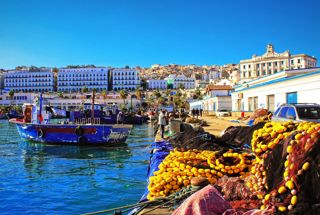
Mid-term review of the Blue Economy Programme
- 2025 – 2026
- unter 500.000 €
- Algeria
This mid-term evaluation, which is both retrospective and forward-looking, aims to independently analyse the performance of the intervention in terms of results, impacts and sustainability, while providing strategic guidance for the next stages of the EU Programme on the Blue Economy in Algeria. It assesses the contribution of the coordination tools and activities implemented to the specific objectives of the Programme and to the EU's cross-cutting priorities, in particular gender, environment and climate. The evaluation will provide concrete recommendations to strengthen coordination between stakeholders, improve the effectiveness of monitoring mechanisms and ensure greater consistency of actions. Its conclusions will ultimately feed into strategic thinking on the sustainability of achievements and future programming in the sector.
- Schlagwörter:
- Industrie und Privatsektorentwicklung, Monitoring und Evaluierung, Umwelt

The overall objective underlying the proposed FWC is to support INTPA A2 and its partners to coordinate, manage and deliver on the three identified TEI components.
The specific objectives are:
- Strengthened coordination within and among the IFF-TOC Political Steering Committee and Management Committee;
- Ensured high-level knowledge management, monitoring and information sharing supporting the coordination among all TEI stakeholders.
- Schlagwörter:
- Institutionelle Entwicklung, Projektdurchführung / technische Hilfe
Evaluation of the European Union Bekou Trust Fund (2014-2024)
- 2023 – 2025
- 500.000 € – 1 Million €
- Central African Republic
The general objective of this assignment was to provide the European Commission, EU Member States, and other stakeholders with an independent final evaluation of the EU Trust Fund Bekou. The Bekou Trust Fund had been established in July 2014 to support the Central African Republic in its transition from crisis to development through stabilisation, reconstruction, and resilience-building interventions. The final evaluation covered the period from the Fund's inception until 2024. This strategic evaluation had a dual thematic scope: on the one hand, all the sectors of intervention financed by the Fund, and, on the other hand, the Fund as a political and financial instrument.
The specific objectives of the evaluation are:
- To assess the response of the Bekou Trust Fund to the needs of beneficiaries and its contribution to results in a crisis context and regarding the SDGs;
- To assess the ownership by stakeholders in the CAR and the sustainability of the interventions financed by the Bekou Trust Fund;
- To identify lessons learned from the Bekou Trust Fund within the framework of the principles of aid effectiveness;
- To examine the comparative advantages of the functioning of the Bekou Trust Fund and on the sustainability of its working methods.
- Schlagwörter:
- Ernährung, Gesundheit, Humanitäre Hilfe, Institutionelle Entwicklung, Ländliche und städtische Entwicklung, Landwirtschaft, Monitoring und Evaluierung, Regierungsführung, Zivilgesellschaft

Election Observation Missions / Framework 2021-2025 Lot2
- 2021 – 2025
- 2 – 5 Millionen €
- Global
The Framework contract related to the implementation of the logistics, security, administrative and financial aspects and the delivery of outputs of specific electoral missions (Electoral Exploratory Missions, Electoral Expert Missions and Electoral Follow Up Missions).
The specific purpose was to:
- ensure adequate expertise and a cost-efficient implementation of electoral missions;
- ensure the availability of a limited number of selected service providers capable of implementing EU electoral missions in often complex environments while ensuring the highest logistical, financial and security standards, on the widest geographic scope; and
- encourage further development, improvement and innovation in the implementation of EU electoral missions.
- Schlagwörter:
- Wahlen

FACILITY TO SUPPORT THE BLUE ECONOMY AGENDA
- 2023 – 2025
- unter 500.000 €
- Mozambique
The blue economy in Mozambique involves a large number of sectors and institutions, and the governance of the country’s marine and coastal resources is highly complex, requiring coordination on a scale seen in few other areas of the national economy. The Government of Mozambique is promoting several reforms towards better management of ocean and marine resources, as well as, a better institutional alignment around the Ministry of Sea, Inland Waters and Fisheries (MIMAIP). MIMAIP is currently drafting a blue economy strategy covering fisheries resources, energy, maritime transport, biodiversity conservation, tourism and security issues as a priority, and would include an oversight by a consultative inter-ministerial body.
The specific objective of the assignment is to provide technical and support assistance to the donor coordination in Mozambique and to the EU Delegation to Mozambique in support of an enhanced strategic and operational dialogue in the area of Blue economic development and decision-making.
- Partner:
- Particip (federführend), CAPA EEIG (managed by Particip), Expertise Advisors (formerly: ETI Consulting)
- Schlagwörter:
- Regierungsführung, Umwelt
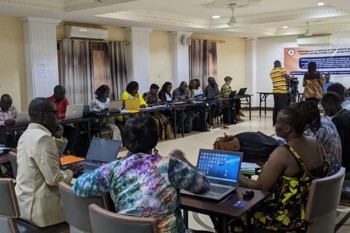
Technical assistance for the implementation of the projects Improvement of the judicial system and access to justice 2021-2025 and Improvement of trust between the population and the internal security forces
- 2021 – 2025
- 2 – 5 Millionen €
- Burkina Faso
The overall Technical Assistance was broken down into two components, linked by a joint general objective to contribute, within the thematic framework of governance of the Danish Country Programme for Burkina Faso 2016, to "an improved human rights situation, strengthening democratic governance and stability" in Burkina Faso.
The main focus was to provide technical assistance to the Governmental agencies and ministries to ensure that the danish programme did not convert into a simple patchwork of training and equipment activities, but that it materialized into a real governance project that links effectiveness, efficiency and accountability; the participation of citizens and CSOs, and inter-ministerial cooperation (particularly with Justice and Human Rights, Social Action and Promotion).
The development of these two axes was guided by the human rights-based approach (HRBA), particularly the four principles of non-discrimination, participation, accountability and transparency
Component 1: Technical Assistance To The Ministry Of Justice, Human Rights And Civic Promotion
The objective of the Development Commitment Paper 1 (DCP 1) was to “strengthen the effectiveness of human rights and the credibility of justice”.
Its aim was to produce the following four outputs:
- Output 1: the Ministry of Justice, Human Rights and Civic Promotion (MJHRCP) will monitor and coordinate the follow-up of the recommendations from the Universal Periodic Review (UPR) for which the public partners are responsible, and strengthen the government capacities in monitoring methods and documenting tools.
- Output 2: the UPR recommendations for which the MJHRCP is responsible were implemented, in particular concerning the key recommendations relating to the categories of rights that were targeted (e.g. child rights, women’s rights, the disabled and prisoners), contributing to an improved delivery of nationwide civic education on justice procedures.
- Output 3: the legislative framework was made more inclusive and participatory in accordance with the UPR recommendations concerning the independence of justice and the categories of rights targeted (child rights, women’s rights, the disabled and prisoners).
- Output 4: the code of ethics were adhered to better within the justice administration and by the governmental agencies and ministries.
Component 2: Technical Assistance To The Ministry Of Territorial Administration, Decentralisation And Security
The objective of the DCP 2 was to “help improve local access to justice, stability and the protection of human rights (2016 – 2020)”. Its aim was to produce the following three outputs:
- Output 1: security services has a good command of the tools and procedures for the protection of human rights, as per international standards.
- Output 2: security services show more presence and effectiveness in the towns / villages that do not have police or gendarmes, in particular by increased citizen participation.
- Output 3: the participation of the communities in building security are effective, especially for vulnerable groups.
The DCP 2 covered the Eastern and Northern Sahel regions and also the strategic function activities at central level. The flagship actions of the present commitment were based on:
- Support in reforming policies, security standards and human rights, as planned in the context of the security services’ missions, and support in preparing a White Paper on defence and security
- Consolidating the initial training in police and gendarme schools (new tools, approaches, procedures and techniques for human rights) and the continuing training (training of trainers and decentralised training in three regions) to accompany the huge ongoing recruitment drive for police officers and gendarmes.
- Support with communication and dialogue between the security services and the population, to assist with community participation on security issues, community conflict resolution and the fight against violent extremism.
The expected results include an improved capacity to deliver security services while respecting and protecting human rights; better citizen’s perception of security services; more responsible governance; and an improved dialogue between state actors and non-state actors (CSOs) when building community security and respecting human rights
- Schlagwörter:
- Institutionelle Entwicklung, Justiz / Rechtsstaatlichkeit, Menschenrechte, Projektdurchführung / technische Hilfe
Consulting Services - Support to the Malawi Youth Sounding Board (2023 - 2025)
- 2023 – 2025
- unter 500.000 €
- Malawi
The global objective (Impact) to which this action contributed was to enhance youth engagement and youth inclusion in the programmes and policies of the European Union Delegation to Malawi.
The specific objective of this contract was to provide technical, administrative and communication support to the MW-YSB to efficiently and effectively implement its role and fulfil its mandate.
- Schlagwörter:
- Kommunikation und Medien, Zivilgesellschaft
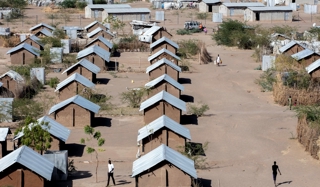
Monitoring Contract for T05-EUTF-HOA-KE-69
- 2024 – 2025
- unter 500.000 €
- Kenya
This project aimed to learn from EU programme implementation in support of refugees and host communities and obtain an assessment of results reported under programme T05-EUTFHOA-KE-69 ‘Enhancing self-reliance of refugees and host communities’, while improving in programme monitoring and evaluation frameworks with the aim of enhanced effectiveness and efficiency of future implementation.
Specific objectives:
- Through third party monitoring (TPM) of EUTF-funded projects T05-EUTF-HOA-KE-69-01 and T05-EUTF-HOA-KE-69-02 in Kakuma and Dadaab, verify results reported thus far by IPs;
- Improve the monitoring system of ongoing EU actions under decision T05-EUTF-HOAKE-69, through hands-on support to EU implementing partners;
- Collection of strategic end-line data of EUTF projects assessing the degree of self-reliance of project participants.
- Partner:
- Particip (federführend), Altai
- Schlagwörter:
- Humanitäre Hilfe, Monitoring und Evaluierung

Global Development Delivery (GDD) Framework Agreement - Lot 10 – Education, Gender and Social Inclusion
- 2023 – 2025
- n/a
- Global
Under this framework agreement, suppliers will provide advice and expertise to FCDO in the thematic areas of education, gender and social inclusion. The exact services provided will be determined through call-down contracts.
In terms of education, the services will notably promote learning for marginalised children at primary and secondary school levels, with a focus on children with disabilities, out of school children, children affected by crises, and hard to reach girls.
Gender equality is a cross-cutting issue for all FCDO work, and an explicit focus in fragile, conflict and humanitarian settings. The expected services will notably focus on strengthening national systems, working in partnership with private sector and civil society.
The services on social inclusion aim at addressing the underlying structural causes of poverty and inclusion, working in multi-dimensional approaches.
- Partner:
- WEglobal (federführend), Agriconsulting Italia, Particip