
Our projects
Explore Particip’s project experience across countries, sectors and areas of expertise.
Our references provide an overview of completed and ongoing assignments, including their objectives, geographic scope, duration and contract value.
Showing 1–10 of 58 references
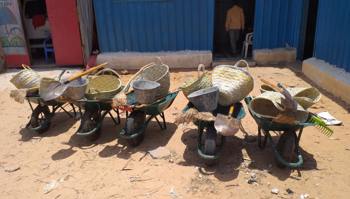
Third Party Monitoring Evaluation and Learning (TPME&L) and Accountability to Affected Populations (AAP) in Somalia
- 2021 – 2029
- € 5 – 10 million
- Somalia
The current objective is to improve the performance of the Swiss HoA programme. This will be achieved thanks to a broad shift in posture, achieved through four highlevel outcomes: (a) improved monitoring and risk governance of the SDC HoA programme, (b) increased benefits for the most vulnerable people, including in hard-to-reach areas, through better targeting by Swiss Agency for Development and Cooperation (SDC), (c) increased number and improved quality of partnerships with local actors, and (d) improved state-led national development plan (NDP) and sustainable development goals (SDG) monitoring.
To better achieve this it is believed that third-party monitoring should be applied at the project, portfolio and strategy level, backed up by community feedback mechanisms to increase accountability to beneficiaries, and implementing partner risk assessments, audit field spot checks, in addition to training and capacity building of implementing partners. SDC will therefore be able to improve the tracking of its projects in Somalia, and also to extend the mix of aid modalities, and allow the management of projects to focus to a greater extent on risk management and trust.
Through its Whole-of-Government Regional Cooperation Strategy Horn of Africa (CS Horn of Africa) 2018-2021, Switzerland has the following priorities:
- Geographic target: At risk regions of the Horn of Africa, mainly Somalia (including Somaliland), and the Arid and Semi-Arid Lands (ASAL) of Kenya (i.e. North-Eastern Kenya) and Ethiopia (i.e. South-Eastern Ethiopia). Switzerland aims at stronger focusing its intervention to rural and harder-to-reach areas.
- Population target: pastoralists, agro-pastoralists, most vulnerable parts of population (including displacement-affected communities). Switzerland aims at better including marginalized and disadvantaged groups, such as minority groups in Somalia.
- Thematic target: Governance, Food Security, Health, Protection/Migration.
- A new Regional Cooperation Programme for the Horn of Africa will be developed in 2021 for the period 2022-25. It is expected that only minor adjustments to the mentioned geographic, population and thematic targets will occur.
Project Components and Phases. FRAP is made up of the following elements:
a) Third-Party Monitoring (TPM) (subject of this tender) and a Digital Platform
b) Support to the International NGO Safety Organization (INSO)
c) Possibly support to the Somalia UN Risk Management Unit (UN RMU)
d) Possibly direct or indirect support to the National Bureau of Statistics of Somalia
As part of the first element, the Kulmis Support Team (KST) works with SDC, implementing partners and digital platform developers to ensure all SDC M&E tools and IP progress data are accurately transferred to the digital platform. This task also including supporting implementing partners during this transaction process, as providing trainings, supporting on filling and uploading specific progress monitoring tools, undertaking the initial QA-QC in data management, etc. In addition to that, KST regularly provides feedback to developers to ensure the digital platform is user friendly and reflects the accurate data, along with regular updates on data protocol to be adopted.

EU Outreach and Partnership Facility for the GCC
- 2026 – 2029
- € 2 – 5 million
- Bahrain, Belgium, Kuwait, Oman, Qatar, Saudi Arabia, United Arab Emirates
As outlined in the Joint Communication, the Gulf is a dynamic neighbouring region and an important gateway between Europe, Asia and Africa. Likewise, the EU has a lot to offer to the Gulf partners, as the world’s biggest single market, trading bloc and investor, a leader in research and innovation, and an important mediator and promoter of multilateralism, social transformation including human rights, gender equality, diversity and inclusion. As both regions navigate an increasingly complex global landscape, their partnership will continue to be shaped by economic interdependence, shared security interests, and a commitment to addressing global challenges collaboratively.
The overall objective to which the project contributes is to ++consolidate the EU-GCC partnership at regional and bilateral level, and improve the EU’s perception in the region.++
The specific objectives of the project are as follows:
1) Strengthen the position of the EU as a key partner in the GCC region in areas of mutual interest.
2) Support the implementation and monitoring of EU–GCC partnership and cooperation initiatives.
3) Foster deeper cooperation and mutual understanding between non-state actors, academia, civil-society and citizens in the EU and the GCC region.
The expected outputs of the project are as follows:
++1) Outcome 1:++ Strengthen the position of the EU as a key partner in the GCC region in areas of mutual interest. ++Output:++ Increased awareness, exchange and collaboration between EU and GCC stakeholders in key strategic areas with a focus on joint initiatives, dialogues, and collaborative projects.
++2) Outcome 2:++ Support the implementation and monitoring of EU-GCC partnership and cooperation initiatives. ++Output:++ Enhanced analysis, knowledge, and expertise to support the implementation and monitoring of joint policy priorities.
++3) Outcome 3:++ Foster deeper cooperation and mutual understanding between non-state actors, academia, civil-society and citizens in the EU and the GCC region. ++Output:++ Expanded opportunities for people-to-people diplomacy, including joint cultural initiatives, academic exchanges, and cross-regional collaborations on mutually strategic sectors.
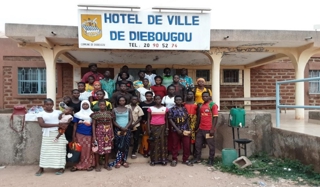
Contribute to the improvement of the institutional, legal and social framework for the protection of vulnerable children and promote the training and empowerment of young people
- 2024 – 2028
- € 1 – 2 million
- Burkina Faso
An evaluation of phase VI of the Children and Youth Fund (FEJ) identified adjustments and recommendations as well as a significant need for a new project.In addition, the consequences of the security situation, threatened social cohesion and rising inflation are crucial issues.These findings have given rise to the present "Children and Youth Fund - Protection of Children and Training of Young People (PEFJ)" project,which aims to protect vulnerable boys and girls and improve the training and economic autonomy of young people. In addition, the new PEFJ project must continue to promote the economic empowerment of women and the educational success of girls by awarding study and vocational training grants.
The ++main objective++ of the project is to help improve the institutional, legal and social framework for the protection of vulnerable children and to promote the training and empowerment of young people.
The ++specific objective++ of the project is to improve the protection of vulnerable girls and boys and the training and economic autonomy of young people. The context of the project is marked by a tense security situation in most regions of Burkina Faso and the displacement of people within the country.
The ++intervention target group++ is the young and vulnerable rural population and their family environment in the intervention zones and, more broadly, the general public in Burkina Faso. However, more attention should be paid to young people and internally displaced children. The same applies to girls, so that they benefit first and foremost from school grants, and so that the interventions enable young people and women to improve their financial independence. On the other hand, young men should preferably be the main beneficiaries of vocational training grants.
Within the framework of the PEFJ, all the ++activities++ are grouped into the following components:
- Component 1: The implementation of communication measures at national and local level to improve the visibility of actions financed by the Children and Youth Fund.
- Component 2: Building and equipping social infrastructure for children and young people (including communal social services)
- Component 3: Promoting vulnerable children and young people, in particular through study grants, vocational training and measures to create income-generating activities (IGAs) for families with vulnerable children and IDP families.
- Component 4: The implementation of support and advisory measures for local authorities, technical services and civil society players in setting up and implementing specific projects carried out under components 2 and 3

Assistance to the Member States for the implementation of EU nature conservation policy and legislation, including the Nature Restoration Regulation
- 2024 – 2027
- € 1 – 2 million
- EU
Providing support to the EU Member States for the implementation of EU nature legislation in the following areas:
- Completing the Natura 2000 network of sites
- Improving the protection, restoration and management of Natura 2000 sites
- Improving the conservation of species and habitats though a more effective integration of their protection requirements into other national sectoral legislation and policies
- Improving the quality and usefulness of reported data under the nature directives (Art.17 Habitats Directive, Art.12 Birds Directive)
- Supporting the development of National Nature Restoration Plans under the Nature Restoration Law, in particular as regards the targets that build upon the Birds and the Habitats Directives
- Sharing successful projects and best practises in areas such as species and habitat protection or recovery, innovative approaches to site management, restoration of habitats and ecosystems, biodiversity monitoring, including in protected areas
The support to Member States shall be given primarily through the organisation of workshops, networking and training events covering the above-mentioned topics.
Support to programming, monitoring, evaluation and knowledge sharing in the EU external action (meldea)
- 2023 – 2027
- over € 10 million
- Africa, Asia, ENI, Latin America & Caribbean, Oceania, Western Balkans
The overall aim of the project is to ++support DG INTPA and DG NEAR in improving quality of performance, institutional learning and accountability for a better targeted and more sustainable impact of EU external action++.
The project comprises ++7 different services++:
++1++: provide methodological support to EU staff to plan, design, implement, monitor, and evaluate EU interventions in a coherent, efficient and effective manner.
++2++: assist requests of methodological screening and quality assurance related to programming and design.
++3++: assist to the enhancement of the internal monitoring and results reporting systems of the Commission services.
++4++: support and contribute to the revision of the results-oriented monitoring (ROM) system and provide operational and coordination support to the ROM contracts.
++5++: assist Commission staff in their mandate to steer, coordinate, monitor and report on evaluation activities.
++6++: support the two units of the DGs to enhance the quality of EU external action by ensuring the quality of the different evaluation deliverables.
++7++: provide methodological support on knowledge management for INTPA.D4 and NEAR.A4 by developing a set of tools and techniques and responding to requests of support.
++Main staff provided for 4 year of contract:++
- Key Expert 1 (Team Leader): 880 WD
- Key Expert 2: 880 WD
- Key Expert 3: 880 WD
- Key Expert 4: 880 WD
- SNKE: 11.847,25
- MNKE: 7.146
- JNKE: 5.887,50
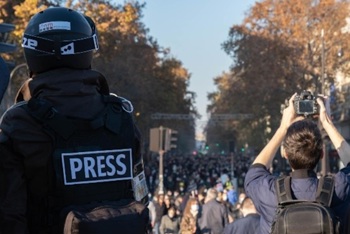
Supporting the Alliance for Democracy Development, in fostering independent and pluralistic media, access to information and the fight against disinformation in Panama, Costa Rica, Dominican Rep. and Ecuador.
- 2024 – 2027
- € 1 – 2 million
- Costa Rica, Dominican Republic, Ecuador, Panama
The expected outputs of this contract are as follows:
- Knowledge based products (analysis and studies) on policy and the legal frameworks pertaining to
media regulation (including digital space), press freedom, journalists’ protection, and other related topics
in the ADD countries are produced;
- Policy and technical expertise and mentoring is provided for the design and development of policy and
legal frameworks pertaining to media regulation (including digital space), press freedom, journalists’
protection, and other related topics, in line with international standards and in respect of fundamental
human rights;
- Research and knowledge based products on information environments, including among others
stakeholder analyses, media sectoral political economy and ownership monitoring analyses, media
consumption analyses, information and communication trends, vulnerabilities and opportunities are
produced;
- Knowledge based products (analysis and studies) on monitoring of (foreign and domestic) information
manipulation trends on traditional and online media, notably on narratives, tactics, techniques and
impact, including through media monitoring, data analyses, investigative journalism, etc. are produced;
- Strengthened capacity of state and non-state (civil society, media, private sector, etc.) actors, on
information manipulation (foreign and domestic) analytical methods including narratives, tactics,
techniques and impact;
- Strengthened capacity of independent media actors to investigate, report, publish/broadcast fact based information;
- Strengthened capacity of fact-checking organisations to enhance their analytical, detection, debunking
and communication work on disinformation campaigns;
- Strengthened capacity of civil society organisations to conduct Media and Information Literacy
activities to broader public and to targeted stakeholders;
- Enhanced experience sharing, lessons learning within each focus country and across countries and
actors from the region.
Sudan Somoud Enhancing Community Resilience (now called THABAT-stability) - Bank Support and Monitoring Agent
- 2024 – 2027
- € 500,000 – 1 million
- Sudan
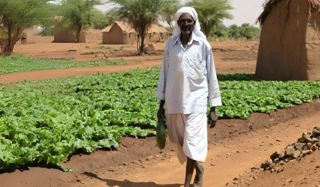
The Project Development Objective (PDO) is to improve access to basic services and food security of Select Communities in the Republic of the Sudan. The project is designed to complement the current humanitarian aid to Sudan by laying a foundation for medium and longer term development support in areas with high concentration of IDPs. It builds for the future of Sudan by restoring access to basic services and food, protecting human capital, and enhancing communities’ resilience using a bottom-up approach. It is sequenced to first meet immediate basic service needs of vulnerable groups in areas of high IDP concentration and relative safety and accessibility, followed by community-led planning and implementation of medium-term basic services.
Project M&E efforts will be supplemented by BSMA to ensure WB oversight on the ground, given limited access for Bank personnel. To support the WB to fulfil its monitoring and supervision obligations in areas where its staff are unable to access project sites, the Bank engaged with BSMA with the objective of providing a monitoring layer to complement the monitoring activities of the Implementing Entities and ensure that Bank funds are utilized for the purposes specified in the grant agreement and project documents. The BSMA ’s services will include monitoring of all aspects of Project implementation, including:
- Implementation progress or completion status (including community selection and fund allocations, verification of stakeholder engagement activities, timeliness of implementation, physical verification of infrastructure and goods including quality, quantity, sizing/dimensions, etc. prepared as part of small-scale climate-resilient infrastructure development), and compliance that the physical implementation of projects (including physical verification of works/construction) is in accordance with signed contracts and approved safeguards instruments which are prepared based on the requirements of the WB safeguards policies, UNICEF/WFP policies and procedures and relevant laws and regulations of Government of Sudan.
- Monitoring of the Implementing Agencies’ implementing partners’ fiduciary compliance within the limits focused on site assessments as outlined below.
- On the environmental and social risk management (ESRM) side, the BSMA shall carry out verification of the degree of compliance with ESRM requirements as per the site ESRM instruments including site visits to construction sites, waste disposal sites aided, GMV Centres to comply with WB requirements. This will include monitoring compliance with the Environmental and Social Commitment Plan and more specifically the ESF instruments used in the project.
- Monitor functioning of the project’s grievance redress mechanism (GRM).
- Carry out physical verification with digital photographs of ongoing works and goods supplied, through geo-tagged information and support of smart technology, alerting the Bank and relevant Implementing Agency to deficiencies in quality and implementation and following up on the correction of these deficiencies.
- Compile lessons from activity verification, challenges faced and output monitoring to generate reports on lessons learned and recommendations for improving monitored projects.
The BSMA will also be responsible for monitoring any project activities to develop the capacity within the lowest level of governance structures to enable delivery of basic services – at the community and Locality level.

Evaluation of the Country Programme in Uganda 2023-2027
- 2026 – 2027
- under € 500,000
- Uganda
The assignment concerns the end-term evaluation of Enabel’s Uganda Country Programme 2023–2027, with a total budget of approximately EUR 68 million. The programme supports Uganda’s development priorities through two main pillars. Pillar 1 focuses on decent jobs and economic opportunities for youth, including technical and vocational education and training (TVET), employability, entrepreneurship, value-chain development and business and human rights. Pillar 2 focuses on health, particularly maternal and child health and sexual and reproductive health and rights.
The evaluation examines the programme’s relevance, coherence, effectiveness, efficiency, sustainability and contribution to intended outcomes and longer-term change. It also assesses cross-cutting dimensions such as gender equality, human rights, inclusion and the principle of Leave No One Behind, as well as the programme’s added value within the wider Ugandan development context.
A theory-based and mixed-methods approach is applied, combining documentary and monitoring-data analysis with stakeholder interviews, focus group discussions and field observations. Fieldwork covers the principal programme implementation areas, including Kampala, Albertine, Acholi, West Nile, Busoga and Rwenzori, allowing the evaluation to capture differences across geographical, institutional and sectoral contexts. A light foresight component is also included to reflect on emerging trends, risks and opportunities that may affect the relevance and sustainability of programme results and future cooperation priorities.
The evaluation is expected to generate robust evidence on programme performance, identify lessons and good practices, and formulate practical recommendations to inform Enabel’s future programming and cooperation in Uganda.
Framework Agreement for Decentralized Evaluations and Reviews (FADER) - Lot 1
- 2023 – 2027
- € 2 – 5 million
- Ethiopia, Indonesia, Kyrgyzstan, Nepal, Tajikistan, Tanzania, Ukraine, Uzbekistan, Viet Nam
The Framework Agreement for Decentralized Evaluations and Reviews (FADER) LOT 1 covers different types of appraisals, evaluations and reviews of development cooperation projects and programmes funded by the Ministry for Foreign Affairs of Finland (MFA).
The main users of the FADER are the regional departments of the MFA, which have regional and country specific development cooperation programmes/projects in Africa, the Middle East, Asia, Eastern Europe and Central Asia.
The following assignments are implemented by Particip GmbH:
- Project appraisal: Strengthening inclusive education system in support of Ethiopia's general education sectoral programme,
- Appraisal of the Local Adaptation to Climate Change- Project in Nepal,
- Project appraisal: Rural Economic Development (RED) Phase I in Ethiopia,
- Appraisal of the “Forestry, Land Use and Value Chains Development in Tanzania” (FORLAND) programme,
- Appraisal of Tax Sector Support to Tanzania (TAXTAN) programme.