
Our projects
Explore Particip’s project experience across countries, sectors and areas of expertise.
Our references provide an overview of completed and ongoing assignments, including their objectives, geographic scope, duration and contract value.
Showing 311–320 of 985 references

EEM to Bangladesh 2023 - Parliamentary Elections
- 2023 – 2024
- under € 500,000
- Bangladesh
The purpose of this Election Expert Mission (EEM) was to collect and analyse factual information, assess and report on the electoral process against international commitments, standards and good practice for democratic elections in line with the criteria contained in the Commission Communication on Electoral Assistance and Observation. The experts also formulated recommendations to improve future electoral processes and assessed the state of implementation of recommendations made by previous electoral missions.
- Keywords:
- Elections

Final evaluation - Environmental Diplomacy in G7/G20
- 2023 – 2024
- under € 500,000
- Global
The main objectives of this evaluation are to provide the relevant services of the European Union and the interested stakeholders with:
- an overall independent assessment of the past performance of the ‘Environmental Diplomacy in G7/G20’, paying particular attention to its results measured against its expected objectives; and the reasons underpinning such results;
- key lessons learned, conclusions and related recommendations in order to improve future Actions.
In particular, this evaluation will serve to provide the relevant European Commission services and the European External Action Service (EEAS) with an independent review of the programme with a view to inform the implementation as well as future programming enabling cooperation on this topic. The review of progress should focus on assessing the achieved and emerging results of the programme, in particular in the 5 specific EU policy areas targeted by this project, i.e. resource efficiency, circular economy, marine litter and plastics as well as green financing. This assessment should take place against the background of the relations between the EU and the G7/G20 country governments and civil societies. It should look for evidence of whether, why and how these results are linked to the project and seek to identify the factors driving or hindering progress. The coherence, complementarity and value added of the project should also be assessed.
The identification of key lessons and the production of recommendations will be particularly relevant as the project aims to develop EU environmental diplomacy by supporting and fostering the environmental agenda in the G7 and G20 discussions and by strengthening bilateral dialogues on environmental issues and opening up new areas of cooperation. The evaluation should inform the planning of similar future EU interventions and Actions.
The main users of this evaluation will be:
- European Commission: FPI, DG ENV, DG CLIMA and EEAS, potentially other DGs (FISMA, MARE, CLIMA, SG)
- Policy makers responsible for environment-related issues (EU and in the partner G7/G20 countries of the action)
- Environment, trade and industry counsellors in EU Delegations
- Implementing partners: GIZ, IEEP, Adelphi, Ecologic
- Keywords:
- Environment, Monitoring & Evaluation

Mid-Term Evaluation of the Programme Supporting Youth in Tunisia (EU4Youth) - Extension
- 2023 – 2024
- under € 500,000
- Tunisia
This project seeked to contribute to the improvement of economic, political, and social inclusion of most disadvantaged youth in Tunisia by taking a local development approach in Tunisia and more specifically in the targeted regions.
Particip's objectives included:
- seeking to address the problems of employability, decent employment, and the creation of jobs, which are key factors in the current phenomenon of youth exclusion. To achieve this, the intervention takes these factors into account and proposes an approach by involving public, private, and associative partners, while also organising inclusive and sustainable activities.
- capitalising on the acquisition and experience of the “Tfanen-Tunisie créative” project, which finances Tunisian cultural operators through calls for proposals and support to reinforce their action and sectoral impact. Another aim is to promote a territorial approach by fostering the emergence of collaborative local strategies for the inclusion of young people through sports and cultural practices.
- improving the integration of young people into public policies. This integration has a dual dimension: on the one hand, the integration of specific youth issues into local public policies, and on the other, the integration of young people into associative and political life, and into public affairs in general.
- Keywords:
- Monitoring & Evaluation

The main objectives of this evaluation were to provide the relevant EU services and interested stakeholders with:
- An overall independent analysis of the performance of the Justice Sector Support Programme (JSSP), paying particular attention to its different levels of results compared to its expected objectives, and the reasons for these results;
- The main lessons, conclusions and recommendations arising from the evaluation in order to improve current and future interventions.
In particular, this evaluation served to understand the performance of the YSAP, its determining factors and those that have hindered the achievement of results, so as to be accountable for the use of EU resources in relation to the results of the YSAP and to serve as a basis for reflection for the next strategic programming of Team Europe in Togo.
- Keywords:
- Justice/Rule of Law, Monitoring & Evaluation

Evaluation of the EU initiative on Health Security
- 2023 – 2024
- under € 500,000
- Africa (Northern)
The main objectives of this evaluation were to provide the relevant services of the European Union, the interested stakeholders with:
- an overall independent assessment of the performance of the EU Initiative on Health Security, paying particular attention to its different levels of results measured against its expected objectives; and the reasons underpinning such results
- key lessons learned, conclusions and related recommendations in order to improve current and future interventions.
In particular, this evaluation served to steer the intervention during its residual duration and to inform decision-making on the appropriateness and thematic priorities of a second phase of the intervention.
The main users of this evaluation were DG NEAR B2 and indirectly EEAS MENA, DG SANTE, DG INTPA and other Commission services and EU delegations of the region.
The evaluation assessed the intervention(s) using the six standard DAC evaluation criteria, namely: relevance, coherence, efficiency, effectiveness, sustainability and early signs of impact. In addition, the evaluation assessed the interventions through an EU specific evaluation criterion, which is the EU added value.
- Partners:
- Particip (Lead), EuroPlus
- Keywords:
- Health, Monitoring & Evaluation

Technical Assistance for engaging assessors for Call for Proposals under Civil Society Facility Programme 2021-23
- 2022 – 2024
- under € 500,000
- North Macedonia
The objective of the assignment was assisting the European Delegation to the Republic of Macedonia in selecting the best-quality proposals (concept notes and full application) to be received in the frame of calls for proposals under the IPA Civil Society Programme 2021-2023.
The specific objective of the calls for proposals was providing a support to civil society and media organisations to contribute to the EU related sector reforms in a number of pre-defined sectors/thematic priorities based on all-inclusive consultations with civil society and other national and international stakeholders in the country.
Areas covered included:
- Rule of Law and Anti-Corruption;
- Gender Equality and Anti-discrimination;
- Youth, Protection of Rights and Disability inclusion;
- Socioeconomic development and social economy;
- Green Agenda, Energy Efficiency and Climate Change;
- Freedom of speech and media integrity;
- Digital technologies;
- European Accession - Civil Society Platforms and Networking for EU Dialogue;
- Keywords:
- Civil society
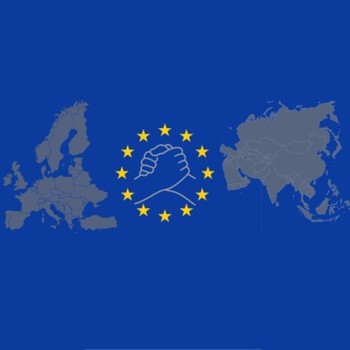
Final Evaluation of PI/2017/383-969 – Cooperation on Competition in Asia
- 2023 – 2024
- under € 500,000
- Asia
The main objectives of this evaluation are to provide the relevant services of the European Union, the interested stakeholders and the wider public with:
- an overall independent assessment of the past performance of the “Cooperation on Competition in Asia”, paying particular attention to its results measured against its expected objectives; and the reasons underpinning such results;
- key lessons learned, conclusions and related recommendations in order to improve future Actions.
In particular, this evaluation will serve as a stocktaking exercise for a flagship project, on a very important policy area of the EU, to understand the performance of the Action, its enabling factors and those hampering a proper delivery of results as to inform the planning of the future EU interventions and Actions in the same sector, which may be taken over from the Service for Foreign Policy Instruments (FPI) by other EU services, such as Directorate-General for International Partnerships (DG INTPA). Thus, a comprehensive evaluation, reflection, and recommendation also considering different mandates will be of significant value.
The main users of this evaluation will be FPI, DG COMP, and to some extent DG INTPA, EEAS including relevant EU Delegations, to inform the design of future activities, as well as to take note of working dynamics and partnership with counterparts in project countries. The evaluation will assess the Action using the five standard DAC evaluation criteria, namely: relevance, effectiveness, efficiency, sustainability and early signs of impact. In addition, the evaluation will assess two EU specific evaluation criteria:
- the EU added value (the extent to which the Action brings additional benefits to what would have resulted from Member States' interventions only);
- the coherence of the Action itself, with the EU strategy in ASEAN and the Indo-Pacific and other key programming documents, and with other EU policies and Member State Actions.
The evaluation team shall furthermore consider whether gender, environment and climate change were mainstreamed; the relevant SDGs and their interlinkages were identified; the principle of Leave No-One Behind and the rights-based approach methodology was followed in the identification/formulation documents and the extent to which they have been reflected in the implementation of the Action, its governance and monitoring.
- Keywords:
- Monitoring & Evaluation, Trade

Evaluations of two AFD policy-based loans (Energy and health/social welfare) for the Government of Georgia and AFD
- 2023 – 2024
- under € 500,000
- Georgia
Two evaluations for the Government of Georgia and AFD:
- Mid-term evaluation of an AFD policy-based loan in the energy sector in Georgia.
The evaluation focussed on the formulation of the policy-based loan and its effects on policy formulation and implementation.
The purpose of the evaluation was to assess to what extent the inputs provided by AFD group and Government of Georgia under the terms of the policy-based loan (funds, policy dialogue, and technical assistance) have impacted policy formulation and/or implementation regarding health and social welfare, and the supported public institutions. The evaluation covered the period from 2017-2022. The period covered was not limited to the disbursement period; it includes the period over which policy dialogue was conducted and technical assistance was implemented.
- Joint ex-post evaluation of an AFD policy-based loan in the health and social welfare sectors in Georgia.
AFD and Government of Georgia jointly carried out this ex-post evaluation. This evaluation assessed whether some areas of policy supported through the policy-based loan (PBL) resulted in the expected outcomes and linked the changes to the PBL.
The purpose of the evaluation was to assess to what extent the inputs provided by AFD and Government nof Georgia under the terms of the policy-based loan (funds, policy dialogue, technical cooperation) have impacted policy formulation and/or implementation regarding the energy sector. The evaluation thus examined AFD’s financial contribution as well as all technical cooperation activities. The type, scope, and methods of the dialogue regarding relevant policies also fell within the scope of the support provided and required special attention during the evaluation process. The evaluation covered the period from 2018-on going. The period covered was not limited to the disbursement period; it included the period over which policy dialogue was conducted and technical cooperation was implemented.
- Keywords:
- Energy, Health, Monitoring & Evaluation, Public finance/budgeting

Thematic evaluation of the EU support to Confidence Building Measures
- 2023 – 2024
- under € 500,000
- Moldova
The main objectives of this evaluation were to provide the relevant services of the European Union, the interested stakeholders with:
- an overall independent assessment of the performance of the interventions ENPI/2013/024-401 Confidence Building Measures (Moldova AAP 2013), ENI/2018/041-309 EU Support to Confidence Building Measures V (2019-2022), ENI/2020/042-967 Scale up EU Support to Confidence Building Measures V (2019-2022), paying particular attention to the levels of achievement of results measured against its expected objectives;
- key lessons learned, conclusions and related recommendations in order to improve current and future interventions in the same domain.
In particular, this evaluation served the purpose to assess the impact of the last 10 years of EU support to Confidence Building Measures, from 2013 to 2023. As per EU Logical Framework approach, aligned with the OECD-DAC definition, the impact was “the overall objective of the Action entailing positive and negative, primary and secondary long-term effects produced by a development intervention, directly or indirectly, intended or unintended.” The impact was the long-term expected effect of the action fulfilling the overall objective to which the action contributes at country, regional or sector level, in the political, social, economic and environmental global context which will stem from interventions of all relevant actors and stakeholders.
The evaluation reported comprehensively and transparently on EU support to Confidence Building Measures in the Republic of Moldova.
It drew lessons that can be replicated in other EU interventions to support Confidence Building Measures in Moldova, and potentially in other countries in the Eastern Partnership Region. It informed decision-making on the appropriateness and thematic priorities of future phases of the same (or similar) intervention in the Republic of Moldova.
- Partners:
- Particip (Lead), EuroPlus, SICI Dominus
- Keywords:
- Monitoring & Evaluation

Central project evaluation of the projects “Regional support for COMIFAC” (PN 2017.2210.7) and “Support of the transboundary national park BSB Yamoussa” (PN 2017.2211.5)
- 2022 – 2024
- under € 500,000
- Africa (Central)
The main task is to process the knowledge generated by the evaluations to precisely facilitate decision-making. The goals are:
- To improve evidence of effectiveness
The new evaluation system is intended to put GIZ in a better position to observe long-term results and the sustainability and mainstreaming of approaches in the partner structures. In addition, evaluations should be conducted at a time when statements about results and sustainability are possible and appropriate, and should be designed using the appropriate methodologies and procedures to ensure this is the case.
- To enhance credibility of evaluation findings
Increase the credibility of our evaluation findings by strengthening the independence of project evaluations. Project evaluations will accordingly be managed by and under the responsibility of the Evaluation Unit, which reports directly to the Management Board and is separated from operational business. Implementation is carried out by specialist external evaluators. Evaluations will be conducted in line with recognised national and international standards and quality criteria, and the evaluation reports will be published.
- To gear project evaluations to new challenges
Central evaluations should take into account the growing complexity of projects and implementation contexts, the increased requirements for accountability and the evaluation challenges arising from the 2030 Agenda and the Joint Procedural Reform.
- Partners:
- Particip (Lead)
- Keywords:
- Forestry