
Our projects
Explore Particip’s project experience across countries, sectors and areas of expertise.
Our references provide an overview of completed and ongoing assignments, including their objectives, geographic scope, duration and contract value.
Showing 11–20 of 50 references

EU Technical Assistance Facility for Improving Sustainable Forest Management (Forests For the Future Facility - F4)
- 2020 – 2027
- over € 10 million
- Global
The Forests for the Future Facility (F4) provides strategic and technical support to the European Commission and to partner countries, to contribute to healthy forest ecosystems able to create decent jobs and to enhance economic growth in partner countries. F4 has a demand-driven approach to improve the number, quality and effectiveness of EU interventions in the forest-relevant sectors. F4's main themes are linked to sustainable forest management, private sector investment, policy reforms and sustainable value chains.
The F4 serves as a platform for dialogue and exchange as well as practical cooperation to address the interlinkages between development, poverty reduction, trade, climate change, biodiversity and forest.
F4 is based on two mutually reinforcing pillars: on the one hand a platform for policy dialogue and knowledge exchange and on the other hand a source of technical and financial support to implement forest-related programmes.
Specifically, the F4 Facility constitutes a team of experts that provides technical assistance to the Commission staff (Commission Headquarter in Brussels and EU delegations, as appropriate) and partner countries to improve the quality of forest-relevant programmes or activities at any stage of their cycle (negotiation, programming, identification, formulation, implementation and evaluation).
The Facility is able to address the full spectrum of the forest sector from legal and sustainable forest management and conservation to trade and consumption aspects, by developing sustainable value chain analysis through a holistic approach, looking extensively at economic, social and environmental indications.
In this context, the Facility promotes the concept of Forest Partnership, integrating programming documents, Team Europe Initiatives and additional policies, which may arise.
Particular attention is given to the role of private sector (smallholder farmers, MSMEs) as a driver of inclusive and sustainable forest sector growth and to enhance civil society ability and capacity to participate in the decision-making and monitoring process.
The Facility also has to be able to assess and develop policies/strategies (reforms, governance, legal framework, institutional strengthening, financing plan, fiscal incentives) within the forest sector as well as sectors that may have an impact on forests, like agriculture, infrastructure, mining.
- Partners:
- Particip (Lead), GFA, Indufor Oy - Metsahallitus Group, Oréade-Brèche, Prospect C&S
- Keywords:
- Communication & media, Environment, Forestry, Industry & private sector development, Project implementation / Technical Assistance
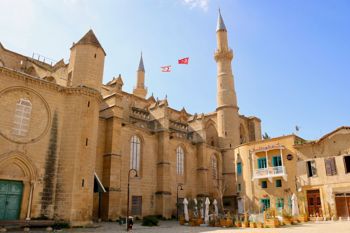
EU Legal and Linguistic Support Phase 2 for the Turkish Cypriot community
- 2024 – 2027
- € 500,000 – 1 million
- Cyprus
The overall objective of the project is to facilitate the delivery of EU funded support under the Aid programme in view of preparing the Turkish Cypriot community for the implementation of the acquis communautaire following a comprehensive settlement of the Cyprus problem.
Specific Objective 1: To improve the interpretation and translation sectors in Cyprus in line with EU standards
1.1 To provide technical support and guidance in using CAT (Phrase) Software and for legal translation/interpretation
1.2 To provide technical assistance for setting up the internal structures of the Bicommunal Professional Association of Translators and Interpreters in Cyprus and implementing activities targeting professionals and youth.
Specific Objective 2: To improve the “legislative processes” in the TCc in view of TAIEX supported legal texts and bring them in line with EU standards
2.1 To provide support for the process and procedures of legal texts drafting.
2.2 To improve awareness and understanding of EU policies, especially for the most active sectors of TAIEX support as per EU acquis in the Turkish Cypriot community, in addition to improving the understanding on the general functioning and structures within the Commission.
2.3 To provide support for the use of the Database developed by the previous EU Legal and Linguistic Support Project for TAIEX supported legal texts.
Specific Objective 3: To promote Cypriot linguistic heritage, network and solidarity amongst professionals and youth
3.1 To conduct awareness raising and networking events, in view of promoting Cypriot linguistic heritage
3.2 To improve interest for interpretation and translation profession, as well as multilingualism and to improve the network and solidarity amongst the professional interpreters and translators
- Keywords:
- Civil society, Institutional development, Justice/Rule of Law, Project implementation / Technical Assistance

EU-India Policy Dialogue Support Facility (PDSF)
- 2024 – 2026
- € 1 – 2 million
- India
The specific objectives of this contract are as follow:
- Outcome 1: To support the ongoing and planned sectoral EU-India policy dialogues and partnerships on topics of EU and EU-India mutual interest; and
- Outcome 2: To contribute to policy convergence of EU-India policy approaches in the global arena.
The expected outputs of this contract are as follows:
- Solid basis is established for operationalisation of the EU-India strategic partnership, as well as other key strategies and agreements shaping EU-India relations.
- People-to-people contacts are strengthened.
- Dissemination of relevant and updated information to target audiences on the EU-India strategic partnership, and more specifically on topics of key relevance to the sectoral policy dialogues is improved.
- Additional thematic areas for EU-India sectoral cooperation are identified, explored, and developed, including beyond India (regional, trilateral or global).
- Mutual understanding, trust, and knowledge of policy objectives and strategic interests between the EU and India are further strengthened.
- Partners:
- Particip (Lead), CEPS, Mixorg, VO Europe SA
- Keywords:
- Communication & media, Governance, Management

Support to Coordination of the EU Development Interventions in Nigeria
- 2025 – 2026
- under € 500,000
- Nigeria
The overall objective is to support the FMBEP in strengthening existing capacities for coordination of the EU development interventions in Nigeria. Given the limited budgetary resources in carrying out the key mandates of the EU Unit of the FMBEP relevant to effective implementation of the EU– MIP for Nigeria, it is pertinent to support key activities. This objective is complementary to the economic blueprint of the current Administration, i.e the Medium Term Plans of the Nigerian Agenda 2050 are also critical in meeting the targets of the Sustainable Development Goals (SDGs).
The timing of the action is therefore relevant for facilitation the implementation of the recommendation from the review of the National Development Plan (NDP) and MIP. The proposed activities for this action will support all the thematic sectors and actions of the EU – MIP 2021 – 2027.
The specific objectives are to:
- Result 1: Strengthen understanding and the capacities of key actors involved in supporting the new modalities for implementation of the EU funded interventions programmes (national and regional).
- Result 2: Strengthen administrative systems, structures and capacity to monitor, evaluate, coordinate and report on the EU development assistance are in place.
- Keywords:
- Governance, Institutional development, Project implementation / Technical Assistance
The general aim of the action is to support the European Union Delegation in Djibouti in its support for Djiboutian civil society in terms of political advocacy and capacity building.
The specific objectives are:
1. Support to the European Union Delegation in Djibouti for civil society support programmes;
2. Adoption of the legal and institutional framework governing CSOs;
3. Supervision of CSO projects.
- Partners:
- Particip (Lead)
- Keywords:
- Civil society, Project implementation / Technical Assistance

Capacity-building for the Implementation of Interreg and Cohesion Policy
- 2025 – 2026
- under € 500,000
- ENI, EU, IPA
The EU Cohesion Policy is a key investment strategy aimed at reducing regional disparities and fostering smart, sustainable, and inclusive growth across the EU. It operates through national, regional, and Interreg cooperation programmes to support infrastructure, the green transition, connectivity, and social inclusion in the EU Member States, while preparing candidate countries for EU membership by building administrative capacity through Interreg and tailored training programmes.
The overall objective of the project is to prepare candidate countries for implementing cohesion policy in the lead up to and upon accession.
The project specifically aims to:
- Train staff from national administrations at central and local/regional level participating in Interreg programmes (and IPA III programmes, if staff overlaps), to reinforce their capacities for participating in and later on implementing cohesion policy programmes.
- Organise study visits (and cover related travel and accommodation costs and per diem) for short-term work experience in selected Member States’ managing or audit authorities, thereby increasing the skills for benefitting better from their participation in existing programmes and preparing future ones.
- Partners:
- Particip (Lead), SZPO
- Keywords:
- Governance, Institutional development, Monitoring & Evaluation, PCM / Logframe, Public finance/budgeting, Training

Strengthening Decentralisation and Good Financial Governance (PADGOF) - Tax and expenditure management in Cameroon
- 2024 – 2026
- € 1 – 2 million
- Cameroon
The general objectives of this program are:
- to improve the efficiency and transparency of tax and expenditure management by the Directorate General of Taxation (DGI) and sector ministries;
- to improve the tax administration's orientation towards citizens and communication with taxpayers from D to C according to the P3-10 standard of the tax administration diagnostic assessment tool (TADAT);
- to evaluate gender- and climate-sensitive programme budgets with 3 sector ministries that play an important role in decentralisation by facilitating the 3 performance (cost-effectiveness) audits from the Audit.
- Partners:
- GFA (Lead), Particip
- Keywords:
- Governance, Institutional development, Macro-economic/ National policy, Project implementation / Technical Assistance, Public finance/budgeting
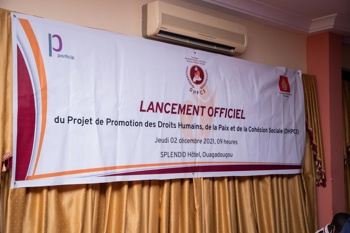
Manager of the CSO Fund 'Promotion of Human Rights, Peace and Social Cohesion 2021-2025'
- 2021 – 2026
- € 2 – 5 million
- Burkina Faso
For many years, the Royal Danish Embassy (RDA) in Ouagadougou has accompanied and strengthened Burkinabe civil society organisations (CSOs) active in the field of democratic governance and the promotion and protection of human rights, which have very often been at the forefront of promoting democratisation and the defence of fundamental rights.
The objective of this project is "a strengthened civil society contributes to the respect of human rights, the prevention of conflicts and the preservation of social cohesion". Three outputs are expected:
- output 1: Human rights are promoted, particularly among women, youth and marginalised groups - including Internally Displaced Persons (IDPs) - and better respected throughout the country;
- output 2: Preservation of social cohesion, resilience against violent extremism and peace-building are strengthened, particularly with the participation of women and youth;
- output 3: The strengthening of CSO’ capacities favours better quality actions on the ground, allowing for greater access to rights and increased dialogue with the government.
In a highly deteriorated context (deterioration of security, expansion of terrorism, social contestation, threats to freedom of expression), Burkina Faso needs stronger CSOs. The project, through the Technical Assistance Unit, will contribute to capacity building in strategic planning, management, monitoring and evaluation and capitalisation, which will lead to better quality actions on the ground, allowing for greater access to rights and increased dialogue with the Government.
- Keywords:
- Civil society, Communication & media, Human rights, Project implementation / Technical Assistance
Technical Assistance for Support to Bangsamoro Transition (SUBATRA)
- 2020 – 2026
- € 5 – 10 million
- Philippines
The signing in July 2018 by the President of the Philippines of the 'Organic Law for the Bangsamoro Autonomous Region in Muslim Mindanao' (BOL) constituted a major step for the Peace Process in Mindanao - as it established the autonomous political entity known as the Bangsamoro Autonomous Region in Muslim Mindanao (BARMM). The capacity of the executive and legislative branches of the Bangsamoro Transition Authority (BTA) to implement the transition according to BOL's provisions is the most critical issue for peace consolidation in Mindanao, being the cornerstone of the core Bangsamoro self-reliance and self-determination for effective autonomy. The challenge is enormous in such a short time frame, foremost of which is the enactment of the BARMM core legal framework, establishment and capacity building of transitional political institutions as well as development and undertaking of key transitional policies.
The overall objective of the TA for Support to Bangsamoro Transition (SUBATRA) was to contribute to a peaceful, cohesive, secure and inclusively developed Bangsamoro.
The specific objective was the establishment of an enabling democratic governance environment for a smooth implementation of the transition in Bangsamoro.
The purpose of this contract was to provide technical assistance for capacity building of executive and legislative branches of the Bangsamoro Transition Authority, to promote an enabling good governance environment with a focus placed on capacities that are critical for a sound functioning of the Bangsamoro institutions during the transition:
- Purpose 1: enhanced capacity of the BTA's executive branch to efficiently handle the transition through improved capacity of the executive branch superstructure to plan, impulse and monitor transitional policies as well as enhanced capacity of the administrative machinery, especially key governance ministries, to implement policies and deliver basic social services.
- Purpose 2: enhanced capacity of the Bangsamoro Parliament to exercise its law making, oversight and representation functions.
This TA required sound monitoring and evaluation mechanism of implementation of the project, and a results-based approach. Particip delivered policy advice, supported law drafting and review and provided capacity building support. We supported the BARMM with high quality expertise, mentoring and training to allow the Bangsamoro institutions to perform their tasks effectively and in a sustainable way.
Our highly qualified experts support the Bangsamoro, among others, in the field of gender mainstreaming, gender research, capacity building, local governance, public administration, decentralization, economic research, policy research and budget management.
Our TA provided support to select Governance Ministries and Agencies (Ministry of Indigenous People Affairs (MIPA), Ministry of Public Order and Safety (MPOS), Ministry of Interior and Local Government (MILG), Bangsamoro Planning and Development Agency (BPDA), Bangsamoro Women Commission (BWC) and Bangsamoro Youth Commission (BYC) through a mix of empowerment, institution building and capacity building. There was an increased focus on local government capacity building and outreach activities. Power and functions of local government administrations were clarified, the financial administration, the legislative process and the local government development planning were strengthened.
Our TA furthermore supported the development of training modules for local officials capacity development; reviewed the Local Government Code, developed many Manual of Operations and did Strategic Planning exercises. A focus was also put on Gender sensitive legislation and Gender mainstreaming in local governance.
- Partners:
- Particip (Lead), KAS
- Keywords:
- Governance, Institutional development, Justice/Rule of Law, Project implementation / Technical Assistance, Training

The overall objective underlying the proposed FWC is to support INTPA A2 and its partners to coordinate, manage and deliver on the three identified TEI components.
The specific objectives are:
- Strengthened coordination within and among the IFF-TOC Political Steering Committee and Management Committee;
- Ensured high-level knowledge management, monitoring and information sharing supporting the coordination among all TEI stakeholders.
- Keywords:
- Institutional development, Project implementation / Technical Assistance