
Our projects
Explore Particip’s project experience across countries, sectors and areas of expertise.
Our references provide an overview of completed and ongoing assignments, including their objectives, geographic scope, duration and contract value.
Showing 11–20 of 56 references

Support to tri-partite cooperation on crises assessments (RPBA, PDNA, PRNA)
- 2024 – 2027
- € 2 – 5 million
- Global
The overall objective (Impact) to which this action contributes is to support third countries to build up their capacity to carry out RPBA/PDNA/PRNA, through provision of technical expertise. Various activities are foreseen, including deployment of experts in RPBA/PDNA/PRNA missions, and provision of training and capacity building activities to national authorities and regional/international organizations, tripartite training events, as well as information sessions for EU entities.
The specific objectives/outcomes of this contract are as follows:
- To assist, together with the UN and the WB, countries affected by crisis with identifying, developing, and implementing recovery activities through RPBA/PDNA/PRNA processes. This will often consist of supporting joint RPBA/PDNA/PRNA missions in-country/in region (in coordination with EU Heads of Delegations, the European Commission, and with the European External Action Service). While such support could cover any relevant technical field (longer-term and shorter-term expertise), it is foreseen that a particular emphasis is put on expertise in mission planning and development of final reports/recovery frameworks;
- To support further development of the joint RPBA/PDNA/PRNA methodologies, tools, training programmes;
- To promote the values and principles of the EU as a global actor;
- To ensure inclusiveness of RPBA/PDNA/PRNA processes.
- Partners:
- Particip (Lead), GIZ InS, TRIAS Consult
- Keywords:
- Civil society, Governance, Training

Technical Assistance support to the WASH sector on Bougainville
- 2024 – 2026
- € 500,000 – 1 million
- Papua New Guinea
The overall objective (Impact) to which this action contributes is to improve gender responsive Water, Sanitation and Hygiene (WaSH) services and practices in the Autonomous Region of Bougainville (AROB) based on the EU-PNG MIP 2021-2027 and in line with current agreed processes of the drawdown of powers.
The specific objective of this action is to improve governance and institutional capacity of mandated authorities for WaSH service delivery in Bougainville.
- Partners:
- EMI (Lead), CAPA EEIG (managed by Particip), Particip
- Keywords:
- Health, Training
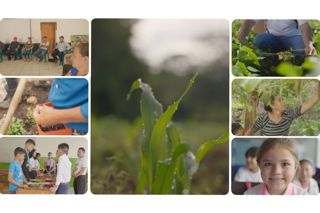
Supporting WFP’s Changing Lives Transformation Fund (CLTF) to Support Country Offices in the Design and Implementation of Impact Measurement Components
- 2023 – 2026
- under € 500,000
- Bangladesh, Chad, Kenya, Peru
The Changing Lives Transformation Fund (CLTF) of the World Food Programme (WFP) was established to provide selected WFP Country Offices (COs), via calls for proposals, with funding to better support governments to design and implement policies and programmes that improve the lives of the most vulnerable people.
The CLTF has three windows, under which a total of 10 country proposals were selected in 2023:
- Window 1: Transition (of populations from dependence on humanitarian assistance to increased self-sufficiency) - Chad, Kenya, Philippines.
- Window 2: Systems strengthening (better capacity and resilience of national programmes and systems) - Bangladesh, Iraq, Niger, Peru.
- Window 3: Climate adaptation - Ghana, Nicaragua, Tanzania.
For each window, the research team designed a global impact measurement framework comprising a theory of change, evaluation questions, indicators, and quantitative and qualitative methodologies for impact measurement. The team also assessed the feasibility of independent impact evaluations in all 10 country proposals.
5 COs were selected for further technical assistance for impact measurement: Chad and Kenya (under Window 1), and Bangladesh, Iraq and Peru (under Window 2). Together with each of these 5 COs, the team conducted research design workshops and developed country-specific concept notes on impact measurement questions and strategies. Finally, the team provided in-country support for baseline data collection and analysis to the COs in Chad, Kenya, Bangladesh and Peru.
- Partners:
- Particip (Lead), C4ED
- Keywords:
- Environment, Food and nutrition, Humanitarian aid, Monitoring & Evaluation, Training

Capacity-building for the Implementation of Interreg and Cohesion Policy
- 2025 – 2026
- under € 500,000
- ENI, EU, IPA
The EU Cohesion Policy is a key investment strategy aimed at reducing regional disparities and fostering smart, sustainable, and inclusive growth across the EU. It operates through national, regional, and Interreg cooperation programmes to support infrastructure, the green transition, connectivity, and social inclusion in the EU Member States, while preparing candidate countries for EU membership by building administrative capacity through Interreg and tailored training programmes.
The overall objective of the project is to prepare candidate countries for implementing cohesion policy in the lead up to and upon accession.
The project specifically aims to:
- Train staff from national administrations at central and local/regional level participating in Interreg programmes (and IPA III programmes, if staff overlaps), to reinforce their capacities for participating in and later on implementing cohesion policy programmes.
- Organise study visits (and cover related travel and accommodation costs and per diem) for short-term work experience in selected Member States’ managing or audit authorities, thereby increasing the skills for benefitting better from their participation in existing programmes and preparing future ones.
- Partners:
- Particip (Lead), SZPO
- Keywords:
- Governance, Institutional development, Monitoring & Evaluation, PCM / Logframe, Public finance/budgeting, Training

Policy Support Facility for the Implementation of Foreign Policy (Lot 2: Technical Assistance)
- 2019 – 2026
- over € 10 million
- Global
The Policy Support Facility (PSF) is foreseen within The PI Multiannual Indicative Programme 2018-2020 to support the Union's relations with key partner countries. Such a facility is needed to respond to the dynamic and fast changing global environment that EU policies are being confronted with and to promote EU interests in a timely manner.
The PSF is one of the Partnership Instrument’s implementation modalities, providing responsiveness to emerging needs and priorities, and a flexible implementation modality. The PSF aims to support (existing) policy dialogues between the EU and partner countries in areas such as global challenges, the international dimension of the “Europe 2020” strategy, to facilitate economic relations with partner countries and to support public diplomacy. It will complement/support the external dimension of internal policies conducted under the other EU political programmes and instruments.
For the purpose of the Policy Support Facility, this Global Framework Contract (FWC) was put into place. Indeed, many European Commission Directorate Generals need shorter and more targeted quick actions rather than standalone, extensive projects/programmes to support the external dimension of their policy agenda. They are therefore interested in short-term targeted support and need a tool that can accommodate rapidly developing policy dialogues and priorities.
Policy sectors covered by this FWC: Environment, natural resources, biodiversity and sustainable water management; Raw materials; Energy; Climate change; Smart, sustainable and green growth; Research, development and innovation; Industry and SMEs; Regulatory cooperation and standards harmonisation; Employment and social policy; Education and training; Judicial cooperation; Migration and mobility; Foreign policy/security; Disinformation and societal resilience; Health and consumer safety;Digital; Economic and financial affairs; Transport; Governance, human rights and democracy; Maritime policy; Culture and creativity;Tourism; Citizens’ rights
- Partners:
- Particip (Lead), AENOR, CEPS, Health Focus GmbH, Idem Concept, SUEZ
- Keywords:
- Communication & media, Governance, Monitoring & Evaluation, Training
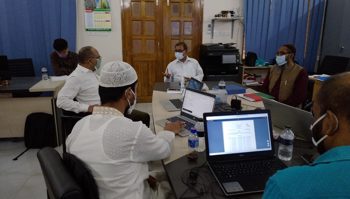
Technical Assistance to support the Human Capital Development Programme for Bangladesh 2021
- 2019 – 2026
- € 5 – 10 million
- Bangladesh
In accordance with the EU's Multi-Annual Indicative Programme for Bangladesh 2014-2020, that aims to contribute to a better educated, trained and qualified population through improved education and skills development, the Human Capital Development Programme for Bangladesh 2021 (HCDP 21) was designed. The programme added value by extending the current budget support modality in primary education and the area of TVET under one single Sector Reform Performance Contract (SRPC) with an overall allocation of EUR 200 million, EUR 150 designated for primary education and EUR 50 million for TVET.
Under this contract, complementary services to the SRPC were provided to enhance policy dialogue for long-term strategic system strengthening of the sector, to support performance assessment and to strengthen the institutional capacity of the relevant government bodies to bring about policy reforms, while ensuring full ownership and sustainability of these reforms. The contract also encouraged the GoB to continue to strengthen governance and PFM systems at sector level, in complementarity with other EU-funded programmes in PFM in the country.
The purpose of this contract was:
- To support the EUD and relevant Government bodies in the more effective delivery of quality primary education services, through targeted technical assistance that will provide institutional strengthening support, capacity building, policy advice and evidence-based research, as required;
- To support the EUD and relevant Government bodies in the more effective delivery of TVET services, through targeted technical assistance that will provide institutional strengthening support, capacity building, policy advice and evidence-based research, as required. Support to the establishment of a SWAP in TVET, through enhanced results-based planning, management and assessment and improved coordination across the TVET sector;
- To support the relevant Government bodies responsible for Finance and Procurement in improving the Public Financial Management (PFM) system in ensuring adequate and equitable financing and management of funds.
- To support the EUD in (i) facilitating more effective policy dialogue with MoE and MoPME by providing technical inputs for strategic thinking on further policy analysis, development and implementation within the education sector in Bangladesh; (ii) periodic monitoring and assessment of overall sector performance and progress in the implementation of the NEP, Sector Budget Support (SBS) eligibility criteria and assessment of progress towards the HCDP21 disbursement linked indicators (DLI) targets of the TVET sector and, if required, for the primary education sector.
The key results to be achieved by the contractor were as follows:
- Develop the necessary enabling environment to reinforce institutional capacities to undertake effective, timely and evidence-based primary education system reforms: through well-targeted institutional capacity development interventions, support the relevant government departments (DPE, BNFE, NCTB…) in achieving the results under each of the targeted PEDP-4 components (Quality, Access and participation and Governance, financing and management);
- Develop the necessary enabling environment for a strengthened public TVET system: Effective and timely support to TMED's TVET services, particularly in respect to strengthening the institutional capacity of key central departments (including TMED, DTE and BTEB) and facilitate better coordination with other stakeholders. A particular focus will be put on successfully supporting the relevant government departments in attaining the DLI targets;
- EU policy dialogue, conditionalities and capacity building activities are more strategic, better coordinated and more conducive for implementation of government strategies/policies that contribute to progress in the education sector as a whole, in line with the SDG agenda.
- Partners:
- Particip (Lead), involas (formerly INBAS GmbH), OPM, Shushilan
- Keywords:
- Education

Preparing the Improving Learning Outcomes in Secondary Education Sector Development Program
- 2023 – 2026
- under € 500,000
- Georgia
Particip provided this Transaction Technical Assistance (TRTA) to support the Government of Georgia and the ADB to prepare the Improving Learning Outcomes in Secondary Education Sector Development Program.
Through this program, the new secondary education curriculum was planned to be rolled out, and needs to increase the efficiency of the school system addressed. The program was intended to increase the effectiveness of the school funding model, the quality of teaching, and address equity and inclusion challenges in the secondary education system.
The TRTA team supported preparing a policy-based loan and a investment project loan component, further developing the program design, a detailed policy matrix, completing due diligence requirements and planning program implementation arrangements. This included analytical work, preparing technical, financial, economic, institutional, safeguards, gender and socioeconomic due diligence, as well as advise and assistance to ensure the investment project was ready for rapid start-up and smooth implementation.
- Partners:
- Particip (Lead), PMCG
- Keywords:
- Education

Evaluation of EU support to IPA Roma inclusion projects (2016-2023)
- 2023 – 2026
- under € 500,000
- Western Balkans
The evaluation covered all European Union (EU) external action support to IPA Roma inclusion projects in the Western Balkans and Türkiye between 2016 and 2023. The main objectives of this assignment were to: i) provide an independent and evidence-based assessment of the EU's past and current external action support in the area of Roma inclusion; and ii) provide lessons learnt and recommendations at EU level to inform ongoing and future decision-making in improving current and future EU strategies, programmes and actions on Roma inclusion.
The evaluation was centred around three main thematic areas:
- Civil rights (registration, data collection, monitoring, reporting, fight against discrimination and antigypsyism);
- Economic and social rights (health, employment, education and housing, including access to public services);
- Roma inclusion in governments' green and digital agendas.
Additionally, the evaluation addressed broader cross-cutting issues such as human rights, the need to ensure appropriate treatment for vulnerable groups including children, fight against environmental poverty and climate change, social inclusion and gender equality.
The analysis covered both spending and non-spending actions and examined all funding mechanisms and modalities of implementation used under IPA II and III.
- Partners:
- Particip (Lead)
- Keywords:
- Education, Governance, Human rights, Monitoring & Evaluation
Technical Assistance for Support to Bangsamoro Transition (SUBATRA)
- 2020 – 2026
- € 5 – 10 million
- Philippines
The signing in July 2018 by the President of the Philippines of the 'Organic Law for the Bangsamoro Autonomous Region in Muslim Mindanao' (BOL) constituted a major step for the Peace Process in Mindanao - as it established the autonomous political entity known as the Bangsamoro Autonomous Region in Muslim Mindanao (BARMM). The capacity of the executive and legislative branches of the Bangsamoro Transition Authority (BTA) to implement the transition according to BOL's provisions is the most critical issue for peace consolidation in Mindanao, being the cornerstone of the core Bangsamoro self-reliance and self-determination for effective autonomy. The challenge is enormous in such a short time frame, foremost of which is the enactment of the BARMM core legal framework, establishment and capacity building of transitional political institutions as well as development and undertaking of key transitional policies.
The overall objective of the TA for Support to Bangsamoro Transition (SUBATRA) was to contribute to a peaceful, cohesive, secure and inclusively developed Bangsamoro.
The specific objective was the establishment of an enabling democratic governance environment for a smooth implementation of the transition in Bangsamoro.
The purpose of this contract was to provide technical assistance for capacity building of executive and legislative branches of the Bangsamoro Transition Authority, to promote an enabling good governance environment with a focus placed on capacities that are critical for a sound functioning of the Bangsamoro institutions during the transition:
- Purpose 1: enhanced capacity of the BTA's executive branch to efficiently handle the transition through improved capacity of the executive branch superstructure to plan, impulse and monitor transitional policies as well as enhanced capacity of the administrative machinery, especially key governance ministries, to implement policies and deliver basic social services.
- Purpose 2: enhanced capacity of the Bangsamoro Parliament to exercise its law making, oversight and representation functions.
This TA required sound monitoring and evaluation mechanism of implementation of the project, and a results-based approach. Particip delivered policy advice, supported law drafting and review and provided capacity building support. We supported the BARMM with high quality expertise, mentoring and training to allow the Bangsamoro institutions to perform their tasks effectively and in a sustainable way.
Our highly qualified experts support the Bangsamoro, among others, in the field of gender mainstreaming, gender research, capacity building, local governance, public administration, decentralization, economic research, policy research and budget management.
Our TA provided support to select Governance Ministries and Agencies (Ministry of Indigenous People Affairs (MIPA), Ministry of Public Order and Safety (MPOS), Ministry of Interior and Local Government (MILG), Bangsamoro Planning and Development Agency (BPDA), Bangsamoro Women Commission (BWC) and Bangsamoro Youth Commission (BYC) through a mix of empowerment, institution building and capacity building. There was an increased focus on local government capacity building and outreach activities. Power and functions of local government administrations were clarified, the financial administration, the legislative process and the local government development planning were strengthened.
Our TA furthermore supported the development of training modules for local officials capacity development; reviewed the Local Government Code, developed many Manual of Operations and did Strategic Planning exercises. A focus was also put on Gender sensitive legislation and Gender mainstreaming in local governance.
- Partners:
- Particip (Lead), KAS
- Keywords:
- Governance, Institutional development, Justice/Rule of Law, Project implementation / Technical Assistance, Training

Evaluation of the project: Youth Economic Empowerment in Palestine (YEP)
- 2025 – 2025
- under € 500,000
- Palestine
The purpose of this Final Evaluation was to assess the relevance, coherence, efficiency, effectiveness, sustainability, and impact of YEP implemented by Enabel under the EU-funded Palestinian Youth Empowerment Programme. It aimed to support accountability for results, inform institutional learning, and generate strategic recommendations to guide future youth employment programming in Palestine and comparable fragile contexts.
The evaluation examined project design, implementation, and results across the three interlinked components of YEP:
• the First Employment Facility (FEF);
• demand-driven TVET and work-based learning interventions; and
• entrepreneurship support for vulnerable youth.
It assessed the performance of the project as a whole and the contribution of each component to the project’s overall objectives.
The scope of the evaluation included all YEP activities implemented in the West Bank and those undertaken in Gaza prior to the suspension of operations in October 2023, through secondary sources. Primary data collection was conducted exclusively in the West Bank, while results from Gaza were reviewed based on available documentation and monitoring data. A survey targeting the beneficiaires of the First Employment Facility (R1) and the Work-Based Learning (WBL) was also conducted to collect and integrate their perspective into the final report.
- Keywords:
- Education, Industry & private sector development, Monitoring & Evaluation