
Our projects
Explore Particip’s project experience across countries, sectors and areas of expertise.
Our references provide an overview of completed and ongoing assignments, including their objectives, geographic scope, duration and contract value.
Showing 11–20 of 65 references
Final Evaluation of the “Quality Standards and Compliance Programme for the United Republic of Tanzania” (QUALITAN NO. FED/2021/428-294) under the business environment growth and innovation (BEGIN/ TZ/FED/41067) programme- Tanzania
- 2026 – 2026
- under € 500,000
- Tanzania
The final evaluation of the EU-funded “Quality Standards and Compliance Programme for the United Republic of Tanzania” (QUALITAN), implemented by UNIDO under the wider Business Environment, Growth and Innovation (BEGIN) programme aimed to increase MSME compliance with quality standards in order to widen market access, reduce standards compliance costs and enhance consumer protection.
The evaluation had a twofold objective: first, to provide the European Union and interested stakeholders with an independent assessment of QUALITAN’s performance, including the results achieved at different levels and the factors explaining those results; and second, to identify lessons learned, conclusions and recommendations to inform current and future interventions.
More specifically, the evaluation assessed progress against the project’s original objectives and expected results; examined the sustainability of benefits; assessed the contribution and effectiveness of stakeholders and governance structures; and identified the major constraints faced during implementation.
The evaluation covered the full QUALITAN implementation period, from 1 January 2022 to 24 July 2025.
While QUALITAN was part of BEGIN, the evaluation focused on the QUALITAN component only. It considered links with BEGIN, the Blueprint reform agenda and Tanzania’s wider quality infrastructure system only where these are relevant to QUALITAN’s performance, coherence, sustainability and EU added value.
The evaluation used a theory-based, mixed-methods approach structured around the OECD-DAC criteria, EU added value, the reconstructed Theory of Change and the Evaluation Matrix. The approach was designed not only to assess what was achieved, but also to explain why results varied across components and how QUALITAN contributed to observed changes.
The main analytical approach was contribution analysis, testing the plausibility of QUALITAN’s intervention logic and assessing whether the project contributed to results in areas such as conformity assessment capacity, standardisation, MSME outreach, digitalisation, governance and communication.
The evaluation assessed QUALITAN against the following main areas: relevance, coherence, effectiveness, efficiency, sustainability, perspective of impact and EU added value. It also integrated cross-cutting issues, including gender equality, youth, disability, Leave No One Behind, human rights-based approaches, environment and climate considerations, and contributions to SDG 8 and SDG 9.
- Keywords:
- Industry & private sector development, Institutional development, Monitoring & Evaluation, Trade

Strategic Evaluation of the EU partnership with Guinea (2014-2024)
- 2025 – 2026
- under € 500,000
- Guinea (Conakry)
This evaluation has two overarching objectives. Firstly, it aims to provide an independent and comprehensive assessment of the performance and strategic relevance of the EU’s partnership with the Republic of Guinea. Secondly, it seeks to identify key lessons and produce forward-looking recommendations to inform responsible decision-makers – particularly within the European External Action Service and the Directorate-General for International Partnerships – on how to enhance the quality, coherence, and impact of the EU’s current and future strategies, programming, and actions in Guinea.
Its specific objectives are as follows:
- To assess how the EU’s overall engagement in Guinea has contributed to its strategic objectives at the country level, through political dialogue, development cooperation, trade, and investment initiatives;
- To provide EU external cooperation services and the broader public with an independent assessment of the EU’s cooperation with the Republic of Guinea over the period 2014-2024.
The evaluation will focus on six priority sectors: i) return to constitutional order; ii) south-north migration; iii) natural resource exploitation and public finance; iv) energy; v) climate change; and vi) health.
The evaluation will deliver findings, conclusions, and lessons regarding the effectiveness, coherence, and sustainability of the EU support in Guinea. It will also provide targeted, practical, and forward-looking recommendations to improve the design and implementation of current and future EU interventions in Guinea under the 2021-2027 programming period
- Partners:
- Particip (Lead), ECDPM
- Keywords:
- Civil society, Elections, Energy, Environment, Forestry, Governance, Health, Human rights, Industry & private sector development, Institutional development, Macro-economic/ National policy, Monitoring & Evaluation, Public finance/budgeting

Final evaluation of the European Union Emergency Trust Fund for stability and addressing root causes of irregular migration and displaced persons in Africa
- 2024 – 2026
- € 500,000 – 1 million
- Africa
The general purpose of this assignment is to provide the relevant EU services, EU and non-EU donors of the trust fund, African partner countries and the wider public with an independent final evaluation of the EUTF for Africa. The EUTF for Africa is financing interventions in several countries in Africa, crossed by the major migration routes, including countries in the Sahel and Lake Chad regions, the Horn of Africa and North Africa. The final evaluation covers the period since the EUTF for Africa inception in November 2015 until December 2024. Thematically, the evauation focuses on the EUTF's objective of addressing the root causes of irregulat migration and forced displacement.
The specific objectives of the evaluation are:
- to independently assess/examine/analyse the EUTF for Africa and its interventions;
- to assess overall whether and how the EUTF for Africa as an instrument of EU external assistance (and the financed interventions) contributed to address the root causes of irregular migration and forced displacement, taking into account the specific characteristics of the EUTF for Africa, compared to other funding instruments;
- to identify key lessons and to provide recommendations to inform future EU strategic approaches and actions in addressing irregular migration and forced displacement, thereby filling the evaluation and knowledge gaps, that this evaluation aims to address;
- finally, the evaluation would assess whether EUTF for Africa interventions have effectively addressed cross-cutting issues, such as human rights, gender and youth in the context of irregular migration and forced displacement.
- Partners:
- Particip (Lead), ECDPM
- Keywords:
- Food and nutrition, Governance, Justice/Rule of Law, Macro-economic/ National policy, Monitoring & Evaluation
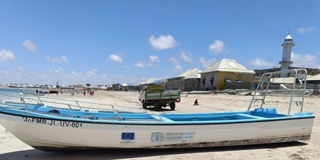
Evaluation of the Programme 'Inclusive Local and Economic Development - ILED' in Somalia (T05-EUTF-HOA-SO-57)
- 2025 – 2026
- under € 500,000
- Somalia
The 'Inclusive Local and Economic Development' (ILED) programme comprised 14 individual interventions in Somalia. The overall objective of ILED was to contribute to stability in Somalia by extending state authority and services, promoting local reconciliation and peacebuilding, creating inclusive economic opportunities, and protecting the most vulnerable. In line with this objective, the 14 interventions were organised under three thematic pillars: stabilisation and governance, inclusive and sustainable economic growth, and social safety nets. Using an integrated territorial approach, the programme was implemented in four strategic corridors of Somalia: Juba River, Shabelle River, Central-North, and Somaliland. ILED was financed by the EU Emergency Trust Fund for Africa with a total budget of almost 100 million EUR.
The evaluation was commissioned by the EU Delegation to Somalia. Its global objective was to provide the relevant services of the EU and interested stakeholders with an overall independent assessment of the performance of the ILED programme, paying particular attention to the results achieved and the underlying reasons of these achievements. It also sought to identify lessons learned, conclusions, and recommendations to improve current and future interventions. The object of evaluation was the programme level (rather than the individual interventions). The evaluation scope covered the entire implementation period from September 2018 to December 2025, all three thematic pillars, and all four geographic corridors.
The methodology to answer the six evaluation questions (EQs) relied on a reconstructed Theory of Change and a mixed methods (albeit predominantly qualitative) approach. After a comprehensive document review, the evaluation team conducted field missions in the four corridors of the programme in Somalia, as well as meetings in Nairobi. The evaluation findings were presented in a dissemination seminar in Mogadishu.
- Partners:
- Particip (Lead)
- Keywords:
- Governance, Industry & private sector development, Infrastructure, Monitoring & Evaluation, Rural and urban development

Capacity-building for the Implementation of Interreg and Cohesion Policy
- 2025 – 2026
- under € 500,000
- ENI, EU, IPA
The EU Cohesion Policy is a key investment strategy aimed at reducing regional disparities and fostering smart, sustainable, and inclusive growth across the EU. It operates through national, regional, and Interreg cooperation programmes to support infrastructure, the green transition, connectivity, and social inclusion in the EU Member States, while preparing candidate countries for EU membership by building administrative capacity through Interreg and tailored training programmes.
The overall objective of the project is to prepare candidate countries for implementing cohesion policy in the lead up to and upon accession.
The project specifically aims to:
- Train staff from national administrations at central and local/regional level participating in Interreg programmes (and IPA III programmes, if staff overlaps), to reinforce their capacities for participating in and later on implementing cohesion policy programmes.
- Organise study visits (and cover related travel and accommodation costs and per diem) for short-term work experience in selected Member States’ managing or audit authorities, thereby increasing the skills for benefitting better from their participation in existing programmes and preparing future ones.
- Partners:
- Particip (Lead), SZPO
- Keywords:
- Governance, Institutional development, Monitoring & Evaluation, PCM / Logframe, Public finance/budgeting, Training

Strengthening Decentralisation and Good Financial Governance (PADGOF) - Tax and expenditure management in Cameroon
- 2024 – 2026
- € 1 – 2 million
- Cameroon
The general objectives of this program are:
- to improve the efficiency and transparency of tax and expenditure management by the Directorate General of Taxation (DGI) and sector ministries;
- to improve the tax administration's orientation towards citizens and communication with taxpayers from D to C according to the P3-10 standard of the tax administration diagnostic assessment tool (TADAT);
- to evaluate gender- and climate-sensitive programme budgets with 3 sector ministries that play an important role in decentralisation by facilitating the 3 performance (cost-effectiveness) audits from the Audit.
- Partners:
- GFA (Lead), Particip
- Keywords:
- Governance, Institutional development, Macro-economic/ National policy, Project implementation / Technical Assistance, Public finance/budgeting

Joint Efforts for a Green Future: Evaluation on Finland's Development Cooperation in Environment and Sustainable Use of Natural Resources and Private Sector Opportunities
- 2024 – 2026
- under € 500,000
- Global
This evaluation aims to provide the Ministry for Foreign Affairs (MFA) of Finland and its stakeholders with an in-depth understanding of the achievements, merits, and value of implementing the policy priority area on sustainable management and use of natural resources. It seeks to deliver evidence-based recommendations to enhance the effectiveness of Finland's engagement with this theme over the long term, while also increasing awareness of results achieved and lessons learned. Additionally, the evaluation will expand knowledge on environment and natural resources-related Sustainable Development Goals (SDGs), with particular attention to SDG 17 on partnerships.
The evaluation encompasses four standalone evaluations on four of the sub-sectors under Finland's ‘Climate and Natural Resources’ policy priority area: i) forests and biodiversity; ii) water resources management; iii) energy, circular economy and critical minerals; and iv) disaster risk reduction (DRR), including meteorology. A synthesis report integrates key findings from the four evaluation reports, explores interlinkages, provides meta-level insights, and identifies concrete opportunities for Finnish private sector engagement. The evaluation also examines digitalisation and data management in forestry sectors in Tanzania and Vietnam, as well as delves deeper into the energy sector in Ukraine.
Objectives:
Assess results, successes, and challenges in achieving the objectives of this policy priority area and its sub-sectors.
Provide a synthesis of outcomes and impacts, including early and emengrgi impacts.
Identify and analyse opportunities for engaging Finnish private sector actors in this work.
Develop practical, evidence-based recommendations for future policy and operational approaches, considering financial and resource constraints. This includes exploring the potential of geospatial data and geo-referencing for monitoring and evaluation purposes.
The evaluation focuses primarily on the OECD DAC criteria of effectiveness and impact, with a particular emphasis on tangible results and signs of impact from both ongoing and completed interventions.
- Keywords:
- Energy, Environment, Forestry, Industry & private sector development, Monitoring & Evaluation

Evaluation of the African Development Bank’s Regional Integration Strategy Paper for Southern Africa (2020-2026)
- 2025 – 2026
- under € 500,000
- Angola, Botswana, Eswatini, Lesotho, Madagascar, Malawi, Mauritius, Mozambique, Namibia, São Tomé & Príncipe, South Africa, Zambia, Zimbabwe
The evaluation focuses on the African Development Bank’s Regional Integration Strategy for Southern Africa (SA-RISP) 2020–2026, with coverage of the period 2020–2024. Its primary purpose is to assess how far the strategy has progressed towards achieving its intended results and to provide lessons and recommendations for the design of the next regional integration strategy. The evaluation will review both lending operations, sovereign and non-sovereign, and non-lending activities such as policy dialogue, analytical work, and technical assistance.
Key objectives include examining the relevance and design of the SA-RISP as a framework for advancing regional integration, its coherence with regional and continental frameworks such as SADC, COMESA, and the AfCFTA, and its effectiveness, efficiency, impact, and sustainability. The evaluation will also analyse factors that have enabled or constrained implementation, including operational, institutional, and policy challenges, as well as cross-cutting issues. Ultimately, it aims to draw out lessons learned and practical recommendations to strengthen AfDB’s future engagement in supporting regional integration in Southern Africa.
- Keywords:
- Industry & private sector development, Infrastructure, Monitoring & Evaluation, Trade

Traceability for export products and sustainability in Colombia
- 2024 – 2026
- € 500,000 – 1 million
- Colombia
Global Objective
Strengthen the EU’s engagement with Colombia on external impacts of EU Green Deal policies and regulatory frameworks, with emphasis on the regulation on deforestation and forest degradation, through the use of EU’s digital tools.
Specific Objective(s)
- Engage with key stakeholders in Colombia to enhance understanding of the objective and content ofthe identified regulations, with emphasis on deforestation and forest degradation. The regulation onCarbon Border Mechanism Adjustment, the Corporate Sustainability Reporting Directive (CSRD), theupcoming Corporate Sustainability Due Diligence Directive, etc. could as well be subject of furtherengagement with Colombian stakeholders;
- Identify the necessary steps to either implement or support already existing effective traceability systems for Colombian exports to the EU market, taking into account the deforestation and forest degradation regulation;
- Identify the most relevant and cost-efficient space-based technologies and data, including their combination and taking into account existing traceability systems, to be used to support Colombia’s efforts to comply with the zero-deforestation supply chain regulation in the most affected value chains, especially coffee, palm oil and/or cocoa. Among these, the most
- Promote the use of already available technological tools within the public and private sector alike, in particular Copernicus-based imagery and support the development of ad-hoc services through the Copernicus Regional centres in Chile and Panama or through the JRC and the European Union Space Programme Agency-EUSPA.
- Identify, promote and support pilot projects and use cases to demonstrate the potential of using satellite-based technologies to develop traceability systems facilitating compliance with the Regulation as well as in other areas such as environmental protection and environmental .
- Support outreach efforts towards the main stakeholders to increase awareness among the main private and public stakeholders over the tools offered by the EU in support of Colombia and promote the uptake of EU Space technologies.
- Support the dialogue on space-based services with institutions, companies, academics, and CSOs through the organisation of high-level events, the creation and animation ofcrosssectoralnetworks and promote synergies with similar EU-funded actions. Complement and supporting the uptake of initiatives like Copernicus Academy, Copernicus Relays, EU Global Action on Space, EU-LAC Digital Alliance amongst others.
- Partners:
- Particip (Lead), Idem Concept
- Keywords:
- Agriculture, Communication & media, Environment, Forestry, Trade

Traceability for export products and sustainability in Argentina
- 2023 – 2026
- € 500,000 – 1 million
- Argentina
Global objective
The global objective of the project is to strengthen the EU’s engagement with Argentina on external impacts of EU Green Deal policies and regulatory frameworks, with emphasis on the regulation on deforestation and forest degradation, through the use of EU’s digital tools.
Specific objective(s)
- Engage with key stakeholders in Argentina to enhance understanding and alleviate concerns on the objective and content of the identified regulations, with emphasis on deforestation and forest degradation;
- Identify the necessary steps to either implement or support already existing effective traceability systems for Argentinian exports to the EU market, taking into account the deforestation and forest degradation regulation;
- Identify the most relevant space-based technologies and data, including their combination, to be used to support Argentina’s effort to comply with the zero-deforestation supply chain regulation;
- Promote the use of already available technological tools within the public and private sector alike, in particular Copernicus-based imagery and support the development of ad-hoc services through the Copernicus Regional centres in Chile and Panama or through the JRC and the European Union Space Programme Agency-EUSPA;
- Promote the development of pilot projects and use cases to demonstrate the potential of using satellite-based technologies to develop traceability systems facilitating compliance with the Regulation as well as in other areas such as environmental protection;
- Support outreach efforts towards the main stakeholders to increase awareness among the main private and public stakeholders over the tools offered by the EU in support of Argentina and promote the uptake of EU Space technologies;
- Support the dialogue on space-based services with institutions, companies and CSOs through the organisation of high-level events, the creation and animation of cross-sectoral networks and promote synergies with similar EU-funded actions.
- Keywords:
- Agriculture, Communication & media, Forestry, Trade