
Our projects
Explore Particip’s project experience across countries, sectors and areas of expertise.
Our references provide an overview of completed and ongoing assignments, including their objectives, geographic scope, duration and contract value.
Showing 21–30 of 254 references
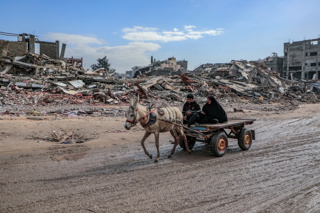
Corporate Emergency Evaluation of WFP’s Response in the State of Palestine
- 2026 – 2027
- under € 500,000
- MENA
This independant Corporate Emergency Evaluation of WFP’s Response in the State of Palestine assesses WFP's emergency response strategy and interventions since the corporate scale up activation in 2023 until 2026.
The evaluation serves the double purpose of accountability (performance and result assessment) and learning (why certain results occurred or not, lessons and evidence for decision-making). It is envisioned that the evaluation will inform the design of the future engagement in the State of Palestine, which is scheduled for Executive Board consideration in June 2027.
Key sectors and activities include:
- Emergency preparedness and response, including cash-based transfers
- Nutrition and school feeding
- Social protection
- Livelihoods activities
- Institutional capacity strengthening
- Logistics, supply chains and on-demand services
Cross-cutting themes included: Gender equality and empowerment of women (GEEW), inclusion, accountability to affected populations (AAP), protection, conflict-sensitivity, and humanitarian principles.
The evaluation employs a mixed-method approach that triangulates qualitative and quantitative data from a variety of sources. For this purpose, the evaluation team is conducting interviews and focus group discussions with different stakeholders including WFP staff at HQ, regional and country level, WFP cooperating partners, donors, UN agencies, government entities and final beneficiaries.
- Keywords:
- Food and nutrition, Humanitarian aid, Monitoring & Evaluation
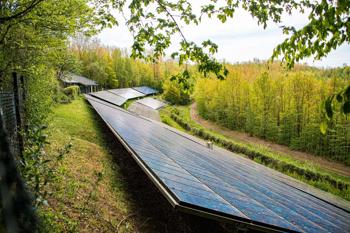
Provision of assistance for the technical and financial monitoring of ongoing projects funded from previous and on-going LIFE programmes and on thematic support.
- 2023 – 2027
- over € 10 million
- Europe
LIFE is the main European Commission funding mechanism for improving the state of the environment in the European Union.
Particip GmbH is responsible for the management of the ELMEN EEIG. Particip provides the Administrative Team, the financial management, and one of the two Managing Directors of ELMEN EEIG, and is therefore responsible for ensuring an effective operation of business activities and the compliance with contractual requirements. The overall management tasks include budgeting, accounting and controlling, as well as guaranteeing high team performance and quality assurance.
The general objective of LIFE is to contribute to the implementation, updating and development of EU environmental and climate policy and legislation by co-financing projects with European added value. The general objectives of LIFE shall be pursued through four sub-programmes:
- Nature and biodiversity
- Circular economy and quality of life
- Climate change mitigation and adaptation
- Clean energy transition
The specific objectives of LIFE are:
- To contribute to the transition towards a resource-efficient, low-carbon and climate resilient economy, to the protection and improvement of the quality of the environment and to halting and reversing biodiversity loss, including the support of the Natura 2000 network and tackling the degradation of ecosystems;
- To improve the development, implementation and enforcement of Union environmental and climate change policy and legislation, and to act as a catalyst for, and promote, the integration and mainstreaming of environmental and climate objectives into other Union policies and public and private sector practice, including by increasing the public and private sector’s capacity;
- To support better environmental and climate governance at all levels, including better involvement of civil society, NGOs and local actors;
- To support the implementation of the 7th Environment Action Programme.
The ELMEN EEIG provides about 130 long-term experts specialised in monitoring and evaluation and in thematic fields related to EU environmental policy. The experts monitor more than 1000 projects that are financed via the LIFE instrument.
- Partners:
- ELMEN EEIG (managed by Particip) (Lead), ELLE, IDOM, ILE UKE, Oréade-Brèche, Particip, Prospect C&S, TIMESIS
- Keywords:
- Agriculture, Environment, Forestry, Governance, Industry & private sector development, Monitoring & Evaluation
Sudan Somoud Enhancing Community Resilience (now called THABAT-stability) - Bank Support and Monitoring Agent
- 2024 – 2027
- € 500,000 – 1 million
- Sudan
The Project Development Objective (PDO) is to improve access to basic services and food security of Select Communities in the Republic of the Sudan. The project is designed to complement the current humanitarian aid to Sudan by laying a foundation for medium and longer term development support in areas with high concentration of IDPs. It builds for the future of Sudan by restoring access to basic services and food, protecting human capital, and enhancing communities’ resilience using a bottom-up approach. It is sequenced to first meet immediate basic service needs of vulnerable groups in areas of high IDP concentration and relative safety and accessibility, followed by community-led planning and implementation of medium-term basic services.
Project M&E efforts will be supplemented by BSMA to ensure WB oversight on the ground, given limited access for Bank personnel. To support the WB to fulfil its monitoring and supervision obligations in areas where its staff are unable to access project sites, the Bank engaged with BSMA with the objective of providing a monitoring layer to complement the monitoring activities of the Implementing Entities and ensure that Bank funds are utilized for the purposes specified in the grant agreement and project documents. The BSMA ’s services will include monitoring of all aspects of Project implementation, including:
- Implementation progress or completion status (including community selection and fund allocations, verification of stakeholder engagement activities, timeliness of implementation, physical verification of infrastructure and goods including quality, quantity, sizing/dimensions, etc. prepared as part of small-scale climate-resilient infrastructure development), and compliance that the physical implementation of projects (including physical verification of works/construction) is in accordance with signed contracts and approved safeguards instruments which are prepared based on the requirements of the WB safeguards policies, UNICEF/WFP policies and procedures and relevant laws and regulations of Government of Sudan.
- Monitoring of the Implementing Agencies’ implementing partners’ fiduciary compliance within the limits focused on site assessments as outlined below.
- On the environmental and social risk management (ESRM) side, the BSMA shall carry out verification of the degree of compliance with ESRM requirements as per the site ESRM instruments including site visits to construction sites, waste disposal sites aided, GMV Centres to comply with WB requirements. This will include monitoring compliance with the Environmental and Social Commitment Plan and more specifically the ESF instruments used in the project.
- Monitor functioning of the project’s grievance redress mechanism (GRM).
- Carry out physical verification with digital photographs of ongoing works and goods supplied, through geo-tagged information and support of smart technology, alerting the Bank and relevant Implementing Agency to deficiencies in quality and implementation and following up on the correction of these deficiencies.
- Compile lessons from activity verification, challenges faced and output monitoring to generate reports on lessons learned and recommendations for improving monitored projects.
The BSMA will also be responsible for monitoring any project activities to develop the capacity within the lowest level of governance structures to enable delivery of basic services – at the community and Locality level.
- Partners:
- Particip (Lead), SRCG
- Keywords:
- Education, Food and nutrition, Health, Humanitarian aid, Infrastructure, Monitoring & Evaluation

EU Technical Assistance Facility for Improving Sustainable Forest Management (Forests For the Future Facility - F4)
- 2020 – 2027
- over € 10 million
- Global
The Forests for the Future Facility (F4) provides strategic and technical support to the European Commission and to partner countries, to contribute to healthy forest ecosystems able to create decent jobs and to enhance economic growth in partner countries. F4 has a demand-driven approach to improve the number, quality and effectiveness of EU interventions in the forest-relevant sectors. F4's main themes are linked to sustainable forest management, private sector investment, policy reforms and sustainable value chains.
The F4 serves as a platform for dialogue and exchange as well as practical cooperation to address the interlinkages between development, poverty reduction, trade, climate change, biodiversity and forest.
F4 is based on two mutually reinforcing pillars: on the one hand a platform for policy dialogue and knowledge exchange and on the other hand a source of technical and financial support to implement forest-related programmes.
Specifically, the F4 Facility constitutes a team of experts that provides technical assistance to the Commission staff (Commission Headquarter in Brussels and EU delegations, as appropriate) and partner countries to improve the quality of forest-relevant programmes or activities at any stage of their cycle (negotiation, programming, identification, formulation, implementation and evaluation).
The Facility is able to address the full spectrum of the forest sector from legal and sustainable forest management and conservation to trade and consumption aspects, by developing sustainable value chain analysis through a holistic approach, looking extensively at economic, social and environmental indications.
In this context, the Facility promotes the concept of Forest Partnership, integrating programming documents, Team Europe Initiatives and additional policies, which may arise.
Particular attention is given to the role of private sector (smallholder farmers, MSMEs) as a driver of inclusive and sustainable forest sector growth and to enhance civil society ability and capacity to participate in the decision-making and monitoring process.
The Facility also has to be able to assess and develop policies/strategies (reforms, governance, legal framework, institutional strengthening, financing plan, fiscal incentives) within the forest sector as well as sectors that may have an impact on forests, like agriculture, infrastructure, mining.
- Partners:
- Particip (Lead), GFA, Indufor Oy - Metsahallitus Group, Oréade-Brèche, Prospect C&S
- Keywords:
- Communication & media, Environment, Forestry, Industry & private sector development, Project implementation / Technical Assistance

Evaluation of the Country Programme in Uganda 2023-2027
- 2026 – 2027
- under € 500,000
- Uganda
The assignment concerns the end-term evaluation of Enabel’s Uganda Country Programme 2023–2027, with a total budget of approximately EUR 68 million. The programme supports Uganda’s development priorities through two main pillars. Pillar 1 focuses on decent jobs and economic opportunities for youth, including technical and vocational education and training (TVET), employability, entrepreneurship, value-chain development and business and human rights. Pillar 2 focuses on health, particularly maternal and child health and sexual and reproductive health and rights.
The evaluation examines the programme’s relevance, coherence, effectiveness, efficiency, sustainability and contribution to intended outcomes and longer-term change. It also assesses cross-cutting dimensions such as gender equality, human rights, inclusion and the principle of Leave No One Behind, as well as the programme’s added value within the wider Ugandan development context.
A theory-based and mixed-methods approach is applied, combining documentary and monitoring-data analysis with stakeholder interviews, focus group discussions and field observations. Fieldwork covers the principal programme implementation areas, including Kampala, Albertine, Acholi, West Nile, Busoga and Rwenzori, allowing the evaluation to capture differences across geographical, institutional and sectoral contexts. A light foresight component is also included to reflect on emerging trends, risks and opportunities that may affect the relevance and sustainability of programme results and future cooperation priorities.
The evaluation is expected to generate robust evidence on programme performance, identify lessons and good practices, and formulate practical recommendations to inform Enabel’s future programming and cooperation in Uganda.
- Keywords:
- Education, Health, Industry & private sector development, Monitoring & Evaluation

PROMOVE Biodiversidade Final Evaluation and capitalization towards GG implementation
- 2026 – 2027
- under € 500,000
- Mozambique
The programme seeks to protect biodiversity and improve the livelihoods of rural communities through four main components: (i) strengthening institutional governance, policy dialogue and financial sustainability of natural resource management; (ii) promoting sustainable, community-based livelihoods and alternative economic opportunities; (iii) improving biodiversity conservation, ecosystem management and monitoring through community participation; and (iv) supporting applied research and participatory studies to inform evidence-based planning and policymaking.
Its specific objectives are to (i) assess the achievement of expected outputs and outcomes and emerging impacts; (ii) analyse factors influencing implementation and performance, including constraints, risks and enabling factors; (iii) generate evidence and lessons learned to inform future EU biodiversity programming, particularly under the Global Gateway Strategy and in synergy with the SADC NaturAfrica Programme; (iv) assess the effectiveness of EU resource utilisation and the added value of EU support; and (v) ensure transparent, evidence-based reporting on achievements, challenges and priorities for future cooperation.
The evaluation will apply the OECD-DAC evaluation criteria and EU added value, while integrating cross-cutting considerations such as gender equality, social inclusion, human rights and climate change adaptation.
- Keywords:
- Environment, Governance, Monitoring & Evaluation
Monitoring, Evaluation and Communication of Results in Iraq
- 2023 – 2027
- € 2 – 5 million
- Iraq
The overall objective (Impact) to which this action contributes is :
- To provide monitoring and evaluation services to assess the results achieved through the EU’s development cooperation, and to provide support on communication and visibility in line with the Delegation’s communication strategy.
The specific objectives of this contract are as follows:
- 1.To conduct results-oriented monitoring of EU-funded projects in Iraq and to implement a results-oriented monitoring based on innovative approaches in the field that allows improving the steering and delivery of programmes to Iraq.
- 2.To provide an assessment of achievements, the quality and the results of interventions based on evaluation approaches adapted to the specific intervention under observation in order to deliver evaluations that allow for institutional learning and improved programming cycles.
- 3.To disseminate information about the EU’s engagement in Iraq and notably its cooperation activity in an accessible manner with a focus on communicating EU values and EU results, in particular to stakeholders in Iraq and the general population.
There are 3 main components each associated to a results that the project will aim to achieve
- Component 1: Results-oriented monitoring of EU-Funded projects in IRAQ
- R-1: Provided a results-oriented assessment of ongoing operations
- Component 2: Evaluations of the EU’s cooperation projects in Iraq
R-2: Provided evaluations of achievements, the quality and the results of interventions based on evaluation approaches adapted to the intervention under observation
- Component 3: Communication of EU engagement in Iraq
R-3: Disseminated information about EU engagement in Iraq and notably cooperation initiatives and projects (including results) in an accessible manner with a focus on communicating results across various platforms and towards various audiences
- Partners:
- Particip (Lead), Altai, Idem Concept
- Keywords:
- Communication & media, Monitoring & Evaluation
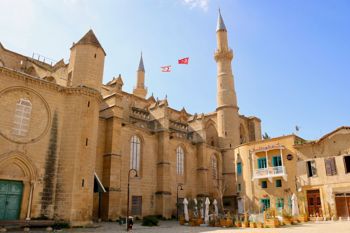
EU Legal and Linguistic Support Phase 2 for the Turkish Cypriot community
- 2024 – 2027
- € 500,000 – 1 million
- Cyprus
The overall objective of the project is to facilitate the delivery of EU funded support under the Aid programme in view of preparing the Turkish Cypriot community for the implementation of the acquis communautaire following a comprehensive settlement of the Cyprus problem.
Specific Objective 1: To improve the interpretation and translation sectors in Cyprus in line with EU standards
1.1 To provide technical support and guidance in using CAT (Phrase) Software and for legal translation/interpretation
1.2 To provide technical assistance for setting up the internal structures of the Bicommunal Professional Association of Translators and Interpreters in Cyprus and implementing activities targeting professionals and youth.
Specific Objective 2: To improve the “legislative processes” in the TCc in view of TAIEX supported legal texts and bring them in line with EU standards
2.1 To provide support for the process and procedures of legal texts drafting.
2.2 To improve awareness and understanding of EU policies, especially for the most active sectors of TAIEX support as per EU acquis in the Turkish Cypriot community, in addition to improving the understanding on the general functioning and structures within the Commission.
2.3 To provide support for the use of the Database developed by the previous EU Legal and Linguistic Support Project for TAIEX supported legal texts.
Specific Objective 3: To promote Cypriot linguistic heritage, network and solidarity amongst professionals and youth
3.1 To conduct awareness raising and networking events, in view of promoting Cypriot linguistic heritage
3.2 To improve interest for interpretation and translation profession, as well as multilingualism and to improve the network and solidarity amongst the professional interpreters and translators
- Keywords:
- Civil society, Institutional development, Justice/Rule of Law, Project implementation / Technical Assistance
Framework Agreement for Decentralized Evaluations and Reviews (FADER) - Lot 1
- 2023 – 2027
- € 2 – 5 million
- Ethiopia, Indonesia, Kyrgyzstan, Nepal, Tajikistan, Tanzania, Ukraine, Uzbekistan, Viet Nam
The Framework Agreement for Decentralized Evaluations and Reviews (FADER) LOT 1 covers different types of appraisals, evaluations and reviews of development cooperation projects and programmes funded by the Ministry for Foreign Affairs of Finland (MFA).
The main users of the FADER are the regional departments of the MFA, which have regional and country specific development cooperation programmes/projects in Africa, the Middle East, Asia, Eastern Europe and Central Asia.
The following assignments are implemented by Particip GmbH:
- Project appraisal: Strengthening inclusive education system in support of Ethiopia's general education sectoral programme,
- Appraisal of the Local Adaptation to Climate Change- Project in Nepal,
- Project appraisal: Rural Economic Development (RED) Phase I in Ethiopia,
- Appraisal of the “Forestry, Land Use and Value Chains Development in Tanzania” (FORLAND) programme,
- Appraisal of Tax Sector Support to Tanzania (TAXTAN) programme.
- Keywords:
- Agriculture, Education, Environment, Forestry, Governance, Monitoring & Evaluation, Rural and urban development
- Result 1: MLS-NoA methodology – ensuring the overall MLS stability and continuing to address
NoA specific needs – is reviewed to provide for an increased level of harmonization with the MLS in place in HoA and SLC with any necessary revisions agreed upon by all parties involved.
- Result 2: NoA capacity-building strategy – providing tailored technical support to both the EUTF teams and implementing partners – is developed and executed according to a need-based analysis.
- Result 3: NoA monitoring reports – analysing progresses of the EUTF-NOA portfolio against both
EUTF strategic objectives and principles of interventions as well as EUTF-NoA intervention logic
– are regularly produced and publically disseminated.
- Result 4: NoA learning strategy – based on cross-country analysis of MLS data, cross-regional analysis of EUTF main thematic areas, qualitative case studies of best practices and contextual analysis – is developed with its findings publically presented to the relevant audience agreed upon.
- Partners:
- InProvE EEIG (managed by Particip) (Lead)
- Keywords:
- Monitoring & Evaluation