
Our projects
Explore Particip’s project experience across countries, sectors and areas of expertise.
Our references provide an overview of completed and ongoing assignments, including their objectives, geographic scope, duration and contract value.
Showing 21–30 of 140 references

Assessors for EU4CSO Call for Proposals Ukraine 2025
- 2026 – 2027
- under € 500,000
- Ukraine
Project overview
This project supports the European Union in the implementation of the EU4CSOs in Ukraine – Call for Proposals 2025, financed under the Ukraine Facility. It focuses on the recruitment and deployment of experienced external assessors to carry out the technical and financial evaluation of grant applications submitted by civil society organisations (CSOs) across Ukraine. The initiative contributes to strengthening democratic resilience, inclusive governance, and civil society participation in the context of Ukraine’s ongoing war of aggression and its EU accession process.
Civil society plays a critical role in Ukraine’s recovery, reform, and European integration efforts. Through this call, the EU aims to support medium-sized, small, and grassroots CSOs—particularly those operating outside Kyiv—working in key priority areas such as women’s rights and gender equality, media and freedom of expression, human rights, social cohesion, and youth engagement.
General objective:
The general objective of the project is to ensure a high-quality, transparent, and policy-aligned selection of civil society actions funded under the EU4CSOs in Ukraine – Call for Proposals 2025, thereby contributing to the strengthening of a resilient, inclusive, and democratic Ukrainian society in line with EU values and accession requirements.
Specific objectives:
The specific objectives of the project are to:
-
Provide independent, impartial, and methodologically sound technical and financial assessments of concept notes and full grant applications submitted under the call, in accordance with EU guidelines and evaluation grids.
-
Support the Evaluation Committee and Contracting Authority by delivering clear, coherent, and well-substantiated assessments that enable informed funding decisions.
-
Ensure consistency, accuracy, and quality control across all evaluation outputs through effective coordination by a dedicated Team Leader.
-
Contribute to the selection of projects that demonstrate strong relevance, feasibility, cost-effectiveness, and alignment with EU priorities, including civil society development, democratic governance, gender equality, human rights, media freedom, social cohesion, and youth participation.
-
Uphold the principles of transparency, confidentiality, and absence of conflict of interest throughout the evaluation process, reinforcing the credibility and integrity of EU external assistance mechanisms.
Scope of activities:
Assessors work remotely and independently evaluate concept notes and full applications using the EU’s PROSPECT system. Each proposal is assessed by at least two experts, while the Team Leader coordinates the process, performs quality checks, consolidates results, and prepares summary tables and methodological notes. The outputs directly feed into the decision-making process of the Evaluation Committee and support the effective allocation of EU funding to civil society initiatives across Ukraine.
- Partners:
- Particip (Lead), EPLO
- Keywords:
- Civil society, Human rights

Corporate Emergency Evaluation of WFP’s Response in the State of Palestine
- 2026 – 2027
- under € 500,000
- MENA
This independant Corporate Emergency Evaluation of WFP’s Response in the State of Palestine assesses WFP's emergency response strategy and interventions since the corporate scale up activation in 2023 until 2026.
The evaluation serves the double purpose of accountability (performance and result assessment) and learning (why certain results occurred or not, lessons and evidence for decision-making). It is envisioned that the evaluation will inform the design of the future engagement in the State of Palestine, which is scheduled for Executive Board consideration in June 2027.
Key sectors and activities include:
- Emergency preparedness and response, including cash-based transfers
- Nutrition and school feeding
- Social protection
- Livelihoods activities
- Institutional capacity strengthening
- Logistics, supply chains and on-demand services
Cross-cutting themes included: Gender equality and empowerment of women (GEEW), inclusion, accountability to affected populations (AAP), protection, conflict-sensitivity, and humanitarian principles.
The evaluation employs a mixed-method approach that triangulates qualitative and quantitative data from a variety of sources. For this purpose, the evaluation team is conducting interviews and focus group discussions with different stakeholders including WFP staff at HQ, regional and country level, WFP cooperating partners, donors, UN agencies, government entities and final beneficiaries.
- Keywords:
- Food and nutrition, Humanitarian aid, Monitoring & Evaluation
Sudan Somoud Enhancing Community Resilience (now called THABAT-stability) - Bank Support and Monitoring Agent
- 2024 – 2027
- € 500,000 – 1 million
- Sudan
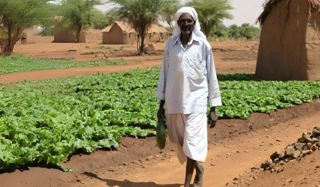
The Project Development Objective (PDO) is to improve access to basic services and food security of Select Communities in the Republic of the Sudan. The project is designed to complement the current humanitarian aid to Sudan by laying a foundation for medium and longer term development support in areas with high concentration of IDPs. It builds for the future of Sudan by restoring access to basic services and food, protecting human capital, and enhancing communities’ resilience using a bottom-up approach. It is sequenced to first meet immediate basic service needs of vulnerable groups in areas of high IDP concentration and relative safety and accessibility, followed by community-led planning and implementation of medium-term basic services.
Project M&E efforts will be supplemented by BSMA to ensure WB oversight on the ground, given limited access for Bank personnel. To support the WB to fulfil its monitoring and supervision obligations in areas where its staff are unable to access project sites, the Bank engaged with BSMA with the objective of providing a monitoring layer to complement the monitoring activities of the Implementing Entities and ensure that Bank funds are utilized for the purposes specified in the grant agreement and project documents. The BSMA ’s services will include monitoring of all aspects of Project implementation, including:
- Implementation progress or completion status (including community selection and fund allocations, verification of stakeholder engagement activities, timeliness of implementation, physical verification of infrastructure and goods including quality, quantity, sizing/dimensions, etc. prepared as part of small-scale climate-resilient infrastructure development), and compliance that the physical implementation of projects (including physical verification of works/construction) is in accordance with signed contracts and approved safeguards instruments which are prepared based on the requirements of the WB safeguards policies, UNICEF/WFP policies and procedures and relevant laws and regulations of Government of Sudan.
- Monitoring of the Implementing Agencies’ implementing partners’ fiduciary compliance within the limits focused on site assessments as outlined below.
- On the environmental and social risk management (ESRM) side, the BSMA shall carry out verification of the degree of compliance with ESRM requirements as per the site ESRM instruments including site visits to construction sites, waste disposal sites aided, GMV Centres to comply with WB requirements. This will include monitoring compliance with the Environmental and Social Commitment Plan and more specifically the ESF instruments used in the project.
- Monitor functioning of the project’s grievance redress mechanism (GRM).
- Carry out physical verification with digital photographs of ongoing works and goods supplied, through geo-tagged information and support of smart technology, alerting the Bank and relevant Implementing Agency to deficiencies in quality and implementation and following up on the correction of these deficiencies.
- Compile lessons from activity verification, challenges faced and output monitoring to generate reports on lessons learned and recommendations for improving monitored projects.
The BSMA will also be responsible for monitoring any project activities to develop the capacity within the lowest level of governance structures to enable delivery of basic services – at the community and Locality level.
- Partners:
- Particip (Lead), SRCG
- Keywords:
- Education, Food and nutrition, Health, Humanitarian aid, Infrastructure, Monitoring & Evaluation
Support to the Operationalisation of Nigeria's Country Level Implementation Plan (CLIP) GAP III
- 2024 – 2027
- € 500,000 – 1 million
- Nigeria
The overall objective of the assignment is to support the EU Delegation to Nigeria in the full operationalisation and implementation of the Country Level Implementation Plan (CLIP) for Nigeria in the framework of the EU Gender Action Plan III (2021-2025) and provide strategic advice to the EU Delegation in Nigeria on gender mainstreaming.
The specific objectives are:
- To advance EU efforts in ensuring that at least 85% of all actions in the programming 2021-2027 have gender equality as a significant (Gender Marker 1) or principal objective (Gender marker 2) in each priority area of the Multi Annual Indicative Programme (MIP).
- To produce and update existing sector analyses to integrate a gender-sensitive approach into the priority sectors of the MIP for Nigeria.
- To support the formulation of the EU Delegation’s new G2 Action.
- To provide technical support to assist the operational sections of the EU Delegation to Nigeria with the strengthening of a gender sensitive approach in the development of action and contractual documents.
- To support the Organisation of key events with government and non-government stakeholders, policy and political dialogues in relation to Gender Equality and Women’s empowerment.
- To support targeted initiatives and advocacy on women’s empowerment with government institutions and non-governmental organisations.
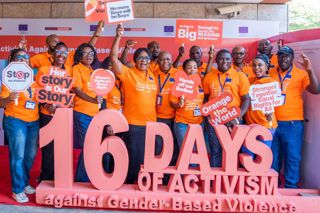
- To support increased cooperation and synergies with Member States during key events and public diplomacy campaigns including the International Women’s Day and the 16 Days of Activism Against Gender-Based Violence.
- To provide specific capacity development for EU Delegation staff as required.
- Support the EU Delegation in reporting on the implementation and progress in the CLIP.
- Keywords:
- Human rights

Evaluation of the Country Programme in Uganda 2023-2027
- 2026 – 2027
- under € 500,000
- Uganda
The assignment concerns the end-term evaluation of Enabel’s Uganda Country Programme 2023–2027, with a total budget of approximately EUR 68 million. The programme supports Uganda’s development priorities through two main pillars. Pillar 1 focuses on decent jobs and economic opportunities for youth, including technical and vocational education and training (TVET), employability, entrepreneurship, value-chain development and business and human rights. Pillar 2 focuses on health, particularly maternal and child health and sexual and reproductive health and rights.
The evaluation examines the programme’s relevance, coherence, effectiveness, efficiency, sustainability and contribution to intended outcomes and longer-term change. It also assesses cross-cutting dimensions such as gender equality, human rights, inclusion and the principle of Leave No One Behind, as well as the programme’s added value within the wider Ugandan development context.
A theory-based and mixed-methods approach is applied, combining documentary and monitoring-data analysis with stakeholder interviews, focus group discussions and field observations. Fieldwork covers the principal programme implementation areas, including Kampala, Albertine, Acholi, West Nile, Busoga and Rwenzori, allowing the evaluation to capture differences across geographical, institutional and sectoral contexts. A light foresight component is also included to reflect on emerging trends, risks and opportunities that may affect the relevance and sustainability of programme results and future cooperation priorities.
The evaluation is expected to generate robust evidence on programme performance, identify lessons and good practices, and formulate practical recommendations to inform Enabel’s future programming and cooperation in Uganda.
- Keywords:
- Education, Health, Industry & private sector development, Monitoring & Evaluation

EU Legal and Linguistic Support Phase 2 for the Turkish Cypriot community
- 2024 – 2027
- € 500,000 – 1 million
- Cyprus
The overall objective of the project is to facilitate the delivery of EU funded support under the Aid programme in view of preparing the Turkish Cypriot community for the implementation of the acquis communautaire following a comprehensive settlement of the Cyprus problem.
Specific Objective 1: To improve the interpretation and translation sectors in Cyprus in line with EU standards
1.1 To provide technical support and guidance in using CAT (Phrase) Software and for legal translation/interpretation
1.2 To provide technical assistance for setting up the internal structures of the Bicommunal Professional Association of Translators and Interpreters in Cyprus and implementing activities targeting professionals and youth.
Specific Objective 2: To improve the “legislative processes” in the TCc in view of TAIEX supported legal texts and bring them in line with EU standards
2.1 To provide support for the process and procedures of legal texts drafting.
2.2 To improve awareness and understanding of EU policies, especially for the most active sectors of TAIEX support as per EU acquis in the Turkish Cypriot community, in addition to improving the understanding on the general functioning and structures within the Commission.
2.3 To provide support for the use of the Database developed by the previous EU Legal and Linguistic Support Project for TAIEX supported legal texts.
Specific Objective 3: To promote Cypriot linguistic heritage, network and solidarity amongst professionals and youth
3.1 To conduct awareness raising and networking events, in view of promoting Cypriot linguistic heritage
3.2 To improve interest for interpretation and translation profession, as well as multilingualism and to improve the network and solidarity amongst the professional interpreters and translators
- Keywords:
- Civil society, Institutional development, Justice/Rule of Law, Project implementation / Technical Assistance

Support to tri-partite cooperation on crises assessments (RPBA, PDNA, PRNA)
- 2024 – 2027
- € 2 – 5 million
- Global
The overall objective (Impact) to which this action contributes is to support third countries to build up their capacity to carry out RPBA/PDNA/PRNA, through provision of technical expertise. Various activities are foreseen, including deployment of experts in RPBA/PDNA/PRNA missions, and provision of training and capacity building activities to national authorities and regional/international organizations, tripartite training events, as well as information sessions for EU entities.
The specific objectives/outcomes of this contract are as follows:
- To assist, together with the UN and the WB, countries affected by crisis with identifying, developing, and implementing recovery activities through RPBA/PDNA/PRNA processes. This will often consist of supporting joint RPBA/PDNA/PRNA missions in-country/in region (in coordination with EU Heads of Delegations, the European Commission, and with the European External Action Service). While such support could cover any relevant technical field (longer-term and shorter-term expertise), it is foreseen that a particular emphasis is put on expertise in mission planning and development of final reports/recovery frameworks;
- To support further development of the joint RPBA/PDNA/PRNA methodologies, tools, training programmes;
- To promote the values and principles of the EU as a global actor;
- To ensure inclusiveness of RPBA/PDNA/PRNA processes.
- Partners:
- Particip (Lead), GIZ InS, TRIAS Consult
- Keywords:
- Civil society, Governance, Training

Technical Assistance support to the WASH sector on Bougainville
- 2024 – 2026
- € 500,000 – 1 million
- Papua New Guinea
The overall objective (Impact) to which this action contributes is to improve gender responsive Water, Sanitation and Hygiene (WaSH) services and practices in the Autonomous Region of Bougainville (AROB) based on the EU-PNG MIP 2021-2027 and in line with current agreed processes of the drawdown of powers.
The specific objective of this action is to improve governance and institutional capacity of mandated authorities for WaSH service delivery in Bougainville.
- Partners:
- EMI (Lead), CAPA EEIG (managed by Particip), Particip
- Keywords:
- Health, Training

Evaluation of Budget Support to Public Administration Reform SBS Reform, Integrated Border Management Strategy and EU4Health - Contribution to the availability and access to vaccines against Covid-19 in Montenegro
- 2026 – 2026
- under € 500,000
- Montenegro
This assignment consists of an evaluation of the European Union’s Budget Support in Montenegro, focusing on three strategic areas: Public Administration Reform (PAR), Integrated Border Management (IBM), and the response to COVID-19. It covers four sector budget support programmes implemented between 2016 and 2026, including the PAR programme, two IBM programmes, and COVID-19 crisis response support. The evaluation will assess the relevance, effectiveness, efficiency, coherence, EU added value and sustainability of these interventions, with particular attention to their contribution to Montenegro’s EU accession agenda. It will examine how EU financial support, policy dialogue and complementary technical assistance have supported reforms, strengthened national systems, and contributed to governance, security, economic recovery and social resilience.
The work will combine document review, interviews, field visits, quantitative analysis and stakeholder consultation, structured around reconstructed intervention logics and evaluation questions. The evaluation will provide evidence-based findings, conclusions and recommendations for future EU support in Montenegro.
Methodologically, the assignment will follow the OECD-DAC approach to budget support evaluation, structured around the levels of the intervention logic: inputs, direct outputs, induced outputs, outcomes and contextual impact indicators. The evaluation will not aim to prove direct causality for higher-level results, but will assess the plausibility and consistency of EU contributions in relation to observed changes. Evidence will be gathered through a combination of documentary review, administrative and statistical data, interviews with EU, government, donor and civil society stakeholders, focus groups and field visits.
- Partners:
- MANCALA CONSULTORES S.L. (Lead), Particip
- Keywords:
- Governance, Health, Monitoring & Evaluation

Grant monitoring and technical support for CSOs in Madagascar
- 2023 – 2026
- under € 500,000
- Madagascar
The general objective of this contract is to encourage the emergence of a civil society that can fully play its role both as a development player alongside the most disadvantaged and discriminated against social groups and as a governance player, influential in promoting more relevant, effective and inclusive public policies.
The specific objective of this contract is to improve the effectiveness of the management by the implementing partners of current and future grants, whatever their source of funding, through on-the-spot monitoring and technical support to build their capacities, including on the specific themes of rights and gender approaches and the electoral process.
- Partners:
- Particip (Lead)
- Keywords:
- Civil society, Elections, Human rights