
Our projects
Explore Particip’s project experience across countries, sectors and areas of expertise.
Our references provide an overview of completed and ongoing assignments, including their objectives, geographic scope, duration and contract value.
Showing 51–56 of 56 references

Evaluation of the European Union’s cooperation with Tajikistan, 2014-2020
- 2021 – 2022
- under € 500,000
- Tajikistan
The specific objectives of the evaluation are:
- Support the design of the new multiannual country programme 2021-2027, with particular regard to the Commission’s newly introduced priorities;
- Feed into the considerations for EU budget support and contribute to the diagnosis of conditions for European Fund for Sustainable Development Plus (EFSD+);
- Contribute to the design and implementation of the envisioned Enhanced Partnership and Cooperation Agreement with Tajikistan which is relevant for promoting Europe as a stronger global actor (Commission priority for 2019-24) and for increasing the resilience of states and societies to the East stretching into Central Asia in line with EU Global Strategy;
- Support the joint programming exercise, which is now fledging. According to the NDICI proposal, joint programming shall be the preferred approach for country programming as it is the EU’s ambition to develop a clear Team Europe approach in the post-2020 cycle;
- Contribute to the negotiations and process of application of the Generalised Scheme for Preferences Plus (GSP+) which Tajikistan can apply for when pending issues are resolved;
- Contribute to the stocktaking, lesson-learning exercise on the objectives of the new Team Europe approach undertaken by DG DEVCO by assessing the EU’s response as provided to the COVID-19 crisis in support of Tajikistan;
The thematic scope of the evaluation covers the following sectors: rural development, education, health, security, environnement, climate change, public finance management as well as cross-cutting issues such as gender, environment or human rights.
Report available here: https://international-partnerships.ec.europa.eu/publications/evaluation-european-unions-cooperation-tajikistan_en
- Keywords:
- Agriculture, Education, Health, Monitoring & Evaluation

TA: media and freedom of expression in the framework of EU democracy support 'Media4Democracy'
- 2017 – 2022
- € 2 – 5 million
- Global
Media4Democracy was an EU-funded Technical Assistance Facility strengthening the European Union Delegations’ ability to implement the EU Human Rights Guidelines on Freedom of Expression Online and Offline.
Our mission was to support the EU Delegations’ broad and coherent implementation of the EU Guidelines on Freedom of Expression and to help them to identify, design and implement appropriate near-, medium- and long-term actions.
The TA team ‘Media4Democracy’ was based in Brussels and provided advocacy support and capacity building services to all EU Delegations (EUDs) worldwide, as well as customised technical support to individual EU Delegations.
The team of three senior experts also utilised and deployed a global network of leading freedom of expression and media professionals, working together to provide tailored support and expertise to EU Delegations.
Media4Democracy was backed by a Consortium of prominent European organisations, led by Particip, from the field of freedom of expression, media development and democracy support: Article19, Deutsche Welle Akademie, European Partnership for Democracy, Free Press Unlimited and the Thomson Foundation.
Media4Democracy was established by the European Commission’s Directorate-General for International Cooperation and Development (DEVCO) in January 2017 under the European Instrument for Democracy & Human Rights (EIDHR).
List of assignments:
March - May 2017: Development of Advocacy material related to World Press Freedom day 2017
June - Nov 2017: Honduras assignment - advocacy expert, data mining expert
July - August 2017: EU Advocacy and Action in Support of Universal Access to Information and the International Day for the Universal Access to Information
June - Nov 2017: November training 2017
March 2018 : Support to EIDHR focal point meeting
March – May 2018 : Development of A19 Package Elements
January – April 2018: Fellowship development
March – June 2018: ToR and CVs for Ghana assignment WPFD 2018
Oct 2017 - July 2018: Practical Guide Access to Information
Sep 2017 - Aug 2018: Assignment support to EU Delegation Laos
Sep 2017 - Aug 2018: Strengthening FoE and Media Pluralism in The Gambia within the Transitional Justice Framework
Sep 2017 - Aug 2018: Set-up and maintenance of website & Copy writer
May – August 2018: TA to the EUD to Botswana and the SADC Media Institutions as Drivers of Democracy: strengthening freedom of expression and media pluralism
May – Sept 2018: Development of FPU Package Elements - Media, Information Access and the Empowerment of Women & Girls + Participation in Gender Focal Point Meeting & Materials
June – Oct 2018: Technical Assistance to the EUD to Rwanda, Media Institutions as Drivers of Democracy: strengthening freedom of expression and media pluralism
Sept - Nov 2018:TA to DEVCO B1: Support to delivery of Brussels-based November training
April 2017-Dec 2018: Services of Junior Graphic designer for continious support
April – Dec 2018: TA to Zambia: Strengthening law and policy in support of FoE and media pluralism: support for EUD strategic advocacy and programme development
Sept - Dec 2018: TA to the EUD to Malaysia: Acting in the context of democratisation - Targeted media pluralism and FoE situation assessment
November – December 2018: TA to the EUD to Vietnam - Targeted Legal Analysis of Cyber Law and Draft Implementing Decree
Jan 2018 - Jan 2019: Communication and Proof-reading Activities
July 2018 – Jan 2019: Handbook on Safety of Journalists and Advocacy Support to EUDs to Mark IIDEIAJ 2018
July 2018 - Jan 2019: Supporting capacity of Media4Democracy Core Expert Team
March 2018 – Feb 2019: ToR and CV for Fellowship implementation- Fellowship Strengthening Institutional Leaders in Support of Pluralistic Media - Collaboration with the EUD of Tanzania
July 2018 – February 2019: Technical Assistance to EU Delegation to Indonesia: Supporting EU – Indonesian Government Joint Seminar “Addressing Hate Speech and Disinformation”
November 2018 - February 2019: TA to the EUD to Kyrgyzstan - Media Institutions as Drivers of Democracy: strengthening FoE and media pluralism
October 2018 - March 2019: Development of TF Package Elements Supporting AtI
October 2018 - March 2019: TA to the EUD to Malaysia: Acting in the context of democratisation - Media, Access to Information and ICT and the Empowerment of Women and Girls; Fighting cyber bullying of women and girls -FPU pilot
Dec 2018 - March 2019 : TA to the EUD to Burundi -Targeted Media Assessment within the Context of 2020 Presidential Elections
Jan - March 2019: Development of Global Webinar for EUDs -EU Guidelines on Freedom of Expression: Policy Essentials Webinar - together with TF
February - June 2019: TA to the EUD to Burkina Faso: Media, AtI and ICT and the Empowerment of Women and Girls; including consideration of issues linked to female genital mutilation and women’s participation in elections
April – June 2018: Development of EPD Package Elements - Media Institutions as Drivers of Democracy
Nov 2018 - July 2019: Fellowship: Strengthening Institutional Leaders in Support of Pluralistic Media - Collaboration with the EUD of Rwanda
Jan - July 2019: Development of Global Handbook for EUDs - EU Human Rights Guidelines on Freedom of Expression Online and Offline: Policy Essentials Handbook
March - July 2019: TA to the EUD to Sri Lanka and Maldives -. Media Institutions as Drivers of Democracy: strengthening FoE and media pluralism
April - July 2019 : TA to the EUD to Nicaragua and SICA: Support FoE and Media in Highly Complex, Closed and Dangerous Context
Feb 2019 - Jan 2020: Supporting capacity of Media4Democracy Core Expert Team - phase II
April 2019 - January 2020: Fellowship: Strengthening Institutional Leaders in Support of Pluralistic Media - Collaboration with the EU Delegation of Kyrgyzstan
- Partners:
- Particip (Lead), Article 19, DW, EPD Germany, FPU, TF
- Keywords:
- Civil society, Communication & media, Human rights, Management, Project implementation / Technical Assistance, Training
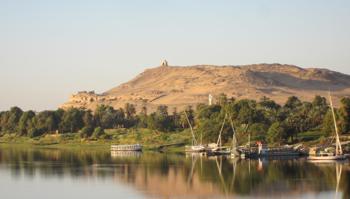
Strengthening the Policy Frameworks for Transboundary Water Resources Management in the Nile Basin
- 2020 – 2022
- under € 500,000
- Burundi, Congo (Brazzaville), Egypt, Ethiopia, Kenya, Rwanda, South Sudan, Sudan, Tanzania, Uganda
The Nile Basin Initiative (NBI) is a partnership of the 10 Nile Basin riparian states with a shared vision objective to promote sustainable socio-economic development through the equitable utilization of and benefit from the shared Nile Basin water resources. Nile Basin countries face increasing challenges of meeting the requirements of their rapidly growing populations in the face of dwindling resources that are threatened by emerging pressures like climate change, land use change and degradation, urbanization, etc. The challenges result in increased efforts at utilization of the Nile waters for agricultural, domestic, industrial and environmental purposes. Countries are embarking on large-scale developments for water utilization and water-related use in riparian countries which have major implications for current and future availability of water resources.
The assignment took the basin perspective and looked at the transboundary governance mechanisms in place. Especially national level arrangements such as policies and Transboundary Water Management (TWM) units served the various transboundary mechanisms a country subscribes to at the same time.
The objective was to facilitate and document a joint review and learning process on provisions for transboundary cooperation in national policies and related institutional arrangements.
The primary work of the project consisted of the following tasks:
- Task 1: Finalization of the NBI Policy Handbook
- Task 2: Guidance Document on key TWM principles for national water policies
- Task 3: Review of experience and mapping of cross-border cooperation arrangements in Nile Basin
- Task 4: Review of experience of the national level organizational arrangements for TWM
- Task 5: Collaborative assessment of progress of implementation of TWM principles in
National Water Policies
- Task 6: Action plan for transboundary water policy at national and regional level
- Task 7: Policy Synthesis Report – Status of TWM governance and Implementation of
SDG 6.5.2. in the Nile Basin
- Task 8: Blended Learning Module
- Prepare and facilitate Policy Roundtables
- Keywords:
- Environment, Training
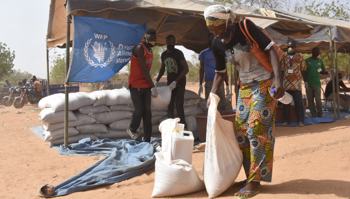
Evaluation Series on Emergency School Feeding in the Democratic Republic of Congo, Lebanon, Niger and Syria (2015-2019)
- 2019 – 2022
- € 500,000 – 1 million
- Congo (Kinshasa), Lebanon, Niger, Syria
The evaluation series was commissioned by the WFP School-based Programmes Unit in Rome and covered WFP emergency school feeding (ESF) programmes during 2015-2019. It encompassed four country-specific evaluations in the Democratic Republic of Congo (focus on North Kivu region), Lebanon, Niger (focus on Diffa region) and Syria, as well as a global synthesis report. It covers the period 2015-2019.
The evaluation was financed from a multi-year Canadian contribution to WFP that also covered the costs of the ESF activities in the last years of the evaluation period. In 2018, these activities had reached nearly 1 million children in Syria and 17,000-71,000 children in each of the other three countries.
The findings of the evaluation series were meant to strengthen the global evidence base on ESF with specific guidance on school feeding in crisis and humanitarian settings. The findings will be used by Country offices to design future ESF activities.
All evaluations in this series used a mixed-method, theory-driven approach based on a set of reconstructed, country-specific Theories of Change. The country evaluation reports were based on document reviews, key informant interviews, focus groups discussions, and large-scale field surveys of schools, children, and households. The synthesis report was based on the four country reports of the evaluation series, a literature review, an online survey among WFP offices, and key informant interviews.
The country evaluation reports are available at:
https://www.wfp.org/publications/democratic-republic-congo-school-feeding-emergencies-evaluation https://www.wfp.org/publications/lebanon-school-feeding-emergencies-evaluation https://www.wfp.org/publications/niger-school-feeding-emergencies-evaluation https://www.wfp.org/publications/syrian-arab-republic-school-feeding-emergencies-evaluation
- Partners:
- Particip (Lead)
- Keywords:
- Education, Food and nutrition, Humanitarian aid, Monitoring & Evaluation

Evaluation and monitoring of the Sector reform contract for Public administration reform and public finance management
- 2017 – 2022
- € 500,000 – 1 million
- Serbia
The objective of the contract was to support the EU Delegation to the Republic of Serbia and the Beneficiaries to ensure the timely, efficient and effective implementation of the Public Administration Sector Reform Contract to be implemented under the IPA 2015 national programme. In particular terms, the project: 1) assessed compliance of the Beneficiaries with the General and Specific Conditions for the release of fixed and variable tranches as set out in the Policy Matrix for the Sector Budget Support component of the Public Administration Reform and Public Finance Management Sector Reform Contract and 2) provided recommendations to the EU Delegation to the Republic of Serbia concerning the value of the tranches to be disbursed.
- Partners:
- Particip (Lead), ADELANTE, Integration
- Keywords:
- Governance, Institutional development, Macro-economic/ National policy, Monitoring & Evaluation, Public finance/budgeting, Training
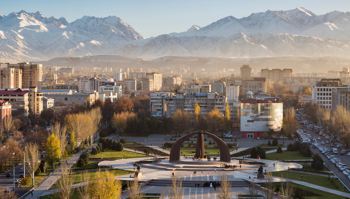
Evaluation of EU Budget Support and Blending in the Kyrgyz Republic 2010-2019
- 2020 – 2022
- under € 500,000
- Kyrgyzstan
The purpose if this evaluation was the assessment of both budget support and blending operations of the EU in the Kyrgyz Republic between 2010 and 2019. The EU has implemented ten budget support programmes in the country. All programmes contain, in addition to the funds transferred to the national budget, funds covering the provision of technical assistance for institutional capacity development, support to the elaboration of coherent policies, and/or evaluation, visibility and communication activities. The EU is using blending as financing modality in Kyrgyzstan since 2011. The funds for the EU blending operations in Kyrgyzstan come from the envelope for regional cooperation and are channelled through the Investment Facility for Central Asia (IFCA). Almost 40% of the total portfolio of funds managed by the EU Delegation to the Kyrgyz Republic is channelled through the blending instrument. Furthermore, Kyrgyzstan is the main beneficiary of the IFCA funds, with 75% of these funds going to this country.
This evaluation entailed two components. First, it provided an assessment of EU budget support in the country applying the 3-Step approach of the OECD-DAC guidelines on the evaluation of budget support. In particular, building on smaller, more specific evaluations and other studies produced in recent years, it assessed to what extent EU budget support contributed to Kyrgyzstan´s achievements in terms of the outcomes and impacts of its education and social protection sectors and of the country’s latest electoral reform policy. The analysis focused on how EU budget support, by enhancing the efficiency and effectiveness of Kyrgyzstan’s policies, strategies, spending actions, administration capacities and PFM system, contributed to sustainable outcomes in the sectors supported and, in turn, to growth and poverty reduction.
Second, the evaluation focused on EU blending operations in Kyrgyzstan’s Energy and Water management sectors. Specifically, the evaluation looked into the overall logic of these operations as a whole and assesses to what extent their design and implementation are suitable to achieve the expected results of this instrument in said sectors.
Report available here: https://international-partnerships.ec.europa.eu/publications/evaluation-eu-budget-support-and-blending-kyrgyz-republic-2010-2019_en
- Keywords:
- Education, Elections, Infrastructure, Macro-economic/ National policy, Monitoring & Evaluation, Public finance/budgeting