Our projects
Explore Particip’s project experience across countries, sectors and areas of expertise.
Our references provide an overview of completed and ongoing assignments, including their objectives, geographic scope, duration and contract value.
Showing 631–640 of 985 references
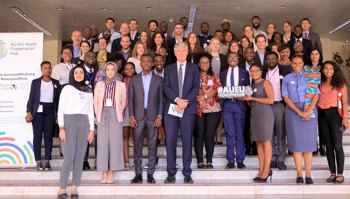
Follow-up to the Youth Plug-In Initiative
- 2018 – 2020
- under € 500,000
- Africa
Global objective:
The overall aim of the contract was to facilitate the first phase of follow-up to the Youth Plug-In Initiative. The aim of the follow-up process was to test innovative solutions to common challenges on both continents as presented in the AU-EU Youth Agenda.
Specific objectives:
1. Supported the EU and AU Services, in collaboration with continental youth networks, to identify and select youth to take part in the advisory process, on the basis of lessons learned from the YPII selection process;
2. Assisted in preparations for the CfP, including facilitation of a consultative meeting with youth representatives; inputs to the Guidelines of the CfP; and workplans for the six clusters;
3. Proposed and implemented a communication strategy for the AU-EU Youth Initiative;
4. Built partnerships with interested stakeholders.
- Keywords:
- Communication & media
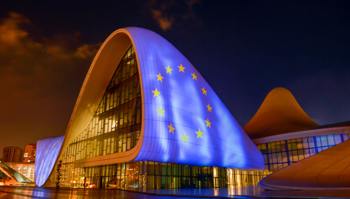
Visibility of EU activities in regional/rural development and institutional capacity in Azerbaijan
- 2018 – 2020
- under € 500,000
- Azerbaijan
The Government of Azerbaijan declared the development of the non-oil economy and the reduction of socio- economic regional disparities as the main priorities for the coming years, as clearly outlined in the Strategy Vision 2020 and other strategic government documents. In order to support the Government in its efforts to develop regions and to implement reforms under the current EU-Azerbaijan agreements and future agreements under the Eastern Partnership, the EU identified two components under the Annual Action Programme:
Component 1. Support Regional and Rural Development in Azerbaijan (SRRD)
The overall objective of this programme was to contribute to the diversification of the economy and sustainable regional development in Azerbaijan, while reducing socio-economic disparities between regions.
Component 2. Framework programme in support of EU-Azerbaijan Agreements
The overall objective of this framework programme was to build the institutional capacity of selected public administration institutions in Azerbaijan. Main activities foreseen included technical assistance and Twinning projects in support to the implementation of the EU- Azerbaijan ENP Action Plan and the implementation of CIB.
To ensure adequate visibility, each project implementing the programme had its own communication and visibility component and budget, according to the Communication and Visibility Manual for EU External Actions. In addition, funds were reserved to ensure overall visibility of the actions under this present project.
The overall objective of the present contract therefore was to increase the visibility of EU-funded projects in Azerbaijan in general, with a specific focus on
- Increasing the visibility of the EU assistance in regional and rural development in Azerbaijan, and
- Awareness raising about the EU activities in institutional capacity building in Azerbaijan through Institution Building Instruments: Twinning/TAIEX/Sigma.
These visibility goals were achieved by using a large variety of communication tools over a duration of 2 years. Activities are carefully planned to ensure a harmonised approach where all elements and campaigns build upon each other. This will maximise the impact and ensure a continued presence of relevant information on EU activities in the Azerbaijani media.
The requested services were split up into three groups:
- Component 1. Support Regional and Rural Development in Azerbaijan (SRRD)
- Component 2. Framework programme in support of EU-Azerbaijan Agreements
- Component 3. General visibility measures
- Keywords:
- Communication & media
Supporting the Mainstreaming of peace, shared analysis and conflict sensitivity with the appropriate tools and practices
- 2018 – 2020
- under € 500,000
- ACP (Africa)
Preventing conflict, preserving peace and eradicating poverty is a key priority in the EU’s foreign engagement. The objective of this project is to strengthen the implementation of the EU’s key policies in this area for ACP and OCT regions, namely the EU Global Strategy for foreign and security policy (EUGS), the New EU Consensus on Development, the 2017 Resilience Communication, the Security-Development Nexus, and the Integrated Approach.
The project was commissioned to assist DEVCO-B2 to respond to growing demands to mainstream peace and strengthen internal capacity for the EU to meet its goal to preserve peace and prevent conflict as part of its foreign policy. The purpose of the project was to produce studies to consolidate and integrate existing contributions into a global product by topics and by country; to demonstrate both implementation and progress of the New European Consensus for development and the Integrated Approach; and to contribute to the mainstreaming of peacebuilding and inclusivity, ensuring in-depth analysis together with in-house tools on resilience, peacebuilding and conflict prevention, also through the production of field cases studies and will ensure knowledge transfer, both in- house and for the targeted countries.
- Partners:
- Particip (Lead), Femconsult
- Keywords:
- Governance, Humanitarian aid, Training
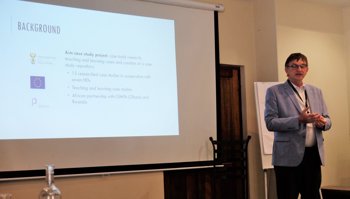
Development of research approaches to provide Case Studies for evidence-based learning
- 2018 – 2020
- under € 500,000
- Ghana, South Africa
The overall objective of the project was to contribute towards building a capable state, responsive to the needs of all its citizens and the promotion of national interest, accountability and transparency in service delivery, and utilising public resources in an effective and efficient way.
The specific objectives of the project were the following:
- Develop fifteen (15) researched case studies (2 from Ghana and 13 from South Africa) utilising the case method for public service teaching and learning.
- Work with at least five (5) assigned higher education institutions (HEI) in South Africa to assist and develop their capacity to develop and use the case study method for public service teaching and learning.
- Dissemination of the case studies via at least ten (15) sector workshops at the NSG
- Preparation of the materials as publications for journals / manual and book chapters so that the NSG can take these forward.
- Keywords:
- Education, Governance, Institutional development, Training
Final Evaluation of EU funded programme 'Support to Judiciary Reform - ENPI/2011/22-756'
- 2019 – 2020
- under € 500,000
- Lebanon
With this evaluation assignment, the EC aimed at responding to the increasing emphasis on result-oriented approaches for EU interventions within the cooperation policy and SDG implementation. The focus of this evaluation was to assess the achievements, the quality and the results of Actions taken in the context of the support programme to Judiciary Reform in Lebanon.
The evaluation sought to identify the results and outputs linked to EU intervention, as well as the factors driving or hindering its progress. By doing so, it highlighted the cause and effect links between inputs, activities, outputs and impacts and serves accountability, decision making, learning and management purposes for future EU intervention and Actions in the sector of governance.
The main objectives were to provide the EU and the interested stakeholders with:
an overall independent assessment of the past performance of the Support to Judiciary Reform decision and all its components, paying particular attention to its results measured against its expected objectives; and the reasons underpinning such results;
recommendations build from the key lessons learned and the conclusions in order to improve current and future actions
- Keywords:
- Justice/Rule of Law
The Good Financial Governance (GFG) Program was to support the Government of Ghana in three focal areas of public finance, namely Revenue management, Budget management (PFM, with a focus on budget preparation), and Domestic accountability & Resource governance. As a crosscutting area the Program supported human resource development within the Ministry of Finance (MoF) and the Ghana Revenue Authority (GRA) with a focus on gender mainstreaming. The consultancy involved the delivery and management of advisory services within the GFG Program. Advisory work was delivered by a long-term expert and short-term experts in the form of technical consultancy services related to the above mentioned areas of intervention, training, soft skills, and in the area of process management.
Process management refered to improvement of decision making and business processes with the relevant partner institutions; soft skills include communication, management, negotiation, presentation, time management and problem solving skills, human resource development with focus on gender mainstreaming (including development of training curricula, guidelines, strategies, and procedures), and organizational development. The technical areas included support to the public budget formulation process and execution, tax policy, revenue administration, domestic accountability including resource governance, and external budgetary oversight. The long-term expert was responsible for the management of the pool of short-term experts and assessed the needs for consultancy services in close collaboration with the GFG program management.
- Partners:
- Particip (Lead), EY Ghana
- Keywords:
- Governance, Institutional development, Macro-economic/ National policy, Project implementation / Technical Assistance, Public finance/budgeting
Framework Contract Beneficiaries 2013, Lot n° 6 Environment
- 2014 – 2020
- over € 10 million
- Global
The objective of the FWC is to provide, via individual assignments defined and contracted through Specific Contracts, short-term technical assistance which can be mobilised at very short notice (normally within about 3 weeks). The quality of this technical assistance must be guaranteed by the selected Framework Contractors disposing of the appropriate internal or external technical skills. The technical assistance will be provided for the exclusive benefit of those receiving the external aid. Technical assistance may be required at any stage of the project cycle (except programmes financial audits) and may cover any sector(s) within a given technical field.
The beneficiaries of the short-term technical assistance available via this Framework Contract (FWC) are exclusively third countries benefiting from the Commission’s External aid programmes. The FWC has no overall contractual amount or maximum budget. Each individual assignment will fix its implementation duration, not exceeding two years, as well as the contractual amount which will not exceed € 299,999.
- Partners:
- Particip (Lead), adelphi, AETS, DAI Global UK, ELLE, ETI, GEOtest NL, Milieu Ltd, NIRAS, PEMconsult a/s, Poseidon, Ramboll Deutschland
- Keywords:
- Environment
Papua New Guinea-Port Moresby: EDF – HRDP2 long-term technical assistance
- 2014 – 2020
- € 2 – 5 million
- Papua New Guinea
The objective of the project was to improve vocational education at lower secondary level in order to promote the development of a skilled labour force adapted to the needs of the country. Technical and advisory services were provided to ensure the effective and timely implementation of the HRDP 2.
The expected results and related activities of our technical assistance project were:
Result 1: (Access) Increase the access to lower secondary level vocational institutions through the provision of support to:
- analysing of labour market trends and projected demand and supply at provincial level to identify vocational lower secondary infrastructure and training requirements;
- auditing human and material assets of the lower secondary VET system and decide on optimal use for grade 8 leavers;
- developing infrastructure in selected locations where lower secondary VET institution development/rehabilitation will have high impact on employment prospects for lower secondary level students;
- raising the awareness of employability prospects resulting from enrolment in quality vocational lower secondary education among families and students.
Result 2: (Quality) Improve conditions for quality education delivery through the provision of technical assistance to:
- expanding of students’ knowledge and skills through workshops and workplace coaching;
- improving managers’ and staff skills in leadership and teaching/instruction through training and updated on-the-job experience;
- increasing on-site accommodation for managers, teachers, instructors, and students of selected vocational institutions;
- implementing the School Learning Implementation Plan (SLIP) for immediate grade 8 leavers and recording students’ progress towards employment.
Result 3: (Management) Improve VET system governance, increase state capacity for cooperation and coordination at national and provincial levels, and promote a greater involvement of the business community through the provision of support to:
- producing, implementing, supervising and monitoring well-structured and budgeted TVET development plans in provinces, following project-provided capacity building in Public Financial Management;
- refining of specific sub-sector or thematic areas within the approved TVET SMP 2011-2020 as well as a VET policy plan for vocational lower secondary level (as part of the TVET SMP 2011-2020);
- facilitating the development of a national VET policy and strategy, linked to overall general education policy and consistent with national employment policy.
- facilitating the development and discussion of options for the establishment of a national VET and TVET authority.
- Partners:
- Particip (Lead), CINOP, GFA
- Keywords:
- Education, Industry & private sector development, PCM / Logframe, Project implementation / Technical Assistance, Training
The global objective of the assignment is to support good governance, including the strengthening of civil society, and the promotion and protection of human rights in Argentina, Brazil, Chile, Uruguay and Venezuela. The specific objective is to support the strengthening of EU grant beneficiaries’ capacities in the implementation of their projects.
- Partners:
- Particip (Lead), Cardno UK, GOPA
Supporting the mainstreaming of resilience with the appropriate tools and practices
- 2018 – 2020
- under € 500,000
- ACP (Africa)
For the EU, investing in countries and regions experiencing fragility and conflict, and building resilience, is a key priority. The EU has devised and adopted policies reflecting this, most recently the EU Global Strategy on Foreign and Security Policy and the New European Consensus on Development. Therefore, the objective of this project is to contribute to the implementation of these policies in ACP and OCT regions.
The objective of the project was to contribute to the implementation of the EU Global Strategy, the 2017 Resilience Communication, as well as the New EU Consensus on Development and support actions undertaken as part of the Humanitarian-Development-Peace Nexus, by strengthening the implementation of these policy priorities for ACP and OCT regions.
The project also contributed to analytical inputs to increase impact and effectiveness of DEVCO responses to crisis and help build long-term resilience in all partner countries.
Ultimately, the purpose of the project was to serve the exclusive interest of the most fragile and conflict-affected countries or/and those who are in a major crisis. To that effect, it supported DG DEVCO in mainstreaming resilience, ensuring in-depth analysis and knowledge transfer both in-house and for the targeted countries.
- Keywords:
- Humanitarian aid, Institutional development, Training