
Our projects
Explore Particip’s project experience across countries, sectors and areas of expertise.
Our references provide an overview of completed and ongoing assignments, including their objectives, geographic scope, duration and contract value.
Showing 791–800 of 981 references

Ex-Post External Evaluation of the EU funded programme 'Public Sector Reform and Modernization: supporting Kazakhstan's policy to modernize its public administration'
- 2017 – 2018
- under € 500,000
- Kazakhstan
In 2015 was the launch of Kazakhstan's Plan for the Nation which provided for main policy reforms and their likely implications over a period of five years. One of five key pillars of the reform programme was the creation of a modern and professional civil service which eschews nepotism, protectionism and corruption. Kazakhstan looks to Europe, North America, and countries such as Malaysia and Singapore for models of best practice, embracing key elements of public management (e-government, decentralization, and performance management systems). The EU has been committed to supporting the plan which, taken together, maps a pathway towards deep political, economic and social reforms.
The two projects to be evaluated (Enhancing Kazakhstan’s Sector Competitiveness through Better Regulations and Institutions; and Civil Service Reform and Modernisation of the Government of Kazakhstan) were key elements in the EU's support to Kazakhstan's wider Plan for the Nation. They fell under the programme "Public sector reform and modernization: supporting Kazakhstan's policy to modernize its public administration" (PSRM) (DCI-ASIE/2010/022-081). This programme aimed at contributing to the implementation of the Government's public sector reform, focusing on (i) effectiveness of central state administration in four sectors (Education, Environment, Agriculture and Industry/Innovation), (ii) improved public service standards (iii) and professionalization of civil service.
Since December 2015 there existed an Enhanced Partnership and Cooperation Agreement between Kazakhstan and the European Union, however bi-lateral financial support from the EU to Kazakhstan has now come to an end. Therefore, the aim of the evaluation of these two major projects was to examine the extent to which the projects delivered their objectives and to offer recommendations on the way forward, especially taking account of the new reality of a regional as opposed to a bi-lateral cooperation approach. Since Kazakhstan is seen as a leading country in the Central Asian region there may well be important lessons for neighbouring countries (Kyrgyzstan, Tajikistan, Uzbekistan and Turkmenistan).
Therefore the main objectives of this evaluation was to provide the relevant services of the EU, the interested stakeholders and the wider public with:
- An overall independent assessment of the past performance of the projects "Enhancing Kazakhstan’s Sector Competitiveness through better Regulations and Institutions" and
"Civil Service Reform and Modernisation of the Government of Kazakhstan"; and
- Key lessons and recommendations in order to improve future actions.
More specifically, the evaluation team
- Conducted an overall independent assessment about the performance of the two projects, paying particularly attention to the actual impact of the projects’ actions against their objectives; and
- Identified key lessons and propose practical recommendations for relevant follow-up actions by the Delegation of the EU and national stakeholders, taking full account that Kazakhstan is a graduated country without any new bilateral cooperation under the DCI instrument since 2014.
- Keywords:
- Institutional development, Monitoring & Evaluation

Supporting the development of the judicial system and improving the services provided by the agencies that implement criminal court orders in Azerbaijan
- 2016 – 2018
- € 1 – 2 million
- Azerbaijan
In its 21 years of independence, Azerbaijan had made significant progress in terms of socio-economic development. However, although some important results had been achieved in the justice sector, inter alia through an EC financed budget support programme, the justice systems needed to be further modernized.
In line with this approach, the global objective of the assignment was to contribute to strengthening the rule of law in Azerbaijan. The specific objectives were to provide technical assistance to the Government of Azerbaijan by supporting the development of an independent, professional, impartial and fair judicial system and improving the services provided by the agencies that implement criminal court orders.
This project was developed as part of the Institutional Reform Programmes (IRPs) on rule of law, aiming to strengthen the institutional capacity of key actors involved in justice reform, in particular the Ministry of Justice (including the Penitentiary Administration), the Judicial Legal Council and the Anti-Corruption Department within the General Prosecutor’s Office.
The project was made up of two components:
- Component 1: Judicial Reform
Results to be achieved for component 1
1. The core elements of judicial independence were analysed and relevant measures were addressed.
2. Anti-Corruption legislation and practices were strengthened.
3. The level of public trust in the Court system was increased.
The project supported the Judicial Legal Council in its role as guarantor of judicial independence. More specifically, the role and functions of the Judicial Legal Council and modernization of current legislation were analysed. Open debates and discussions on European and International standards on judicial independence were held at national level.
Close collaboration with the Ministry of Justice was ensured and the Head Department on Anti-Corruption within the General Prosecutor’s Office was institutionally strengthened.
Taking a rights-based perspective, the project fostered the legal education at grass-roots level (in 3 rural areas), and surveys amongst Court users, including the development of several sets of surveys/indicators. The project contributed to building the institutional capacity of the Head Department on Anti-Corruption within the General Prosecutor’s Office in order to properly enforce the integrity measures for the judiciary, including conflict of interest, and to modernize the techniques of criminal investigation and pursuit.
- Component 2: Offender Management System
Results to be achieved for component 2:
1. Preparations to introduce a Probation Service were significantly advanced.
2. Pilot projects demonstrated key aspects of a modern probation service.
3. The offender management agencies worked in closer cooperation.
The first task in offender management was to invigorate efforts to establish a probation service in Azerbaijan. Alternatives to prison sentences for mid-range offenders, and supervised early release schemes for more serious offenders, were considered essential aspects of effective offender management. The second part of this component involved demonstrating selected aspects of a modern probation service. Pilot projects were therefore established in cooperation with the Ministry of Justice, other government departments and civil society. Moreover, this project introduced leaders of the penal agencies to methods of integration used in other countries, and supported practical action.
Coordination between the main agencies for penal services (i.e. police, prosecutors, courts and prisons) were improved.
- Partners:
- Particip (Lead), Icon Institute, PRI
- Keywords:
- Justice/Rule of Law

Mid-term evaluation (MTE) of the support project to the “Africa-EU Migration and Mobility Dialogue (MMD)”
- 2017 – 2018
- under € 500,000
- Africa (Central), Africa (Eastern), Africa (Northern), Africa (Western), ENI South
The MTE aimed to provide independent insights into further improving effective, efficient and economic delivery on results in order to inform the project implementation and make adjustments if necessary through the evaluation of the management and delivery set-up, structures and processes of the ongoing project.
It also aimed to enable ICMPD as well as project stakeholders to assess the project implementation experience at mid-term, learn from the experiences mindful of evolution of the context, and determine adjustments to optimize project implementation and outcomes.
The evaluation identified lessons learnt as well as effective practices based on the experience of 24 months of the project and come up with proposals/recommendations on how to refine the project activities as well as management to best achieve its intended results.
Through the OECD evaluation criteria the exercise reviewed the project implementation, including management, structure, internal mechanisms, and working procedures, as well as outputs and outcomes.
The evaluation reviewed the ways the project adapted its structure and internal mechanisms to the changing environment of migration issues.
The evaluation fully covered eight issues underlined in the tender ToR, plus one to incorporate the OECD criteria:
- Describe the status quo of project implementation based on a review of activities and budget expenditures (comparison planned vs. actual);
- Assess to which extent the project activities have remained consistent with objectives and key results outlined in the project proposa;
- Informally assess the extent project objectives remain suited to possibly evolving priorities and policies of target groups, and consistency of activities and outputs with over goal and objectives;
- Assess whether the logic intervention (logframe) of the project needs to be updated, considering the fast changing project context, and suggest a revised logframe design;
- Determine the interaction with the project partners and gain stakeholder information and feedback;
- Rate how the management arrangements support the effective and efficient implementation of the project;
- Identify constraints and challenges and how these can be mitigated during the project continuation;
- Identify lessons learned, effective practices and formulate recommendations as regards the implementation and management of the project;
- Formulate recommendations on how to enhance the expected impact of project activities.
- Keywords:
- Civil society, Governance, Health, Humanitarian aid, Monitoring & Evaluation

Final evaluation of the IfS/lcSP support under Article 3 to Mine Action in beneficiary countries (2007-2017)
- 2018 – 2018
- under € 500,000
- Global
The main objectives of this evaluation were to provide the relevant services of the European Union, the interested stakeholders and the wider public with:
- an overall independent assessment of the past performance of the IfS/IcSP support to mine;
action related projects and programmes;
- key lessons and recommendations in order to improve current (if relevant) and future actions;
- recommendations for the future within the frame of the EU guidelines on Mine Action that are currently subject to review.
In particular, this evaluation served the European Commission, the European External Action Service, and other relevant stakeholders with:
- an independent assessment of the overall IfS/IcSP support to mine action (2007-2017), paying particularly attention to the results achieved against its objectives;
- key lessons and recommendations to FPI.2 in order to improve current and future support for mine action related interventions financed under the IcSP;
- recommendations to the European Commission on the best way to approach and improve its support to mine action overall.
The main users of this evaluation will be the European Commission and the European External Action Service.
- Keywords:
- Humanitarian aid

This evaluation assessed Finland’s development co-operation activities and policy influencing on gender equality and commitment to enhance the rights of women and girls as a cross cutting objective as well as the priority objective of funding. The emphasis in this evaluation was on co-operation where gender equality is the priority objective.
The main objective of this evaluation was to assess the value and merit of programmes and policy influencing in those initiatives where Gender equality, especially rights of women and girls has been the main objective of the initiative, or the mainstreaming has been prioritised in the initiative or it has been a condition for Finland’s engagement with an organization.
This evaluation covered the activities under the two last development policies from 2012 until the end of 2017.
The evaluation was divided into five phases:
- Planning phase: Identification of Team Leader and finalisation of ToR,
- Start-up phase: Development of first draft approach and methodology
- Inception phase: Desk analysis and preparation of a detailed evaluation matrix. The desk study included a comprehensive context and document analysis. It also included a mapping of programs and their different sources of funding.
- Implementation phase: Included visits at the HQ offices of UNFPA and UN Women in New York, EU HQ in Brussels and three bilateral cooperation countries (Nepal, Kenya and Somalia).
- Reporting and dissemination phase: Drafting of final report and dissemination of final results.
The report is available at: https://um.fi/documents/384998/0/Evaluation_Women_and_Girls_rights_NETTI_2018+%281%29.pdf/eec54c45-a96e-c084-4ada-8c9056548d04
- Partners:
- Particip (Lead), Indufor Oy - Metsahallitus Group
- Keywords:
- Civil society, Human rights, Monitoring & Evaluation

Technical Assistance in drafting documents for the "Post-Cotonou" task force
- 2016 – 2018
- under € 500,000
- ACP region
The Task Force was requested to feed the debate with a large variety of documents and analysis, both on the content and on the form of the possible future partnership beyond 2020.
The consultants supported the Task Force in drafting documents. The documents took the form of e.g. briefings, option papers, issue papers, sectorial or geographical analysis. Specific tasks were detailed during the contract period, depending on the outcomes of the current debate and on the orientations yet to be taken at political level.
- Keywords:
- Project implementation / Technical Assistance

Positioning of the EU in air quality management in India
- 2017 – 2018
- under € 500,000
- India
The overall objective of the action is to understand India's needs in air quality management and exploit EU's know-how on air quality (political, regulatory, technical, economic) to create opportunities for European stakeholders and businesses by raising the interest of India in addressing air pollution as a global challenge and develop a national strategy to ambient air pollution, in particular in urban settings.
The specific objectives of the action is to:
1. Understand the air quality management sector in India, including stakeholder analysis, regulations and policy reviews, needs in India and opportunities for the European actors.
2. Develop, as pilot projects, air pollution reviews and action plans with 3 Indian cities, and supporting the implementation of selected activities.
3. Raise awareness of Indian Stakeholders on EU best practices and technologies in the sector through technical speaker events and a closing event allowing selected European speakers and companies to showcase their approach to air quality management, best practices, technologies and products.
4. Support the policy dialogue between the EUD and the Government of India and support the development of a national air quality management strategy.
- Partners:
- Particip (Lead), AETS
- Keywords:
- Environment
Final Evaluation of the Programme 'Support to the Community Courts of Eritrea' - FED/ 2009/021-604
- 2018 – 2018
- under € 500,000
- Eritrea
The main objectives of this evaluation were to provide the relevant services of the European Union, the interested stakeholders and the wider public with:
- an overal independent assessment of the past performance of the programme Support ot the Community Courts of Eritrea (FED/2009/21604);
- key lessons and recommendations in order to improve current (if relevant) and future actions.
In particular, this evaluation served to understand the performance of the action, its enabling factors and those that hampered a proper delivery of results as to inform the planning of the future EU interventions and Actions in the same sector.
- Partners:
- Particip (Lead), EuroPlus
- Keywords:
- Governance, Justice/Rule of Law, Monitoring & Evaluation

Implementation of the Communication and Visibility Component of the Budget Support Programme for Haitian State Building
- 2015 – 2018
- € 1 – 2 million
- Haiti
The general objective of the project was to increase the visibility of the European Union's SBC (State Building Contract) budget support programme focused on the reforms undertaken by the Haitian State and to ensure strong participation and involvement of the legislative authorities and civil society in the reform process.
The specific objectives of the project were:
- Objective 1: To increase the visibility of the European Union in the framework of SBC budget support in Haiti
- Objective 2: To improve the Government's capacity to communicate effectively on the SBC budget support programme
- Objective 3: To facilitate a structured and regular dialogue between civil society and the legislature on the one hand, and the government on the other.
The technical assistance organised the implementation of communication and visibility actions around the Haitian State Construction Support Programme.
The implementation of these actions made the SBC and its methods of intervention in Haiti better known; it communicated the reforms undertaken and the progress made; it strengthened the image of the European Union as a reliable and committed partner of Haiti, which "helps the country to help itself" and finally, strengthened the State's accountability thanks to a forthright sharing of information with civil society and parliament.
The services provided by the technical assistance included the implementation and monitoring of the communication and visibility actions of the SBC programme, direct technical support and advice.
- Partners:
- Particip (Lead), Médialternatif
- Keywords:
- Civil society, Communication & media, Project implementation / Technical Assistance
Technical assistance to the environment programme for Trinidad and Tobago
- 2016 – 2018
- under € 500,000
- Trinidad And Tobago
The overall objectives of the project were:
- To support the Government of the Republic of Trinidad and Tobago (GoRTT) to provide a comprehensive picture of the impacts of climate change,climate variability and projected climate change impacts.
- To increase climate resilience through safeguarding carbon sink areas.
The purposes of the contract were:
- To strengthen the capacity of the GoRTT to carry out vulnerability studies needed to formulate climate change adaptation measures.
- To strengthen the capacity of the Government to carry out demarcation of important biological reserves.
The two results to be achieved through this Technical Assistance contract were to enable the Government to proceed on with its National Adaptation Strategy and increase the carbon sequestration capacity of important in ecological value areas.
- Result 1: The government obtained better knowhow on how to carry out vulnerability assessments needed for climate change adaptation.
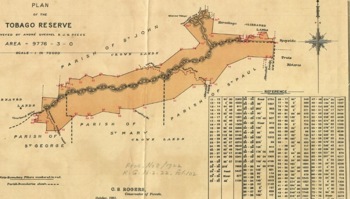
- Result 2: The government obtained better knowhow on how to carry out demarcation of the important ecological value Main Ridge Forest Reserve in Tobago. In doing so the government capacity in safeguarding such areas as carbon sinkswas strengthened.
- Partners:
- Particip (Lead)
- Keywords:
- Civil society, Environment, Institutional development, Project implementation / Technical Assistance, Training