
Our projects
Explore Particip’s project experience across countries, sectors and areas of expertise.
Our references provide an overview of completed and ongoing assignments, including their objectives, geographic scope, duration and contract value.
Showing 401–410 of 980 references

Mid-term evaluation of the implementation of the EU Gender Action Plan III (2021-2025)
- 2022 – 2023
- under € 500,000
- Global
The main objectives of this assignment are to: i) provide an independent evidence-based assessment of the contribution of EU external action support in the policy area of Gender Equality and Women’s Empowerment (GEWE), including achieved results in line with the objectives of the GAP III, the EU Gender Equality Strategy 2020-2025 and other relevant overall policy frameworks for gender equality such as the Agenda 2030, CEDAW, the Beijing Platform for Action, and ii) based on the above, identify lessons learnt and recommendations to inform the EU programming process in order to improve the implementation of future EU external action.
In particular, this evaluation aims to:
- measure the level of effectiveness of mainstreaming GEWE into the 2021-2027 bilateral, multi-country/regional, and thematic programming (including MIPs and, for the Enlargement Region, Strategic Responses);
- assess the added value of GAP III requirements for the EU and EU Member States (EU MS) to develop GAP III Country Level Implementation Plans (CLIPs);
- assess the progress in the implementation of the EU Action Plan on WPS including in the EU's Common Foreign and Security Policy (CFSP)/ Common Security and Defence Policy (CSDP) context;
- assess results achieved on Women’s Economic Empowerment (WEE), which is part of GAP III’s third pillar on key thematic areas of engagement;
- identify lessons learnt and best good practices that can help improve the effective implementation of GAP III at global, regional and country level;
- provide recommendations to ensure a coherent EU approach on supporting WEE, as well as the effectiveness of the EU actions.

European Union Exploratory Mission (ExM) to Guatemala 2023
- 2022 – 2023
- under € 500,000
- Guatemala
The purpose of the Exploratory Mission was to collect factual information concerning this election process,
in line with the criteria contained in the Commission Communication on Electoral Assistance and
Observation [COM(2000)191].
The experts did in particular:
- Assess the pre-election situation in the light of international standards for democratic elections and national legislation. The assessment will cover: (i) Political situation, (ii) Legal and Electoral framework, (iii) election administration, (iv) voter registration, (v) party and candidate registration, (vi) human rights and fundamental freedoms, (vii) potential for electoral violence, (viii) traditional and online media, as well as social media, (ix) security aspects, (x) logistics and operational matters, (xi) use of electoral ICT and (xii) any other relevant issues relating to the elections and possible deployment of an EU EOM.
- Assess, when relevant, the state of implementation of recommendations of previous EU election missions (both EU EOMs and EEMs).
- Make necessary preliminary logistics related enquiries and provide advice on how to organise the operational component of a possible EU EOM.
- Assess the security situation in the country, in particular in connection with the possible deployment of an EU EOM.
Advise on the composition, number and length of stay of the Core Team members and long and short-term observers of the EU EOM.
- Draft tentative specifications and Terms of Reference of a possible EU EOM and related estimated costs and budget breakdown.
- Assess the relevance of providing support to domestic observer organisations.
- Acquire updated information on EU election support (both EU and Member States) and other major partners (Canada, Norway and Switzerland) and possible other major actors plans in this field, including in the area of electoral assistance.
- Liaise closely with domestic and international election observation organisations that may be present on the ground regarding the preparation of elections.
- Prepare a number of specific reports as outlined in section 'VI. Output' of these ToR.
- If necessary, participate in the briefing of the EU EOM Core Team should the deployment of an EU EOM be decided.

Framework Contract Services for the Implementation of External Aid (SIEA) 2018 - Lot 6: Innovative Financing for Development
- 2018 – 2023
- max. of 999,999€ for each specific project
- Global
The objective of the Framework Contract (FWC) is to provide, via individual assignments defined and contracted through Specific Contracts, expertise which can be mobilised at short notice. The quality of the services is guaranteed by the Consortium, which provides the appropriate technical skills and resources. This FWC provides expertise for the implementation of External Aid.
The FWC has no overall contract amount or maximum budget. The contract amount is fixed at the level of each individual assignment in the Specific Contract and the maximum value of a specific contract under this framework contract cannot exceed 999,999 EUR.
The various Specific Contracts are governed by the EU External Aid Programmes under which they are financed. These EU External Aid Programmes include the European Development Fund (EDF), as well as the Programmes financed from the EU General Budget.

Evaluation on Development Communications in the Context of the Ministry for Foreign Affairs Finland
- 2022 – 2023
- under € 500,000
- Finland
The evaluation examines the role of the Ministry for Foreign Affairs in the development communications and assesses the efficiency and coherence of the current organisational processes and practices. The effectiveness of various development communications means, modalities and channels that are currently at the MFA disposal is assessed. Based on the related findings the evaluation draws justified conclusions and makes recommendations for enhancing the efficiency, effectiveness and coherence of the Ministry’s development communications for various audiences.
The temporal scope of the evaluation covers the years 2015- 2022. The evaluation only covers activities funded by MFA Finland, including those of programme CSOs that received funding for development communication, while the main focus is on VIE-30 communications.
The evaluation is based on two tracks of inquiry. The first inquiry track is descriptive (how has MFA supported and implemented development communication and global education), and the second is evaluative (how effective, efficient and coherent has the MFA been in funding and implementing development communication).

Long-term Technical Assistance to Uganda MoFPED/NAO
- 2019 – 2023
- € 500,000 – 1 million
- Uganda
The global objective of this Technical Assistance was to support the Government of Uganda, namely the Ministry of Finance, Planning and Economic Development (MoFPED), in streamlining and strengthening existing capacities and coordination mechanisms with the Local Development Partners Group (LDPG) in terms of planning, budgeting, overseeing, coordination, monitoring, and implementation and performance evaluation.
The specific objective of this project was to assist the MoFPED, specifically the Directorate of Debt and Cash Policy (DARC) and the Accountant General office (Directorate of Treasury Services and Assets Management - TSD) in its overall coordination and overseeing of external aid.
Long Term Technical Assistance was being provided to achieve the following expected results:
1) MoFPED (DARC and TSD) are enabled to closely monitor and supervise the implementation and financial performance EU and other donors funded projects/programmes.
2) Dialogue between DPs and MoFPED on ODA is strengthened
3) GoU is enabled to benefit from the opportunities offered at global and regional level and to be systematically involved in regional integration initiatives, including COMESA, IGAD, EAC, etc.
4) MoFPED contributes successfully to the achievement of the objectives of the Partnership Coordination Programme

Framework Contract Services for the Implementation of External Aid (SIEA) 2018 - Lot 5: Budget Support
- 2018 – 2023
- max. of 999,999€ for each specific project
- Global
The objective of the Framework Contract is to provide, via individual assignments defined and contracted through Specific Contracts, expertise which can be mobilised at short notice. The quality of the services is guaranteed by the Consortium, which provides the appropriate technical skills and resources.
This FWC provides expertise for the implementation of External Aid. The FWC has no overall contract amount or maximum budget. The contract amount is fixed at the level of each individual assignment in the Specific Contract and the maximum value of a specific contract under this framework contract cannot exceed 999,999 EUR.
The various Specific Contracts are governed by the EU External Aid Programmes under which they are financed. These EU External Aid Programmes include the European Development Fund (EDF), as well as the Programmes financed from the EU General Budget.
End-term review of the Sustainable Agriculture Kigoma Regional Project (SAKIRP)
- 2023 – 2023
- under € 500,000
- Tanzania
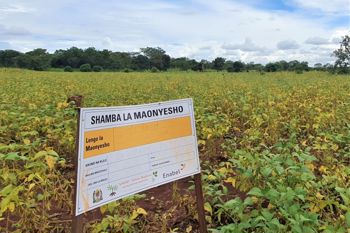
The end-term review of the "Sustainable Agriculture Kigoma Regional Project" (SAKIRP) was commissioned by Enabel.
SAKIRP was an agricultural value chain improvement project with the aim of developing smallholder agriculture into Farming as a Business through better value chain organisation, increased collective aggregation, and better access to markets and credits for smallholder farmers. It ran from June 2016 to May 2023 in all six rural districts of the Kigoma region of Tanzania with a total budget of 8.8 million EUR.
The end-term review served the purposes of accountability (through performance assessment), and learning and steering (by explaining what works and does not work, and why, as well as through evidence-based lessons for other interventions and recommendations for decision-making). It addressed the six evaluation criteria of relevance, coherence, efficiency, effectiveness, impact and sustainability, as well as the cross-cutting issues of gender and environment, among others.
Qualitative data were collected during a two-week field mission (including stakeholder interviews, focus group discussions with leadership and members of cooperatives, and direct observation) and in remote interviews. The review also drew on documents and existing quantitative M&E and survey data.
The executive summary of the review is available on the Enabel website:
https://open.enabel.be/fr/2157/doc/42637/etr-summary
European Union Exploratory Mission (ExM) to Paraguay 2022
- 2022 – 2023
- under € 500,000
- Paraguay
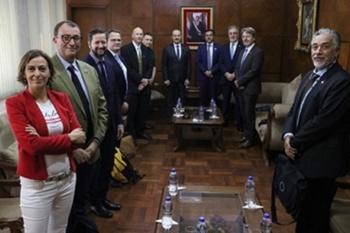
The purpose of the Exploratory Mission was to collect factual information concerning this election process, in line with the criteria contained in the Commission Communication on Electoral Assistance and Observation [COM(2000)191]
The experts had in particular to:
- Assess the pre-election situation in the light of international standards for democratic elections and national legislation. The assessment will cover: (i) Political situation, (ii) Legal and Electoral framework, (iii) election administration, (iv) voter registration, (v) party and candidate registration, (vi) human rights and fundamental freedoms, (vii) potential for electoral violence, (viii) traditional and online media, as well as social media, (ix) security aspects, (x) logistics and operational matters, (xi) use of electoral ICT and (xii) any other relevant issues relating to the elections and possible deployment of an EU EOM.
- Assess, when relevant, the state of implementation of recommendations of previous EU election missions (both EU EOMs and EEMs).
- Make necessary preliminary logistics related enquiries and provide advice on how to organise the operational component of a possible EU EOM.
- Assess the security situation in the country, in particular in connection with the possible deployment of an EU EOM.
- Advise on the composition, number and length of stay of the Core Team members and long and short-term observers of the EU EOM.
- Draft tentative specifications and Terms of Reference of a possible EU EOM and related estimated costs and budget breakdown.
- Assess the relevance of providing support to domestic observer organisations.
- Acquire updated information on EU election support (both EU and Member States) and other major partners (Canada, Norway and Switzerland) and possible other major actors plans in this field, including in the area of electoral assistance.
- Liaise closely with domestic and international election observation organisations that may be present on the ground regarding the preparation of elections.
- Prepare a number of specific reports as outlined in section 'VI. Output' of these ToR.
- Participate in the briefing of the EU EOM Core Team should the deployment of an EU EOM be decided.

Evaluation of the WFP Country Strategic Plan for Bhutan 2019-2023
- 2022 – 2023
- under € 500,000
- Bhutan
This independent evaluation of the WFP Country Strategic Plan in Bhutan assessed the strategic positionning, added-value and results of WFP operations in the country from 2018 to 2022.
The evaluation served the double purpose of accountability (performance and result assessment) and learning (why certain results occurred or not, lessons and evidence for decision-making). It is envisioned that the evaluation will inform the design of the new CSP for Bhutan, which was scheduled for Executive Board consideration in November 2023.
CSP key sectors and activities included:
- Emergency preparedness and response
- Nutrition and school feeding
- Social protection
- Agriculture value chains and smallholder farmer support
- Resilience, disaster risk reduction and management, and climate change
- Institutional capacity strengthening
Cross-cutting themes included: Gender equality and empowerment of women (GEEW), humanitarian principles and protection, accountability to affected populations (AAP), WFP partnership strategy.
The evaluation employed a mixed-method approach that triangulated qualitative and quantitative data from a variety of sources. For this purpose, the evaluation team conducted interviews with different stakeholders including WFP staff at HQ, regional and country level, WFP cooperating partners, donors, UN agencies, ministries as well as focus group discussions with the beneficiaries.
The final report is available at: https://www.wfp.org/publications/evaluation-bhutan-wfp-country-strategic-plan-2019-2023
Facility for the European Neighbourhood Instrument (ENI) Cross Border Cooperation (CBC) programmes at the EU’s external borders (Technical Support to the Implementation and Management of ENI CBC Programmes)
- 2015 – 2023
- over € 10 million
- ENI, Europe
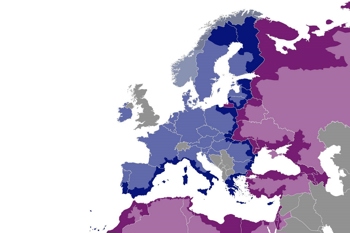
The overall objective of the project is to provide technical support to the implementation and management of the 16 ENI CBC Programmes listed in the ENI CBC Programming Document.
The purposes of this contract are the following:
- to enable participating countries to manage and implement the ENI CBC Programmes in the most efficient way and to ensure effective cooperation between the Member States and the partner countries;
- to improve the project development and management capacity of organisations eligible to participate in the ENI CBC programmes – such as local and regional authorities, CSOs and other relevant players. These activities should benefit CBC partner countries (including Turkey and the Russian Federation).
- to stimulate coordination not only among ENI CBC programmes but also between ENI CBC programmes and other similar instruments. This would allow for exchanges of best practices among both Programmes and projects and increase the ENI CBC visibility.
Results achieved:
- ENI CBC programmes stakeholders will be able to share experiences and best practices with their counterparts in other ENI CBC programmes and with players involved in European Territorial Cooperation and in CBC programmes under the Instrument for pre-accession (IPA) where relevant;
- The Commission and the ENI CBC programme stakeholders will receive assistance to solve implementation problems;
- Studies and/or tools of general nature requested by the Commission or ENI CBC stakeholders will be carried out;
- Active networking among programme stakeholders will be established enabling them to share information, good management practices and to improve procedures.
- Level of awareness of cross-border and regional cooperation opportunities in the beneficiary regions will be increased;
- Visibility of the ENI CBC instrument will be strengthened;
- Coordination of ENI CBC instrument with other sources of funding will be increased,
- Partners capacity in CBC partner countries to identify and prepare good quality projects will be increased;
- Partners capacity in the CBC partner countries to manage local/regional development projects will be increased;
- Number of good quality projects prepared and approved for implementation will be increased.