
Nuestros proyectos
Explore la experiencia de Particip en proyectos desarrollados en distintos países, sectores y ámbitos de especialización.
Nuestras referencias ofrecen una visión general de las misiones finalizadas y en curso, incluidos sus objetivos, alcance geográfico, duración y valor contractual.
Mostrando 1–10 de 59 referencias

EU Outreach and Partnership Facility for the GCC
- 2026 – 2029
- de 2 a 5 millones de €
- Bahrain, Belgium, Kuwait, Oman, Qatar, Saudi Arabia, United Arab Emirates
As outlined in the Joint Communication, the Gulf is a dynamic neighbouring region and an important gateway between Europe, Asia and Africa. Likewise, the EU has a lot to offer to the Gulf partners, as the world’s biggest single market, trading bloc and investor, a leader in research and innovation, and an important mediator and promoter of multilateralism, social transformation including human rights, gender equality, diversity and inclusion. As both regions navigate an increasingly complex global landscape, their partnership will continue to be shaped by economic interdependence, shared security interests, and a commitment to addressing global challenges collaboratively.
The overall objective to which the project contributes is to ++consolidate the EU-GCC partnership at regional and bilateral level, and improve the EU’s perception in the region.++
The specific objectives of the project are as follows:
1) Strengthen the position of the EU as a key partner in the GCC region in areas of mutual interest.
2) Support the implementation and monitoring of EU–GCC partnership and cooperation initiatives.
3) Foster deeper cooperation and mutual understanding between non-state actors, academia, civil-society and citizens in the EU and the GCC region.
The expected outputs of the project are as follows:
++1) Outcome 1:++ Strengthen the position of the EU as a key partner in the GCC region in areas of mutual interest. ++Output:++ Increased awareness, exchange and collaboration between EU and GCC stakeholders in key strategic areas with a focus on joint initiatives, dialogues, and collaborative projects.
++2) Outcome 2:++ Support the implementation and monitoring of EU-GCC partnership and cooperation initiatives. ++Output:++ Enhanced analysis, knowledge, and expertise to support the implementation and monitoring of joint policy priorities.
++3) Outcome 3:++ Foster deeper cooperation and mutual understanding between non-state actors, academia, civil-society and citizens in the EU and the GCC region. ++Output:++ Expanded opportunities for people-to-people diplomacy, including joint cultural initiatives, academic exchanges, and cross-regional collaborations on mutually strategic sectors.

Strengthening the national regional linkages in SADC (SNRL) - Consultancies on regional integration based on SADC policies, facilitation of events, communication and visibility
- 2023 – 2027
- de 2 a 5 millones de €
- SADC region
The overall objective of the project "Strengthening the national regional linkages in SADC (SNRL)" is to support the Southern African Development Community (SADC) in its efforts to promote regional integration in the member states (MS) for the benefit of the population in the SADC region.
The project is aligned with SADC's regional strategy (the Regional Indicative Strategic Development Plan 2020-30, RISDP) and supports its implementation.
In particular, it supports SADC and its MS on implementing Chapter 5 of the RISDP focusing on the strategic management objectives of the RISDP. By strengthening SADC as a regional organization and by supporting the implementation of the regional agenda RISDP, the SNRL project aims to facilitate the regional integration in the SADC region.
The objective of this contract is the provision of high-quality short-term expert (STE) advice in various topics relevant for enhancing the capacities of national stakeholders to vigorously and effectively pursue in their respective countries the regional integration protocols, policies and strategies of SADC.
The individual consultancy assignments are developed between GIZ and its partners and are based on a joint process and methodology aimed at identifying the needs in the SADC region and within individual member states.
The assignments focus on the scaling-up of best practices and should aim to share experiences and knowledge throughout the region (for example by aiming to standardize products developed as part of the assignment).
The following outputs are expected as a result of project implementation:
- ++Output 1:++ The institutional framework for the implementation of regional integration in the SADC region has improved in the member states;
- ++Output 2:++ Monitoring and evaluation systems for the implementation of regional integration are in place in selected member states;
- ++Output 3:++ The strategic communication capacities of SADC and member states for high profile communication around SADC activities and operations are strengthened.
Implemented projects include the following (project number and title):
- P1/2023 Consultancy to Support the SADC Secretariat to Develop and Pilot the Protocol Compliance Mechanism and Monitoring of the Trade Protocol;
- P2/2023 Perception Survey on the status of SADC regional integration in the Member States;
- P3/2023 Facilitator/Presenter and Group Work Moderators for Two Regional Workshops Supported by SNRL;
- P4/2023 Development of Model Law for the Establishment of SADC National Committees in Member States;
- P5/2023 Consultancy to develop communication products for publication purposes from the deliberations of SADC Member States at the Regional Learning and Exchange Symposium in Lesotho;
- P6/2023 Consultancy to develop presentation on the Status of SADC National Structures and their Financing at the Regional Learning and Exchange Symposium in Lesotho;
- P7/2023 Facilitation Operational Planning SNRL;
- P8/2023 Consultancy Services to Support the Publicity Products of The SADC Summit Public Lecture- Angola;
- P9/2023 Consultancy Services to Provide Rapporteuring of the Proceedings of The SADC Summit Public Lecture- Angola;
- P10/2023 Development of Peer Learning & Review Mechanism for national SADC coordination;
- P11/2023 Shadow monitoring on the extent of implementation of the SADC RAIP 2017 – 2022;
- P12/2023 Editing & Design of Eswatini’s New Industrial Policy;
- P13/2023 Capacity Building on SADC Regional Integration and Project Management for SADC National Contact Points Junior and Middle Staff;
- P14/2023 Updating and Finalising the Status of the SADC National Committees Desk Review Report;
- P15/2023 Consultancy Services to Support the Documentation of Proceedings at the SADC Integrated Regional Electronic Settlement System 10th Anniversary Celebrations;
- P16/2023 Consultancy Services to Support the Publicity Products of the SADC Integrated Regional Electronic Settlement Systems 10-year anniversary;
- P17/2023 Consultancy Services to Support the Rapporteuring of the SADC Integrated Regional Electronic Settlement Systems 10-year anniversary;
- P18/2023 Scoping Studies South Africa and Zimbabwe;
- P19/2023 Scoping Study Madagascar;
- P20/2023 SNRL II Operational Planning Workshop.
- P21 Team Retreat Facilitatior
- P22 Communication Guidelines
- P23 Lesotho National Policy on Regional Economic Integration
- P24 Scoping study and development of SA documentary
- P25 Production of SADC video podcasts
- P27 Development of a Resource Mobilisation Plan for the SNC of the Kingdom of Eswatini
- P28 Ops Manual, OP & Capacity Building Training on RI & PM - Eswatini
- P29 Communications Capacity Building in Botswana
- P30 SNRL II Team Retreat Refresher
- P31 CB& Strengthening Lesotho's SNCs - Project Management
- P33 Establishment of South Africa’s SADC National Committee
- P34 Graphic Design for Promotional Material - SADC Public Lecture in Zimbabwe
- P35 Rapportuering of the SADC Public Lecture Zimbabwe
- P36 Madagascar National Policy on SADC RI
- P37 Capacity Building & Strengthening SNC in Madagascar
- P38 CB & Training on SADC RI & PM for Zambia’s SNC staff
- P39 CB on Resource Mobilisation & Development of Resource Mobilisation Strategy in Zambia
- P40 Regional CB on Resource Mobilisation
- P41 Model Law on the Establishment of SNCs
- P42 Policy briefs on SADC-RTGS; role/significance of the SADC public lectures in promoting regional cooperation and integration in the SADC region.
- P43 Fact Sheets on SADC Protocols
- P44 Communications Strategy and Social Media Dissemination Plan for BGCIS in Botswana
- P46 RI Orientation & Induction for the SNC in Eswatini
- P47 SNRL II Operational Planning Workshop 2025
- P48 Rapporteur for Tanzania Event on SADC RAIP 2017-2022 Shadow Monitoring Report
- P49 Rapporteur for Malawi Event on SADC RAIP 2017-2022 Shadow Monitoring Report
- P50 Policy Brief, Factsheet & Press Release On he AML (Anti-Money Laundering) & CFT
- P51 Madagascar Resource Mobilisation Strategy and Action Plan
- P52 Piloting SNC Peer Learning and Review Mechanism (S-PLRM)
- P53 Establish Baseline Values on SADC Parliamentary Forum’s Operational Efficiency
- P54 Revise SADC Draft Communication, Awareness and Visibility Strategy
- P55 NSA Baseline Indicators
- P56 Interpretation Assignments
- P57 Facilitation of Consultation Workshop SNRL
- P58 Endline Perception Survey
- P60 Piloting M&E Framework for the SADC Protocol on Trade
- P61 SADC Parliamentary Forum M&E on Gender
- P62 Photography, Videography and Livestreaming _ Launch of SA's SNC
- P63 SADC PRU Comms Strategy Launch
- P64 Status of SNCs in the Member States
- P65 Training of Botswana SNC
- P69 Facilitation of SPLRM 1st Cycle
- P70 SPRLM Budget and Finance Plan
- P71 CfP Support
- P72 Facilitation of SNC Guidelines
- P73 SADC PF Publication and Dissemination
- P74 SADC PF Gender Assessment
- P75 SADC PF Mid-Term Evaluation
- P77 Review of Public Hearing
- P81 Communication Documentary Launch

EU-Pakistan Private Sector Engagement
- 2024 – 2027
- de 500.000 € a 1 millón de €
- Pakistan
The overall objective (Impact) to which this action aims to contribute is to strengthen the economic and trade relation between the European Union and the Islamic Republic of Pakistan.
The specific objective of this contract is to contribute to the Private Sector Engagement (PSE) and Economic diplomacy strategy of the EU in Pakistan.
The expected outputs of this contract are as follows:
- Output 1: Coordinate with, and asses the other activities/interventions under the PSE strategy. Further
develop the PSE strategy during the contracting years, proposing new interventions;
- Output 2: Generate knowledge on private sector development challenges, investments opportunities,
European Business situation, all centred in EU interests to be presented/disseminated during the
Business Forum;
- Output 3: Design a communication strategy that enhances the Business Forum visibility, interest,
engagement and recognition;
- Output 4: Organised tailored high level business forums to discuss the situation of the sector and
promote investment between Pakistan and the European Union businesses.
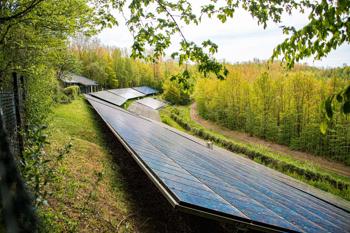
Provision of assistance for the technical and financial monitoring of ongoing projects funded from previous and on-going LIFE programmes and on thematic support.
- 2023 – 2027
- más de 10 millones de €
- Europe
LIFE is the main European Commission funding mechanism for improving the state of the environment in the European Union.
Particip GmbH is responsible for the management of the ELMEN EEIG. Particip provides the Administrative Team, the financial management, and one of the two Managing Directors of ELMEN EEIG, and is therefore responsible for ensuring an effective operation of business activities and the compliance with contractual requirements. The overall management tasks include budgeting, accounting and controlling, as well as guaranteeing high team performance and quality assurance.
The general objective of LIFE is to contribute to the implementation, updating and development of EU environmental and climate policy and legislation by co-financing projects with European added value. The general objectives of LIFE shall be pursued through four sub-programmes:
- Nature and biodiversity
- Circular economy and quality of life
- Climate change mitigation and adaptation
- Clean energy transition
The specific objectives of LIFE are:
- To contribute to the transition towards a resource-efficient, low-carbon and climate resilient economy, to the protection and improvement of the quality of the environment and to halting and reversing biodiversity loss, including the support of the Natura 2000 network and tackling the degradation of ecosystems;
- To improve the development, implementation and enforcement of Union environmental and climate change policy and legislation, and to act as a catalyst for, and promote, the integration and mainstreaming of environmental and climate objectives into other Union policies and public and private sector practice, including by increasing the public and private sector’s capacity;
- To support better environmental and climate governance at all levels, including better involvement of civil society, NGOs and local actors;
- To support the implementation of the 7th Environment Action Programme.
The ELMEN EEIG provides about 130 long-term experts specialised in monitoring and evaluation and in thematic fields related to EU environmental policy. The experts monitor more than 1000 projects that are financed via the LIFE instrument.

Evaluation of the Country Programme in Uganda 2023-2027
- 2026 – 2027
- menos de 500.000 €
- Uganda
The assignment concerns the end-term evaluation of Enabel’s Uganda Country Programme 2023–2027, with a total budget of approximately EUR 68 million. The programme supports Uganda’s development priorities through two main pillars. Pillar 1 focuses on decent jobs and economic opportunities for youth, including technical and vocational education and training (TVET), employability, entrepreneurship, value-chain development and business and human rights. Pillar 2 focuses on health, particularly maternal and child health and sexual and reproductive health and rights.
The evaluation examines the programme’s relevance, coherence, effectiveness, efficiency, sustainability and contribution to intended outcomes and longer-term change. It also assesses cross-cutting dimensions such as gender equality, human rights, inclusion and the principle of Leave No One Behind, as well as the programme’s added value within the wider Ugandan development context.
A theory-based and mixed-methods approach is applied, combining documentary and monitoring-data analysis with stakeholder interviews, focus group discussions and field observations. Fieldwork covers the principal programme implementation areas, including Kampala, Albertine, Acholi, West Nile, Busoga and Rwenzori, allowing the evaluation to capture differences across geographical, institutional and sectoral contexts. A light foresight component is also included to reflect on emerging trends, risks and opportunities that may affect the relevance and sustainability of programme results and future cooperation priorities.
The evaluation is expected to generate robust evidence on programme performance, identify lessons and good practices, and formulate practical recommendations to inform Enabel’s future programming and cooperation in Uganda.

EU Technical Assistance Facility for Improving Sustainable Forest Management (Forests For the Future Facility - F4)
- 2020 – 2026
- más de 10 millones de €
- Global
The Forests for the Future Facility (F4) provides strategic and technical support to the European Commission and to partner countries, to contribute to healthy forest ecosystems able to create decent jobs and to enhance economic growth in partner countries. F4 has a demand-driven approach to improve the number, quality and effectiveness of EU interventions in the forest-relevant sectors. F4's main themes are linked to sustainable forest management, private sector investment, policy reforms and sustainable value chains.
The F4 serves as a platform for dialogue and exchange as well as practical cooperation to address the interlinkages between development, poverty reduction, trade, climate change, biodiversity and forest.
F4 is based on two mutually reinforcing pillars: on the one hand a platform for policy dialogue and knowledge exchange and on the other hand a source of technical and financial support to implement forest-related programmes.
Specifically, the F4 Facility constitutes a team of experts that provides technical assistance to the Commission staff (Commission Headquarter in Brussels and EU delegations, as appropriate) and partner countries to improve the quality of forest-relevant programmes or activities at any stage of their cycle (negotiation, programming, identification, formulation, implementation and evaluation).
The Facility is able to address the full spectrum of the forest sector from legal and sustainable forest management and conservation to trade and consumption aspects, by developing sustainable value chain analysis through a holistic approach, looking extensively at economic, social and environmental indications.
In this context, the Facility promotes the concept of Forest Partnership, integrating programming documents, Team Europe Initiatives and additional policies, which may arise.
Particular attention is given to the role of private sector (smallholder farmers, MSMEs) as a driver of inclusive and sustainable forest sector growth and to enhance civil society ability and capacity to participate in the decision-making and monitoring process.
The Facility also has to be able to assess and develop policies/strategies (reforms, governance, legal framework, institutional strengthening, financing plan, fiscal incentives) within the forest sector as well as sectors that may have an impact on forests, like agriculture, infrastructure, mining.
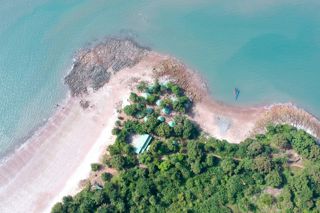
Strategic Evaluation of the EU partnership with Guinea (2014-2024)
- 2025 – 2026
- menos de 500.000 €
- Guinea (Conakry)
This evaluation has two overarching objectives. Firstly, it aims to provide an independent and comprehensive assessment of the performance and strategic relevance of the EU’s partnership with the Republic of Guinea. Secondly, it seeks to identify key lessons and produce forward-looking recommendations to inform responsible decision-makers – particularly within the European External Action Service and the Directorate-General for International Partnerships – on how to enhance the quality, coherence, and impact of the EU’s current and future strategies, programming, and actions in Guinea.
Its specific objectives are as follows:
- To assess how the EU’s overall engagement in Guinea has contributed to its strategic objectives at the country level, through political dialogue, development cooperation, trade, and investment initiatives;
- To provide EU external cooperation services and the broader public with an independent assessment of the EU’s cooperation with the Republic of Guinea over the period 2014-2024.
The evaluation will focus on six priority sectors: i) return to constitutional order; ii) south-north migration; iii) natural resource exploitation and public finance; iv) energy; v) climate change; and vi) health.
The evaluation will deliver findings, conclusions, and lessons regarding the effectiveness, coherence, and sustainability of the EU support in Guinea. It will also provide targeted, practical, and forward-looking recommendations to improve the design and implementation of current and future EU interventions in Guinea under the 2021-2027 programming period
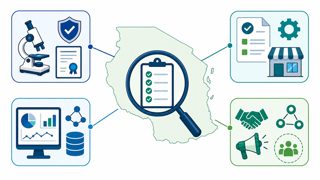
Final Evaluation of the “Quality Standards and Compliance Programme for the United Republic of Tanzania” (QUALITAN NO. FED/2021/428-294) under the business environment growth and innovation (BEGIN/ TZ/FED/41067) programme- Tanzania
- 2026 – 2026
- menos de 500.000 €
- Tanzania
The final evaluation of the EU-funded “Quality Standards and Compliance Programme for the United Republic of Tanzania” (QUALITAN), implemented by UNIDO under the wider Business Environment, Growth and Innovation (BEGIN) programme aimed to increase MSME compliance with quality standards in order to widen market access, reduce standards compliance costs and enhance consumer protection.
The evaluation has a twofold objective: first, to provide the European Union and interested stakeholders with an independent assessment of QUALITAN’s performance, including the results achieved at different levels and the factors explaining those results; and second, to identify lessons learned, conclusions and recommendations to inform current and future interventions.
More specifically, the evaluation will assess progress against the project’s original objectives and expected results; examine the sustainability of benefits; assess the contribution and effectiveness of stakeholders and governance structures; and identify the major constraints faced during implementation.
The evaluation covers the full QUALITAN implementation period, from 1 January 2022 to 24 July 2025.
While QUALITAN is part of BEGIN, the evaluation focuses on the QUALITAN component only. It will consider links with BEGIN, the Blueprint reform agenda and Tanzania’s wider quality infrastructure system only where these are relevant to QUALITAN’s performance, coherence, sustainability and EU added value.
The evaluation will use a theory-based, mixed-methods approach structured around the OECD-DAC criteria, EU added value, the reconstructed Theory of Change and the Evaluation Matrix. The approach is designed not only to assess what was achieved, but also to explain why results varied across components and how QUALITAN contributed to observed changes.
The main analytical approach will be contribution analysis, testing the plausibility of QUALITAN’s intervention logic and assessing whether the project contributed to results in areas such as conformity assessment capacity, standardisation, MSME outreach, digitalisation, governance and communication.
The evaluation will assess QUALITAN against the following main areas: relevance, coherence, effectiveness, efficiency, sustainability, perspective of impact and EU added value. It will also integrate cross-cutting issues, including gender equality, youth, disability, Leave No One Behind, human rights-based approaches, environment and climate considerations, and contributions to SDG 8 and SDG 9.
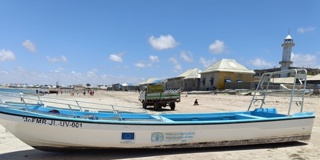
Evaluation of the Programme 'Inclusive Local and Economic Development - ILED' in Somalia (T05-EUTF-HOA-SO-57)
- 2025 – 2026
- menos de 500.000 €
- Somalia
The 'Inclusive Local and Economic Development' (ILED) programme comprised 14 individual interventions in Somalia. The overall objective of ILED was to contribute to stability in Somalia by extending state authority and services, promoting local reconciliation and peacebuilding, creating inclusive economic opportunities, and protecting the most vulnerable. In line with this objective, the 14 interventions were organised under three thematic pillars: stabilisation and governance, inclusive and sustainable economic growth, and social safety nets. Using an integrated territorial approach, the programme was implemented in four strategic corridors of Somalia: Juba River, Shabelle River, Central-North, and Somaliland. ILED was financed by the EU Emergency Trust Fund for Africa with a total budget of almost 100 million EUR.
The evaluation was commissioned by the EU Delegation to Somalia. Its global objective was to provide the relevant services of the EU and interested stakeholders with an overall independent assessment of the performance of the ILED programme, paying particular attention to the results achieved and the underlying reasons of these achievements. It also sought to identify lessons learned, conclusions, and recommendations to improve current and future interventions. The object of evaluation was the programme level (rather than the individual interventions). The evaluation scope covered the entire implementation period from September 2018 to December 2025, all three thematic pillars, and all four geographic corridors.
The methodology to answer the six evaluation questions (EQs) relied on a reconstructed Theory of Change and a mixed methods (albeit predominantly qualitative) approach. After a comprehensive document review, the evaluation team conducted field missions in the four corridors of the programme in Somalia, as well as meetings in Nairobi. The evaluation findings were presented in a dissemination seminar in Mogadishu.

Joint Efforts for a Green Future: Evaluation on Finland's Development Cooperation in Environment and Sustainable Use of Natural Resources and Private Sector Opportunities
- 2024 – 2026
- menos de 500.000 €
- Global
This evaluation aims to provide the Ministry for Foreign Affairs (MFA) of Finland and its stakeholders with an in-depth understanding of the achievements, merits, and value of implementing the policy priority area on sustainable management and use of natural resources. It seeks to deliver evidence-based recommendations to enhance the effectiveness of Finland's engagement with this theme over the long term, while also increasing awareness of results achieved and lessons learned. Additionally, the evaluation will expand knowledge on environment and natural resources-related Sustainable Development Goals (SDGs), with particular attention to SDG 17 on partnerships.
The evaluation encompasses four standalone evaluations on four of the sub-sectors under Finland's ‘Climate and Natural Resources’ policy priority area: i) forests and biodiversity; ii) water resources management; iii) energy, circular economy and critical minerals; and iv) disaster risk reduction (DRR), including meteorology. A synthesis report integrates key findings from the four evaluation reports, explores interlinkages, provides meta-level insights, and identifies concrete opportunities for Finnish private sector engagement. The evaluation also examines digitalisation and data management in forestry sectors in Tanzania and Vietnam, as well as delves deeper into the energy sector in Ukraine.
Objectives:
Assess results, successes, and challenges in achieving the objectives of this policy priority area and its sub-sectors.
Provide a synthesis of outcomes and impacts, including early and emengrgi impacts.
Identify and analyse opportunities for engaging Finnish private sector actors in this work.
Develop practical, evidence-based recommendations for future policy and operational approaches, considering financial and resource constraints. This includes exploring the potential of geospatial data and geo-referencing for monitoring and evaluation purposes.
The evaluation focuses primarily on the OECD DAC criteria of effectiveness and impact, with a particular emphasis on tangible results and signs of impact from both ongoing and completed interventions.