
Nuestros proyectos
Explore la experiencia de Particip en proyectos desarrollados en distintos países, sectores y ámbitos de especialización.
Nuestras referencias ofrecen una visión general de las misiones finalizadas y en curso, incluidos sus objetivos, alcance geográfico, duración y valor contractual.
Mostrando 91–100 de 980 referencias
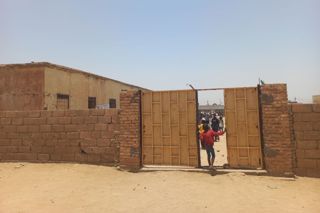
Bank Support and Monitoring Agent for Social Protection and Education projects in Sudan
- 2025 – 2026
- menos de 500.000 €
- Sudan
The main purpose of the BSMA is to ensure that funds of the two World Bank-financed projects, namely the Sudan SANAD – Emergency Crisis Response Safety Nets Project and the Sudan Primary Education Emergency Project (P504621), are used for the intended purpose.
The BSMA will carry out its support and monitoring activities consistent with the terms of the grant agreements concluded by the World Bank with WFP and UNICEF, respectively, including the terms of personal data protection. The BSMA consultancy assignment is additional to the normal monitoring and evaluation (M&E) functions that will be carried out by WFP and UNICEF, respectively, and will monitor and review the following:
- Monitor the progress of project activities in accordance with their overall plans. This includes data collection, field visits, and progress reporting.
- Monitor that results are being achieved in accordance with each projects’ results framework. This includes confirmation of the projects targets in the Results Frameworks.
- Monitor the implementation of the environmental and social risk management instruments as set out in the Environmental and Social Commitment Plan (ESCP), and provide recommendations to address the challenges, if any. Provide recommendations for continuous improvement, relevance, effectiveness, impact, and sustainability of activities.
- Monitor the mitigation and management of risks outlined in the project documents and provide recommendations to reduce or manage potential risks or constraints identified through the BSMA.
- Provide evidence-based, credible, and useful information to enable the incorporation of conclusions, lessons, and recommendations into the future decision-making processes of the World Bank projects.
- The BSMA will utilise the World Bank’s Geo-Enabling Initiative for Monitoring and Supervision (GEMS) to enhance transparency and accountability of the BSMA services, where possible, given the Fragility, Conflict, and Violence (FCV) context.

Third-Party Monitoring for Programmes Funded by the Somalia Joint Fund (SJF) and the UN Secretary-General's Peacebuilding Fund (SG PBF)
- 2025 – 2026
- menos de 500.000 €
- Somalia
The overall objective is to independently monitor and/or verify that SJF supported activities are being implemented with quality and integrity by NGOs, Government partners and participating UN entities and to assess the impact of SJF funded programmes on the target beneficiaries in line with fiduciary principles. Independent verification will also assess the extent to which the SJF is achieving its objective, contribute to organizational learning and recommend ways in which the Fund should enhance coherence, alignment, and harmonisation based on UNSDG Pooled-Financing mechanism best practices and the Funding Compact.
The scope of work encompasses monitoring activities, which may be of either an “overt” or a more “low-profile” nature. The exact nature of the assignment will depend, among other factors, on the proposed methodology, the sensitivity/type of information requested, and the local security context at the time of deployment.
Six cross-cutting programmatic themes and approaches guide all investments by the SJF:
- Gender equality and women empowerment
- Leave no one behind
- Social contract and legitimacy
- Capacity sharing and exit strategies
- Anti-corruption
- Environment and Climate Security

Framework Contract Services for the Implementation of External Aid 2018 ('FWC SIEA 2018') Lot 1 – Sustainable management of natural resources and resilience
- 2018 – 2026
- más de 10 millones de €
- Global
The objective of the FWC is to provide, via individual assignments defined and contracted through Specific Contracts, expertise which can be mobilised at short notice. The expertise may be required at any stage of the project cycle (except financial audits) and may cover the following sectors related to Sustainable management of natural resources and resilience:
Agriculture
1.1. Crop production, storage, conservation, transformation, and marketing /value chains
1.2. Vegetable, fruit and cash crop productio
n storage, conservation, transformation and marketing /value chains
1.3. Legal aspects
1.4. Alternative production systems (organic farming, agroforestry, permaculture)
2. Livestock
2.1. Livestock regeneration plans
2.2. Veterinary, animal health, animal identification, quarantine and border inspection posts
2.3. Trade of animal products
2.4. Production, conservation, storage and marketing of animal products
2.5. Legal aspects
3. Sustainable Forestry management and conservation
3.1. Forest inventories, forest management plans, forest establishment and plantation management
3.2. Agroforestry, community and environmental development programmes
3.3. Strategic and operational resource development and wood supply plans
3.4. Forestry industry development plans
4. Fishery and aquaculture
4.1. Marine and fresh water aquaculture
4.2. Assessment of fish stocks and sustainable fish resources exploitation
4.3. Legal aspects
5. Land management
5.1. Land use planning, Land information systems and applications,
5.2. Land reform policies
5.3. Land registration and cadastre, Land market development, estate economic assessments
6. Food security & nutrition
6.1. Assessment of national stocks
6.2. National statistics on food production
6.3. Forecasts of famine and early warning systems
6.4. Transitory and chronic food insecurity
6.5. Nutrition
7. Food safety
7.1. Tracing, food control
7.2. Legal aspects
8. Extension/Training/Human Resources Development/Institutional development
8.1. Extension services
8.2. Training of personnel
8.3. Sectoral organisations (farmers, producers, traders)
8.4. Institutional strengthening
9. Rural Infrastructure
9.1. Rural infrastructure planning, development and rehabilitation (Market infrastructure, irrigation and drainage, etc.)
10. Climate Change
10.1. Climate change: resilience, adaptation and mitigation
11. Sustainable Natural Resource management
11.1. Sustainable management and protection of natural resources, biodiversity and ecosystems (soil erosion/salinization/fertility, national parks ecosystem protection, fight against desertification, etc.)
11.2. Sustainable Water management including planning (e.g. integrated river basin management), supply, waste water treatment (incl. waste water reuse and energy generation)
11.3. Environmental protection
11.4. Pollution including chemicals, plastics, waste, air pollution and greenhouse gases emissions
11.5. Green economy (incl. sustainable and resource efficient production and consumption), Blue Economy
11.6. Ocean governance including marine/coastal zones protection
12. Disaster Risk Reduction
12.1. Disaster Risk Reduction, including climate and environmental risks/disaster management
The expertise may cover any geographic area in the world, either inside or outside the EU.
The Specific Terms of Reference (Specific ToR), which form part of each Specific Contract, shall describe the objectives and required outputs of each individual assignment.

Evaluation of the Regional Sub-Saharan African Programme (2021-2025)
- 2025 – 2026
- menos de 500.000 €
- Africa
The main objectives of this assignment are: i) to provide the relevant services of the European Union (EU) with an overall independent assessment of the performance of the EU cooperation with Sub-Saharan Africa (SSA) MIP (2021-2027); and ii) to identify key lessons learned, conclusions and recommendations in order to inform decision-makers on how to improve current and future EU objectives, instruments and implementation arrangements targeting SSA, in the context of the design of the Multi-Annual Financial Framework 2028-2034 and the next programming document for SSA.
In particular, this evaluation aims to: i) assess to what extent the design and the implementation arrangements of the SSA MIP are suited to deliver on its intended objectives and the Global Gateway agenda in particular; and ii) assess to what extent the design and the implementation arrangements of the SSA MIP are flexible and responsive to fragility and to continuously evolving geopolitical contexts and shifts.

EU-India Policy Dialogue Support Facility (PDSF)
- 2024 – 2026
- de 1 a 2 millones de €
- India
The specific objectives of this contract are as follow:
- Outcome 1: To support the ongoing and planned sectoral EU-India policy dialogues and partnerships on topics of EU and EU-India mutual interest; and
- Outcome 2: To contribute to policy convergence of EU-India policy approaches in the global arena.
The expected outputs of this contract are as follows:
- Solid basis is established for operationalisation of the EU-India strategic partnership, as well as other key strategies and agreements shaping EU-India relations.
- People-to-people contacts are strengthened.
- Dissemination of relevant and updated information to target audiences on the EU-India strategic partnership, and more specifically on topics of key relevance to the sectoral policy dialogues is improved.
- Additional thematic areas for EU-India sectoral cooperation are identified, explored, and developed, including beyond India (regional, trilateral or global).
- Mutual understanding, trust, and knowledge of policy objectives and strategic interests between the EU and India are further strengthened.

Mid-Term Evaluation of the Ukraine Facility
- 2025 – 2026
- menos de 500.000 €
- Ukraine
The Ukraine Facility (the Facility) is a key instrument of the European Union’s strategy to address the scale and complexity of the challenges facing Ukraine in the wake of Russia’s ongoing war of aggression. This mid-term evaluation (MTE) is a stock-taking, lesson-learning, and forward-looking exercise, whose general objective is to provide the European Commission and other key stakeholders with an independent assessment of progress towards the Facility’s objective.
The specific objectives of the evaluation are:
- To provide a qualitative and quantitative assessment of the relevance, implementation conditions, and performance of the Facility as a performance-based instrument, with particular attention to efficiency, effectiveness, and EU added value.
- To assess the protection of the financial interests of the Union.
- To identify lessons learned (positive and negative), best practices, and recommendations, particularly regarding:
- the impact on the administrative capacities of Ukrainian public institutions (including monitoring and reporting) and the link to actual results and their sustainability;
- the administrative costs for Commission services in terms of expertise and processes; and
- the factors that facilitate or hinder the effectiveness of the Facility in achieving its objectives.
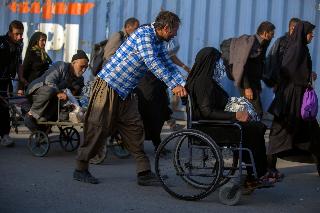
Evaluation of Disability Inclusion in EU-funded humanitarian aid operations (2020-2025)
- 2026 – 2026
- menos de 500.000 €
- Global
The Evaluation of Disability Inclusion in EU-funded humanitarian aid operations (2020–2025) assesses how disability inclusion has been integrated into DG ECHO-funded humanitarian interventions five years after the publication of its 2019 Operational Guidance on the inclusion of persons with disabilities. The global objective of this evaluation is twofold:
- To provide the relevant EU services and stakeholders with an independent assessment of the extent to which DG ECHO-funded humanitarian interventions have mainstreamed disability inclusion across sectors and contexts, while also supporting disability-targeted actions and relevant policy projects;
- To identify key lessons learned, conclusions, and recommendations to inform decision-makers on how to strengthen disability inclusion in current and future EU-funded humanitarian aid operations, including through improved programming, data use, participation, and accessibility.
The specific objectives are:
- to assess the relevance of DG ECHO’s operational guidance in supporting staff and partners to mainstream disability inclusion in EU-funded humanitarian aid interventions;
- to assess the level, quality, and effectiveness of disability inclusion across all sectors, covering both mainstreaming and disability-targeted actions;
- to assess ECHO-funded policy projects on disability inclusion, including their coherence with EU policy, relevance to global priorities and needs, added value for partners and the broader humanitarian system, and achieved results;
- to assess the capacity of DG ECHO staff and partners to operationalise disability inclusion in programming, including through available requirements, tools, and practices;
- to identify barriers, enablers, gaps, lessons learned, and good practices in disability inclusion, and to develop actionable strategic and operational recommendations for future DG ECHO strategies, policies, programming priorities, guidance, and tools.

Technical Assistance support to the WASH sector on Bougainville
- 2024 – 2026
- de 500.000 € a 1 millón de €
- Papua New Guinea
The overall objective (Impact) to which this action contributes is to improve gender responsive Water, Sanitation and Hygiene (WaSH) services and practices in the Autonomous Region of Bougainville (AROB) based on the EU-PNG MIP 2021-2027 and in line with current agreed processes of the drawdown of powers.
The specific objective of this action is to improve governance and institutional capacity of mandated authorities for WaSH service delivery in Bougainville.

Bridging Knowledge and Policy: Strengthening Armenian Think Tanks for Enhanced EU Engagement and Regional Cooperation
- 2024 – 2026
- menos de 500.000 €
- Armenia
The overall objective of this contract is to support evidence-based policymaking and to strengthen the inputs of the Armenian think tank community in the current context of deepening of EU-AM relations in line with the objective of further strengthening Eastern Partnership (EaP) priorities and enhancing awareness and understanding of the European Neighboured Policy.
The specific objectives of this contract are as follows:
- Specific objective 1: Enable production of high-quality research papers that provide indepth analysis on topics of importance to the EU’s engagement in Armenia and the South Caucasus.
- Specific objective 2: Foster collaboration between Armenia and EU based think-tanks, local experts, policymakers, and EU representatives to support informed decision-making and policy development.

Provision of Monitoring and Evaluation Services in Support to UNSOS Somalia
- 2022 – 2026
- de 1 a 2 millones de €
- Somalia
The main objective is to provide Monitoring and Evaluation Services in support to UNSOS in Somalia. Monitoring services will focus on responding to ongoing requests to review and assess the Strategic Communication and Public Information activities undertaken by UNSOS, UNSOM and ATMIS. As part of these services, Particip will provide 24/7 automated/recorded monitoring for all broadcasted client radio and television programs as well as UNSOS-supported community radios for the duration of the contract. Evaluation services shall include in-depth desk reviews of relevant documents, interviews, field visits, focus group discussions, surveys and analysis of public opinion.
Task Area 1: Monitoring.
- Conduct a systematic review and assessment of the Strategic Communication and Public Information (AU/UN/IST) project, comment on its relevance, and recommend measures necessary for improvement.
- Assess the reach and impact of the AU/UN/IST project outputs based on program objectives.
- Recommend specific action necessary to improve the project’s effectiveness and include additional resources required for implementation of such recommendations. Where necessary, the evaluation shall propose changes and revisions in the approaches, organization, management approach, and prioritization of AU/UN/IST activities to ensure achievement of objectives, sustainability of results, and minimize possible risks.
- Consistently monitor operations of the AU/UN/IST and similar organizations to generate ideas for new and creative strategic communication perspectives and approaches.
- Provide 24/7 automated/recorded monitoring for all broadcasted client radio and television programs as well as UNSOS supported community radios for the duration of the contract.
Task Area 2: Evaluation:
The contractor shall demonstrate their capability to:
- Review project documents, work plans, annual and semi-annual reports, performance monitoring plans, and other related technical documents.
- Interview key stakeholders including program related clients, government counterparts and civil society representatives, TCCs.
- Conduct specific field visits and observe the activities in action.
- Conduct focus groups and surveys of audiences to measure impact of project services and outputs.
- Design and implement baseline, mid-line and end-line opinion polls and surveys of Somali citizens’ perceptions of the clients’ stabilization efforts.
- Conduct a critical analysis of public opinion evolution and identify new developments in the public domain that could be leveraged to shape public opinion.
- Conduct an objective assessment of AU/UN/IST strengths and weaknesses.
- Conduct Focus Group Discussions (FGDs).
- Generate situation analysis and issue-based briefing papers.