
Nuestros proyectos
Explore la experiencia de Particip en proyectos desarrollados en distintos países, sectores y ámbitos de especialización.
Nuestras referencias ofrecen una visión general de las misiones finalizadas y en curso, incluidos sus objetivos, alcance geográfico, duración y valor contractual.
Mostrando 581–590 de 980 referencias
OPEN Neighbourhood — media hub: networking, on-the-job training and support to media professionals across the EU Neighbourhood area
- 2015 – 2021
- de 5 a 10 millones de €
- ENI
This project is a continuation of the journalist training project which was part of the previous Regional Communication programme. It aims at contributing via the training of journalists and media professionals and the support to production of audio-visual and on-line material (i) to the development of independent media in the Neighbourhood and (ii) to a more accurate presentation of the EU policies and support to the region by the media as well as a better understanding of these policies and support and of their impact in the partner countries of the Neighbourhood area by the general public.
Ultimately it will contribute to the establishment of a culture of transparency, dialogue and mutual understanding between EU citizens and those from its partner countries in the Neighbourhood region.
The purpose of this contract is as follows:
- To provide skills to Neighbourhood journalists to improve independent and objective reporting;
- To provide skills to Neighbourhood media editorial and management staff to run independent media outlets;
- To reinforce a network of Neighbourhood journalists and media professionals and ensure it is actively used as professional resource and networking platform.
Evaluation of the DRIVE Project 'Chemba Serviços de Irrigação Lda – Irrigation Infrastructure for Organic Sugarcane'
- 2019 – 2021
- menos de 500.000 €
- Mozambique
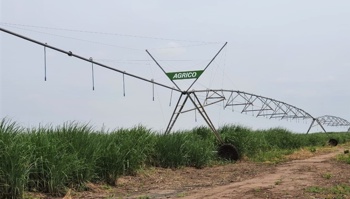
'Chemba Serviços de Irrigação Lda – Irrigation Infrastructure for Organic Sugarcane' was funded by the Development Related Infrastructure Investment Vehicle (DRIVE) of the Ministry of Foreign Affairs of the Netherlands. The project was located in the Chemba district of Mozambique and aimed to put an agricultural infrastructure in place for small-scale farmers (members of cooperatives) to sustainably grow high-quality organic sugarcane and food crops, which should ultimately enhance the income and food security of farmers and their communities.
The infrastructural outputs of the project, all operated by a utility company through a public-private partnership, included: (i) a bulk water supply infrastructure for irrigation, (ii) an electricity island for power supply to the irrigation system, (iii) a road grader and (iv) a weighbridge for the sugar cane delivered by cooperative members.
The purposes of the evaluation were accountability and learning (for continuous improvement) through insight into the nature and magnitude of effects (direct and indirect, positive and negative, intended or unintended) that could be attributed to the Chemba project. The evaluation determined whether the project contributed to private sector and human development as the overall objectives of the DRIVE facility. It also sought to contribute to the assessment of the feasibility of financing of other irrigation projects through DRIVE.
The evaluation used a mixed-methods contribution analysis that triangulated primary and secondary data. Specifically, it was based on a literature review, a household survey of members of beneficiary cooperatives, and qualitative stakeholder consultations (key informant interviews, focus group discussions, participatory workshop).

Evaluation on Economic Development, Job Creation and Livelihoods
- 2020 – 2021
- menos de 500.000 €
- Kenya, Tanzania, Zambia
This evaluation assessed how Finland’s objectives related to economic development, job creation and livelihoods, manifested in the Priority Area 2 (PA2), but not only limited to it, are being fulfilled through the various thematic approaches, cooperation modalities and funding instruments. An essential aspect of the evaluation was to provide guidance on how Finland might tailor its efforts, elaborating on what Finland’s strengths and “unique competencies” are in the division of labour in the donor community. Included in the Evaluation were also Finland’s Private Sector Instruments (PSI), i.e. Finland’s Development Finance Institution, Finnfund, the seed-funding and match-making programme Finnpartnership (FP), the innovation focused Business with Impact (BEAM) programme and the mixed credit scheme Public Sector Investment Facility (PIF).
The evaluation’s specific objectives were as follows:
- To assess to what extent and how the objectives of the Priority Area 2 on economic development, jobs and livelihoods are being achieved and how relevant and effective the interventions have been in relation to partner country needs.
- To determine what the Ministry of Foreign Affairs can learn from its peer organisations, especially the Nordics as well as from emerging international 'best practices' for more relevant, effective and coordinated support for economic development, jobs and livelihood opportunities.
- To suggest how the effectiveness of Finnish development cooperation related to economic development can be be further developed, including if and how the Results-based Management system can be strengthened.
The evaluation entailed the following:
- Mapping of the PA2 portfolio and the Private Sector instruments in order to investigate what Finland in fact has been doing 2016-2019 in this respect;
- Assessing what have been the results of these interventions in terms of improved economies and more jobs and livelihood opportunities in particular for women, youth and the poor;
- Looking deeper into certain sectors/themes of the PA2 portfolio of specific interest either due to overall significant resource flow under PA2 (energy); perceived comparative advantage by Finland (innovation); policy concern by MFA (women economic empowerment and taxation).
The final report is available here: https://um.fi/publications/-/asset_publisher/TVOLgBmLyZvu/content/evaluointiraportti-suomen-tuki-kumppanimaiden-talouden-vahvistamiseksi-ty-c3-b6paikkojen-luomiseksi-ja-toimeentulon-parantamiseksi/384998
EU Policy and Outreach Partnership
- 2016 – 2021
- de 2 a 5 millones de €
- Russia
This project is part of wider EU public diplomacy and outreach activities towards audiences in Russia and it complements other cooperation programmes of the EU and its member states in Russia.
The overall objective of this action is to support the achievement of the EU’s policy objectives through public diplomacy activities that engage meaningfully with targeted audiences and stakeholders in order to build trust and mutual understanding.
The purposes of this contract are:
- to offer a platform for dialogue and debate on a number of bilateral and global issues for selected Russian and EU experts and interlocutors who can function as moderators/facilitators of a balanced and positive dialogue between EU and Russia;
- to expose selected Russian target audiences to the EU, EU policies and positions and to engage them into a dialogue on a number of bilateral and global issues;
- to expose wider public in Russia to different positions and points of view on a number of bilateral and global issues, as well as to more complete information about the EU, EU policies and positions.
This action consists of five main components which are mutually reinforcing:
- Component 1: EU-Russia Experts Network (on foreign policy). EU-Russia Experts Network brings together experts, analysts and alumni from a variety of institutions and academic centers from Russia and EU member states to discuss actual foreign policy issues (such as economics, EU affairs and human rights) with the aim of coming up with concrete recommendations for a new modus operandi for EU-Russia relations. EU-Russia Experts Network meets on a quarterly basis.
- Component 2: 12 Roundtables/debates on other policy areas to bring together different business representatives networks, journalists, researchers and NGOs representatives. The debates are organised in partnership with selected Russian universities and academic institutions including the EU-supported Jean Monnet centres around Russia, alumni networks from EU and Russian universities, business organisations and representatives of international organisations.
- Component 3: Provision of EU speakers to public events in Russia. A network of experts is established for dedicated events in Russia. The visiting EU speakers are expected inter alia to speak at conferences organised by the Russian Association of European Studies, the European Studies Institute at MGIMO-university, the Jean Monnet Centres of Excellence, the EU information centres, as well as events organised by different think tanks, non-governmental organisations and foundations.
- Component 4: Visiting Russian practitioners to the EU. The visits are addressed to journalists, representatives of civil society organisations as well as civil servants, local government officials, think tanks/analysts, alumni networks and business representatives. 50 Russian professionals benefit from this opportunity each year.
- Component 5: Cross cutting activities, including dissemination to wider audiences through audiovisual products, media relations, awareness raising and PR activities.

Technical Assistance in support to the Office of the National Authorising Officer (NAO)
- 2017 – 2021
- de 1 a 2 millones de €
- Sierra Leone
The overall objective of the Project/Financing Agreement wass to contribute to sustainable inclusive growth and poverty reduction in Sierra Leone, as outlined in the National Agenda for Prosperity, through effective delivery of EU cooperation in line with Paris Declaration, the Accra Agenda and the EU’s commitments to the Busan New Deal.
The specific purpose of this contract was to strengthen the capacity of the National Authorising Officer Office (NAO office) to efficiently execute its mandate as stated in the Cotonou Partnership Agreement.
Furthermore, the Contractor achieved the following results:
- Continued greater understanding and improved utilisation of the rules, regulations and procedures applicable to the delivery of EU development assistance (EDF) by the staff of the NAO office, MDAs and relevant stakeholders
- Continued efficient office and management information systems (MIS) and effective tracking and monitoring system for all projects, programme estimates and contracts are in place and staff is trained in their utilisation
- Continued enhancement of the capacity of the NAO to participate proactively on strategic issues such as programming, coordination, reviews and dialogue with other MDAs, and relevant stakeholders, including non-state-actors (NSA)

Non-proliferation and disarmament (NPD) monitoring system and logframe migration to OPSYS
- 2020 – 2021
- menos de 500.000 €
- Global
The overall objective of this assignment is to provide a sound basis for the future design, implementation, monitoring and reporting of results of NPD actions to the Commission, FPI.3 and implementing partners as represented by FPI.3.
The specific objectives are to:
- Develop an overall intervention logic and results framework for NPD as an area of FPI intervention, including core indicators.
- Propose an NPD action-level intervention logic and results framework template, including core indicators suitable for sub categories of interventions as relevant, while seeking: (1) Coherence with the overall intervention logic and results framework for NPD as an area of FPI intervention, and (2) Consideration of differences between the focus of different NPD actions and categories of NPD actions.

Mid-term evaluation of the "Sustainable Solutions" Action for the most vulnerable host populations, refugees and migrants in Djibouti.
- 2020 – 2021
- menos de 500.000 €
- Djibouti
The main objectives of this evaluation were to provide the relevant EU services, interested stakeholders and the Horn of Africa Trust Fund (HLTF) Monitoring and Lessons Learned System (including to illustrate through operational examples the mid-term evaluation of the UTF instrument) with the following information
- a comprehensive and independent analysis of the performance of the Sustainable Solutions for the Most Vulnerable Host Populations, Refugees and Migrants in Djibouti action, with particular attention to its intermediate results, in comparison with the expected objectives, and the reasons supporting these results;
- lessons learned, conclusions and associated recommendations, so as to improve, where appropriate, the implementation of the action and potential future interventions.
The evaluation analysed the action according to the five DAC evaluation criteria, namely: relevance, effectiveness, efficiency, sustainability and impact prospects. In addition, the evaluation followed two specific EU evaluation criteria:
- EU added value (insofar as the action brings additional benefits to those that would have resulted from member states' intervention alone};
- the coherence of the action itself with the EU strategy in Djibouti and under the EU Emergency Trust Fund, Horn of Africa window, with other EU policies and with other actions of member states and donors involved in the sector.
The evaluation team furthermore checked whether gender, environment and climate change issues have been incorporated; whether important SDGs and their interactions have been identified; whether the principle of "Leave No-One Behind", (see https://www.un.org/africarenewal/fr/magazine/avril-
2016/odd-don't-leave-none-behind) and a rights-based approach were taken into account in the identification/formulation of documents and to what extent these were reflected in the implementation, governance and monitoring of the action.

EU communication campaign in Djibouti: Visibility of the EU's actions for Women and Employment in the Republic of Djibouti
- 2019 – 2020
- menos de 500.000 €
- Djibouti
The overall objective of the campaign is to consolidate the EU’s image as the main partner for Djiboutians, focussing on the values of the EU, in particular the promotion of women's rights and sustainable development resulting in job creation.
The specific objectives of this contract are:
a) Design and implement a communication campaign focussing on EU assistance to sustainable development resulting in job creation. The campaign aims at strengthening the image of the EU as the main support partner of Djibouti. In this context the project will:
- Define the target audience and its size (core target of the campaign, main target, secondary target);
- Define the communication message(s) and axis of the campaign that will support the actions and communication tools for each identified target audience. These messages should contribute to: (i) publicise EU actions in the field of employment promotion; (ii) assess the relevant results of the actions carried out; (iii) to positively change the perception of the target audience on EU support in the field of knowledge building and job creation;
- Identify for the campaign, the choice of media and supports (based on the defined budget and characteristics of the target audience) that will be produced and disseminated in order to contribute to a positive change in the perception of the EU and the image that the target audience has of it;
- Define the provisional budget allowing to have a realistic global vision of the project by taking into account the selected supports;
- Define a retro-planning to highlight the essential steps of the communication campaign;
(b) Design and implement a communication campaign focussing on the values of the EU, in particular the defence of the rights of women and girls. The objective of the campaign is to consolidate the image of the EU as Djibouti’s main partner. In this context the project will:
- Define the target audience and its size (core target of the campaign, main target, secondary target);
- Define the target audience and its size (core target of the campaign, main target, secondary target);
- Define the communication message(s) and axis of the campaign that will support the actions and communication tools for each identified target audience. These messages should contribute to: (i) publicise EU actions in the field of employment promotion; (ii) assess the relevant results of the actions carried out; (iii) to positively change the perception of the target audience on EU support in the field of knowledge building and the defence of the rights of women and girls;
- Identify for the campaign, the choice of media and supports (based on the defined budget and characteristics of the target audience) that will be produced and disseminated in order to contribute to a positive change in the perception of the EU and the image that the target audience has of it;
- Define the provisional budget allowing to have a realistic global vision of the project by taking into account the selected supports;
- Define a retro-planning to highlight the essential steps of the communication campaign;
(c) Define indicators to monitor the achievement of the results listed above, which are measurable and objectively verifiable, half way through and at the end of the implementation period of the communication campaigns.
Final evaluation of the Gouvernance Support Programme
- 2019 – 2020
- menos de 500.000 €
- Ivory Coast
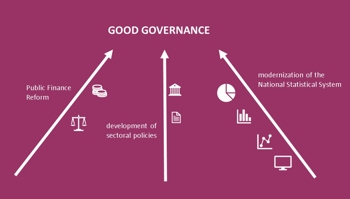
The overall objective of this programme was to contribute to the strengthening of the peace and recovery process in Côte d'Ivoire with a view to improving and promoting good governance. Situated at the crossroads of the main cross-cutting issues contained in the European Consensus on Development, the GAP supports the strengthening of governance in Côte d'Ivoire through 3 main components:
Axis 1. Support for the implementation of the Public Finance Reform for results-based budget management in line with the WAEMU Budget Reform.
- Component R1.1 - Institutional support to the Ministry of Economy and Finance (MEF) Component
- R.1.2 - Institutional support to pilot sectors of WAEMU reform: Component
- R1.3 - Support for institutional capacity building :
Axis 2. Support for the development of sectoral policies :
Contribution to the development of sectoral policies in certain key sectors that have a direct impact on poverty and the root causes of the crisis (health, education, water, sanitation, national identity/civil status, agriculture, rural land tenure, etc.), in line with the orientations taken in the framework of the WAEMU Reform, as well as in more cross-cutting sectors such as the environment (membership of FLEGT, Forest Law Enforcement, Governance and Trade), or decentralization :
Axis 3. Support for the modernization of the National Statistical System :
Institutional support to the National Institute of Statistics (NIS) in the implementation of the National Strategy for the Development of Statistics:
For the implementation of the GAP, in addition to equipment support granted to the structures involved in the PPPBSE chain and specific support to the Chamber of Accounts in the form of a PD, two technical assistance packages were mobilised, namely
- The Project to Support the Implementation of Results-Based Budget Management (PAGAR) for the "Reform of Public Financial Management" component; and ;
- the Project to Support the Planning and Statistics System (PAPS) for the components "Development of Sectoral Policies" and "Modernization of the National Statistical System (NSS)".
The assessment shows that the problems have been well targeted but less well addressed. Weaknesses were noted at the level of ownership of the programme by the ministries, the institutional anchoring of technical assistance, the synchronization of the two programmes, the monitoring of programme outputs, etc. The evaluation shows that the programme has been well targeted but less well addressed. All of these weaknesses have been identified and documented in the various evaluations and ROMs conducted on the project.
A mid-term evaluation with the main objective of providing stakeholders with an objective and reliable assessment of the implementation of the GAP with conclusions, recommendations, and lessons learned, likely to lead to proposals for updating, improving and revising the programme with a view to better implementation, based on the needs of the country and the performance achieved by the country in the governance sector was carried out from 23 November 2016 to 26 January 2017 by the evaluators of the DECG (Department of Evaluation and Management Control) of the National Authorizing Officer's Unit.
Evaluation of the Eastern Partnership Technical Assistance Trust Fund (EPTATF)
- 2020 – 2020
- menos de 500.000 €
- ENI East
The EPTATF was set up to accelerate the origination of operations in Eastern Partnership countries, and to improve the quality and development impact of the Bank's operations in the region. The establishment of the EPTATF was based on the assumption that technical assistance available at the time was inadequate to support the Bank’s operations in the region, particularly for small projects. It was set up to be complementary to the Neighbourhood Investment Facility (NIF) instrument and resources.
The purpose of the evaluation was to determine the extent to which the EPTATF has helped to improve EIB operations in Eastern Partnership countries since its establishment. Particip was expected to analyse the functioning of the EPTATF, its decision-making process, its governance arrangement and its organisation and performed a review of the EPTATF portfolio of TA operations.
The evaluation work encompassed the following main phases:
- Structuring phase: the evaluation team took ownership of the evaluation framework and approach, further amended and developed it, if deemed necessary.
- Data collection and analysis phase: this phase entailed a thorough desk review, data collection, validation and analysis. The analysis, focussing on 10 case studies of TA operations (at least three in Ukraine, and at least one in Armenia, Georgia, and Moldova) led up to the drafting of the Evaluation Report
- Preparation of the final report: the Team Leader participated in the presentation of the evaluation’s emerging findings to IG/EV and to the Evaluation Reference Group; and then drafted and finalised the Evaluation Report under the guidance of IG/EV