
Nuestros proyectos
Explore la experiencia de Particip en proyectos desarrollados en distintos países, sectores y ámbitos de especialización.
Nuestras referencias ofrecen una visión general de las misiones finalizadas y en curso, incluidos sus objetivos, alcance geográfico, duración y valor contractual.
Mostrando 751–760 de 980 referencias

Framework Contract Beneficiaries 2013: Lot 7 Governance and Home Affairs
- 2014 – 2018
- más de 10 millones de €
- Global
The objective of the FWC was to provide, via individual assignments defined and contracted through Specific Contracts, short-term technical assistance which can be mobilised at very short notice (normally within about 3 weeks).
The beneficiaries of the short-term technical assistance available via this Framework Contract (FWC) are exclusively third countries benefiting from the Commission’s External aid programmes. The FWC had no overall contractual amount or maximum budget. The implementation duration (not exceeding two years) and the contractual amount (not exceeding € 300,000) were fixed for each individual assignment. These maxima included the possible addenda.
The various assignments were financed from the different budget lines for external aid (the European Communities general budget) and the European Development Fund (EDF).
Implemented missions:
- 06.03.2014 - ongoing: Botswana; Preparation of the 11th EDF SADC programme in the field of Regional Political Cooperation, Budget: €183,443
- 02.04.2014 - ongoing: Cameroon; Evaluation à mi parcour du PASC, Budget: €52,713
- 24.03.2014-ongoing: Niger; Mid-term evaluation of the support programme to civil society (PASOC) II in Niger, Budget: €64,500
- 22.04.2014-ongoing: Uganda; Identification of 11th EDF good governance pillar, Budget: 158,280
- 14.04.2014-ongoing: Azerbaijan; Study on Azerbaijani-Georgian project for 'Implementation of Infrastructure at the 'Red Bridge' Crossing Point', Budget: €55,000
- 22.04.2014-ongoing: Pakistan; Appraisal of EU electoral interventions 2009-2013 to feed into EU ongoing federal and provincial parliamentary programmes, Budget: €99,928
- 09.06.2014-ongoing: Malawi; Mid Term Evaluation of the Democratic Governance Programme in Malawi, Budget: €90,000
- 20.05.2014-ongoing: Bosnia and Herzegovina; Corruption risk assessment in the education and health sectors in Bosnia and Herzegovina, Budget: €93,990
- 13.05.2014-ongoing: Mauritania; Election Expert Mission to Mauritania 2014, Budget: €217,898
- 22.06.2014-ongoing: Nigeria; Mid-term Evaluation of the programme Support to the Office of NAO II FED/2010/021-980, Budget: €93,998
- 30.05.2014-ongoing: South Africa; Review of Technical Assistance Models in South Africa, Budget €121,595
- 23.06.2014-ongoing: South Africa; Technical Assistance to Strengthening the e-Learning of the National School of Government, Budget: €108,200
- 01.06.2014-ongoing: Mauritania; Evaluation of the "Program implementation of the 10th EDF (PAMO EDF 10) and instructions for a new program", Budget: €115,000
- 15.08.2014-ongoing: Haiti; Sectoral state of affairs and formulation of component 'Institutional Support' - part II the "Support Programme for Reconstruction and Development of Neighborhoods", Budget: €74,625
- 01.09.2014-ongoing: Armenia; Review of the Sector Support Programme for Support to Justice Reform in Armenia 'Phase II' Project, Budget: €161,992

Civil Society and Foundations Communication and visibility programme 2018-2020
- 2018 – 2018
- menos de 500.000 €
- Global
DEVCO’s Civil Society and Foundations unit is also tasked with contributing to strengthen communication, information sharing and coordination (within DEVCO and with European External Action Service, EU Delegations in partner countries and, where appropriate, with line DGs, EU Member States and the Council) and improving visibility and understanding of the EU development cooperation on sector related issues.
Therefore, the overall objective of this assignment was to design an action plan to support and assist the implementation of the communication strategy elaborated by DEVCO Civil Society and Foundations unit.
The specific objectives were to raise awareness, promote and increase knowledge and visibility of the Civil Society and Foundations' policy and initiatives with, amongst others, its Framework Partnership Agreement signatories, EU institutions, development actors and the general audience in the EU and partner countries through the design and production of multimedia, visibility and other materials as required.
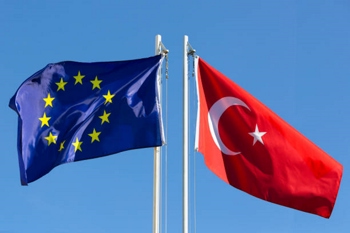
Support for the EU communication programme in Turkey
- 2016 – 2018
- de 5 a 10 millones de €
- Türkiye
The overall objective of this communication programme is to communicate the EU's policy objectives in Turkey. The purposes of this contract are as follows:
=Promote the EU and its values – in particular civil and political rights - among the Turkish population with a particular focus on identified target audiences, notably young people (under the heading ‘Our Europe, Our Future’), and underline the practical benefits of adopting these values for the Turkish citizens.
=Disseminate information about what the EU is concretely doing for Turkish citizens through its financing instruments to key partners and policy-makers and enhance the visibility of EU-funded projects. This information will include facts and figures about EU funded projects as well as the impact and effect of these projects.=Promote EU interests in Turkey, whether of an economic nature or aiming at a better understanding of EU policy positions.
=Dispel myths and misconceptions related to the EU and EU-Turkey relations and the accession process.

Belgium-Brussels: DCI — Advisory services in the health sector
- 2014 – 2018
- de 2 a 5 millones de €
- DCI
In line with the policy priorities referred to under 1.4, the purposes of this contract are to provide advisory services and support with a view to:
- Purpose 1: Help improve the quality of the EU's development aid in health in the medium and long term through adequate support at the key steps of the project/programme cycle and through the increase in know-how and capacity of staff in charge of operations in the health sector
- Purpose 2: Support the EU in the continuing definition and/or adaptation of coherent EU policies for global health aid
- Purpose 3: Support the EU in its contribution to the improvement of the governance of the global health aid architecture and mechanisms, in its ambition to increase the coherence and the complementarity between interventions at bilateral and global levels; and in the definition of its own approaches to cooperation in the health sector
- Purpose 4: Enhance the accountability framework of the EU through adequate resource tracking and impact monitoring and to enhance its visibility at all levels, while respecting the EU commitments in terms of aid effectiveness
- Purpose 5: On a request base and resources allowing, to reinforce partner countries and, more generally, to reinforce the technical capacities of all stakeholders through targeted technical assistance and sharing of knowledge and know-how, in order to facilitate and improve the EU cooperation in the field of health

IDENTIFICATION AND FORMULATION OF A REGIONAL FLEGT SUPPORT PROGRAMME
- 2017 – 2018
- menos de 500.000 €
- Indonesia
1) Sound comparative analysis on status quo, coherencies, complementarities and conflicts between
national timber legality systems in ASEAN and ASEAN + 3 developed
2) Intervention options for the EU to support the implementation of the ASEAN workplan on FLEG,
including an ASEAN common position on timber legality and development of an ASEAN timber
legality baseline supportive to robust and effective VPA agreements identified
3) Intervention options for the EU to maintain the momentum of forest governance and trade
approaches in ASEAN +3 developed
4) Formulation of a detailed design of the regional support programme through Identification and
Formulation of an Action Document (AD) in line with EU guidelines and official updated
templates

Gender Analysis in conflict-affected Yemen and post-conflict Iraq
- 2018 – 2018
- menos de 500.000 €
- Iraq, Yemen
The global objective of this project was to provide a short-term expertise to support the EUD in planning for the implementation and monitoring of GAP II for the period 2018-20.
More specifically, the objective was to conduct two Gender Analyses (GAs), one for Yemen and one for Iraq, focusing on the EU development and cooperation strategic areas for each respective country to inform and effectively mainstream gender into the design and formulation of future projects/programmes of the EU Delegation to Yemen/Iraq and EU Member States (EUMS).
To this end, the GAs provided an understanding of the gender inequalities that persist in the economic and political spheres in Yemen and in Iraq, their causes, the changes prompted by the conflict (ongoing in Yemen, and recent in Iraq), and of local authorities' and non-state actors' capacity to work on gender equality in these contexts.

National Monitoring and Evaluation (M&E) System in Zambia: Supporting and Strengthening the Analytical Skills of the M&E staff
- 2018 – 2018
- menos de 500.000 €
- Zambia
Since 2015, GIZ’s Good Financial Governance Program (GFG) was implementing a large-scale program aiming to create a government-wide M&E system, including core business activities, IT support and capacity building and training. For this program, GIZ acts as implementing agency for UKAid and the Federal Ministry for Economic Cooperation and Development (BMZ). The program supported the Ministry of National Development Planning (MNDP), the Cabinet Office and the Ministry of Finance (MoF) at the “Apex” level as well as five sectors (Agriculture, Labour, Education, Health and Transport), encompassing seven line ministries.
The services requested under this assignment supported the first and the third pillar GFG’s M&E component, namely Capacity Building and Training on core business M&E activities.
The assignment was embedded in the Zambian Government’s process to produce its Annual Progress Report (APR). In order to improve evidence-based policy making in the context of the APR an in-depth understanding of the national context and how different results in various sectors interact with regards to the achievement of overall development objectives was required.
The APR is used as a monitoring tool and was intended to increase transparency of development outcomes. The ToR stated that the key issue underlying the assignment were the untimely production of the APR due to insufficient capacities of M&E staff to analyse, interpret and communicates meaningfully on the results and findings extracted from the available and assembled data sets from various sectors and line ministries.
Our understanding of the ToR and the status of achievements of the Programme was that the challenge existed in the further use of collected data through M&E activities under the GW-MIS in order to analyse and extract relevant information on actual performance against the N-KPIs. The appropriate, efficient and transparent communication and visualisation of this information gained from data analysis was another crucial element of this assignment.
Subsequently, the objective as described in the ToR was to strengthen the skills of M&E staff in data analysis and communication and to support the APR production process.
Ultimately, this project contributed to better policy decisions for improved service delivery for citizens and higher transparency and accountability

The Analysis of Methods of Data Collection on Incidents of Racism, Racial Discrimination, Xenophobia and Related Intolerance
- 2017 – 2018
- menos de 500.000 €
- South Africa
The global objective was to provide technical assistance to Government of South Africa, and in particular the Department of Justice and Constitutional Development, to analyze the existing data sources and methods of data collection on incidents of racism, racial discrimination, xenophobia and related intolerance in the public and private sector.
Related intolerance includes discrimination on the basis of sexual orientation, gender and disability.
Data refers to any piece of information in numerical or any other form.
The requested technical assistance assisted the government of South Africa with statistical information in the design of country responses to meet its obligations in terms of the DOPA, the ICERD and other international Human Rights treaties referring to discriminations.
The specific objectives of the assignment were:
- Identify and catalogue the methods of data collection, dissemination of data and the publishing of data by existing institutions and structures in the private and public sector with regard to racism, racial discrimination, xenophobia and related intolerance.
- Determine the owners of data, how data is generated and the products/outcomes of these processes.
- Categorise the format of data collected by governmental and nongovernmental institutions including academia, think tanks and other civil society organizations
- Provide recommendations on the utilisation of the combined existing databases as a national tool to record incidents of racism, racial discrimination, xenophobia and related intolerance.
- Engage organs of state, nongovernmental sector and the private sector in establishing the sources of data and methods used to collect, analyse, disseminate and publish reliable statistical data.
- Literature review on the methods of data collection, dissemination and publishing of data at both national and local levels.
- Conduct an international comparative desktop study on similar data collection methods and processes/ mechanisms.
- Analyse all the regulatory frameworks in South Africa and identify the responsible parties and methods for the collection of data.
- Provide recommendations with regard to the link between the methods of data collection and dissemination and the implementation of the NAP and assist with reliable statistics for the compilation of upcoming country reports.
- Benchmarking and reflecting best practises in data collection, analysis, dissemination and publishing

Technical assistance for the Evaluation Committee for the IPA 2014 Grant Scheme “Strengthening the impact of the Civil Society in effective Justice Sector reforms”
- 2018 – 2018
- menos de 500.000 €
- North Macedonia
The global objective was to select the best-quality Concept Notes and Full Application proposals for the Restricted Call for Proposals for IPA II 2014 Grant Scheme ”Strengthening the impact of the Civil Society in effective Justice Sector reforms”, in line with the criteria set in the Guidelines for applicants.
The specific objective of this assignment was to provide independent technical expertise as an assessor (non-voting member) to increase efficiency in the evaluation of project proposals, according to the rules of the Practical Guide to Contract procedures for EU external actions - PRAG.
More specific, the assessors provided technical expertise to:
- Assess and recommend best quality Concept Notes (Step1 – evaluation of Concept Notes) for passing on to the next stage of the evaluation, i.e. the evaluation of Full Applications (Step 2);
- Assess the best quality Full Application (technical and financial assessment) forms (Step 2 – evaluation of Full Applications) for passing on to the final stage of the evaluation, i.e. the evaluation of the eligibility check (Step 3); and identify, based on the evaluation of the application forms, projects that were proposed for funding.

Production of Country Evaluation Briefs and Country Evaluation Portraits for Ethiopia, Haiti, Mali, Myanmar, Nepal and Tanzania
- 2017 – 2018
- menos de 500.000 €
- Ethiopia, Haiti, Mali, Myanmar, Nepal, Tanzania
The purpose of this assignment is to collect, collate and systematically present, in the form of Evaluation Portraits and Country Evaluation Briefs, findings from existing evaluations and other documents of development interventions in five Norwegian partner countries: Ethiopia, Haiti, Mali, Myanmar, Nepal and Tanzania.
The objective of this assignment is to provide accessible and relevant knowledge about Norwegian and other donors’ development efforts in Norway’s partner countries through systematising findings from existing evaluations of development interventions. The exercise emphasises learning, supplementing a growing database of systematised, relevant, context-specific and accessible information. Beyond its intrinsic value, this knowledge forms a basis for development policies and strategies, contributes to development efforts in the field and reveals knowledge gaps that could be covered by future evaluations.
The main target groups for the study are the Norwegian Ministry of Foreign Affairs, Norad and Norwegian embassies in the selected partner countries and elsewhere.
The assignment is guided by the following questions:
- What are the key contextual features characterising each of the studied case countries?
- How do these contextual features affect development interventions in the respective country/-ies?
- What is the nature of the programmes and projects studied, including levels of development support?
- What are the major obstacles/challenges faced by those interventions?
- What are the major findings in the assessed material concerning the goals, methods, challenges, results and sustainability of the interventions studied?
- How do the programmes and projects perform in terms of such cross-cutting issues as gender equality, environmental concerns and anti-corruption?
- Which, intended and, if any, unintended effects of the programmes and projects, positive and negative, can be identified?