
Nuestros proyectos
Explore la experiencia de Particip en proyectos desarrollados en distintos países, sectores y ámbitos de especialización.
Nuestras referencias ofrecen una visión general de las misiones finalizadas y en curso, incluidos sus objetivos, alcance geográfico, duración y valor contractual.
Mostrando 751–760 de 984 referencias

Organisation of DEVCO's worldwide blogging competition 2017/2018
- 2017 – 2019
- menos de 500.000 €
- Global
The overall objective of the assignment was raising the awareness of young people worldwide about the activities of the EU on development and cooperation and especially about the positive impact they have on changing people’s lives for the better.
The specific objective was achieving this by creating enhanced international, regional and national media exposure by having a fresh different perspective on the EU-funded projects. This new perspective was provided by a blogging competition and a reporting trip of 4 young people on 3 continents (Asia-Pacific, Africa and Latin America and Caribbean).
Communicating directly from the field did not only provide for a closer, more concrete understanding of the EU activities and people’s needs and achievements but also provided DEVCO with new, updated, good quality material that can be used for further communication purposes at EU level as well as at regional and national level in the third countries.
- Palabras clave:
- Comunicación y medios
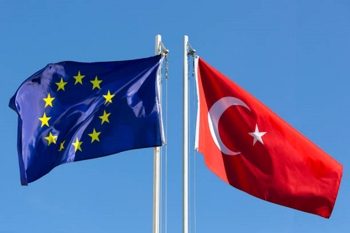
Support for the EU communication programme in Turkey
- 2016 – 2018
- de 5 a 10 millones de €
- Türkiye
The overall objective of this communication programme is to communicate the EU's policy objectives in Turkey. The purposes of this contract are as follows:
- Promote the EU and its values – in particular civil and political rights - among the Turkish population with a particular focus on identified target audiences, notably young people (under the heading ‘Our Europe, Our Future’), and underline the practical benefits of adopting these values for the Turkish citizens.
- Disseminate information about what the EU is concretely doing for Turkish citizens through its financing instruments to key partners and policy-makers and enhance the visibility of EU-funded projects. This information will include facts and figures about EU funded projects as well as the impact and effect of these projects.=Promote EU interests in Turkey, whether of an economic nature or aiming at a better understanding of EU policy positions.
- Dispel myths and misconceptions related to the EU and EU-Turkey relations and the accession process.
- Socios:
- Norm (líder), ESN, LDK, Particip
- Palabras clave:
- Comunicación y medios

Delivery of trainings on managing for results: linking planning/programming, monitoring and evaluation of EU assistance in ENI countries
- 2017 – 2018
- menos de 500.000 €
- ENI
The overall objective of the assignment is to further strengthen the capacity of the staff of the EC
(including EUDs) and of the ENI partner countries involved in the design, monitoring and implementation of EU assistance in line with sector focused approach and results based management principles.
The specific objectives are to:
1. Increase the capacity of EC and ENI partner countries' staff to design, implement and monitor programmes/ actions in line with sector focused approach;
2. Improve the quality of actions/interventions and the achievement and reporting of results;
3. Increase the capacity of EC and ENI partner countries' staff to design and manage evaluations.
The direct beneficiaries of this assignment are the European Commission, DG NEAR, including the
EU Delegations and the national authorities in the ENI partner countries.
- EU stakeholders are (non-exhaustive list): EC services - DG NEAR Directorate A, B, C and R; the EU Delegations (Office) in ENI partner countries;
- National stakeholders include (non-exhaustive list): General Secretariats of Government/ Deputy Prime Minister´s or Prime Minister´s Offices, Ministries of Finance, European Integration, other line ministries, Statistical Office etc. The staff of the national authorities of the ENI partner countries and that of the European Commission in headquarters (DG NEAR) and in the EU Delegations involved in programming, monitoring and implementation of EU assistance is the target group of this contract.
- Palabras clave:
- Desarrollo institucional, Formación, GCP / marco lógico, Gobernanza, Seguimiento y evaluación

National Monitoring and Evaluation (M&E) System in Zambia: Supporting and Strengthening the Analytical Skills of the M&E staff
- 2018 – 2018
- menos de 500.000 €
- Zambia
Since 2015, GIZ’s Good Financial Governance Program (GFG) was implementing a large-scale program aiming to create a government-wide M&E system, including core business activities, IT support and capacity building and training. For this program, GIZ acts as implementing agency for UKAid and the Federal Ministry for Economic Cooperation and Development (BMZ). The program supported the Ministry of National Development Planning (MNDP), the Cabinet Office and the Ministry of Finance (MoF) at the “Apex” level as well as five sectors (Agriculture, Labour, Education, Health and Transport), encompassing seven line ministries.
The services requested under this assignment supported the first and the third pillar GFG’s M&E component, namely Capacity Building and Training on core business M&E activities.
The assignment was embedded in the Zambian Government’s process to produce its Annual Progress Report (APR). In order to improve evidence-based policy making in the context of the APR an in-depth understanding of the national context and how different results in various sectors interact with regards to the achievement of overall development objectives was required.
The APR is used as a monitoring tool and was intended to increase transparency of development outcomes. The ToR stated that the key issue underlying the assignment were the untimely production of the APR due to insufficient capacities of M&E staff to analyse, interpret and communicates meaningfully on the results and findings extracted from the available and assembled data sets from various sectors and line ministries.
Our understanding of the ToR and the status of achievements of the Programme was that the challenge existed in the further use of collected data through M&E activities under the GW-MIS in order to analyse and extract relevant information on actual performance against the N-KPIs. The appropriate, efficient and transparent communication and visualisation of this information gained from data analysis was another crucial element of this assignment.
Subsequently, the objective as described in the ToR was to strengthen the skills of M&E staff in data analysis and communication and to support the APR production process.
Ultimately, this project contributed to better policy decisions for improved service delivery for citizens and higher transparency and accountability

EDF — Technical Assistance to the National Authorising Officer (NAO) Support Unit and Relevant Line Ministries in order to Build Capacity in Project Management, Mbabane Eswatini
- 2014 – 2018
- de 2 a 5 millones de €
- Eswatini
The overall objective of the assignment was to assist the Government of Eswatini in the reduction of poverty in the country.
The purpose of the project was to improve the speed, the quality and the amount of the EU support to Eswatini. The programme aimed to develop the capacity of the NAO support unit to enable the NAO to effectively and efficiently perform and fulfil all of the responsibilities as set out in Article 35 of Annex IV of the Cotonou Agreement. The project also developed the capacity of line ministries, parastatals and NSAs to manage EDF/EU funds and strengthen their capability to design and implement policies, as well as to optimise absorption capacity.
The results of the assignment were defined as follows:
1. The consultant/TAT must ensure that all NAO staff, line ministries, parastatals and NSA’s currently implementing EU funded programmes are well trained in all disciplines related to PCM (identification, formulation, implementation and evaluation), EU procedures, and sound financial management. Training to be undertaken must include but not limited to on the job mentoring, formal training, etc.
2. The consultant/TAT must ensure smooth implementation which includes but is not limited to formulation of contract documents, meeting of contract deadlines, processing of all contract related documents, monitoring and supervision of contracts etc, of all EU funded projects by backstopping programme managers. The TAT is expected to be semi-operational, depending on the situation on the ground.
3. The consultant/TAT is expected to offer technical support at all levels in the identification, formulation as well as the implementation of the 10th EDF and 11th EDF.
4. The consultant/TAT is expected to offer technical support to the NAO/ACMS in performing its general ODA coordination and management role.
- Socios:
- Particip (líder), PROMAN

The purpose of this assignment is to collect, collate and systematically present, in the form of Evaluation Portraits and Country Evaluation Briefs, findings from existing evaluations and other documents of development interventions in five Norwegian partner countries: Ethiopia, Haiti, Mali, Myanmar, Nepal and Tanzania.
The objective of this assignment is to provide accessible and relevant knowledge about Norwegian and other donors’ development efforts in Norway’s partner countries through systematising findings from existing evaluations of development interventions. The exercise emphasises learning, supplementing a growing database of systematised, relevant, context-specific and accessible information. Beyond its intrinsic value, this knowledge forms a basis for development policies and strategies, contributes to development efforts in the field and reveals knowledge gaps that could be covered by future evaluations.
The main target groups for the study are the Norwegian Ministry of Foreign Affairs, Norad and Norwegian embassies in the selected partner countries and elsewhere.
The assignment is guided by the following questions:
- What are the key contextual features characterising each of the studied case countries?
- How do these contextual features affect development interventions in the respective country/-ies?
- What is the nature of the programmes and projects studied, including levels of development support?
- What are the major obstacles/challenges faced by those interventions?
- What are the major findings in the assessed material concerning the goals, methods, challenges, results and sustainability of the interventions studied?
- How do the programmes and projects perform in terms of such cross-cutting issues as gender equality, environmental concerns and anti-corruption?
- Which, intended and, if any, unintended effects of the programmes and projects, positive and negative, can be identified?
- Socios:
- Particip (líder), Menon
- Palabras clave:
- Seguimiento y evaluación

Belgium-Brussels: DCI — Advisory services in the health sector
- 2014 – 2018
- de 2 a 5 millones de €
- DCI
In line with the policy priorities referred to under 1.4, the purposes of this contract are to provide advisory services and support with a view to:
- Purpose 1: Help improve the quality of the EU's development aid in health in the medium and long term through adequate support at the key steps of the project/programme cycle and through the increase in know-how and capacity of staff in charge of operations in the health sector
- Purpose 2: Support the EU in the continuing definition and/or adaptation of coherent EU policies for global health aid
- Purpose 3: Support the EU in its contribution to the improvement of the governance of the global health aid architecture and mechanisms, in its ambition to increase the coherence and the complementarity between interventions at bilateral and global levels; and in the definition of its own approaches to cooperation in the health sector
- Purpose 4: Enhance the accountability framework of the EU through adequate resource tracking and impact monitoring and to enhance its visibility at all levels, while respecting the EU commitments in terms of aid effectiveness
- Purpose 5: On a request base and resources allowing, to reinforce partner countries and, more generally, to reinforce the technical capacities of all stakeholders through targeted technical assistance and sharing of knowledge and know-how, in order to facilitate and improve the EU cooperation in the field of health
- Socios:
- HERA (líder), AEDES, Easpd, OPM, Particip
- Palabras clave:
- Desarrollo institucional, Ejecución de proyectos / asistencia técnica, Finanzas públicas / presupuestación, Formación, Gestión, Macroeconomía / política nacional, Salud

Framework Contract Beneficiaries 2013: Lot 7 Governance and Home Affairs
- 2014 – 2018
- más de 10 millones de €
- Global
The objective of the FWC was to provide, via individual assignments defined and contracted through Specific Contracts, short-term technical assistance which can be mobilised at very short notice (normally within about 3 weeks).
The beneficiaries of the short-term technical assistance available via this Framework Contract (FWC) are exclusively third countries benefiting from the Commission’s External aid programmes. The FWC had no overall contractual amount or maximum budget. The implementation duration (not exceeding two years) and the contractual amount (not exceeding € 300,000) were fixed for each individual assignment. These maxima included the possible addenda.
The various assignments were financed from the different budget lines for external aid (the European Communities general budget) and the European Development Fund (EDF).
Implemented missions:
- 06.03.2014 - ongoing: Botswana; Preparation of the 11th EDF SADC programme in the field of Regional Political Cooperation, Budget: €183,443
- 02.04.2014 - ongoing: Cameroon; Evaluation à mi parcour du PASC, Budget: €52,713
- 24.03.2014-ongoing: Niger; Mid-term evaluation of the support programme to civil society (PASOC) II in Niger, Budget: €64,500
- 22.04.2014-ongoing: Uganda; Identification of 11th EDF good governance pillar, Budget: 158,280
- 14.04.2014-ongoing: Azerbaijan; Study on Azerbaijani-Georgian project for 'Implementation of Infrastructure at the 'Red Bridge' Crossing Point', Budget: €55,000
- 22.04.2014-ongoing: Pakistan; Appraisal of EU electoral interventions 2009-2013 to feed into EU ongoing federal and provincial parliamentary programmes, Budget: €99,928
- 09.06.2014-ongoing: Malawi; Mid Term Evaluation of the Democratic Governance Programme in Malawi, Budget: €90,000
- 20.05.2014-ongoing: Bosnia and Herzegovina; Corruption risk assessment in the education and health sectors in Bosnia and Herzegovina, Budget: €93,990
- 13.05.2014-ongoing: Mauritania; Election Expert Mission to Mauritania 2014, Budget: €217,898
- 22.06.2014-ongoing: Nigeria; Mid-term Evaluation of the programme Support to the Office of NAO II FED/2010/021-980, Budget: €93,998
- 30.05.2014-ongoing: South Africa; Review of Technical Assistance Models in South Africa, Budget €121,595
- 23.06.2014-ongoing: South Africa; Technical Assistance to Strengthening the e-Learning of the National School of Government, Budget: €108,200
- 01.06.2014-ongoing: Mauritania; Evaluation of the "Program implementation of the 10th EDF (PAMO EDF 10) and instructions for a new program", Budget: €115,000
- 15.08.2014-ongoing: Haiti; Sectoral state of affairs and formulation of component 'Institutional Support' - part II the "Support Programme for Reconstruction and Development of Neighborhoods", Budget: €74,625
- 01.09.2014-ongoing: Armenia; Review of the Sector Support Programme for Support to Justice Reform in Armenia 'Phase II' Project, Budget: €161,992
- Socios:
- Particip (líder), ADE, Cardno UK, DiHR, DW, ECDPM, Epes Mandala, EPRD, EuroPlus, GOPA, JCP SRL
- Palabras clave:
- Derechos humanos, Desarrollo institucional, GCP / marco lógico, Gobernanza, Justicia / Estado de derecho, Seguimiento y evaluación, Sociedad civil

IDENTIFICATION AND FORMULATION OF A REGIONAL FLEGT SUPPORT PROGRAMME
- 2017 – 2018
- menos de 500.000 €
- Indonesia
1) Sound comparative analysis on status quo, coherencies, complementarities and conflicts between national timber legality systems in ASEAN and ASEAN + 3 developed
2) Intervention options for the EU to support the implementation of the ASEAN workplan on FLEG, including an ASEAN common position on timber legality and development of an ASEAN timber legality baseline supportive to robust and effective VPA agreements identified
3) Intervention options for the EU to maintain the momentum of forest governance and trade approaches in ASEAN +3 developed
4) Formulation of a detailed design of the regional support programme through Identification and
Formulation of an Action Document (AD) in line with EU guidelines and official updated templates

Civil Society and Foundations Communication and visibility programme 2018-2020
- 2018 – 2018
- menos de 500.000 €
- Global
DEVCO’s Civil Society and Foundations unit is also tasked with contributing to strengthen communication, information sharing and coordination (within DEVCO and with European External Action Service, EU Delegations in partner countries and, where appropriate, with line DGs, EU Member States and the Council) and improving visibility and understanding of the EU development cooperation on sector related issues.
Therefore, the overall objective of this assignment was to design an action plan to support and assist the implementation of the communication strategy elaborated by DEVCO Civil Society and Foundations unit.
The specific objectives were to raise awareness, promote and increase knowledge and visibility of the Civil Society and Foundations' policy and initiatives with, amongst others, its Framework Partnership Agreement signatories, EU institutions, development actors and the general audience in the EU and partner countries through the design and production of multimedia, visibility and other materials as required.
- Socios:
- Particip (líder), ESN
- Palabras clave:
- Comunicación y medios, Sociedad civil