
Our projects
Explore Particip’s project experience across countries, sectors and areas of expertise.
Our references provide an overview of completed and ongoing assignments, including their objectives, geographic scope, duration and contract value.
Showing 321–330 of 985 references
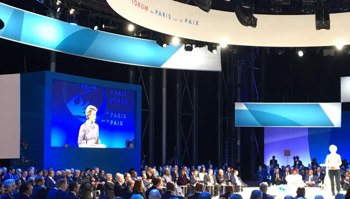
Provision of expertise and tools to support Recovery and Peace Building Assessments and Post-Disaster Needs Assessments
- 2017 – 2024
- € 2 – 5 million
- Global
The Particip-led “Post Crisis Assessment and Recovery Planning: Support Office of the EU“ provided systematic support to all stages of disaster- and conflict-related needs assessment missions.
As part of the 2008 Joint Declaration on Post-Crisis Assessments and Recovery Planning, the World Bank (WB), United Nations (UN), and European Union (EU) have committed to providing joint support for assessing, planning, and mobilising efforts toward recovery, reconstruction, and development in countries affected by crises. This tripartite agreement was executed via the mechanism of joint Recovery and Peacebuilding Assessments (RPBA), Post-Disaster Needs Assessments (PDNA), and Pandemic Recovery Needs Assessments (PRNA).
The activities of the advisory team included:
- Provision of support to EU Delegations around the world and EU Services in Brussels in the planning, undertaking and reporting of post crisis assessments: RPBA: support to peacebuilding through short- and longterm support to specific EUDs. Trainings and and workshops for local authorities, ministries and EU staff. PDNA: post-disaster assessments and support to recovery including trainings and workshops. CRNA/PRNA: COVID/pandemic recovery needs assessments and support to recovery including trainings and workshops.
- Support to third countries to build their capacity to carry out RPBAs, PDNAs, and PRNA this includes institutional strengthening and inter-institutional coordination such as the HLAG (High-level-Advisory-Group) composed of WB, UN and EU;
- Facilitate coordination of EU and tripartite input to the implementation of the joint declaration (conceptual work and RPBA/PDNA/PCNA missions);
- Elaborate a preliminary early and longer-term framework (which identifies key recovery sectors, peacebuilding priorities, etc.)– in close cooperation with the EU Delegation and other relevant EU services, including identification/definition of sectors requiring additional EU support (whether provided through short-term assistance under the present project or not), essential cross-cutting issues, a tentative recovery calendar, recovery information management systems, the existing capacity in-country and institutional and legal arrangements for national Authorities, recovery support anticipated, etc.;
- Deployment of experts in RPBA/PDNA/PRNA missions, and
- Revise and/or updating the methodologies as necessary.
Recovery and Peacebuilding Assessments (RPBAs) offered countries a standardised and internationally recognised approach to identify the underlying causes and impacts of conflict and crisis. The RPBA had three primary purposes:
- to help governments identify, prioritise and sequence recovery and peacebuilding activities,
- to provide an inclusive process to support political dialogue and participation of stakeholders,
- to coordinate international support through a joint assessment and a joint recovery and peacebuilding plan as well as a monitoring system.
Post-Disaster Needs Assessment (PDNA) assisted governments with assessing the full extent of a disaster’s impact on the affected country and, on the basis of these findings, producing an actionable and sustainable Recovery Strategy for mobilizing financial and technical resources. The internationally recognised PDNA methodology is a key commitment mentioned in the the Joint Declaration on Post-Crisis Assessments and Recovery Planning. In May 2020, in order to respond to the COVID-19 pandemic, the PDNA methodology was adapted to elaborate a COVID-19 Recovery Needs Assessment (CRNA) methodology.
Recovery and Peace Building Assessment (RPBA)
Myanmar (Jan 2018); Burkina Faso (Jun 2019-June 2021); Mozambique (RPBA Nov 2020-Nov 2021); Azerbaijan (Joint Recovery Needs Assessment - falls outside the RPBA framework, Scoping Mission March 2022); Libya (Stocktaking 2018-2019, RPBA 2022)
Post-Disaster Needs Assessment (PDNA) & Disaster Risk Framework (DRF)
Myanmar (Jan 2018); Syria (Feb 2018); Ivory Coast (July-Sept 2018); Tunisia (Oct 2018); Bangladesh (2018); Georgia (2018); Tonga (2018); Fiji (2018); Mozambique (Apr–Aug 2019);
Central African Republic/CAR (July 2019); Somalia (Drought Impact Needs Assessment/DINA, July - Aug 2018); Albania (Dec 2019-Feb 2020); Lebanon (Rapid Damage Needs Assessment/RDNA, Aug 2020); Lebanon (DRF, Sep 2020-2021); Saint Vincent and the Grenadines (June–Aug) 2021); El Salvador (June-Dec 2021); Haiti (Sep-Oct 2021); Haiti (DRF, Nov-Dec 2021); Pakistan (Sep-Nov 2022); Pakistan (DRF, Nov-Dec 2022); Belize (Jan-Feb 2023); Turkey (Feb-Mar 2023); Ukraine Khakhova dam (June 2023), Myanmar (CMRNA , Sep 2023); Libya ( RDNA, Sep 2023); Afghanistan ( Oct 2023); Afghanistan ( AFPR-PDNA like Refugee support assessment, Nov 2023)
COVID-19 Recovery Needs Assessment (CRNA)
Ecuador (July 2020-Apr 2021); El Salvador (July-Sept 2020); Dominican Republic (Dec 2020-Feb 2021); Zambia (Feb-Aug 2021); Eswatini (Dec 2020-Nov 2021)
Trainings: Recovery and Peace Building Assessment (RPBA)
Bangkok, Thailand (Dec 2017); Lebanon (Apr 2018)
Trainings: Post-Disaster Needs Assessment (PDNA) & Disaster Risk Framework (DRF)
Dominican Republic (Nov 2017); Fiji (Mar-Apr 2018); Vanuatu (Apr 2018); Somalia (May 2018); Myanmar (Aug 2018); Mauritius (Oct 2018); Djibouti & Ethiopia (Feb 2019); Chad (Apr 2019); CAR & Congo (July 2019); India (Aug 2019); Kenya (Sept 2019); Caribbean (Nov 2019); St. Lucia (Nov 2019); Balkans (Sarajevo, Bosnia & Herzegovina, Feb 2020); Mexico (Feb 2020); Liberia (Mar 2020); Senegal (May 2021); Europe and the Commonwealth of Independent States/ECIS region (Jun 2021); University of West Indies (Training of Trainers/ToT, Dec 2021); Panama (PDNA/DRF, Latin American countries/LAC, Mar 2022); Belgrade (ECIS DPPI-SEE, Jun 2022); Regional ECIS (DRF, June 2022); Columbia (PDNA/DRF, July 2022); Costa Rica (PDNA/DRF, July 2022); Barbados (Caribbean countries, Mar 2023); Training Togo Regional ECOWAS (PDNA/DRF, May 2023); Antigua and Barbuda, Saint Johns (DRF, Sept 2023)
Trainings: COVID-19 Recovery Needs Assessment (CRNA) & Pandemic Recovery Needs Assessment (PRNA)
Sahel Region Academia (Nov 2020); Sahel Region government staff and regional organisations (Dec 2020); Ghana (Mar 2021); India (PRNA, Mar 2023)
Other Events
Fragility Forum (RPBA, Mar 2018); Paris Peace Forum (RPBA/PDNA 2019); Paris Peace Forum (RPBA/PDNA, Nov 2020); EU Information Session (Oct 2021); EU Information Session: Asia/Pacific Hub (April 2022); World Reconstruction Conference 5 and Global Platform for Disaster Risk Reduction/GPDRR (Apr 2022); International Society for Photogrammetry and Remote Sensing (ISPRS) Congress (satellite, June 2022); EU Information Session: Caribbean Region (online, June 2023); Slow Onset Event Damage and Loss Workshop ( Nov 2023); Cyclone Mitch 25 year Commemoration ( Oct 2023)
- Partners:
- Particip (Lead), GIZ InS
- Keywords:
- Civil society, Governance, Project implementation / Technical Assistance, Training
Policy Dialogue Support Facility India
- 2020 – 2024
- € 1 – 2 million
- India
The overall objective of this project was to contribute to strengthening and expanding the EU-India strategic relationship in line with the EU Global Strategy, the EU Strategy on India, the EU-India Agenda for Action/Roadmap 2025, bilateral Summit conclusions, and other relevant agreements and documents.
The specific objectives of this project were:
- to support the ongoing and planned sectoral EU-India policy dialogues and partnerships on topics of mutual interest; and
- to contribute to policy convergence of EU-India policy approaches in the global arena.
The following results to be achieved were:
R1: A solid basis established operationalisation of the EU-India strategic partnership (inter alia through support provided to the sectoral policy dialogues in the form of studies, technical assistance, etc.).
R2: People-to-people contacts were strengthened.
R3: Dissemination of relevant and updated information to target audiences on the EU-India strategic partnership, and more specifically on topics of key relevance to the sectoral policy dialogues was improved.
R4: Additional thematic areas for EU-India sectoral cooperation were identified, explored, and developed.
R5: Mutual understanding, trust, and knowledge of policy objectives and strategic interests between the EU and India were further strengthened.
- Partners:
- Particip (Lead), CEPS, Mixorg, VO Europe SA
- Keywords:
- Communication & media, Governance, Management
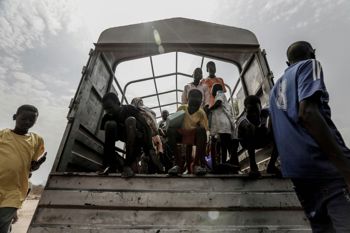
Final Evaluation of the Support to the Protection of the Most Vulnerable Migrants in West Africa (PROMISA)
- 2023 – 2024
- under € 500,000
- Africa (Western)
The main objectives of this evaluation were to provide the relevant EU services and interested stakeholders with overall independent analysis of the performance of the intervention T05-EUTF-SAH-REG-13, with particular attention to its different levels of results compared to its intended objectives, and the reasons for these results. The resulting good practices, key lessons, conclusions and recommendations for improving future interventions.
In particular, this evaluation :
- Served to inform the reflection for the next strategic programming in the sector and draw replicable lessons to other EU interventions in the protection of migrants sector and in the Sahel/Lake Chad region and countries targeted by the intervention and this evaluation.
- Reported on the use of EU resources in relation to the results of the intervention T05-EUTF-SAH-REG-13.
- Identified the relevance, added value and success of implementing a regional approach to the protection aspects of migrants, as well as the limitations of this approach.
- Learnt about the added value and limitations of cooperation with national/local authorities in partner countries (with a view to their ownership and capacity-building in this sector), as well as with the United Nations and in particular IOM.
- Learnt about the added value and limitations of the instruments, approaches and modalities used in the implementation of the intervention and its three respective contracts; and also about how to make future interventions more sustainable in the sector and maximise the positive effects of interventions in the sector of action.
- Partners:
- Particip (Lead), EuroPlus
- Keywords:
- Monitoring & Evaluation
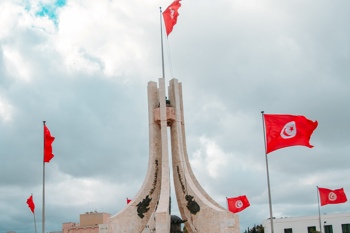
Technical assistance to the Tunisian Ministry in charge of the Civil Service in the management of change and the deployment of HRM modernization systems
- 2021 – 2024
- € 500,000 – 1 million
- Tunisia
a) Train and disseminate concepts, methods and tools related to forward-looking employment, staffing and skills management (French: GPEEC) through awareness-raising and introductory activities through four main topics: the fundamentals of GPEEC, the GPEEC "toolbox", management of jobs and skills, and the transition from GPEEC to proactive human resources management (French: GPRH);
b) Make the "interministerial mobility exchange" system known and accepted in order to ensure it is deployed throughout the State administration and becomes the only tool for ministerial and interministerial mobility, particularly between local and national levels; to bring real transparency to the mobility process, to attract the right profiles to vacant positions in the ministries and to enhance the skills of existing public servants who wish to advance in their professional careers;
c) Support the Tunisian administration in matching the tasks of its various ministerial departments, and support these entities in updating the regulatory texts and the actual organization of structures through functional reviews.
- Keywords:
- Institutional development, Project implementation / Technical Assistance

Evaluation of the Technical Assistance to Civil Society Organisations in the Western Balkans and Turkey – TACSO programme
- 2023 – 2024
- under € 500,000
- Western Balkans
The main objectives of this evaluation were to provide the relevant services of the European Union and the interested stakeholders with:
- an overall independent assessment of the performance of the TACSO programme (in its three phases), paying particular attention to its different levels of results measured against its expected objectives; and the reasons underpinning such results
- key lessons learned, conclusions and related recommendations in order to improve current and future interventions.
In particular, this evaluation served:
- To inform the implementation of the programme fourth phase, which will be implemented through an extension of the current contract (TACSO 3);
- To inform the decision-making on the appropriateness of a potential fifth phase of the programme, to be launched with the next programming exercise (CSF 2024-2026);
- To inform the potential programme exit strategy to ensure the sustainability of its results.
The main users of this evaluation are the relevant EU services (DG NEAR HQ and EU Delegations of the targeted region) and the implementing partners.
- Keywords:
- Civil society, Monitoring & Evaluation

FPI Project implementation and monitoring support - PIMS
- 2022 – 2024
- under € 500,000
- Global
Global objective:
- The overall objective of the assignment is to further strengthen the capacity of the staff of the EC (including FPI, line DGs, EEAS and EUDs) and the Implementing Partners involved in the design, monitoring and implementation of FPI-funded actions in line with results-based management principles.
Specific objective(s)
The specific objectives are to:
- Increase the capacity of EC and Implementing Partners' staff to design, implement and monitor EU-funded actions managed by FPI;
- Improve the quality of interventions and the achievement and reporting of their respective results.
The consultant is requested to perform the following services:
- Task 1. Training for FPI Operational Managers, implementing partners and line DGs on the LogFrame Matrices (LFM), indicators, monitoring and reporting.
- Task 2 Coaching for FPI Operational Managers and Implementing Partners.
- Task 3 Ad-hoc guidance and technical assistance to FPI Operational Managers and implementing Partners.
- Task 4 Support to the continued enhancement of the monitoring system and results reporting to FPI.4
Deliverables
- 3-monthly reports summarising feedback received and issues identified as well as proposed recommendations for improvement, and where relevant, support to implement the solutions retained;
- Any necessary guidance document.
Required outputs
- The number of staff from FPI and implementing partners with programming, monitoring and evaluation expertise is increased;
- The quality of the design of programming/action documents is improved;
- The quality of action/intervention level and FPI-level reporting on results is improved.
- Partners:
- Particip (Lead), Idem Concept
- Keywords:
- Institutional development, Monitoring & Evaluation, PCM / Logframe

Evaluation of the Syrian Arab Republic WFP Interim Country Strategic Plan (2022-2023)
- 2022 – 2024
- under € 500,000
- Syria
The evaluation of the WFP Interim Country Strategy Plan (ICSP) in Syria assessed the strategic positioning, added-value and results of WFP operations in the country from 2018 to 2023.
The evaluation served the double purpose of accountability (performance and result assessment) and learning (why certain results occurred or not, lessons and evidence for decision-making). It is envisioned to enable the Syria WFP Country Office (CO) to use the evidence on past and current performance for the design of the new Syria CSP. The early findings of the CSPE also fed into the development of the extension of the ICSP until end of 2024.
ICSP key sectors and activities included:
- Emergency preparedness and response, including cash-based transfers
- Nutrition and school feeding
- Social protection
- Livelihoods activities
- Institutional capacity strengthening
Cross-cutting themes included: Gender Equality and Women's Empowerment (GEWE) and Accountability to Affected Populations (AAP), centrality of protection, humanitarian principles and access, inclusion of people with disabilities (PWD), social cohesion, and capacity strengthening.
The evaluation was theory-based and relied on a mixed-method approach that triangulates qualitative and quantitative data from a variety of sources. For this purpose, the evaluation team conducted interviews with different stakeholders including WFP staff at HQ, regional and country level, WFP cooperating partners, donors, UN agencies, government entities as well as focus group discussions with the beneficiaries.
- Keywords:
- Agriculture, Food and nutrition, Humanitarian aid, Monitoring & Evaluation

End Term Evaluation of the Project "Skilled Young Palestine - Improving Resilience and Job Creation for Youth"
- 2024 – 2024
- under € 500,000
- Palestine
End-Term Evaluation of the Enabel-funded 'Skilled Young Palestine - Improving Resilience and Employment Opportunities for Youth' (SYP) project which aimed to strengthen the resilience of Palestinian youth in vulnerable areas by improving their employability and entrepreneurship skills (2019-2024, EUR 7 million).
The evaluation guided future strategic and operational decisions with evidence-based recommendations. Its findings, conclusions and recommendations were drawn from a comprehensive desk analysis and from key informant interviews and focus group discussions with implementing partners and beneficiaries across the West Bank and East Jerusalem.
- Keywords:
- Education, Industry & private sector development, Monitoring & Evaluation

Appraisal of the “Forestry, Land Use and Value Chains Development in Tanzania” (FORLAND) programme
- 2024 – 2024
- under € 500,000
- Tanzania
The objective of the appraisal was to assess the feasibility of the new draft programme, called “Forestry, Land Use and Value Chains Development in Tanzania” (FORLAND). It offered a thorough assessment of the draft project document's potential to serve as a practical and achievable guide for programme implementation. This assessment encompassed an examination of the overall feasibility, feasibility of management, implementation and financial arrangements, sector-specific factors, and the sustainability of the program. Furthermore, the appraisal determined whether the project adequately catered to the needs of its main beneficiaries and stakeholders. It also entailed identifying any potential challenges and proposing viable solutions or alternative methods to address them.
In addition, the appraisal reviewed the result orientation of the programme and likely effectiveness in Tanzania, as well as the integration of human rights based approach and cross-cutting objectives into the programme plan.
- Keywords:
- Environment, Forestry, Industry & private sector development, Monitoring & Evaluation, Rural and urban development

Building Resilience to Climate Change in Papua New Guinea: Project Implementation Support Consultants
- 2018 – 2024
- € 2 – 5 million
- Papua New Guinea
The Government of Papua New Guinea has obtained a Grant from the Asian Development Bank to implement the proposed “Building Resilience to Climate Change” (BRCC - the project). The project will provide technical assistance in order to implement PNG’s Strategic Program for Climate Resilience (SPCR) 1 aimed at achieving transformational change in addressing the current and future threats from climate change and related hazards. This will be achieved by mainstreaming climate resilience into development planning and addressing country priorities that focus on vulnerable communities of Bougainville, East New Britain, Manus, Milne Bay and Morobe provinces comprising 21 priority vulnerable islands/atolls identified through a participatory process across four sectors including (i) infrastructure, (ii) natural resources, (iii) health, and (iv) agriculture, against potential impacts from climate change and variability.
The project impact is: increased resilience to the impacts of climate change and climate variability. The outcome is: improved capacities of vulnerable islands/atoll communities, government agencies, and civil society to plan and respond to the impacts of climate change. The direct beneficiaries include approximately 13,000 inhabitants of the 21 vulnerable islands. The nationwide benefits include increased capacity to manage climate change risks through establishment of early warning systems, access to finance by communities, and development of national databases and knowledge management systems.
The purpose of this assignment is to support the Project Management Unit (PMU) in
- Project implementation and administration
- Developing the necessary capacity development including training and transfer of skills to PMU personnel to improve their project management and implementation skills, and
- Strengthening CCDA’s overall capacity for future management and implementation of similar projects.
- Keywords:
- Environment