India
9 references
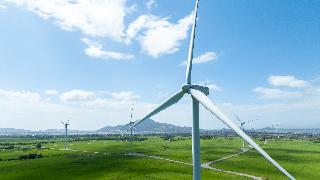
The evaluation of the Danish Energy Partnership Programmes (DEPP) covers more than a decade of bilateral cooperation supporting the green energy transition in emerging economies. Since 2012, these programmes have engaged Denmark with key partner countries such as China, India, South Africa, Vietnam, and Mexico, whose future energy choices will significantly shape global emissions. DEPP provides technical assistance in long-term energy planning, renewable energy integration, energy efficiency, and the development of regulatory frameworks.
The overall objective of the evaluation is to strengthen accountability and learning by documenting results and assessing DEPP’s contributions to capacity strengthening, as well as their strengths and weaknesses. More specifically, the study will analyse the programmes’ relevance, coherence, effectiveness, efficiency, impact, and sustainability. By doing so, it will generate lessons learned and actionable recommendations to inform the design and implementation of future programmes, consolidating Denmark’s role as a trusted partner in advancing global climate and energy goals
.
- Partners:
- NCG Denmark (Lead), DEM, Particip

EU-India Policy Dialogue Support Facility (PDSF)
- 2024 – 2026
- € 1 – 2 million
- India
The specific objectives of this contract are as follow:
- Outcome 1: To support the ongoing and planned sectoral EU-India policy dialogues and partnerships on topics of EU and EU-India mutual interest; and
- Outcome 2: To contribute to policy convergence of EU-India policy approaches in the global arena.
The expected outputs of this contract are as follows:
- Solid basis is established for operationalisation of the EU-India strategic partnership, as well as other key strategies and agreements shaping EU-India relations.
- People-to-people contacts are strengthened.
- Dissemination of relevant and updated information to target audiences on the EU-India strategic partnership, and more specifically on topics of key relevance to the sectoral policy dialogues is improved.
- Additional thematic areas for EU-India sectoral cooperation are identified, explored, and developed, including beyond India (regional, trilateral or global).
- Mutual understanding, trust, and knowledge of policy objectives and strategic interests between the EU and India are further strengthened.
- Partners:
- Particip (Lead), CEPS, Mixorg, VO Europe SA
- Keywords:
- Communication & media, Governance, Management
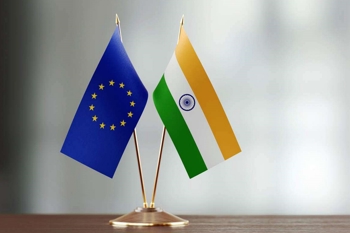
Policy Dialogue Support Facility India
- 2020 – 2024
- € 1 – 2 million
- India
The overall objective of this project was to contribute to strengthening and expanding the EU-India strategic relationship in line with the EU Global Strategy, the EU Strategy on India, the EU-India Agenda for Action/Roadmap 2025, bilateral Summit conclusions, and other relevant agreements and documents.
The specific objectives of this project were:
- to support the ongoing and planned sectoral EU-India policy dialogues and partnerships on topics of mutual interest; and
- to contribute to policy convergence of EU-India policy approaches in the global arena.
The following results to be achieved were:
R1: A solid basis established operationalisation of the EU-India strategic partnership (inter alia through support provided to the sectoral policy dialogues in the form of studies, technical assistance, etc.).
R2: People-to-people contacts were strengthened.
R3: Dissemination of relevant and updated information to target audiences on the EU-India strategic partnership, and more specifically on topics of key relevance to the sectoral policy dialogues was improved.
R4: Additional thematic areas for EU-India sectoral cooperation were identified, explored, and developed.
R5: Mutual understanding, trust, and knowledge of policy objectives and strategic interests between the EU and India were further strengthened.
- Partners:
- Particip (Lead), CEPS, Mixorg, VO Europe SA
- Keywords:
- Communication & media, Governance, Management

Mid-term evaluation of 'Support the Development and Operationalization of the Partnership for Smart and Sustainable Urbanisation for India and the EU, IUC Component IV' (IEUP)
- 2022 – 2023
- under € 500,000
- India
The main objectives of this evaluation was to provide the relevant services of the European Union, the interested stakeholders with:
- an overall independent assessment of the past performance of the Action ‘Support the Development and Operationalization of the Partnership for Smart and Sustainable Urbanisation for India and the EU’, paying particular attention to its intermediate results measured against its expected objectives; and the reasons underpinning such results;
- key lessons learned, conclusions and related recommendations in order to improve current and future Actions, including improving their coordination, coherence and efficiency.
The evaluation team assessed the Action using the five standard DAC evaluation criteria, namely: relevance, effectiveness, efficiency, sustainability and perspective of impact. In addition, the evaluation team assessed two EU specific evaluation criteria:
- the EU added value (the extent to which the Action brings additional benefits to what would have resulted from Member States' interventions only);
- the coherence of the Action itself; 1) with the EU strategy in India covered by the EU-India Partnership on Smart and Sustainable Urbanisation and 2) with other EU policies and EU and Member State Actions.
The evaluation team furthermore considered whether gender, environment and climate change were mainstreamed; the relevant SDGs and their interlinkages were identified; the principle of Leave No-One Behind and the rights-based approach methodology was followed in the identification/formulation documents and the extent to which they have been reflected in the implementation of the Action, its governance and monitoring.
- Keywords:
- Monitoring & Evaluation, Rural and urban development

The main objectives of this evaluation are to provide the relevant services of the European Union, the interested stakeholders with:
- an overall independent assessment of the past performance of the Partnership Instrument (PI) funded Policy Dialogues Support Facilities (PDSFs) to be evaluated, paying particular attention to the approach taken under the different PDSFs, as well as paying particular attention to the intermediate or final results measured against their expected objectives; and the reasons underpinning such results;
- key lessons learned, conclusions and related recommendations in relation to the PI approach and use of PDSFs and in order to improve current and future Actions.
The specific rationale for undertaking this evaluation is to assess the relevance, outcomes, and approach of PI funded Policy Dialogues Support Facilities (PDSFs), as well as the added value of the activities in strengthening EU’s partnerships/alliances and its position as a global player in the countries concerned, and reinforcing multilateralism, as expressed in the specific objectives of the PI.
This evaluation contract covers 13 actions. The work to be covered under this contract is a hybrid evaluation of individual actions and, drawing conclusions, recommendations and lessons learned, where possible, when looking at the package of these projects as a whole and the approaches taken on how to use the “SPDF approach” to influence effectively EU interests in the respective countries.
The focus of the evaluation is two-fold:
- On the assessment of the approach taken in relation to PDSFs under the different Actions, progress to date and, by explaining why progress is happening or is not happening as planned, provide recommendations on how to improve the approach in order to achieve the expected objectives of the PI, taking into account problems and opportunities.
- This evaluation will also serve to understand the performance of the Actions, its enabling factors and those hampering a proper delivery of results as to inform the planning of the future funded Policy Dialogues Support Facilities.
- Partners:
- Particip (Lead), Idem Concept
- Keywords:
- Monitoring & Evaluation

The purpose of this evaluation was to build an evidence base regarding SDC’s engagement in climate change adaptation and mitigation, including partnerships established by SDC to address climate change adaptation and mitigation at global, regional and national level.
The evaluation was designed to:
- Contribute to strategic decision-making (i.e. for the Dispatch 2021-2024).
- Derive lessons learnt in order to improve institutional performance.
- Serve as one measure of accountability towards the Parliament and the public.
The evaluation : i) assessed the successes, difficulties / challenges (including failures) of programmes and projects in Climate Change Adaptation and Mitigation implemented by SDC; ii) identified ‘good practices’ and determined how they could be systematically applied within SDC; iii) conducted a comparison / benchmarking of SDC’s performance compared to international practices; and iv) assessed the effectiveness and rate of achievement of projects and programmes.
The evaluation covered activities implemented during a period of six years (2015-2020) from all domains of SDC (i.e. South Cooperation; Global Cooperation; Humanitarian Aid; and Cooperation with Eastern Europe). It concentrated on projects in the area of climate change adaptation (CCA) and climate change mitigation (CCM) that SDC steers or co-steers. This includes direct implemented projects, mandates and contributions to trust or basket funds, etc. It excludes core contributions to multilateral organizations, large Funds (GCF, IDA, etc.) and NGOs.
- Keywords:
- Environment, Monitoring & Evaluation

Evaluation of ICI-Projects for the Department for the Americas and Asia
- 2021 – 2021
- under € 500,000
- Afghanistan, Bhutan, India, Nepal
The objective of the evaluation was to produce and provide objective and impartial information about five ICI (Institutional Cooperation Instrument) projects implemented in 2011 – 2020 in Afghanistan, Bhutan, India and Nepal. The evaluation covered a range of evaluation criteria and questions to be used by different evaluation stakeholders for the purposes of accountability, learning and informed decision-making.
The evaluation focused on the following projects:
- Capacity Buidling for Emission Measurements in India,
- Climate Modelling and Observations (CLIMOB) in India,
- Meteorology Sector Cooperation in Bhutan,
- Finnish-Nepalese Project for Improved capability of the Government of Nepal to respond to the increased risks related to the weather-related natural disasters caused by climate change (phase II and III)
- Geological Survey of Finland’s Support to Afghanistan Geological Survey (AGS, Afghanistan)
- Partners:
- Particip (Lead), Niras Finland Oy
- Keywords:
- Environment, Institutional development, Monitoring & Evaluation

Positioning of the EU in air quality management in India
- 2017 – 2018
- under € 500,000
- India
The overall objective of the action is to understand India's needs in air quality management and exploit EU's know-how on air quality (political, regulatory, technical, economic) to create opportunities for European stakeholders and businesses by raising the interest of India in addressing air pollution as a global challenge and develop a national strategy to ambient air pollution, in particular in urban settings.
The specific objectives of the action is to:
1. Understand the air quality management sector in India, including stakeholder analysis, regulations and policy reviews, needs in India and opportunities for the European actors.
2. Develop, as pilot projects, air pollution reviews and action plans with 3 Indian cities, and supporting the implementation of selected activities.
3. Raise awareness of Indian Stakeholders on EU best practices and technologies in the sector through technical speaker events and a closing event allowing selected European speakers and companies to showcase their approach to air quality management, best practices, technologies and products.
4. Support the policy dialogue between the EUD and the Government of India and support the development of a national air quality management strategy.
- Partners:
- Particip (Lead), AETS
- Keywords:
- Environment

Support to the EU-India Climate Change Dialogue
- 2016 – 2018
- under € 500,000
- India
The specific objectives of this assignment are:
- To raise awareness on EU positions and know how in Climate Change and low carbon technologies by engaging Indian stakeholders such as NGOs, think tanks, businesses and Government officials.
- To gather intelligence on policies and needs in view of facilitating European business and policylevel involvement in India's Climate Change agenda
- To initiate cooperative action between the EU and India, in support of mitigation, adaptation and transparency targets of the Paris Agreement.
- Partners:
- Particip (Lead), adelphi, AETS, DAI Global UK
- Keywords:
- Environment