
Our projects
Explore Particip’s project experience across countries, sectors and areas of expertise.
Our references provide an overview of completed and ongoing assignments, including their objectives, geographic scope, duration and contract value.
Showing 531–540 of 985 references
Monitoring of activities financed under Article 3 of the IcSP in West Africa and the Lake Chad Basin
- 2020 – 2021
- under € 500,000
- Africa (Western)
The general objective of the service was to improve the degree of accountability and quality of certain EU-funded actions by providing the FPI Regional Team with follow-up and monitoring products for these actions and feedback on experience at the end of the project.
The specific objective of this contract was to assist the FPI Regional Team in the monitoring of certain projects financed under Article 3 of the IcSP in the Sahel region and the Lake Chad Basin.
- Partners:
- Particip (Lead), EPRD
- Keywords:
- Governance, Humanitarian aid, Monitoring & Evaluation

Consultancy for undertaking scenario planning on the socio-economic impact of Covid-19 in the SADC Region
- 2021 – 2021
- under € 500,000
- SADC region
The overall objective of this assignment is to undertake scenario planning on the un-folding of the COVID-19 pandemic in the SADC region with a focus on the broader economic and social consequences, and thereafter, recommend practical response strategies under the different scenarios.
The purpose of this contract is to undertake a review on COVID -19 effects (direct and secondary) in the SADC region for the selected sectors in order to provide recommendations to mitigate the impacts of COVID-19.
The assignment covers the entire SADC region, but is limited to a few sectors for which various studies have revealed that the COVID-19 pandemic has greater impact. These sectors are:
(i) Health;
(ii) Trade;
(iii) Tourism;
(iv) Food Security;
(v) Education;
(vi) Employment; and
(vii) The Informal Sector.
In addition to the selected sectors, the analysis also covers the impact of the pandemic on macroeconomic stability in the region under the different scenarios, and recommend policy responses. The analysis will be based on selected macroeconomic variables (including GDP Growth, Inflation, Budget Deficit, External Debt, Current Account Deficit, External Reserves, Central Bank Credit to Government, and Domestic Savings).
The following steps should be considered:
- Step1 - Identifying key factors
- Step 2 - Developing Scenarios
- Step 3 – Analysing Scenarios
- Step 4 - Recommending action
- Partners:
- Particip (Lead), DMI, EY Belgium
The objective of this contract was to provide DEVCO.C.7 with professional video and animation expertise, as well as graphic design expertise.
Development of audio-visual products (such as short videos, animated data visualisations and animations) and graphic material on EIP’s work and achievements.
Most of the outputs were requested in English but occasionally in other languages. They applied a consistent visual identity in line with Commission’s Visual Identity Guidelines and the EIP’s ‘look and feel.
- Keywords:
- Communication & media

Framework Contract COM 2015 Lot 1: Evaluation
- 2016 – 2021
- € 5 – 10 million
- Global
This Framework Contract supported the European Commission in conducting evaluations in the area of international cooperation and development relations. One of its key objectives was to ensure that lessons learned and results from EU cooperation strategies and their implementation are accessible to EU services and relevant stakeholders, thereby enhancing decision-making. The evaluations focussed on ‘strategic evaluation’ at various levels, including Country, Regional, Thematic, Sectoral, Instrument, or Modality. The scope was global, encompassing all EU external actions (including non-spending activities such as policy dialogue) related to the portfolios managed by DG INTPA (formerly DEVCO) and DG NEAR.
Evaluations were carried out through individual assignments defined and contracted through ‘Specific Contracts’. The consortium lead, Particip, ensured overall Quality and Contract management.
Evaluations implemented by the Particip-led consortium include:
- Evaluation of EU Budget Support and Blending in the Kyrgyz Republic 2010-2019
- Mid-term evaluation of cross border cooperation programmes between IPA II beneficiaries
- Evaluation of the EU cooperation with Central African Republic (2008-2019)
- Evaluation of the EU's external action support in the area of gender equality and women's and girls' empowerment (2010-2018)
- Evaluation of the European Union's cooperation with the Islamic Republic of Mauritania (2014-2020)
- External Evaluation of EU’s Support to Conflict Prevention and Peace Building (2013-2018)
- Evaluation of the EU's external action support in the area of migration (2008-2018)
- Evaluation of EU support to local authorities in Enlargement and Neighbourhood regions (2010-2018)
- Evaluation of EU Support for Rule of Law in Neighbourhood Countries and Candidates and Potential Candidates of Enlargement in the period 2010-2017
- Evaluation of Spain and the European Union's cooperation with Nicaragua (2009-2017)
- Evaluation of the European Union’s Regional Level Cooperation with Latin America (2009-2017)
- Chapeau Contract for the Evaluation of the Common Implementing Regulation (CIR)
- Evaluation of the Development Co-operation Instrument (DCI)
- Evaluation of Greenland Decision (GD)
- Coherence Report on the External Financial Instruments and Co-ordination
- Evaluation of the European Neighbourhood Instrument (ENI)
- Evaluation of the Instrument for Pre-accession Assistance (IPA II)
- Evaluation of European Union's Budget Support operations in Peru (2009-2016)
- Evaluation of regional organisations in the Western Balkans
- Partners:
- Particip (Lead), ECDPM, Ecorys B.V., Fiscus, itad, OPM
- Keywords:
- Monitoring & Evaluation
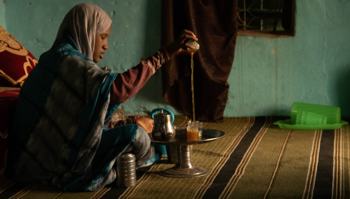
Evaluation of the European Union's cooperation with the Islamic Republic of Mauritania (2014-2020)
- 2020 – 2021
- under € 500,000
- Mauritania
The objective of this evaluation was to provide the relevant EU cooperation services and the general public with a comprehensive and independent assessment of past and current EU cooperation with the Islamic Republic of Mauritania (RIM). In addition, the objective was also to draw the main lessons learned and to make recommendations to guide decision-makers, in particular at the European External Action Service (EEAS) and the Directorate-General for International Cooperation and Development (DG DEVCO), on how to improve strategies, programs and implementation of current and future interventions.
The specific objectives of the evaluation were:
- To provide food for thought for the formulation of the future strategy for the next programming cycle (2021-2027);
- To analyze the coherence of strategies and objectives of development cooperation and the G5 Sahel, and their implementation;
- To assess and provide recommendations on the coherence and complementarity between the different EU, national and regional strategies as well as on the different sectoral policies of EU intervention (cooperation, Fisheries Agreement, EPAs) and the different modalities;
- To evaluate the application of the integrated approach of the EU external action (and in particular of the Humanitarian - Development - Peace nexus) and its efficiency, in order to draw conclusions and recommendations for the establishment of a possible internal process;
- To assess the EU contribution on progress related to the Sustainable Development Goals (SDGs), and the expected progress towards Mauritania's objectives and the macroeconomic outlook (including future gas exploitation) on a medium-term perspective;
- To assess and provide recommendations on the process of dialogue with the government, other development partners and on joint programming.
The evaluation covers the EU cooperation strategy with RIM including its implementation during the period 2014-2020.
The thematic scope of the evaluation covered the following sectors: resilience and inclusive and sustainable growth, governance and rule of law, health, migration and security as well as cross-cutting issues such as gender, environment or human rights. Sectoral logics are developed for each of the priority intervention sectors identified above.
Report available here: https://international-partnerships.ec.europa.eu/publications/evaluation-eu-cooperation-islamic-republic-mauritania-2014-2020_en
- Partners:
- Particip (Lead)
- Keywords:
- Agriculture, Governance, Health, Monitoring & Evaluation

Evaluation of Afghanistan WFP Country Strategic Plan 2018-2022
- 2020 – 2021
- under € 500,000
- Afghanistan
This independent evaluation of WFP Country Strategic Plan in Afghanistan assessed the strategic positionning, added-value and results of WFP operations in the Country from 2018 à 2021.
The evaluation served the double purpose of accountability (performance and result assessment) and learning (why certain results occurred or not, lessons and evidence for decision-making about a potential scale-up). It aimed at informing the design of the next CSP for Afghanistan and will be presented to WFP Executive Board in November 2022.
For the purpose of the evaluation, the evaluation team performed a documentary review, interviews with different stakeholders including WFP staff at HQ, regional and country level, WFP cooperation partners, ministries as well as focus group discussions and interviews with beneficiaries in Afghanistan.
CSP key sectors and activities included:
- Emergency Response (general distribution, CBT)
- Malnutrition treatment and prevention (food distribution, school feeeding)
- Resilience (Food for Asset, infrastructure rehabilitation) and support to small-holder farmers.
- Capacity Strengthening
- Cross cutting themes: Gender Equality and Women Empowerment (GEWE), Humanitarian principles and protection, accountability to affected populations (AAP)
The evaluation used a mixed-method approach that triangulated qualitative and quantitative data from a variety of sources. A field mission took place in Afghanistan in April 2021.
Report available here: https://www.wfp.org/publications/evaluation-afghanistan-wfp-country-strategic-plan-2018-2022
- Keywords:
- Agriculture, Food and nutrition, Humanitarian aid, Monitoring & Evaluation
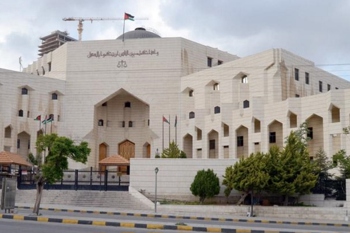
Mid term evaluation of the 'Support to the Rule of Law in Jordan' programme and formulation of a new action
- 2020 – 2021
- under € 500,000
- Jordan
The main objectives of this evaluation were to provide the relevant services of the European Union and the interested stakeholders with:
- an overall independent assessment of the past performance of the programme to “Support the Rule of Law in Jordan”, paying particular attention to its intermediate results measured against its expected objectives; and the reasons underpinning such results;
- key lessons learned, conclusions and related recommendations in order to improve current and formulate a new Budget Support programme.
In particular, this evaluation aimed at assessing:
1. to what extent the programme “Support to the Rule of Law in Jordan” has achieved its expected results, notably through contributing to the implementation of the partner government's sector strategies such as the Justice Sector Reform Strategy and the Criminal Justice Strategy by providing opportunities for the improvement of national policy processes and policy implementation.
2. The evaluation also specifically analysed how the budget support programme has contributed (or not) to strengthen Public Financial Management (PFM) systems, including improved transparency within government systems, improved Domestic Revenues Mobilisation and stronger accountability.
3. The evaluation also paid attention to other aid modalities (basket/common funds, projects), in order to assess the complementarity and synergy (or discrepancy) of these modalities with budget support.
4. It also assessed the effects of the budget support operation on the M&E systems in the sectors supported by the programme. Budget support should aim to strengthen the monitoring systems in the sectors it supports, in alignment with the existing national level monitoring and evaluation systems and contribute to the improved availability and credibility of data. Availability of the robust progress reports by the government, providing results information against targets set under the strategy, and the use of these reports to facilitate informed policy dialogue between the different stakeholders (CSOs, private sector, Parliament, donors) and evidence-based decision making is one indicator of the capacity of the government in the area of M&E.
- Partners:
- Particip (Lead), Coffey, EuroPlus
- Keywords:
- Governance, Justice/Rule of Law
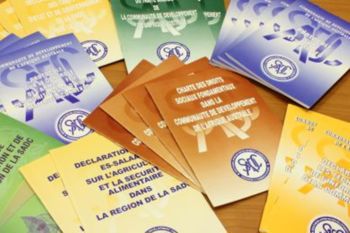
TECHNICAL ASSISTANCE TO SADC SECRETARIAT ON PROTECTION OF PERSONAL DATA TRAINING.
- 2021 – 2021
- under € 500,000
- SADC region
The overall objective of the project of which this contract will be a part is as follows: To improve employee skills on Protection of Personal Data procedures and rules and to ensure that the Policy for Protection of Personal Data and Guidelines are effectively implemented.
The purpose is to enhance SADC Secretariat employee’s competencies with recognised and accepted practices in Protection of Personal Data processes.
The specific objectives of the assignment are to:
strengthen Protection of Personal Data at the SADC Secretariat through assessment of opportunities and threats to data protection and development of tools to implement and monitor personal data; and strengthen institutional capacity for identification, storage, management and preservation of personal data in general.
- Partners:
- Particip (Lead), DMI, EY Belgium
- Keywords:
- Governance, Institutional development

Analysis of market failures in pre-identified areas and sectors, for the planning of EFSD+ within EU Neighbourhood and Enlargement Countries
- 2021 – 2021
- under € 500,000
- ENI East, ENI South, Western Balkans
The overall objective was to provide DG NEAR with an overview of key market failures and sub-optimal investment situations to which the Commission should respond when setting up investment windows under the European Fund for Sustainable Development plus (EFSD+) Guarantee and updating investment priorities to be addressed by the European Union's respective blending platforms, namely the Western Balkans Investment Framework (WBIF) and the Neighbourhood Investment Platform (NIP).
The analysis covered all DG NEAR countries of operation for blending and budgetary guarantees (clustered for analytical purposes in four regions, namely Western Balkans, Turkey, Eastern Neighbourhood, Southern Neighbourhood) and provided detailed assessments on the market failures and sub-optimal investment situations in the preidentified areas, namely:
- Access to Finance for private companies, particularly Micro, Small and Medium Enterprises (MSMEs);
- Green Finance; and
- Financing Digital Transformation.
The analysis thereby helped to target intervention of the European Union under both blending facilities under DG NEAR responsibility (WBIF, NIP) and under all types of budgetary guarantees foreseen under the EFSD+. More specifically, it helped to target financing operations that could be provided by the European Investment Bank (EIB) and other implementing partners. The analysis was driven by empirical knowledge of the economic situations and financial market environments in the respective regions.
- Partners:
- Particip (Lead), ADE, DID Development International Desjardins
- Keywords:
- Industry & private sector development, Information technology, Institutional development, Monitoring & Evaluation

EUROsociAL+ mid-term evaluation
- 2021 – 2021
- under € 500,000
- America (Central), America (South)
In particular, this evaluation served to understand the performance of the EUROsociAL+ programme, its enabling factors and those hampering a proper delivery of results. The present mid-term evaluation was performed mid-way with respect of the overall cumulative implementation period of EUROsociAL+.
It explained why progress happened or did not happen as planned and provided recommendations to prepare new interventions, encompassing both a forward and backwardlooking perspective.
The focus of this evaluation was on the assessment of achievements, the quality and the results in the context of an evolving Programme focus, with an emphasis on result-oriented approaches and the contribution towards the support to the public policies to improve social cohesion in LA countries.
This evaluation served accountability, decision making, learning and management purposes. The main users of this evaluation were the relevant EU services (DEVCO and EU Delegations in the respective countries) and other stakeholders (partner institutions involved in the implementation of the interventions to be evaluated).
- Partners:
- PROMAN (Lead), Particip