
Our projects
Explore Particip’s project experience across countries, sectors and areas of expertise.
Our references provide an overview of completed and ongoing assignments, including their objectives, geographic scope, duration and contract value.
Showing 281–290 of 514 references

Identification of partner countries needs for support on ABS from, biodiversity genetic resources, including DSI aspects
- 2024 – 2024
- under € 500,000
- Global
The overall objective of this contract was to contribute to the implementation of the GBF and the preparation of the implementation of the BBNJ Treaty, with particular reference to the GBF Targets 13 and 15, CBD COP decision 15/9, COP-MOP decision NP-4/6 and BBNJ Articles 9 to 16, and to improving and increasing the monetary and non-monetary benefits derived by developing countries from the use of their genetic resources and associated traditional knowledge, as well as from the generation and use of DSI on their genetic resources and the marine genetic resources from the areas beyond national jurisdiction.
The specific objective of this contract was to inform EU options for supporting the development of capacities of developing countries, including the least developed countries and small islands developing States, in regards to ABS schemes on genetic resources and traditional knowledge associated with genetic resources and/or the access, as well as the generation and use of DSI on genetic resources and ABNJ MGRs, under the framework of the future EU programmes “Capacity Development for the implementation of the Kunming-Montreal Global Biodiversity Framework (GBF)”and “Global Ocean Programme”, planned for adoption in 2023 and 2024 respectively.
- Partners:
- Particip (Lead), CAPA EEIG (managed by Particip)
- Keywords:
- Environment, Governance, Human rights

The global objective of this action was to contribute to the implementation of the HDP nexus to bridge the gap between short, medium and long-term EU action in fragile and crisis- or conflict-affected partner countries, increasing its coherence and impact.
The specific objective of this action was to provide support in concrete identified needs for the implementation of the HDP nexus in EU action:
- Specific Objective 1: To provide expertise, facilitation and logistical support for the regular HDP Nexus workshops for colleagues in EU Delegations, ECHO offices and HQ across the 4 services relevant to the Nexus (ECHO, INTPA, EEAS and FPI).
- Specific Objective 2: To provide expertise for the development of a self-paced course on the HDP Nexus, targeted at EU colleagues in EU Delegations, ECHO offices and HQ across the 4 services relevant to the Nexus (ECHO, INTPA, EEAS and FPI).
- Specific Objective 3: To provide a report on the EU understanding of the peace dimension of the humanitarian development-peace nexus.
- Partners:
- Particip (Lead), ECDPM
- Keywords:
- Management, Training
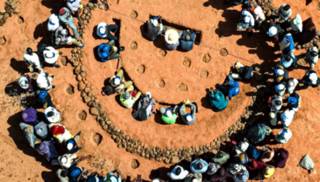
Final evaluation of 2 projects to strengthen social cohesion between displaced populations and host communities in Burkina Faso and Niger (WFP)
- 2024 – 2024
- under € 500,000
- Burkina Faso, Niger
The overall objectives of this evaluation were twofold:
- To provide the relevant services of the European Union and interested stakeholders with an independent overall assessment of the performance of the 2 projects, paying particular attention to its different levels of results measured against its intended objectives and the reasons behind these results; and
- To identify key lessons learned, conclusions and associated recommendations to inform decision-makers on how to improve future interventions.
The specific objectives of this evaluation were:
- To understand the performance of these interventions in strengthening social cohesion, their determining factors and those that hindered the achievement of results, so as to modify their design or implementation modalities and serve as a basis for planning future EU interventions in the same sector.
- To analyse whether and how these interventions have helped to operationalise the HDP Nexus in innovative ways for the benefit of beneficiary communities.
- To inform decision-making on the relevance and thematic priorities of a second phase of these interventions.
- To explore the follow-up questions proposed in the IFPRI study, ‘Sahel Social Cohesion Research in Burkina Faso and Niger’:
- Deepen understanding of issues of intra- and inter-community equity and distributive justice.
- Assess the role of extrinsic versus intrinsic community motivation
- Identify key FFA activities that promote social cohesion
- Partners:
- Particip (Lead)
- Keywords:
- Humanitarian aid, Monitoring & Evaluation

Mid-term and final evaluation of the project 'Local Strategic Alliances for Climate Change Adaptation in the Upper Coconut River Basin (ALLACC)'.
- 2023 – 2024
- under € 500,000
- Nicaragua
The main objectives of the mid-term and final evaluation were to provide the relevant EU services, stakeholders and the general public with:
- an independent overall assessment of the results of "Local Strategic Alliances for Climate Change Adaptation in the Upper Coconut River Basin (ALLACC) DCI 2017/039-205", paying particular attention to its different levels of results measured against the intended objectives; and the rationale behind these results
- main lessons learned, conclusions and related recommendations to improve current interventions in order to improve management in the next stages of possible new interventions.
Mid-term evaluation: In particular, this evaluation focused on the relevance/design, efficiency, effectiveness and coherence of the project, and on the progress made to date, explaining why progress is occurring or not occurring as planned, looked at how it evolved and how it responded to ROM recommendations and make recommendations on how to improve the intervention during its residual duration in order to achieve the intended objectives, taking into account problems and opportunities.
Final evaluation: assessed the entire programme from inception to closure of activities in terms of impact, effectiveness, sustainability and accountability; it contributed to accountability by providing an assessment of the results achieved and the likelihood of impact and sustainability being achieved; it should review the integration of the mid-term evaluation recommendations. In addition, it contributed to learning by explaining the factors that have enabled or hindered the achievement of results, and by identifying any key lessons that will lead to the improvement of future interventions in the country/region/sector of operation or elsewhere. It also included recommendations for preparing new interventions and encompass both forward-looking and retrospective perspectives.
- Keywords:
- Human rights, Monitoring & Evaluation
The overall objective of the LCBA programme was to promote EU companies on low carbon and circular economy related technologies and services at regional scale in the Americas
The Action contributed to promote and defend EU economic interests, in particular SMEs and small-mid caps, on the regional stage and thus constituted a major operational action in support of an EU Economic
Diplomacy. It also contributed to the limitation and/or reduction of industrial GHG emissions in line with the commitments of the Paris Agreement on Climate Change.
- Keywords:
- Energy, Environment, Monitoring & Evaluation
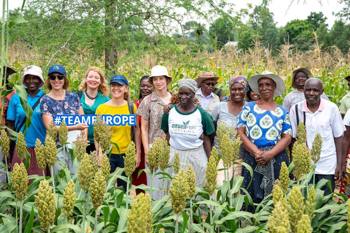
Support to the implementation of EU Working Better Together and Team Europe Initiatives in Zimbabwe
- 2022 – 2024
- under € 500,000
- Zimbabwe
The overall objective of the contract was to enhance overall effectiveness and visibility of the Team Europe approach in Zimbabwe.
The specific objectives of this contract were as follows:
- Assist the EUD and the European Partners in the implementation of the Working Together Roadmap signed in September 2019
- Support the EUD and European Partners in the design, approval process, coordination and monitoring of interventions under the TEIs as well as the overall management of the TEIs (TEIs updates, overall progress reporting, information for the communication contract, etc.)
- Keywords:
- Agriculture, Governance, Human rights

The purpose of the Exploratory Mission was to collect factual information concerning this election process, in line with the criteria contained in the Commission Communication on Electoral Assistance and Observation [COM(2000)191]. The experts have also in particular:
1. Assessed the pre-election situation in the light of international standards for democratic elections and national legislation. The assessment covered: (i) Political situation, (ii) legal and electoral framework, (iii) election administration, (iv) voter registration, (v) party and candidate registration, (vi) human rights and fundamental freedoms, (vii) potential for electoral violence, (viii) traditional and online media, as well as social media, (ix) security aspects, (x) logistics and operational matters, (xi) use of electoral ICT and (xii) any other relevant issues relating to the elections and possible deployment of an EU EOM.
2. Assessed, when relevant, the state of implementation of recommendations of previous EU election missions (both EU EOMs and EEMs).
3. Made necessary preliminary logistics related enquiries and provided advice on how to organise the operational component of a possible EU EOM.
4. Assessed the security situation in the country, in particular in connection with the possible deployment of an EU EOM.
5. Advised on the composition, number and length of stay of the Core Team members and long and short-term observers of the EU EOM.
6. Drafted tentative specifications and Terms of Reference of a possible EU EOM and related estimated costs and budget breakdown.
7. Assessed the relevance of providing support to domestic observer organisations.
8. Acquired updated information on EU election support (both EU and Member States) and other major partners (Canada, Norway and Switzerland) and possible other major actors plans in this field, including in the area of electoral assistance.
9. Liaised closely with domestic and international election observation organisations that were present on the ground regarding the preparation of elections.
10. Prepared a number of specific reports as outlined in section 'VI. Output' of these ToR.
11. Participated in the briefing of the EU EOM Core Team should the deployment of an EU EOM be decided.
- Keywords:
- Elections
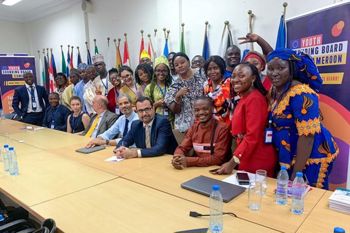
Prefiguration youth sounding board et jeunesse
- 2023 – 2024
- under € 500,000
- Cameroon
The general objective of this contract was to support the Delegation of the European Union to Cameroon in the implementation, in Team Europe mode, of its policy towards Cameroonian youth. The aim was to position youth as a key partner for the EU and its Member States in defining, implementing and monitoring its external policy towards Cameroon.
More specifically, the aim of the contract was to support the EUD in its 3 pillars of the EU Youth Action Plan:
"ENGAGE"
- The creation, structuring and operation in Team Europe mode of a Youth Sounding Board (YSB) in Cameroon,
- Identifying contact points likely to promote coordination and the creation of a regular working relationship based on trust with central and local government players involved in youth issues,
- Preparing communication and visibility actions to promote the EU's commitment to Cameroonian youth.
"EMPOWER"
- Identify a project that could be financed under the initiatives set up by the EU's Youth Action Plan,
- Make the youth theme a transversal element (mainstreaming) of all the projects, programmes and cooperation policies of the European Union in Cameroon (the expert took on the role of technical assistant who trained the programme officers in the integration of young people in all the UECameroon strategic documents),
"CONNECT"
- The formulation of a proposal for action to enable young Cameroonians to be connected to their peers
- The relaunch of the ERASMUS+ exchange programme and a partnership with universities, with a view in particular to the creation of a Jean Monnet Chair in European Studies.
- Keywords:
- Civil society, Governance

Technical expertise to support the Delegation of the European Union to the Republic of Guinea-Bissau in drafting programming documents in the democratic governance sector.
- 2024 – 2024
- under € 500,000
- Guinea-Bissau
The European Union Delegation to Guinea-Bissau was preparing the Action on “Strengthening Democratic Governance in Guinea Bissau” as part of the above-mentioned 2024 Annual Action Plan. The general objective of the current assignment was to contribute to the implementation of the AAP 2024 in the framework of the MIP 2021-2027, in the area of democratic governance, notably in the elections, civil society and National Popular Assembly sectors.
The specific objective of this assignment was to elaborate and formulate a proposal of Action Document to contribute to strengthening democratic governance in Guinea Bissau, with the purpose of consolidating democracy and facilitating lasting peace in the country.
The action was based on three essential support components, according to the AAP 2024 of the MIP 2021-2027: civil society, parliament and elections. In the elaboration of the Action Document, EU thematic and regional programmes have been taken in consideration and demonstrate the coherence and synergies with the following specific objectives.
- SO1: strengthen the civil society as an actor to inclusive development at national and local levels;
Main expected results were: national and regional hubs strengthened or established to enhance dialogue and participation of civil society (including women and marginalized groups) in development planning processes with authorities and relevant stakeholders; regional Technical Assistance Offices created or supported to provide continuous training to CSOs on good governance, financial sustainability mechanisms and organizational culture; “citizen control” mechanisms consolidated and promoted; CSOs legal framework and capacities strengthened. Indicative budget: 3 M EUR
- SO2: strengthen representative and inclusive democracy through the effective functioning of the parliament;
Main expected results were: capacities of the elected members of ANP and its administration strengthened, including at the level of commissions on key topics (e.g. budget, gender); women parliamentarians supported in the development and implementation of strategies and relevant tools for better consideration of gender in the legislative process; exchanges ensured with other parliaments (including quota systems for women), constitutional experts and networks for technical improvements. Indicative budget: 1M EUR
- SO3: enhance credibility, inclusiveness, legitimacy and transparency of elections, in line with the domestic legislation and international standards, with a special attention to the next Presidential election foreseen in 2025.
Main expected results were: non-discriminatory laws for political participation and representation of women, youth, elderly and rural population promoted; capacities of women and youth in political participation strengthened; civil society activities to promote a safe space for the elections fostered; awareness raising on the Electoral Dispute Resolution Mechanism enhanced; observation and reporting on the elections facilitated; capacity building of journalists, including community radios’ voices and ethical journalism supported. Indicative budget: 1M EUR
- Keywords:
- Civil society, Elections

Framework Agreement for Evaluation Management Services (EMS)
- 2020 – 2024
- € 5 – 10 million
- Finland
The Evaluation Management Services (EMS) was a service contract which consisted in the implementation of strategic and policy-level evaluations, meta-evaluations, project-level evaluations and assessments for the Ministry for Foreign Affairs of Finland (MFA). It corresponded to a model that is based on evaluation services commissioned to one service provider rather than outsourcing the implementation of each evaluation as a single assignment. The purpose of this contract was to increase the quality of outsourced evaluations and also to increase flexibility, efficiency and effectiveness of the MFA of Finland in planning and commissioning evaluations. In addition to some decentralised (project level) evaluations and assessments from various geographical units, all MFA centralised evaluations were prepared and implemented through the EMS.
The assignments that were implemented under this service contract are the following:
- Evaluation on Development Cooperation carried out by the Department for Russia, Eastern Europe and Central Asia, Including The Wider Europe Initiative (WEI).
- External Review and Evaluation Services of forest programmes in Tanzania
- Evaluation on the transition towards a new partnership between Finland and Vietnam
- Evaluation on water diplomacy in the context of Finnish development cooperation – lessons for the future
- Evaluation of ICI Projects in Afghanistan, Bhutan, India, and Nepal
- Meta-evaluation of MFA's projects and programme evaluations in 2018-2020
- Evaluation of the Finnish Development Policy Influencing in the European Union
- Evaluation of Finnish Humanitarian Aid
- Assessment on the Response of Finnish Development Policy and Cooperation to the Covid-19
- Final Evaluation of Rural Village Water Resources Management Project (RVWRMP) 2006-2022 and Post-evaluation of Rural Water Supply and Sanitation Western Nepal Project (RWSSP-WN) 2008-2019
- Facilitated assessment of Finnish peace, democratization and sustainable livelihoods support in Myanmar
- Evaluation of Finland’s International Climate Finance
- Evaluation of Human Rights-Based Approach (HRBA) in Finland’s Development Policy and Cooperation
- Review of the MFA’s support to international recruitment
- Evaluation on Development Communications in the Context of the Ministry for Foreign Affairs Finland
- Right to Education, Right to Learn – Evaluation of Finnish Development Policy and Cooperation in the Education Sector
- Evaluation of Finland’s initiatives focused on enhanced domestic resources mobilization (DRM)
- Meta-analysis of Country Programmes 2021–2024
- Partners:
- Particip (Lead), Niras Finland Oy
- Keywords:
- Monitoring & Evaluation