Zimbabwe
8 references

Strengthening the national regional linkages in SADC (SNRL) - Consultancies on regional integration based on SADC policies, facilitation of events, communication and visibility
- 2023 – 2027
- € 2 – 5 million
- SADC region
The overall objective of the project "Strengthening the national regional linkages in SADC (SNRL)" is to support the Southern African Development Community (SADC) in its efforts to promote regional integration in the member states (MS) for the benefit of the population in the SADC region.
The project is aligned with SADC's regional strategy (the Regional Indicative Strategic Development Plan 2020-30, RISDP) and supports its implementation.
In particular, it supports SADC and its MS on implementing Chapter 5 of the RISDP focusing on the strategic management objectives of the RISDP. By strengthening SADC as a regional organization and by supporting the implementation of the regional agenda RISDP, the SNRL project aims to facilitate the regional integration in the SADC region.
The objective of this contract is the provision of high-quality short-term expert (STE) advice in various topics relevant for enhancing the capacities of national stakeholders to vigorously and effectively pursue in their respective countries the regional integration protocols, policies and strategies of SADC.
The individual consultancy assignments are developed between GIZ and its partners and are based on a joint process and methodology aimed at identifying the needs in the SADC region and within individual member states.
The assignments focus on the scaling-up of best practices and should aim to share experiences and knowledge throughout the region (for example by aiming to standardize products developed as part of the assignment).
The following outputs are expected as a result of project implementation:
- Output 1: The institutional framework for the implementation of regional integration in the SADC region has improved in the member states;
- Output 2: Monitoring and evaluation systems for the implementation of regional integration are in place in selected member states;
- Output 3: The strategic communication capacities of SADC and member states for high profile communication around SADC activities and operations are strengthened.
Implemented projects include the following (project number and title):
- P1/2023 Consultancy to Support the SADC Secretariat to Develop and Pilot the Protocol Compliance Mechanism and Monitoring of the Trade Protocol;
- P2/2023 Perception Survey on the status of SADC regional integration in the Member States;
- P3/2023 Facilitator/Presenter and Group Work Moderators for Two Regional Workshops Supported by SNRL;
- P4/2023 Development of Model Law for the Establishment of SADC National Committees in Member States;
- P5/2023 Consultancy to develop communication products for publication purposes from the deliberations of SADC Member States at the Regional Learning and Exchange Symposium in Lesotho;
- P6/2023 Consultancy to develop presentation on the Status of SADC National Structures and their Financing at the Regional Learning and Exchange Symposium in Lesotho;
- P7/2023 Facilitation Operational Planning SNRL;
- P8/2023 Consultancy Services to Support the Publicity Products of The SADC Summit Public Lecture- Angola;
- P9/2023 Consultancy Services to Provide Rapporteuring of the Proceedings of The SADC Summit Public Lecture- Angola;
- P10/2023 Development of Peer Learning & Review Mechanism for national SADC coordination;
- P11/2023 Shadow monitoring on the extent of implementation of the SADC RAIP 2017 – 2022;
- P12/2023 Editing & Design of Eswatini’s New Industrial Policy;
- P13/2023 Capacity Building on SADC Regional Integration and Project Management for SADC National Contact Points Junior and Middle Staff;
- P14/2023 Updating and Finalising the Status of the SADC National Committees Desk Review Report;
- P15/2023 Consultancy Services to Support the Documentation of Proceedings at the SADC Integrated Regional Electronic Settlement System 10th Anniversary Celebrations;
- P16/2023 Consultancy Services to Support the Publicity Products of the SADC Integrated Regional Electronic Settlement Systems 10-year anniversary;
- P17/2023 Consultancy Services to Support the Rapporteuring of the SADC Integrated Regional Electronic Settlement Systems 10-year anniversary;
- P18/2023 Scoping Studies South Africa and Zimbabwe;
- P19/2023 Scoping Study Madagascar;
- P20/2023 SNRL II Operational Planning Workshop.
- P21 Team Retreat Facilitatior
- P22 Communication Guidelines
- P23 Lesotho National Policy on Regional Economic Integration
- P24 Scoping study and development of SA documentary
- P25 Production of SADC video podcasts
- P27 Development of a Resource Mobilisation Plan for the SNC of the Kingdom of Eswatini
- P28 Ops Manual, OP & Capacity Building Training on RI & PM - Eswatini
- P29 Communications Capacity Building in Botswana
- P30 SNRL II Team Retreat Refresher
- P31 CB& Strengthening Lesotho's SNCs - Project Management
- P33 Establishment of South Africa’s SADC National Committee
- P34 Graphic Design for Promotional Material - SADC Public Lecture in Zimbabwe
- P35 Rapportuering of the SADC Public Lecture Zimbabwe
- P36 Madagascar National Policy on SADC RI
- P37 Capacity Building & Strengthening SNC in Madagascar
- P38 CB & Training on SADC RI & PM for Zambia’s SNC staff
- P39 CB on Resource Mobilisation & Development of Resource Mobilisation Strategy in Zambia
- P40 Regional CB on Resource Mobilisation
- P41 Model Law on the Establishment of SNCs
- P42 Policy briefs on SADC-RTGS; role/significance of the SADC public lectures in promoting regional cooperation and integration in the SADC region.
- P43 Fact Sheets on SADC Protocols
- P44 Communications Strategy and Social Media Dissemination Plan for BGCIS in Botswana
- P46 RI Orientation & Induction for the SNC in Eswatini
- P47 SNRL II Operational Planning Workshop 2025
- P48 Rapporteur for Tanzania Event on SADC RAIP 2017-2022 Shadow Monitoring Report
- P49 Rapporteur for Malawi Event on SADC RAIP 2017-2022 Shadow Monitoring Report
- P50 Policy Brief, Factsheet & Press Release On he AML (Anti-Money Laundering) & CFT
- P51 Madagascar Resource Mobilisation Strategy and Action Plan
- P52 Piloting SNC Peer Learning and Review Mechanism (S-PLRM)
- P53 Establish Baseline Values on SADC Parliamentary Forum’s Operational Efficiency
- P54 Revise SADC Draft Communication, Awareness and Visibility Strategy
- P55 NSA Baseline Indicators
- P56 Interpretation Assignments
- P57 Facilitation of Consultation Workshop SNRL
- P58 Endline Perception Survey
- P60 Piloting M&E Framework for the SADC Protocol on Trade
- P61 SADC Parliamentary Forum M&E on Gender
- P62 Photography, Videography and Livestreaming _ Launch of SA's SNC
- P63 SADC PRU Comms Strategy Launch
- P64 Status of SNCs in the Member States
- P65 Training of Botswana SNC
- P69 Facilitation of SPLRM 1st Cycle
- P70 SPRLM Budget and Finance Plan
- P71 CfP Support
- P72 Facilitation of SNC Guidelines
- P73 SADC PF Publication and Dissemination
- P74 SADC PF Gender Assessment
- P75 SADC PF Mid-Term Evaluation
- P77 Review of Public Hearing
- P81 Communication Documentary Launch
- Partners:
- Particip (Lead), Africa Practice, DPC, Imani Development Group
- Keywords:
- Agriculture, Communication & media, Governance, Industry & private sector development, Institutional development, Monitoring & Evaluation, Trade

Evaluation of the African Development Bank’s Regional Integration Strategy Paper for Southern Africa (2020-2026)
- 2025 – 2026
- under € 500,000
- Angola, Botswana, Eswatini, Lesotho, Madagascar, Malawi, Mauritius, Mozambique, Namibia, São Tomé & Príncipe, South Africa, Zambia, Zimbabwe
The evaluation focuses on the African Development Bank’s Regional Integration Strategy for Southern Africa (SA-RISP) 2020–2026, with coverage of the period 2020–2024. Its primary purpose is to assess how far the strategy has progressed towards achieving its intended results and to provide lessons and recommendations for the design of the next regional integration strategy. The evaluation will review both lending operations, sovereign and non-sovereign, and non-lending activities such as policy dialogue, analytical work, and technical assistance.
Key objectives include examining the relevance and design of the SA-RISP as a framework for advancing regional integration, its coherence with regional and continental frameworks such as SADC, COMESA, and the AfCFTA, and its effectiveness, efficiency, impact, and sustainability. The evaluation will also analyse factors that have enabled or constrained implementation, including operational, institutional, and policy challenges, as well as cross-cutting issues. Ultimately, it aims to draw out lessons learned and practical recommendations to strengthen AfDB’s future engagement in supporting regional integration in Southern Africa.
- Keywords:
- Industry & private sector development, Infrastructure, Monitoring & Evaluation, Trade
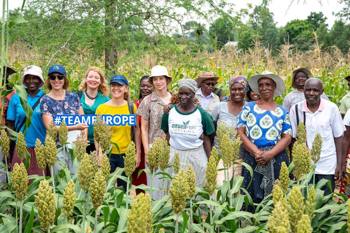
Support to the implementation of EU Working Better Together and Team Europe Initiatives in Zimbabwe
- 2022 – 2024
- under € 500,000
- Zimbabwe
The overall objective of the contract was to enhance overall effectiveness and visibility of the Team Europe approach in Zimbabwe.
The specific objectives of this contract were as follows:
- Assist the EUD and the European Partners in the implementation of the Working Together Roadmap signed in September 2019
- Support the EUD and European Partners in the design, approval process, coordination and monitoring of interventions under the TEIs as well as the overall management of the TEIs (TEIs updates, overall progress reporting, information for the communication contract, etc.)
- Keywords:
- Agriculture, Governance, Human rights

The purpose of this evaluation was to build an evidence base regarding SDC’s engagement in climate change adaptation and mitigation, including partnerships established by SDC to address climate change adaptation and mitigation at global, regional and national level.
The evaluation was designed to:
- Contribute to strategic decision-making (i.e. for the Dispatch 2021-2024).
- Derive lessons learnt in order to improve institutional performance.
- Serve as one measure of accountability towards the Parliament and the public.
The evaluation : i) assessed the successes, difficulties / challenges (including failures) of programmes and projects in Climate Change Adaptation and Mitigation implemented by SDC; ii) identified ‘good practices’ and determined how they could be systematically applied within SDC; iii) conducted a comparison / benchmarking of SDC’s performance compared to international practices; and iv) assessed the effectiveness and rate of achievement of projects and programmes.
The evaluation covered activities implemented during a period of six years (2015-2020) from all domains of SDC (i.e. South Cooperation; Global Cooperation; Humanitarian Aid; and Cooperation with Eastern Europe). It concentrated on projects in the area of climate change adaptation (CCA) and climate change mitigation (CCM) that SDC steers or co-steers. This includes direct implemented projects, mandates and contributions to trust or basket funds, etc. It excludes core contributions to multilateral organizations, large Funds (GCF, IDA, etc.) and NGOs.
- Keywords:
- Environment, Monitoring & Evaluation
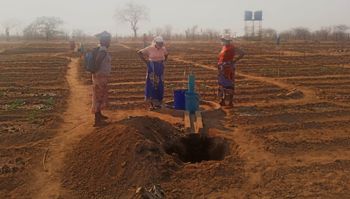
Evaluation of R4 Rural Resilience Initiative in Masvingo and Rushinga Districts in Zimbabwe (2018-2021)
- 2021 – 2021
- under € 500,000
- Zimbabwe
The decentralized evaluation of the R4 Rural Resilience Initiative was commissioned by WFP Zimbabwe. The R4 Initiative managed climate-related risk to enhance the food and nutrition security of farming households. Its integrated risk management strategy relied on four pillars: risk reduction (through a food for assets scheme and improved agricultural practices), risk transfer (through drought insurance), risk reserves and prudent risk taking (through village savings and loan groups, and market access for smallholder farmers).
The evaluation period covered the first phase of the R4 Initative in Zimbabwe, which ran from January 2018 to June 2021 and targeted 6,000 beneficiaries in the rural districts of Masvingo and Rushinga.
The evaluation served the double purpose of accountability and learning (with emphasis on the latter) and addressed the evaluation criteria of relevance, efficiency, effectiveness, impact, and sustainability, mainstreaming gender equality and empowerment of women throughout.
The mixed methods approach of the evaluation combined qualitative methods (document review, remote key informant interviews with national stakeholders, as well as field-based in-depth interviews with local stakeholders, focus group discussions with beneficiaries, and direct observation) and quantitative methods (a phone survey with beneficiaries, and analysis of existing M&E data).
The evaluation report is available at: https://www.wfp.org/publications/zimbabwe-r4-rural-resilience-initiative-masvingo-and-rushinga-evaluation
- Partners:
- Particip (Lead), JIMAT Consult Ltd
- Keywords:
- Agriculture, Environment, Food and nutrition, Infrastructure, Monitoring & Evaluation
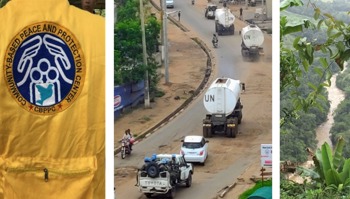
External Evaluation of EU’s Support to Conflict Prevention and Peace Building (2013-2017)
- 2018 – 2020
- € 500,000 – 1 million
- Global
This evaluation took place in a context of a recent surge in violent conflicts and a renewed momentum on Conflict Prevention and Peacebuilding (CPPB) both at the EU and global level. Its purpose was to:
- provide the relevant EU Institutions and the wider public with an overall independent assessment of the EU support to CPPB focusing on the period 2013-2017; and
- identify key lessons, instil good practices, and produce recommendations to feed into ongoing and future approaches to EU’s engagement in the field of CPPB.
In particular, the evaluation will feed into the EU implementation of the Integrated Approach to Conflict and Crises and nurture future EU support to CPPB strategies and interventions.
The scope of the evaluation included:
- all relevant actions (including spending and non-spending activities) and all countries/regions which fall under the responsibility of DG DEVCO and DG NEAR (neighbourhood region only); and
- the work/engagement of EEAS related to them.
In terms of temporal scope, the evaluation focused on the period 2013-2018, but also took the period 2011-2012 into consideration in order to assess the evolution of EU support to CPPB.
Through the course of the evaluation, the evaluation team conducted 12 case studies (focusing on countries, regions and instruments) which were subject to an in-depth analysis, including eight field visits. Two surveys – one covering EU services in Brussels, the other covering EU Delegations/Offices worldwide – were also part of the data collection and analysis process. Findings from all evaluation activities were synthesized into a final report.
The final report is available online: https://ec.europa.eu/international-partnerships/external-evaluation-eus-support-conflict-prevention-and-peacebuilding-2013-2018_en
- Partners:
- Particip (Lead), ECDPM
- Keywords:
- Governance, Monitoring & Evaluation

Evaluation of the ECHO assistance in the Southern Africa and Indian Ocean Region (SAIO), 2012-2016
- 2017 – 2017
- under € 500,000
- Madagascar, Malawi, Mozambique, Zimbabwe
The purpose of this Assignment was to have an independent overall evaluation of the ECHO actions in the SAIO region during the period 2012-2016.
Specifically, the evaluation provided:
- A comprehensive, retrospective assessment of DG ECHO's strategy/approach (as formalised by the Humanitarian Implementation Plans), in the SAIO region covering the evaluation issues of relevance, coherence, EU Added Value, effectiveness, efficiency and sustainability;
- Prospective, strategic recommendations – based on the retrospective evaluation and the related research – for a future ECHO strategy in the region, with a view of maximizing the benefits of ECHO's initiatives on the ground.
- Keywords:
- Humanitarian aid, Monitoring & Evaluation

Strengthening the Capacity of National Authorising Office in the Ministry of Finance Planning and Economic Development
- 2016 – 2017
- under € 500,000
- Zimbabwe
The global objective of this assignment was to strengthen the capacity of the NAO’s office, in the identification, implementation, coordination and pro-active monitoring and evaluation of the EDF funded cooperation programme, in line with the Cotonou Partnership Agreement, EDF and other relevant procedures. This objective was to be achieved through the implementation of the following:
- To assess the organisational structure and capacity of the Office of the NAO in discharging its role as foreseen in the Cotonou Agreement;
- To strengthen the capacity of the NAO in providing inputs in the programming and implementation of the 11th EDF and in contributing to the MOFED Aid Coordination mandate;
- To assess and design an aid information management system for tracking and reporting development cooperation inflows; and
- To explore and design further Technical Assistance.
- Partners:
- Particip (Lead), EuroPlus