Kuwait
3 references

EU Outreach and Partnership Facility for the GCC
- 2026 – 2029
- € 2 – 5 million
- Bahrain, Belgium, Kuwait, Oman, Qatar, Saudi Arabia, United Arab Emirates
As outlined in the Joint Communication, the Gulf is a dynamic neighbouring region and an important gateway between Europe, Asia and Africa. Likewise, the EU has a lot to offer to the Gulf partners, as the world’s biggest single market, trading bloc and investor, a leader in research and innovation, and an important mediator and promoter of multilateralism, social transformation including human rights, gender equality, diversity and inclusion. As both regions navigate an increasingly complex global landscape, their partnership will continue to be shaped by economic interdependence, shared security interests, and a commitment to addressing global challenges collaboratively.
The overall objective to which the project contributes is to consolidate the EU-GCC partnership at regional and bilateral level, and improve the EU’s perception in the region.
The specific objectives of the project are as follows:
1) Strengthen the position of the EU as a key partner in the GCC region in areas of mutual interest.
2) Support the implementation and monitoring of EU–GCC partnership and cooperation initiatives.
3) Foster deeper cooperation and mutual understanding between non-state actors, academia, civil-society and citizens in the EU and the GCC region.
The expected outputs of the project are as follows:
1) Outcome 1: Strengthen the position of the EU as a key partner in the GCC region in areas of mutual interest. Output: Increased awareness, exchange and collaboration between EU and GCC stakeholders in key strategic areas with a focus on joint initiatives, dialogues, and collaborative projects.
2) Outcome 2: Support the implementation and monitoring of EU-GCC partnership and cooperation initiatives. Output: Enhanced analysis, knowledge, and expertise to support the implementation and monitoring of joint policy priorities.
3) Outcome 3: Foster deeper cooperation and mutual understanding between non-state actors, academia, civil-society and citizens in the EU and the GCC region. Output: Expanded opportunities for people-to-people diplomacy, including joint cultural initiatives, academic exchanges, and cross-regional collaborations on mutually strategic sectors.
- Partners:
- Particip (Lead), Clingendael, CommWithUs, GINGER Group (ex SOFRECO)
- Keywords:
- Communication & media, Education, Governance, Human rights, Industry & private sector development
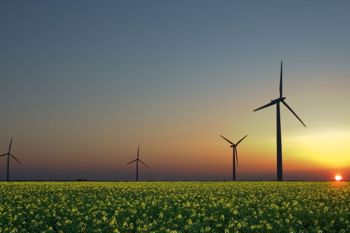
Final evaluation for EU-GCC Clean Energy Network
- 2021 – 2022
- under € 500,000
- Bahrain, Kuwait, Oman, Qatar, Saudi Arabia, United Arab Emirates
Systematic and timely evaluation of its programmes and activities is an established priority of the European Commission. The focus of evaluations is on the assessment of achievements, the quality and the results of Actions in the context of an evolving cooperation policy with an increasing emphasis on result-oriented approaches and the contribution towards EU foreign policy objectives and the implementation of the SDGs. From this perspective, evaluations should look for evidence of why, whether or how these results are linked to the EU intervention and seek to identify the factors driving or hindering progress. Evaluations should provide an understanding of the cause and effect links between: inputs and activities, and outputs, outcomes and impacts. Evaluations should serve accountability, decision making, learning and management purposes.
The main objectives of this evaluation are to provide the relevant services of the European Union and the interested stakeholders with:
- an overall independent assessment of the past performance of the EU-GCC project, paying particular attention to its intermediate results measured against its expected objectives; and the reasons underpinning such results;
- key lessons learned, conclusions and related recommendations in order to improve current and future Actions.
- Partners:
- Particip (Lead), SUEZ
- Keywords:
- Energy, Industry & private sector development, Monitoring & Evaluation

EU-GCC Dialogue on Economic Diversification Evaluation
- 2021 – 2022
- under € 500,000
- Bahrain, Kuwait, Oman, Qatar, Saudi Arabia, United Arab Emirates
Systematic and timely evaluation of its programmes and activities is an established priority of the European Commission. The focus of evaluations is on the assessment of achievements, the quality and the results of Actions in the context of an evolving cooperation policy with an increasing emphasis on result-oriented approaches and the contribution towards EU foreign policy objectives and the implementation of the SDGs. From this perspective, evaluations should look for evidence of why, whether or how these results are linked to the EU intervention and seek to identify the factors driving or hindering progress. Evaluations should provide an understanding of the cause and effect links between: inputs and activities, and outputs, outcomes and impacts. Evaluations should serve accountability, decision making, learning and management purposes.
The main objectives of this evaluation are to provide the relevant services of the European Union and the interested stakeholders with:
- an overall independent assessment of the past performance of the EU-GCC project, paying particular attention to its intermediate results measured against its expected objectives; and the reasons underpinning such results;
- key lessons learned, conclusions and related recommendations in order to improve current and future Actions.
- Keywords:
- Industry & private sector development, Macro-economic/ National policy, Monitoring & Evaluation, Trade