
Nuestros proyectos
Explore la experiencia de Particip en proyectos desarrollados en distintos países, sectores y ámbitos de especialización.
Nuestras referencias ofrecen una visión general de las misiones finalizadas y en curso, incluidos sus objetivos, alcance geográfico, duración y valor contractual.
Mostrando 711–720 de 985 referencias

Government Advice on Economic Development
- 2016 – 2019
- menos de 500.000 €
- Moldova
“Government Advice on Economic Development” Programme, which was implemented by GIZ and structured into two components, aimed at the objective: “Public policy-makers promote private sector investment geared towards boosting employment”. The Consortium of Particip GmbH and Avensa Romania & Moldova was supporting through the provision of high level advice the implementation of component 1, Investment Climate. Component 1 was geared towards improving the existing legal framework, which regulates the investment and business activity in the country, stimulates direct investment thereby contributing to its economic development and further approximation to the EU market. Investment promotion should spur inclusive economic growth, the creation of jobs and contribute to increasing local labor force qualification. To this end, the component 1 aimed at supporting the development of economic policy reform proposals with the participation of private sector stakeholders.
The following short-term missions have been provided:
- Consultancy on investment contracts between Government and private investors
- Developing proposals to streamline Republic of Moldova’s Policy Documents Structure
- Socios:
- Particip (líder), Avensa, IM Avensa

CONSULTANCY TO DEVELOP A DETAILED AND COSTED IMPLEMENTATION PLAN FOR THE COFFEE ROAD MAP FOR UGANDA
- 2018 – 2019
- menos de 500.000 €
- Uganda
To contribute towards obtaining an insight in the coffee value chain in order to design interventions that lead to sustainable solutions that contribute to the achieving the targets of the Coffee Roadmap.
To develop a detailed and costed implementation plan for the initiatives identified in the Coffee Roadmap for Uganda for the next 5 years commencing the financial year (FY) 2019/20.
- Socios:
- Particip (líder), CAPA EEIG (managed by Particip), EMI (formerly: Cardno Belgium)
- Palabras clave:
- Agricultura

Monitoring of LIFE projects (action grants and operational grants), communication about the LIFE programme and other linked activities.
- 2014 – 2019
- más de 10 millones de €
- EU
LIFE is the main European Commission funding mechanism for improving the state of the environment in the European Union.
Particip GmbH was responsible for the management of the NEEMO EEIG. Particip provided the Administrative Team, the financial management, and one of the two Managing Directors of NEEMO EEIG, and was therefore responsible for ensuring an effective operation of business activities and the compliance with contractual requirements. The overall management tasks included budgeting, accounting and controlling, as well as guaranteeing high team performance and quality assurance.
The general objective of LIFE is to contribute to the implementation, updating and development of EU environmental and climate policy and legislation by co-financing projects with European added value. The general objectives of LIFE shall be pursued through two sub-programmes:
- Environment consisting of three strands; nature and biodiversity, environment and resource efficiency, governance and information
- Climate Action consisting of three strands; climate change mitigation, climate change adaptation, governance and information
The general objectives of LIFE are:
- to contribute to the shift towards a resource-efficient, low-carbon and climate resilient economy, to the protection and improvement of the quality of the environment and to halting and reversing biodiversity loss, including the support of the Natura 2000 network and tackling the degradation of ecosystems;
- to improve the development, implementation and enforcement of Union environmental and climate change policy and legislation, and to act as a catalyst for, and promote, the integration and mainstreaming of environmental and climate objectives into other Union policies and public and private sector practice, including by increasing the public and private sector’s capacity;
- to support better environmental and climate governance at all levels, including better involvement of civil society, NGOs and local actors;
- to support the implementation of the 7th Environment Action Programme.
The NEEMO EEIG provided more than 170 long-term experts specialised in monitoring and evaluation, in communication activities and in thematic fields related to EU environmental policy. The experts monitored more than 1000 projects that are financed via the LIFE instrument.
- Socios:
- NEEMO EEIG (managed by Particip) (líder), AEiDL, DAI Global UK, ELLE, IDOM, ILE UKE, Oréade-Brèche, Particip, Prospect C&S, TIMESIS
- Palabras clave:
- Ejecución de proyectos / asistencia técnica, Medio ambiente, Seguimiento y evaluación
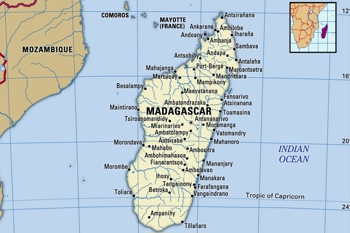
Technical assistance to improve the effectiveness of the strategic partnership with civil society organizations and private sector professional organizations in Madagascar
- 2017 – 2019
- menos de 500.000 €
- Madagascar
The specific objective of the mission was to improve the effectiveness of the strategic partnership of the Delegation of the European Union, in connection with the Office of support to the National Authorizing Officer (NAO), with civil society organizations and professional organizations in the private sector in Madagascar; by offering specific technical support and helping to strengthen the strategic capacities of these organizations in the relevant governance issues related to the EU programmes in Madagascar.
The results achieved were as follows:
1. Strategic dialogue, participation and the role of CSOs and professional organisations in national and local governance were improved and strengthened in the framework of EU actions in Madagascar, in particular:
1.1.The strategic analyses and contributions to reporting on the proposed themes were produced at the request of the European Union Delegation to Madagascar (EUD Madagascar) and on the basis of exchanges with stakeholders (including questionnaires for evaluating cross-cutting issues);
1.2.Four strategic dialogues between the EUD Madagascar and the civil society (including two deconcentrated) were organised (including preparation, reporting and logistical organisation) in connection with the EU's high-level political dialogue. These dialogues were the subject of preparation and restitution sessions with CSOs;
1.3.The report on the implementation of the roadmap to support the civil society 2014-2017 was produced and this roadmap was updated for the period 2018-2021. The implementation of the updated roadmap was monitored (reporting and consultations) and the meetings of the EUD Madagascar - CSO working group, set up in June 2017, were organised. An update of the database of CSOs supported by the EU and the MS was also carried out in connection with the Common Support Fund for Civil Society in 2018.
1.4.Specific contributions at the request of the EUD Madagascar to the monitoring of the implementation and reporting on the Democracy and Human Rights strategy were provided twice a year.
1.5.Support for the setting up of the consortium of professional employers' organisations from the private sector within the framework of the future PADEIR programme grant, in particular support for: the drafting of the statutes, the definition of governance and management structures, internal regulations, the procedures manual. The elaboration and proposal of a coaching/training programme for the capacity building of the professional employers' organizations members of the consortium, in particular on the management of the subsidies envisaged by the PADEIR. This support was carried out in complementarity and synergy with the actions developed by the PROCOM programme (strengthening of intermediary organisations (IOs) and others, support for IO grants);
1.6.Organisation of two dialogue sessions between private sector employer/professional organisations, the EUD Madagascar, the NAO and other stakeholders whose themes were validated in advance by the European Union Delegation;
1.7.Two thematic dialogue sessions between CSOs, the EUD Madagascar and the NAO/Ministry of Finance and Budget were prepared and organised (including post-session follow-up) during the 2017 and 2018 disbursements of State Building Contract 2 budget support 11th EDF;
1.8.Organisation and facilitation of consultations for the monitoring and improvement of civil society strategies for participation in the electoral process in the framework of EU funded projects.
2. The Steering Committee of the Multi-Donor Common Fund to Support Malagasy Civil Society was supported in its consolidation and strategic orientations.
2.1.The capitalisation by the Steering Committee of the modalities developed on the basis of the recommendations of the final evaluation of the Dinika 10th EDF programme became effective and the monitoring and evaluation system was set up;
2.2.The Steering Committee and the future Advisory Committee of the Common Fund were accompanied and supported in their strategic orientations;
2.3.The capacities of civil society representatives in the various bodies of the Common Fund were strengthened, in particular through a coaching programme and the facilitation of concentration workshops between CSOs (six workshops over a period of two years);
2.4.New donors were identified and ways of moving towards an autonomous national mechanism were proposed;
2.5. The monitoring of complementarity/synergy between Common Fund support and other EU support (EDF/budget lines) was carried out, in particular helping to identify the priorities of the 2018 CSOs-LAs call for proposals guidelines.
3. gender equality and women's empowerment in the 11th EDF programmes are now taken into account more and the draft budget lines have been strengthened, in particular in the implementation of GAP II, more specifically :
3.1.The “gender” analysis of the Action Papers and of other programming documents of the EUD Madagascar (including the guidelines for calls for proposals) was produced and contributed to gender mainstreaming;
3.2.Gender checklists and sex-disaggregated and gender-sensitive indicators were produced to improve the management of EU programmes and projects; in future these indicators will also serve to measure the gender impact of these EU-funded programmes and projects;
3.3.Coaching sessions and/or short training sessions were given on request by the EUD Madagascar;
3.4.The monitoring of the GAP II implementation and reporting was supported, particularly the identification of gender equality results achieved by existing programmes and the selection of targets and indicators for programmes and projects that were not included in the GAP 2016 report;
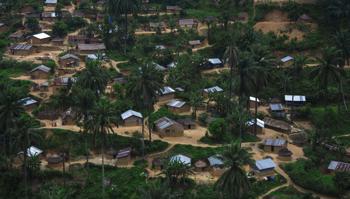
Support to WFP/FAO: Stabilization of Priority Post-Conflict Areas of DRC
- 2019 – 2019
- menos de 500.000 €
- Congo (Kinshasa)
In 2016, the United Nations World Food Programme (WFP) and the Food and Agriculture Organization of the United Nations (FAO) launched a joint project to rebuild livelihoods shattered by conflict in eastern Democratic Republic of Congo (DRC), by empowering women, supporting farmers and helping build peace between communities. This was funded by the German Cooperation through KfW with a grant of 35 million EUR.
Working hand-in-hand in using their collective expertise, WFP and FAO have set out efforts to assist rural farming communities returning home after forced displacement. The support includes a short-term safety net for people in urgent need, as well as micro-financing, numeracy and literacy training, economic empowerment training for women, and conflict prevention tools.
The aim is to bridge the gap between humanitarian assistance and development work, by improving value chains and livelihood development for smallholder farmers, thus supporting the emergence of more resilient and peaceful communities. Families will benefit from better access to markets, training in sustainable agricultural production, including post-harvest management, adequate agro-processing and marketing of their produce to boost their income and improve their food and nutrition security.
The overall task of the consultancy was to support WFP and FAO in the monitoring and reporting of the project “Stabilization of Priority Post-Conflict Areas of DRC”. This included support in a review of the operational management and coordination of the project,identifying improvements in data collection and analysis, updating / finalizing the effects matrix, and drafting an evaluation report.

Technical Assistance for the Implementation of the Justice, Security, Accountability and Transparency (JSAT) Project
- 2014 – 2019
- de 1 a 2 millones de €
- Jamaica
The Justice, Security, Accountability & Transparency Project (JSAT) is valued at 12.6 million EUR and was funded by the EU under the 10th European Development Fund (EDF). The JSAT was implemented jointly by two Ministries (Ministry of National Security and Ministry of Justice), the Independent Commission of Investigations (INDECOM) and Civil Society Organizations. The overall objective of the JSAT was to improve the standard of living and quality of life of Jamaican citizens by strengthening governance and oversight, with particular regard to the functioning of the security and justice systems. The purpose of the Technical Assistance (TA) was to provide project management support and build the capacity of the Ministries of National Security and Justice, and to support INDECOM to ensure the efficient implementation of the JSAT Project.
The project encompassed four components:
Component 1) Strengthening the capacity, forensic capability and oversight within the security sector thereby improving respect for the rule of law and human rights principles.
- Capacity building and training at the Single Training Academy
- Rehabilitation and equipping of classrooms and dormitories at the Single Training Academy and supply of software and training
- Supply of Equipment and training at the Forensic laboratory to facilitate the identification of drugs and other substances
- Construction of annex to the Forensic Laboratory and provision of retrieval system and software to facilitate security of exhibits and easy retrieval.
- Capacity Building and provision of equipment to the Independent Commission for Investigations (INDECOM)
Component 2) Improved networking and data-sharing capability and strengthened professional capacity of key entities to investigate and present for prosecution, cases of corruption, money laundering and organised crime.
- Technical assistance and capacity building to support the establishment of the Single Anti-Corruption Agency
- Supply of Equipment, Technology and Training to select Law Enforcement Agencies to improve capacity and encourage coherence between operations.
- Technical assistance to document protocols within law enforcement agencies
- Refurbishing and fitting of interview rooms at select law enforcement agencies
Component 3) Improved capability of the justice system to ensure timely treatment and disposal of cases
- Review and streamline the administrative processes underpinning the Case Management System (CMS) in the Justice Sector and implement CMS in select courts
- Rehabilitate and equip select courts with new technology to facilitate video evidence and electronic recording of evidence
Component 4) Civil society organisations (CSOs) empowered to fulfil their monitoring, advocacy and public education functions.
- At least 2 Calls for Proposals with grants awarded to civil society organisations
The activities under each component were implemented using a tendering / procurement procedure following the guidelines for Programme Estimates.
The implementation of all sub-activities under components 1-3 required an invitation to tender procedure. The overall number of tenders launched was forty (40). All types of procurement (Service, Supplies and Work), all types of EU procedures (Single tender, Competitive negotiated, Local and International open) were used for the various types of JSAT activities: training, forensic equipment, IT equipment, furnishing, sophisticated software, rehabilitation and construction works, social studies, communication & visibility studies, etc.
- Socios:
- GOPA PACE (ex B&S Europe SA) (líder), Lumin Consulting, Particip

Joint country strategy evaluation of Spain and the European Union's cooperation with Nicaragua (2009-2017)
- 2018 – 2019
- menos de 500.000 €
- Nicaragua
The evaluation assessed the cooperation of the European Union and Spain with Nicaragua between 2009 and 2017. It covered:
- All of EU and Spanish cooperation with Nicaragua between 2009 and 2017, including programming and political dialogue. The main sectors covered included: private sector development, good governance and justice, security, climate change, water and sanitation, energy, education and TVET, and gender equality.
- All instruments and aid modalities employed, as well as crisis response mechanisms and financing implemented within the framework of the IFS (Instrument for Stability) followed by the IcSP (Instrument contributing to Stability and Peace) in the case of the EU, and for the Spanish Cooperation, instruments and modalities in the framework of III and IV Master Plans (2009-2012 and 2013-2016).
- Spending and non-spending activities completed, in progress and being planned in the evaluation period.
- EEAS in so far as it related to development in Nicaragua (programming and political dialogue).
- The interaction of DG DEVCO interventions with those of DG Trade, FPI, ECHO and the EIB and those carried out under the Common Foreign and Security Policy (CFSP) in Nicaragua; The interaction of AECID interventions with other actors of Spanish Cooperation in Nicaragua, such as other Ministries, autonomous communities, local governments, etc. The interaction between EU and Spanish Cooperation interventions is also assessed.
- Coherence between European Union interventions in the field of international cooperation and development and other EU policies affecting Nicaragua in the framework of the Policy Coherence for Development (PCD) commitments. Coherence between Spanish interventions in the field of international cooperation and other Spanish policies affecting Nicaragua
*Due to the political crisis in Nicaragua as from April 2018, the Contracting Authority decided to stop this evaluation upon conclusion of the desk stage. The last report produced was the desk report and included preliminary conclusions and recommendations.
- Palabras clave:
- Seguimiento y evaluación
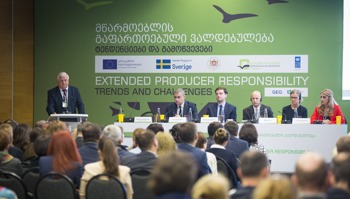
Technical assistance for awareness, information and communication to improve waste management practices in Georgia and the visibility of EU support to the sector
- 2018 – 2019
- menos de 500.000 €
- Georgia
Since Georgia adopted its new Waste Code in 2015 and the development of a National Waste Management Strategy, the Georgian government has treated waste collection, safe disposal, recycling, recovery and waste management in general as top priorities. Some requirements of the new code had already been enforced, while others were expected to be enacted step-wise according to a time-bound Action Plan (2016-2020). The government’s aim was to establish a comprehensive system for waste management in line with modern standards and the EU-Georgia Association Agreement (AA) requirements.
The EU, through its Delegation in Georgia, played a significant role in supporting this field of environmental protection. However, in spite of the extensive and outstanding contribution to the waste sector development, the awareness of key target audiences and of the general public of implemented or ongoing actions in the waste sector, and of best waste management practices needed to be strengthened further.
The overall objective of this project was to increase awareness, understanding, and support for the EU and its activities in Georgia, particularly among Georgian audiences. The specific objective was to do so with particular emphasis on the EU support to improve waste management practices in the country through active participation within society.
Concretely, this has been done by raising awareness, informing, engaging and building capacity among the key audiences, and by enhancing communication and cooperation among the key stakeholders and counterparts of this initiative. This increased the visibility of the EU activities and awareness of waste related issues, while demonstrating its importance for the whole country.
- Palabras clave:
- Comunicación y medios, Medio ambiente

Final evaluation - Institutional Capacity Building of the National Authorising Officer System in PNG - Phase II
- 2019 – 2019
- menos de 500.000 €
- Papua New Guinea
The Project under the 10th EDF was designed based on lessons learnt from the Institutional Capacity Building - Phase I Project, the 2010 Result Oriented Monitoring (ROM) and the Mid-Term Review (MTR) and the subsequent analysis during formulation of ICB - Phase II which confirmed the weak ownership of the EU-PNG Development Programme and of the EDF-funded projects/programmes by the GoPNG and the implementing line departments and agencies (LDA), largely as a consequence of inadequate involvement in the programming and planning process, and as evidenced by virtual non-functioning of the Programme Steering Committee, which was to play a central role in guiding the NAO-SU.
The overall objective of the project was to contribute to the strengthening of the mobilisation, management and coordination of all development assistance to PNG, ensuring its effectiveness and alignment with national strategies and development plans.
It was expected to deliver support and capacity strengthening actions to the NAO system in order to enhance the preparation and the implementation of the PNG-EU development cooperation programme and therefore to contribute to the effectiveness of the aid provided to PNG.
It focussed on the areas of programming, planning, aid management and project management. The implementation was expected to be underpinned by effective internal and external communication and information.
The main objectives of this evaluation were to provide the relevant services of the European Union, the interested stakeholders and the wider public with:
- an overall independent assessment of the past performance of the Institutional Capacity Building of the National Authorising Officer System in PNG - Phase II, paying particular attention to its results measured against its expected objectives; and the reasons underpinning such results;
- key lessons learned, conclusions and related recommendations in order to improve current if relevant and future Actions.
- Palabras clave:
- Desarrollo institucional, Seguimiento y evaluación

Final Evaluation of EPJUST II Project
- 2019 – 2019
- menos de 500.000 €
- Philippines
The EPJUST II programme was designed to address some of the weaknesses identified in rule of law in the Philippines, in particular key obstacles related to justice accessibility and enforceability. In doing so, it aimed to address both the "demand" side, with the view to enhance the possibilities of rights-holders to seek justice, and the "supply" side with the view to enhance the efficiency of duty-bearers to deliver justice. The expected results were to directly or indirectly contribute to the implementation of seven out of nine key action points identified to strengthen the Rule of Law in the Philippines Development Plan(PDP) 2011-2016, aimed at improving the economic performance and reducing poverty.
The objective of the EPJUST II Programme was to help achieve equitable access to efficient legal enforcement of rights for all citizens in general and the poor and disadvantaged, including women, children, minorities, indigenous peoples, and human rights and social activists in particular.
The main objectives of this evaluation were to provide the relevant services of the European Union, the interested stakeholders and the wider public with:
- An overall independent assessment of the past performance of the EPJUST II Programme, paying particular attention to its intermediate results measured against its objectives;
- Key recommendations about sustainability of the action and exit strategy
- Key lessons and recommendations, to be drawn also from the evaluation in order to improve current implementation and future Actions.
In particular, this evaluation served the purpose of identifying key bottlenecks of actual slow–moving implementation and suggested corrective measures for a smoother implementation.
The main users of this evaluation were the EU Delegation, the Government of Philippines, the
Department of Interior and Local Government and other beneficiary Departments and Agencies.
- Socios:
- Particip (líder), EuroPlus
- Palabras clave:
- Justicia / Estado de derecho, Seguimiento y evaluación