Congo (Kinshasa)
19 referencias

Strengthening the national regional linkages in SADC (SNRL) - Consultancies on regional integration based on SADC policies, facilitation of events, communication and visibility
- 2023 – 2027
- de 2 a 5 millones de €
- SADC region
The overall objective of the project "Strengthening the national regional linkages in SADC (SNRL)" is to support the Southern African Development Community (SADC) in its efforts to promote regional integration in the member states (MS) for the benefit of the population in the SADC region.
The project is aligned with SADC's regional strategy (the Regional Indicative Strategic Development Plan 2020-30, RISDP) and supports its implementation.
In particular, it supports SADC and its MS on implementing Chapter 5 of the RISDP focusing on the strategic management objectives of the RISDP. By strengthening SADC as a regional organization and by supporting the implementation of the regional agenda RISDP, the SNRL project aims to facilitate the regional integration in the SADC region.
The objective of this contract is the provision of high-quality short-term expert (STE) advice in various topics relevant for enhancing the capacities of national stakeholders to vigorously and effectively pursue in their respective countries the regional integration protocols, policies and strategies of SADC.
The individual consultancy assignments are developed between GIZ and its partners and are based on a joint process and methodology aimed at identifying the needs in the SADC region and within individual member states.
The assignments focus on the scaling-up of best practices and should aim to share experiences and knowledge throughout the region (for example by aiming to standardize products developed as part of the assignment).
The following outputs are expected as a result of project implementation:
- Output 1: The institutional framework for the implementation of regional integration in the SADC region has improved in the member states;
- Output 2: Monitoring and evaluation systems for the implementation of regional integration are in place in selected member states;
- Output 3: The strategic communication capacities of SADC and member states for high profile communication around SADC activities and operations are strengthened.
Implemented projects include the following (project number and title):
- P1/2023 Consultancy to Support the SADC Secretariat to Develop and Pilot the Protocol Compliance Mechanism and Monitoring of the Trade Protocol;
- P2/2023 Perception Survey on the status of SADC regional integration in the Member States;
- P3/2023 Facilitator/Presenter and Group Work Moderators for Two Regional Workshops Supported by SNRL;
- P4/2023 Development of Model Law for the Establishment of SADC National Committees in Member States;
- P5/2023 Consultancy to develop communication products for publication purposes from the deliberations of SADC Member States at the Regional Learning and Exchange Symposium in Lesotho;
- P6/2023 Consultancy to develop presentation on the Status of SADC National Structures and their Financing at the Regional Learning and Exchange Symposium in Lesotho;
- P7/2023 Facilitation Operational Planning SNRL;
- P8/2023 Consultancy Services to Support the Publicity Products of The SADC Summit Public Lecture- Angola;
- P9/2023 Consultancy Services to Provide Rapporteuring of the Proceedings of The SADC Summit Public Lecture- Angola;
- P10/2023 Development of Peer Learning & Review Mechanism for national SADC coordination;
- P11/2023 Shadow monitoring on the extent of implementation of the SADC RAIP 2017 – 2022;
- P12/2023 Editing & Design of Eswatini’s New Industrial Policy;
- P13/2023 Capacity Building on SADC Regional Integration and Project Management for SADC National Contact Points Junior and Middle Staff;
- P14/2023 Updating and Finalising the Status of the SADC National Committees Desk Review Report;
- P15/2023 Consultancy Services to Support the Documentation of Proceedings at the SADC Integrated Regional Electronic Settlement System 10th Anniversary Celebrations;
- P16/2023 Consultancy Services to Support the Publicity Products of the SADC Integrated Regional Electronic Settlement Systems 10-year anniversary;
- P17/2023 Consultancy Services to Support the Rapporteuring of the SADC Integrated Regional Electronic Settlement Systems 10-year anniversary;
- P18/2023 Scoping Studies South Africa and Zimbabwe;
- P19/2023 Scoping Study Madagascar;
- P20/2023 SNRL II Operational Planning Workshop.
- P21 Team Retreat Facilitatior
- P22 Communication Guidelines
- P23 Lesotho National Policy on Regional Economic Integration
- P24 Scoping study and development of SA documentary
- P25 Production of SADC video podcasts
- P27 Development of a Resource Mobilisation Plan for the SNC of the Kingdom of Eswatini
- P28 Ops Manual, OP & Capacity Building Training on RI & PM - Eswatini
- P29 Communications Capacity Building in Botswana
- P30 SNRL II Team Retreat Refresher
- P31 CB& Strengthening Lesotho's SNCs - Project Management
- P33 Establishment of South Africa’s SADC National Committee
- P34 Graphic Design for Promotional Material - SADC Public Lecture in Zimbabwe
- P35 Rapportuering of the SADC Public Lecture Zimbabwe
- P36 Madagascar National Policy on SADC RI
- P37 Capacity Building & Strengthening SNC in Madagascar
- P38 CB & Training on SADC RI & PM for Zambia’s SNC staff
- P39 CB on Resource Mobilisation & Development of Resource Mobilisation Strategy in Zambia
- P40 Regional CB on Resource Mobilisation
- P41 Model Law on the Establishment of SNCs
- P42 Policy briefs on SADC-RTGS; role/significance of the SADC public lectures in promoting regional cooperation and integration in the SADC region.
- P43 Fact Sheets on SADC Protocols
- P44 Communications Strategy and Social Media Dissemination Plan for BGCIS in Botswana
- P46 RI Orientation & Induction for the SNC in Eswatini
- P47 SNRL II Operational Planning Workshop 2025
- P48 Rapporteur for Tanzania Event on SADC RAIP 2017-2022 Shadow Monitoring Report
- P49 Rapporteur for Malawi Event on SADC RAIP 2017-2022 Shadow Monitoring Report
- P50 Policy Brief, Factsheet & Press Release On he AML (Anti-Money Laundering) & CFT
- P51 Madagascar Resource Mobilisation Strategy and Action Plan
- P52 Piloting SNC Peer Learning and Review Mechanism (S-PLRM)
- P53 Establish Baseline Values on SADC Parliamentary Forum’s Operational Efficiency
- P54 Revise SADC Draft Communication, Awareness and Visibility Strategy
- P55 NSA Baseline Indicators
- P56 Interpretation Assignments
- P57 Facilitation of Consultation Workshop SNRL
- P58 Endline Perception Survey
- P60 Piloting M&E Framework for the SADC Protocol on Trade
- P61 SADC Parliamentary Forum M&E on Gender
- P62 Photography, Videography and Livestreaming _ Launch of SA's SNC
- P63 SADC PRU Comms Strategy Launch
- P64 Status of SNCs in the Member States
- P65 Training of Botswana SNC
- P69 Facilitation of SPLRM 1st Cycle
- P70 SPRLM Budget and Finance Plan
- P71 CfP Support
- P72 Facilitation of SNC Guidelines
- P73 SADC PF Publication and Dissemination
- P74 SADC PF Gender Assessment
- P75 SADC PF Mid-Term Evaluation
- P77 Review of Public Hearing
- P81 Communication Documentary Launch
- Socios:
- Particip (líder), Africa Practice, DPC, Imani Development Group
- Palabras clave:
- Agricultura, Comercio, Comunicación y medios, Desarrollo institucional, Gobernanza, Industria y desarrollo del sector privado, Seguimiento y evaluación
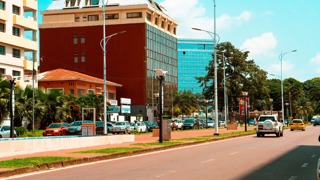
Technical assistance to the partnership between the EU and the DRC
- 2024 – 2027
- de 5 a 10 millones de €
- Congo (Kinshasa)
The general objective (impact) of this action is to contribute to the sustainable economic and social development of the Democratic Republic of Congo, through the EU's strategy in the DRC which aims at (i) the sustainable stabilisation of the country, (ii) the reduction of inequalities, and (iii) the contribution to the preservation of global public goods, as specified in the Multiannual Indicative Programme 2021-27. The specific objective of this contract is to strengthen the partnership between the EU and the DRC through actions designed to support and complement interventions carried out under the MIP or regional and global programmes in the DRC.
The products expected from this contract are as follows:
- Product 1: The preparation (identification and formulation) and implementation of the EU-DRC MIP is improved, as is its complementarity with regional or global programmes.
- Product 2: Political dialogue between the EU and the DRC is better informed and coordinated with the other partners, in particular the Member States, on joint programming and Team Europe Initiatives, at both strategic and operational levels.
- Product 3: Knowledge of issues relating to the EU's action and presence in the DRC, including outside the MIP's priority areas, is deepened.
- Product 4: The management and technical capacities of programme implementation partners are strengthened.
- Product 5: The programme monitoring, evaluation and audit system has been strengthened.
- Product 6: Information on the investment and economic governance framework in the DRC and on specific investment themes or projects, particularly in relation to the Global Gateway strategy or the EIP, is improved.
- Product 7: Technical assistance missions in support of improving the business climate or implementing the Global Gateway strategy or the EIP in the DRC are encouraged.
- Product 8: The visibility of EU-DRC cooperation, the EU's overall objectives and its multilateral agenda among the authorities and the general public is improved.
- Product 9: Cultural cooperation between the EU and the DRC is being stepped up.
- Product 10: Actors or entities that contribute to the achievement of the EU's strategic objectives in the DRC and worldwide, and do not fall within the scope of multi-annual programming, are supported on an ad hoc basis.
This contract covers all the products of the Technical Cooperation Facility. However, for related products 8 and 9, specific contracts outside the present contract will be concluded by the Delegation, which should be able to cover the vast majority of culture and communication and visibility actions.
- Socios:
- Particip (líder), IBF International Consulting S.A.

Evaluation of the project Wehubit 2.0 (BEL22009)
- 2026 – 2026
- menos de 500.000 €
- Africa
The Wehubit 2.0 programme is Enabel's flagship D4D/innovation programme working on Digital Social Innovations (DSIs). This independent evaluation assesses the performance of Wehubit 2.0 against its objectives, with a focus on relevance, coherence, efficiency, effectiveness, sustainability and impact. It follows Enabel’s evaluation standards and includes a field visit in Dakar (Senegal). The evaluation approach combines document review and stakeholder consultation to generate evidence-based findings and practical recommendations, and is implemented within the ToR’s fixed reporting milestones.
- Socios:
- Particip (líder), Technopolis Group
- Palabras clave:
- Seguimiento y evaluación
Evaluation of the EU support to the Water Convention - Phase 1 (2019-2021) and Phase 2 (2022-2024)
- 2025 – 2026
- menos de 500.000 €
- Global
The EU has financed two global interventions to support the UNECE Water Conventiontion, with a particular emphasis on promoting accession and strengthening implementation. The evaluation covered Phase 1 (01/04/2019-30/06/2022) with a budget of EUR 2,350,000, and Phase 2 (01/07/2022-31/12/2024) with a budget of EUR 3,000,000. The scope was global and the evaluation covered the entire implementation periods of Phase 1 and Phase 2.
The ex-post evaluation’s overarching purpose was twofold: (i) provide EU services and stakeholders with an independent assessment of performance and levels of results achieved against expected objectives, and (ii) identify lessons learned, conclusions, and recommendations to inform improvements to ongoing and future support.
Evaluation focus:
- assessing the relevance and coherence of EU-supported components of the Convention’s work programme in both phases, with a particular focus on activities that facilitate accession and support implementation by new Parties;
- examining the efficiency and effectiveness of the Water Convention secretariat in implementing EU-supported components, including its capacity to respond to increasing demands; and
- drawing lessons and forward-looking recommendations for improving sustainability. A Theory of Change is to be developed considering causal and contextual assumptions as part of the assessment approach
- Socios:
- Photoshooters (líder)
- Palabras clave:
- Medio ambiente, Seguimiento y evaluación
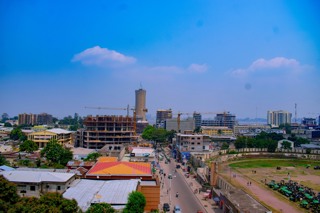
Strengthening the technical, organisational and operational authorities in the fight against money laundering and the financing of terrorism
- 2024 – 2026
- menos de 500.000 €
- Congo (Kinshasa)
The objective of the mission will be to strengthen the capacities of COGEBISCO and other actors involved in the asset recovery chain.
The general objectives of the project are:
- to strengthen the technical capacities and skills of staff by implementing continuous training programs for staff to improve their knowledge of recovery techniques and legislative developments;
- to improve of the organizational and legal framework;
- to implement of effective procedures by developing clear and appropriate procedures for asset recovery, incorporating modern tools and best practices;
- to strengthen inter-institutional cooperation by proposing measures to strengthen functional relationships between COGEBISCO and other key stakeholders, particularly authorities responsible for prosecuting cases related to fraud and criminal prosecution;
- to the use of new technologies by adopting advanced technological solutions for asset recovery and management.

Mid-term evaluation of the ‘United for Peace and Security’ programme in DRC
- 2025 – 2025
- menos de 500.000 €
- Congo (Kinshasa)
The overall objective of this evaluation is twofold:
- To provide the relevant European Union services and interested stakeholders with an independent comprehensive assessment of the performance of the ‘Implementation of the Action for Peace and Security’ initiative, paying particular attention to its various levels of results measured against its expected objectives, and the reasons underlying these results; and
- Identify the main lessons learned, conclusions and recommendations that can be drawn from this in order to inform decision-makers on how to improve current and future interventions.
The specific objectives of this evaluation are:
- Conduct a desk review and analyse all existing documents and data on the project and its environment
- Conduct a field study to assess the programme's performance, including interviews with key informants and discussions with target groups in the project's areas of intervention
- Organise and facilitate a debriefing meeting in Kinshasa. The preliminary results of the field mission will be presented to the UNDE and other interested parties as appropriate.
- Produce the evaluation report
- Socios:
- Particip (líder), Technopolis Group
- Palabras clave:
- Gobernanza, Seguimiento y evaluación
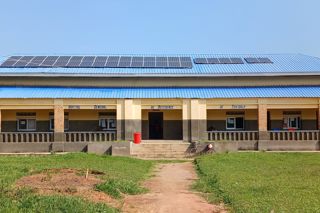
Final evaluation of the programme to strengthen the health provision and develop access to healthcare in the DRC and support for the preparation of the European Union's future health programme in the Democratic Republic of Congo.
- 2024 – 2025
- menos de 500.000 €
- Congo (Kinshasa)
Since the 10th EDF and from 2013, EU support represents a total amount of EUR 307 million broken down into three successive programs: (i) The Project to Accelerate Progress Towards Millennium Development Goals 4 and 5 (PAP MDG4&5) financed by the 10th EDF since 2013 (EUR 40 million, 23 ZS); (ii) The Program to Strengthen Supply and Development of Access to Health Care in the DRC (PRO DS) financed by the 11th EDF since 2016 (EUR 217 million on 40 ZS of 8/26 provinces); (iii) United for Health and Education financed by NDICI since 2021 (EUR 50 million).
The overall objective of this evaluation is to provide an independent comprehensive analysis of the performance of the EU Health Programme (between 12/2013 and 07/2023) in the 8 beneficiary provinces, paying particular attention to its different levels of results in comparison with its expected results, and the reasons that explain possible gaps in the achievement of results. The main lessons, conclusions and recommendations that emerge will help improve current and future interventions.
The overall objective of this evaluation was to provide an independent global analysis of the performance of the EU Health Programme (between 12/2013 and 07/2023) in the 8 beneficiary provinces, paying particular attention to its different levels of results compared to its expected results, and the reasons for any gaps in the achievement of results. The main lessons, conclusions and recommendations identified aim to improve current and future interventions. In particular, the final evaluation serves to:
(i) highlight to all stakeholders (Congolese, development partners, EU) the contribution made by the 3 programmes;
(ii) capitalise on the programmes to enrich not only the DRC's health strategies and policies, but also the programming of future EU interventions in the DRC;
(iii) improve synergies between technical and financial partners; and
(iv) improve the health of target populations.
- Palabras clave:
- Salud, Seguimiento y evaluación
Mid-term evaluation of the implementation of the EU Gender Action Plan III (2021-2025)
- 2022 – 2023
- menos de 500.000 €
- Global
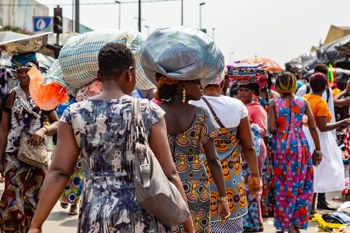
The main objectives of this assignment are to: i) provide an independent evidence-based assessment of the contribution of EU external action support in the policy area of Gender Equality and Women’s Empowerment (GEWE), including achieved results in line with the objectives of the GAP III, the EU Gender Equality Strategy 2020-2025 and other relevant overall policy frameworks for gender equality such as the Agenda 2030, CEDAW, the Beijing Platform for Action, and ii) based on the above, identify lessons learnt and recommendations to inform the EU programming process in order to improve the implementation of future EU external action.
In particular, this evaluation aims to:
- measure the level of effectiveness of mainstreaming GEWE into the 2021-2027 bilateral, multi-country/regional, and thematic programming (including MIPs and, for the Enlargement Region, Strategic Responses);
- assess the added value of GAP III requirements for the EU and EU Member States (EU MS) to develop GAP III Country Level Implementation Plans (CLIPs);
- assess the progress in the implementation of the EU Action Plan on WPS including in the EU's Common Foreign and Security Policy (CFSP)/ Common Security and Defence Policy (CSDP) context;
- assess results achieved on Women’s Economic Empowerment (WEE), which is part of GAP III’s third pillar on key thematic areas of engagement;
- identify lessons learnt and best good practices that can help improve the effective implementation of GAP III at global, regional and country level;
- provide recommendations to ensure a coherent EU approach on supporting WEE, as well as the effectiveness of the EU actions.
- Palabras clave:
- Derechos humanos, Seguimiento y evaluación, Sociedad civil
TA to the establishment of the coordination cell of interventions envisaged in the financing agreement for the environment and sustainable agriculture for protection of biological priority sites of the DRC
- 2018 – 2023
- de 2 a 5 millones de €
- Congo (Kinshasa)
The protection of DR Congo's protected areas requires a concomitant, coordinated and coherent effort to conserve nature within parks and improve the well-being of the population living in peripheral areas, through economic and social benefits. positive social issues. Within this context, the European Union and the DRC concluded a financing agreement to support action to contribute to the protection of the country's ecosystems.
The Coordination Unit of the NIP 11th EDF E&AD DRC Program was called upon to support the EDF National Authorizing Officer in the management of the activities foreseen by the financing agreement.
The overall objective of the project was to contribute to the protection and enhancement of the unique environmental capital of the DRC by increasing the positive economic benefits for the surrounding populations.
The specific objectives was:
- to increase the appropriation of the concerned administrations by feeding the reflection at national level with the lessons of the concrete experiences of the NIP 11th EDF Environment and Sustainable Agriculture.
- to ensure that the program is implemented in accordance with the objectives of the financing agreement.
The results to be achieved by the implementation of the project were the following:
- The Cell is set up and operational
- The integrated planning, monitoring, evaluation and decision support system (PME-DSS) of the NIP 11e EDF E-AD DRC Program is fully operational
- The Steering Committee of the Program Convention fully assumes the decision-making power devolved to it by the Financing Agreement
- The progress reports of the PIN 11e EDF E-AD DRC Program and other documents related to its implementation are prepared in a timely manner and submitted to the project owner and stakeholders
- Program achievements, lessons learned and good practices based on the experience of the program are made available to relevant stakeholders and may be integrated into sectoral policies
- The exchange of information between stakeholders, communication and visibility of the program are ensured.
- Socios:
- Particip (líder), Expertise Advisors (formerly: ETI Consulting)
- Palabras clave:
- Desarrollo rural y urbano, Medio ambiente, Silvicultura

Evaluation of the European Union support to Rule of Law and anticorruption in Partner Countries (2010-2021)
- 2021 – 2023
- de 500.000 € a 1 millón de €
- Burkina Faso, Congo (Kinshasa), Guatemala, Jamaica, Kenya, Kyrgyzstan, Mali, Myanmar, Niger, Nigeria, Philippines, Viet Nam
The general objective of this evaluation is to provide an independent assessment of the performance of EU support to the Rule of Law (RoL) and Anticorruption in the period 2010-2021 in INTPA partner countries, funded under DCI, EDF, EIDHR, IcSP, CSO and relevant Trust Funds. The evaluation seeks to be a stock-taking and forward-looking exercise but will focus on learning i.e. the identification of key lessons on what has and has not worked and why.
In addition, the specific objectives for this evaluation are:
- To assess the EU support to independent, effective and efficient justice systems, notably a) legislative processes (legality), b) legal certainty and access to justice; and c) equality and accountability before the law, in terms of its impact on good governance (including stability, human rights and democracy, environmental governance and business climate).
- To look at actions aimed at promoting anti-corruption, public accountability and transparency, improving the justice systems and enforcing the principle of separation of powers.
- To pay specific attention to the inclusion of different groups (political, ethnic, religious, etc.), women and youth in decision making at all levels.
- To gather insights on the extent to which the different tools, instruments and modalities used in the EU response have been beneficial in providing effective support to partner countries and the interactions and coherence of those, notably of policy and political dialogue.
- To evaluate the rationale of the EU in these supports to RoL, as well as risk mitigation measures and the impact of policy dialogue, not least on societal and state resilience.
- To produce recommendations for decision-makers in DG INTPA, FPI, DG NEAR, DG ECHO, DG Trade, DG JUST and EEAS on how to improve the EU’s policy strategy and implementation.
The temporal scope of the evaluation is 2010 to 2021, with a particular focus on the previous MMF (2014-2020). The evaluation will focus on the support provided to core state institutions and civil society organisations, specifically: state institutions and oversight bodies, justice institutions, anti-corruption agencies, civil society and human rights institutions.
- Socios:
- Particip (líder), ECDPM
- Palabras clave:
- Justicia / Estado de derecho, Seguimiento y evaluación
Evaluation Series on Emergency School Feeding in the Democratic Republic of Congo, Lebanon, Niger and Syria (2015-2019)
- 2019 – 2022
- de 500.000 € a 1 millón de €
- Congo (Kinshasa), Lebanon, Niger, Syria
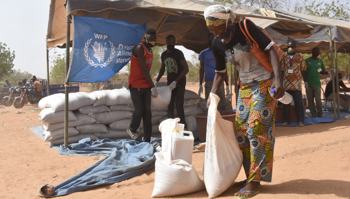
The evaluation series was commissioned by the WFP School-based Programmes Unit in Rome and covered WFP emergency school feeding (ESF) programmes during 2015-2019. It encompassed four country-specific evaluations in the Democratic Republic of Congo (focus on North Kivu region), Lebanon, Niger (focus on Diffa region) and Syria, as well as a global synthesis report. It covers the period 2015-2019.
The evaluation was financed from a multi-year Canadian contribution to WFP that also covered the costs of the ESF activities in the last years of the evaluation period. In 2018, these activities had reached nearly 1 million children in Syria and 17,000-71,000 children in each of the other three countries.
The findings of the evaluation series were meant to strengthen the global evidence base on ESF with specific guidance on school feeding in crisis and humanitarian settings. The findings will be used by Country offices to design future ESF activities.
All evaluations in this series used a mixed-method, theory-driven approach based on a set of reconstructed, country-specific Theories of Change. The country evaluation reports were based on document reviews, key informant interviews, focus groups discussions, and large-scale field surveys of schools, children, and households. The synthesis report was based on the four country reports of the evaluation series, a literature review, an online survey among WFP offices, and key informant interviews.
The country evaluation reports are available at:
https://www.wfp.org/publications/democratic-republic-congo-school-feeding-emergencies-evaluation https://www.wfp.org/publications/lebanon-school-feeding-emergencies-evaluation https://www.wfp.org/publications/niger-school-feeding-emergencies-evaluation https://www.wfp.org/publications/syrian-arab-republic-school-feeding-emergencies-evaluation
- Socios:
- Particip (líder)
- Palabras clave:
- Alimentación y nutrición, Ayuda humanitaria, Educación, Seguimiento y evaluación
Support of the DRC in the Process of Negotiations Under The Framework Convention Of The United Nations On Climate Change
- 2020 – 2021
- menos de 500.000 €
- Congo (Kinshasa)
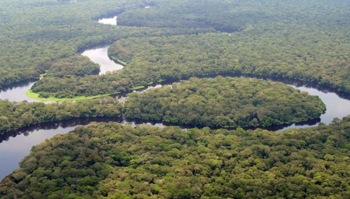
The general objective of the project of which this market is part is to contribute to an active role of the DRC in the processes of negotiation, development of policies and the implementation of commitments within the framework of the United Nations Framework Convention on Climate Change (UNFCCC) and the Convention on Biological Diversity (CBD).
The specific objectives of this contract are as follows:
In relation to the UNFCCC:
- Support the DRC team of negotiators involved in the UNFCCC negotiation processes
- Follow the negotiations of Article 6 of the Paris Agreement, namely, the "concerted steps to raise the level of ambition''
- Promote long-term climate action in the DRC by supporting the Ministry of the Environment and Sustainable Development in its reflection for the transformation of the commitments of the national determined contribution (CDN) of the DRC into actions of mitigation and adaptation and their integration into national planning.
- Identify possible synergies and establish partnerships with existing initiatives for the mobilization of resources and the sharing of experiences necessary for the rapid and effective deployment of the NDC.
Compared to CBD:
- Actively follow the negotiations for the preparation of the post-2020 Global Framework for Biodiversity, scheduled for COP-15, in coordination with the African Group, the CBD Secretariat, the European Union and others stakeholders.
- Support the contribution of the DRC and African states to the Post-2020 Global Framework Working Group and to the COP-15, based on the strategy agreed with the main stakeholders.
Transversely:
- Contribute to a stronger involvement of national stakeholders (civil society, indigenous peoples, private sector, etc.) in the implementation of the commitments and instruments proposed by the two conventions, at the national, regional and continental levels.
- Work for a better synergy in the commitments between these two multilateral conventions, as well as vis-à-vis the 2030 Agenda and the Sustainable Development Goals (in particular goals 13, 14 and 15).
- Socios:
- Particip (líder), Expertise Advisors (formerly: ETI Consulting)
- Palabras clave:
- Medio ambiente

Support to the surveillance of the volcanos Nyiragongo and Nyamulagira and institutional support to ensure the sustainability of the public services of the Volcano Observatory of Goma
- 2019 – 2020
- menos de 500.000 €
- Congo (Kinshasa)
The overall objective was to contribute to the reduction of risks for the population and to interventions funded by the European Union for capacity building as well as the establishment of a basis for the sustainability of essential public services in the Goma Volcano Observatory.
Objective 1: Technically strengthen the GVO to refine the monitoring and analysis of risks related to the exceptional activity of the Nyiragongo and Nyamulagira volcanoes by capitalizing on project support and previous support financed by European cooperation.
Objective 2: To work towards the institutional and scientific strengthening of the GVO through targeted support to the training programme and the promotion of study visits and scientific exchanges.
Objective 3: Strengthen the sustainability of essential services of the GVO from the development of partnerships and other strategies.
- Socios:
- Particip (líder), CAPA EEIG (managed by Particip), Expertise Advisors (formerly: ETI Consulting)
- Palabras clave:
- Medio ambiente

Feasibility study on the development of a low impact, high-end tourism product in Garamba National Park, DRC as a component of the development strategy for job creation
- 2018 – 2019
- menos de 500.000 €
- Congo (Kinshasa)
The aim of this project was to:
- Ensure that all opportunities of renovating Gangala, relaunching Nagero and launching a tented camp as high-end tourist products are accurately identified and described.
- Ensure that all Key Threats/Weaknesses (if any) associated with the proposed action are accurately identified and described.
- Develop an initial financial model taking into consideration all income generating opportunities related with the products and basic market requirements.
- Develop an initial concept plan including basic requirements, potential activities in the Park (to justify the logistical challenges of tourists reaching the Park) as well as ideas on complimentary attractions that could be developed.
- Investigate potential tourist circuits within the DRC that could tie in visits to Garamba with other parks and neighbouring countries (Reserve de faune á Okapi, Virunga, …).
- Investigate the effect that the various seasons (particularly the long wet season) would have on the tourist experience.
- Investigate and determine a security risk mitigation and management plan for the tourism in this location.
- Investigate the needs in terms of local capacity reinforcement and the possible solutions (identify the institutions that could be able to deliver specialized trainings).
- Identify potential economic and cultural cross-cutting opportunities to integrate community led initiatives into GNP’s tourism opportunities (e.g. purchasing honey from the communities to produce soap for lodges, integrating local artists…).
- Socios:
- Particip (líder), CAPA EEIG (managed by Particip), ETI
- Palabras clave:
- Medio ambiente
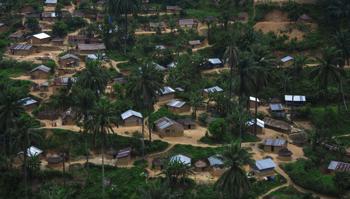
Support to WFP/FAO: Stabilization of Priority Post-Conflict Areas of DRC
- 2019 – 2019
- menos de 500.000 €
- Congo (Kinshasa)
In 2016, the United Nations World Food Programme (WFP) and the Food and Agriculture Organization of the United Nations (FAO) launched a joint project to rebuild livelihoods shattered by conflict in eastern Democratic Republic of Congo (DRC), by empowering women, supporting farmers and helping build peace between communities. This was funded by the German Cooperation through KfW with a grant of 35 million EUR.
Working hand-in-hand in using their collective expertise, WFP and FAO have set out efforts to assist rural farming communities returning home after forced displacement. The support includes a short-term safety net for people in urgent need, as well as micro-financing, numeracy and literacy training, economic empowerment training for women, and conflict prevention tools.
The aim is to bridge the gap between humanitarian assistance and development work, by improving value chains and livelihood development for smallholder farmers, thus supporting the emergence of more resilient and peaceful communities. Families will benefit from better access to markets, training in sustainable agricultural production, including post-harvest management, adequate agro-processing and marketing of their produce to boost their income and improve their food and nutrition security.
The overall task of the consultancy was to support WFP and FAO in the monitoring and reporting of the project “Stabilization of Priority Post-Conflict Areas of DRC”. This included support in a review of the operational management and coordination of the project,identifying improvements in data collection and analysis, updating / finalizing the effects matrix, and drafting an evaluation report.
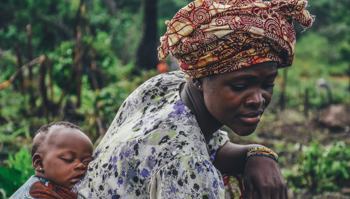
Review of Findings from DRC Evaluations - Review of evaluations by other donors of development and humanitarian assistance programs in the DRC
- 2019 – 2019
- menos de 500.000 €
- Congo (Kinshasa)
Canada is significantly involved in the DRC through projects addressing children and youth, maternal, newborn and child health care (MNCH), security and protection, as well as governance and the advancement of democracy. Since 2006, Canada has been an important player in the DRC and in the Great Lakes Region, notably in the fight against sexual violence and holding criminals accountable.
The review covers all international assistance programming including humanitarian assistance, stabilization, and development projects. The main focus is on the most recent years in order to reflect changing contexts (2012-2018).
DRC review focuses on responsiveness and agility in fragile states, program and policy coherence, and women and girls programming.
The review will generate recommendations to improve the relevance, effectiveness, sustainability, and efficiency of programs.
At this point, PRA is planning an evaluation of Global Affairs Canada’s international assistance in the DRC in accordance with the Treasury Board Policy on Results, which requires that all departments conduct an evaluation of the relevance and performance of all ongoing programs every five years.
- Palabras clave:
- Ayuda humanitaria, Derechos humanos, Gobernanza, Justicia / Estado de derecho, Seguimiento y evaluación

Public services contract for midterm and final evaluations of projects and programmes of the Belgian Technical Cooperation in the sector of governance
- 2013 – 2018
- de 500.000 € a 1 millón de €
- Africa, Asia
This 4-year framework contract has the objective to conduct all mid-term and final evaluations of projects and programmes of the Belgian Technical Cooperation (BTC-CTB) in the governance sector. Sectors targeted: Justice, security, decentralisation, local development, institutional capacity building.
The following evaluations have been carried out so far are:
- Mid-term review of the project "Appui institutionnel au MACTL pour le pilotage stratégique de la décentralisation et de la déconcentration au Mali", Mali;
- Final evaluation of the project "Appui au développement socio-économique de la Province du Nord (PADSEC)", Rwanda;
- Mid-term review of the project "PADLPC - Projet d'appui au développement local et à la participation citoyenne", Burundi;
- Final evaluation of the project "Support to capacity development in Rwanda", Rwanda;
- Mid-term review of the project "Projet d’appui institutionnel a la mise en œuvre de la politique nationale genre par le Ministere de la population, de la promotion de la femme et de la protection de l’enfant", Niger;
- Mid-term review of the project "Support to Local Government Reform and Development Programme", Palestinian Territories;
- Final evaluation of the project "Kasese District Rural Community Development Programme - Phase II", Uganda;
- Mid-term evaluation of the Common Management Support Units (CMSU) – EPSP – MINIDER - AGRI – DRC;
- Final evaluation of the institutional support to the Ministry of Planning in DRC;
- Final evaluation of the “Support to community development initiatives programme” in the District of Tshopo (Paideco-Tshopo), DRC;
- Final evaluation - Poverty reduction through institutional strengthening at provincial (Nghe An) and district (Quy Chau) levels (Vie 08 036 11) Vietnam;
- Mid-term review of the intervention “Enhancement of procurement capacity of local government authorities project”, Tanzania;
- Mid-term review of the project “Central and decentralized institutional support to the Ministry of Justice in Burundi”;
- Final review of “the support of professionalization of the National Police in Burundi”.
- End-term review of the intervention “Local Government Reform and Development Program (LGRDP)” in Palestine
- Mid-term review of the programme of studies and expertise in DRC
- Mid-term review of the Institutional support project to the regionalisation process in Mali (PAIR)
- Final reviews of the interventions “Support to the decentralization of the Koulikoro region – PADK II” and “Support to civil status – PAEC” in Mali
- Final review of the intervention "Support to the Ministry of foreign affairs, international cooperation and francophonie" in the Democratic Republic of Congo
- Yearly review of the intervention facility for front line service delivery improvement - Tirelo Bosha – in South Africa
- Mid-Term Review of the intervention “Support to the development of human resources of beneficiary organisations “SDHR” in Uganda
- MTR of the intervention Capacity Building for Planning Reform (CDPR) in Vietnam
- Mid-Term Review of the Intervention “Regeneration of Historical Centres in Local Government Units (RHC)” in Palestine
- Mid-Term Review of Rwanda Decentralization Support Programme – Enhancing the capacities of districts (RDSP-ECD)
- Final Evaluation of the Project “Enhancement of Procurement Capacity of Local Government Authorities in Tanzania”
- Final review of the intervention “Institutional support project to the Ministry of Territorial Administration and Local Government (MATDRE) for the strategic steering of decentralization and deconcentration” in Mali
- Final Review of the project "Institutional support to the process of regionalisation in Mali" (PAIR)
- Mid-term review of the support project to investments of local authorities (PAICT) in Mali
- External mid-term review of the Support Project on Expertise, Studies and Technical Assistance to the water and environment sector (PAERE) and the Project on Strengthening of Competencies of the sector water and environment (CF) in Bolivia
- Mid-term review of the project to support Burundian organizations through human resources capacity building (PAORC) in Burundi
- Mid-Term Review Of The Intervention “Facility For Capacity Building” (FCB) in Vietnam
- Final Evaluation of the Support Programme for the Implementation of Decentralised Entities in the Dosso Region, phase 2 and extension phase (PAMED II & PAMED II Extension) in Niger
- End-Term Review of the Intervention "Capacity Building for Planning Reform (CDPR)" in Vietnam
- Socios:
- Particip (líder), MDF
- Palabras clave:
- Desarrollo institucional, GCP / marco lógico, Gobernanza, Seguimiento y evaluación

Capitalisation des résultats du projet PREVENTION ET GESTION DES RISQUES NATURELS en République Démocratique du Congo.
- 2015 – 2017
- menos de 500.000 €
- Congo (Kinshasa)
- Objectif spécifique 1 : Capitaliser les acquis techniques et scientifiques du projet « Prévention et Gestion des Risques Naturels » en matière de gestion des désastres naturels en RDC et dans le Nord Kivu en particulier.
- Objectif spécifique 2 : Capitaliser les résultats institutionnels du projet « Prévention et Gestion des Risques Naturels » et disséminer ses résultats à l’ensemble des acteurs et de la filière recherche/surveillance-protection civile-autorités provinciales/humanitaires.
- Objectif spécifique 3 : Développer une réflexion globale et proposer des outils innovants pour répondre à l’évolution, certainement prévisible, de l’activité de ces deux volcans, dans une ville, comme celle de Goma, en expansion démographique et physique continue et qui s’approche malheureusement de plus en plus des volcans.
- Socios:
- Particip (líder), ETI
- Palabras clave:
- Medio ambiente

Group coordination building Least Developed Countries (LDCs) in the negotiation process on Climate Change
- 2016 – 2017
- menos de 500.000 €
- Congo (Kinshasa)
Objectifs généraux
Appuyé le Ministère de l'Environnement, Conservation de la Nature et Développement Durable (MECNDD), qui représente la RDC à la tête du Groupe des Pays les Moins Avancés (PMA), afin qu'il assure une coordination efficace et compétente des activités dont est chargée la présidence.
Objectif(s) particulier(s)
- les capacités opérationnelles de la délégation congolaise ont été renforcées afin d'assurer pleinement son rôle de Président du Groupe des Pays les Moins Avancés (PMA) au sein du processus de négociation placé sous l’égide de la Convention Cadre des Nations Unies sur les Changements Climatiques.
- Socios:
- Particip (líder), ETI
- Palabras clave:
- Medio ambiente