
Nuestros proyectos
Explore la experiencia de Particip en proyectos desarrollados en distintos países, sectores y ámbitos de especialización.
Nuestras referencias ofrecen una visión general de las misiones finalizadas y en curso, incluidos sus objetivos, alcance geográfico, duración y valor contractual.
Mostrando 451–460 de 980 referencias

Evaluation of the EU's support to climate change and environment in Enlargement and Neighbourhood regions
- 2021 – 2022
- menos de 500.000 €
- ENI East, ENI South, IPA
The purpose of this study is i) to provide an independent and evidence-based assessment of the EU's past and current external action support in the policy area of environment and climate change in Enlargement and Neighbourhood regions; and ii) based on this assessment, to provide lessons learnt and recommendations for decision-makers at EU level.
The evaluation encompasses both spending and non-spending activities between 2014 and 2020. It examines all funding mechanisms and modalities of implementation used under the Instrument for Pre-Accession (IPA) II and the European Neighbourhood Instrument (ENI) in a variety of sectors (e.g. energy, water and waste management).
The evaluation covers all thematic areas related to environment and climate change, paying special attention to i) issues of mainstreaming in EU external aid programmes and projects for the ten sectors in the environmental chapter of the acquis; and ii) the EU support provided through international organisations, in particular support aimed at strengthening environment and climate change governance at national and regional levels. Process and context factors – conducive to or hampering the performance of EU support, including in terms of the convergence with EU legislation in the regions under scope – are also systematically assessed.
The evaluation aims to contribute to ongoing EU strategic discussions on the use of innovative financing, in particular blending, which is playing an increasingly important role in EU support to environment and climate change. The evaluation results are also useful in enriching ongoing reflections on the future role of European Development Finance Institutions in EU external action. Finally, in the context of the COVID-19 pandemic, the evaluation contributes to identifying good practices that can strengthen Team Europe’s ongoing efforts to help ‘build back better’ and design ‘risk-informed and climate-smart’ recovery actions.

Evaluation of the European Union’s cooperation with Tajikistan, 2014-2020
- 2021 – 2022
- menos de 500.000 €
- Tajikistan
The specific objectives of the evaluation are:
- Support the design of the new multiannual country programme 2021-2027, with particular regard to the Commission’s newly introduced priorities;
- Feed into the considerations for EU budget support and contribute to the diagnosis of conditions for European Fund for Sustainable Development Plus (EFSD+);
- Contribute to the design and implementation of the envisioned Enhanced Partnership and Cooperation Agreement with Tajikistan which is relevant for promoting Europe as a stronger global actor (Commission priority for 2019-24) and for increasing the resilience of states and societies to the East stretching into Central Asia in line with EU Global Strategy;
- Support the joint programming exercise, which is now fledging. According to the NDICI proposal, joint programming shall be the preferred approach for country programming as it is the EU’s ambition to develop a clear Team Europe approach in the post-2020 cycle;
- Contribute to the negotiations and process of application of the Generalised Scheme for Preferences Plus (GSP+) which Tajikistan can apply for when pending issues are resolved;
- Contribute to the stocktaking, lesson-learning exercise on the objectives of the new Team Europe approach undertaken by DG DEVCO by assessing the EU’s response as provided to the COVID-19 crisis in support of Tajikistan;
The thematic scope of the evaluation covers the following sectors: rural development, education, health, security, environnement, climate change, public finance management as well as cross-cutting issues such as gender, environment or human rights.
Report available here: https://international-partnerships.ec.europa.eu/publications/evaluation-european-unions-cooperation-tajikistan_en
Midterm Review of Norway’s Humanitarian Strategy and Strategic Partnership Model
- 2021 – 2022
- menos de 500.000 €
- Africa, Global, MEDA region
The midterm review object is the implementation of the humanitarian strategy, and the Strategic Partnership Model.
The purpose of the review is to assess whether Norway is on track in the implementation of the humanitarian strategy, assess the relevance of the strategy to adjust the course and to inform decision-making and strategic direction when formulating a new strategy for Norway's humanitarian engagement after 2023. The review also provides an assessment on the perceived value added of the Strategic Partnership Model, whether it is a good tool to achieve the main goals of the strategy and how it facilitates predictability and flexibility for the partners.
The specific objectives of the review are to:
1. Assess the relevance and coherence of the strategy and whether it has been used as the main tool to guide Norwegian humanitarian engagement.
2. Document progress and results in reaching the strategy's main goals.
3. Assess the Strategic Partnership Model, considering whether it is an effective tool for grant management, how it facilitates predictability and flexibility for the partners and whether it is likely to provide the best results for people in need in line with the priorities in the humanitarian strategy.
Based on the findings and conclusions, the review identifies lessons learnt and gives operational recommendations relevant for the continued follow-up and necessary adjustments of the strategy, and the Strategic Partnership Model.
The review has both a learning and accountability purpose, and its main users will be stakeholders at the Ministry, Norad and partners.

Mid-term evaluation of the performance of the International Science and Technology Center and the Science and the Technology Center Ukraine
- 2021 – 2022
- menos de 500.000 €
- Ukraine
The EU supports efforts to enhance governance and cooperation on Chemical, Biological, Radiological and Nuclear (CBRN) risk detection and mitigation at both the regional and the global level. In addition to the Centres of Excellence Initiative and the EU P2P programme, the EU also supports the securing of sensitive knowledge and technology through, in particular, the International Science and Technology Centre (ISTC) in Kazakhstan and the Science and Technology Centre in Ukraine (STCU). These two science centres are the subjects of this evaluation. The European External Action Service (EEAS) leads on the political side of this initiative and the Foreign Policy Instrument (FPI) is the fund-holder, managing all the projects under the Instrument contributing to Stability and Peace (IcSP).
Both centres work at the crossroads between scientific research and non-proliferation. In recent years, the centres have increasingly focussed on supporting projects aiming at mitigation of broader CBRN risks, including the promotion of aviation and missile technologies for peaceful purposes, bio safety and biosecurity, physical upgrades of laboratories, and stimulation of networking activities among relevant scientific communities.
The main objectives of this evaluation were to provide the relevant services of the European Union and other interested stakeholders with:
- an overall independent assessment of the past performance of the two centres both in the core objective of containment of sensitive knowledge and as implementers of specific CBRN, export control actions and other activities against the objectives and results established in the strategic documents;
- key lessons learned, achievements, conclusions and related recommendations in order to improve current and future engagement of the centres and related funding schemes.
In particular, this evaluation served to explore the possibility to enlarge the scope of the spectrum of activities implemented (i.e. cyber, climate change, etc.), and to provide recommendations on other type of funding mechanisms to cover the administrative costs.
The main user of this evaluation is the European Commission, specifically FPI.

Programme formulation for an accountable State for Development.
- 2022 – 2022
- menos de 500.000 €
- Madagascar
The overall objective of the program to be formulated is to contribute to the establishment of an effective and accountable State in the service of development in Madagascar, through three specific objectives which are (i) strengthening the efficiency and transparency of public administration; (ii) promoting and protecting democracy, through the organization of free elections and citizen participation in political life; (iii) accountability and control of State action through the strengthening of counter-power actors. Support for civil society, including human rights organizations and the media, gender issues, digitalization and political economy issues are transversal to these three objectives. The requested services aim to (i) conduct an in-depth analysis of the situation, and the problems and constraints at the root of this situation, based on documentation and interviews, and (ii) make proposals for a European Union support program that are relevant, realistic, credible and adapted to the context - while taking into account EU procedures.
The consultants are responsible for collecting the information necessary to achieve these results through:
- Analysis of the documentation that will be provided in part by the DUEM;
- Briefing meetings with the DUEM and the government;
- A series of interviews with stakeholders (ministries agents, technical and financial partners, project implementation partners, civil society, etc.) in order to collect the priorities and analyses of the main stakeholders. ==A total of 20 man/days of mission in the field to be distributed between the four consultants (the mission area will be defined later, in 2 of the regions of concentration of EU support).

Mid-term evaluation of the "Support to Governance Sector in Sierra Leone" programme
- 2022 – 2022
- menos de 500.000 €
- Sierra Leone
The main objectives of this evaluation were to provide the relevant services of the European Union and other interested stakeholders with:
- an overall independent assessment of the performance of the technical assistance in Sierra Leone in the areas of Civil Service Reform, Parliament and the Electoral Cycle, Technical Assistance in support of the Governance Sector in Sierra Leone in the area of Civil Registration, Programme Estimate on Civil Registration, Programme Estimate - Civil Service Reform with HRMO/PSC and Meeting Critical Infrastructure and Technology Needs in the Parliament of Sierra Leone, paying particular attention to its different levels of results measured against its expected objectives; and the reasons underpinning such results;
- key lessons learned, conclusions and related recommendations in order to improve current and future interventions.
In particular, this evaluation served to:
- understand the performance of the intervention and the reasons behind it in order to maximise its potential to achieve the expected results during the residual implementation time;
- understand whether the implementation modalities of the intervention were the most appropriate in order to achieve its objectives;
- understand whether the governance mechanism of the intervention allowed for a suitable and efficient representation of the interests of key stakeholders;
- understand the performance of the intervention and the reasons behind it in order to inform the planning of upcoming EU interventions in the same sector.
Furthermore, the evaluation team considered whether gender equality and women’s empowerment, environment and adaptation to climate change were mainstreamed; the relevant SDGs and their interlinkages were identified; the principle of Leave No One Behind and the rights-based approach methodology were followed in the identification/formulation documents and the extent to which they were reflected in the implementation of the intervention, its governance and monitoring.
The main users of this evaluation are the EU Delegation to Sierra Leone, the National Authorising Office, the Members of the Programme Steering Committee, the Governance Advisers to the President and Chief Minister, the national authorities targeted by the programme and its interventions and the implementing partners contracted by the EU.

DFID Global Evaluation Framework Agreement
- 2017 – 2022
- n/a
- Global
Global Evaluation Framework Agreement (GEFA) to ensure the provision of efficient and effective expert services for the design and implementation of evaluations of ODA delivered by DFID and Other Government
Department (OGDs).
For Lots 1 & 2 the Framework Agreement has global coverage (including the UK) and evaluations will be undertaken in a wide range of different geographic locations and contexts, primarily where DFID operates, including fragile and conflict affected states (FCAS). For Lots 3-8 (Process) & 9-14 (Monitoring) are subject o
regional segmentation.
The Framework Agreement covers requirements for monitoring and evaluation in a range of themes, including but not limited to: Human development (e.g. education, health, water supply, social protection and sanitation); humanitarian assistance; economic development (e.g. infrastructure, social services, production); governance and security (e.g. public sector reform, anti-corruption); climate change.

Support to the strengthening of the MINECO's capacities, in the access to the market of the MSMEs and Cooperatives
- 2019 – 2022
- de 500.000 € a 1 millón de €
- Guatemala
The general objective of the program of which this contract is a part was to improve the competitiveness of MSMEs and cooperatives in order to meet market requirements.
The specific objective (SO) of this contract was to improve MINECO's capacity to support the competitiveness of MSMEs and cooperatives in accessing formal markets and linking up to value chains.
The following results were achieved:
1. The process of implementation of the WTO Trade Facilitation Agreement on MINECO's competition issues was supported.
2. Institutional capacity of MINECO strengthened to support market access for MSMEs and cooperatives.
The Programme's cross-cutting themes were: environmental assessment, gender equity and good governance.

EU-GCC Dialogue on Economic Diversification Evaluation
- 2021 – 2022
- menos de 500.000 €
- Bahrain, Kuwait, Oman, Qatar, Saudi Arabia, United Arab Emirates
Systematic and timely evaluation of its programmes and activities is an established priority of the European Commission. The focus of evaluations is on the assessment of achievements, the quality and the results of Actions in the context of an evolving cooperation policy with an increasing emphasis on result-oriented approaches and the contribution towards EU foreign policy objectives and the implementation of the SDGs. From this perspective, evaluations should look for evidence of why, whether or how these results are linked to the EU intervention and seek to identify the factors driving or hindering progress. Evaluations should provide an understanding of the cause and effect links between: inputs and activities, and outputs, outcomes and impacts. Evaluations should serve accountability, decision making, learning and management purposes.
The main objectives of this evaluation are to provide the relevant services of the European Union and the interested stakeholders with:
- an overall independent assessment of the past performance of the EU-GCC project, paying particular attention to its intermediate results measured against its expected objectives; and the reasons underpinning such results;
- key lessons learned, conclusions and related recommendations in order to improve current and future Actions.

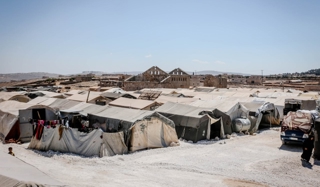
Promotion of the return of Somali refugees with a community oriented reintegration approach: Consultancy for Third Party Monitoring and Evaluation in Somalia
- 2021 – 2022
- menos de 500.000 €
- Somalia
In January 2015, the German Federal Ministry for Economic Cooperation and Development (BMZ) contracted GIZ to assist the Government of Somalia with the social and economic (re-) integration of returnees, internally displaced persons (IDPs) as well as members of the host community of Kismayo in Jubaland. This project has been extended to run until 12/ 2022, under the title “Somali Reintegration Program” (SRP) with the aim of supporting returnees, IDPs and host community members of Kismayo to establish and secure sustainable livelihoods through a community-based approach of (re-)integration.
The ++main objective++ of this assignment was to provide primary data and analysis by conducting independent monitoring and evaluation of project activities to draw conclusions on outcomes, impacts and sustainability of project activities. To that end, the consultant collected data by observations, key informant interviews, and other methods he or she deems necessary to provide an accurate overview of the implementation progress in order to ensure compliance with the contractual arrangements of implementing partners.
The project was implemented in five fields of action: (1) improving the functioning of social and economic infrastructure; (2) promoting income-generating opportunities through business support, employment promotion, and the provision of employment services; (3) qualifying selected local authorities and institutions in managing the (re-)integration of returnees and IDPs; (4) providing basic psycho-social support (not to be included in the TPM) as well as (5) providing short-term services to strengthen the resilience of the population to COVID- 19.
The project followed a participatory approach: activities were closely developed, implemented and monitored through GIZ’s cooperation with target beneficiaries, governmental, international and national partners. Harmonization with other sectors including agencies and other coordination structures was imperative to ensure synergies and project success. The modes of deliveries were grant agreements with national and international NGOS, financial agreements with governmental agencies and consultancies. Less than 10 % were implemented by GIZ personnel. The main task of the GIZ personnel was the provision of capacity development of public institutions/ partners, the conceptualization of the contracts with governmental and non-governmental partners, guidance of NGOS, and mentoring.