Unsere Projekte
Entdecken Sie, wo und wie Particip weltweit wirkt.
Unsere Referenzen geben Ihnen einen Einblick in laufende und abgeschlossene Projekte in verschiedenen Ländern, Sektoren und Fachgebieten – mit Informationen zu Zielen, geografischem Schwerpunkt, Laufzeit und Auftragsvolumen.
671–680 von 980 Referenzen
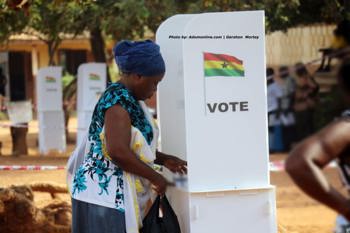
European Union Electoral Follow-Up Mission (EU EFM) to Ghana, 2019
- 2019 – 2019
- unter 500.000 €
- Africa (Western)
Ghana is commended for its good democratic track record, respect of human rights and economic performance over recent years. Following the successful referendum on the creation of six new regions, the administrative regions in Ghana increased from 10 to 16. Elections for the local councils in old and new regions are scheduled for December 2019, in parallel with a second referendum to change the system of election of these councils. These will be followed by presidential and parliamentary elections in December 2020.
An EU EOM was deployed to observe the closely contested Presidential and Parliamentary elections held in December 2016. The preliminary findings of the EOM stressed that the elections delivered to the Ghanaian citizens a well-administered and transparent vote. However, the EU EOM also pointed to the misuse of incumbency including unequal access to state media.
Having in mind the local election of 2019, as well as the reccomendations that resulted from the EOM in 2016, a Follow Up mission was deplyed in order to:
- Generate additional impetus for – or contribute to ongoing debates on – electoral reform;
- Identify areas of agreement and disagreement on EU EOM recommendations among the stakeholders and any political, technical, financial obstacles to electoral reform;
- Propose actions to overcome obstacles to electoral reform, including measures to develop support for and national ownership of the recommendations;
- Identify which EOM recommendations are most relevant to the prevailing country situation and the current phase of the electoral cycle;
- Assess any electoral reforms adopted/considered or planned since the last EOM and the degree to which these reflect EOM recommendations and their alignment with international standards for democratic elections;
- Assist the EU Delegation, EEAS and DEVCO in their assessment on whether ongoing cooperation and conflict prevention projects are addressing the recommendations made by EU EOMs.
Based on a brief overview of existing programmes provide needed information to support identification of potential additional election/democracy support action which could contribute to strengthening the implementation of the recommendations and/or to the overall improvement of the electoral framework;
- Suggest any other possible EU actions that could contribute to strengthening the implementation of the recommendations and/or to the overall improvement of the electoral framework.
- Schlagwörter:
- Institutionelle Entwicklung, Justiz / Rechtsstaatlichkeit, Wahlen
Evaluation: How do we learn, manage and make decisions in Finland´s development policy and cooperation?
- 2018 – 2019
- unter 500.000 €
- Ethiopia, Mozambique, Viet Nam
The evaluation focused particularly on knowledge management, decision making and learning as part of results-based management (RBM). It examined collaboration, organisational learning and capacity development throughout the implementation of RBM loops. Moreover, the evaluation provided an analysis of the progress of RBM and deepened the recommendations of the previous evaluations. It assessed how coherently the Ministry for Foreign Affairs (MFA) implements knowledge management in development policy and co-operation.
The evaluation had the following objectives:
- Evaluate how the Ministry for Foreign Affairs (MFA) manages internal and external knowledge and uses it for evidence-informed learning and decision-making in Finnish development policy and cooperation;
- Issue recommendations that help improving the MFA’s knowledge management, learning and decision-making; and
- Raise awareness and foster learning among MFA staff about these issues during the evaluation process.
The evaluation was conducted in four phases:
- Start-up phase
- Inception phase
- Implementation phase, including field visits
- Reporting and dissemination phase
The final report is available online: https://um.fi/documents/384998/0/Evaluation+report+Knowledge+Management+2019+%281%29.pdf/f5c3b583-6887-bfdf-6cce-9c78ee4a5fe7?t=1567156930398
- Partner:
- Particip (federführend), Niras Finland Oy
- Schlagwörter:
- Institutionelle Entwicklung, Management, Monitoring und Evaluierung
Support to the public administration reform process
- 2017 – 2019
- 1 – 2 Millionen €
- Kosovo
The technical assistance/the contractor is expected to support Kosovo central and local government (Ministry of Public Administration, Ministry of Trade and Industry, Ministry of Local Governance Administration and municipalities) to build procedures, mechanisms and human capacities to steer and implement the reform agenda. The technical assistance will support the implementation of service delivery modernization agenda by assisting institutions in Kosovo to implement the Law on General Administrative Procedures.
- Partner:
- Lattanzio Group (federführend), Particip, VEVE
- Schlagwörter:
- Institutionelle Entwicklung, Projektdurchführung / technische Hilfe, Regierungsführung
Evaluation of the Agriculture, Rural Development and Forest Sector programmes in Africa
- 2018 – 2019
- unter 500.000 €
- Africa
The objective of the evaluation was to identify relevant and effective approaches, methodologies, instruments in the Agriculture, Rural Development and Forest sectors’ interventions to support the implementation of current programmes and the planning of possible future cooperation in the Agriculture, Rural Development and Forest Sector.
The evaluation was based on a selection of eight Finnish bilateral programmes in agriculture, rural development and forest sectors in Africa. They represent different approaches, methodologies, ecosystems and geographical areas in Kenya, Tanzania, Zambia, Mozambique and Ethiopia. However, all selected programmes focused on improving livelihoods and reducing poverty through agriculture or forest sector development, providing institutional support and capacity building, and contributing to socio-economic development.
The main issues to be addressed were:
- How can Finnish co-operation efforts best contribute to the achievement of the SDGs – as well as other relevant international agreements – through ARDF sectors making optimal use of its comparative advantages?
- Under what conditions can a value chain approach increase finance and investment in sustainable forestry and agriculture- while benefiting final beneficiaries in a sustainable way?
- How can cross-cutting objectives and HRBA be successfully integrated and implemented, in such a way that they support achievement of the Finnish development cooperation objectives and objectives of the projects?
- What are key success factors for achievement of ’reduced poverty and inequality’, in particular in terms of benefits for women, vulnerable groups, and small and medium-size farmers?
- How can investment in sustainable land use and land management be made inclusive of smallholder and community needs while being attractive to investors at the same time?
- Which implementation approaches are most appropriate - in terms of scale, modality/instrument, channel and/or implementing organisations in future?
- What type of monitoring and evaluation system is most appropriate for outcome monitoring of Finnish projects in the context of wider support for achievement of SDGs?
- How have the lessons learnt from other donors and development organizations been taken into account or implemented at project level and what kind of approaches do the organizations have for future challenges in the sector?
- How can ’Finnish added value’ in the AFRD sector be realised (e.g. through access to Finnish markets and expertise or to Finland’s experience in creating a favourable business environment)?
The final report is available here: https://um.fi/publications/-/asset_publisher/TVOLgBmLyZvu/content/evaluointi-maatalous-maaseutukehitys-ja-metsasektorin-kehityshankkeista-afrikassa/384998
- Partner:
- Particip (federführend), Niras Finland Oy
- Schlagwörter:
- Forstwirtschaft, Landwirtschaft, Monitoring und Evaluierung, Regierungsführung, Umwelt
Independent Evaluation of SDC’s Performance in Disaster Risk Reduction (DRR) 2010-2017
- 2018 – 2019
- unter 500.000 €
- Global
The purpose of this evaluation was to build an evidence base for the implementation of the SDC’s Guidelines on Disaster Risk Reduction (DRR), and programmes and partnerships established by SDC to address DRR on global, regional and national levels.
The evaluation was designed to:
- Contribute to strategic decision-making (i.e. for the Dispatch 2021-2024).
- Derive lessons learnt in order to improve institutional performance.
- Serve as one measure of accountability towards the Parliament and the public.
The evaluation assessed the extent to which and how DRR practice is currently and should be applied across the SDC. The evaluation team identified successes, challenges and opportunities for DRR within the SDC as well as a comparison of SDC’s performance with other practices when feasible.
The temporal scope was 2010-2017, covering almost three Swiss Dispatches, including but not limited to, an estimated tentative total of approximately 461.9 million CHF, 818 projects with 1,482 ‘project phases’, identified by the DRR Portfolio Analysis. The evaluation was both backward (2010-2018) - and forward-looking (building on good practice to suggest ways SDC can reshape the future of DRR).
The geographic scope of the evaluation was global with an in-depth analysis of five geographic case studies: Peru/Bolivia, Chad, Morocco, Tajikistan and Thailand/Myanmar. In addition, three thematic case studies have been performed: 1.Climate Change and DRR: adaptation (CCA) & mitigation (CCM), 2. DRR Value for Money (V4M); and 3. Modalities: Swiss Humanitarian Aid Unit/Secondments, Network, DRR Consultative Group.
While the Whole of Government Approach (WoGA) was explored as was feasible, this was not an evaluation of any specific department, division, department, network, component or project/programme inside or outside SDC.
- Schlagwörter:
- Ernährung, Humanitäre Hilfe, Monitoring und Evaluierung, Öffentliche Finanzen / Haushaltsplanung, Regierungsführung, Umwelt, Zivilgesellschaft
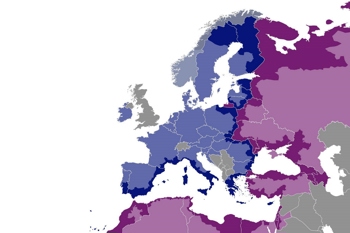
Overview of programmes addressing culture in the Eastern Partnership region and identification of a regional programme under RAP 2018
- 2018 – 2019
- unter 500.000 €
- ENI East
The global objective was to develop - within the context of the currently prioritised objectives of the EU’s development policy related to culture - a programme which addresses gap areas and neglected agendas related to culture and the cultural and creative industries which have not been sufficiently addressed by the national authorities, by previous EU interventions and programmes and by other donors.
The specific objectives were:
- To obtain a comprehensive overview of all cultural activity in the EaP region at national, bilateral, regional and global levels which has been initiated or is planned for the period 2016-2020.
- To provide a comprehensive overview and analysis of areas and agendas related to culture in the six EaP countries which have been insufficiently addressed hitherto by the national authorities or by donors and partners including the EU, identifying these gaps both geographically and thematically.
- To carry out a Needs Assessment focused on needs and opportunities in the EaP region related to culture issues and the cultural and creative industries.
- To identify and shape an EaP regional culture programme which responds to the identified needs and opportunities and addresses gap areas.
- Schlagwörter:
- Industrie und Privatsektorentwicklung, PCM / Logframe
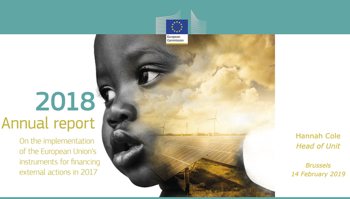
2018 Annual Report: editing, drafting, layout, design,translation, printing, Data analysis, infographics, HTML version, PowerPoint presentation, 3min video
- 2018 – 2019
- unter 500.000 €
- Global
The global objective for this assignment was:
1.Production of the “2018 Annual Report on the implementation of the European Union's instruments for financing external actions in 2017”,
2. Editing of the Staff Working Document, and drafting the Annual Report
3. Analysis of data for online presentation of data visualisation products
4. Production of: infographics, an animated video presentation of the Annual Report, a PowerPoint presentation, an HTML version of the Annual Report
5. Including editing, drafting, translation, lay-out, design, printing
The project consisted of:
1. Editing the Staff Working Document (consolidated draft provided by EuropeAid of approximately 350 pages)
2. Drafting the Annual Report in English (approximately 10 pages)
3. Analysis of data for most efficient online presentation of data visualisation products
4. Production of Infographics based on data visualisation specialist’s recommendations
5. Graphic Design and Layout of the Annual Report and the Staff Working Document including numerous tables with financial data
6. Production of an HTML version of the Annual Report
7. Production of a PowerPoint presentation
8. Producing of an animated video presentation
9. Translation of some content
10. Printing
- Schlagwörter:
- Kommunikation und Medien
Request for Evaluation of Grant Applications Received under the PASOC III Call for Proposals
- 2019 – 2019
- unter 500.000 €
- Niger
Overall objective:
In this case, the aim was to contribute to the implementation of the civil society support programme by supporting the Ministry of Finance, EDF National Authorising Officer and the Delegation of the European Union in the evaluation process of grant applications received under the EuropeAID/163-741IH/ACT/NE call for proposals.
Specific objectives:
This was particularly the evaluation of short notes in the first instance and full applications in the second instance. These were validated and approved by the parties involved, mainly within the Evaluation Committee and during the ex-ante control of the Delegation of the European Union.
The assessors carried out the technical evaluation of the summary notes provided by the contracting administration of the programme (PASOC III) in accordance with the guidelines of the call for proposals.
The assessors were also be responsible for evaluating complete applications (technical and budget evaluation).
The assessors had to write the technical evaluation grids at each step.
The evaluation of each note or complete application was the subject of two readings and did thus involve at least two assessors. The Head of Mission was responsible, among other things, for arbitrations in the event of evaluations (between assessors), the consistency and quality of all evaluations, and thus equal treatment of all applications. On the basis of the assessments by the assessors and following its arbitration in the event of divergent scores, the Head of Mission drafted response letters which were sent to each applicant. These letters were made available to the evaluation committee at the debriefing session.
- Partner:
- Particip (federführend), EMI (formerly: Cardno Belgium), EuroPlus
- Schlagwörter:
- Zivilgesellschaft
Support Measures in Strengthening Capacity of CSOs
- 2018 – 2019
- unter 500.000 €
- Thailand
The global objective was to support local CSOs' contributions to Thailand development process through governance, public accountability, and promotion of inclusive policy-making, with a view to contribute to poverty reduction and the attainment of sustainable development goals (SDGs).
The specific objectives were to provide technical assistance in strengthening capacity of CSOs to be more efficient in participating in country's development process in attaining Thailand's Sustainable Development Goals particularly in the context of the EU CSOs Roadmap for the benefit of CSOs communities in Thailand at large.
- Partner:
- Particip (federführend), ADE
- Schlagwörter:
- Zivilgesellschaft
Political economy analysis and support to the identification and formulation of the programming of 2019 - Tunisia
- 2018 – 2019
- unter 500.000 €
- Tunisia
The general objective of this project was to support the European Union Delegation (EUD) in Tunisia by providing it with a political economy analysis to identify strategic entry points for the programming of 2019, focusing particularly on fighting corruption and improving the business climate.
To do so, the specific objectives for this mission are as follows:
- To train the staff of the EU Delegation in Tunisia on the conceptual tools of political economy analysis and to support them in their concrete application to the Tunisian context
- To develop a political economy analysis on three levels (national, sectors, specific issues) with a thematic focus on fighting corruption and improving the business climate. The dynamics at work and the interactions between the actors as well as the levers for change were clearly identified
- To formulate concrete and guided recommendations for decision-making in the framework of the general and sectoral dialogue and of the programming of 2019
- To produce the action documents for the programming of 2019.
- Partner:
- Particip (federführend), ECDPM
- Schlagwörter:
- Aus- und Fortbildung, Handel, Industrie und Privatsektorentwicklung, Makroökonomie / nationale Politik, Monitoring und Evaluierung, Regierungsführung