
Unsere Projekte
Entdecken Sie, wo und wie Particip weltweit wirkt.
Unsere Referenzen geben Ihnen einen Einblick in laufende und abgeschlossene Projekte in verschiedenen Ländern, Sektoren und Fachgebieten – mit Informationen zu Zielen, geografischem Schwerpunkt, Laufzeit und Auftragsvolumen.
291–300 von 516 Referenzen

Technical expertise to support the Delegation of the European Union to the Republic of Guinea-Bissau in drafting programming documents in the democratic governance sector.
- 2024 – 2024
- unter 500.000 €
- Guinea-Bissau
The European Union Delegation to Guinea-Bissau was preparing the Action on “Strengthening Democratic Governance in Guinea Bissau” as part of the above-mentioned 2024 Annual Action Plan. The general objective of the current assignment was to contribute to the implementation of the AAP 2024 in the framework of the MIP 2021-2027, in the area of democratic governance, notably in the elections, civil society and National Popular Assembly sectors.
The specific objective of this assignment was to elaborate and formulate a proposal of Action Document to contribute to strengthening democratic governance in Guinea Bissau, with the purpose of consolidating democracy and facilitating lasting peace in the country.
The action was based on three essential support components, according to the AAP 2024 of the MIP 2021-2027: civil society, parliament and elections. In the elaboration of the Action Document, EU thematic and regional programmes have been taken in consideration and demonstrate the coherence and synergies with the following specific objectives.
- SO1: strengthen the civil society as an actor to inclusive development at national and local levels;
Main expected results were: national and regional hubs strengthened or established to enhance dialogue and participation of civil society (including women and marginalized groups) in development planning processes with authorities and relevant stakeholders; regional Technical Assistance Offices created or supported to provide continuous training to CSOs on good governance, financial sustainability mechanisms and organizational culture; “citizen control” mechanisms consolidated and promoted; CSOs legal framework and capacities strengthened. Indicative budget: 3 M EUR
- SO2: strengthen representative and inclusive democracy through the effective functioning of the parliament;
Main expected results were: capacities of the elected members of ANP and its administration strengthened, including at the level of commissions on key topics (e.g. budget, gender); women parliamentarians supported in the development and implementation of strategies and relevant tools for better consideration of gender in the legislative process; exchanges ensured with other parliaments (including quota systems for women), constitutional experts and networks for technical improvements. Indicative budget: 1M EUR
- SO3: enhance credibility, inclusiveness, legitimacy and transparency of elections, in line with the domestic legislation and international standards, with a special attention to the next Presidential election foreseen in 2025.
Main expected results were: non-discriminatory laws for political participation and representation of women, youth, elderly and rural population promoted; capacities of women and youth in political participation strengthened; civil society activities to promote a safe space for the elections fostered; awareness raising on the Electoral Dispute Resolution Mechanism enhanced; observation and reporting on the elections facilitated; capacity building of journalists, including community radios’ voices and ethical journalism supported. Indicative budget: 1M EUR
- Schlagwörter:
- Wahlen, Zivilgesellschaft

Framework Agreement for Evaluation Management Services (EMS)
- 2020 – 2024
- 5 – 10 Millionen €
- Finland
The Evaluation Management Services (EMS) was a service contract which consisted in the implementation of strategic and policy-level evaluations, meta-evaluations, project-level evaluations and assessments for the Ministry for Foreign Affairs of Finland (MFA). It corresponded to a model that is based on evaluation services commissioned to one service provider rather than outsourcing the implementation of each evaluation as a single assignment. The purpose of this contract was to increase the quality of outsourced evaluations and also to increase flexibility, efficiency and effectiveness of the MFA of Finland in planning and commissioning evaluations. In addition to some decentralised (project level) evaluations and assessments from various geographical units, all MFA centralised evaluations were prepared and implemented through the EMS.
The assignments that were implemented under this service contract are the following:
- Evaluation on Development Cooperation carried out by the Department for Russia, Eastern Europe and Central Asia, Including The Wider Europe Initiative (WEI).
- External Review and Evaluation Services of forest programmes in Tanzania
- Evaluation on the transition towards a new partnership between Finland and Vietnam
- Evaluation on water diplomacy in the context of Finnish development cooperation – lessons for the future
- Evaluation of ICI Projects in Afghanistan, Bhutan, India, and Nepal
- Meta-evaluation of MFA's projects and programme evaluations in 2018-2020
- Evaluation of the Finnish Development Policy Influencing in the European Union
- Evaluation of Finnish Humanitarian Aid
- Assessment on the Response of Finnish Development Policy and Cooperation to the Covid-19
- Final Evaluation of Rural Village Water Resources Management Project (RVWRMP) 2006-2022 and Post-evaluation of Rural Water Supply and Sanitation Western Nepal Project (RWSSP-WN) 2008-2019
- Facilitated assessment of Finnish peace, democratization and sustainable livelihoods support in Myanmar
- Evaluation of Finland’s International Climate Finance
- Evaluation of Human Rights-Based Approach (HRBA) in Finland’s Development Policy and Cooperation
- Review of the MFA’s support to international recruitment
- Evaluation on Development Communications in the Context of the Ministry for Foreign Affairs Finland
- Right to Education, Right to Learn – Evaluation of Finnish Development Policy and Cooperation in the Education Sector
- Evaluation of Finland’s initiatives focused on enhanced domestic resources mobilization (DRM)
- Meta-analysis of Country Programmes 2021–2024
- Partner:
- Particip (federführend), Niras Finland Oy
- Schlagwörter:
- Monitoring und Evaluierung

Formulation Regional Transnational Organised Crime Programme WCA
- 2023 – 2024
- unter 500.000 €
- Africa (Western)
The contractor undertook the formulation of an Action Document (AD) to implement a regional program addressing illicit trafficking and transnational organized crime in selected West African and neighboring Central African countries. This included providing all necessary inputs and conducting comprehensive analysis, documentation review, fact-finding work, and consultations to propose possible options/scenarios for program focus and intervention logic. This work identified key strategic questions/issues to support informed discussions with relevant EU Delegations and other key stakeholders
- Partner:
- Particip (federführend), EuroPlus
- Schlagwörter:
- Menschenrechte, Regierungsführung

Final evaluation - Central Services to the International Urban and Regional Cooperation (IURC): sustainable and innovative cities and regions
- 2023 – 2024
- unter 500.000 €
- Global
The main objectives of this evaluation are to provide the relevant services of the European Union, the interested stakeholders with:
- an overall independent assessment of the past performance of the Central Services to the International Urban and Regional Cooperation (IURC): Sustainable and innovative cities and regions, paying particular attention to its results measured against its expected objectives; and the reasons underpinning such results;
- key lessons learned, conclusions and related recommendations in order to improve current and possible future Actions.
The main users of this evaluation will be:
- European Commission: FPI, DG REGIO, DG INTPA
- Policy makers responsible for regional -related issues
- Environment, trade and industry counsellors in EU Delegations
- Implementing partners
- Schlagwörter:
- Ländliche und städtische Entwicklung, Monitoring und Evaluierung, Regierungsführung

The Public Expenditure and Financial Accountability (PEFA) TOGO
- 2022 – 2024
- unter 500.000 €
- Togo
The overall objective of the assessment mission is to assess the performance of the public finance management system using the PEFA methodology and the different developments since the previous assessment in 2016.
The assessment mission should be able to explain the changes observed and the degree of sustainability of the improvements observed by identifying the factors that contributed to the progress (or lack of progress) recorded compared to the previous assessment.
The results of this assessment will allow the formulation of new reform measures that will allow the updating of the Public Finance Management Reform Action Plan.
The periodic measurement of public finance management performance by national stakeholders and technical assistance missions are regularly taken into account and enrich the action plan.
The results will feed into the analytical work of the Technical and Financial Partners group on economic governance and facilitate a concerted dialogue between TFPs and the government on reforms.
By integrating a gender module, the report will highlight the progress and challenges of the public finance system in Togo with regard to gender equality, in particular the development and implementation of gender budgeting, and will show the efforts already made by Togo and the challenges that remain with regard to gender.
The environmental protection module will also allow Togo to measure progress and make adjustments to improve the country's performance in this area.
- Partner:
- ADE (federführend), Particip

Meta-analysis of Country Programmes 2021–2024
- 2023 – 2024
- unter 500.000 €
- Global
The purpose of the meta-analysis of the 2021-2024 Country Programmes in Finland's 10 partner countries was to support the achievement of Finland’s development policy objectives in the partner countries, and to provide information for the further development of the Country Programmes and their implementation at the strategic level. The meta-analysis and its recommendations supported the regional departments in the programming of the next generation of Country Programmes, and in their subsequent management.
The meta-analysis comprised a desk review of available information and stakeholder feedback (phase 1) as well as self-assessment workshops with each country team, to assess contributions to results and to discuss further scenarios.
The specific objectives of the analysis were:
1. To synthesise key developments in the 10 partner countries with relevance for the respective Country Programmes
2. To assess the degree and usefulness of adaptive management of the Country Programmes during the current programme cycle
3. To assess the degree to which Country Programmes have contributed to intended (or unintended) Country Programme results and to analyse the factors explaining these contributions (or the absence of contributions)
4. To assess the sustainability of Country Programme results
5. To assess the value-add of Country Programmes compared to planning and implementing separate projects
6. To support the preparation of the next cycle of Country Programmes
- Partner:
- Particip (federführend), NIRAS
- Schlagwörter:
- Monitoring und Evaluierung
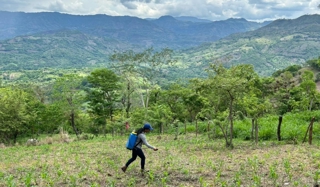
Final Evaluation of the BOOST Project from August 2018 to January 2024 in the Regions of Nueva Segovia, Madriz, Estelí, Matagalpa, Jinotega and RACCN
- 2024 – 2024
- unter 500.000 €
- Nicaragua
The final evaluation of the project "Boosting Rural and Rurban Economy in Times of Crisis and Beyond" (BOOST) was commissioned by the World Food Programme (WFP) in Nicaragua. BOOST was implemented from 2018 to 2024 and aimed to promote sustainable and resilient agri-food systems in five departments and one autonomous region of Nicaragua. The support package included three components (including gender-transformative approaches): support to smallholder farmers and their cooperatives in the production of basic grain and market access; links with the National School Feeding Programme of the Ministry of Education; and support to the creation of home gardens by vulnerable (peri-)urban families. The European Union was the main donor of the project.
The evaluation covered the entire implementation period of the project and served the double purpose of accountability and learning. It adopted a theory-based approach using the Qualitative Impact Assessment Protocol (QuIP) to answer evaluation questions linked to different evaluation criteria (relevance and coherence, effectiveness, efficiency, sustainability) and gender equality and empowerment of women. Primary data were collected during a two-week field mission and remotely. The evaluation team conducted (i) interviews at national and local levels with WFP staff, government institutions, the donor, technical staff and management of cooperatives; as well as focus group discussions with beneficiaries of all project components; (ii) direct observation during field visits; (iii) a comprehensive document review; and (iv) an analysis of existing M&E data.
In addition to the evaluation report, a short video with a summary of evaluation results was produced for dissemination purposes. The report is available at: https://www.wfp.org/publications/nicaragua-evaluacion-final-del-proyecto-boost-2018-2024
- Schlagwörter:
- Ernährung, Ländliche und städtische Entwicklung, Landwirtschaft, Monitoring und Evaluierung
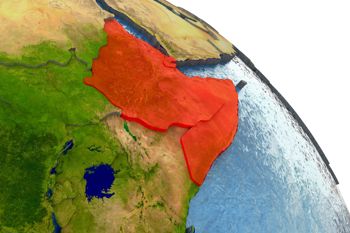
Resilience Assessments in Support of Programming in the Horn of Africa region
- 2023 – 2024
- unter 500.000 €
- Africa (Eastern)
With a view to supporting the programming in the Horn of Africa region, and in particularly in support of resilience-building components of the EU’s external action, the overall objective of a Resilience Assessment and Roadmap creation was to:
a) identify, b) address, c) and take action on structural causes of fragility and potential shocks, as well as opportunities for resilience building in the Horn of Africa region; operationalizing, improving and strengthening EU resilience-focused interventions and providing a vision on what specific strategic, policy, programming, design and implementation changes are needed to strengthen resilience in a specific context.
To this end, the expert(s), in conjunction with INTPA G5, provided technical assistance to Delegations to conduct resilience assessments and develop resilience roadmaps, highlighting which resilience dimensions should be targeted and how to best target them.
The specific objectives of the project were:
SO 1: To provide technical assistance to EU Delegations in the Horn of Africa region to highlight those structural causes of fragility that could potentially be transformed into effective resilience-building opportunities to improve ongoing and planned EU actions.
SO 2: To develop regional/national resilience roadmap(s) linking relevant resilience results chain indicators to existing national plans on the one hand and to national/regional SDGs on the other hand, in order to measure evidence based progress.
- Partner:
- Particip (federführend), TANA Copenhagen
- Schlagwörter:
- Zivilgesellschaft

Evaluation of the European Union’s cooperation with the Federal Democratic Republic of Nepal (2014-2021)
- 2022 – 2024
- unter 500.000 €
- Nepal
This evaluation had two overarching objectives. Firstly, it aimed to provide the relevant external cooperation services of the European Union (EU) and the broader public with an independent assessment of the EU's past and current cooperation with the Federal Democratic Republic of Nepal from 2014 to 2021. Secondly, it sought to identify key lessons and produce recommendations to inform responsible decision-makers, particularly in the European External Action Service and the Directorate-General for International Partnerships, on how to improve the EU’s current and future strategies, programmes, and actions.
Its specific objectives were as follows:
- To measure how the combination of different interventions and modalities contributed to the expected objectives of the Multi-Indicative Programme (MIP) 2014-2020 at the country level, taking into consideration policy dialogue and financial assistance (including budget support);
- To assess the extent to which budget support in Nepal achieved its expected results in the education sector. This included evaluating how sectoral budget support enhanced the efficiency and effectiveness of policies, strategies, spending actions, and administrative capacities in the education sector;
- To evaluate how EU external actions have supported and continue to support Nepal’s overarching priorities under the 2021-2027 MIP, particularly implementing the federalism reform and graduating from the status of least developed countries; and,
- To assess the impact of the COVID-19 pandemic on the evaluated sectors and the EU’s support as a response to the pandemic.
The evaluation focussed on the areas of i) sustainable rural development (incl. nutrition); ii) education (incl. technical and vocational education and training)); iii) federalism reform, strengthening democracy, decentralisation; as well as cross-cutting issues related to gender equality, climate change, and human rights.
The evaluation identified conclusions, lessons learned, and examples of good practices regarding the achievement of the EU’s support to Nepal. It also provided a set of targeted and practical forward-looking recommendations for the improvement of the programming, assistance, and implementation of current and future EU interventions in Nepal under the new multi-annual financial period 2021-2027.
- Schlagwörter:
- Bildung, Ernährung, Landwirtschaft, Makroökonomie / nationale Politik, Monitoring und Evaluierung, Öffentliche Finanzen / Haushaltsplanung, Regierungsführung, Zivilgesellschaft

Thematic Evaluation of EUTF Protection Interventions in Libya
- 2022 – 2024
- unter 500.000 €
- Libya
The European Union Trust Fund (EUTF) for Africa provides a coordinated response by the European Union, its Member States and other donors to multiple crises affecting the most vulnerable and marginalised people in the Sahel and Lake Chad, the Horn of Africa, and the North of Africa. The overall objective of the EUTF is to support all aspects of stability and contribute to better migration management as well as addressing the root causes of destabilisation, forced displacement and irregular migration, in particular promoting resilience, economic and equal opportunities, security and development, and addressing human rights abuses.
This evaluation will focus specifically on protection interventions financed by the EUTF North of Africa window in Libya. It will cover eight major interventions financed by the EU over the 2017-2021 period. The main objectives of the evaluation are to provide the relevant services of the European Union and interested stakeholders with:
- An overall independent assessment of the performance of the eight interventions, paying particular attention to different levels of results, measured against the expected objectives; and the reasons underpinning such results;
- Key lessons learned, conclusions and related recommendations in order to improve current and future Protection interventions in Libya.
In particular, this evaluation will serve to:
- Measure the level of aggregated results achieved by the interventions and assess how they have contributed to NoA strategic objective 3 “Strengthen protection and resilience of those in need” (as defined in the Result matrices of the EUTF-NoA and the (re)constructed IL elaborated);
- Understand the reasons behind the performance of the interventions to provide recommendation on how to strengthen relevance, effectiveness, sustainability and impact of the future EU interventions in the Protection sector in Libya.
- Partner:
- Particip (federführend), ECDPM
- Schlagwörter:
- Menschenrechte, Monitoring und Evaluierung