Guinea-Bissau
6 Referenzen

Technical expertise to support the Delegation of the European Union to the Republic of Guinea-Bissau in drafting programming documents in the democratic governance sector.
- 2024 – 2024
- unter 500.000 €
- Guinea-Bissau
The European Union Delegation to Guinea-Bissau was preparing the Action on “Strengthening Democratic Governance in Guinea Bissau” as part of the above-mentioned 2024 Annual Action Plan. The general objective of the current assignment was to contribute to the implementation of the AAP 2024 in the framework of the MIP 2021-2027, in the area of democratic governance, notably in the elections, civil society and National Popular Assembly sectors.
The specific objective of this assignment was to elaborate and formulate a proposal of Action Document to contribute to strengthening democratic governance in Guinea Bissau, with the purpose of consolidating democracy and facilitating lasting peace in the country.
The action was based on three essential support components, according to the AAP 2024 of the MIP 2021-2027: civil society, parliament and elections. In the elaboration of the Action Document, EU thematic and regional programmes have been taken in consideration and demonstrate the coherence and synergies with the following specific objectives.
- SO1: strengthen the civil society as an actor to inclusive development at national and local levels;
Main expected results were: national and regional hubs strengthened or established to enhance dialogue and participation of civil society (including women and marginalized groups) in development planning processes with authorities and relevant stakeholders; regional Technical Assistance Offices created or supported to provide continuous training to CSOs on good governance, financial sustainability mechanisms and organizational culture; “citizen control” mechanisms consolidated and promoted; CSOs legal framework and capacities strengthened. Indicative budget: 3 M EUR
- SO2: strengthen representative and inclusive democracy through the effective functioning of the parliament;
Main expected results were: capacities of the elected members of ANP and its administration strengthened, including at the level of commissions on key topics (e.g. budget, gender); women parliamentarians supported in the development and implementation of strategies and relevant tools for better consideration of gender in the legislative process; exchanges ensured with other parliaments (including quota systems for women), constitutional experts and networks for technical improvements. Indicative budget: 1M EUR
- SO3: enhance credibility, inclusiveness, legitimacy and transparency of elections, in line with the domestic legislation and international standards, with a special attention to the next Presidential election foreseen in 2025.
Main expected results were: non-discriminatory laws for political participation and representation of women, youth, elderly and rural population promoted; capacities of women and youth in political participation strengthened; civil society activities to promote a safe space for the elections fostered; awareness raising on the Electoral Dispute Resolution Mechanism enhanced; observation and reporting on the elections facilitated; capacity building of journalists, including community radios’ voices and ethical journalism supported. Indicative budget: 1M EUR
- Schlagwörter:
- Wahlen, Zivilgesellschaft

Mid-Term Evaluation for the PACED (Rule of Law Project) in PALOP and Timor-Leste
- 2019 – 2020
- unter 500.000 €
- Angola, Cape Verde, Guinea-Bissau, Mozambique, São Tomé & Príncipe, Timor-leste
The main objectives of this evaluation were to provide the relevant services of the European Union and the interested stakeholders with:
- an overall independent assessment of the past performance of the PACED, paying particular attention to its intermediate results measured against its expected objectives; and the reasons underpinning such results;
- key lessons learned, conclusions and related recommendations in order to improve current and future Actions.
In particular, this evaluation served to understand the performance of the Action, its enabling factors and those hampering a proper delivery of results in order to adjust its design or implementing modalities;
The main users of this evaluation were the EU Delegations, the NAO's, the Central Banks, the ministries of Finance and Plan and other relevant national partner institutions in PALOP/TL involved in the implementation of the Action evaluated.
The specific Evaluation Questions as formulated below were indicative. Based on the latter and following initial consultations and document analysis, the evaluation team discussed them with the Evaluation Manager and proposed in their Inception Report a complete and finalised set of Evaluation Questions with indication of specific Judgement Criteria and Indicators, as well as the relevant data collection sources and tools.
Once agreed through the approval of the Inception Report, the Evaluation Questions became contractually binding.
Relevance:
To what extent activities implemented, and to be implemented, were consistent with beneficiaries' requirements and country needs?
Effectiveness:
To what extent services provided have contributed to expected results making the best use possible of the available resources?
Efficiency:
To what extent outputs were achieved with the lowest possible use of resources/inputs (funds, expertise, time, administrative costs, etc.)?
Perspectives of impact:
To what extent activities implemented had the positive and durable expected impact? Can it be said that the activities and outputs logically allowed the objectives to be achieved?
Coherence of the Action:
Were there contradictions between the different levels of objective? Were there duplications between the activities/components of the Programme? Were there duplications between the PACED and other interventions (from the beneficiary or other donors)? Were complementarities between PACED and other interventions duly capitalized?
The questions coverd the following fields of analysis:
- a)Evaluation of the preliminary results of the action, including factors that have determined its success and failures;
- b)Assessment of the impact of the activities implemented within the beneficiary institutions;
- c)Assessment of the adequacy of the measures adopted to counter delays and deadlocks in the implementation of the action;
- d)Evaluation of the index of appropriation of the results of the action by the beneficiaries;
- e)Evaluation of the beneficiaries’ perception of the results of the action (methodology applied, successes, failures, solutions encountered, etc.); Identification of measures taken by beneficiaries to ensure the sustainability of the results of the action.
- Partner:
- Particip (federführend), EMI (formerly: Cardno Belgium), EuroPlus
- Schlagwörter:
- Justiz / Rechtsstaatlichkeit, Monitoring und Evaluierung

Election Expert Mission (EEM) to Guinea-Bissau - Legislative elections of 2019
- 2018 – 2019
- unter 500.000 €
- Guinea-Bissau
The purpose of the Experts Mission was to collect factual information concerning the electoral process, in line with the criteria contained in the Commission Communication on Electoral Assistance and Observation [COM(2000)191]. Moreover, the experts produced strategic analysis and reporting on the ongoing electoral processes and provided inputs for electoral reform as well as confidence-enhancing measures, during and after the elections.
The objectives of the missions were to:
- Assess all aspects of the electoral process in light of international and regional commitments and relevant national legislation of Guinea Bissau; evaluate openness, comprehensiveness and adherence to the rules of the different phases of the process, including voting, counting and possibly treatment of complaints and appeals; and make recommendations in the area of electoral reform.
- Assess the implementation and continuous relevance of previous EU (and non-EU) election related missions’ recommendations and propose targeted recommendations to relevant authorities and stakeholders in Guinea Bissau in order to improve the election framework.
- Provide analysis to help identify needs and the potential for additional bilateral or EU electoral support and analyse how ongoing projects are addressing recommendations of past EU EOMs.
- Prepare a draft Final Mission Report, in consultation with representatives of EC/EEAS services presenting an overview of the pre-election situation.
- Following the final de-briefing with EC/EEAS services in Brussels incorporate additional comments into the draft report and provide Commission and EEAS services with a concise Final Report.
- Schlagwörter:
- Wahlen
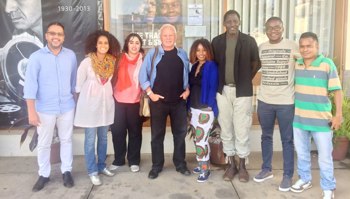
Celebration of the 25th anniversary of the PALOP-TL / EU program
- 2016 – 2018
- unter 500.000 €
- Angola, Cape Verde, Guinea-Bissau, Mozambique, São Tomé & Príncipe, Timor-leste
The general objective of the contract was to contribute to a strengthened common identity of the PALOP-TL by the production and diffusion of knowledge about the origins and current common ties of the PALOP-TL on the occasion of the 25th anniversary of the programme between the PALOP-TL and the EU.
- produce audio-visual material about the common history and the current common ties between the PALOP-TL through a short-film contest;
- present/diffuse of material to the public during short-film festivals and/or films about the PALOP-TL in 2017 and 2018;
- Schlagwörter:
- Kommunikation und Medien

Evaluation of the implementation of the African Peace Facility as an instrument supporting African efforts to manage conflicts on the continent
- 2017 – 2018
- unter 500.000 €
- ACP (Africa)
The objective of the evaluation was to provide an overall independent assessment of the performance of the African Peace Facility (APF) for the period 2014-2016 and, on this basis, draw key lessons and recommendations in order to improve current and future support through that instrument.
The evaluation served policy decision-making and project management purposes. The main users of this evaluation were DG DEVCO, the EEAS, EU delegations in the APF beneficiary regions; the AU and the REC/RMs. The evaluation also generated results of interest to governmental and civil society partners and the EU member states.
Evaluators followed a two-step approach:
- First, the evaluation provided an assessment of what has been achieved through the APF for the period 2014-2016 with regards to Peace Support Operations and capacity-building, taking into account the conclusions and recommendations of th11-0248-052e 2013 APF evaluation.
- Second and based on the findings of the first step, the evaluation offered concrete and actionable follow-up as well as new recommendations to address the remaining and new challenges faced by the APF.
- Partner:
- Particip (federführend), Cardno UK, ECDPM
- Schlagwörter:
- Monitoring und Evaluierung, Regierungsführung

Identification and Formulation of Support to West Africa Peace, Security and Stability: Complementary action combatting other main threats
- 2016 – 2017
- unter 500.000 €
- Africa (Western)
This assignment provided a coherent proposal to ECOWAS and EU for the strengthening of coordination and cooperation in security in West Africa and the implementation of programmes dealing with specific threats.
It gave sufficient background information and justifications to enable the ECOWAS and EU to make an informed decision on specific objectives and of the projects' implementation modalities.
The specific objective of this assignment was to prepare all the necessary elements of 4 different Action Documents to implement 4 potential projects covering respectively areas A, B, C and D.(Area A: Border Management, Area B: Enhancing Cybersecurity in ECOWAS region, Area C: Support to GIABA, Area D: Fighting against illicit trafficking).
For each area A,B,C and D, it was required to proceed to:
- an identification of issues, strategical orientations and priority intervention areas
- a formulation of the project under 11th EDF (Phase II).
- Partner:
- Particip (federführend), EuroPlus
- Schlagwörter:
- PCM / Logframe