Nicaragua
6 Referenzen
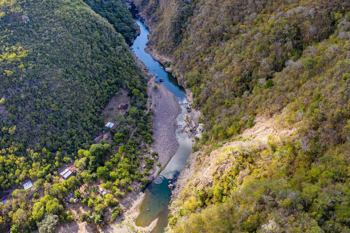
Mid-term and final evaluation of the project 'Local Strategic Alliances for Climate Change Adaptation in the Upper Coconut River Basin (ALLACC)'.
- 2023 – 2024
- unter 500.000 €
- Nicaragua
The main objectives of the mid-term and final evaluation were to provide the relevant EU services, stakeholders and the general public with:
- an independent overall assessment of the results of "Local Strategic Alliances for Climate Change Adaptation in the Upper Coconut River Basin (ALLACC) DCI 2017/039-205", paying particular attention to its different levels of results measured against the intended objectives; and the rationale behind these results
- main lessons learned, conclusions and related recommendations to improve current interventions in order to improve management in the next stages of possible new interventions.
Mid-term evaluation: In particular, this evaluation focused on the relevance/design, efficiency, effectiveness and coherence of the project, and on the progress made to date, explaining why progress is occurring or not occurring as planned, looked at how it evolved and how it responded to ROM recommendations and make recommendations on how to improve the intervention during its residual duration in order to achieve the intended objectives, taking into account problems and opportunities.
Final evaluation: assessed the entire programme from inception to closure of activities in terms of impact, effectiveness, sustainability and accountability; it contributed to accountability by providing an assessment of the results achieved and the likelihood of impact and sustainability being achieved; it should review the integration of the mid-term evaluation recommendations. In addition, it contributed to learning by explaining the factors that have enabled or hindered the achievement of results, and by identifying any key lessons that will lead to the improvement of future interventions in the country/region/sector of operation or elsewhere. It also included recommendations for preparing new interventions and encompass both forward-looking and retrospective perspectives.
- Schlagwörter:
- Menschenrechte, Monitoring und Evaluierung
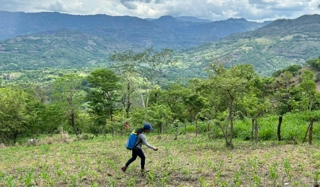
Final Evaluation of the BOOST Project from August 2018 to January 2024 in the Regions of Nueva Segovia, Madriz, Estelí, Matagalpa, Jinotega and RACCN
- 2024 – 2024
- unter 500.000 €
- Nicaragua
The final evaluation of the project "Boosting Rural and Rurban Economy in Times of Crisis and Beyond" (BOOST) was commissioned by the World Food Programme (WFP) in Nicaragua. BOOST was implemented from 2018 to 2024 and aimed to promote sustainable and resilient agri-food systems in five departments and one autonomous region of Nicaragua. The support package included three components (including gender-transformative approaches): support to smallholder farmers and their cooperatives in the production of basic grain and market access; links with the National School Feeding Programme of the Ministry of Education; and support to the creation of home gardens by vulnerable (peri-)urban families. The European Union was the main donor of the project.
The evaluation covered the entire implementation period of the project and served the double purpose of accountability and learning. It adopted a theory-based approach using the Qualitative Impact Assessment Protocol (QuIP) to answer evaluation questions linked to different evaluation criteria (relevance and coherence, effectiveness, efficiency, sustainability) and gender equality and empowerment of women. Primary data were collected during a two-week field mission and remotely. The evaluation team conducted (i) interviews at national and local levels with WFP staff, government institutions, the donor, technical staff and management of cooperatives; as well as focus group discussions with beneficiaries of all project components; (ii) direct observation during field visits; (iii) a comprehensive document review; and (iv) an analysis of existing M&E data.
In addition to the evaluation report, a short video with a summary of evaluation results was produced for dissemination purposes. The report is available at: https://www.wfp.org/publications/nicaragua-evaluacion-final-del-proyecto-boost-2018-2024
- Schlagwörter:
- Ernährung, Ländliche und städtische Entwicklung, Landwirtschaft, Monitoring und Evaluierung
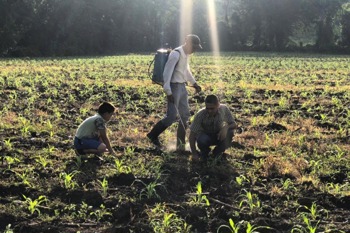
Mid-term Evaluation of the BOOST Project in the Regions of Nueva Segovia, Madriz, Estelí, Matagalpa, Jinotega and RACCN from August 2018 to June 2021
- 2021 – 2022
- unter 500.000 €
- Nicaragua
The mid-term evaluation of the project "Boosting Rural and Rurban Economy in Times of Crisis and Beyond" (BOOST) was commissioned by WFP Nicaragua. BOOST is expected to run from 2018 to 2024 and aims to promote sustainable and resilient agri-food systems in five departments and one autonomous region of Nicaragua. The support package includes three components (including gender-transformative approaches): support to smallholder farmers and their cooperatives in the production of basic grain and market access; links with the National School Feeding Programme; and support to the creation of home gardens by vulnerable (peri-)urban families. The European Union is the main donor of the project.
The evaluation served the double purpose of accountability and learning. The evaluation period covered the first three years of the BOOST project (August 2018 to June 2021), and the findings and recommendations were expected to inform the next phase of the project.
The evaluation adopted a theory-based mixed methods approach to answer the five evaluation questions linked to different evaluation criteria (effectiveness; relevance and coherence; sustainability; efficiency) and gender equality and empowerment of women. Data were collected remotely and during a two-week field mission. The evaluation team conducted interviews at national and local levels with WFP and other agencies, government institutions, the donor, cooperatives, and schools; as well as two dozen focus group discussions with beneficiaries; field visits; a comprehensive document review; and an analysis of existing M&E data.
In addition to the evaluation report, Particip produced a short video (produced by a film team in the field) for dissemination purposes. The evaluation report and the video are available at: https://www.wfp.org/publications/nicaragua-boost-project-nueva-segovia-madriz-esteli-matagalpa-jinotega-and-raccn-areas
- Schlagwörter:
- Ernährung, Landwirtschaft, Monitoring und Evaluierung, Umwelt

Joint country strategy evaluation of Spain and the European Union's cooperation with Nicaragua (2009-2017)
- 2018 – 2019
- unter 500.000 €
- Nicaragua
The evaluation assessed the cooperation of the European Union and Spain with Nicaragua between 2009 and 2017. It covered:
- All of EU and Spanish cooperation with Nicaragua between 2009 and 2017, including programming and political dialogue. The main sectors covered included: private sector development, good governance and justice, security, climate change, water and sanitation, energy, education and TVET, and gender equality.
- All instruments and aid modalities employed, as well as crisis response mechanisms and financing implemented within the framework of the IFS (Instrument for Stability) followed by the IcSP (Instrument contributing to Stability and Peace) in the case of the EU, and for the Spanish Cooperation, instruments and modalities in the framework of III and IV Master Plans (2009-2012 and 2013-2016).
- Spending and non-spending activities completed, in progress and being planned in the evaluation period.
- EEAS in so far as it related to development in Nicaragua (programming and political dialogue).
- The interaction of DG DEVCO interventions with those of DG Trade, FPI, ECHO and the EIB and those carried out under the Common Foreign and Security Policy (CFSP) in Nicaragua; The interaction of AECID interventions with other actors of Spanish Cooperation in Nicaragua, such as other Ministries, autonomous communities, local governments, etc. The interaction between EU and Spanish Cooperation interventions is also assessed.
- Coherence between European Union interventions in the field of international cooperation and development and other EU policies affecting Nicaragua in the framework of the Policy Coherence for Development (PCD) commitments. Coherence between Spanish interventions in the field of international cooperation and other Spanish policies affecting Nicaragua
*Due to the political crisis in Nicaragua as from April 2018, the Contracting Authority decided to stop this evaluation upon conclusion of the desk stage. The last report produced was the desk report and included preliminary conclusions and recommendations.
- Schlagwörter:
- Monitoring und Evaluierung

The evaluation assessed three regional forestry projects that had support to small producers, development of value chains and the use of participatory approaches in common:
1. ForInfo: Livelihood improvement through generation and ownership of forest information by local people in products and services markets (Mekong, 2011–2015);
2. Finnfor-II: Integrated environmental and forest management co-operation (Central America, 2012–2016);
3. MFS: Sustainable forest management in the Andean region (South America, 2011–2016).
The purpose of the evaluation was to provide guidance to the Ministry for Foreign Affairs of Finland in planning and implementing regional forestry projects. It produced lessons for future forest sector co-operation and planning of other regional programmes. Specific objectives of the evaluation were to:
- Assess the added value of the regional approach compared to a country-based approach;
- Assess the success of the programmes in promoting sustainable forestry based livelihoods and increasing income of small producers;
- Identify the lessons learned from developing value chains and payment for ecosystem services.
The evaluation was conducted in several phases:
- An inception phase focusing on the design and the methodology of the evaluation;
- A desk and field phase with document review and visits to eight different countries in the three regions;
- A synthesis phase with global-level conclusions and recommendations across the three regional projects, presented in a final report to concerned stakeholders.
- Partner:
- Indufor Oy - Metsahallitus Group (federführend), Particip
- Schlagwörter:
- Forstwirtschaft, Industrie und Privatsektorentwicklung, Monitoring und Evaluierung, Umwelt

Post-conflict and post-disaster needs assessment (PCNA/PDNA): development of assessment capacity and tools - Phase I + II
- 2013 – 2017
- 2 – 5 Millionen €
- Global
Relevant background
Since early 2007, the Commission, the UN-family and the World Bank have worked together in setting up a platform for cooperation on post-crisis needs assessments for natural disaster (Post-Disaster Needs Assessment, PDNA) and conflict (Recovery and Peacebuilding Assessment (RPBA), previously named Post-Conflict Needs Assessment, PCNA) scenarios. This trilateral cooperation was framed and formalised through the signature of a Joint Declaration on “Post-Crisis Assessments and Recovery Planning” in September 2008. The EU/UN/WB platform covers the whole PDNA/RPBA(PCNA) process, including strategic coordination, development of joint methodologies for post-crisis assessments, joint deployment of assessment teams, joint training and joint recovery planning and monitoring.
In line with the 2008 Declaration on Joint Post-crisis Assessments and Recovery Planning, the overall objective of the project is to assist and develop third countries’ in-country capacity to gradually assume a more prominent role in Post-Disaster Needs Assessments and Post-Conflict Needs Assessments (now changed to Recovery and Peacebuilding Assessments, RPBA).
The purpose of this project was:
- to support further development of joint PDNA/RPBA(formerly PCNA) methodologies, tools, training programmes, etc.;
- to support joint PDNA/RPBA(formerly PCNA) missions in-country/in region (in coordinating with EU Heads of Delegations and with the European External Actions Service (EEAS) and European Commission). While such support could cover any relevant technical field (long-term and short-term expertise), it is foreseen that a particular emphasis is put on expertise in mission planning and development of final reports/recovery frameworks.
The two phases of the project contributed to a variety of outputs and results, including:
- Phase 1 (01/01/2013 – 31/07/2015): revision of the PDNA methodology and development of the joint EU/UN/WB PDNA Guide, development of the Disaster Recovery Framework (DRF) Guide, review of the PCNA methodology, development of training and capacity building materials, delivery of information/capacity building sessions, joint PDNA/PCNA training courses for national authorities and regional/international organisations, support to over 15 joint EU/UN/WB PDNA/PCNA missions;
- Phase 2 (10/07/2015 – 09/07/2017): revision of the PCNA methodology and development of the RPBA methodology, development of training and capacity building materials, delivery of information/capacity building sessions, joint PDNA/RPBA training courses for national authorities and regional/international organisations, support to over 10 joint EU/UN/WB PDNA/RPBA missions.
- Partner:
- Particip (federführend), Dara, ECDPM, GOPA, Punto.sud
- Schlagwörter:
- Aus- und Fortbildung, Humanitäre Hilfe, Institutionelle Entwicklung, Regierungsführung