
Unsere Projekte
Entdecken Sie, wo und wie Particip weltweit wirkt.
Unsere Referenzen geben Ihnen einen Einblick in laufende und abgeschlossene Projekte in verschiedenen Ländern, Sektoren und Fachgebieten – mit Informationen zu Zielen, geografischem Schwerpunkt, Laufzeit und Auftragsvolumen.
351–360 von 516 Referenzen

Good Financial Governance - Consulting service to support Internal Audit System
- 2021 – 2024
- 1 – 2 Millionen €
- Tanzania
The Good Financial Governance II programme (GFG II, August 2020 – January 2024) built on the successful implementation of the GFG I programme (May 2016 – July 2020). The overall objective was to ensure the public finance system is strengthened in accordance with the principles of good financial governance, specifically transparency, efficiency and accountability.
The consortium implemented Field of Action 2 under the GFG II programme, which focused on strengthening the internal audit function across the Tanzanian public sector by enabling conditions for an effective internal audit in the public sector in Tanzania with the continued ambition that the internal audit reports of Internal Audit Units (IAUs) in Ministries, Departments, Agencies (MDAs) and Local Government Authorities (LGAs), may achieve international standards for Internal Audit. This was mainly done via support in two key areas, which were the provision of capacity building measures at organisational and individual level (on-the-job trainings, workshops and formal certification trainings) and the development / updating of audit guidance documents (Internal Audit, Risk Management, Quality Assurance and Improvement, Performance Audit, and Gender Audit)
Results achieved:
- 23 out of 30 internal audit units of ministries, departments, and agencies (MDAs) and local government authorities (LGAs) improved their internal audit reports’ conformance with international standards by one step (based on standards of the Institute of Internal Auditors, IIA)
- Conditions for an effective internal audit function improved in line with the MoFP's 'strategy for the further development of the internal audit system in the public sector of Tanzania'.
- 5 guidance documents were newly developed or revised to address recurrent issues of the Internal Audit strategy, of which 3 were adopted and 2 were in the approval process by the Ministry of Finance and Planning (MoFP) by the end of the contract.
- 3 measures for improved knowledge management were developed for the Internal Audit General Division (IAGD) and Internal Audit Units of partner LGAs/MDAs.
- 3 measures, agreed upon in a MoFP action plan to establish independent and effective audit committees in the Tanzanian public sector were developed.
- Partner:
- Particip (federführend), EY Germany, EY Tanzania
- Schlagwörter:
- Aus- und Fortbildung, Institutionelle Entwicklung, Öffentliche Finanzen / Haushaltsplanung, Projektdurchführung / technische Hilfe, Regierungsführung, Zivilgesellschaft
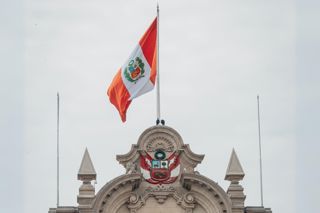
The overall objective of this assignment was to contribute to improving the electoral and democratic framework of Peru during the inter-election period and raising awareness and understanding of the EU EOM recommendations and technical issues related to their implementation. In general, an EFM supports the consolidation of democracy, institution-building and democratic elections in Peru in the context of the implementation of the 2020 EU EOM recommendations.
The specific objectives of the Mission included:
- Assess the state of play of the implementation of the recommendations of the 2020 EU EOM to Peru.
- Assess any electoral reforms adopted since the last EOM or which are under consideration (e.g. draft legislation) or planned and the degree to which these reflect EOM recommendations and their alignment with international standards for democratic elections;
- Identify which EOM recommendations are most relevant to the prevailing country situation and the current phase of the electoral cycle;
- Generate additional impetus for – or contribute to ongoing debates on – electoral reform;
- Identify areas of agreement and disagreement on EU EOM recommendations among the stakeholders and any political, technical, financial obstacles to electoral reform;
- Propose actions to overcome obstacles to electoral reform, including measures to develop support for and national ownership of the recommendations;
- Assist the EU Delegation, EEAS and INTPA in their assessment on whether ongoing cooperation and conflict prevention projects are addressing the recommendations made by EU EOMs. Based on a brief overview of existing programmes, provide needed information to support identification of potential additional election/democracy support action that could contribute to strengthening the implementation of the recommendations and/or to the overall improvement of the electoral framework;
- Contribute to analysis by the EU Delegation, EEAS and INTPA with information to originate any other possible EU actions that could contribute to strengthening the implementation of the recommendations and/or to the overall improvement of the electoral framework;
- Prepare/update with EU Delegation a follow-up plan to EU EOM recommendations.
- Schlagwörter:
- Wahlen

Particip aimed to contribute to improving the electoral and democratic framework of Honduras during the inter-election period and raising awareness and understanding of the EU EOM recommendations and technical issues related to their implementation. In general, an EFM supports the consolidation of democracy, institution-building and democratic elections in Honduras in the context of the implementation of the 20231 EU recommendations.
Particip's specific objectives included:
- Assessing the state of play of the implementation of the recommendations of the 2021 EU EOM to Honduras;
- Assessing any electoral reforms adopted since the last EOM or which are under consideration (e.g. draft legislation) or planned and the degree to which these reflect EOM recommendations and their alignment with international standards for democratic elections;
- Identifying which EOM recommendations are most relevant to the prevailing country situation and the current phase of the electoral cycle;
- Generating additional impetus for – or contribute to ongoing debates on – electoral reform;
- Identifying areas of agreement and disagreement on EU EOM recommendations among the stakeholders and any political, technical, financial obstacles to electoral reform;
- Proposing actions to overcome obstacles to electoral reform, including measures to develop support for and national ownership of the recommendations;
- If helpful and requested, assisting the EU Delegation, EEAS and INTPA in their assessment on whether ongoing cooperation and conflict prevention projects are addressing the recommendations made by EU EOMs. Based on a brief overview of existing programmes, providing needed information to support identification of potential additional election/democracy support action that could contribute to strengthening the implementation of the recommendations and/or to the overall improvement of the electoral framework;
- Contributing to analysis by the EU Delegation, EEAS and INTPA with information to originate any other possible EU actions that could contribute to strengthening the implementation of the recommendations and/or to the overall improvement of the electoral framework;
- Preparing/updating with EU Delegation a follow-up plan to EU EOM recommendations.
- Schlagwörter:
- Wahlen

Third-party Monitoring & Evaluation of resilience projects in Yemen in the areas of migration, TVET and financial inclusion
- 2020 – 2024
- 500.000 € – 1 Million €
- Yemen
The overall objective was to contribute to poverty reduction and development in the Republic of Yemen through EU cooperation assistance as well as promoting EU cross-cutting objectives related to environment and climate change, rights based approach, persons with disability, indigenous peoples and gender equality. The specific objective was to conduct third-party monitoring and evaluation of EU projects in Yemen.
Two main outputs delivered for this project:
- Requested output 1: A third-party monitoring report for each of the third-party monitoring assignments.
- Requested output 2: An evaluation report for each of the evaluation assignments.
- Partner:
- Particip (federführend), CAPA EEIG (managed by Particip)
- Schlagwörter:
- Monitoring und Evaluierung
Capacity development on monitoring and evaluation for enlargement and neighborhood regions (PROMEL)
- 2019 – 2024
- 2 – 5 Millionen €
- ENI, IPA
The overall objective of the intervention is to support DG NEAR to strengthen the linkages between the planning/programming, monitoring and evaluation of EU support (policy dialogue and financial assistance) in the context of the neighbourhood and enlargement policies.
The three purposes of this contract are as follows:
- to provide methodological support to DG NEAR staff and implementing partners for the design of strategic documents (e.g. indicative strategy papers, single support frameworks, sector planning documents), and of programming documents e.g. action documents, annual action programmes) in particular the elaboration of context analysis, definition of problems, the elaboration of intervention logic diagrams, and the definition of relevant indicators;
- to provide methodological support to DG NEAR staff and implementing partners for the design of monitoring and evaluation systems/arrangements at sector/policy/action levels and the implementation of the monitoring activities and evaluations of EU support;
- to promote a monitoring, evaluation and learning culture within the DG and in the partner countries/beneficiaries.
- Partner:
- Particip (federführend), Atelier Real, Integration
- Schlagwörter:
- Aus- und Fortbildung, Institutionelle Entwicklung, Monitoring und Evaluierung, PCM / Logframe

Support to the identification and formulation of a complementary support (top up) to the MOUSSAWAT program
- 2022 – 2024
- unter 500.000 €
- Morocco
The general objective of this program (2018-2024) was to contribute to gender equality in Morocco through a human rights approach, with the specific objectives of:
- increasing women's empowerment and enjoyment of their rights;
- combating violence against women and promoting a culture of equality;
- ensuring gender mainstreaming in sectoral public policies and local governance.
The general objective of the project was to contribute to the implementation of the cooperation strategy of the European Union with the Kingdom of Morocco, in particular in terms of promotion of gender equality.
The specific objectives were to proceed to the identification and formulation of a top up to the MOUSSAWAT Support Program (phase II)
SO1: Combat all forms of gender-based violence in the public and private spheres, online and in the workplace
- Support policies and programs to prevent gender-based violence
- Ensure the protection and care of victims of gender-based violence
- Strengthen the effective criminalization of gender-based violence
SO2: Contribute to the empowerment (emancipation) and realization of economic, social and labor rights of girls and women
- Promote women's access to education at all levels, to vocational training and support their professional integration
- Improve women's access to decent work
- Facilitate women's access to productive resources, financing and entrepreneurship
SO3: Contribute to women's equal rights and opportunities to participate in political processes and governance at all levels
- Support the strengthening and/or modification of legislative and regulatory frameworks for gender equality in political participation
- Support women's and girls' participation at the national and local levels
- Promote women's leadership in public administration (national and territorial) and the private sector
SO4: Promote a culture of equality
- Fight against discrimination and gender stereotypes
- Support gender responsive budgeting at the institutional level
- Schlagwörter:
- Menschenrechte

Appraisal of the Local Adaptation to Climate Change- Project in Nepal
- 2023 – 2024
- unter 500.000 €
- Nepal
The appraisal served two primary purposes. Firstly, it aimed to provide an independent assessment of the feasibility and implementation potential of the Local Adaptation to Climate Change (LACC) project, finalizing the Project Document (PD). This involved evaluating project relevance, implementation strategy, organizational structures, resource allocation, sustainability, and effectiveness in the given context. It also assessed the integration of cross-cutting objectives into the PD and addressed specific issues identified during the planning process, considering recommendations from the Quality Assurance Group of MFA Finland. Possible problem areas were pointed out, and workable solutions to the problems were presented. The Appraisal team collaborated with MFA and the Government of Nepal to make necessary PD revisions based on their decisions.
Secondly, the appraisal reviewed opportunities to broaden cooperation between Finland and Nepal beyond traditional development cooperation, particularly under Finland's Country Programme. This review contributed to the appraisal and finalization of the LACC PD, emphasizing practical proposals for the implementation strategy. The appraisal explored possibilities for cooperation in various sectors like natural resources management, WASH, climate solutions, green economy, circular economy, bio- and agro-technology, aiming to diversify cooperation modalities and partnerships involving the public and private sectors, academia, and civil society. The appraisal team presented comprehensive recommendations to support Team Finland's efforts, utilizing ODA instruments to assist Nepal's transition from Least Developed Country status by 2026 to a Lower Middle Income Country by 2030. This review aided Finland in supporting Nepal's graduation and navigating the post-graduation landscape to achieve its national sustainable development priorities. The relevant recommendations were translated into practical steps and activities to be included in the LACC PD, as applicable, taking into account the scope and modality of the Project.
- Schlagwörter:
- Ländliche und städtische Entwicklung, Monitoring und Evaluierung, Umwelt

Third-party Monitoring & Evaluation of Resilience projects in Yemen - Enhancing rural resilience through the creation of a Community Health Workers Network
- 2020 – 2024
- 500.000 € – 1 Million €
- Yemen
The objective is to contribute to poverty reduction and development in the Republic of Yemen through EU cooperation assistance as well as promoting EU cross-cutting objectives related to environment and climate change, rights based approach, persons with disability, indigenous peoples and gender equality.
- Partner:
- Particip (federführend), CAPA EEIG (managed by Particip)
- Schlagwörter:
- Ernährung, Monitoring und Evaluierung, Regierungsführung
Mid-term review of the project “Renewable Energy for Rural Development 2+” (RERD2+)
- 2023 – 2024
- unter 500.000 €
- Mozambique
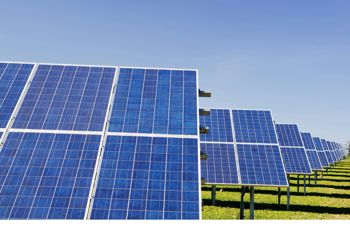
The mid-term review of the project “Renewable Energy for Rural Development 2+ (RERD2+)” was commissioned by Enabel. The project was initiated in 2018 as a continuation of the “Renewable Energy for Development Project 1”. The Project is scheduled for completion by the end of 2024.
The mid-term review served the purposes of accountability, learning, and steering. It addressed the standard evaluation criteria, The purpose of this mid-term review was to support the project towards a successful completion. The work has included the desk review of documents, field visits to the sites of implementation, as well as extensive interviews and triangulation of data, observations, and collected views to formulate findings.
- Partner:
- Particip (federführend), TG France
- Schlagwörter:
- Energie, Ländliche und städtische Entwicklung, Monitoring und Evaluierung

The main objectives of this evaluation are to provide the European Union departments concerned, interested stakeholders and the general public with:
- an overall independent analysis of the performance of the Global Climate Change Alliance Programme in Mali phase 2 (GCCA-Mali2), paying particular attention to its different levels of results in comparison with its expected objectives, and the reasons for these results;
- the main lessons learned, conclusions and recommendations to improve current and future interventions.
- Partner:
- Particip (federführend), CAPA EEIG (managed by Particip), Expertise Advisors (formerly: ETI Consulting)
- Schlagwörter:
- Monitoring und Evaluierung, Umwelt