Mali
22 Referenzen
Support Program for the Strengthening of Teacher Training
- 2023 – 2028
- 5 – 10 Millionen €
- Mali
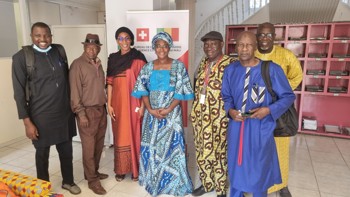
The objective of the Support Programme for the Strengthening of Normal Education (AREN) is to contribute to improving the quality of formal and non-formal education in Mali.
To this end, the mission is to provide technical assistance and capacity building services to the Malian education authorities in order to contribute to a sustainable improvement in the quality of education in Mali, and more generally, to the improvement of the quality of education and the achievement of Sustainable Development Goal 4 (SDG 4).
The mandate has two missions: to implement the 2023-2028 programme in accordance with the logical framework developed and; Secondly, draft the project document that will guide the next phase of the programme, for the period 2029-2033.
- Partner:
- Particip (federführend)

Evaluation of the project Wehubit 2.0 (BEL22009)
- 2026 – 2026
- unter 500.000 €
- Africa
The Wehubit 2.0 programme is Enabel's flagship D4D/innovation programme working on Digital Social Innovations (DSIs). This independent evaluation assesses the performance of Wehubit 2.0 against its objectives, with a focus on relevance, coherence, efficiency, effectiveness, sustainability and impact. It follows Enabel’s evaluation standards and includes a field visit in Dakar (Senegal). The evaluation approach combines document review and stakeholder consultation to generate evidence-based findings and practical recommendations, and is implemented within the ToR’s fixed reporting milestones.
- Partner:
- Particip (federführend), Technopolis Group
- Schlagwörter:
- Monitoring und Evaluierung
Outsourcing the regular monitoring of projects financed by the EU delegation
- 2019 – 2026
- 2 – 5 Millionen €
- Mali
Relevant Background - The deterioration of the political framework in Mali in the last 5 years is having a great impact both at social and economic level, leading the country in a very difficult situation in terms of health and security. The humanitarian situation in central Mali can be seen mainly as a “protection crisis” with relevant consequences also in other areas such as shelter, nutrition, food security, health, education as well as water, hygiene and sanitation. Despite the risk, the Technical and Financial Partners remain present and active. Safety is therefore is a key issue in the implementation of this project, for which access to many dangerous areas is essential. The European Union is actively present in the country and supports Mali in several areas, including agriculture, health, environment, culture and in strengthening civil society.
The General Objective of the intervention is to contribute to the effective implementation of the EU funded projects in Mali.
The Specific Objective is to assist the European Delegation in Mali and the EDF National Authorising Officer (NAO) to the regular monitoring of all its current and future projects financed by the European Union through its various financial instruments (EDF, UTF, LB, regional funds, etc.). The projects cover mainly the following sectors: infrastructure (roads, water and sanitation), agriculture and food security, governance, justice and human rights, education, etc. However, the EU also finances projects in other sectors such as security and migration, etc.
The Results to be achieved through the activities carried out during the implementation are:
• Design, set up and constant update of a field mission workplan, issued each three months and approved by the EUD in Mali.
• “Human resources” (experts) identified and mobilized to provide updated and reliable information on the project’s implementation, directly from the field.
• A flexible and continues communication mechanism is put in place to ensure adequate information sharing both with the EUD/EDF NAO and the Consortium partners.
• An updated methodology that ensure the triangulation of the information collected, including several and cross-referenced data acquisition methods: analysis of reporting documents (project reports, evaluation and monitoring reports), direct survey of the project facilities and achievements, sampling if necessary, to measure quality, and interviews with stakeholders.
• Problems and good practices identified to be provided to the EUD and the stakeholders.
• Criteria and sub-questions defined in order to monitor and evaluate the two relevant cross-cutting issues: gender and environment.
- Partner:
- Particip (federführend), BETICO, Dorsch Impact GmbH - AHT, MDF
- Schlagwörter:
- Monitoring und Evaluierung

The main objectives of this evaluation are to provide the European Union departments concerned, interested stakeholders and the general public with:
- an overall independent analysis of the performance of the Global Climate Change Alliance Programme in Mali phase 2 (GCCA-Mali2), paying particular attention to its different levels of results in comparison with its expected objectives, and the reasons for these results;
- the main lessons learned, conclusions and recommendations to improve current and future interventions.
- Partner:
- Particip (federführend), CAPA EEIG (managed by Particip), Expertise Advisors (formerly: ETI Consulting)
- Schlagwörter:
- Monitoring und Evaluierung, Umwelt
Production of the Sahel Alliance 5 years results report
- 2023 – 2023
- unter 500.000 €
- Burkina Faso, Chad, Mali, Mauritania, Niger
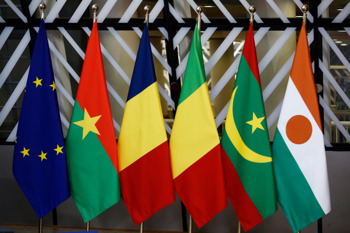
The members of the Sahel Alliance have chosen to concentrate their efforts in five priority sectors of intervention, in line with the development priorities established by the G5 Sahel countries: Agriculture, rural development and food security; Decentralisation and basic services; Education and youth employment; Energy; Governance.
The overall objective of this contract is to produce the 5-years Technical Report in line with the needs of the SA needs. In line with the commitments of the SA and its members, the Sahel Alliance Coordination Unit (UCA) plans to produce a SA 5 years results report in 2023.
The 5 years results report will include the following elements:
- Analysis of the evolution of the national indicators included in the Alliance results framework in relation to the target values set by the G5 Sahel countries.
- The analysis of the aggregated results of the projects included in the Alliance Sahel portfolio in line with the project indicators included in the Alliance Sahel results framework.
- Analysis of the achievements attributable to the Sahel Alliance stricto sensu will beproduced, in order to show whatthe platform has collectivelyachieved and what its membersare achieving individually.
The following elements should be taken into consideration while drafting the report:
- A qualitative analysis will be needed, particularly in terms of Sahel Alliance member organizations contribution to the provision of basic services;
- The contexts of Sahelian countries (crisis, displacement of population, COVID-19, etc.) should be taken into account in the analysis of results where possible;
- Where possible, the results obtained should be read with regard to the existing policy messages and the sectoral notes issued by the sectoral and thematic coordination groups of the SA in order to measure their operational translation

Evaluation of the European Union support to Rule of Law and anticorruption in Partner Countries (2010-2021)
- 2021 – 2023
- 500.000 € – 1 Million €
- Burkina Faso, Congo (Kinshasa), Guatemala, Jamaica, Kenya, Kyrgyzstan, Mali, Myanmar, Niger, Nigeria, Philippines, Viet Nam
The general objective of this evaluation is to provide an independent assessment of the performance of EU support to the Rule of Law (RoL) and Anticorruption in the period 2010-2021 in INTPA partner countries, funded under DCI, EDF, EIDHR, IcSP, CSO and relevant Trust Funds. The evaluation seeks to be a stock-taking and forward-looking exercise but will focus on learning i.e. the identification of key lessons on what has and has not worked and why.
In addition, the specific objectives for this evaluation are:
- To assess the EU support to independent, effective and efficient justice systems, notably a) legislative processes (legality), b) legal certainty and access to justice; and c) equality and accountability before the law, in terms of its impact on good governance (including stability, human rights and democracy, environmental governance and business climate).
- To look at actions aimed at promoting anti-corruption, public accountability and transparency, improving the justice systems and enforcing the principle of separation of powers.
- To pay specific attention to the inclusion of different groups (political, ethnic, religious, etc.), women and youth in decision making at all levels.
- To gather insights on the extent to which the different tools, instruments and modalities used in the EU response have been beneficial in providing effective support to partner countries and the interactions and coherence of those, notably of policy and political dialogue.
- To evaluate the rationale of the EU in these supports to RoL, as well as risk mitigation measures and the impact of policy dialogue, not least on societal and state resilience.
- To produce recommendations for decision-makers in DG INTPA, FPI, DG NEAR, DG ECHO, DG Trade, DG JUST and EEAS on how to improve the EU’s policy strategy and implementation.
The temporal scope of the evaluation is 2010 to 2021, with a particular focus on the previous MMF (2014-2020). The evaluation will focus on the support provided to core state institutions and civil society organisations, specifically: state institutions and oversight bodies, justice institutions, anti-corruption agencies, civil society and human rights institutions.
- Partner:
- Particip (federführend), ECDPM
- Schlagwörter:
- Justiz / Rechtsstaatlichkeit, Monitoring und Evaluierung
Final evaluation of project MLI/804: Support for local economic development and conflict prevention in the regions of Gao and Timbuktu (ADEL)
- 2022 – 2022
- unter 500.000 €
- Mali
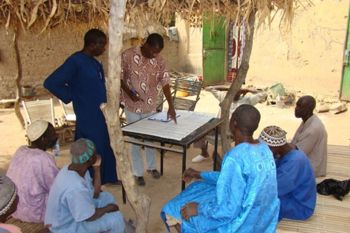
This evaluation will allow:
- to know if the organization and the methods used for the implementation of the project are appropriate;
- to have an evaluation of the results achieved at the end of the project in relation to the objectives set in beginning of the project according to the criteria of relevance, coherence, effectiveness, efficiency, impact and sustainabilit
- to know the impact on the stabilization of the targeted municipalities, and courses of action complementary for the continuation of the stabilization of the North of M
- to appreciate the involvement of the various stakeholders in the monitoring and implementation of the project

Final evaluation of projects MLI/021 (Développement rural et sécurité alimentaire), MLI/022 (Formation et insertion professionnelle) and MLI/023 (Décentralisation et bonne gouvernance)
- 2021 – 2021
- unter 500.000 €
- Mali
The mission's main objective is to carry out a final, internal and independent evaluation of the Mali – Luxembourg program (MLI/021, MLI/022, and MLI/023). In this context, the mission should:
- Analyze the results and specific objectives achieved at the end of the interventions compared to what had been planned in the technical and financial documents and the inception reports
- Analyze the results achieved by the interventions in terms of capacity building (CB). The analysis will be structured around the following four points:
- RC support repository
- Contribution of CD to results and changes
- Contribution of CD to the process of partner empowerment
- Level of institutionalization of CD
- Analyze the management and monitoring of projects/programmes, paying particular attention to:
- the coordination mechanisms between the projects,on one hand, and on the other hand between the program and the counterparts (including the other contributing donors and the national counterpart);
- the operation of the project steering structure;
- Analyze the interventions according to the DAC evaluation criteria
- Analyze interventions according to cross-cutting themes:
- governance for development;
- gender equality;
- environment and climate change.
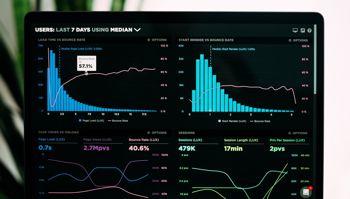
Monitoring of activities financed under Article 3 of the IcSP in West Africa and the Lake Chad Basin
- 2020 – 2021
- unter 500.000 €
- Africa (Western)
The general objective of the service was to improve the degree of accountability and quality of certain EU-funded actions by providing the FPI Regional Team with follow-up and monitoring products for these actions and feedback on experience at the end of the project.
The specific objective of this contract was to assist the FPI Regional Team in the monitoring of certain projects financed under Article 3 of the IcSP in the Sahel region and the Lake Chad Basin.
- Partner:
- Particip (federführend), EPRD
- Schlagwörter:
- Humanitäre Hilfe, Monitoring und Evaluierung, Regierungsführung

Mid Term evaluation of MLI/804 project : Appui au développement économique local et à la prévention des conflits dans les régions de Gao et Tombouctou (ADEL)
- 2021 – 2021
- unter 500.000 €
- Mali
The expected results are as follows:
- Result 1: Associations and cooperatives contribute to local economic development. This result, which continues through the implementation of local economic projects in the fields of agriculture, livestock, fishing, handicrafts, allows the improvement of economic benefits and agricultural yields of associations and beneficiary households and also contributes to the revitalization of the local economy (mobilization of local economic operators).
- Result 2: Young men and women in the Timbuktu region are trained and professionally integrated through self-employment and salaried work. This result makes it possible to increase the integration rate of young people through self-employment and salaried work, as well as the level of economic benefits and wage remuneration.
- Result 3: Basic social services are strengthened and local authorities contribute to their operation. This result is achieved through the rehabilitation (construction, rehabilitation, equipment) and improvement of basic social services (schools, health centers, water points, socio-collective infrastructure) for the benefit of the populations.
- Result 4: Local authorities are strengthened in the exercise of their mandate and functions. This result continues on the one hand through the strengthening of the skills of elected officials and agents of the beneficiary local authorities, on the other hand by the support and/or the establishment of mechanisms for the prevention and management of conflicts.
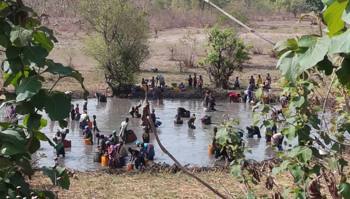
Evaluation of the Belgian Fund for Food Security (BFFS), the integration of food security and the multi-stakeholder approach within the Belgian Development Cooperation
- 2018 – 2019
- unter 500.000 €
- Benin, Burundi, Guinea (Conakry), Mali, Mozambique, Tanzania
The objectives of the evaluation were as follow:
- Draw lessons learned from the implementation of the FBSA from the results observed in terms of food security with its 4 dimensions (summative evaluation).
- Assess the measures that have been taken to integrate the issue of agriculture and food security into Belgian cooperation.
- Assess the specificity and added value of the multi-stakeholder and multi-dimensional approach for Belgian Cooperation in the field of food security.
Thus, the evaluation is i) backward-looking, covering the implementation of the BFFS in its multidimensional approach based on the four pillars of food security (FAO) and its multi-actor approach; and ii) forward-looking, covering the food security dimension of the new programming of Belgian cooperation. The temporal scope extends from 2010, the year of the creation of the BFFS, to the time of the evaluation in 2019.
The evaluation team conducted 6 country case studies, notably for the five countries in which a BFFS multi-actor programme was carried out from 2012 to 2019: Mali, Mozambique, Burundi, Tanzania and Benin. A sixth case study was carried out on Guinea where a new bilateral programme had been launched, in order to meet the second objective which is to assess the measures taken to integrate agriculture and food security into the new programming of Belgian cooperation. In addition, an online survey was conducted among all actors involved in the implementation of the BFFS programmes.
The published report can be found here: https://diplomatie.belgium.be/sites/default/files/downloads/fbsa-fr-digital-complet.pdf
- Schlagwörter:
- Ernährung, Landwirtschaft, Monitoring und Evaluierung

Program of Support to Administrative Reform, Decentralization and Regional Economic Development (PARADDER) - Final Evaluation
- 2019 – 2019
- unter 500.000 €
- Mali
This evaluation was mainly intended to provide the relevant services of the European Union, interested stakeholders with the following information:
- a comprehensive and independent analysis of PARADDER's performance, paying particular attention to its results, in comparison with the expected objectives, and the reasons supporting these results;
- lessons learned, conclusions, associated recommendations and added value of EU interventions;
- to formulate future actions, which may include different and / or innovative approaches and approaches, such as (non-exhaustive):
- the integration of the administrative reform and decentralization components into the EU's sectoral programs.
- the territorial approach to local development
- approaches that directly target the Territorial Communities
- links with civil society and democracy programs
- the harmonization with the interventions of the other TFPs
In particular, this evaluation served to:
- to verify and assess the relevance of the program's objectives with regard to the activities carried out (capacity building, granting of grants, technical assistance, studies, etc.) in the post-crisis context and their relevance in the current Malian context
- to formulate concrete recommendations and proposals for institutional anchoring and sustainability issues and prospects for possible future support, taking into account the priorities of the EU's action for the period 2020-2024 and the provisions of the Peace Agreement, hence the flagship element is a new institutional architecture around in-depth decentralization based on greater regional empowerment. The signing of the Agreement commits stakeholders to its implementation in accordance with the agreed timetable.
The main users of this evaluation are the EU Delegation in Mali, the EDF National Authorizing Officer, the Malian Ministry responsible for Decentralization and Administrative Reform (currently the Ministry of Territorial Administration and Decentralization and the Ministry of Territorial Administration). Reform of the Administration and Transparency of Public Life).
The overall objective was to contribute to the reduction of poverty through the continued implementation of the Institutional Development Program and the National Decentralization Policy Framework Document. The specific objective was to support the continued effective implementation of state reform and decentralization policies including the regional economic development of the Northern Regions and the Niger Delta and the decentralized sectors (health, education , hydraulics and environment).
- Schlagwörter:
- Institutionelle Entwicklung, Ländliche und städtische Entwicklung, Monitoring und Evaluierung, Regierungsführung
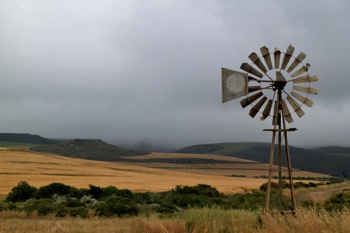
The Country Environmental Profile should identify the environmental issues that need to be taken into consideration in the preparation of the Mali Country Strategy Paper, and assess them, in order to influence - directly or indirectly - the EC's cooperation actions.
The Environmental Country Profile should provide decision-makers in the partner country and the European Commission with clear information on the major environmental issues, as well as on the policies, strategies and programs that concern them, including the 2030 Sustainable Development Agenda.
The purpose of providing this information is to ensure that the EC cooperation strategy can take environmental considerations and climate change objectives into account during the preparation of EU cooperation programs and to integrate them into the guidelines for EU-supported programs and policies. It should also be possible to use this information as a reference for environmental compliance in all development-cooperation-activities in the country.
The Profile will identify key links between environment, climate change and poverty reduction. It will also gather baseline information and help focus policy dialogue and cooperation with the country on key issues such as sustainable development or environmental awareness among policy makers.
- Partner:
- Particip (federführend), CAPA EEIG (managed by Particip), ETI
- Schlagwörter:
- Umwelt

The purpose of this assignment is to collect, collate and systematically present, in the form of Evaluation Portraits and Country Evaluation Briefs, findings from existing evaluations and other documents of development interventions in five Norwegian partner countries: Ethiopia, Haiti, Mali, Myanmar, Nepal and Tanzania.
The objective of this assignment is to provide accessible and relevant knowledge about Norwegian and other donors’ development efforts in Norway’s partner countries through systematising findings from existing evaluations of development interventions. The exercise emphasises learning, supplementing a growing database of systematised, relevant, context-specific and accessible information. Beyond its intrinsic value, this knowledge forms a basis for development policies and strategies, contributes to development efforts in the field and reveals knowledge gaps that could be covered by future evaluations.
The main target groups for the study are the Norwegian Ministry of Foreign Affairs, Norad and Norwegian embassies in the selected partner countries and elsewhere.
The assignment is guided by the following questions:
- What are the key contextual features characterising each of the studied case countries?
- How do these contextual features affect development interventions in the respective country/-ies?
- What is the nature of the programmes and projects studied, including levels of development support?
- What are the major obstacles/challenges faced by those interventions?
- What are the major findings in the assessed material concerning the goals, methods, challenges, results and sustainability of the interventions studied?
- How do the programmes and projects perform in terms of such cross-cutting issues as gender equality, environmental concerns and anti-corruption?
- Which, intended and, if any, unintended effects of the programmes and projects, positive and negative, can be identified?
- Partner:
- Particip (federführend), Menon
- Schlagwörter:
- Monitoring und Evaluierung
Support to the management of the grant contract by the Ministry for National Reconciliation in the context of the project Support for reconciliation and conflict resolution in Mali (ARCOMA)
- 2017 – 2018
- unter 500.000 €
- Mali
The general objective was to contribute to the financial execution of the funds granted to the Ministry for Reconciliation in accordance with the procedures of the EFD.
The specific objective was to contribute to the training and support of the stakeholders involved in the implementation of the grant, based on a logic of transfer of competences in the following areas:
- procurement and monitoring of contracts for services and supplies in accordance with the procedures set out in the PRAG;
- the justification of the project expenditures and the archiving of supporting documents.
- Partner:
- Particip (federführend), Cideal
- Schlagwörter:
- Aus- und Fortbildung, Öffentliche Finanzen / Haushaltsplanung

Public services contract for midterm and final evaluations of projects and programmes of the Belgian Technical Cooperation in the sector of governance
- 2013 – 2018
- 500.000 € – 1 Million €
- Africa, Asia
This 4-year framework contract has the objective to conduct all mid-term and final evaluations of projects and programmes of the Belgian Technical Cooperation (BTC-CTB) in the governance sector. Sectors targeted: Justice, security, decentralisation, local development, institutional capacity building.
The following evaluations have been carried out so far are:
- Mid-term review of the project "Appui institutionnel au MACTL pour le pilotage stratégique de la décentralisation et de la déconcentration au Mali", Mali;
- Final evaluation of the project "Appui au développement socio-économique de la Province du Nord (PADSEC)", Rwanda;
- Mid-term review of the project "PADLPC - Projet d'appui au développement local et à la participation citoyenne", Burundi;
- Final evaluation of the project "Support to capacity development in Rwanda", Rwanda;
- Mid-term review of the project "Projet d’appui institutionnel a la mise en œuvre de la politique nationale genre par le Ministere de la population, de la promotion de la femme et de la protection de l’enfant", Niger;
- Mid-term review of the project "Support to Local Government Reform and Development Programme", Palestinian Territories;
- Final evaluation of the project "Kasese District Rural Community Development Programme - Phase II", Uganda;
- Mid-term evaluation of the Common Management Support Units (CMSU) – EPSP – MINIDER - AGRI – DRC;
- Final evaluation of the institutional support to the Ministry of Planning in DRC;
- Final evaluation of the “Support to community development initiatives programme” in the District of Tshopo (Paideco-Tshopo), DRC;
- Final evaluation - Poverty reduction through institutional strengthening at provincial (Nghe An) and district (Quy Chau) levels (Vie 08 036 11) Vietnam;
- Mid-term review of the intervention “Enhancement of procurement capacity of local government authorities project”, Tanzania;
- Mid-term review of the project “Central and decentralized institutional support to the Ministry of Justice in Burundi”;
- Final review of “the support of professionalization of the National Police in Burundi”.
- End-term review of the intervention “Local Government Reform and Development Program (LGRDP)” in Palestine
- Mid-term review of the programme of studies and expertise in DRC
- Mid-term review of the Institutional support project to the regionalisation process in Mali (PAIR)
- Final reviews of the interventions “Support to the decentralization of the Koulikoro region – PADK II” and “Support to civil status – PAEC” in Mali
- Final review of the intervention "Support to the Ministry of foreign affairs, international cooperation and francophonie" in the Democratic Republic of Congo
- Yearly review of the intervention facility for front line service delivery improvement - Tirelo Bosha – in South Africa
- Mid-Term Review of the intervention “Support to the development of human resources of beneficiary organisations “SDHR” in Uganda
- MTR of the intervention Capacity Building for Planning Reform (CDPR) in Vietnam
- Mid-Term Review of the Intervention “Regeneration of Historical Centres in Local Government Units (RHC)” in Palestine
- Mid-Term Review of Rwanda Decentralization Support Programme – Enhancing the capacities of districts (RDSP-ECD)
- Final Evaluation of the Project “Enhancement of Procurement Capacity of Local Government Authorities in Tanzania”
- Final review of the intervention “Institutional support project to the Ministry of Territorial Administration and Local Government (MATDRE) for the strategic steering of decentralization and deconcentration” in Mali
- Final Review of the project "Institutional support to the process of regionalisation in Mali" (PAIR)
- Mid-term review of the support project to investments of local authorities (PAICT) in Mali
- External mid-term review of the Support Project on Expertise, Studies and Technical Assistance to the water and environment sector (PAERE) and the Project on Strengthening of Competencies of the sector water and environment (CF) in Bolivia
- Mid-term review of the project to support Burundian organizations through human resources capacity building (PAORC) in Burundi
- Mid-Term Review Of The Intervention “Facility For Capacity Building” (FCB) in Vietnam
- Final Evaluation of the Support Programme for the Implementation of Decentralised Entities in the Dosso Region, phase 2 and extension phase (PAMED II & PAMED II Extension) in Niger
- End-Term Review of the Intervention "Capacity Building for Planning Reform (CDPR)" in Vietnam
- Partner:
- Particip (federführend), MDF
- Schlagwörter:
- Institutionelle Entwicklung, Monitoring und Evaluierung, PCM / Logframe, Regierungsführung

Mid-term evaluation of the Justice Sector Support Program in Mali (JSSP)
- 2017 – 2017
- unter 500.000 €
- Mali
The purpose of the service was to carry out the mid-term evaluation of the implementation of the financing agreement for the "PAJM" program CRIS 023-652 and to formulate recommendations and suggestions for any adaptation necessary to achieve the expected results according to Annex II DTA to the financing agreement, point 4.2.
The evaluation met the requirements of the project cycle. The consultants carefully verified, analysed and appreciated the points set out in the final report template. The list of these points was not exhaustive. The questions related to the five criteria adopted by the OECD DAC (relevance, effectiveness, efficiency, viability and impact) and the EC's specific evaluation criteria (EU added value and coherence).
The consultants verified, analysed and appreciated the impact of cross-cutting issues on the project and how they were taken into account. They were expected to rely on their professional judgment and experience to review all relevant factors and bring them to the attention of the responsible government and the European Commission.
- Schlagwörter:
- Justiz / Rechtsstaatlichkeit

Identification and Formulation of Support to West Africa Peace, Security and Stability: Complementary action combatting other main threats
- 2016 – 2017
- unter 500.000 €
- Africa (Western)
This assignment provided a coherent proposal to ECOWAS and EU for the strengthening of coordination and cooperation in security in West Africa and the implementation of programmes dealing with specific threats.
It gave sufficient background information and justifications to enable the ECOWAS and EU to make an informed decision on specific objectives and of the projects' implementation modalities.
The specific objective of this assignment was to prepare all the necessary elements of 4 different Action Documents to implement 4 potential projects covering respectively areas A, B, C and D.(Area A: Border Management, Area B: Enhancing Cybersecurity in ECOWAS region, Area C: Support to GIABA, Area D: Fighting against illicit trafficking).
For each area A,B,C and D, it was required to proceed to:
- an identification of issues, strategical orientations and priority intervention areas
- a formulation of the project under 11th EDF (Phase II).
- Partner:
- Particip (federführend), EuroPlus
- Schlagwörter:
- PCM / Logframe

Technical assistance for the institutional development commission
- 2012 – 2017
- 1 – 2 Millionen €
- Mali
The overall objective of the project of which this contract was a part was as follows: Support the implementation of the Institutional Development Program (IDP).
The particular objectives of this contract were to strengthen the control of the Commissioner of Institutional Development (CID) of the reform process and to support the Institutional Development Program.
The IDP aimed to:
- adapt the organization of the Administration to the political and institutional changes to correct its structural inconsistencies and increase efficiency;
- strengthen governance to improve quantitatively and qualitatively services to populations;
- put the concerns of users at the heart of the administrative action to give legitimacy to the state and strengthen the democratic process;
- ensure adequate control of development policies and improve coordination of development.
To achieve these goals, six (6) strategic areas were identified:
- reorganization of the central government;
- improving processes, methods and procedures of managing public affairs;
- strengthening decentralization;
- consolidation of decentralization;
- capacity building and strengthening of human resources;
- communication and customer relations.
- Partner:
- Louis Berger (federführend), Particip
- Schlagwörter:
- Regierungsführung

Mid-Term Evaluation 'Sustaining and strengthening African Union’s Liaison Offices in post-conflict countries'
- 2016 – 2017
- unter 500.000 €
- Central African Republic, Ethiopia, Ivory Coast, Mali, South Sudan
The main objectives of the evaluation were to provide the relevant external co-operation services of the contributing partners the African Union and, when appropriate, the wider public with:
- an overall independent assessment of the past performance (from 1 January 2013 until 31 December 2015) of the intervention (Sustaining and strengthening African Union’s Liaison Offices in post-conflict countries), paying particular attention to the results of the project against its objectives;
- key lessons learnt and recommendations in order to improve current and future action.
The evaluation was intended to inform the remaining period of implementation of the project, as well as the additional support to the AULO from 1 January 2018.
Evaluations should serve decision-making, learning and management purposes. This evaluation did provide indications to both the AUC and partners on key aspects of the programme management, and fed in the discussion on perspective mandate renewals.
- Schlagwörter:
- Humanitäre Hilfe, Regierungsführung

Final review of the intervention “Institutional support project to the Ministry of Territorial Administration and Local Government (MATDRE) for the strategic steering of decentralization and deconcentration”
- 2017 – 2017
- unter 500.000 €
- Mali
Final review of the intervention “Institutional support project to the Ministry of Territorial Administration and Local Government (MATDRE) for the strategic steering of decentralization and deconcentration”. The aim of the project was to make the planning, management, cooperation, technical support and monitoring –evaluation activities of the Ministry of Territorial Administration and Decentralization within the framework of the implementation of the national Decentralization/deconcentration more effective, efficient and sustainable.
The purpose of the review was to provide answers to "how"- and "why"-questions, assess the value of the results achieved and of the whole implementation process of the intervention.
The review aimed:
- To support steering. On the basis of in-depth analyses, the review offered useful recommendations that are evidence-based.
- To contribute to learning. By analysing the development process, the review allowed to explain what works, what does not work and why, and to thus draw lessons for other interventions or for the elaboration of new policies, strategies and programmes.
- Accountability to the donor, partner and other internal actors by supplying an external assessment of the progress made and the results achieved.
- Partner:
- Particip (federführend), MDF
- Schlagwörter:
- Institutionelle Entwicklung, Monitoring und Evaluierung, Regierungsführung

Final reviews of the interventions “Support to the decentralization of the Koulikoro region – PADK II” and “Support to civil status – PAEC”
- 2016 – 2017
- unter 500.000 €
- Mali
The final review of the “Support to the decentralization of the Koulikoro – PADK II” intervention had as its goal to strengthen the process of decentralization and good governance, in order to provide useful and sustainable services to the populations and in particular contribute to the sustainable and socio-economic development of the Koulikoro region.
Simultaneously, the second intervention “Support to civil status – PAEC” was to contribute to ensuring the legal security of citizens, as well as peace and stability through a reliable, secure and harmonized national civil registration system.
The evaluation provided answered to "how"- and "why"-questions and was essential for assessing the value of the achieved results and of the implementation process of the whole intervention.
The evaluation served the following functions:
- To support steering. On the basis of in-depth analyses, the review offered useful recommendations that are based on data (evidence-based).
- To contribute to learning. By analysing the development process, the review allowed to explain what works, what does not work and why, and to thus draw lessons for other interventions or for the elaboration of new policies, strategies and programmes.
- Accountability to the donor, partner and other internal actors by supplying an external assessment of the progress made and the results achieved
- Partner:
- Particip (federführend), MDF
- Schlagwörter:
- Monitoring und Evaluierung, Regierungsführung