Tanzania
26 Referenzen

EU-Tanzania Communication and Visibility 2027
- 2026 – 2029
- 1 – 2 Millionen €
- Tanzania
The overall objective (Impact) of this contract is to position the EU as a strategic and reliable partner of Tanzania among key target audiences to which this action contributes.
The specific objectives (outcomes) of this contract are as follows:
- Specific objective (outcome) 1: EU awareness, understanding and perception is increased among the target audiences (strategic communication)
- Specific objective (outcome) 2: Long-term engagement and partnerships with key stakeholders, including influencers and multipliers, are strengthened in support of the strategic communication objectives (public diplomacy)
- Partner:
- Particip (federführend), Saracen
- Schlagwörter:
- Kommunikation und Medien

Strengthening the national regional linkages in SADC (SNRL) - Consultancies on regional integration based on SADC policies, facilitation of events, communication and visibility
- 2023 – 2027
- 2 – 5 Millionen €
- SADC region
The overall objective of the project "Strengthening the national regional linkages in SADC (SNRL)" is to support the Southern African Development Community (SADC) in its efforts to promote regional integration in the member states (MS) for the benefit of the population in the SADC region.
The project is aligned with SADC's regional strategy (the Regional Indicative Strategic Development Plan 2020-30, RISDP) and supports its implementation.
In particular, it supports SADC and its MS on implementing Chapter 5 of the RISDP focusing on the strategic management objectives of the RISDP. By strengthening SADC as a regional organization and by supporting the implementation of the regional agenda RISDP, the SNRL project aims to facilitate the regional integration in the SADC region.
The objective of this contract is the provision of high-quality short-term expert (STE) advice in various topics relevant for enhancing the capacities of national stakeholders to vigorously and effectively pursue in their respective countries the regional integration protocols, policies and strategies of SADC.
The individual consultancy assignments are developed between GIZ and its partners and are based on a joint process and methodology aimed at identifying the needs in the SADC region and within individual member states.
The assignments focus on the scaling-up of best practices and should aim to share experiences and knowledge throughout the region (for example by aiming to standardize products developed as part of the assignment).
The following outputs are expected as a result of project implementation:
- Output 1: The institutional framework for the implementation of regional integration in the SADC region has improved in the member states;
- Output 2: Monitoring and evaluation systems for the implementation of regional integration are in place in selected member states;
- Output 3: The strategic communication capacities of SADC and member states for high profile communication around SADC activities and operations are strengthened.
Implemented projects include the following (project number and title):
- P1/2023 Consultancy to Support the SADC Secretariat to Develop and Pilot the Protocol Compliance Mechanism and Monitoring of the Trade Protocol;
- P2/2023 Perception Survey on the status of SADC regional integration in the Member States;
- P3/2023 Facilitator/Presenter and Group Work Moderators for Two Regional Workshops Supported by SNRL;
- P4/2023 Development of Model Law for the Establishment of SADC National Committees in Member States;
- P5/2023 Consultancy to develop communication products for publication purposes from the deliberations of SADC Member States at the Regional Learning and Exchange Symposium in Lesotho;
- P6/2023 Consultancy to develop presentation on the Status of SADC National Structures and their Financing at the Regional Learning and Exchange Symposium in Lesotho;
- P7/2023 Facilitation Operational Planning SNRL;
- P8/2023 Consultancy Services to Support the Publicity Products of The SADC Summit Public Lecture- Angola;
- P9/2023 Consultancy Services to Provide Rapporteuring of the Proceedings of The SADC Summit Public Lecture- Angola;
- P10/2023 Development of Peer Learning & Review Mechanism for national SADC coordination;
- P11/2023 Shadow monitoring on the extent of implementation of the SADC RAIP 2017 – 2022;
- P12/2023 Editing & Design of Eswatini’s New Industrial Policy;
- P13/2023 Capacity Building on SADC Regional Integration and Project Management for SADC National Contact Points Junior and Middle Staff;
- P14/2023 Updating and Finalising the Status of the SADC National Committees Desk Review Report;
- P15/2023 Consultancy Services to Support the Documentation of Proceedings at the SADC Integrated Regional Electronic Settlement System 10th Anniversary Celebrations;
- P16/2023 Consultancy Services to Support the Publicity Products of the SADC Integrated Regional Electronic Settlement Systems 10-year anniversary;
- P17/2023 Consultancy Services to Support the Rapporteuring of the SADC Integrated Regional Electronic Settlement Systems 10-year anniversary;
- P18/2023 Scoping Studies South Africa and Zimbabwe;
- P19/2023 Scoping Study Madagascar;
- P20/2023 SNRL II Operational Planning Workshop.
- P21 Team Retreat Facilitatior
- P22 Communication Guidelines
- P23 Lesotho National Policy on Regional Economic Integration
- P24 Scoping study and development of SA documentary
- P25 Production of SADC video podcasts
- P27 Development of a Resource Mobilisation Plan for the SNC of the Kingdom of Eswatini
- P28 Ops Manual, OP & Capacity Building Training on RI & PM - Eswatini
- P29 Communications Capacity Building in Botswana
- P30 SNRL II Team Retreat Refresher
- P31 CB& Strengthening Lesotho's SNCs - Project Management
- P33 Establishment of South Africa’s SADC National Committee
- P34 Graphic Design for Promotional Material - SADC Public Lecture in Zimbabwe
- P35 Rapportuering of the SADC Public Lecture Zimbabwe
- P36 Madagascar National Policy on SADC RI
- P37 Capacity Building & Strengthening SNC in Madagascar
- P38 CB & Training on SADC RI & PM for Zambia’s SNC staff
- P39 CB on Resource Mobilisation & Development of Resource Mobilisation Strategy in Zambia
- P40 Regional CB on Resource Mobilisation
- P41 Model Law on the Establishment of SNCs
- P42 Policy briefs on SADC-RTGS; role/significance of the SADC public lectures in promoting regional cooperation and integration in the SADC region.
- P43 Fact Sheets on SADC Protocols
- P44 Communications Strategy and Social Media Dissemination Plan for BGCIS in Botswana
- P46 RI Orientation & Induction for the SNC in Eswatini
- P47 SNRL II Operational Planning Workshop 2025
- P48 Rapporteur for Tanzania Event on SADC RAIP 2017-2022 Shadow Monitoring Report
- P49 Rapporteur for Malawi Event on SADC RAIP 2017-2022 Shadow Monitoring Report
- P50 Policy Brief, Factsheet & Press Release On he AML (Anti-Money Laundering) & CFT
- P51 Madagascar Resource Mobilisation Strategy and Action Plan
- P52 Piloting SNC Peer Learning and Review Mechanism (S-PLRM)
- P53 Establish Baseline Values on SADC Parliamentary Forum’s Operational Efficiency
- P54 Revise SADC Draft Communication, Awareness and Visibility Strategy
- P55 NSA Baseline Indicators
- P56 Interpretation Assignments
- P57 Facilitation of Consultation Workshop SNRL
- P58 Endline Perception Survey
- P60 Piloting M&E Framework for the SADC Protocol on Trade
- P61 SADC Parliamentary Forum M&E on Gender
- P62 Photography, Videography and Livestreaming _ Launch of SA's SNC
- P63 SADC PRU Comms Strategy Launch
- P64 Status of SNCs in the Member States
- P65 Training of Botswana SNC
- P69 Facilitation of SPLRM 1st Cycle
- P70 SPRLM Budget and Finance Plan
- P71 CfP Support
- P72 Facilitation of SNC Guidelines
- P73 SADC PF Publication and Dissemination
- P74 SADC PF Gender Assessment
- P75 SADC PF Mid-Term Evaluation
- P77 Review of Public Hearing
- P81 Communication Documentary Launch
- Partner:
- Particip (federführend), Africa Practice, DPC, Imani Development Group
- Schlagwörter:
- Handel, Industrie und Privatsektorentwicklung, Institutionelle Entwicklung, Kommunikation und Medien, Landwirtschaft, Monitoring und Evaluierung, Regierungsführung
Framework Agreement for Decentralized Evaluations and Reviews (FADER) - Lot 1
- 2023 – 2027
- 2 – 5 Millionen €
- Ethiopia, Indonesia, Kyrgyzstan, Nepal, Tajikistan, Tanzania, Ukraine, Uzbekistan, Viet Nam
The Framework Agreement for Decentralized Evaluations and Reviews (FADER) LOT 1 covers different types of appraisals, evaluations and reviews of development cooperation projects and programmes funded by the Ministry for Foreign Affairs of Finland (MFA).
The main users of the FADER are the regional departments of the MFA, which have regional and country specific development cooperation programmes/projects in Africa, the Middle East, Asia, Eastern Europe and Central Asia.
The following assignments are implemented by Particip GmbH:
- Project appraisal: Strengthening inclusive education system in support of Ethiopia's general education sectoral programme,
- Appraisal of the Local Adaptation to Climate Change- Project in Nepal,
- Project appraisal: Rural Economic Development (RED) Phase I in Ethiopia,
- Appraisal of the “Forestry, Land Use and Value Chains Development in Tanzania” (FORLAND) programme,
- Appraisal of Tax Sector Support to Tanzania (TAXTAN) programme.
- Schlagwörter:
- Bildung, Forstwirtschaft, Ländliche und städtische Entwicklung, Landwirtschaft, Monitoring und Evaluierung, Regierungsführung, Umwelt
Final Evaluation of the “Quality Standards and Compliance Programme for the United Republic of Tanzania” (QUALITAN NO. FED/2021/428-294) under the business environment growth and innovation (BEGIN/ TZ/FED/41067) programme- Tanzania
- 2026 – 2026
- unter 500.000 €
- Tanzania
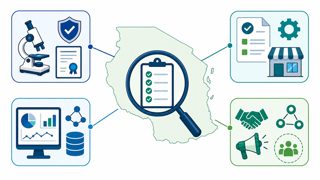
The final evaluation of the EU-funded “Quality Standards and Compliance Programme for the United Republic of Tanzania” (QUALITAN), implemented by UNIDO under the wider Business Environment, Growth and Innovation (BEGIN) programme aimed to increase MSME compliance with quality standards in order to widen market access, reduce standards compliance costs and enhance consumer protection.
The evaluation has a twofold objective: first, to provide the European Union and interested stakeholders with an independent assessment of QUALITAN’s performance, including the results achieved at different levels and the factors explaining those results; and second, to identify lessons learned, conclusions and recommendations to inform current and future interventions.
More specifically, the evaluation will assess progress against the project’s original objectives and expected results; examine the sustainability of benefits; assess the contribution and effectiveness of stakeholders and governance structures; and identify the major constraints faced during implementation.
The evaluation covers the full QUALITAN implementation period, from 1 January 2022 to 24 July 2025.
While QUALITAN is part of BEGIN, the evaluation focuses on the QUALITAN component only. It will consider links with BEGIN, the Blueprint reform agenda and Tanzania’s wider quality infrastructure system only where these are relevant to QUALITAN’s performance, coherence, sustainability and EU added value.
The evaluation will use a theory-based, mixed-methods approach structured around the OECD-DAC criteria, EU added value, the reconstructed Theory of Change and the Evaluation Matrix. The approach is designed not only to assess what was achieved, but also to explain why results varied across components and how QUALITAN contributed to observed changes.
The main analytical approach will be contribution analysis, testing the plausibility of QUALITAN’s intervention logic and assessing whether the project contributed to results in areas such as conformity assessment capacity, standardisation, MSME outreach, digitalisation, governance and communication.
The evaluation will assess QUALITAN against the following main areas: relevance, coherence, effectiveness, efficiency, sustainability, perspective of impact and EU added value. It will also integrate cross-cutting issues, including gender equality, youth, disability, Leave No One Behind, human rights-based approaches, environment and climate considerations, and contributions to SDG 8 and SDG 9.
- Schlagwörter:
- Handel, Industrie und Privatsektorentwicklung, Institutionelle Entwicklung, Monitoring und Evaluierung

Joint Efforts for a Green Future: Evaluation on Finland's Development Cooperation in Environment and Sustainable Use of Natural Resources and Private Sector Opportunities
- 2024 – 2026
- unter 500.000 €
- Global
This evaluation aims to provide the Ministry for Foreign Affairs (MFA) of Finland and its stakeholders with an in-depth understanding of the achievements, merits, and value of implementing the policy priority area on sustainable management and use of natural resources. It seeks to deliver evidence-based recommendations to enhance the effectiveness of Finland's engagement with this theme over the long term, while also increasing awareness of results achieved and lessons learned. Additionally, the evaluation will expand knowledge on environment and natural resources-related Sustainable Development Goals (SDGs), with particular attention to SDG 17 on partnerships.
The evaluation encompasses four standalone evaluations on four of the sub-sectors under Finland's ‘Climate and Natural Resources’ policy priority area: i) forests and biodiversity; ii) water resources management; iii) energy, circular economy and critical minerals; and iv) disaster risk reduction (DRR), including meteorology. A synthesis report integrates key findings from the four evaluation reports, explores interlinkages, provides meta-level insights, and identifies concrete opportunities for Finnish private sector engagement. The evaluation also examines digitalisation and data management in forestry sectors in Tanzania and Vietnam, as well as delves deeper into the energy sector in Ukraine.
Objectives:
Assess results, successes, and challenges in achieving the objectives of this policy priority area and its sub-sectors.
Provide a synthesis of outcomes and impacts, including early and emengrgi impacts.
Identify and analyse opportunities for engaging Finnish private sector actors in this work.
Develop practical, evidence-based recommendations for future policy and operational approaches, considering financial and resource constraints. This includes exploring the potential of geospatial data and geo-referencing for monitoring and evaluation purposes.
The evaluation focuses primarily on the OECD DAC criteria of effectiveness and impact, with a particular emphasis on tangible results and signs of impact from both ongoing and completed interventions.
- Schlagwörter:
- Energie, Forstwirtschaft, Industrie und Privatsektorentwicklung, Monitoring und Evaluierung, Umwelt
End-term evaluation (ETE) of the Water and Sanitation Kigoma Region Project (WASKIRP)
- 2024 – 2025
- unter 500.000 €
- Tanzania
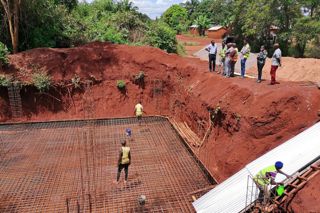
Enabel commissioned the end-term evaluation (ETE) of the Water and Sanitation Kigoma Region Project (WASKIRP).
The WASKIRP project was aligned with Tanzania's development goals under the Water Sector Development Programme (WSDP) (2006–2025) by enhancing water infrastructure, supporting Community-Based Water Supply Organisations (CBWSOs), and providing Water, Sanitation, and Health (WASH) training to ensure sustainable village water services. The initiative, backed by an initial budget of €8.8 million (€8 million from Belgium and €800,000 from Tanzania), collaborated with local authorities, including the Rural Water and Sanitation Agency (RUWASA) and community leaders, to address water supply challenges across six districts in the Kigoma region, serving approximately 200,000 residents across 15 villages.
The end-term evaluation aimed to generate evidence-based findings that highlighted both the project's positive impacts and its added value, while also identifying areas requiring further attention from the WASKIRP phase-out intervention team and the Enabel formulation teams.
Beyond assessing project performance, the evaluation provided actionable and realistic recommendations aligned with its objectives, offering valuable guidance for future interventions in similar sectors.
A key component of the evaluation was the extraction of lessons learned from both the project formulation and implementation phases, emphasising experiences—both positive and negative—that had influenced performance, achievement of results, and impact generation.
The ETE covered all OECD-DAC evaluation criteria (relevance, coherence, efficiency, effectiveness, impact, and sustainability), albeit at varying levels of depth. The primary focus was on the specific analysis of efficiency, effectiveness, and sustainability. The evaluation was conducted in accordance with the principles and criteria established by the OECD and the DAC for Development Aid, with adjustments made by Enabel.
It integrated cross-cutting themes such as gender and the environment, as well as horizontal aspects, including results-based steering and monitoring. In line with the human rights-based approach, special attention was given to gender in this intervention, which was designed to be as environmentally neutral as possible.
- Schlagwörter:
- Infrastruktur, Monitoring und Evaluierung, Umwelt

Appraisal of the Tax Sector Support to Tanzania (TAXTAN) programme
- 2024 – 2024
- unter 500.000 €
- Tanzania
Domestic Revenue Mobilization through a fair and efficient tax system is critical to the achievement of Tanzania’s Five Year development Plan III and the Sustainable Development Goals.
The Tax Sector Support to Tanzania (TAXTAN) derived from the needs that the Tanzania Revenue Authority (TRA) has for the implementation of its Sixth Corporate Plan (CP6), which has the themes of operational excellence, taxpayer’s engagement, automation, and innovation.
The objective of the appraisal was to adjust the Programme Document. The appraisal was expected to propose feasible solutions to accommodate the agreed changes to the design of the Programme, for example to the organizational structures, implementation strategy, resource allocations and budget. Other issue to assess were the TRA’s current partners and donors and the modality and field of their cooperation and to take these into consideration while revising the Programme Document.
The appraisal focused on the feasibility of the programme. Feasibility included overall feasibility, feasibility of the management, implementation and financial arrangements and sector specific considerations. The appraisal also covered relevant aspects concerning relevance, effectiveness and sustainability of the programme. The appraisal also assessed the relevance of the programme in the light of Finland’s new government programme.
- Schlagwörter:
- Institutionelle Entwicklung, Öffentliche Finanzen / Haushaltsplanung, Regierungsführung

Meta-analysis of Country Programmes 2021–2024
- 2023 – 2024
- unter 500.000 €
- Global
The purpose of the meta-analysis of the 2021-2024 Country Programmes in Finland's 10 partner countries was to support the achievement of Finland’s development policy objectives in the partner countries, and to provide information for the further development of the Country Programmes and their implementation at the strategic level. The meta-analysis and its recommendations supported the regional departments in the programming of the next generation of Country Programmes, and in their subsequent management.
The meta-analysis comprised a desk review of available information and stakeholder feedback (phase 1) as well as self-assessment workshops with each country team, to assess contributions to results and to discuss further scenarios.
The specific objectives of the analysis were:
1. To synthesise key developments in the 10 partner countries with relevance for the respective Country Programmes
2. To assess the degree and usefulness of adaptive management of the Country Programmes during the current programme cycle
3. To assess the degree to which Country Programmes have contributed to intended (or unintended) Country Programme results and to analyse the factors explaining these contributions (or the absence of contributions)
4. To assess the sustainability of Country Programme results
5. To assess the value-add of Country Programmes compared to planning and implementing separate projects
6. To support the preparation of the next cycle of Country Programmes
- Partner:
- Particip (federführend), NIRAS
- Schlagwörter:
- Monitoring und Evaluierung

Appraisal of the “Forestry, Land Use and Value Chains Development in Tanzania” (FORLAND) programme
- 2024 – 2024
- unter 500.000 €
- Tanzania
The objective of the appraisal was to assess the feasibility of the new draft programme, called “Forestry, Land Use and Value Chains Development in Tanzania” (FORLAND). It offered a thorough assessment of the draft project document's potential to serve as a practical and achievable guide for programme implementation. This assessment encompassed an examination of the overall feasibility, feasibility of management, implementation and financial arrangements, sector-specific factors, and the sustainability of the program. Furthermore, the appraisal determined whether the project adequately catered to the needs of its main beneficiaries and stakeholders. It also entailed identifying any potential challenges and proposing viable solutions or alternative methods to address them.
In addition, the appraisal reviewed the result orientation of the programme and likely effectiveness in Tanzania, as well as the integration of human rights based approach and cross-cutting objectives into the programme plan.
- Schlagwörter:
- Forstwirtschaft, Industrie und Privatsektorentwicklung, Ländliche und städtische Entwicklung, Monitoring und Evaluierung, Umwelt

External Review and Evaluation Services of forest programmes in Tanzania
- 2020 – 2024
- 500.000 € – 1 Million €
- Tanzania
The main purpose of this project was to conduct reviews and evaluations alongside the implementation of three different Forestry Programmes in Tanzania. These are:
- Participatory Plantation Forestry Programme phase 2 (PFP2),
- Forestry and Value Chain Development Programme (FORVAC) and
- Tree Outgrowers Support Programme (TOSP).
The Finnish support to PFP2, FORVAC and TOSP aimed at increasing rural income, social and environmental benefits in Tanzania thereby reducing poverty and inequality. This is achieved through developing sustainable plantation forestry, sustainable management and utilization of natural forests, and value addition including employment creation in the entire forest production value chain. The interventions support sustainable land-use planning, plantation, community-based forest management, facilitation of local organisations, including Tree Growers Associations (TGAs), and capacity building of tree growers, small and medium sized enterprises (SMEs), service providers and other stakeholders involved in the forest value chain.
The reviews and mid-term evaluations were conducted for accountability and learning purposes as well as for supporting strategic and adaptive management of MFA Finland funds.
The services were carried out in 2020–2023. They included the following:
- Annual reviews of the three programmes
- Mid-term evaluation of FORVAC and PFP2
- Socio Economic Assessment
- Final synthesis report
The evaluation team implemented an annual field mission in the beginning of the calendar year and the analysis fed into the preparation of the programme annual plans. The synthesis report summarised the analysis, recommendations and lessons learned throughout the assignment.
- Partner:
- Particip (federführend), NIRAS
- Schlagwörter:
- Forstwirtschaft, Ländliche und städtische Entwicklung, Monitoring und Evaluierung, Regierungsführung, Zivilgesellschaft

Good Financial Governance - Consulting service to support Internal Audit System
- 2021 – 2024
- 1 – 2 Millionen €
- Tanzania
The Good Financial Governance II programme (GFG II, August 2020 – January 2024) built on the successful implementation of the GFG I programme (May 2016 – July 2020). The overall objective was to ensure the public finance system is strengthened in accordance with the principles of good financial governance, specifically transparency, efficiency and accountability.
The consortium implemented Field of Action 2 under the GFG II programme, which focused on strengthening the internal audit function across the Tanzanian public sector by enabling conditions for an effective internal audit in the public sector in Tanzania with the continued ambition that the internal audit reports of Internal Audit Units (IAUs) in Ministries, Departments, Agencies (MDAs) and Local Government Authorities (LGAs), may achieve international standards for Internal Audit. This was mainly done via support in two key areas, which were the provision of capacity building measures at organisational and individual level (on-the-job trainings, workshops and formal certification trainings) and the development / updating of audit guidance documents (Internal Audit, Risk Management, Quality Assurance and Improvement, Performance Audit, and Gender Audit)
Results achieved:
- 23 out of 30 internal audit units of ministries, departments, and agencies (MDAs) and local government authorities (LGAs) improved their internal audit reports’ conformance with international standards by one step (based on standards of the Institute of Internal Auditors, IIA)
- Conditions for an effective internal audit function improved in line with the MoFP's 'strategy for the further development of the internal audit system in the public sector of Tanzania'.
- 5 guidance documents were newly developed or revised to address recurrent issues of the Internal Audit strategy, of which 3 were adopted and 2 were in the approval process by the Ministry of Finance and Planning (MoFP) by the end of the contract.
- 3 measures for improved knowledge management were developed for the Internal Audit General Division (IAGD) and Internal Audit Units of partner LGAs/MDAs.
- 3 measures, agreed upon in a MoFP action plan to establish independent and effective audit committees in the Tanzanian public sector were developed.
- Partner:
- Particip (federführend), EY Germany, EY Tanzania
- Schlagwörter:
- Aus- und Fortbildung, Institutionelle Entwicklung, Öffentliche Finanzen / Haushaltsplanung, Projektdurchführung / technische Hilfe, Regierungsführung, Zivilgesellschaft

Mid-term Review of the Beekeeping Value Chain Support (BEVAC) Programme in Tanzania
- 2023 – 2023
- unter 500.000 €
- Tanzania
The mid-term review of the Beekeeping Value Chain Support (BEVAC) Programme in Tanzania was commissioned by Enabel.
BEVAC aims to enhance the beekeeping industry's contribution to inclusive economic growth in Tanzania. The specific objective is that quality honey produced in an environmentally sustainable manner leads to increased market penetration. BEVAC runs from 2021 to 2024 in seven regions of Tanzania (Kigoma, Katavi, Tabora, Singida, Shinyanga, North Pemba and South Pemba) with a total budget of EUR 10 million.
The mid-term review served the purposes of accountability (through performance assessment), and learning and steering (by explaining what works and does not work, and why, as well as through evidence-based lessons for other interventions and recommendations for decision-making). It addressed the six evaluation criteria of relevance, coherence, efficiency, effectiveness, impact and sustainability, as well as the cross-cutting issues of gender and youth empowerment, among others.
Qualitative data were collected during a two-week field mission (including stakeholder interviews, focus group discussions with leadership and members of cooperatives, and direct observation) and in remote interviews. The review also drew on documents and existing quantitative M&E and survey data.
- Schlagwörter:
- Landwirtschaft, Monitoring und Evaluierung

Mid-term evaluation of the implementation of the EU Gender Action Plan III (2021-2025)
- 2022 – 2023
- unter 500.000 €
- Global
The main objectives of this assignment are to: i) provide an independent evidence-based assessment of the contribution of EU external action support in the policy area of Gender Equality and Women’s Empowerment (GEWE), including achieved results in line with the objectives of the GAP III, the EU Gender Equality Strategy 2020-2025 and other relevant overall policy frameworks for gender equality such as the Agenda 2030, CEDAW, the Beijing Platform for Action, and ii) based on the above, identify lessons learnt and recommendations to inform the EU programming process in order to improve the implementation of future EU external action.
In particular, this evaluation aims to:
- measure the level of effectiveness of mainstreaming GEWE into the 2021-2027 bilateral, multi-country/regional, and thematic programming (including MIPs and, for the Enlargement Region, Strategic Responses);
- assess the added value of GAP III requirements for the EU and EU Member States (EU MS) to develop GAP III Country Level Implementation Plans (CLIPs);
- assess the progress in the implementation of the EU Action Plan on WPS including in the EU's Common Foreign and Security Policy (CFSP)/ Common Security and Defence Policy (CSDP) context;
- assess results achieved on Women’s Economic Empowerment (WEE), which is part of GAP III’s third pillar on key thematic areas of engagement;
- identify lessons learnt and best good practices that can help improve the effective implementation of GAP III at global, regional and country level;
- provide recommendations to ensure a coherent EU approach on supporting WEE, as well as the effectiveness of the EU actions.
- Schlagwörter:
- Menschenrechte, Monitoring und Evaluierung, Zivilgesellschaft
End-term review of the Sustainable Agriculture Kigoma Regional Project (SAKIRP)
- 2023 – 2023
- unter 500.000 €
- Tanzania
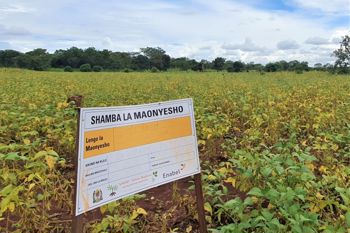
The end-term review of the "Sustainable Agriculture Kigoma Regional Project" (SAKIRP) was commissioned by Enabel.
SAKIRP was an agricultural value chain improvement project with the aim of developing smallholder agriculture into Farming as a Business through better value chain organisation, increased collective aggregation, and better access to markets and credits for smallholder farmers. It ran from June 2016 to May 2023 in all six rural districts of the Kigoma region of Tanzania with a total budget of 8.8 million EUR.
The end-term review served the purposes of accountability (through performance assessment), and learning and steering (by explaining what works and does not work, and why, as well as through evidence-based lessons for other interventions and recommendations for decision-making). It addressed the six evaluation criteria of relevance, coherence, efficiency, effectiveness, impact and sustainability, as well as the cross-cutting issues of gender and environment, among others.
Qualitative data were collected during a two-week field mission (including stakeholder interviews, focus group discussions with leadership and members of cooperatives, and direct observation) and in remote interviews. The review also drew on documents and existing quantitative M&E and survey data.
The executive summary of the review is available on the Enabel website:
https://open.enabel.be/fr/2157/doc/42637/etr-summary
- Schlagwörter:
- Industrie und Privatsektorentwicklung, Infrastruktur, Landwirtschaft, Monitoring und Evaluierung

Evaluation of the Finnish Development Policy Influencing in the European Union
- 2021 – 2022
- unter 500.000 €
- Global
The Ministry for Foreign Affairs of Finland (MFA) commissioned an evaluation of Finnish Development Policy Influencing in the European Union. The purpose of this evaluation was to assess the relevance, effectiveness and coherence of the different development policy influencing activities of the Finnish MFA in relation to the EU and its institutions, and to provide guidance to the Ministry on further strengthening of the influencing activities for the future. The evaluation was mostly forward-looking and utilization focused, providing strategic information to inform future developments of the influencing agenda.
The objectives of this evaluation were:
- To assess how Finland has managed to promote Agenda2030, Building Back Better (and Greener), and Finland’s Development Policy objectives in the EU, as well as the common development cooperation practices and principles by the member states.
- To assess the effectiveness of various influencing activities, means and channels and Finland’s best opportunities to influence (intuitions and bodies, country delegations, interventions etc.) taking into account available human and financial resources.
- To analyze the factors (structures, processes, tools, capacity, other) that have facilitated/enabled or hindered the positive results of the influencing activities.
- To provide insight on the best opportunities and ways to engage and influence in the future, especially under the new EU funding instrument and the evolving development cooperation scene.
- To provide insight on how the Ministry together with other relevant stakeholders could develop their practices in order to maximize influence for the future, taking into account available human and financial resources.
- Partner:
- Particip (federführend), Niras Finland Oy
- Schlagwörter:
- Bildung, Forstwirtschaft, Menschenrechte, Monitoring und Evaluierung, Regierungsführung, Umwelt

Strengthening the Policy Frameworks for Transboundary Water Resources Management in the Nile Basin
- 2020 – 2022
- unter 500.000 €
- Burundi, Congo (Brazzaville), Egypt, Ethiopia, Kenya, Rwanda, South Sudan, Sudan, Tanzania, Uganda
The Nile Basin Initiative (NBI) is a partnership of the 10 Nile Basin riparian states with a shared vision objective to promote sustainable socio-economic development through the equitable utilization of and benefit from the shared Nile Basin water resources. Nile Basin countries face increasing challenges of meeting the requirements of their rapidly growing populations in the face of dwindling resources that are threatened by emerging pressures like climate change, land use change and degradation, urbanization, etc. The challenges result in increased efforts at utilization of the Nile waters for agricultural, domestic, industrial and environmental purposes. Countries are embarking on large-scale developments for water utilization and water-related use in riparian countries which have major implications for current and future availability of water resources.
The assignment took the basin perspective and looked at the transboundary governance mechanisms in place. Especially national level arrangements such as policies and Transboundary Water Management (TWM) units served the various transboundary mechanisms a country subscribes to at the same time.
The objective was to facilitate and document a joint review and learning process on provisions for transboundary cooperation in national policies and related institutional arrangements.
The primary work of the project consisted of the following tasks:
- Task 1: Finalization of the NBI Policy Handbook
- Task 2: Guidance Document on key TWM principles for national water policies
- Task 3: Review of experience and mapping of cross-border cooperation arrangements in Nile Basin
- Task 4: Review of experience of the national level organizational arrangements for TWM
- Task 5: Collaborative assessment of progress of implementation of TWM principles in
National Water Policies
- Task 6: Action plan for transboundary water policy at national and regional level
- Task 7: Policy Synthesis Report – Status of TWM governance and Implementation of
SDG 6.5.2. in the Nile Basin
- Task 8: Blended Learning Module
- Prepare and facilitate Policy Roundtables
- Schlagwörter:
- Aus- und Fortbildung, Umwelt

Final Evaluation of Support to Food Security and Nutrition in Tanzania
- 2022 – 2022
- unter 500.000 €
- Tanzania
Systematic and timely evaluation of its programmes and activities is an established priority of the European Commission. The focus of evaluations was on the assessment of achievements, the quality and the results of Interventions in the context of an evolving cooperation policy with an increasing emphasis on result-oriented approaches and the contribution towards the implementation of the SDGs.
The main objectives of this evaluation were to provide the relevant services of the European Union, the interested stakeholders and the wider public with:
- an overall independent assessment of the past performance of the project: Improving food and nutrition security in Dodoma and Singida Regions, Tanzania - Boresha Lishe, paying particular attention to its results measured against its expected objectives; and the reasons underpinning such results;
- key lessons learned, conclusions and related recommendations in order to improve future interventions.
The main users of this evaluation were the EU Delegation to Tanzania, WFP, Save the Children and the Government of Tanzania being the PMO’s Office, PORALG, Ministry of Agriculture, TFNC and the Ministry of Finance and Planning NAO office.
- Partner:
- EMI (formerly: Cardno Belgium) (federführend), CAPA EEIG (managed by Particip), Expertise Advisors (formerly: ETI Consulting), Particip
- Schlagwörter:
- Ernährung, Monitoring und Evaluierung

This evaluation assessed how Finland’s objectives related to economic development, job creation and livelihoods, manifested in the Priority Area 2 (PA2), but not only limited to it, are being fulfilled through the various thematic approaches, cooperation modalities and funding instruments. An essential aspect of the evaluation was to provide guidance on how Finland might tailor its efforts, elaborating on what Finland’s strengths and “unique competencies” are in the division of labour in the donor community. Included in the Evaluation were also Finland’s Private Sector Instruments (PSI), i.e. Finland’s Development Finance Institution, Finnfund, the seed-funding and match-making programme Finnpartnership (FP), the innovation focused Business with Impact (BEAM) programme and the mixed credit scheme Public Sector Investment Facility (PIF).
The evaluation’s specific objectives were as follows:
- To assess to what extent and how the objectives of the Priority Area 2 on economic development, jobs and livelihoods are being achieved and how relevant and effective the interventions have been in relation to partner country needs.
- To determine what the Ministry of Foreign Affairs can learn from its peer organisations, especially the Nordics as well as from emerging international 'best practices' for more relevant, effective and coordinated support for economic development, jobs and livelihood opportunities.
- To suggest how the effectiveness of Finnish development cooperation related to economic development can be be further developed, including if and how the Results-based Management system can be strengthened.
The evaluation entailed the following:
- Mapping of the PA2 portfolio and the Private Sector instruments in order to investigate what Finland in fact has been doing 2016-2019 in this respect;
- Assessing what have been the results of these interventions in terms of improved economies and more jobs and livelihood opportunities in particular for women, youth and the poor;
- Looking deeper into certain sectors/themes of the PA2 portfolio of specific interest either due to overall significant resource flow under PA2 (energy); perceived comparative advantage by Finland (innovation); policy concern by MFA (women economic empowerment and taxation).
The final report is available here: https://um.fi/publications/-/asset_publisher/TVOLgBmLyZvu/content/evaluointiraportti-suomen-tuki-kumppanimaiden-talouden-vahvistamiseksi-ty-c3-b6paikkojen-luomiseksi-ja-toimeentulon-parantamiseksi/384998
- Partner:
- Particip (federführend), NIRAS
- Schlagwörter:
- Industrie und Privatsektorentwicklung, Makroökonomie / nationale Politik, Monitoring und Evaluierung

Evaluation of the Results-Based Financing for Low Carbon Energy Access Facility (RBFF) within Energising Development (EnDev)
- 2015 – 2020
- 500.000 € – 1 Million €
- Global
The overall objective was to evaluate the Results-Based Financing (RBF) for Low Carbon Energy Access Facility within the Energising Development (EnDev) Programme. The specific purposes of this evaluation were (i) to assess the performance of the RBF Facility over the period 2012-2020 against key OECD/DAC evaluation criteria, (ii) to understand and disseminate what had worked in which circumstances and why, and (iii) to derive lessons learned and recommendations for future programmes in RBF, energy access support through private sector development, and climate finance more broadly.
EnDev piloted an RBF scheme offering incentive payments to private sector market actors in the low-carbon off-grid energy sector in developing countries. Payments were made against pre-specified results achieved in delivery and sustainable operation of modern energy technologies and services.The aim of the RBF Facility within the global EnDev programme was to (i) increase access to modern energy services in developing countries (including vulnerable groups) (ii) through the use of decentralised renewable energy products and services, (iii) delivered as market-based approaches through private sector actors.
The scope of the evaluation encompassed 17 different RBF projects within the global EnDev programme. The evaluation focused on market changes and private sectors responses – such as market efficiency, business development, distribution strategies and technology adoption –, but also analysed the consumer perspective and the interaction with sector policies and regulation by national governments.
Outputs included:
- Inception Report.
- Baseline Report (review of existing baseline studies).
- Internal Process Review.
- A Mid-term Evaluation, including a set of project evaluations and a portfolio review.
- Deep impact studies of one selected country project in Tanzania.
- A cross-portfolio survey targeting RBF participants.
- Final Evaluation, including a set of project evaluations and a portfolio review.
- Concept notes for the various evaluation products.
- Networking conferences with individual projects to foster knowledge-sharing and learning experiences based on the above products and between projects.
Nine countries were targeted for field and remote evaluation: Bangladesh, Benin, Cambodia, Kenya, Peru, Rwanda, Tanzania, Uganda, Vietnam.
- Partner:
- Particip (federführend), Arepo Consult
- Schlagwörter:
- Energie, Industrie und Privatsektorentwicklung, Monitoring und Evaluierung
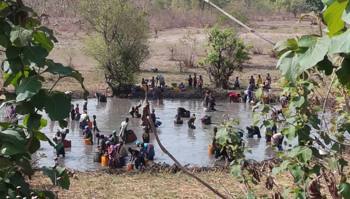
Evaluation of the Belgian Fund for Food Security (BFFS), the integration of food security and the multi-stakeholder approach within the Belgian Development Cooperation
- 2018 – 2019
- unter 500.000 €
- Benin, Burundi, Guinea (Conakry), Mali, Mozambique, Tanzania
The objectives of the evaluation were as follow:
- Draw lessons learned from the implementation of the FBSA from the results observed in terms of food security with its 4 dimensions (summative evaluation).
- Assess the measures that have been taken to integrate the issue of agriculture and food security into Belgian cooperation.
- Assess the specificity and added value of the multi-stakeholder and multi-dimensional approach for Belgian Cooperation in the field of food security.
Thus, the evaluation is i) backward-looking, covering the implementation of the BFFS in its multidimensional approach based on the four pillars of food security (FAO) and its multi-actor approach; and ii) forward-looking, covering the food security dimension of the new programming of Belgian cooperation. The temporal scope extends from 2010, the year of the creation of the BFFS, to the time of the evaluation in 2019.
The evaluation team conducted 6 country case studies, notably for the five countries in which a BFFS multi-actor programme was carried out from 2012 to 2019: Mali, Mozambique, Burundi, Tanzania and Benin. A sixth case study was carried out on Guinea where a new bilateral programme had been launched, in order to meet the second objective which is to assess the measures taken to integrate agriculture and food security into the new programming of Belgian cooperation. In addition, an online survey was conducted among all actors involved in the implementation of the BFFS programmes.
The published report can be found here: https://diplomatie.belgium.be/sites/default/files/downloads/fbsa-fr-digital-complet.pdf
- Schlagwörter:
- Ernährung, Landwirtschaft, Monitoring und Evaluierung
Video production and Animation for DEVCO online Communications
- 2018 – 2019
- unter 500.000 €
- Belgium, Jordan, Madagascar, Tanzania
The objective of this contract was to provide DEVCO.C.7 with professional video and animation expertise, including production and editing.
DEVCO.C.7 wanted to make sure that EU citizens and stakeholders are informed about the EIP and its implementation, as well as the results in the context of EU international cooperation and development and neighbourhood policies. In order to do so, it needed to reflect achievements in the formats that appeal to audiences today on online channels. More and more, these include short videos, animated data visualisations and animations.
Therefore, the specific objectives of this contract were as follows:
- Regular development of short videos to feed social media channels and other online channels with the latest news about the work of the EU External Investment Plan (EIP) and its achievements in the field, mostly in English but also occasionally in other languages
- Less frequently, production of animated data visualisations and short animations to better explain to its audiences’ issues which are easier to illustrate with video or photo material. All outputs should apply a consistent visual identity in line with Commission’s Visual Identity Guidelines.
- Schlagwörter:
- Kommunikation und Medien

The overall objective of this assignment was to establish a Helpdesk in the area of democratic governance with the aim to support the NAO office and EUDEL in the formulation and implementation of governance portfolio. Special attention was given to translating the priorities of the new European Consensus on Development into consistent projects and programmes under formulation.
The specific purpose of the assignment was to provide regular support to the NAO Office and EUDEL in the area of democratic governance, providing ad hoc support for identification, formulation and monitoring of governance-related programs/projects and exercises.
The experts identifies complementarities and synergies amongst different instruments and programs (EDF and budget lines) and across different focal sectors (governance, agriculture, energy) and in terms of peace related issues.
- Partner:
- Particip (federführend)
- Schlagwörter:
- Regierungsführung

Evaluation of the Agriculture, Rural Development and Forest Sector programmes in Africa
- 2018 – 2019
- unter 500.000 €
- Africa
The objective of the evaluation was to identify relevant and effective approaches, methodologies, instruments in the Agriculture, Rural Development and Forest sectors’ interventions to support the implementation of current programmes and the planning of possible future cooperation in the Agriculture, Rural Development and Forest Sector.
The evaluation was based on a selection of eight Finnish bilateral programmes in agriculture, rural development and forest sectors in Africa. They represent different approaches, methodologies, ecosystems and geographical areas in Kenya, Tanzania, Zambia, Mozambique and Ethiopia. However, all selected programmes focused on improving livelihoods and reducing poverty through agriculture or forest sector development, providing institutional support and capacity building, and contributing to socio-economic development.
The main issues to be addressed were:
- How can Finnish co-operation efforts best contribute to the achievement of the SDGs – as well as other relevant international agreements – through ARDF sectors making optimal use of its comparative advantages?
- Under what conditions can a value chain approach increase finance and investment in sustainable forestry and agriculture- while benefiting final beneficiaries in a sustainable way?
- How can cross-cutting objectives and HRBA be successfully integrated and implemented, in such a way that they support achievement of the Finnish development cooperation objectives and objectives of the projects?
- What are key success factors for achievement of ’reduced poverty and inequality’, in particular in terms of benefits for women, vulnerable groups, and small and medium-size farmers?
- How can investment in sustainable land use and land management be made inclusive of smallholder and community needs while being attractive to investors at the same time?
- Which implementation approaches are most appropriate - in terms of scale, modality/instrument, channel and/or implementing organisations in future?
- What type of monitoring and evaluation system is most appropriate for outcome monitoring of Finnish projects in the context of wider support for achievement of SDGs?
- How have the lessons learnt from other donors and development organizations been taken into account or implemented at project level and what kind of approaches do the organizations have for future challenges in the sector?
- How can ’Finnish added value’ in the AFRD sector be realised (e.g. through access to Finnish markets and expertise or to Finland’s experience in creating a favourable business environment)?
The final report is available here: https://um.fi/publications/-/asset_publisher/TVOLgBmLyZvu/content/evaluointi-maatalous-maaseutukehitys-ja-metsasektorin-kehityshankkeista-afrikassa/384998
- Partner:
- Particip (federführend), Niras Finland Oy
- Schlagwörter:
- Forstwirtschaft, Landwirtschaft, Monitoring und Evaluierung, Regierungsführung, Umwelt

The purpose of this assignment is to collect, collate and systematically present, in the form of Evaluation Portraits and Country Evaluation Briefs, findings from existing evaluations and other documents of development interventions in five Norwegian partner countries: Ethiopia, Haiti, Mali, Myanmar, Nepal and Tanzania.
The objective of this assignment is to provide accessible and relevant knowledge about Norwegian and other donors’ development efforts in Norway’s partner countries through systematising findings from existing evaluations of development interventions. The exercise emphasises learning, supplementing a growing database of systematised, relevant, context-specific and accessible information. Beyond its intrinsic value, this knowledge forms a basis for development policies and strategies, contributes to development efforts in the field and reveals knowledge gaps that could be covered by future evaluations.
The main target groups for the study are the Norwegian Ministry of Foreign Affairs, Norad and Norwegian embassies in the selected partner countries and elsewhere.
The assignment is guided by the following questions:
- What are the key contextual features characterising each of the studied case countries?
- How do these contextual features affect development interventions in the respective country/-ies?
- What is the nature of the programmes and projects studied, including levels of development support?
- What are the major obstacles/challenges faced by those interventions?
- What are the major findings in the assessed material concerning the goals, methods, challenges, results and sustainability of the interventions studied?
- How do the programmes and projects perform in terms of such cross-cutting issues as gender equality, environmental concerns and anti-corruption?
- Which, intended and, if any, unintended effects of the programmes and projects, positive and negative, can be identified?
- Partner:
- Particip (federführend), Menon
- Schlagwörter:
- Monitoring und Evaluierung
The Finnish Fund for Industrial Cooperation (Finnfund) is the national Development Finance Institution (DFI) of Finland. Finnfund provides equity, loans and guarantees to private sector companies in developing countries and has as its’ overarching objective to further the economic and social development of its’ target countries.
The objective of the assignment is to evaluate how well Finnfund has implemented its’ mandate during the period 2008-2017, as defined by the Finnfund Act and the annual Ownership Steering Memorandums (OSMs) by the MFA. Core evaluation issues will be
- relevance and additionality;
- commercial risk management;
- environmental, social and human rights related risk management; and
- effectiveness in delivering desired outputs.
The evaluation will assess these issues through a desk study, interviews with key stakeholders in Finland, a benchmarking exercise comparing Finnfund to similar DFIs of other donors and field visits to three case study countries.
The results of the evaluation will feed into the development of Finland’s new development policy programme expected for the period 2020-2023.
The report is available at:
https://um.fi/publications/-/asset_publisher/TVOLgBmLyZvu/content/evaluointi-kehitysrahoitusyhtio-finnfundin-toiminnas-2/384998?curAsset=0&stId=44227
- Partner:
- Particip (federführend), Indufor Oy - Metsahallitus Group
- Schlagwörter:
- Energie, Industrie und Privatsektorentwicklung, Monitoring und Evaluierung, Umwelt

Final Evaluation of the Project “Enhancement of Procurement Capacity of Local Government Authorities in Tanzania”
- 2017 – 2017
- unter 500.000 €
- Tanzania
The project “Enhancement of Procurement Capacity of Local Government Authorities in Tanzania” contributed to ensuring systems and structures of governance to uphold the rule of law which are democratic, effective, accountable, predictable, transparent, inclusive and corruption free at all levels.
The evaluation provided answered to "how" and "why" questions and was essential for assessing the value of the achieved results and of the implementation process of the whole intervention.
The evaluation served the following functions:
- To support steering. On the basis of in-depth analyses, the review offered useful recommendations that are based on data (evidence-based).
- To contribute to learning. By analysing the development process, the review allowed to explain what works, what does not work and why, and to thus draw lessons for other interventions or for the elaboration of new policies, strategies and programmes.
- Accountability to the donor, partner and other internal actors by supplying an external assessment of the progress made and the results achieved.
- Partner:
- Particip (federführend), MDF Brussels
- Schlagwörter:
- Institutionelle Entwicklung, Justiz / Rechtsstaatlichkeit, Monitoring und Evaluierung, Regierungsführung