Papua New Guinea
9 Referenzen

Technical Assistance support to the WASH sector on Bougainville
- 2024 – 2026
- 500.000 € – 1 Million €
- Papua New Guinea
The overall objective (Impact) to which this action contributes is to improve gender responsive Water, Sanitation and Hygiene (WaSH) services and practices in the Autonomous Region of Bougainville (AROB) based on the EU-PNG MIP 2021-2027 and in line with current agreed processes of the drawdown of powers.
The specific objective of this action is to improve governance and institutional capacity of mandated authorities for WaSH service delivery in Bougainville.
- Partner:
- EMI (federführend), CAPA EEIG (managed by Particip), Particip
- Schlagwörter:
- Aus- und Fortbildung, Gesundheit
Final Evaluation of the Support to Rural Entrepreneurship, Investment and Trade in Papua New Guinea (EU-STREIT PNG) Programme
- 2025 – 2026
- unter 500.000 €
- Papua New Guinea
The Support to Rural Entrepreneurship, Investment and Trade in Papua New Guinea (EU-STREIT PNG) was the largest grant-funded project of the EU in the Pacific region at the time of the assignment. With a budget of nearly 90 million EUR, it was implemented by a consortium of five UN agencies (led by FAO) from 2020 to 2026 in the two Sepik provinces of Papua New Guinea. It aimed to foster rural development through a holistic approach that integrated the development of three agrofishery value chains (cocoa, vanilla, and fisheries) with enabling services and infrastructure, in particular business services for farmers and their organisations, financial services and digital services, rural transport infrastructure, and renewable energy.
The evaluation was commissioned by the EU Delegation to Papua New Guinea and was managed by the Delegation together with FAO and the Department of National Planning and Monitoring of PNG. Its global objective was to provide the relevant services of the EU, its development partners, and other interested stakeholders with an overall independent assessment of the performance of the programme, paying particular attention to the results achieved and the underlying reasons of these achievements. It also identified lessons learned, conclusions, and recommendations to improve current and future interventions. The evaluation scope included all programme activities over the entire implementation period.
Methodologically, the evaluation adopted a theory-based approach using mixed methods. Qualitative research included a comprehensive document review and primary data collection through remote interviews and an in-country mission in Port Moresby and the Sepik provinces to conduct face-to-face interviews, focus groups with beneficiaries, and field visits to project sites. In terms of quantitative methods, the team analysed the data available in the programme's Management Information System (STREITMIS).
The final report is available online at: https://webapps.ilo.org/ievaldiscovery/#alt4829
- Partner:
- Particip (federführend)
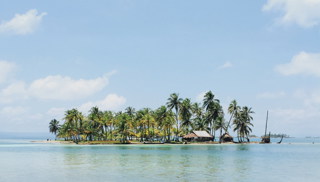
Building Resilience to Climate Change in Papua New Guinea: Project Implementation Support Consultants Provision of two Experts: Team Leader and M&E Specialist
- 2026 – 2026
- unter 500.000 €
- Papua New Guinea
The Government of Papua New Guinea has obtained a Grant from the Asian Development Bank to implement the proposed 'Building Resilience to Climate Change in Papua New Guinea (BRCC) Project'. The project will help implement PNG’s Strategic Program for Climate Resilience (SPCR) 1 aimed at achieving transformational change in addressing the current and future threats from climate change and related hazards.
The purpose of this assignment is to support the Project Management Unit (PMU) in
- Project implementation and administration
- Developing the necessary capacity development including training and transfer of skills to PMU personnel to improve their project management and implementation skills, and
- Strengthening CCDA’s overall capacity for future management and implementation of similar projects.
Experts provided:
1) Team Leader - Implementation Coordinator: The team leader provides support and assistance in leading and managing all project implementation activities under the BRCC Project. This includes support to planning, supervision, reporting, and ensuring that safeguards and monitoring standards are met. The scope covers:
- Supervision and coordination of PISC specialists.
- Oversight of physical and financial progress.
- Ensuring safeguards compliance (environmental and social).
- Facilitating communication with ADB and relevant national and provincial stakeholders.
- Preparing and submitting key project reports, including progress and completion reports as specified in this ToR.
- Supporting field monitoring, mission preparations, and reviews.
- Ensuring performance tracking and results-based management of project components
2) International M&E Specialist: The Specialist leads implementation of the Project Performance Monitoring System (PPMS), ensuring alignment with ADB’s requirements and PPCR frameworks. Tasks include developing the endline survey methodology, designing data collection tools, processing instruments, and evaluation templates, and analyzing data to determine project outcomes and the likelihood of achieving the desired impact. The role also covers mentoring of the PMU’s M&E Officer, supporting quarterly and annual reporting, and integrating findings into the overall project management and learning processes.
- Schlagwörter:
- Umwelt

Building Resilience to Climate Change in Papua New Guinea: Project Implementation Support Consultants
- 2018 – 2024
- 2 – 5 Millionen €
- Papua New Guinea
The Government of Papua New Guinea has obtained a Grant from the Asian Development Bank to implement the proposed “Building Resilience to Climate Change” (BRCC - the project). The project will provide technical assistance in order to implement PNG’s Strategic Program for Climate Resilience (SPCR) 1 aimed at achieving transformational change in addressing the current and future threats from climate change and related hazards. This will be achieved by mainstreaming climate resilience into development planning and addressing country priorities that focus on vulnerable communities of Bougainville, East New Britain, Manus, Milne Bay and Morobe provinces comprising 21 priority vulnerable islands/atolls identified through a participatory process across four sectors including (i) infrastructure, (ii) natural resources, (iii) health, and (iv) agriculture, against potential impacts from climate change and variability.
The project impact is: increased resilience to the impacts of climate change and climate variability. The outcome is: improved capacities of vulnerable islands/atoll communities, government agencies, and civil society to plan and respond to the impacts of climate change. The direct beneficiaries include approximately 13,000 inhabitants of the 21 vulnerable islands. The nationwide benefits include increased capacity to manage climate change risks through establishment of early warning systems, access to finance by communities, and development of national databases and knowledge management systems.
The purpose of this assignment is to support the Project Management Unit (PMU) in
- Project implementation and administration
- Developing the necessary capacity development including training and transfer of skills to PMU personnel to improve their project management and implementation skills, and
- Strengthening CCDA’s overall capacity for future management and implementation of similar projects.
- Schlagwörter:
- Umwelt

Evaluation of European Union's Cooperation with Papua New Guinea (2014-2021)
- 2022 – 2023
- unter 500.000 €
- Papua New Guinea
The general objective of this evaluation was twofold. Firstly, to provide the relevant external co-operation services of the European Union (EU) and the wider public with an overall independent, evidence-assessment of the EU cooperation with the Independent State of Papua New Guinea (PNG) between 2014 and 2021. And secondly, to identify key lessons and to produce recommendations in order to inform the responsible decision makers on how to improve the current and future strategies, programmes and actions of the EU in PNG.
Its specific objectives were the following:
- To assess the performance (relevance, efficiency, effectiveness, coherence, impact, sustainability and EU added value) of EU support (policy dialogue and financial assistance); and
- To provide recommendations for the next programming period.
The evaluation paid particular attention to the areas of i) Rural development and Rural Infrastructure; ii) Investment, Trade and Private Sector Development; iii) Education and Technical and Vocational Education and Training; iv) Water, Sanitation and Hygiene; iv) Good Governance including Public Finance Management; and v) Forestry, Climate Change, and Biodiversity. It led to the identification of conclusions, lessons learnt (both positive and negative), good practices regarding the achievement of the EU’s cooperation with PNG with a set of targeted and useful forward-looking recommendations for the improvement of the programming, assistance, and implementation of current EU interventions in the country.
- Schlagwörter:
- Monitoring und Evaluierung

TA-9807 PNG: Preparing the Improved Technical and Vocational Education and Training for Employment
- 2020 – 2023
- 500.000 € – 1 Million €
- Papua New Guinea
This Transaction Technical Assistance (TRTA) is provided to assist the Department of Higher Education, Research, Science and Technology (DHERST) to
- Design and prepare a project that will address key TVET challenges able to respond to labour market needs,
- Assess the technical suitability, economic, financial and social viability, capacity and institutional issues, gender issues and proposed actions, address environmental and social safeguards of the project; and
- Identify and implement selected measures to improve project implementation capacity of DHERST and other relevant government agencies.
The TA designs, undertakes due diligence and prepares project documentation for the future TVET project. The TA also assists in building the capacity of the government during their assignment, including implementing project management trainings and coaching as required.
- Schlagwörter:
- Bildung
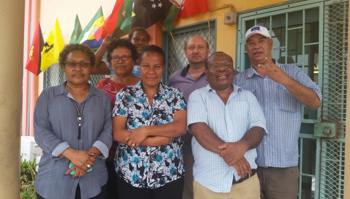
Papua New Guinea-Port Moresby: EDF – HRDP2 long-term technical assistance
- 2014 – 2020
- 2 – 5 Millionen €
- Papua New Guinea
The objective of the project was to improve vocational education at lower secondary level in order to promote the development of a skilled labour force adapted to the needs of the country. Technical and advisory services were provided to ensure the effective and timely implementation of the HRDP 2.
The expected results and related activities of our technical assistance project were:
Result 1: (Access) Increase the access to lower secondary level vocational institutions through the provision of support to:
- analysing of labour market trends and projected demand and supply at provincial level to identify vocational lower secondary infrastructure and training requirements;
- auditing human and material assets of the lower secondary VET system and decide on optimal use for grade 8 leavers;
- developing infrastructure in selected locations where lower secondary VET institution development/rehabilitation will have high impact on employment prospects for lower secondary level students;
- raising the awareness of employability prospects resulting from enrolment in quality vocational lower secondary education among families and students.
Result 2: (Quality) Improve conditions for quality education delivery through the provision of technical assistance to:
- expanding of students’ knowledge and skills through workshops and workplace coaching;
- improving managers’ and staff skills in leadership and teaching/instruction through training and updated on-the-job experience;
- increasing on-site accommodation for managers, teachers, instructors, and students of selected vocational institutions;
- implementing the School Learning Implementation Plan (SLIP) for immediate grade 8 leavers and recording students’ progress towards employment.
Result 3: (Management) Improve VET system governance, increase state capacity for cooperation and coordination at national and provincial levels, and promote a greater involvement of the business community through the provision of support to:
- producing, implementing, supervising and monitoring well-structured and budgeted TVET development plans in provinces, following project-provided capacity building in Public Financial Management;
- refining of specific sub-sector or thematic areas within the approved TVET SMP 2011-2020 as well as a VET policy plan for vocational lower secondary level (as part of the TVET SMP 2011-2020);
- facilitating the development of a national VET policy and strategy, linked to overall general education policy and consistent with national employment policy.
- facilitating the development and discussion of options for the establishment of a national VET and TVET authority.
- Partner:
- Particip (federführend), CINOP, GFA
- Schlagwörter:
- Aus- und Fortbildung, Bildung, Industrie und Privatsektorentwicklung, PCM / Logframe, Projektdurchführung / technische Hilfe

Mid-term evaluation of the Support programme to implementation of the EU- PNG Cooperation
- 2019 – 2020
- unter 500.000 €
- Papua New Guinea
From this perspective, evaluations looked for evidence of why, whether or how these results are linked to the EU intervention and seek to identify the factors driving or hindering progress.
Evaluations provided an understanding of the cause and effect links between: inputs and activities, and outputs, outcomes and impacts. Evaluations should serve accountability, decision making, learning and management purposes.
The main objectives of this evaluation were to provide the relevant services of the European Union, the interested stakeholders with:
- an overall independent assessment of the past performance of the Support Programme to Implementation of the EU-PNG Cooperation, paying particular attention to its intermediate results measured against its expected objectives; and the reasons underpinning such results
- key lessons learned, conclusions and related recommendations in order to improve current and future Actions
In particular, this evaluation served to ensure that the objectives of the Financing Agreement (FA) are achieved at the end of implementation.
As a result, the mid-term evaluation has helped to:
- assess the role and the performance of the NAO Office in managing the different tools provided by the Action, identifying priorities, allocating the appropriate resources and ensuring proper communication and information among the stakeholders;
- assess the role and the performance of the NAO Office in the context of the phasing out of the 10th EDF programmes and the implementation of the 11th EDF programmes;
- assess the role and the performance of the NAO Office in the context of an increased use of innovative financing instruments (i.e. blending);
- assess the role and the performance of the NAO Office in organizing the coordination between the different stakeholders;
- assess the effectiveness and design of the technical assistance contract component in support of the Action
- based on the findings, amend the operational set up of the Action.
The main users of this evaluation were the Delegation of the European Union to Papua New Guinea, the National Authorising Officer and the GoPNG.
- Partner:
- Particip (federführend), EuroPlus
- Schlagwörter:
- Justiz / Rechtsstaatlichkeit, Menschenrechte

Final evaluation - Institutional Capacity Building of the National Authorising Officer System in PNG - Phase II
- 2019 – 2019
- unter 500.000 €
- Papua New Guinea
The Project under the 10th EDF was designed based on lessons learnt from the Institutional Capacity Building - Phase I Project, the 2010 Result Oriented Monitoring (ROM) and the Mid-Term Review (MTR) and the subsequent analysis during formulation of ICB - Phase II which confirmed the weak ownership of the EU-PNG Development Programme and of the EDF-funded projects/programmes by the GoPNG and the implementing line departments and agencies (LDA), largely as a consequence of inadequate involvement in the programming and planning process, and as evidenced by virtual non-functioning of the Programme Steering Committee, which was to play a central role in guiding the NAO-SU.
The overall objective of the project was to contribute to the strengthening of the mobilisation, management and coordination of all development assistance to PNG, ensuring its effectiveness and alignment with national strategies and development plans.
It was expected to deliver support and capacity strengthening actions to the NAO system in order to enhance the preparation and the implementation of the PNG-EU development cooperation programme and therefore to contribute to the effectiveness of the aid provided to PNG.
It focussed on the areas of programming, planning, aid management and project management. The implementation was expected to be underpinned by effective internal and external communication and information.
The main objectives of this evaluation were to provide the relevant services of the European Union, the interested stakeholders and the wider public with:
- an overall independent assessment of the past performance of the Institutional Capacity Building of the National Authorising Officer System in PNG - Phase II, paying particular attention to its results measured against its expected objectives; and the reasons underpinning such results;
- key lessons learned, conclusions and related recommendations in order to improve current if relevant and future Actions.
- Schlagwörter:
- Institutionelle Entwicklung, Monitoring und Evaluierung