Serbia
24 Referenzen

Strengthening strategic framework in nature protection sector and further implementation of Natura 2000 in the Republic of Serbia
- 2026 – 2029
- 2 – 5 Millionen €
- Serbia
This technical assistance project supports Serbia in advancing the Natura 2000 network by strengthening strategic, regulatory and investment frameworks for nature protection, enhancing the capacities of institutions and local authorities, and promoting inclusive consultation and public awareness on biodiversity conservation.
The specific objectives (Outcomes) of this contract are as follows:
1. Specific objective (Outcome) 1: To provide continuous support in identification and designation of the Natura 2000 sites establishing the base for successful implementation and management of future Natura 2000 network
2. Specific objective (Outcome) 2: To strengthen the regulatory framework for nature protection and biodiversity conservation in accordance with Natura 2000 requirements
3. Specific objective (Outcome) 3: To strengthen the capacities of authorities and other relevant bodies for the implementation of nature protection legislation and relevant international conventions (agreements) and to facilitate the consultation process in accordance with Natura 2000 requirements including Appropriate Assesment
4. Specific objective (Outcome) 4: To improve investment planning of nature protection and biodiversity conservation
5. Specific objective (Outcome) 5: To increase public awareness of nature conservation in accordance with Natura 2000 requirements
- Partner:
- Particip (federführend), Daphne - Institute of Applied Ecology
- Schlagwörter:
- Umwelt

Complementary assistance for the PAR SRC - Assessment and monitoring of SBS implementation
- 2024 – 2027
- 500.000 € – 1 Million €
- Serbia
The specific objective (Outcome) of this contract is to assess compliance of the national administration with the General and Specific Conditions for the release of fixed and variable tranches as set out in the Appendix for Budget Support for Public Administration Reform and to provide recommendations to the EU Delegation to the Republic of Serbia concerning the value of the tranches to be disbursed.
- Partner:
- Particip (federführend), Idem Concept
- Schlagwörter:
- Institutionelle Entwicklung, Makroökonomie / nationale Politik, Monitoring und Evaluierung, Öffentliche Finanzen / Haushaltsplanung, Projektdurchführung / technische Hilfe, Regierungsführung

Bio-Waste 5 Regions Project (BW5R)
- 2024 – 2027
- 500.000 € – 1 Million €
- Serbia
The specific objective of this contract is to enhance the capacities of the national and local authorities in order to allow them to plan, organize and implement the introduction of bio(green)waste source separation into 25 targeted cities/municipalities across five waste management regions namely Subotica, Pančevo, Sremska Mitrovica (Srem-Mačva), Užice (Duboko) and Pirot.
The scope of the contract is to support introduction of home composting, separate collection and simple biological treatment of biowaste (inc. green waste) in 25 cities/municipalities across five waste management regions in Serbia.
The separation at source approach is as valid for bio-waste as it is for other recyclable materials.
Preparation for recycling, by the generator (source) of the waste consists of separating bioaste from other types of waste and either home composting or bringing to a shared site or putting out for collection.
Within the proposed approach, the home composting measure represents a package of support provided to citizens to prepare and treat bioaste at home. The EU suggests home composting in rural areas or areas where it is reasonable and realistically achievable, including educational programmes and composting advisors. The introduction of door-to-door collection and biological treatment by composting is envisaged at the municipal level. This would include collection from individual households (where home composting is not realistic), small businesses such are restaurants, groceries, super-markets and green markets, green waste from public places. Serbia already has some local PUCs conducting seasonal campaigns to collect green waste and agreements with some small businesses. The intention under this project is to systemize and increase the number of campaigns.
- Partner:
- Particip (federführend)
- Schlagwörter:
- Kommunikation und Medien, Umwelt

Evaluation of EU support to IPA Roma inclusion projects (2016-2023)
- 2023 – 2026
- unter 500.000 €
- Western Balkans
The evaluation covered all European Union (EU) external action support to IPA Roma inclusion projects in the Western Balkans and Türkiye between 2016 and 2023. The main objectives of this assignment were to: i) provide an independent and evidence-based assessment of the EU's past and current external action support in the area of Roma inclusion; and ii) provide lessons learnt and recommendations at EU level to inform ongoing and future decision-making in improving current and future EU strategies, programmes and actions on Roma inclusion.
The evaluation was centred around three main thematic areas:
- Civil rights (registration, data collection, monitoring, reporting, fight against discrimination and antigypsyism);
- Economic and social rights (health, employment, education and housing, including access to public services);
- Roma inclusion in governments' green and digital agendas.
Additionally, the evaluation addressed broader cross-cutting issues such as human rights, the need to ensure appropriate treatment for vulnerable groups including children, fight against environmental poverty and climate change, social inclusion and gender equality.
The analysis covered both spending and non-spending actions and examined all funding mechanisms and modalities of implementation used under IPA II and III.
- Partner:
- Particip (federführend)
- Schlagwörter:
- Bildung, Menschenrechte, Monitoring und Evaluierung, Regierungsführung
External Provider for Evaluation of the Action “Increased innovation capacity and technological readiness of SMEs”
- 2024 – 2025
- unter 500.000 €
- Serbia
Under Annual Action Programme for the Republic of Serbia for the year 2018, Grant contract “IPA 2018 – Direct Award to the Innovation Fund - Increased innovation capacity and technological readiness of SMEs” (hereinafter the Action) has been directly awarded to the Innovation Fund with the aim to provide financial support to third parties through three grant programs – Mini Grants Program, Matching Grants Program and Collaborative Grant Scheme Program, which were designed to provide financial support for boosting commercially oriented R&D in Serbian SMEs and cooperation with academia. The total budget of this Action is EUR 20 million, of which EUR 15 million from the European Union Pre-Accession Assistance for 2018 (IPA 2018) and EUR 5 million from the budget of the Republic of Serbia, the line of Ministry of Science, Technological Development and Innovation. The amount allocated for the financing of approved projects under the Mini Grants, Matching Grants and Collaborative Grant Scheme Program financed under this Direct Grant Agreement is EUR 18 million.
The purposes of this evaluation contract were as follows:
- to assess the performance of the Action, paying particular attention to measured results against its expected objectives;
- to assess the intended and unintended outcomes of the Action and determine the level of the Action’s contribution to outcomes.
The evaluation has identified the results/outcomes/lessons learnt achieved during four years of Action implementation.

Evaluation of EU support to connectivity in the enlargement and neighbourhood regions (2014-2022)
- 2023 – 2025
- unter 500.000 €
- ENI, IPA
The evaluation covered all EU external action support to connectivity in the Enlargement and Neighbourhood regions between 2014 and 2022. It served a dual purpose of accountability and learning. The main objectives are to: i) provide an independent and evidence-based assessment of the EU’s past and current external action support in the area of connectivity in the transport and energy sectors, and ii) based on this assessment, provide lessons learnt and recommendations for decision-makers at EU level to inform ongoing and future decision making.
The specific objectives of the evaluation were:
- To assess whether the EU support on connectivity has contributed to achieve the objectives articulated in the EU’s strategic policy framework and whether those results justify and strengthen the approach followed for the current programming period;
- To assess the extent that the EU support has contributed to enhance connectivity in the energy and transport sectors at both policy and implementation level;
- To assess the EU’s toolbox especially grants, technical assistance, blending of loans, risk capital, equity and guarantees and whether it has contributed to catalysing investments on connectivity;
- To identify how the most recent engagement in connectivity supports the operationalisation of the Global Gateway, and derives lessons learnt to further strengthen Global Gateway implementation in the context of the Economic Investment Plans (EIPs);
- To assess the interplay between regional, multi country and bilateral interventions and the synergies created to stimulate regional integration;
- To assess the Working Better Together approach and the private-public dialogues and partnerships and their impact on the effectiveness, predictability and sustainability of long-term interventions;
- To assess the extent to which the EU connectivity support in energy and transport sectors have contributed to supporting the twin green and digital transitions.
The analysis covered both spending and non-spending actions and examines all funding mechanisms and modalities of implementation (including grants for investments and technical assistance, financial instruments such as guarantees, budget support) used under the Instrument for Pre-accession Assistance (IPA) II and III, the European Neighbourhood Instrument (ENI), and the Neighbourhood, Development and International Cooperation Instrument – Global Europe (NDICI-GE). This also included operations under the Western Balkans Investment Framework (WBIF), the Neighbourhood Investment Facility (NIF) and the European Fund for Sustainable Development (Plus) (EFSD / EFSD+).
- Schlagwörter:
- Energie, Infrastruktur, Monitoring und Evaluierung

The objective of this facility is to improve the overall quality of the NDICI Rapid Response and Peace, Stability and Conflict Prevention thematic areas by providing high quality research services.
We will provide the FPI with flexible and ad hoc research services and prepare literature reviews and rapid assistance reports in the thematic areas specified below.
- Partner:
- Particip (federführend), SICI Dominus
- Schlagwörter:
- Humanitäre Hilfe, Umwelt

Feasibility Study on development of a sustainable model of Inclusive Education Financing
- 2022 – 2024
- unter 500.000 €
- Serbia
The exercise will contribute to UNICEF’s efforts in supporting the Government of Serbia and MoESTD to further align national policy, legal and institutional framework to international standards through, i.e. improvement of the IE financing.
The exercise will inform development of the most appropriate model of IE financing, that will secure the adequate funding level, funding methods and mechanisms and contribute to education effectiveness, openness, and equity, and will recommend next steps for all financing levels (national, AP, local and school level).
- Partner:
- Particip (federführend), Center for Social Policy

Evaluation of the Technical Assistance to Civil Society Organisations in the Western Balkans and Turkey – TACSO programme
- 2023 – 2024
- unter 500.000 €
- Western Balkans
The main objectives of this evaluation were to provide the relevant services of the European Union and the interested stakeholders with:
- an overall independent assessment of the performance of the TACSO programme (in its three phases), paying particular attention to its different levels of results measured against its expected objectives; and the reasons underpinning such results
- key lessons learned, conclusions and related recommendations in order to improve current and future interventions.
In particular, this evaluation served:
- To inform the implementation of the programme fourth phase, which will be implemented through an extension of the current contract (TACSO 3);
- To inform the decision-making on the appropriateness of a potential fifth phase of the programme, to be launched with the next programming exercise (CSF 2024-2026);
- To inform the potential programme exit strategy to ensure the sustainability of its results.
The main users of this evaluation are the relevant EU services (DG NEAR HQ and EU Delegations of the targeted region) and the implementing partners.
- Schlagwörter:
- Monitoring und Evaluierung, Zivilgesellschaft

Mid-term evaluation of the implementation of the EU Gender Action Plan III (2021-2025)
- 2022 – 2023
- unter 500.000 €
- Global
The main objectives of this assignment are to: i) provide an independent evidence-based assessment of the contribution of EU external action support in the policy area of Gender Equality and Women’s Empowerment (GEWE), including achieved results in line with the objectives of the GAP III, the EU Gender Equality Strategy 2020-2025 and other relevant overall policy frameworks for gender equality such as the Agenda 2030, CEDAW, the Beijing Platform for Action, and ii) based on the above, identify lessons learnt and recommendations to inform the EU programming process in order to improve the implementation of future EU external action.
In particular, this evaluation aims to:
- measure the level of effectiveness of mainstreaming GEWE into the 2021-2027 bilateral, multi-country/regional, and thematic programming (including MIPs and, for the Enlargement Region, Strategic Responses);
- assess the added value of GAP III requirements for the EU and EU Member States (EU MS) to develop GAP III Country Level Implementation Plans (CLIPs);
- assess the progress in the implementation of the EU Action Plan on WPS including in the EU's Common Foreign and Security Policy (CFSP)/ Common Security and Defence Policy (CSDP) context;
- assess results achieved on Women’s Economic Empowerment (WEE), which is part of GAP III’s third pillar on key thematic areas of engagement;
- identify lessons learnt and best good practices that can help improve the effective implementation of GAP III at global, regional and country level;
- provide recommendations to ensure a coherent EU approach on supporting WEE, as well as the effectiveness of the EU actions.
- Schlagwörter:
- Menschenrechte, Monitoring und Evaluierung, Zivilgesellschaft

Evaluation of the EU's support to climate change and environment in Enlargement and Neighbourhood regions
- 2021 – 2022
- unter 500.000 €
- ENI East, ENI South, IPA
The purpose of this study is i) to provide an independent and evidence-based assessment of the EU's past and current external action support in the policy area of environment and climate change in Enlargement and Neighbourhood regions; and ii) based on this assessment, to provide lessons learnt and recommendations for decision-makers at EU level.
The evaluation encompasses both spending and non-spending activities between 2014 and 2020. It examines all funding mechanisms and modalities of implementation used under the Instrument for Pre-Accession (IPA) II and the European Neighbourhood Instrument (ENI) in a variety of sectors (e.g. energy, water and waste management).
The evaluation covers all thematic areas related to environment and climate change, paying special attention to i) issues of mainstreaming in EU external aid programmes and projects for the ten sectors in the environmental chapter of the acquis; and ii) the EU support provided through international organisations, in particular support aimed at strengthening environment and climate change governance at national and regional levels. Process and context factors – conducive to or hampering the performance of EU support, including in terms of the convergence with EU legislation in the regions under scope – are also systematically assessed.
The evaluation aims to contribute to ongoing EU strategic discussions on the use of innovative financing, in particular blending, which is playing an increasingly important role in EU support to environment and climate change. The evaluation results are also useful in enriching ongoing reflections on the future role of European Development Finance Institutions in EU external action. Finally, in the context of the COVID-19 pandemic, the evaluation contributes to identifying good practices that can strengthen Team Europe’s ongoing efforts to help ‘build back better’ and design ‘risk-informed and climate-smart’ recovery actions.
- Schlagwörter:
- Energie, Monitoring und Evaluierung, Regierungsführung, Umwelt

Evaluation and monitoring of the Sector reform contract for Public administration reform and public finance management
- 2017 – 2022
- 500.000 € – 1 Million €
- Serbia
The objective of the contract was to support the EU Delegation to the Republic of Serbia and the Beneficiaries to ensure the timely, efficient and effective implementation of the Public Administration Sector Reform Contract to be implemented under the IPA 2015 national programme. In particular terms, the project: 1) assessed compliance of the Beneficiaries with the General and Specific Conditions for the release of fixed and variable tranches as set out in the Policy Matrix for the Sector Budget Support component of the Public Administration Reform and Public Finance Management Sector Reform Contract and 2) provided recommendations to the EU Delegation to the Republic of Serbia concerning the value of the tranches to be disbursed.
- Partner:
- Particip (federführend), ADELANTE, Integration
- Schlagwörter:
- Aus- und Fortbildung, Institutionelle Entwicklung, Makroökonomie / nationale Politik, Monitoring und Evaluierung, Öffentliche Finanzen / Haushaltsplanung, Regierungsführung
Support to preschool education system reform
- 2019 – 2021
- 500.000 € – 1 Million €
- Serbia
The aim of this project was to support the Ministry of Education, Science and Technological Development and Local Self Governments (LSGs) to continue reform of pre school education, such as improving the preschool education as part of the lifelong learning to plan and manage pre-school education on the local level and to implement modem pedagogical approaches in pre-school education.
The project improved the capacities of the LSGs stakeholders (responsible employees for education in LSGs) and pre-school staff (teachers, associates, principles and mentors) which are crucial for the implementation of quality inclusive pre-school education as a constructive start to lifelong learning. Moreover, parents were made aware of the importance of early involvement of children in education.
Activities of the project included trainings, expert meetings, presentations on TV, newspapers, web-page, etc.
The following results were attained:
- Professional capacities of LSGs to plan and manage preschool education were strengthened
- Professional competences of preschool institutions staff for quality inclusive preschool education were improved
- Legislative framework in accordance with the new laws and Preschool Curriculum Framework were developed
- Partner:
- Particip (federführend), CIP, IB, VBJK
- Schlagwörter:
- Aus- und Fortbildung, Bildung, Projektdurchführung / technische Hilfe

Remittances and Payments Program (RPP) in Western Balkans - Final Project Evaluation
- 2020 – 2021
- unter 500.000 €
- IPA
The RPP Program Evaluation is being conducted to assess the implementation, management governance, and results of the program observed until the date of the evaluation to draw lessons for future programming. The evaluation was expected to benefit design and implementation of other similar ongoing and future Advisory Services and Analytics (ASA) activities. This Evaluation has assessed:
- 1.Program strategy design and approach: with a forward-looking approach, independent evaluator(s) will assess RPP strategy, and management and governance arrangements.
- 2.Country program performance: assessed based on the modified Organization for Economic Cooperationnand Development (OECD)/Development Assistance Committee (DAC) evaluation criteria, notably—Relevance, Effectiveness, Efficiency, Coherence and Sustainability. However where outcomes are already available, these were assessed.
- 3.Knowledge management performance: assessed based on the evaluation questions below, focusing on RPP’s relevance, effectiveness, efficiency on producing frontier knowledge on areas relevant for the countries and topics it supports in an efficient and impactful way.
- 4.A list of the donor-specific criteria for external evaluations to be used (based on OECD-DAC criteria) will be shared with the evaluators. The scope of the evaluation has to be defined accordingly in the inception report.
- Schlagwörter:
- Makroökonomie / nationale Politik, Monitoring und Evaluierung, Öffentliche Finanzen / Haushaltsplanung

Evaluation of EU support to local authorities in Enlargement and Neighbourhood regions (2010-2018)
- 2019 – 2021
- unter 500.000 €
- ENI, IPA
The purpose of this evaluation was to provide an independent assessment and evidence on the extent to which EU external action has contributed to the achievement of objectives and intended impacts of the EU’s policy towards local authorities (LAs) in enlargement and neighbourhood regions during the 2010-2018 period.
The specific objectives of this evaluation were:
- To assess the performance (relevance, efficiency, effectiveness, coherence, impact, sustainability and EU value added) of EU support (policy dialogue and financial assistance) to LAs and associations of local authorities (ALAs) in partner countries between 2010 and 2018;
- To assess the coherence, complementarity and coordination of EU interventions financed from IPAI/II and ENPI/ENI with other actions financed from other EU instruments, actions carried out by Member States, regional and international donors (state and/or international organisations) to support LAs and ALAs in partner countries;
- To provide recommendations for future programming and policy purposes, particularly on how to engage with LAs and ALAs in the next Multiannual Financial Framework (MFF) and in the context of the Commission proposals for the Neighbourhood, Development and International Cooperation Instrument (NDICI) and the Instrument for Pre-Accession III.
The results of the evaluation were used to:
- Take stock of the results achieved by the European Commission's support to local authorities and associations of local authorities in enlargement, neighbourhood regions over a large period of time (2010 to 2018) and identify the contributing (and hindering) factors;
- Consider those results against the problems and needs the EU's support to local authorities and associations of local authorities sought to address, resources deployed, as well as instrument and implementation modalities available;
- Measure the extent to which strategic orientations and principles were operationalised within the design, implementation and monitoring of the EU's support (political and policy dialogue as well as financial assistance) to local authorities and their associations;
- Identify areas of improvement for future policy and financial assistance orientations and guidelines, as well as for the future programming of interventions for the remaining period of the 2014-2020 Multi-annual Financial Framework and for the future one
- Partner:
- Particip (federführend), ECDPM
- Schlagwörter:
- Infrastruktur, Institutionelle Entwicklung, Ländliche und städtische Entwicklung, Monitoring und Evaluierung, Regierungsführung

Evaluation of the EU's external action support in the area of migration (2008-2018)
- 2019 – 2021
- unter 500.000 €
- ACP (Africa), Asia, ENI East, ENI South, IPA
The purpose of this evaluation is to provide an independent assessment and evidence on the contribution of EU external action support in aspects of the policy area of migration. Its specific objectives are the following:
- To assess in both qualitative and quantitative terms the relevance, conditions of implementation and performance of EU external action support to migration in the areas defined in the evaluation’s focal areas.
- To address coherence of the EU external action projects/programmes framed also in the international context (e.g. UN related and non-EU Member States) and achievement by the EU and the candidate countries for EU membership, the potential candidates and the partner countries of their respective commitments in these policy areas.
- To assess how EU external action support in the area of migration in the geographical focal areas, has changed in the aftermath of the 2015 structural shift associated with the so-called “refugee crisis.” The assessment shall also take into account complementarity of EU external action support with that of other donors and actors, including EU Member States.
- To assess whether the EU's policy and operational response to the external dimension on migration triggered new approaches and rendered programmes and actions more effective, targeted and efficient.
It furthermore aims to provide lessons learnt and recommendations for the improvement of the programming and implementation and shall:
- lead to the identification of conclusions based on objective, credible, reliable and valid findings;
- highlight lessons learnt;
- provide the Commission and the European External Action Service (EEAS) with a set of operational, targeted and useful forward-looking recommendations.
The three overarching thematic focal areas examined by this evaluation are the following: Legal (labour) migration, Smuggling of Migrants (SoM), and Trafficking of Human Beings (THB).
Report available here: https://ec.europa.eu/neighbourhood-enlargement/sites/default/files/eval_eu_support_migration_area_-_final_report.zip
- Partner:
- Particip (federführend), ECDPM
- Schlagwörter:
- Monitoring und Evaluierung

Evaluation of EU Support for Rule of Law in Neighbourhood Countries and Candidates and Potential Candidates of Enlargement in the period 2010-2017
- 2018 – 2019
- unter 500.000 €
- ENI, ENI East, ENI South, IPA
The purpose of this evaluation was to provide an independent assessment and evidence on the scope and performance of the implemented and on-going EU support for Rule of Law (RoL) funded by the Instrument for Pre-Accession Assistance (IPA I and II ), and the European Neighbourhood and Partnership Instrument (ENPI ) and its successor the European Neighbourhood Instrument (ENI). It also encompassed support provided by global thematic instruments, such as the European Instrument for Democracy and Human Rights (EIDHR).
The Evaluation assessed to what extent the EU support to these institutions led to strengthening of RoL in the respective countries and beneficiaries, and in particular whether essential RoL principles were applied in practice.
The evaluation also aimed to provide recommendations for the improvement of the programming and implementation of EU support to RoL. In line with the ToR, the Evaluation focused on interventions in areas such as the judiciary, fundamental rights and democracy that have aimed to strengthen the RoL, and its results will be used to:
- Provide an overall independent assessment of EU support to RoL funded by the IPA (I and II) and the ENPI/ ENI and other relevant instruments;
- Demonstrate whether already on-going and planned IPA and ENPI/ENI action programmes and interventions in the area of RoL have incorporated lessons learnt;
- Support reflection on the revision of policies and programmes in view of the 2030 Agenda for Sustainable Development and new/ current policy framework;
- Provide recommendations to the European Commission (EC) on the most appropriate manner to approach and improve its financial and policy dialogue support to RoL;
- Contribute to the preparation or adjustment of action programmes under IPA II and ENI;
- Contribute to the development of a monitoring and evaluation framework, including through proposing indicators for measuring impact in capacity building in RoL and related activities.
The report is available at: https://ec.europa.eu/neighbourhood-enlargement/sites/near/files/rol_final_evaluation_report.zip
- Schlagwörter:
- Justiz / Rechtsstaatlichkeit, Menschenrechte, Monitoring und Evaluierung

National Sludge Management Strategy for Serbia
- 2017 – 2019
- unter 500.000 €
- Serbia
The general objective of the project is to improve environmental protection through investments into waste water treatment improving environmental standards in Serbia.
Specific objective of this contract is to provide assistance to state authorities in preparation of a National Sludge Management Strategy and related Implementation Plan to enable Serbia to carry out the institutional, legal, technical, financial and administrative improvements to meet EU and national standards in urban wastewater sludge management.
- Partner:
- Particip (federführend), ETI
- Schlagwörter:
- Umwelt
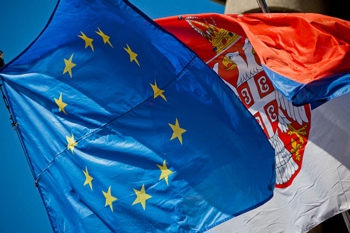
Support to EUD Staff on Programming Preparation, Monitoring Tools Implementation and Programme Visibility
- 2018 – 2018
- unter 500.000 €
- Serbia
The specific objective of the assignment was to provide technical and logistical support to EUD Serbia staff for two one-day internal meetings to improve programming preparation and facilitation of the monitoring tools for all modalities of IPA financial assistance as well as visibility and communication.
- Schlagwörter:
- Aus- und Fortbildung, Projektdurchführung / technische Hilfe

Evaluation of regional organisations in the Western Balkans
- 2016 – 2017
- unter 500.000 €
- Albania, Bosnia & Herzegovina, Kosovo, Montenegro, North Macedonia, Serbia
The purpose of the evaluation was to provide an overall independent assessment of the regional organisations and fora in the Western Balkans and the instrumental role they play in the regional integration and accession perspective including recommendations on possible streamlining.
The specific objectives of the evaluation were the following:
- Mapping of existing regional organisations and initiatives;
- Assessment of administrative and financial costs for its member countries of each organisation/initiative;
- Assessment of benefits for the region/countries of each organisation/initiative;
- Proposal for possible streamlining.
The evaluation mapped 56 organisations in the six Western Balkan IPA countries that were still active in June 2016 (cut-off date) and analysed 31 of them in detail. The key sectors included: connectivity (transport, energy and environment), competitiveness (industry and private sector development, trade), skills and mobility (human capital development, higher education), good governance, fighting crime and security cooperation.
- Partner:
- Ecorys B.V. (federführend)
- Schlagwörter:
- Energie, Handel, Industrie und Privatsektorentwicklung, Informationstechnologie, Justiz / Rechtsstaatlichkeit, Monitoring und Evaluierung, Regierungsführung, Umwelt

Post-conflict and post-disaster needs assessment (PCNA/PDNA): development of assessment capacity and tools - Phase I + II
- 2013 – 2017
- 2 – 5 Millionen €
- Global
Relevant background
Since early 2007, the Commission, the UN-family and the World Bank have worked together in setting up a platform for cooperation on post-crisis needs assessments for natural disaster (Post-Disaster Needs Assessment, PDNA) and conflict (Recovery and Peacebuilding Assessment (RPBA), previously named Post-Conflict Needs Assessment, PCNA) scenarios. This trilateral cooperation was framed and formalised through the signature of a Joint Declaration on “Post-Crisis Assessments and Recovery Planning” in September 2008. The EU/UN/WB platform covers the whole PDNA/RPBA(PCNA) process, including strategic coordination, development of joint methodologies for post-crisis assessments, joint deployment of assessment teams, joint training and joint recovery planning and monitoring.
In line with the 2008 Declaration on Joint Post-crisis Assessments and Recovery Planning, the overall objective of the project is to assist and develop third countries’ in-country capacity to gradually assume a more prominent role in Post-Disaster Needs Assessments and Post-Conflict Needs Assessments (now changed to Recovery and Peacebuilding Assessments, RPBA).
The purpose of this project was:
- to support further development of joint PDNA/RPBA(formerly PCNA) methodologies, tools, training programmes, etc.;
- to support joint PDNA/RPBA(formerly PCNA) missions in-country/in region (in coordinating with EU Heads of Delegations and with the European External Actions Service (EEAS) and European Commission). While such support could cover any relevant technical field (long-term and short-term expertise), it is foreseen that a particular emphasis is put on expertise in mission planning and development of final reports/recovery frameworks.
The two phases of the project contributed to a variety of outputs and results, including:
- Phase 1 (01/01/2013 – 31/07/2015): revision of the PDNA methodology and development of the joint EU/UN/WB PDNA Guide, development of the Disaster Recovery Framework (DRF) Guide, review of the PCNA methodology, development of training and capacity building materials, delivery of information/capacity building sessions, joint PDNA/PCNA training courses for national authorities and regional/international organisations, support to over 15 joint EU/UN/WB PDNA/PCNA missions;
- Phase 2 (10/07/2015 – 09/07/2017): revision of the PCNA methodology and development of the RPBA methodology, development of training and capacity building materials, delivery of information/capacity building sessions, joint PDNA/RPBA training courses for national authorities and regional/international organisations, support to over 10 joint EU/UN/WB PDNA/RPBA missions.
- Partner:
- Particip (federführend), Dara, ECDPM, GOPA, Punto.sud
- Schlagwörter:
- Aus- und Fortbildung, Humanitäre Hilfe, Institutionelle Entwicklung, Regierungsführung

Evaluation of the Instrument for Pre-accession Assistance (IPA II)
- 2016 – 2017
- unter 500.000 €
- Albania, Bosnia & Herzegovina, Kosovo, Montenegro, North Macedonia, Serbia, Türkiye
The Evaluation of the Instrument for Pre-accession Assistance (IPA II) assessed whether IPA II is fit for purpose to deliver EU resources towards EU's external policy, both at start of the planning period (2014) and at the time of the evaluation (2017), and considered the place of IPA II – its complementarities and synergies – within the wider set of external financing instruments.
The objective of the IPA II evaluation was: 1) to provide the relevant external relations services of the European Union and the wider public with an independent assessment of the IPA II instrument, including complementarities/synergies between IPA II and the other EFIs; and 2) to inform the future programming and implementation of the current EFIs, as well as the next generation of the EFIs.
The evaluation was evidence-based using a non-experimental mixed methods approach combining quantitative and, more importantly, qualitative data and was guided by Evaluation Questions (EQ) covering EU evaluation criteria (relevance; effectiveness, impact and sustainability; efficiency; added value; coherence, consistency, complementarity and synergies; leverage).
The main analytical tools consisted of a rigorous assessment of documentation, analysis of statistics and quantitative data and a consultation of stakeholders (via interviews, group discussions, the online-survey focusing on EU Delegations and the Open Public Consultation).
The report is available at:
https://ec.europa.eu/neighbourhood-enlargement/sites/near/files/final_report_ipa_ii_evaluation.zip
- Schlagwörter:
- Monitoring und Evaluierung

Support to the alignment of the Cross Border and Transnational Programmes with the requirement of IPA II 2014-2020
- 2015 – 2017
- unter 500.000 €
- Serbia
The Global objective of this contract was to contribute to the effective and timely implementation of CBC and TN programmes implemented in shared management mode under IPA II 2014-2020 in the Republic of Serbia.
The Specific Objective was to provide Serbia with the assistance necessary for establishing proper control and management system, related procedures and documents for the implementation of CBC and TN programmes financed under IPA II, including the capitalisation of the lessons learned and sharing experience.
- Partner:
- Particip (federführend), Cardno UK
- Schlagwörter:
- Institutionelle Entwicklung, Projektdurchführung / technische Hilfe, Regierungsführung

Capacity development on monitoring and evaluation for IPA II
- 2016 – 2017
- unter 500.000 €
- Serbia
The overall objective of the assignment was to improve and to strengthen the capacity of the EU Delegation and its direct counterpart in Serbia as regards the IPA II performance indicators, monitoring and evaluation frameworks.
The purpose of the contract was to:
1. Provide capacity development to staff tasked with programming and managing of IPA II, along with their beneficiary institutions, in terms of defining and managing performance indicators in the context of programming IPA;
2. Provide capacity development to staff tasked with programming and managing IPA II as well as its beneficiaries, with particular reference to monitoring and evaluation.
The purpose was achieved through training workshops for performance indicators, monitoring and evaluation and delivery of face to face trainings to IPA II beneficiaries.
- Schlagwörter:
- Aus- und Fortbildung, Institutionelle Entwicklung