Sierra Leone
7 Referenzen

Communication and Visibility for the European Union in Sierra Leone
- 2024 – 2028
- 2 – 5 Millionen €
- Sierra Leone
The overall objective is to increase the knowledge and understanding of the EU (what the EU is), of EU values, priorities and actions (what the EU stands for), and especially of EU cooperation in Sierra Leone, focusing on the impact of EU support to the benefit of the Sierra Leonean people and presenting the EU as a key partner regarding the consolidation of peace and stability as well as in achieving a sustainable and inclusive development.
The specific objectives of this contract are the following:
1) Enhanced awareness of EU values, priorities and policies, in particular on peace, sustainable development, social inclusion and protection of the environment.
2) Increased knowledge and understanding of the EU's activities in the areas of: dialogue with Sierra Leonean stakeholders, peace, human rights and democracy, governance, gender equality, development cooperation, multilateralism, trade, investment and culture.
3) The EU's Global Gateway strategy is promoted.
4) The #TeamEurope approach (the joint efforts of the EU and its Member States as partners of Sierra Leone) is strengthened by improved visibility of joint activities.
5) Increased visibility of the EU and its cooperation activities.
6) Increased visibility of the impact of the EU support in Sierra Leone for the Sierra Leonean people.
7) Improved coverage of EU in Sierra Leone both in terms of quantity and quality across print, broadcast and social media.
8) Shifted public perception of the EU from mere provider of development assistance to reliable strategic partner.
- Partner:
- Particip (federführend)
- Schlagwörter:
- Kommunikation und Medien

Strategic Environmental Assessment for the Forest Sector
- 2025 – 2026
- unter 500.000 €
- Sierra Leone
The objective of this SEA is to inform the Government of Sierra Leone as well as the EU and other donors on the potential significant environmental, climate and social challenges and opportunities related to the Forestry and Wildlife Sector Strategic Planning Framework (SPF) 2024-2030 and the potential Forest Partnership with the EU.
This includes the identification of potential significant impacts on the environment and climate that may result from the implementation of the Forestry and Wildlife Sector Strategic Planning Framework (SPF) 2024-2030 and the potential Forest Partnership; the identification of measures to avoid or minimize adverse impacts and to maximize positive impacts.
The SEA will also identify the challenges that environmental degradation and climate change pose to the sustainability and feasibility of the Forestry and Wildlife Sector Strategic Planning Framework (SPF) 2024-2030 and the potential Forest Partnership and identify measures to be integrated in those actions to take them into account and enhance their resilience.
The SEA will thus provide elements that will contribute to enhance the state of the environment and health, build climate resilience of the forest sector and the population, contribute to disaster risk reduction, and promote low carbon development and the transition to a green economy.
- Partner:
- Particip (federführend), Expertise Advisors (formerly: ETI Consulting)
- Schlagwörter:
- Forstwirtschaft, Umwelt
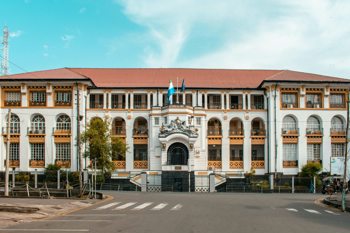
Mid-term evaluation of the "Support to Governance Sector in Sierra Leone" programme
- 2022 – 2022
- unter 500.000 €
- Sierra Leone
The main objectives of this evaluation were to provide the relevant services of the European Union and other interested stakeholders with:
- an overall independent assessment of the performance of the technical assistance in Sierra Leone in the areas of Civil Service Reform, Parliament and the Electoral Cycle, Technical Assistance in support of the Governance Sector in Sierra Leone in the area of Civil Registration, Programme Estimate on Civil Registration, Programme Estimate - Civil Service Reform with HRMO/PSC and Meeting Critical Infrastructure and Technology Needs in the Parliament of Sierra Leone, paying particular attention to its different levels of results measured against its expected objectives; and the reasons underpinning such results;
- key lessons learned, conclusions and related recommendations in order to improve current and future interventions.
In particular, this evaluation served to:
- understand the performance of the intervention and the reasons behind it in order to maximise its potential to achieve the expected results during the residual implementation time;
- understand whether the implementation modalities of the intervention were the most appropriate in order to achieve its objectives;
- understand whether the governance mechanism of the intervention allowed for a suitable and efficient representation of the interests of key stakeholders;
- understand the performance of the intervention and the reasons behind it in order to inform the planning of upcoming EU interventions in the same sector.
Furthermore, the evaluation team considered whether gender equality and women’s empowerment, environment and adaptation to climate change were mainstreamed; the relevant SDGs and their interlinkages were identified; the principle of Leave No One Behind and the rights-based approach methodology were followed in the identification/formulation documents and the extent to which they were reflected in the implementation of the intervention, its governance and monitoring.
The main users of this evaluation are the EU Delegation to Sierra Leone, the National Authorising Office, the Members of the Programme Steering Committee, the Governance Advisers to the President and Chief Minister, the national authorities targeted by the programme and its interventions and the implementing partners contracted by the EU.
- Partner:
- Particip (federführend), EuroPlus
- Schlagwörter:
- Monitoring und Evaluierung, Regierungsführung, Wahlen
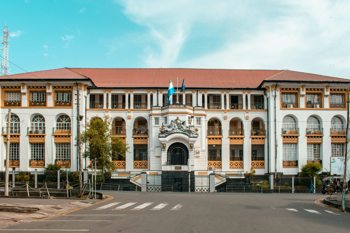
European Union Electoral Follow-up Mission (EU EFM) 2021
- 2021 – 2022
- unter 500.000 €
- Sierra Leone
The European Union deployed Election Observation Missions (EOMs) to Sierra Leone in 2007, 2012 and 2018. This Election Follow-up Mission (EFM) was be the first to be deployed by the EU to Sierra Leone. The 2018 EU EOM put forward 29 recommendations to strengthen future electoral processes in the country.
Out of the 29 proposed recommendations, 21 require a change of the legal framework in order to be implemented.
The main objectives of this mission included:
- Assess the state of play of the implementation of the recommendations of the 2018 EU EOM to Sierra Leone;
- Assess any electoral reforms adopted since the last EOM or which are under consideration (e.g.draft legislation) or planned and the degree to which these reflect EOM recommendations and their alignment with international standards for democratic elections;
- Identify which EOM recommendations are most relevant to the prevailing country situation and the current phase of the electoral cycle;
- Generate additional impetus for – or contribute to ongoing debates on – electoral reform;
- Identify areas of agreement and disagreement on EU EOM recommendations among the stakeholders and any political, technical, financial obstacles to electoral reform;
- Propose actions to overcome obstacles to electoral reform, including measures to develop support for and national ownership of the recommendations;
- If helpful and requested, assist the EU Delegation, EEAS and INTPA in their assessment on whether ongoing cooperation and conflict prevention projects are addressing the recommendations made by EU EOMs. Based on a brief overview of existing programmes, provide needed information to support identification of potential additional election/democracy support action that could contribute to strengthening the implementation of the recommendations and/or to the overall improvement of the electoral framework;
- Contribute to analysis by the EU Delegation, EEAS and INTPA with information to originate any other possible EU actions that could contribute to strengthening the implementation of the recommendations and/or to the overall improvement of the electoral framework;
- Prepare/update with EU Delegation a follow-up plan to EU EOM recommendations.
In order to achieve this objective, the EFM met relevant election stakeholders, including the national authorities, the election authorities, political actors, civil society, representatives of the international community and the media.
- Schlagwörter:
- Wahlen

Technical Assistance in support to the Office of the National Authorising Officer (NAO)
- 2017 – 2021
- 1 – 2 Millionen €
- Sierra Leone
The overall objective of the Project/Financing Agreement wass to contribute to sustainable inclusive growth and poverty reduction in Sierra Leone, as outlined in the National Agenda for Prosperity, through effective delivery of EU cooperation in line with Paris Declaration, the Accra Agenda and the EU’s commitments to the Busan New Deal.
The specific purpose of this contract was to strengthen the capacity of the National Authorising Officer Office (NAO office) to efficiently execute its mandate as stated in the Cotonou Partnership Agreement.
Furthermore, the Contractor achieved the following results:
- Continued greater understanding and improved utilisation of the rules, regulations and procedures applicable to the delivery of EU development assistance (EDF) by the staff of the NAO office, MDAs and relevant stakeholders
- Continued efficient office and management information systems (MIS) and effective tracking and monitoring system for all projects, programme estimates and contracts are in place and staff is trained in their utilisation
- Continued enhancement of the capacity of the NAO to participate proactively on strategic issues such as programming, coordination, reviews and dialogue with other MDAs, and relevant stakeholders, including non-state-actors (NSA)
- Partner:
- Particip (federführend), EMI (formerly: Cardno Belgium)
- Schlagwörter:
- Aus- und Fortbildung, Institutionelle Entwicklung, Kommunikation und Medien, Projektdurchführung / technische Hilfe, Regierungsführung
PR Campaign - Communication and Visibility of EU Cooperation in Sierra Leone
- 2016 – 2018
- unter 500.000 €
- Sierra Leone
- Ensure maximum visibility of EU cooperation activities in Sierra Leone.
- Raise awareness of EU work on specific sectors through high media impact activities.
- Partner:
- Particip (federführend), Danicom
- Schlagwörter:
- Kommunikation und Medien

Post-conflict and post-disaster needs assessment (PCNA/PDNA): development of assessment capacity and tools - Phase I + II
- 2013 – 2017
- 2 – 5 Millionen €
- Global
Relevant background
Since early 2007, the Commission, the UN-family and the World Bank have worked together in setting up a platform for cooperation on post-crisis needs assessments for natural disaster (Post-Disaster Needs Assessment, PDNA) and conflict (Recovery and Peacebuilding Assessment (RPBA), previously named Post-Conflict Needs Assessment, PCNA) scenarios. This trilateral cooperation was framed and formalised through the signature of a Joint Declaration on “Post-Crisis Assessments and Recovery Planning” in September 2008. The EU/UN/WB platform covers the whole PDNA/RPBA(PCNA) process, including strategic coordination, development of joint methodologies for post-crisis assessments, joint deployment of assessment teams, joint training and joint recovery planning and monitoring.
In line with the 2008 Declaration on Joint Post-crisis Assessments and Recovery Planning, the overall objective of the project is to assist and develop third countries’ in-country capacity to gradually assume a more prominent role in Post-Disaster Needs Assessments and Post-Conflict Needs Assessments (now changed to Recovery and Peacebuilding Assessments, RPBA).
The purpose of this project was:
- to support further development of joint PDNA/RPBA(formerly PCNA) methodologies, tools, training programmes, etc.;
- to support joint PDNA/RPBA(formerly PCNA) missions in-country/in region (in coordinating with EU Heads of Delegations and with the European External Actions Service (EEAS) and European Commission). While such support could cover any relevant technical field (long-term and short-term expertise), it is foreseen that a particular emphasis is put on expertise in mission planning and development of final reports/recovery frameworks.
The two phases of the project contributed to a variety of outputs and results, including:
- Phase 1 (01/01/2013 – 31/07/2015): revision of the PDNA methodology and development of the joint EU/UN/WB PDNA Guide, development of the Disaster Recovery Framework (DRF) Guide, review of the PCNA methodology, development of training and capacity building materials, delivery of information/capacity building sessions, joint PDNA/PCNA training courses for national authorities and regional/international organisations, support to over 15 joint EU/UN/WB PDNA/PCNA missions;
- Phase 2 (10/07/2015 – 09/07/2017): revision of the PCNA methodology and development of the RPBA methodology, development of training and capacity building materials, delivery of information/capacity building sessions, joint PDNA/RPBA training courses for national authorities and regional/international organisations, support to over 10 joint EU/UN/WB PDNA/RPBA missions.
- Partner:
- Particip (federführend), Dara, ECDPM, GOPA, Punto.sud
- Schlagwörter:
- Aus- und Fortbildung, Humanitäre Hilfe, Institutionelle Entwicklung, Regierungsführung