
Our projects
Explore Particip’s project experience across countries, sectors and areas of expertise.
Our references provide an overview of completed and ongoing assignments, including their objectives, geographic scope, duration and contract value.
Showing 511–520 of 985 references
Monitoring and Reporting under the SDG-Contract to promote Investment and Job Creation in Ghana
- 2019 – 2022
- under € 500,000
- Ghana
The European Union (EU) and the Government of Ghana (GoG) jointly implemented a new budget support contract that aimed to support the implementation of Ghana's Medium-Term National Development Policy Framework ('The Agenda for Jobs: Creating Prosperity and Opportunity for All) with a view of achieving the Sustainable Development Goals (SDG). The following specific objectives had been identified as priorities: 1) Promote domestic and foreign private investment and enable all businesses to spearhead economic transformation and create more employment and decent work opportunities; and 2) Strengthen public financial governance and fight against corruption, and boost domestic revenue mobilisation.
As a response to the COVID-19 pandemic, the EU and the GoG agreed on a new single fixed tranche “Emergency EU Budget Support in response to COVID-19 crisis in Ghana” State Building and Resilience Contract (COVID-19 Emergency Response programme). This tranche was also supposed to absorb inter alia the undisbursed funds of the SDG-Contract.
The project services were hence extended to include support for the EU's disbursement decision for the COVID-19 Emergency Response programme, while continuing the monitoring of the Government's performance with respect to the SDG-Contract indicators, included as a commitment under the new Programme, and ongoing support for related policy dialogue on SDG-Contract and related budget support issues.
The global objective of this assignment was to support the GoG and the EU Delegation in the implementation of the SDG-Contract to promote sustainable investment and employment and to support the EU Delegation in the management of subsequent budget support interventions, including specifically the COVID-19 Emergency Response.
The specific objective of this contract was to provide support in three areas:
- Strengthening the monitoring and reporting for the disbursement of fixed and variable tranches of the SDG-Contract and the COVID-19 Emergency Response programmes;;
- Continued monitoring of, and reporting on, progress in the Government's achievement of the SDG-Contract indicators agreed for 2021 and 2022;
- Guidance for and contribution to an effective and efficient policy dialogue between the EU Delegation and the Government of Ghana in the context of the implementation of the SDG-Contract indicators and further agreed areas of support related to implementation of the "Agenda for Jobs";
- Improvement of communication and visibility around the SDG-Contract and the COVID-19 Emergency Response programmes indicators and related policy dialogue..
- Partners:
- Particip (Lead), ADE, GOPA PACE (ex B&S Europe SA)
- Keywords:
- Communication & media, Monitoring & Evaluation, Public finance/budgeting
Mid-term Evaluation of the BOOST Project in the Regions of Nueva Segovia, Madriz, Estelí, Matagalpa, Jinotega and RACCN from August 2018 to June 2021
- 2021 – 2022
- under € 500,000
- Nicaragua
The mid-term evaluation of the project "Boosting Rural and Rurban Economy in Times of Crisis and Beyond" (BOOST) was commissioned by WFP Nicaragua. BOOST is expected to run from 2018 to 2024 and aims to promote sustainable and resilient agri-food systems in five departments and one autonomous region of Nicaragua. The support package includes three components (including gender-transformative approaches): support to smallholder farmers and their cooperatives in the production of basic grain and market access; links with the National School Feeding Programme; and support to the creation of home gardens by vulnerable (peri-)urban families. The European Union is the main donor of the project.
The evaluation served the double purpose of accountability and learning. The evaluation period covered the first three years of the BOOST project (August 2018 to June 2021), and the findings and recommendations were expected to inform the next phase of the project.
The evaluation adopted a theory-based mixed methods approach to answer the five evaluation questions linked to different evaluation criteria (effectiveness; relevance and coherence; sustainability; efficiency) and gender equality and empowerment of women. Data were collected remotely and during a two-week field mission. The evaluation team conducted interviews at national and local levels with WFP and other agencies, government institutions, the donor, cooperatives, and schools; as well as two dozen focus group discussions with beneficiaries; field visits; a comprehensive document review; and an analysis of existing M&E data.
In addition to the evaluation report, Particip produced a short video (produced by a film team in the field) for dissemination purposes. The evaluation report and the video are available at: https://www.wfp.org/publications/nicaragua-boost-project-nueva-segovia-madriz-esteli-matagalpa-jinotega-and-raccn-areas
- Keywords:
- Agriculture, Environment, Food and nutrition, Monitoring & Evaluation

Evaluation of EU Budget Support and Blending in the Kyrgyz Republic 2010-2019
- 2020 – 2022
- under € 500,000
- Kyrgyzstan
The purpose if this evaluation was the assessment of both budget support and blending operations of the EU in the Kyrgyz Republic between 2010 and 2019. The EU has implemented ten budget support programmes in the country. All programmes contain, in addition to the funds transferred to the national budget, funds covering the provision of technical assistance for institutional capacity development, support to the elaboration of coherent policies, and/or evaluation, visibility and communication activities. The EU is using blending as financing modality in Kyrgyzstan since 2011. The funds for the EU blending operations in Kyrgyzstan come from the envelope for regional cooperation and are channelled through the Investment Facility for Central Asia (IFCA). Almost 40% of the total portfolio of funds managed by the EU Delegation to the Kyrgyz Republic is channelled through the blending instrument. Furthermore, Kyrgyzstan is the main beneficiary of the IFCA funds, with 75% of these funds going to this country.
This evaluation entailed two components. First, it provided an assessment of EU budget support in the country applying the 3-Step approach of the OECD-DAC guidelines on the evaluation of budget support. In particular, building on smaller, more specific evaluations and other studies produced in recent years, it assessed to what extent EU budget support contributed to Kyrgyzstan´s achievements in terms of the outcomes and impacts of its education and social protection sectors and of the country’s latest electoral reform policy. The analysis focused on how EU budget support, by enhancing the efficiency and effectiveness of Kyrgyzstan’s policies, strategies, spending actions, administration capacities and PFM system, contributed to sustainable outcomes in the sectors supported and, in turn, to growth and poverty reduction.
Second, the evaluation focused on EU blending operations in Kyrgyzstan’s Energy and Water management sectors. Specifically, the evaluation looked into the overall logic of these operations as a whole and assesses to what extent their design and implementation are suitable to achieve the expected results of this instrument in said sectors.
Report available here: https://international-partnerships.ec.europa.eu/publications/evaluation-eu-budget-support-and-blending-kyrgyz-republic-2010-2019_en
- Keywords:
- Education, Elections, Infrastructure, Macro-economic/ National policy, Monitoring & Evaluation, Public finance/budgeting

European Union Electoral Follow-up Mission (EU EFM) 2021
- 2021 – 2022
- under € 500,000
- Sierra Leone
The European Union deployed Election Observation Missions (EOMs) to Sierra Leone in 2007, 2012 and 2018. This Election Follow-up Mission (EFM) was be the first to be deployed by the EU to Sierra Leone. The 2018 EU EOM put forward 29 recommendations to strengthen future electoral processes in the country.
Out of the 29 proposed recommendations, 21 require a change of the legal framework in order to be implemented.
The main objectives of this mission included:
- Assess the state of play of the implementation of the recommendations of the 2018 EU EOM to Sierra Leone;
- Assess any electoral reforms adopted since the last EOM or which are under consideration (e.g.draft legislation) or planned and the degree to which these reflect EOM recommendations and their alignment with international standards for democratic elections;
- Identify which EOM recommendations are most relevant to the prevailing country situation and the current phase of the electoral cycle;
- Generate additional impetus for – or contribute to ongoing debates on – electoral reform;
- Identify areas of agreement and disagreement on EU EOM recommendations among the stakeholders and any political, technical, financial obstacles to electoral reform;
- Propose actions to overcome obstacles to electoral reform, including measures to develop support for and national ownership of the recommendations;
- If helpful and requested, assist the EU Delegation, EEAS and INTPA in their assessment on whether ongoing cooperation and conflict prevention projects are addressing the recommendations made by EU EOMs. Based on a brief overview of existing programmes, provide needed information to support identification of potential additional election/democracy support action that could contribute to strengthening the implementation of the recommendations and/or to the overall improvement of the electoral framework;
- Contribute to analysis by the EU Delegation, EEAS and INTPA with information to originate any other possible EU actions that could contribute to strengthening the implementation of the recommendations and/or to the overall improvement of the electoral framework;
- Prepare/update with EU Delegation a follow-up plan to EU EOM recommendations.
In order to achieve this objective, the EFM met relevant election stakeholders, including the national authorities, the election authorities, political actors, civil society, representatives of the international community and the media.
- Keywords:
- Elections

Enhance EU visibility through effective communication
- 2018 – 2022
- € 1 – 2 million
- Pakistan
The overall objective of the project was to continue positioning the EU as a strong partner of Pakistan. The purpose of the project was to ensure the visibility of cooperation programmes in complementarity with the messages of the EU Delegation to Pakistan, in order to enhance the image and visibility of EU as a strong partner of Pakistan.
The following results were achieved:
- A communication strategy is developed by EUD together with the contractor
- Clear EU image and messaging is established, rooted in an agreed set of overall and specific messages.
- Comprehensive and strategically sequenced communication campaigns implemented.
- Sustained links with the media are established, with improved coverage – in terms both of quantity and quality – across print, broadcast and digital media.
- A mechanism to monitor and evaluate the progress of how the EU is monitored on a yearly basis.
- The profile of the EU and the awareness of how EU official development aid and cooperation benefits Pakistan is increased.
- Organisation of ad hoc public diplomacy events in accordance with the EU Delegation's communication strategy.
- Keywords:
- Communication & media

Mediterranean Climate Finance Strategy
- 2019 – 2021
- under € 500,000
- Albania, Algeria, Bosnia and Herzegovina, Egypt, Israel, Jordan, Lebanon, Mauritania, Montenegro, Morocco, Palestine, Syria, Tunisia, Türkiye
Background
In March 2017, the UfM Climate Change Expert Group (UfM CCEG) adopted a 5-years work-program, which stress the importance to strengthen climate finance in the Euro-Mediterranean region to address climate change issues. In April 2019, UfM Member States agreed to pursue the assessment of climate finance in the UfM region, with the view of providing sound basis for a renewed climate mandate of the UfM by 2020, with the new UfM Ministerial Declaration on Climate Change.
Target Groups
Target gruops of tehis technical assistance are: UfM Institutions, UfM Member States, International Financial Institutions, International Climate Change Institutions, Civil society representatives, Private sector Organisations and Institution interested in UfM regional integration.
Objectives
- The primary objective of this technical assistance is to enhance the knowledge of UfM Member States, International Financial Institutions, civil society representatives, private sector organisations and any other institution interested in the UfM regional integration, regarding the level of financial commitments made in 2018 and in 2019 to address climate change issues in the UfM region.
- The second objective is to explore the feasibility of financial mechanisms, which could be implemented in the UfM region with the aim of enhancing the mobilisation of climate finance for specific population or sectors, while building on lessons learned in some specific sectors (in particular in the water sector) or potentially in other regions, such as Caribbean or Latin America.
Expected Results
- R1 - to have a precise figure of financial commitments made to recipients in UfM developing countries in 2018 and in 2019, by public/private donors from developed/developing countries;
- R2 - to have a precise view of commitments and disbursements made by national governments, local authorities, private sector and, if possible, households addressing climate change in UfM developing countries;
- R3 - to have the methodology and process in place for monitoring, reporting and verifying climate finance commitments made in the UfM region, especially by ensuring the involvement of all relevant actors, including the scientific community, the private sector and NGOs;
- R4 - quantitative and qualitative analysis of financial mechanisms, which could be implemented in the UfM region with the aim of enhancing the mobilisation of climate finance for specific population or sectors.
- Keywords:
- Environment
Technical Assistance for EU Joint Programming strategy and aid effectiveness agenda in Madagascar
- 2020 – 2021
- under € 500,000
- Madagascar
To enhance the overall effectiveness of the European aid to Madagascar in support of the achievement of the Sustainable Development Goals (SDGs) through the development of EU Joint Cooperation Strategy Paper 2021-2027.
We undertook an assessment of the key lessons learnt, progress, achievements and challenges from the first phase of Joint Programming process in Madagascar (diagnosis and structuring of the framework).
- Assist the DUE and the EU MS involved in developing a Joint Programming in Madagascar to finalise the Joint analysis, the strategic response documents, the implementation of EU Division of Labor (DoL) and prepare the Joint Programming Strategy for the 2021-2027 period.
- Increase the impact of the European aid to Madagascar, through increased coordination, harmonisation and alignment among EU Member States and the European Delegation and with other development partners (DPs), leading to greater aid effectiveness and visibility of European joint support.
- Partners:
- Particip (Lead), Cardno UK
- Keywords:
- Civil society, Management, Project implementation / Technical Assistance
Evaluation of R4 Rural Resilience Initiative in Masvingo and Rushinga Districts in Zimbabwe (2018-2021)
- 2021 – 2021
- under € 500,000
- Zimbabwe
The decentralized evaluation of the R4 Rural Resilience Initiative was commissioned by WFP Zimbabwe. The R4 Initiative managed climate-related risk to enhance the food and nutrition security of farming households. Its integrated risk management strategy relied on four pillars: risk reduction (through a food for assets scheme and improved agricultural practices), risk transfer (through drought insurance), risk reserves and prudent risk taking (through village savings and loan groups, and market access for smallholder farmers).
The evaluation period covered the first phase of the R4 Initative in Zimbabwe, which ran from January 2018 to June 2021 and targeted 6,000 beneficiaries in the rural districts of Masvingo and Rushinga.
The evaluation served the double purpose of accountability and learning (with emphasis on the latter) and addressed the evaluation criteria of relevance, efficiency, effectiveness, impact, and sustainability, mainstreaming gender equality and empowerment of women throughout.
The mixed methods approach of the evaluation combined qualitative methods (document review, remote key informant interviews with national stakeholders, as well as field-based in-depth interviews with local stakeholders, focus group discussions with beneficiaries, and direct observation) and quantitative methods (a phone survey with beneficiaries, and analysis of existing M&E data).
The evaluation report is available at: https://www.wfp.org/publications/zimbabwe-r4-rural-resilience-initiative-masvingo-and-rushinga-evaluation
- Partners:
- Particip (Lead), JIMAT Consult Ltd
- Keywords:
- Agriculture, Environment, Food and nutrition, Infrastructure, Monitoring & Evaluation
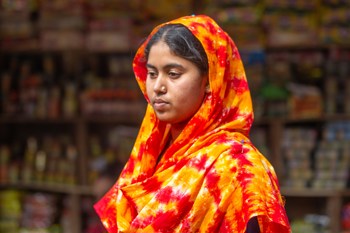
Visibility & Communication for the European Union Development Cooperation in Bangladesh
- 2020 – 2021
- € 500,000 – 1 million
- Bangladesh
The overall objective of the project was to enhance the visibility of EU development cooperation in Bangladesh.
The specific objectives were:
- The EU is perceived as an important and longstanding partner of development cooperation in Bangladesh.
- The EU is perceived as an important strategic partner for Bangladesh (beyond development).
- EU development cooperation is seen as making a difference in people's daily life in Bangladesh in the long term, in particular with regard to the priority sectors in the Multi-annual Indicative Programme (MIP) 2014-2020, i.e. democratic governance, food & nutrition security, and education & skills development.
- EU development cooperation in Bangladesh is perceived as a good investment/win-win option for the beneficiary country and the EU.
- Partners:
- Particip (Lead)
- Keywords:
- Communication & media
Innovative Pilot Evaluation: Aflatoxin Reduction in the Rwanda Maize Value Chain from October to December 2021
- 2021 – 2021
- under € 500,000
- Rwanda
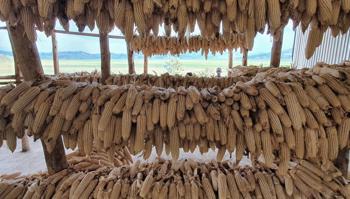
This pilot evaluation, commissioned by the WFP Regional Bureau of Nairobi in cooperation with WFP Rwanda and the Farm to Market Alliance (FtMA), assessed the introduction of a new technology for enhanced food safety of maize in Rwanda.
Rwandan maize is particularly affected by aflatoxin, a carcinogen, which prevents farmers from selling their harvests to premium domestic buyers that adhere to aflatoxin regulations. In this context, AflaSight (a start-up firm based in Rwanda) uses an innovative aflatoxin reduction technology that removes aflatoxin from already infected maize kernels at industrial scale. The direct users of AflaSight are agro-processors and traders that source maize from smallholder cooperatives. The strategic objective of AflaSight is to solve the aflatoxin problem in maize in Rwanda and enable smallholder farmers to connect with premium buyers of domestically produced maize.
The evaluation covered the pilot period from October to December 2021 and served the double objectives of accountability and learning (with emphasis on the latter). It followed a theory-based mixed methods approach to answer the nine main evaluation questions linked to different evaluation criteria (relevance, effectiveness, efficiency, impact, and sustainability), streaming gender equality and empowerment of women farmers throughout. Primary data was collected through key informant interviews in Kigali, as well as interviews, focus groups, direct observation, and a large-scale survey with 400 smallholder farmers in the Southern Province of Rwanda. The team also analysed existing M&E, financial and technical data, and carried out a document review, as well as a cost-effectiveness analysis of AflaSight.
The main users of the evaluation are WFP, FtMA, Government institutions involved in agricultural production and food standards, private sector agents, and smallholder cooperatives.
The evaluation report and brief are available at: https://www.wfp.org/publications/rwanda-innovative-pilot-evaluation-aflatoxin-reduction-rwanda-maize-value-chain
- Partners:
- Particip (Lead), C4ED
- Keywords:
- Agriculture, Food and nutrition, Industry & private sector development, Information technology, Monitoring & Evaluation