Türkiye
29 references

Technical Assistance for Results Oriented Monitoring in Türkiye – Phase IV
- 2025 – 2027
- € 2 – 5 million
- Türkiye
The overall objective to which this action contributes is to ensure efficient and effective use of IPA assistance in Türkiye by improving the performance of interventions through strengthening design, monitoring and evaluation systems.
The specific objectives of this contract are as follows:
- To improve the design and implementation of IPA assistance in Türkiye
- To improve the visibility and public perception of IPA assistance by promoting the results and achievements of IPA projects.
The expected outputs of this contract are as follows:
- Output I to Outcome 1: ROM services provided in Türkiye were updated and extended.
- Output 2 to Outcome 1: Capacities of Turkish institutions dealing with ROM services were increased.
- Output 1 to Outcome 2: Results and achievements of IPA Projects were collected and disseminated through different means.
Stakeholders: Central Finance and Contracts Unit (CFCU), National IPA Coordinator (NIPAC/DEUA), National Authorising Officer (NAO) – Ministry of Treasury and Finance, Delegation of European Union to Türkiye (EUD), National Programming Compliance Coordinator, Managing Authority (MA) (IPA III), Intermediate Bodies for Policy Management (IBPM) (IPA III), Operating Structure (OS) (IPA II), Sectoral Monitoring Committees (SMC), Contractors, End beneficiaries
- Partners:
- Particip (Lead)
- Keywords:
- Monitoring & Evaluation

Technical Assistance for Monitoring of Project Preparation Support to Municipal Infrastructure Projects
- 2026 – 2026
- under € 500,000
- Türkiye
The overall objective (Impact) to which this action contributes is to ensure the efficient and effective use of PA assistance in Türkiye by enhancing the quality and performance of EU-funded interventions through strengthening design, monitoring and evaluation systems, with a particular focus on supporting the post-earthquake recovery and reconstruction efforts.
The specific objectives (Outcomes) of this contract are as follows:
- To conduct a single monitoring mission in line with the ROM methodology to ensure achievement of objectives of the PPF project at action level.
- To assess the performance of the PPF Project in terms of the ROM criteria.
- Keywords:
- Infrastructure, Monitoring & Evaluation
Overall objective
The Overall Objective of the project of which this contract was: to support the implementation of a comprehensive and effective Monitoring and Evaluation mechanism, established by the EU Trust Fund in Response to the Syrian Crisis.
Purposes
- 1.To provide evidence-based knowledge on progresses achieved by EUTF in Response to the Syrian Crisis financed projects, and to inform on their management, through regular and ad-hoc Results Oriented Monitoring (ROM).
- 2.To measure the effectiveness of EUTF actions, through centralized data collection and analysis, based on disaggregated quarterly results reporting.
- 3.To evaluate the sustainability, efficiency and effectiveness of EUTF-funded Programmes at thematic and geographic level and to assess potential prospects of impact, through portfolio evaluations.
The monitoring and evaluation technical services mobilised under the present multi-sector action aimed to continue assessing the extent to which the strategic objectives of the EUTF were achieved. The project built on the existing M&E system put in place by the EUTF in December 2016 and served to complement the regular M&E activities carried out by the EUTF operational team at headquarters as well as the internal monitoring conducted by EUTF local officers, at country level.
Target group
The target group of this contract were EUTF project partners, management, donors, other involved EU services, direct beneficiaries, as well as the general public.
Results achieved
- R1 An independent and real-time EUTF ROM mechanism put in place and continuously improved, in line with the increasing monitoring needs of the EUTF.
- R2 The EUTF system for regular results reporting remained in place and was continuously improved in line with the increasing reporting needs of the EUTF.
- R3 A portfolio evaluation framework remained in place and was continuously improved in line with the evolving needs of the EUTF.
- Partners:
- Particip (Lead), Integration
- Keywords:
- Monitoring & Evaluation

Evaluation of EU support to IPA Roma inclusion projects (2016-2023)
- 2023 – 2026
- under € 500,000
- Western Balkans
The evaluation covered all European Union (EU) external action support to IPA Roma inclusion projects in the Western Balkans and Türkiye between 2016 and 2023. The main objectives of this assignment were to: i) provide an independent and evidence-based assessment of the EU's past and current external action support in the area of Roma inclusion; and ii) provide lessons learnt and recommendations at EU level to inform ongoing and future decision-making in improving current and future EU strategies, programmes and actions on Roma inclusion.
The evaluation was centred around three main thematic areas:
- Civil rights (registration, data collection, monitoring, reporting, fight against discrimination and antigypsyism);
- Economic and social rights (health, employment, education and housing, including access to public services);
- Roma inclusion in governments' green and digital agendas.
Additionally, the evaluation addressed broader cross-cutting issues such as human rights, the need to ensure appropriate treatment for vulnerable groups including children, fight against environmental poverty and climate change, social inclusion and gender equality.
The analysis covered both spending and non-spending actions and examined all funding mechanisms and modalities of implementation used under IPA II and III.
- Partners:
- Particip (Lead)
- Keywords:
- Education, Governance, Human rights, Monitoring & Evaluation
TA to the EUD in assessment of impacts and developing recovery efforts of the Feb 2023 earthquakes in Türkiye
- 2024 – 2025
- under € 500,000
- Türkiye
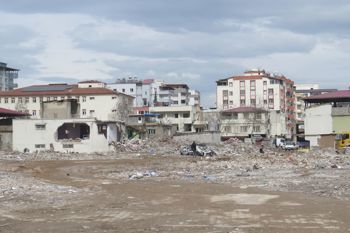
The global objective of this assignment was to support the EU Delegation in its efforts and activities with respect to EQ recovery support to Türkiye.
Specific objectives:
- to support the Delegation of the European Union to Turkiye (EU Delegation) in assessment of the impacts (damages and losses) caused by the earthquake;
- to support the EU Delegation in assessment of the needs for recovery and rehabilitation of the damages and losses caused by the earthquake;
- to support the EU Delegation in up-to-date situation analysis including assessment of the gaps for recovery and rehabilitation and prioritisation of them in light of the efforts already done/programmed by other national and international bodies;
- to support the EU Delegation for developing projects linked to earthquake recovery and reconstruction (if and when necessary);
- to support the EU Delegation for monitoring use of the EU Solidarity Fund;
- to support the EU Delegation in appraisal of the projects submitted for EU financing (if and when necessary);
- to support the EU Delegation in monitoring of the projects under implementation (if and when necessary);
- to support the EUD in developing DRR models for each sector;
- organise and deliver workshop/training to EUD and/or public authorities representatives on Disaster Risk Reduction (DRR) and Earthquake recovery processes.
- Partners:
- Particip (Lead), AETS, CAPA EEIG (managed by Particip)
- Keywords:
- Environment, Humanitarian aid, Training

Evaluation of the Republic of Türkiye WFP Country Strategic Plans 2018-2025
- 2024 – 2025
- under € 500,000
- Türkiye
This independant evaluation of WFP Country Strategic Plan (CSP) in Turkiye assessed the strategic positionning, added-value and results of WFP operations in the Country from 2018 to 2024.
The evaluation served the double purpose of accountability (performance and result assessment) and learning (why certain results occurred or not, lessons and evidence for decision-making). It is envisioned that the evaluation will inform the design of the new CSP for Turkiye, which is scheduled for Executive Board consideration in November 2025.
CSP key sectors and activities included:
- Emergency response and recovery, including cash-based transfers
- School feeding
- Livelihoods activities, including technical and vocational education and training
- Institutional capacity strengthening
Cross-cutting themes included: Gender equality and empowerment of women (GEEW), humanitarian principles and protection, accountability to affected populations (AAP), WFP partnership strategy
The evaluation employed a mixed-method approach that triangulated qualitative and quantitative data from a variety of sources. For this purpose, the evaluation team conducted interviews with different stakeholders including WFP staff at HQ, regional and country level, WFP cooperating partners, donors, UN agencies, government entities as well as focus group discussions with the beneficiaries.
- Keywords:
- Food and nutrition, Humanitarian aid, Monitoring & Evaluation

Evaluation of EU support to youth in the Enlargement and Neighbourhood regions (2014-2021)
- 2022 – 2024
- under € 500,000
- ENI East, ENI South, IPA
The main objectives of this assignment are to: i) provide an independent and evidence-based assessment of the EU’s past and current external action support in the policy area of Youth, and ii) identify lessons learnt and recommendations to inform strategic policy orientation on supporting youth, define synergy effects with the EU's political and reform objectives, and enhance the planning, design, implementation and monitoring of new interventions launched under IPA III and NDICI-GE.
The evaluation aims to assess the performance of EU assistance (spending and non-spending actions) in Enlargement and Neighbourhood regions in the following sectors:
- i)Youth engagement (including participation in policy making and youth work);
- ii)Youth economic integration (including youth employment and employability, entrepreneurship, digital skills formal and non-formal learning);
- iii)Youth social inclusion (including youth mobility, culture, school retention, sexual, reproductive and mental health);
- iv)Peace and security (regional cooperation and reconciliation).
The legal and temporal scope of the evaluation covers:
- IPA II and III, ENI, NDICI-GE, EIDHR, Erasmus+, Trust funds and the Facility for Refugees in Turkey;
- funding related to the last programming cycle (2014-2020), as well programming under the current programming cycle until 2022.
- Partners:
- Particip (Lead), ECDPM
- Keywords:
- Civil society, Education, Governance, Industry & private sector development, Monitoring & Evaluation

Evaluation of the Technical Assistance to Civil Society Organisations in the Western Balkans and Turkey – TACSO programme
- 2023 – 2024
- under € 500,000
- Western Balkans
The main objectives of this evaluation were to provide the relevant services of the European Union and the interested stakeholders with:
- an overall independent assessment of the performance of the TACSO programme (in its three phases), paying particular attention to its different levels of results measured against its expected objectives; and the reasons underpinning such results
- key lessons learned, conclusions and related recommendations in order to improve current and future interventions.
In particular, this evaluation served:
- To inform the implementation of the programme fourth phase, which will be implemented through an extension of the current contract (TACSO 3);
- To inform the decision-making on the appropriateness of a potential fifth phase of the programme, to be launched with the next programming exercise (CSF 2024-2026);
- To inform the potential programme exit strategy to ensure the sustainability of its results.
The main users of this evaluation are the relevant EU services (DG NEAR HQ and EU Delegations of the targeted region) and the implementing partners.
- Keywords:
- Civil society, Monitoring & Evaluation
Support measures for implementation of Civil Society Facility programme 2021-2023 Turkey - assessment CfP
- 2023 – 2023
- under € 500,000
- Türkiye
The global objective of this assignment was to contribute to fostering a functioning, pluralistic, participatory and representative democracy and the consolidation of a resilient civil society by promoting a culture of fundamental rights and dialogue in Türkiye. As all EU funded actions, this has also contributed to promoting cross-cutting issues such as environment and climate change, rights based approach, gender equality rights of persons with disability and indigenous peoples.
The specific objective of this assignment was to assist the EU Delegation to Türkiye in assessing the concept notes (CN) submitted in the framework of the calls for proposals stemming from the following activities of the Civil Society Facility Programme 2021-2023 for Türkiye:
- Activity 5 - Support CSOs working on human and fundamental rights (EUR 5.5 million)
- Activity 15 - Civil Society Action towards European Green Deal (EUR 5 million)
- Partners:
- Particip (Lead), SICI Dominus
- Keywords:
- Civil society
Technical Assistance for the Evaluation of 2014, 2015 and 2016 Türkiye Annual Programmes
- 2021 – 2022
- € 1 – 2 million
- Türkiye
The objective of the contract was to improve the overall management of IPA II financial assistance in Türkiye by enhancing the strategic link between the planning/programming, monitoring and evaluation activities of the National IPA Coordinator (NIPAC) office. In this context, the project team carried out 9 thematic evaluations of the EU funded contracts/interventions financed by IPA II assistance in Türkiye, and disseminated the lessons learnt and the results of IPA II interventions to the stakeholders and the wider public.
The evaluation exercise consisted of 9 thematic evaluations, extending the scope over 109 contracts within 43 activities/interventions of the 2014, 2015 and 2016 IPA Annual Programmes. The thematic areas covered by the evaluation included Agriculture, Energy, EU-Turkey Dialogue, Civil society, Fundamental rights, Border Surveillance, Removal Centres, Judiciary System and Penitentiary System, with all types of contracts, including services, works, supply, twinning, and direct grants. In total, more than 450 million EUR worth of assistance was covered by the evaluation.
The evaluation team has:
- assessed in both qualitative and quantitative terms the relevance, conditions of implementation and performance of each intervention/theme covered by the evaluation, particularly their efficiency, effectiveness, sustainability, and the EU added value;
- assessed the coherence of each intervention/theme with the policy objectives set out at national and European level with a view to identify its contribution in long-term;
- assessed the programming process, the monitoring system and process and, where appropriate, implementation arrangements;
- formulated rigorous conclusions based on objective, credible, reliable and valid findings and evidence, as well as explanatory factors that facilitate or hamper effectiveness and impact;
- provided NIPAC and other stakeholders with lessons learned (both positive and negative), best practices and recommendations to improve the quality and design of current interventions as well as of the future Annual Action Plans in the Framework of IPA III;
- engaged in a variety of dissemination activities aimed at raising awareness of IPA II, understanding of evaluation findings and recommendations, and inspiring further action among stakeholders.
- Partners:
- InProvE EEIG (managed by Particip) (Lead), Espes, Integration, Particip
- Keywords:
- Communication & media, Institutional development, Monitoring & Evaluation

Mediterranean Climate Finance Strategy
- 2019 – 2021
- under € 500,000
- Albania, Algeria, Bosnia & Herzegovina, Egypt, Israel, Jordan, Lebanon, Mauritania, Montenegro, Morocco, Palestine, Syria, Tunisia, Türkiye
Background
In March 2017, the UfM Climate Change Expert Group (UfM CCEG) adopted a 5-years work-program, which stress the importance to strengthen climate finance in the Euro-Mediterranean region to address climate change issues. In April 2019, UfM Member States agreed to pursue the assessment of climate finance in the UfM region, with the view of providing sound basis for a renewed climate mandate of the UfM by 2020, with the new UfM Ministerial Declaration on Climate Change.
Target Groups
Target gruops of tehis technical assistance are: UfM Institutions, UfM Member States, International Financial Institutions, International Climate Change Institutions, Civil society representatives, Private sector Organisations and Institution interested in UfM regional integration.
Objectives
- The primary objective of this technical assistance is to enhance the knowledge of UfM Member States, International Financial Institutions, civil society representatives, private sector organisations and any other institution interested in the UfM regional integration, regarding the level of financial commitments made in 2018 and in 2019 to address climate change issues in the UfM region.
- The second objective is to explore the feasibility of financial mechanisms, which could be implemented in the UfM region with the aim of enhancing the mobilisation of climate finance for specific population or sectors, while building on lessons learned in some specific sectors (in particular in the water sector) or potentially in other regions, such as Caribbean or Latin America.
Expected Results
- R1 - to have a precise figure of financial commitments made to recipients in UfM developing countries in 2018 and in 2019, by public/private donors from developed/developing countries;
- R2 - to have a precise view of commitments and disbursements made by national governments, local authorities, private sector and, if possible, households addressing climate change in UfM developing countries;
- R3 - to have the methodology and process in place for monitoring, reporting and verifying climate finance commitments made in the UfM region, especially by ensuring the involvement of all relevant actors, including the scientific community, the private sector and NGOs;
- R4 - quantitative and qualitative analysis of financial mechanisms, which could be implemented in the UfM region with the aim of enhancing the mobilisation of climate finance for specific population or sectors.
- Keywords:
- Environment

Analysis of market failures in pre-identified areas and sectors, for the planning of EFSD+ within EU Neighbourhood and Enlargement Countries
- 2021 – 2021
- under € 500,000
- ENI East, ENI South, Western Balkans
The overall objective was to provide DG NEAR with an overview of key market failures and sub-optimal investment situations to which the Commission should respond when setting up investment windows under the European Fund for Sustainable Development plus (EFSD+) Guarantee and updating investment priorities to be addressed by the European Union's respective blending platforms, namely the Western Balkans Investment Framework (WBIF) and the Neighbourhood Investment Platform (NIP).
The analysis covered all DG NEAR countries of operation for blending and budgetary guarantees (clustered for analytical purposes in four regions, namely Western Balkans, Turkey, Eastern Neighbourhood, Southern Neighbourhood) and provided detailed assessments on the market failures and sub-optimal investment situations in the preidentified areas, namely:
- Access to Finance for private companies, particularly Micro, Small and Medium Enterprises (MSMEs);
- Green Finance; and
- Financing Digital Transformation.
The analysis thereby helped to target intervention of the European Union under both blending facilities under DG NEAR responsibility (WBIF, NIP) and under all types of budgetary guarantees foreseen under the EFSD+. More specifically, it helped to target financing operations that could be provided by the European Investment Bank (EIB) and other implementing partners. The analysis was driven by empirical knowledge of the economic situations and financial market environments in the respective regions.
- Partners:
- Particip (Lead), ADE, DID Development International Desjardins
- Keywords:
- Industry & private sector development, Information technology, Institutional development, Monitoring & Evaluation
Ex-post Evaluation of EU Support to Civil Society delivered under IPA 2007 to 2014 in Turkey
- 2020 – 2021
- under € 500,000
- Türkiye
This ex-post evaluation assessed interventions funded under the IPA programs in support of civil society in Turkey, managed primarily under IMBC.
For the purpose of the evaluation, a limited number of projects financed under the IPA II 2014 allocations was part of the assessment.
The evaluation did not only describe what has been achieved (or what the Intervention contributed to achieve) but particularly why and upon what conditions results have been (or have not been) achieved.
- Partners:
- Particip (Lead), SICI Dominus
- Keywords:
- Civil society, Monitoring & Evaluation

Evaluation of the EU's external action support in the area of migration (2008-2018)
- 2019 – 2021
- under € 500,000
- ACP (Africa), Asia, ENI East, ENI South, IPA
The purpose of this evaluation is to provide an independent assessment and evidence on the contribution of EU external action support in aspects of the policy area of migration. Its specific objectives are the following:
- To assess in both qualitative and quantitative terms the relevance, conditions of implementation and performance of EU external action support to migration in the areas defined in the evaluation’s focal areas.
- To address coherence of the EU external action projects/programmes framed also in the international context (e.g. UN related and non-EU Member States) and achievement by the EU and the candidate countries for EU membership, the potential candidates and the partner countries of their respective commitments in these policy areas.
- To assess how EU external action support in the area of migration in the geographical focal areas, has changed in the aftermath of the 2015 structural shift associated with the so-called “refugee crisis.” The assessment shall also take into account complementarity of EU external action support with that of other donors and actors, including EU Member States.
- To assess whether the EU's policy and operational response to the external dimension on migration triggered new approaches and rendered programmes and actions more effective, targeted and efficient.
It furthermore aims to provide lessons learnt and recommendations for the improvement of the programming and implementation and shall:
- lead to the identification of conclusions based on objective, credible, reliable and valid findings;
- highlight lessons learnt;
- provide the Commission and the European External Action Service (EEAS) with a set of operational, targeted and useful forward-looking recommendations.
The three overarching thematic focal areas examined by this evaluation are the following: Legal (labour) migration, Smuggling of Migrants (SoM), and Trafficking of Human Beings (THB).
Report available here: https://ec.europa.eu/neighbourhood-enlargement/sites/default/files/eval_eu_support_migration_area_-_final_report.zip
- Partners:
- Particip (Lead), ECDPM
- Keywords:
- Monitoring & Evaluation
Support for the EU communication programme in Turkey
- 2019 – 2020
- € 2 – 5 million
- Türkiye
Background: Turkey goes through a long and challenging process which requires alignment of its political, institutional, economic and social structures with those of the European Union. This process inevitably creates apprehensions, debate and intense questioning. Therefore, although this process is expected to take several years, it is important that Turkish citizens understand the benefits as well as the challenges of EU membership.
Overall objective: to communicate the EU's policy objectives in Turkey, in view of providing accurate information on the EU, increasing understanding of the Turkish population of the EU-Turkey partnership and what the EU is doing in Turkey.
Target groups: general public, young people, women, SMEs/Entrepreneurs, sceptics of EU integration (to be identified), multipliers, Civil society including NGOs, Policy makers, Opinion leaders, Economic actors and business associations, Media, including regional and local outlets, Universities and academics, International organisations.
Purpose:
- Promote the EU and its values – in particular civil and political rights - among the Turkish population with a particular focus on identified target audiences, notably young people (under the heading ‘Our Europe, Our Future’), and underline the practical benefits of adopting these values for the Turkish citizens.
- Disseminate information about what the EU is concretely doing for Turkish citizens through its financing instruments to key partners and policy-makers and enhance the visibility of EU-funded projects. This information will include facts and figures about EU funded projects as well as the impact and effect of these projects.
- Promote EU interests in Turkey, whether of an economic nature or aiming at a better understanding of EU policy positions.
- Dispel myths and misconceptions related to the EU and EU-Turkey relations and the accession process.
- Partners:
- Norm (Lead), CommWithUs, Particip
- Keywords:
- Communication & media
Overall objective
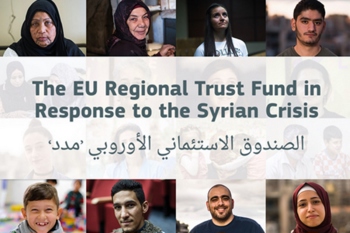
The Overall Objective is to establish a comprehensive Monitoring and Evaluation mechanism: for the EUTF in response to the Syrian crises, the 'MADAD Fund'.
Purpose:
The purposes of this contract are:
l. Results-Oriented Monitoring: To monitor the implementation of and develop recommendations for ongoing MADAD-financed projects and provide evidence based know ledge on the results and outputs, through the use of SMART qualitative and quantitative indicators.
2. Data Collection: To assess effectiveness of the EUTF at thematic and geographic level, through regular data collection and systematization as well as sector/country analysis.
3. Impact-focussed Evaluation: To assess the sustainability, efficiency and effectiveness of Madad-funded programs and evaluate prospects of impact.
- Partners:
- Particip (Lead), GOPA, Integration
- Keywords:
- Monitoring & Evaluation
Mid-Term evaluation of actions funded under the Civil Society Facility and Media Programme 2016 – Turkey component
- 2019 – 2019
- under € 500,000
- Türkiye
The support to civil society is an important priority of EU financial assistance to Turkey. Civil Society Organizations (CSOs) are key actors in expressing the demands and needs of citizens and encouraging active citizenship; they can stimulate and expand the space for dialogue and cooperation on matters of public interest, including on the EU accession process.
As highlighted in the Revised Indicative Strategy Paper for Turkey 2014-2020, EU support to civil society has 3 objectives:
- Support the development of civil society allowing its more active participation in democratic policy and decision-making processes
- Promote a culture of fundamental rights and dialogue
- Enhance civil society dialogue and inter-cultural exchange between civil societies in Turkey and Europe
A key objective of the Instrument for Pre-accession Assistance II (IPA II) was to support reforms in the 'enlargement countries' that bring them closer to the EU and help them converge with EU rules and standards. IPA II set a framework for providing pre-accession assistance for the period 2014-2020 and put specific emphasis on the need to further support civil society.
The main objectives of this evaluation were to provide the relevant services of the European Union, the interested stakeholders with:
- An overall independent assessment of the past and on-going performance of the actions funded under CSF 2016 Turkey, paying particular attention to its intermediate results measured against its expected objectives; and the reasons underpinning such results
- Key lessons learned, conclusions and related recommendations in order to improve current and future actions.
In particular, this evaluation focused on progress to date and, by explaining why progress happened or did not happen as planned, provided recommendations on how to improve the actions during their residual duration in order to achieve the expected objectives, taking into account problems and opportunities. They were also supposed to serve to prepare new actions and encompass both forward and backward-looking perspectives.
The main users of this evaluation are the EU Delegation to Turkey as well as the 6 implementing partners.
- Partners:
- Particip (Lead), Tetra Tech NL
- Keywords:
- Civil society, Monitoring & Evaluation

Evaluation of EU Support for Rule of Law in Neighbourhood Countries and Candidates and Potential Candidates of Enlargement in the period 2010-2017
- 2018 – 2019
- under € 500,000
- ENI, ENI East, ENI South, IPA
The purpose of this evaluation was to provide an independent assessment and evidence on the scope and performance of the implemented and on-going EU support for Rule of Law (RoL) funded by the Instrument for Pre-Accession Assistance (IPA I and II ), and the European Neighbourhood and Partnership Instrument (ENPI ) and its successor the European Neighbourhood Instrument (ENI). It also encompassed support provided by global thematic instruments, such as the European Instrument for Democracy and Human Rights (EIDHR).
The Evaluation assessed to what extent the EU support to these institutions led to strengthening of RoL in the respective countries and beneficiaries, and in particular whether essential RoL principles were applied in practice.
The evaluation also aimed to provide recommendations for the improvement of the programming and implementation of EU support to RoL. In line with the ToR, the Evaluation focused on interventions in areas such as the judiciary, fundamental rights and democracy that have aimed to strengthen the RoL, and its results will be used to:
- Provide an overall independent assessment of EU support to RoL funded by the IPA (I and II) and the ENPI/ ENI and other relevant instruments;
- Demonstrate whether already on-going and planned IPA and ENPI/ENI action programmes and interventions in the area of RoL have incorporated lessons learnt;
- Support reflection on the revision of policies and programmes in view of the 2030 Agenda for Sustainable Development and new/ current policy framework;
- Provide recommendations to the European Commission (EC) on the most appropriate manner to approach and improve its financial and policy dialogue support to RoL;
- Contribute to the preparation or adjustment of action programmes under IPA II and ENI;
- Contribute to the development of a monitoring and evaluation framework, including through proposing indicators for measuring impact in capacity building in RoL and related activities.
The report is available at: https://ec.europa.eu/neighbourhood-enlargement/sites/near/files/rol_final_evaluation_report.zip
- Keywords:
- Human rights, Justice/Rule of Law, Monitoring & Evaluation

Review of Gender Equality Findings from Middle East Evaluations
- 2019 – 2019
- under € 500,000
- ENI South
Following intensive consultations that took place in 2016, Canada refocused its international assistance on helping the poorest and most vulnerable people and supporting fragile states.
Within this broader context, support has been requested by the International Assistance Evaluation Division (PRA) of Global Affairs Canada for the planning of an evaluation of gender equality programming in the Middle East. In this regard, a review of evaluations by other donors of development and humanitarian assistance programmes in the region has been considered as necessary.
The purpose of this study is to review available thematic evaluations, country programme evaluations, major project evaluations and possibly other essential documents related to the achievement of gender equality outcomes in the Middle East.
The focus of the study has been on three countries: Turkey, Lebanon and Egypt. The countries were chosen on the basis of amount and quality of the available literature rather than total spending of Global Canada’s which is highest in Jordan, Syria, and Iraq.
Support for the EU communication programme in Turkey
- 2016 – 2018
- € 5 – 10 million
- Türkiye
The overall objective of this communication programme is to communicate the EU's policy objectives in Turkey. The purposes of this contract are as follows:
- Promote the EU and its values – in particular civil and political rights - among the Turkish population with a particular focus on identified target audiences, notably young people (under the heading ‘Our Europe, Our Future’), and underline the practical benefits of adopting these values for the Turkish citizens.
- Disseminate information about what the EU is concretely doing for Turkish citizens through its financing instruments to key partners and policy-makers and enhance the visibility of EU-funded projects. This information will include facts and figures about EU funded projects as well as the impact and effect of these projects.=Promote EU interests in Turkey, whether of an economic nature or aiming at a better understanding of EU policy positions.
- Dispel myths and misconceptions related to the EU and EU-Turkey relations and the accession process.
- Partners:
- Norm (Lead), ESN, LDK, Particip
- Keywords:
- Communication & media
Assistance Technique au projet « Réaménagement et entretien de centres de rétention»
- 2016 – 2018
- under € 500,000
- Türkiye
The specific objective of this project was to strengthen the infrastructural capacity of the Directorate General of Migration Management in order to effectively implement the EU-Turkey Readmission Agreement and to advance the implementation of the Visa Liberalisation Roadmap by preparation of tender documents for the supply of furniture of 7 new removal centres which were to be constructed from the National funds in Ankara, Agri, Canakkale, Kocaeli, Konya, Malatya and Tekirdag and for the refurbishment and maintenance of 13 removal centres in Adana, Antalya, Aydin, Bursa, Canakkale, Edirne, Gaziantep, Istanbul, Izmir, Kirikkale, Kirklareli, Tekirdag and Van which were to be taken over from TNP (Turkish National Police).
- Keywords:
- Infrastructure

Technical assistance for Bafra Business and Export Development Unit (BEDU)
- 2016 – 2018
- € 1 – 2 million
- Türkiye
The overall objective of the project is to contribute to socio-economic development of Bafra.
The purpose of this contract to improve the competitiveness of all enterprises in Bafra with special focus on export development and stimulate start-ups.
Results to be achieved is:
• Business infrastructure for small and medium scale enterprises and entrepreneurs strengthened.
• Operational efficiency and access to finance capacities of small and medium enterprises and entrepreneurs increased
• Capacities of the project partners improved related to small business advisory services
- Partners:
- Norm (Lead), Particip
- Keywords:
- Industry & private sector development, Trade

Evaluation of EU support to social protection in external action 2007-2013
- 2016 – 2018
- under € 500,000
- Global
The objectives of the evaluation were to:
- support the decision-making, both at EU strategic (planning) level, and at the level of the design of the action programmes /interventions;
- feed into the reflection on the revision of future development policies in view of the recent adoption of the 2030 Sustainable Development Agenda;
- demonstrate whether already on-going/planned IPA (I) II, ENPI/ENI, DCI and EDF action programmes/interventions in the area of social protection have taken on board the latest lessons learnt from the previous programming period;
- provide recommendations on the best way to approach and improve its support to the development of social protection systems, in partner countries both in terms of the use of policy dialogue and financial assistance;
- contribute to the preparation and adjustment of action programmes, namely for IPA II, ENI, DCI and EDF assistance to the extent possible;
- feed in the Mid-term Review of financial instruments;
- feed in Mid-term Reviews of country/region multi-annual indicative programmes.
The evaluation used the five standard OECD/DAC evaluation criteria, namely relevance, effectiveness, efficiency, impact and sustainability. In addition, the evaluation also looked at the EU added value and the 3Cs.
The evaluation focused on EU support (policy dialogue and financial assistance) provided for the development of social protection systems in partner countries, more specifically on the social insurance and social assistance measures to address the following risks and needs: unemployment, parental responsibilities, sickness and healthcare, work accidents/employment injuries disability, loss of a spouse or parent, old age, housing and social exclusion.
The evaluation covered:
- IPA I beneficiary countries;
- ENPI partner countries;
- Countries covered by DCI and EDF.
The evaluation was conducted in four phases
- An Inception Phase, focusing on the design and the methodology of the evaluation including the reconstruction of the intervention logic and the compilation of an inventory;
- A Desk Phase, focusing on gathering and analysing existing data and information (through literature/document reviews and interviews/focus groups/surveys);
- A Field Phase, including preparation of field missions, visits to the case study countries (Bosnia and Herzegovina, El Salvador, Ethiopia, Turkey, Kyrgyzstan, Macedonia*, Malawi, Moldova, Montenegro, Morocco, Palestine*) and drafting of country reports;
- A Synthesis Phase, producing a final report and dissemination of results to concerned stakeholders.
- Partners:
- AETS (Lead), Particip
- Keywords:
- Civil society, Food and nutrition, Health, Monitoring & Evaluation
Capacity Building for Effective Nationality Determination
- 2016 – 2018
- under € 500,000
- Türkiye
The global objective of this project was to contribute to Turkey’s efforts in establishing well functional migration management system in line with new normative framework and EU acquis.
The specific objectives of this project were as follows:
- To support the DGMM to facilitate the nationality determination process of the irregular migrants and international protection applicants through Needs Assessment Report and Study visits;
- To support the DGMM in preparation of Terms of Reference and Technical Specifications documents for the project of “Capacity Building for Effective Nationality Determination”.
- Keywords:
- Governance

Technical Assistance for Information and Publicity Activities - II
- 2016 – 2017
- € 500,000 – 1 million
- Türkiye
The project aimed to promote public awareness regarding the objectives of the EU financial assistance in the transport sector and its impact on Turkish citizen's lives and Turkey’s economy.
Activities carried out to ensure and sustain the proper visibility of TOP and its projects.
A renewed perspective for the Communication Strategy and Action Plan was prepared.
Project-specific publicity events, media exchanges, focused events organized.
Raising of awareness and the dissemination of information to the general public and other stakeholders assured via printed, visual, website and social media.
The project also provided expert support to the Contracting Authority to enhance its capacity to implement information and publicity activities via formal training modules and a study visit.
The following results conducted:
• Public awareness raised on the TOP policy, activities, achievements and opportunities.
• Operations which are funded by TOP are promoted and target groups are informed about the programme and projects.
• Capability of the EULD Staff and end recipients of publicizing the projects improved.
• Sustainability of publicity/visibility activities ensured.
- Partners:
- Norm (Lead), ESN, Particip
- Keywords:
- Communication & media, Project implementation / Technical Assistance

Technical Assistance to the Project 'Enhancing the Capacity to Determine and Reduce the Disaster Risks Stemming from the Climate Change in Turkey'
- 2017 – 2017
- under € 500,000
- Türkiye
The global objective of this contract was to minimize the risks of probable disasters that may occur depending on the climate change in Turkey.The specific objectives of this contract were as follows:
- To conduct legislative and institutional gap analysis, climate change impacts and climate related disaster vulnerabilities in Turkey analysis
- To prepare/revise the necessary project documents such as project fiche, terms of reference including the budget and technical specifications based on the analysis of existing documentation and stakeholder views for the project “Enhancing the Capacity to Determine and Reduce the Disaster Risks Stemming from the Climate Change in Turkey".
- Partners:
- Particip (Lead), ETI
- Keywords:
- Environment

Final Evaluation of Sivil Dusun Programme (Program to support civil society)
- 2017 – 2017
- under € 500,000
- Türkiye
The global objective of this assignment was to carry out the final evaluation of Sivil Dusun Programme (contracts IPA/2012/306-893 and IPA/2014/352-653 centrally managed by the EU Delegation to Turkey in the framework of the Civil Society Facility - Turkey window). The evaluation provided findings and recommendations to assist the EU Delegation to Turkey in the programming and implementation of upcoming supports to civil society in Turkey, and more particularly of the third phase of Sivil Dusun due to start by-mid 2018.
The specific objective was to evaluate the implementation of Sivil Dusun Programme using the classical criteria for programme evaluation (relevance, efficiency, effectiveness, organisation and internal methodology, consistency, complementarity and synergies, impact and sustainability).
The final evaluation encompassed all Components of the programme but according to the Terms of Reference specific attention was given to the forthcoming topics: Framework Partnership Agreements (FPAs) for supporting networks; Flexible response mechanism for civil society in action – Micro Grant Scheme; Active Citizenship Mechanism (ACM); Support to CSO networking and communication skills.
- Keywords:
- Civil society, Monitoring & Evaluation

Post-conflict and post-disaster needs assessment (PCNA/PDNA): development of assessment capacity and tools - Phase I + II
- 2013 – 2017
- € 2 – 5 million
- Global
Relevant background
Since early 2007, the Commission, the UN-family and the World Bank have worked together in setting up a platform for cooperation on post-crisis needs assessments for natural disaster (Post-Disaster Needs Assessment, PDNA) and conflict (Recovery and Peacebuilding Assessment (RPBA), previously named Post-Conflict Needs Assessment, PCNA) scenarios. This trilateral cooperation was framed and formalised through the signature of a Joint Declaration on “Post-Crisis Assessments and Recovery Planning” in September 2008. The EU/UN/WB platform covers the whole PDNA/RPBA(PCNA) process, including strategic coordination, development of joint methodologies for post-crisis assessments, joint deployment of assessment teams, joint training and joint recovery planning and monitoring.
In line with the 2008 Declaration on Joint Post-crisis Assessments and Recovery Planning, the overall objective of the project is to assist and develop third countries’ in-country capacity to gradually assume a more prominent role in Post-Disaster Needs Assessments and Post-Conflict Needs Assessments (now changed to Recovery and Peacebuilding Assessments, RPBA).
The purpose of this project was:
- to support further development of joint PDNA/RPBA(formerly PCNA) methodologies, tools, training programmes, etc.;
- to support joint PDNA/RPBA(formerly PCNA) missions in-country/in region (in coordinating with EU Heads of Delegations and with the European External Actions Service (EEAS) and European Commission). While such support could cover any relevant technical field (long-term and short-term expertise), it is foreseen that a particular emphasis is put on expertise in mission planning and development of final reports/recovery frameworks.
The two phases of the project contributed to a variety of outputs and results, including:
- Phase 1 (01/01/2013 – 31/07/2015): revision of the PDNA methodology and development of the joint EU/UN/WB PDNA Guide, development of the Disaster Recovery Framework (DRF) Guide, review of the PCNA methodology, development of training and capacity building materials, delivery of information/capacity building sessions, joint PDNA/PCNA training courses for national authorities and regional/international organisations, support to over 15 joint EU/UN/WB PDNA/PCNA missions;
- Phase 2 (10/07/2015 – 09/07/2017): revision of the PCNA methodology and development of the RPBA methodology, development of training and capacity building materials, delivery of information/capacity building sessions, joint PDNA/RPBA training courses for national authorities and regional/international organisations, support to over 10 joint EU/UN/WB PDNA/RPBA missions.
- Partners:
- Particip (Lead), Dara, ECDPM, GOPA, Punto.sud
- Keywords:
- Governance, Humanitarian aid, Institutional development, Training

Evaluation of the Instrument for Pre-accession Assistance (IPA II)
- 2016 – 2017
- under € 500,000
- Albania, Bosnia & Herzegovina, Kosovo, Montenegro, North Macedonia, Serbia, Türkiye
The Evaluation of the Instrument for Pre-accession Assistance (IPA II) assessed whether IPA II is fit for purpose to deliver EU resources towards EU's external policy, both at start of the planning period (2014) and at the time of the evaluation (2017), and considered the place of IPA II – its complementarities and synergies – within the wider set of external financing instruments.
The objective of the IPA II evaluation was: 1) to provide the relevant external relations services of the European Union and the wider public with an independent assessment of the IPA II instrument, including complementarities/synergies between IPA II and the other EFIs; and 2) to inform the future programming and implementation of the current EFIs, as well as the next generation of the EFIs.
The evaluation was evidence-based using a non-experimental mixed methods approach combining quantitative and, more importantly, qualitative data and was guided by Evaluation Questions (EQ) covering EU evaluation criteria (relevance; effectiveness, impact and sustainability; efficiency; added value; coherence, consistency, complementarity and synergies; leverage).
The main analytical tools consisted of a rigorous assessment of documentation, analysis of statistics and quantitative data and a consultation of stakeholders (via interviews, group discussions, the online-survey focusing on EU Delegations and the Open Public Consultation).
The report is available at:
https://ec.europa.eu/neighbourhood-enlargement/sites/near/files/final_report_ipa_ii_evaluation.zip
- Keywords:
- Monitoring & Evaluation