
Our projects
Explore Particip’s project experience across countries, sectors and areas of expertise.
Our references provide an overview of completed and ongoing assignments, including their objectives, geographic scope, duration and contract value.
Showing 541–550 of 985 references

Study on air pollution in Dhaka and opportunities for cost-effective control solutions
- 2019 – 2021
- under € 500,000
- Bangladesh
The global objective of the project is to identify the most effective solutions to tackle the problem of air pollution in Dhaka metropolitan area.
Specifically, the project aims:
- To determine the main drivers of air pollution in Dhaka metropolitan area and its surroundings, categorized by type, origin and impact,
- To have an overview of the economic costs of air-pollution, also with reference to health impacts,
- To identify key areas of action for cost-effective control solutions and strategies, to address/mitigate the causes of air pollution in the Dhaka metropolitan area.
The services provided by our expert include:
- Collection and analysis of all available information and already existing data, statistics, literature and studies on the quality of air and air pollution levels in Dhaka metropolitan area;
- Elaboration of an in-depth understanding of the main sources of air pollution in the area;
- Outline of an estimate of the economic costs of air-pollution's impact on health (e.g. estimated medicines expenses, labour loss…) by source of pollution;
- Identification of cost-effective actions for remediation and mitigation of the impact of the pollution in Dhaka metropolitan area, listed and classified in a way that provides a clear comparison of their feasibility, cost-effectiveness, impact extent; a SWOT analysis could be performed as well;
- Assessment and outline of the associated risks for the identified actions including gaps in laws and regulations, feasibility to fill those gaps, potential job creation/losses, bottlenecks among others.
- Partners:
- Particip (Lead), AETS, CAPA EEIG (managed by Particip)
- Keywords:
- Environment

Mid Term evaluation of MLI/804 project : Appui au développement économique local et à la prévention des conflits dans les régions de Gao et Tombouctou (ADEL)
- 2021 – 2021
- under € 500,000
- Mali
The expected results are as follows:
- Result 1: Associations and cooperatives contribute to local economic development. This result, which continues through the implementation of local economic projects in the fields of agriculture, livestock, fishing, handicrafts, allows the improvement of economic benefits and agricultural yields of associations and beneficiary households and also contributes to the revitalization of the local economy (mobilization of local economic operators).
- Result 2: Young men and women in the Timbuktu region are trained and professionally integrated through self-employment and salaried work. This result makes it possible to increase the integration rate of young people through self-employment and salaried work, as well as the level of economic benefits and wage remuneration.
- Result 3: Basic social services are strengthened and local authorities contribute to their operation. This result is achieved through the rehabilitation (construction, rehabilitation, equipment) and improvement of basic social services (schools, health centers, water points, socio-collective infrastructure) for the benefit of the populations.
- Result 4: Local authorities are strengthened in the exercise of their mandate and functions. This result continues on the one hand through the strengthening of the skills of elected officials and agents of the beneficiary local authorities, on the other hand by the support and/or the establishment of mechanisms for the prevention and management of conflicts.

Evaluation of the EU cooperation with Central African Republic (2008-2019)
- 2019 – 2021
- under € 500,000
- Central African Republic
The Evaluation focuses on the development cooperation of the European Union (EU) with the Central African Republic (CAR), the cooperation strategy since 2008 and its implementation from 2014 to 2019.
This evaluation had two overarching objectives. Firstly, to provide the relevant external co-operation services of the European Union (EU) and the wider public with an overall independent assessment of the EU's past and current cooperation with Central African Republic. And secondly, to identify key lessons and to produce recommendations in order to inform the responsible decision makers on how to improve the current and future strategies, programmes and actions of the EU.
In addition, the specific objectives for this evaluation were to:
- Assess the performance (relevance, efficiency, effectiveness, coherence, impact, sustainability and EU value added) of EU support (policy dialogue and financial assistance) and its contribution to the restoration of an inclusive and sustainable peace in CAR;
- Draw lessons for the EU's future intervention in fragile states;
- Provide recommendations for the next programming cycle (2021-2027).
The thematic scope of the evaluation covered: economic governance and public administration, justice, democratic governance, security, education, health (including urban water and sanitation), as well as rural resilience, job creation and the management of natural resources. The evaluation also analysed the support for major infrastructure networks and regional economic integration.
- Partners:
- Ecorys B.V. (Lead), Particip
- Keywords:
- Agriculture, Governance, Monitoring & Evaluation, Public finance/budgeting

Mid-term evaluation of cross border cooperation programmes between IPA II beneficiaries
- 2019 – 2021
- under € 500,000
- IPA
The general objective of the mid-term evaluation was to provide an independent assessment and evidence on the performance of CBC Programmes between IPA II Beneficiaries from their launch in 2014 until 2019.
The general objectives of this evaluation were to:
- Assess the performance of CBC Programmes between IPA II Beneficiaries during 2014-2019, the cut off date for the evaluation is 31 December 2019;
- Identify good practices and lessons learned;
- Provide recommendations to improve the implementation of CBC Programmes between IPA II Beneficiaries;
- Produce recommendations for future programming and policy purposes for territorial cooperation in the context of the next Multiannual Financial Framework (MFF) and in particular the Commission proposal for the 2021-2027 Instrument for Pre-Accession Assistance (IPA III).
The evaluation included all nine ongoing IPA CBC Programmes between IPA II Beneficiaries, amounting to a total budget of €83.3m financial contribution from the European Commission. A total of €27.029m had been contracted through 13 completed calls for proposals across eight of the nine programmes
- Partners:
- Ecorys B.V. (Lead), Particip
- Keywords:
- Monitoring & Evaluation
Final evaluation of the implementation of the SPRING Convention and related projects and formulation of recommendations
- 2020 – 2021
- under € 500,000
- Morocco
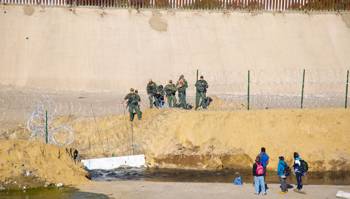
Systematic and timely evaluation of its programmes and activities is an established priority of the European Commission. Evaluation focuses on the analysis of the achievements, the attainment and the quality of the results of actions, in the context of an evolving cooperation policy, with an increasing emphasis on results-oriented approaches and contribution to the implementation of the Sustainable Development Goals (SDGs).
From this perspective, evaluators should find evidence of why, where and how these results are linked to the EU intervention and try to identify the factors driving or hindering progress.
Evaluators should provide an explanation of the causal links between inputs and activities, and outputs, outcomes and impacts. The evaluators' work should encourage accountability, decision-making, learning and management.
The main purpose of this evaluation was to provide the relevant EU services and interested stakeholders (including technical and financial partners and civil society organisations) with the following information
- an overall and independent analysis of :
- the overall coherence of the Spring Convention (choice and articulation/complementarity of components, choice of partners, management modes, calls for proposals, timetable, etc). The analysis of coherence was also put into perspective with EU projects and programmes in Morocco on the professional integration of vulnerable Moroccan populations.
- the performance of the projects implemented under the latter, and more specifically the two following projects, paying particular attention to their results in comparison with the expected objectives. The factors (positive or negative) underlying these results have been identified.
- Support for the creation and development of entrepreneurship projects and cooperatives among refugees in Morocco' (UNHCR).
- Work4Integration
- The evaluation of the Work4Integration project was carried out in order to identify lessons learnt, conclusions and associated recommendations, so as to improve/guide, if necessary, the remaining actions of the Work4Integration project and to help sustain them in order to systematise good practices.
In particular, this evaluation served to understand how the programme's articulation, as well as the implementation arrangements proposed under each of the projects, have allowed the performance of the actions as demonstrated to date (response to the needs of care and training of the beneficiaries and reduction of the vulnerabilities/empowerment of the target populations), the effectiveness of the capacity building of the national actors, as well as the institutionalisation of the established cooperation mechanisms and processes.
The evaluation covered the relevance of the procedures and tools for information and selection of beneficiaries as developed and applied in each of the projects (particularly in terms of employability), the determining factors in the professional and socio-economic integration of migrants and refugees, the structural (or other) reasons underlying the delays in the deployment of certain activities and the achievement of certain results.
The evaluation of the Financing Agreement and its projects served as a basis for the planning of future EU actions and interventions in the same sector, notably in the framework of the UTF funding allocated for Morocco under phase III of the DEV-pillar of the Regional Development and Protection programme, Reference: T05-EUTF-NOA-REG-08 (the specific objective for Morocco was: Self-sufficiency of target groups and host communities is enhanced).
For the Delegation of the European Union in Morocco, the specific aspects to be assessed were
- The coherence of the programme as articulated in the Financing Agreement with i) the objectives of the Mobility Partnership, ii) the Migration Policy Support Programme and iii) the Sharaka project.
- The relevance of the guidelines of the call for proposals to the achievement of specific objective 2 of the Financing Agreement.
- The contribution of the different projects to the results of (i) the Financing Agreement and (ii) the call for proposals
- The adequacy of the response mechanisms (including awareness-raising campaigns) proposed in the projects, i) with the needs of migrants and refugees and ii) with the existing training, referral and support systems. The complementarity of the schemes has been studied.
- The relevance of the choice of project leaders (contractors and co-contractors): relevance of the roles and functions assigned to national partners (institutional and associative) in the projects as well as their adequacy with the technical capacities, mandates, sectoral and functional responsibilities. The added value of the partners selected was commented on, particularly with a view to the sustainability of the mechanisms put in place.
- The relevance of the projects' set-up in the perspective of the institutionalisation of the mechanisms of support, supervision and financing of the beneficiaries as deployed and/or supported by the projects. In this respect, the relevance of the granting of subsidies and co-financing arrangements was studied.
- The relevance, quality and effectiveness of the capacity building activities of the beneficiaries and partners as well as their anchorage in the existing institutional fabric and their coordination with other similar initiatives.
- The achievement and sustainability of planned results and the positive and negative factors underlying them.
- The performance of the management of the actions, as well as the absorption and adaptation capacity of the implementing actors to a changing environment and a restrictive legal framework.
- The calibration of financial resources versus the results obtained.
- The adequacy of funding methods (grants versus micro-finance)
- Partners:
- Particip (Lead), EPRD
- Keywords:
- Civil society, Human rights
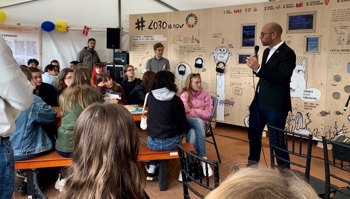
The EC implemented the 2019 #2030isnow campaign of the EU Development Communication Network. The main objective of this campaign was to inform European citizens - particularly young people - about European development cooperation policies and activities in support of the 2030 Agenda and the SDGs.
As a main communication tool, the Network opted to install stands with an interactive “wall” in existing summer festivals around Europe. The interactive wall informed the festivalgoers about the 2030 Agenda and Europe’s leading role in supporting the SDGs around the world. The installation of both the wall and the surrounding elements required the management of their procurement, delivery, installation, removal and disposal. Particip further responsible to ensure the correct functioning of all technical and IT components integrated into the interactive wall throughout the entire duration of all events.
The project closely coordinated with the participating Member States, the festival organizers, other involved service providers and the European Commission on all practical aspects of the organization in each country.
The events and festivals identified were located in Slovenia, Estonia, Germany, Spain, Denmark, Belgium and other European countries.
The campaign ran from May to September 2019 and the project also supported follow-up activities in 2020.
- Partners:
- Particip (Lead)
- Keywords:
- Civil society, Communication & media

Consultancy Services to Carry out Re-organization and Modernization of the Ministries, Departments and Agencies of Somaliland Government (Civil Service Strengthening Project)
- 2020 – 2021
- under € 500,000
- Somalia
The Government of Somaliland (GoSL) was supported to improve capacity to perform key government functions, strengthen its policy capabilities and improve civil service management including support to improve institutional, organizational and individual level capacity to improve public sector performance.
Organizational performance is directly dependent on the quality of staff performing well-defined functions on the basis of clearly defined mandates and availability of appropriate tools and enabling work conditions.
The Civil Service Strengthening Project (CSSP), funded by the World Bank, aimed to support the GoSL to conduct a rapid assessment of mandates, functions and staffing requirements of ministries, departments and agencies (MDAs) including taking them through a visioning process to define their vision, mission and value system.
The key objective was to support the establishment and/or strengthening of Human resources and the Policy and planning departments in the beneficiary institutions (BIs) and the roll out of related reforms in these areas.
The objective of this assignment was to provide technical assistance to support a diagnostic assessment of the organizational set up of MDAs focusing on their mandates, functions, and organizational structures, staffing requirements and administrative policies, processes and systems.
The assessment identified:
- National development priorities that MDA contributes, Service Delivery and performance issues;
- Gaps in mandates and functions in the context of government performance on national development objectives;
- Relevance of the current organizational structure to the mandates and functions and proposed changes and recommendations in the organizational structure, taking into account relevant international experience;
- Vision, mission and value statements of MDA in line with NDP2 and HR best practices
- Relevance of current staffing to the mandates and functions and recommendations on staffing requirements, taking into consideration impact on the wage bill of MDA;
- Critical and strategic positions to be filled through the Talent Management Program (TMP).
The result of the organizational assessment facilitates the identification of critical and strategic positions to be filled through the Talent Management Program.
- Partners:
- Particip (Lead)

Third Party Monitoring (TPM) under COVID-19 Emergency Response and Health Systems preparedness project
- 2020 – 2021
- € 500,000 – 1 million
- Afghanistan
As a response to the rapid spread of COVID-19 in Afghanistan and the call for humanitarian assistance, the World Bank has granted the Ministry of Public Heath (MoPH) of Afghanistan a project called “Afghanistan COVID-19 Emergency Response and Health System Preparedness project (ESHSP)”. The project’s main goal is it, to reduce the spread of COVID-19 and to prepare the countries national health systems for the pandemic and strengthen their capacities.
Overall objective:
The overall purpose of the consultancy services is to assess and monitor the performance and progress of COVID 19 contracts under Emergency Response and Health System Preparedness (ERHSP) Project with the implementing BPHS/EPHS partner, WHO and UNICEF.
Specific Objectives:
- assess and monitor die availability of staff and equipment’s, quality of services and readiness
- assess and monitor the compliance of implementing NGOs with the signed contracts
- assess and monitor the availability, functionality and effectiveness of RRTs at provincial level,
- assess and monitor the availability, functionality, effectiveness, sensitivity, simplicity of targeted laboratory centres
- assess and monitor the effectiveness simplicity, timeliness, data quality, data completeness, flexibility, usefulness, and acceptability of the surveillance,
- assess and monitor the supply chain management including timeline of medicine, equipment’s, PPE kits, consumable items and Lab reagents procured by UN (WHO and
UNICEF) at central, provincial and targeted HF levels,
- assess and monitor the quantity including (consistency and completeness) and quality of medicine, equipment’s, PPE kits, consumable items and Lab reagents at central, provincial and targeted HF levels,
- assess and monitor the availability and effectiveness of risk communication activities under ERHSP project,
- asses and monitor the implementation of infection prevention measures at COVID-19 wards/hospitals
Longterm: Shortterm:
K1 12 wm N1 228 wm
K2 12 wm N2 64 wm
N3 11 wm N8 1 wm
N4 30 wm N10 8 wm
N5 12 wm
N6 12 wm
N7 12 wm
N9 10 wm
- Partners:
- Particip (Lead), KIT - Royal Tropical Institute
- Keywords:
- Monitoring & Evaluation
Ex-post Evaluation of EU Support to Civil Society delivered under IPA 2007 to 2014 in Turkey
- 2020 – 2021
- under € 500,000
- Türkiye
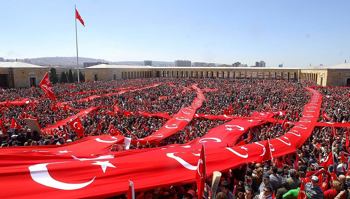
This ex-post evaluation assessed interventions funded under the IPA programs in support of civil society in Turkey, managed primarily under IMBC.
For the purpose of the evaluation, a limited number of projects financed under the IPA II 2014 allocations was part of the assessment.
The evaluation did not only describe what has been achieved (or what the Intervention contributed to achieve) but particularly why and upon what conditions results have been (or have not been) achieved.
- Partners:
- Particip (Lead), SICI Dominus
- Keywords:
- Civil society, Monitoring & Evaluation
Support to preschool education system reform
- 2019 – 2021
- € 500,000 – 1 million
- Serbia
The aim of this project was to support the Ministry of Education, Science and Technological Development and Local Self Governments (LSGs) to continue reform of pre school education, such as improving the preschool education as part of the lifelong learning to plan and manage pre-school education on the local level and to implement modem pedagogical approaches in pre-school education.
The project improved the capacities of the LSGs stakeholders (responsible employees for education in LSGs) and pre-school staff (teachers, associates, principles and mentors) which are crucial for the implementation of quality inclusive pre-school education as a constructive start to lifelong learning. Moreover, parents were made aware of the importance of early involvement of children in education.
Activities of the project included trainings, expert meetings, presentations on TV, newspapers, web-page, etc.
The following results were attained:
- Professional capacities of LSGs to plan and manage preschool education were strengthened
- Professional competences of preschool institutions staff for quality inclusive preschool education were improved
- Legislative framework in accordance with the new laws and Preschool Curriculum Framework were developed
- Partners:
- Particip (Lead), CIP, IB, VBJK
- Keywords:
- Education, Project implementation / Technical Assistance, Training