
Our projects
Explore Particip’s project experience across countries, sectors and areas of expertise.
Our references provide an overview of completed and ongoing assignments, including their objectives, geographic scope, duration and contract value.
Showing 571–580 of 985 references

Mid Term Review of Civil Society in Uganda Support Programme
- 2021 – 2021
- under € 500,000
- Uganda
The overall objective was to assess the overall performance of the Civil Society in Uganda Support Programme.
The specific objectives of this evaluation were to:
- Assess the performance of the Civil Society in Uganda Support Programme (CUSP), paying particular attention to its intermediate results measured against its expected objectives; and the reasons underpinning such results;
- Enumerate the benefits for civil society directly accruing from Civil Society in Uganda Support Programme (CUSP);
- Assess the extent to which the action has contributed to quality improvement of CS landscape;
- Highlight the key lessons learnt, conclusions and related recommendations for adjustment in order to improve the current Action and its possible extension as well as future Actions.
- Partners:
- Particip (Lead), EMI (formerly: Cardno Belgium)
- Keywords:
- Civil society, Monitoring & Evaluation

Evaluation of EU support to local authorities in Enlargement and Neighbourhood regions (2010-2018)
- 2019 – 2021
- under € 500,000
- ENI, IPA
The purpose of this evaluation was to provide an independent assessment and evidence on the extent to which EU external action has contributed to the achievement of objectives and intended impacts of the EU’s policy towards local authorities (LAs) in enlargement and neighbourhood regions during the 2010-2018 period.
The specific objectives of this evaluation were:
- To assess the performance (relevance, efficiency, effectiveness, coherence, impact, sustainability and EU value added) of EU support (policy dialogue and financial assistance) to LAs and associations of local authorities (ALAs) in partner countries between 2010 and 2018;
- To assess the coherence, complementarity and coordination of EU interventions financed from IPAI/II and ENPI/ENI with other actions financed from other EU instruments, actions carried out by Member States, regional and international donors (state and/or international organisations) to support LAs and ALAs in partner countries;
- To provide recommendations for future programming and policy purposes, particularly on how to engage with LAs and ALAs in the next Multiannual Financial Framework (MFF) and in the context of the Commission proposals for the Neighbourhood, Development and International Cooperation Instrument (NDICI) and the Instrument for Pre-Accession III.
The results of the evaluation were used to:
- Take stock of the results achieved by the European Commission's support to local authorities and associations of local authorities in enlargement, neighbourhood regions over a large period of time (2010 to 2018) and identify the contributing (and hindering) factors;
- Consider those results against the problems and needs the EU's support to local authorities and associations of local authorities sought to address, resources deployed, as well as instrument and implementation modalities available;
- Measure the extent to which strategic orientations and principles were operationalised within the design, implementation and monitoring of the EU's support (political and policy dialogue as well as financial assistance) to local authorities and their associations;
- Identify areas of improvement for future policy and financial assistance orientations and guidelines, as well as for the future programming of interventions for the remaining period of the 2014-2020 Multi-annual Financial Framework and for the future one
- Partners:
- Particip (Lead), ECDPM
- Keywords:
- Governance, Infrastructure, Institutional development, Monitoring & Evaluation, Rural and urban development

Final evaluation of the Technical Cooperation Project in support of the Renewable Natural Resources Sector Bhutan
- 2020 – 2021
- under € 500,000
- Bhutan
The main objectives of this evaluation were to provide the relevant services of the European Union and the interested stakeholders with:
- an overall independent assessment of the past performance of the 'Technical Cooperation Project in support of the Renewable Natural Resources Sector Bhutan', paying particular attention to its results measured against its expected objectives; and the reasons underpinning such results;
- key lessons learned, conclusions and related recommendations in order to improve current and future Actions.
In particular, this evaluation served as an independent assessment of the:
- extent to which the project has achieved its intended results.
- factors that contributed or created obstacles in the achievement of results.
- identify key lessons that would lead to improved future actions in the country.
- propose practical recommendations and a roadmap that can be addressed through the ongoing EU supported initiatives in the country.
- Partners:
- Particip (Lead), CAPA EEIG (managed by Particip), EMI (formerly: Cardno Belgium)
- Keywords:
- Environment
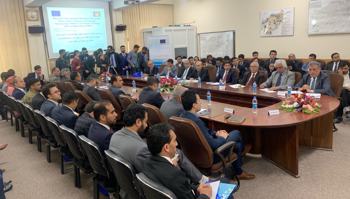
Second phase of EU Assistance and Training in Transboundary Waters for the Ministry of Foreign Affairs Afghanistan (ATTBW2)
- 2018 – 2021
- under € 500,000
- Afghanistan
The specific objective was to increase the capacity of The Directorate General of Border Affairs, Transboundary Rivers and Security Cooperation (DGBSC) for high-level negotiations between Afghanistan and Iran (involving the Hari Rud and Helmand); Turkmenistan, Tajikistan and Uzbekistan (involving the Amu Darya); and Pakistan (involving the Kabul/Kunar).
Ancillary objectives included promoting peaceful regional cooperation and development and ensuring there is a reasonably sustainable training program in place for these matters at the MoFA Institute of Diplomacy.
- Provided on-going support and advice including, but no limited to, strategic, international legal and negotiation advice to MoFA and other involved Afghan Ministries within the scope of the Project.
- Researched, organized, conducted and promoteed a visibility campaign.
- Researched, organized and conducted an experiential learning strategic overview mission to one of the River Basins abroad, close to the Afghanistan context to facilitate both substantive learning and team building.
- Further researched, developed and successfully implemented the already existing Data Base and Training Course / Curriculum on International Watercourses.
- Significantly improved the substantive knowledge, skills and capacity of MoFA Staff through mentoring.
- Keywords:
- Environment, Institutional development

Visibility of EU and EU assistance in the Republic of Moldova in 2020
- 2020 – 2021
- under € 500,000
- Moldova
The overall objective of the project was to achieve increased visibility of EU and the EU assistance provided to the Republic of Moldova, while providing targeted information on tangible results for the Moldovan citizens. The contract focused on EU values and assistance provided to the country, taking as reference the framework of the Association Agreement (AA) and the Deep and Comprehensive Free Trade Agreement (DCFTA). In addition to this, increased focus was placed on visibility of the European Neighbourhood Policy (ENP), the European Neighbourhood Instrument (ENI), the Eastern Partnership (EaP) and EU regional policies.
Last but not least, a special focus was placed on the role and importance of European values and culture, thus providing a pivotal role to communication activities around cultural aspects, both of the EU and the Republic of Moldova.
The specific objectives of this contract were:
- 1.Organisation of Europe Day events
- 2.Management of online communication tools of the EU Delegation
- 3.Provision of support to the EU Delegation in light of high-level communication events, cultural events and ad-hoc events
- 4.Provision of support for the promotion and participation of the EU Delegation in culture related events.
- Partners:
- Particip (Lead), BDR Associates
- Keywords:
- Communication & media
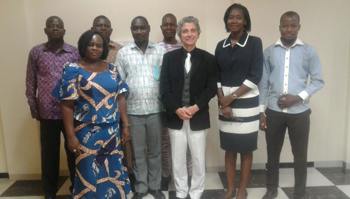
Technical assistance within the areas of justice, human rights and security in Burkina Faso
- 2016 – 2021
- € 2 – 5 million
- Burkina Faso
TECHNICAL ASSISTANCE TO THE MINISTRY OF JUSTICE, HUMAN RIGHTS AND CIVIC PROMOTION
The objective of the Development Commitment Paper 1 (DCP 1) was to “strengthen the effectiveness of human rights and the credibility of justice”. Its aim is to produce the following four outputs:
- Output 1: the Ministry of Justice, Human Rights and Civic Promotion (MJHRCP) will monitor and coordinate the follow-up of the recommendations from the Universal Periodic Review (UPR) for which the public partners are responsible, and strengthen the public partners’ capacities in monitoring methods and documenting tools.
- Output 2: the UPR recommendations for which the MJHRCP is responsible will be implemented, in particular concerning the key recommendations relating to the categories of rights that are targeted (e.g. child rights, women’s rights, the disabled and prisoners) and relating to the independence of justice.
- Output 3: the legislative framework will be made more inclusive and participatory in accordance with the UPR recommendations concerning the independence of justice and the categories of rights targeted (child rights, women’s rights, the disabled and prisoners).
- Output 4: the code of ethics will be adhered to better within the justice administration and by the judiciary actors.
The DCP 1’s field of activity was funnel-shaped from the broadest to the most specific issue, and can be described as follows: the general aim of output 1 is for the MJHRCP to monitor and coordinate the follow-up of the UPR recommendations, under the responsibility / in partnership with other public partners (the responsible ministerial departments or partners, and public institutions including the National HR Commission etc.) and to strengthen their capacities in monitoring methods and documenting tools; the aim of output 2 is for the MJHRCP to implement the UPR recommendations, particularly concerning the quality of the key recommendations relating to non-derogable fundamental rights, the independence of justice, women’s rights and child rights; the aim of output 3 is to make the legislative framework more inclusive and participatory in accordance with UPR recommendations, in particular concerning the independence of justice, women’s rights and non-derogable rights; and finally, more specifically, output 4 aims to improve the code of ethics within the justice administration and among the judiciary actors.
TECHNICAL ASSISTANCE TO THE MINISTRY OF TERRITORIAL ADMINISTRATION, DECENTRALISATION AND SECURITY
The objective of the DCP 2 was to “help improve local access to justice, stability and the protection of human rights (2016 – 2020)”. Its aim is to produce the following three outputs:
- Output 1: security services will have a good command of the tools and procedures for the protection of human rights, as per international standards.
- Output 2: security services will show more presence and effectiveness in the towns / villages that do not have police or gendarmes.
- Output 3: the participation of the communities in building security will be effective, especially for vulnerable groups.
The DCP 2 covers the Eastern and Northern Sahel regions and also the strategic function activities at central level. The flagship actions of the present commitment are based on:
- Support in reforming policies, security standards and human rights, as planned in the context of the security services’ missions, and support in preparing a White Paper on defence and security, planned for 2016.
- Consolidating the initial training in police and gendarme schools (new tools, approaches, procedures and techniques for human rights) and the continuing training (training of trainers and decentralised training in three regions) to accompany the huge ongoing recruitment drive for police officers and gendarmes.
- Support in deploying childhood protection squads in the Eastern and Northern Sahel regions.
- Set-up of model stations / units to receive citizens (especially locally for facilities to keep suspects in custody, separate rooms for women and minors, information panels to provide information on the services or benefits available).
- Support with communication and dialogue between the security services and the population, to assist with community participation on security issues, community conflict resolution and the fight against violent extremism.
The expected results include an improved capacity to deliver security services while respecting and protecting human rights; better citizen’s perception of security services; more responsible security services; and an improved dialogue between state actors and non-state actors when building community security and respecting human rights. The emphasis is placed on groups vulnerable to insecurity or to being deprived of human rights, such as the populations of the three regions and within them, women, minors, and chronic victims of the violation of human rights in Burkina Faso.
- Partners:
- Particip (Lead), TANA Copenhagen
- Keywords:
- Human rights, Justice/Rule of Law

European Union Election Expert Mission to Kosovo 2021 - Early Parliamentary Elections
- 2021 – 2021
- under € 500,000
- Kosovo
The purpose of the Election Expert Mission (EEM) was to collect and analyse factual information, assess and report on the electoral process against international commitments, standards and good practice for democratic elections in line with the criteria contained in the Commission Communication on Electoral Assistance and Observation. The experts also formulated recommendations to improve future electoral processes and assess, when relevant, the state of implementation of recommendations made by previous electoral missions
- Keywords:
- Elections
Decentralized Evaluation of Support for Strengthening Resilience of Vulnerable Groups in Ethiopia: The Fresh Food Voucher Programme Expansion in Amhara Region, January 2018 - December 2020)
- 2020 – 2021
- under € 500,000
- Ethiopia
This evaluation assessed the WFP Fresh Food Voucher (FFV) programme implemented in seven selected districts of the Amhara region of Ethiopia. The programme sought to improve the dietary diversity of pregnant and lactating women and children aged 6-23 months and stimulate the local fresh food market. Through the FFV, WFP provided training and technical support to the Government, mobile money vouchers redeemable for fresh foods at retailer traders, and communication campaigns for social behaviour change.
This endline evaluation covered six programme districts in the period January 2018 to December 2020. It served the double purpose of accountability (through a performance and result assessment of the programme) and learning (about the reasons why certain results occurred or not, and deriving lessons and good practices) to inform operational and strategic decision-making.
For this purpose, the evaluation team undertook large-scale data collection from FFV beneficiary households and other stakeholders. The quantitative survey was conducted remotely (via phone) and included 1,380 households and 140 traders in the FFV districts. In addition, the team conducted a desk review and context analysis, and qualitative interviews with key informants and households. The resulting evidence addressed the evaluation criteria of effectiveness, efficiency and sustainability, with gender equality and empowerment of women mainstreamed throughout.
The final report is available at: https://www.wfp.org/publications/ethiopia-support-strengthening-resilience-vulnerable-groups-fresh-food-voucher
- Partners:
- C4ED (Lead), Particip
- Keywords:
- Food and nutrition, Monitoring & Evaluation

Evaluation of the EU's external action support in the area of gender equality and women's and girls' empowerment (2010-2018)
- 2019 – 2021
- € 500,000 – 1 million
- ACP (Africa), ACP (Caribbean), ACP (Pacific), DCI, ENI, ENI East, ENI South, IPA
The main objective of this evaluation was to provide an independent assessment and evidence on the contribution of EU external action support in the policy area of gender equality and women empowerment (GEWE). In line with the EU policy on evaluation, this evaluation sought to be a stock- taking lesson-learning and forward-looking exercise, as well as an accurate assessment of achieved results in line with the objectives of the EU Gender Action Plan (GAP) II and other relevant overall policy frameworks for gender equality such as the new approach on Women, Peace and Security Agenda, Agenda 2030, the New European Consensus for Development.
Its specific objectives were the following:
- To assess in both qualitative and quantitative terms the relevance, conditions of implementation and performance of EU external action to promote GEWE and its mainstreaming, particularly its efficiency, effectiveness, sustainability, and the EU added value.
- To assess whether the EU's policy and operational response on GEWE in partner regions (EU Plans of Action on Gender Equality and Women’s Empowerment for 2010-2015 and 2016-2020) have triggered new approaches and rendered EU external action support more effective, targeted, gender-responsive and efficient.
- To assess: a) the coordination and complementarity of the European Commission services, the European External Action Service (EEAS) and EU Members States’ external action; b) the coordination and complementarity between EU external action support and other non-EU donors’ and actors’; c) the coherence of EU GEWE policy in external action with other relevant EU external policies; and d) the coherence of EU external action support with international commitments to GEWE.
The evaluation should lead to the identification of conclusions, lessons learnt (both positive and negative), good practices regarding the achievement of the intended GEWE-related results and the Commission, the EEAS and EU Member States with a set of targeted and useful forward-looking recommendations for the improvement of the programming and implementation.
Through the course of the evaluation, the evaluation team conducted 18 case studies (focusing on countries, regions and thematic areas) which were subject to an in-depth analysis, including 9 field visits. Both a ‘country-level’ and ‘global’ survey – covering EU services (HQ and EU Delegations/Offices worldwide), EU Member States, other development partners and Civil Society Organisations – were part of the data collection and analysis process. Findings from all evaluation activities were synthesized into a final report.
Final report available here: https://ec.europa.eu/international-partnerships/evaluation-eus-external-action-support-area-gender-equality-and-womens-and-girls-empowerment_en
- Keywords:
- Governance, Human rights, Monitoring & Evaluation

Evaluation of the EU's external action support in the area of migration (2008-2018)
- 2019 – 2021
- under € 500,000
- ACP (Africa), Asia, ENI East, ENI South, IPA
The purpose of this evaluation is to provide an independent assessment and evidence on the contribution of EU external action support in aspects of the policy area of migration. Its specific objectives are the following:
- To assess in both qualitative and quantitative terms the relevance, conditions of implementation and performance of EU external action support to migration in the areas defined in the evaluation’s focal areas.
- To address coherence of the EU external action projects/programmes framed also in the international context (e.g. UN related and non-EU Member States) and achievement by the EU and the candidate countries for EU membership, the potential candidates and the partner countries of their respective commitments in these policy areas.
- To assess how EU external action support in the area of migration in the geographical focal areas, has changed in the aftermath of the 2015 structural shift associated with the so-called “refugee crisis.” The assessment shall also take into account complementarity of EU external action support with that of other donors and actors, including EU Member States.
- To assess whether the EU's policy and operational response to the external dimension on migration triggered new approaches and rendered programmes and actions more effective, targeted and efficient.
It furthermore aims to provide lessons learnt and recommendations for the improvement of the programming and implementation and shall:
- lead to the identification of conclusions based on objective, credible, reliable and valid findings;
- highlight lessons learnt;
- provide the Commission and the European External Action Service (EEAS) with a set of operational, targeted and useful forward-looking recommendations.
The three overarching thematic focal areas examined by this evaluation are the following: Legal (labour) migration, Smuggling of Migrants (SoM), and Trafficking of Human Beings (THB).
Report available here: https://ec.europa.eu/neighbourhood-enlargement/sites/default/files/eval_eu_support_migration_area_-_final_report.zip
- Partners:
- Particip (Lead), ECDPM
- Keywords:
- Monitoring & Evaluation