Uganda
15 references

Evaluation of the Country Programme in Uganda 2023-2027
- 2026 – 2027
- under € 500,000
- Uganda
The assignment concerns the end-term evaluation of Enabel’s Uganda Country Programme 2023–2027, with a total budget of approximately EUR 68 million. The programme supports Uganda’s development priorities through two main pillars. Pillar 1 focuses on decent jobs and economic opportunities for youth, including technical and vocational education and training (TVET), employability, entrepreneurship, value-chain development and business and human rights. Pillar 2 focuses on health, particularly maternal and child health and sexual and reproductive health and rights.
The evaluation examines the programme’s relevance, coherence, effectiveness, efficiency, sustainability and contribution to intended outcomes and longer-term change. It also assesses cross-cutting dimensions such as gender equality, human rights, inclusion and the principle of Leave No One Behind, as well as the programme’s added value within the wider Ugandan development context.
A theory-based and mixed-methods approach is applied, combining documentary and monitoring-data analysis with stakeholder interviews, focus group discussions and field observations. Fieldwork covers the principal programme implementation areas, including Kampala, Albertine, Acholi, West Nile, Busoga and Rwenzori, allowing the evaluation to capture differences across geographical, institutional and sectoral contexts. A light foresight component is also included to reflect on emerging trends, risks and opportunities that may affect the relevance and sustainability of programme results and future cooperation priorities.
The evaluation is expected to generate robust evidence on programme performance, identify lessons and good practices, and formulate practical recommendations to inform Enabel’s future programming and cooperation in Uganda.
- Keywords:
- Education, Health, Industry & private sector development, Monitoring & Evaluation

Evaluation of the project Wehubit 2.0 (BEL22009)
- 2026 – 2026
- under € 500,000
- Africa
The Wehubit 2.0 programme is Enabel's flagship D4D/innovation programme working on Digital Social Innovations (DSIs). This independent evaluation assesses the performance of Wehubit 2.0 against its objectives, with a focus on relevance, coherence, efficiency, effectiveness, sustainability and impact. It follows Enabel’s evaluation standards and includes a field visit in Dakar (Senegal). The evaluation approach combines document review and stakeholder consultation to generate evidence-based findings and practical recommendations, and is implemented within the ToR’s fixed reporting milestones.
- Partners:
- Particip (Lead), Technopolis Group
- Keywords:
- Monitoring & Evaluation

Evaluation of the project Digital for Girls and Women (BFA 22005)
- 2025 – 2025
- under € 500,000
- Burkina Faso, Uganda
This end term evaluation (ETE) of the Digital for Girls and Women (D4GW) project is both summative and formative with a general purpose to assess overall project performance. It aims at identifying all project outcomes and generating learning for scaling, sustainability, and policy integration within broader D4D initiatives.
The evaluation considers all pillars of the Project and its diversity in activities. Therefore, the scope is:
- Temporal: the ETE covers the whole implementation period, hence from December 2021 to May 2025, complementing the findings of the previous reviews (2022-2023 Results Report).
- Geographical: the ETE covers the project’s three geographical intervention areas: Belgium, Burkina Faso, and Uganda.
- Thematic: the ETE will assess the entire project, covering the analysis of the 2 specific objectives of the project, the interventions in the 3 countries, and the expected results.
Our approach to conducting this evaluation and the methodological tools is as follows:
- A theory-based approach relying on a contribution analysis that links together the inputs and activities of an intervention with its expected outcomes and impacts. A Theory of Change (ToC) is used to explain this intervention logic.
- Process evaluation: This methodology allows for understanding how well a program is working, the extent to which the program is being implemented as designed, and whether the implementation mechanisms are sufficiently efficient. While focusing on the “how” and “why”, it observes variances to initially intended, planned, and implemented activities.
- Collaborative and utilisation-focused approach: We will ensure to establish our analysis, interpretation, judgement and recommendations with an active involvement of evaluation users. This will not only improve the quality of our work but also allow a greater ownership and dissemination of our findings.
- Capitalising on existing data & evidence and combining qualitative and quantitative investigations: gather existing data from multiple sources, mainly the project management team and the beneficiaries, but also from the literature. Quantitative data provides hard evidence on the desk review, informs about the initial needs assessment and design of the programme, its implementation process, and outcomes.
- a mixed methods approach to conduct this evaluation, using a variety of tools to collect and generate credible evidence and respond to the evaluation questions. This methodology has been designed also to generate “useful” learning throughout the evaluation process for the project management and for Enabel in general.
- Partners:
- Particip (Lead), Technopolis Group
- Keywords:
- Human rights, Information technology, Monitoring & Evaluation

End Term Evaluation of the "Skills, Attitudes, Governance and Anti-corruption project (SG+)" - Uganda
- 2025 – 2025
- under € 500,000
- Uganda
This end term evaluation (ETE) of the SG+ Project follows two specific objectives of learning and accountability. It is therefore both summative and formative with a general purpose to identify the project achievements and challenges of implementation and generate learnings for future programming and next phases of similar interventions. The accountability purpose is to provide an overall assessment of the performance achieved by the intervention.
The ETE covers the whole the implementation period, hence from December 2020 to December 2024, building and complementing on the findings of the mid-term Review and Result Oriented Monitoring ROM review. It covers all communities in Uganda where regions in activities took place, notably, Kampala, Mbarara and Wakiso. It is worth noting that field visits will take place in Kampala, Wakiso and Mukono. Thematically, the ETE covers all Project intervention areas and outcomes within intervention areas, and it involves stakeholders from ENABEL and the PSFU, the Project management unit, the steering committee, the EU Sustainable Business for Uganda Platform (SB4U), the Curriculum developers and soft skills trainers, the National Information Technology Authority and companies hosting graduates.
- Partners:
- Particip (Lead), Technopolis Group
- Keywords:
- Governance, Justice/Rule of Law, Training
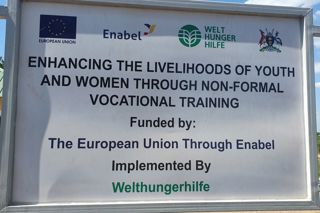
Mid-term Review of the European Union Trust Fund (EUTF) Support Programme for Refugee Settlements in Northern Uganda (SPRS-NU): Livelihood and Labor Market Relevant Skills Development for Refugees and Host Communities
- 2023 – 2023
- under € 500,000
- Uganda
The mid-term review (MTR) of the Support Programme for Refugee Settlements in Northern Uganda (SPRS-NU) was commissioned by Enabel.
The Enabel-led component of SPRS-NU aimed to enhance the livelihoods of refugee and host communities through technical vocational education and training and entrepreneurship support. It was implemented in five districts of Northern Uganda (Adjumani, Arua, Madi Okolo, Terego, and Yumbe) and the Kiryandongo district in Western Uganda. The MTR assessed the first 22 months (from December 2021 to September 2023) of the last phase of the programme.
The MTR served the purposes of accountability (through performance assessment), and learning and steering (by explaining what works and does not work, and why, as well as through evidence-based lessons for other interventions and recommendations for decision-making). It addressed the six evaluation criteria of relevance, coherence, efficiency, effectiveness, impact and sustainability, as well as the cross-cutting themes of gender and environment.
Qualitative data were collected during a field mission in five of the six intervention districts (including stakeholder interviews, focus group discussions with direct beneficiaries, and direct observation) and in remote interviews. The review also drew on documents and existing quantitative M&E.
The executive summary of the review is available on the Enabel website: https://open.enabel.be/en/2208/doc/44108/mtr-summary
- Keywords:
- Education, Humanitarian aid, Industry & private sector development, Monitoring & Evaluation

Joint End-Term-Review of i) UGA180371T - (EHA) Roll out the National Results Based Financing Policy in the Acholi Sub-Region and ii) UGA20003 - (LSF) Leveraging strategic health financing for Universal Health Coverage
- 2023 – 2023
- under € 500,000
- Uganda
The Joint End-Term-Review of i) EHA - Roll out the National Results Based Financing Policy in the Acholi Sub-Region and ii) LSF - Leveraging strategic health financing for Universal Health Coverage was commissioned by Enabel.
EHA and LSF aimed to contribute to Universal health coverage with focus on primary health care services in Tanzania. EHA runs from 2019 up to 2024, and covers the West Acholi region with a budget of EUR 9,7 million. LSF runs from 2021 up to 2024, and covers the West Acholi, Rwenzori and West Acholi regions with a budget of EUR 4 million.
The end-term review served the purposes of accountability (through performance assessment), and learning and steering (by explaining what works and does not work, and why, as well as through evidence-based lessons for other interventions and recommendations for decision-making). It addressed the six evaluation criteria of relevance, coherence, efficiency, effectiveness, impact and sustainability, as well as the cross-cutting issues of gender and youth empowerment, among others.
Qualitative data were collected during a two-week field mission (including stakeholder interviews, focus group discussions with leadership and members of cooperatives, and direct observation) and in remote interviews. The review also drew on documents and existing quantitative M&E and survey data.
- Keywords:
- Health, Monitoring & Evaluation

Long-term Technical Assistance to Uganda MoFPED/NAO
- 2019 – 2023
- € 500,000 – 1 million
- Uganda
The global objective of this Technical Assistance was to support the Government of Uganda, namely the Ministry of Finance, Planning and Economic Development (MoFPED), in streamlining and strengthening existing capacities and coordination mechanisms with the Local Development Partners Group (LDPG) in terms of planning, budgeting, overseeing, coordination, monitoring, and implementation and performance evaluation.
The specific objective of this project was to assist the MoFPED, specifically the Directorate of Debt and Cash Policy (DARC) and the Accountant General office (Directorate of Treasury Services and Assets Management - TSD) in its overall coordination and overseeing of external aid.
Long Term Technical Assistance was being provided to achieve the following expected results:
1) MoFPED (DARC and TSD) are enabled to closely monitor and supervise the implementation and financial performance EU and other donors funded projects/programmes.
2) Dialogue between DPs and MoFPED on ODA is strengthened
3) GoU is enabled to benefit from the opportunities offered at global and regional level and to be systematically involved in regional integration initiatives, including COMESA, IGAD, EAC, etc.
4) MoFPED contributes successfully to the achievement of the objectives of the Partnership Coordination Programme
- Keywords:
- Governance, Macro-economic/ National policy, Management, Project implementation / Technical Assistance, Public finance/budgeting
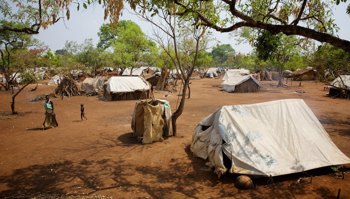
The main purpose of this project was to develop the capacity of secondary teachers to deliver quality education in refugee settings and host communities. Improving the quality of secondary school teaching has an accelerating effect and will enable refugee students to attend higher tertiary education or TVET programmes.
The project was implemented in 6 refugee settings/host communities, two in each of the three selected IGAD Member States (Uganda, Ethiopia, Sudan).
The delivered trainings on pedagogical, psychosocial, ICT and life skills enabled teachers in secondary refugee schools to better respond to the specific needs of refugee students. Under the supervision of the IGAD Secretariat the project worked closely together with the respective Ministries of Education and regional National Teaching Institutes in the selected Member States in order to strengthen their capacities to improve teaching quality and mainstream refugee education in their national education plans. The teacher trainings were elaborated and conducted together with the National Training Institutes of the regions where the refugee settings/host communities are, in order to improve the local and national capacities to tackle the main local challenges, as well as the sustainability of the initiative.
Female teachers were encouraged to participate during the selection process, in order to increase the participation of women in further training activities in all 6 refugee settings/host communities.
The provided support and advisory services brought on board various stakeholders from government, local authorities, international organizations, and foundations involved in refugee education in the selected IGAD Member States.
- Keywords:
- Education, Humanitarian aid
Evaluation of the European Union’s humanitarian interventions in disaster preparedness (2015-2020)
- 2021 – 2022
- under € 500,000
- Global
The main objectives of the evaluation are to provide: i) an independent, retrospective assessment of the performance and results of the EU's contributions to disaster preparedness within its humanitarian action; and ii) strategic recommendations to support DG ECHO future actions in this field. The evaluation will generate lessons and insights to inform how DG ECHO and its partners continue to deliver effective and life-saving preparedness activities worldwide. The evaluation covers all disaster preparedness activities, both targeted preparedness and mainstreaming. Its geographical scope covers all countries in which DG ECHO carries out humanitarian interventions. In terms of temporal scope, the evaluation covers the six years from 2015-2020.
Consistent with the EC’s Better Regulation Guidelines, the evaluation will serve a dual purpose of accountability and learning:
- Accountability: the evaluation will assess the results of EU interventions against its aims and expectations, coherence with humanitarian principles, relevance of DG ECHO interventions in targeting the most vulnerable beneficiaries, addressing gaps and contribution to DG ECHO overall mission
- Learning: the evaluation will support DG ECHO internal learning by identifying best practices and areas for improvement, but also aims at sharing learning and knowledge within DG ECHO partners and the wider humanitarian and development sector.
Report available here: https://op.europa.eu/en/publication-detail/-/publication/bf6a3cc9-751f-11ed-9887-01aa75ed71a1/language-en
- Partners:
- Particip (Lead), ICF Consulting
- Keywords:
- Humanitarian aid, Monitoring & Evaluation

Strengthening the Policy Frameworks for Transboundary Water Resources Management in the Nile Basin
- 2020 – 2022
- under € 500,000
- Burundi, Congo (Brazzaville), Egypt, Ethiopia, Kenya, Rwanda, South Sudan, Sudan, Tanzania, Uganda
The Nile Basin Initiative (NBI) is a partnership of the 10 Nile Basin riparian states with a shared vision objective to promote sustainable socio-economic development through the equitable utilization of and benefit from the shared Nile Basin water resources. Nile Basin countries face increasing challenges of meeting the requirements of their rapidly growing populations in the face of dwindling resources that are threatened by emerging pressures like climate change, land use change and degradation, urbanization, etc. The challenges result in increased efforts at utilization of the Nile waters for agricultural, domestic, industrial and environmental purposes. Countries are embarking on large-scale developments for water utilization and water-related use in riparian countries which have major implications for current and future availability of water resources.
The assignment took the basin perspective and looked at the transboundary governance mechanisms in place. Especially national level arrangements such as policies and Transboundary Water Management (TWM) units served the various transboundary mechanisms a country subscribes to at the same time.
The objective was to facilitate and document a joint review and learning process on provisions for transboundary cooperation in national policies and related institutional arrangements.
The primary work of the project consisted of the following tasks:
- Task 1: Finalization of the NBI Policy Handbook
- Task 2: Guidance Document on key TWM principles for national water policies
- Task 3: Review of experience and mapping of cross-border cooperation arrangements in Nile Basin
- Task 4: Review of experience of the national level organizational arrangements for TWM
- Task 5: Collaborative assessment of progress of implementation of TWM principles in
National Water Policies
- Task 6: Action plan for transboundary water policy at national and regional level
- Task 7: Policy Synthesis Report – Status of TWM governance and Implementation of
SDG 6.5.2. in the Nile Basin
- Task 8: Blended Learning Module
- Prepare and facilitate Policy Roundtables
- Keywords:
- Environment, Training

The purpose of this assignment is to collect, collate and systematically present, in the form of Evaluation Portraits and Country Evaluation Briefs, findings from existing evaluations and other documents of development interventions in five Norwegian partner countries: Colombia, Ghana, Uganda, Indonesia and Niger. The first four countries are characterised as partners “for long-term development” while Niger is characterised as a partner “for stabilisation and conflict prevention”.
The objective of this assignment is to provide accessible and relevant knowledge about Norwegian and other donors’ development efforts in Norway’s partner countries through systematising findings from existing evaluations of development interventions. The exercise emphasises learning, supplementing a growing database of systematised, relevant, context-specific and accessible information. Beyond its intrinsic value, this knowledge forms a basis for development policies and strategies, contributes to development efforts in the field and reveals knowledge gaps that could be covered by future evaluations.
The main target groups for the study are the Norwegian Ministry of Foreign Affairs, Norad and Norwegian embassies in the selected partner countries and elsewhere.
The assignment is guided by the following questions:
- What are the key contextual features characterising each of the studied case countries, and how do these contextual features affect development and/or humanitarian interventions in the respective country/-ies?
- What is the nature of the programmes and projects studied, including levels and trends of development/humanitarian support?
- What are the major findings in the assessed material concerning the goals, methods, challenges, results and sustainability of the interventions studied?
- How do the studied interventions perform in terms of such cross-cutting issues as human rights; women’s rights and gender equality; climate and environment; and anti-corruption?
- Which intended and, if any, unintended effects of the interventions, positive and negative, direct or indirect, can be identified?
Report available here: https://www.norad.no/en/front/evaluation/about-evaluation-department/evaluation-series/country-evaluation-briefs/
- Keywords:
- Monitoring & Evaluation

Mid Term Review of Civil Society in Uganda Support Programme
- 2021 – 2021
- under € 500,000
- Uganda
The overall objective was to assess the overall performance of the Civil Society in Uganda Support Programme.
The specific objectives of this evaluation were to:
- Assess the performance of the Civil Society in Uganda Support Programme (CUSP), paying particular attention to its intermediate results measured against its expected objectives; and the reasons underpinning such results;
- Enumerate the benefits for civil society directly accruing from Civil Society in Uganda Support Programme (CUSP);
- Assess the extent to which the action has contributed to quality improvement of CS landscape;
- Highlight the key lessons learnt, conclusions and related recommendations for adjustment in order to improve the current Action and its possible extension as well as future Actions.
- Partners:
- Particip (Lead), EMI (formerly: Cardno Belgium)
- Keywords:
- Civil society, Monitoring & Evaluation

Evaluation of the Results-Based Financing for Low Carbon Energy Access Facility (RBFF) within Energising Development (EnDev)
- 2015 – 2020
- € 500,000 – 1 million
- Global
The overall objective was to evaluate the Results-Based Financing (RBF) for Low Carbon Energy Access Facility within the Energising Development (EnDev) Programme. The specific purposes of this evaluation were (i) to assess the performance of the RBF Facility over the period 2012-2020 against key OECD/DAC evaluation criteria, (ii) to understand and disseminate what had worked in which circumstances and why, and (iii) to derive lessons learned and recommendations for future programmes in RBF, energy access support through private sector development, and climate finance more broadly.
EnDev piloted an RBF scheme offering incentive payments to private sector market actors in the low-carbon off-grid energy sector in developing countries. Payments were made against pre-specified results achieved in delivery and sustainable operation of modern energy technologies and services.The aim of the RBF Facility within the global EnDev programme was to (i) increase access to modern energy services in developing countries (including vulnerable groups) (ii) through the use of decentralised renewable energy products and services, (iii) delivered as market-based approaches through private sector actors.
The scope of the evaluation encompassed 17 different RBF projects within the global EnDev programme. The evaluation focused on market changes and private sectors responses – such as market efficiency, business development, distribution strategies and technology adoption –, but also analysed the consumer perspective and the interaction with sector policies and regulation by national governments.
Outputs included:
- Inception Report.
- Baseline Report (review of existing baseline studies).
- Internal Process Review.
- A Mid-term Evaluation, including a set of project evaluations and a portfolio review.
- Deep impact studies of one selected country project in Tanzania.
- A cross-portfolio survey targeting RBF participants.
- Final Evaluation, including a set of project evaluations and a portfolio review.
- Concept notes for the various evaluation products.
- Networking conferences with individual projects to foster knowledge-sharing and learning experiences based on the above products and between projects.
Nine countries were targeted for field and remote evaluation: Bangladesh, Benin, Cambodia, Kenya, Peru, Rwanda, Tanzania, Uganda, Vietnam.
- Partners:
- Particip (Lead), Arepo Consult
- Keywords:
- Energy, Industry & private sector development, Monitoring & Evaluation

CONSULTANCY TO DEVELOP A DETAILED AND COSTED IMPLEMENTATION PLAN FOR THE COFFEE ROAD MAP FOR UGANDA
- 2018 – 2019
- under € 500,000
- Uganda
To contribute towards obtaining an insight in the coffee value chain in order to design interventions that lead to sustainable solutions that contribute to the achieving the targets of the Coffee Roadmap.
To develop a detailed and costed implementation plan for the initiatives identified in the Coffee Roadmap for Uganda for the next 5 years commencing the financial year (FY) 2019/20.
- Partners:
- Particip (Lead), CAPA EEIG (managed by Particip), EMI (formerly: Cardno Belgium)
- Keywords:
- Agriculture

Public services contract for midterm and final evaluations of projects and programmes of the Belgian Technical Cooperation in the sector of governance
- 2013 – 2018
- € 500,000 – 1 million
- Africa, Asia
This 4-year framework contract has the objective to conduct all mid-term and final evaluations of projects and programmes of the Belgian Technical Cooperation (BTC-CTB) in the governance sector. Sectors targeted: Justice, security, decentralisation, local development, institutional capacity building.
The following evaluations have been carried out so far are:
- Mid-term review of the project "Appui institutionnel au MACTL pour le pilotage stratégique de la décentralisation et de la déconcentration au Mali", Mali;
- Final evaluation of the project "Appui au développement socio-économique de la Province du Nord (PADSEC)", Rwanda;
- Mid-term review of the project "PADLPC - Projet d'appui au développement local et à la participation citoyenne", Burundi;
- Final evaluation of the project "Support to capacity development in Rwanda", Rwanda;
- Mid-term review of the project "Projet d’appui institutionnel a la mise en œuvre de la politique nationale genre par le Ministere de la population, de la promotion de la femme et de la protection de l’enfant", Niger;
- Mid-term review of the project "Support to Local Government Reform and Development Programme", Palestinian Territories;
- Final evaluation of the project "Kasese District Rural Community Development Programme - Phase II", Uganda;
- Mid-term evaluation of the Common Management Support Units (CMSU) – EPSP – MINIDER - AGRI – DRC;
- Final evaluation of the institutional support to the Ministry of Planning in DRC;
- Final evaluation of the “Support to community development initiatives programme” in the District of Tshopo (Paideco-Tshopo), DRC;
- Final evaluation - Poverty reduction through institutional strengthening at provincial (Nghe An) and district (Quy Chau) levels (Vie 08 036 11) Vietnam;
- Mid-term review of the intervention “Enhancement of procurement capacity of local government authorities project”, Tanzania;
- Mid-term review of the project “Central and decentralized institutional support to the Ministry of Justice in Burundi”;
- Final review of “the support of professionalization of the National Police in Burundi”.
- End-term review of the intervention “Local Government Reform and Development Program (LGRDP)” in Palestine
- Mid-term review of the programme of studies and expertise in DRC
- Mid-term review of the Institutional support project to the regionalisation process in Mali (PAIR)
- Final reviews of the interventions “Support to the decentralization of the Koulikoro region – PADK II” and “Support to civil status – PAEC” in Mali
- Final review of the intervention "Support to the Ministry of foreign affairs, international cooperation and francophonie" in the Democratic Republic of Congo
- Yearly review of the intervention facility for front line service delivery improvement - Tirelo Bosha – in South Africa
- Mid-Term Review of the intervention “Support to the development of human resources of beneficiary organisations “SDHR” in Uganda
- MTR of the intervention Capacity Building for Planning Reform (CDPR) in Vietnam
- Mid-Term Review of the Intervention “Regeneration of Historical Centres in Local Government Units (RHC)” in Palestine
- Mid-Term Review of Rwanda Decentralization Support Programme – Enhancing the capacities of districts (RDSP-ECD)
- Final Evaluation of the Project “Enhancement of Procurement Capacity of Local Government Authorities in Tanzania”
- Final review of the intervention “Institutional support project to the Ministry of Territorial Administration and Local Government (MATDRE) for the strategic steering of decentralization and deconcentration” in Mali
- Final Review of the project "Institutional support to the process of regionalisation in Mali" (PAIR)
- Mid-term review of the support project to investments of local authorities (PAICT) in Mali
- External mid-term review of the Support Project on Expertise, Studies and Technical Assistance to the water and environment sector (PAERE) and the Project on Strengthening of Competencies of the sector water and environment (CF) in Bolivia
- Mid-term review of the project to support Burundian organizations through human resources capacity building (PAORC) in Burundi
- Mid-Term Review Of The Intervention “Facility For Capacity Building” (FCB) in Vietnam
- Final Evaluation of the Support Programme for the Implementation of Decentralised Entities in the Dosso Region, phase 2 and extension phase (PAMED II & PAMED II Extension) in Niger
- End-Term Review of the Intervention "Capacity Building for Planning Reform (CDPR)" in Vietnam
- Partners:
- Particip (Lead), MDF
- Keywords:
- Governance, Institutional development, Monitoring & Evaluation, PCM / Logframe