
Nuestros proyectos
Explore la experiencia de Particip en proyectos desarrollados en distintos países, sectores y ámbitos de especialización.
Nuestras referencias ofrecen una visión general de las misiones finalizadas y en curso, incluidos sus objetivos, alcance geográfico, duración y valor contractual.
Mostrando 111–120 de 513 referencias

Mid-Term Evaluation of the Youth Action Plan in EU External Action (2022-2027)
- 2025 – 2026
- ACP (Africa), ASEAN region, Latin America & Caribbean
The Youth Action Plan (YAP) in EU External Action 2022–2027, adopted in October 2022, aims to promote meaningful youth participation and empowerment in EU external action for sustainable development, equality, and peace. The global objective of this evaluation is twofold:
- To provide the relevant EU services and stakeholders with an independent assessment of the performance of the YAP, ensuring accountability by examining results at different levels against expected objectives and analysing the factors underpinning those results.
- To identify key lessons learned, conclusions, and recommendations regarding the YAP in order to inform decision-makers on how to improve current and future interventions on youth mainstreaming in EU policies, dialogues, and actions, notably within Global Gateway initiatives.
The specific objectives are:
- To assess the performance of the YAP to date in achieving its objectives and expected results, identifying best practices and gaps in implementation.
- To assess the relevance, coherence, efficiency, effectiveness, sustainability, and prospects for impact of DG INTPA’s youth-targeted actions and youth mainstreaming (at country, regional, and global levels) in relation to YAP objectives.
- To assess the relevance, coherence, efficiency, effectiveness, sustainability, and prospects for impact of EU initiatives undertaken to enhance institutional youth engagement.
- To inform decision-making on the implementation and further development of youth policy and priorities in EU external action up to 2027 and into the next programming cycle (possible YAP II), contributing to EU priorities and, in particular, the implementation of Global Gateway.
- Socios:
- Particip (líder), ECDPM
- Palabras clave:
- Seguimiento y evaluación

Citizen's engagement and innovative data use for Africa's development (DataCipation-II) - African Union communications strategy and implementation
- 2021 – 2026
- de 2 a 5 millones de €
- Africa
As a joint AU-German Government initiative, the GIZ project “Citizen Engagement and Innovative Data Use for Africa’s Development (DataCipation II)” aimed to strengthen engagement between AU Organs, Regional Economic Communities, Member States and citizens by leveraging data as well as digital and non-digital approaches for good governance and development. Activities focused on three interrelated action areas:
- strengthening cooperation between AU Member States and the African digital innovation system;
- leveraging participatory, inclusive and innovative communication opportunities for African citizens; and
- fostering multi-stakeholder dialogue on good governance in digital contexts.
The project supported cooperation with the African Union Commission, in particular the Information and Communication Directorate of the African Union Commission (AU ICD). Core activities included the development and implementation of communication formats enabling participatory, inclusive and creative citizen engagement in line with the AU brand identity, as well as capacity development for AU staff on interactive communication tools and methodologies.
While the need to communicate policies and engage stakeholders in policy processes cut across all thematic policy areas, it was particularly relevant for AU flagship initiatives such as the African Continental Free Trade Area (AfCFTA). The AfCFTA aimed to create a continental African market for goods, services and investment and constituted a core element of AU Agenda 2063. Under the same contract, the GIZ Support Project to the AfCFTA was therefore supported through professional communication services.
Over the four-year implementation period, the project evolved beyond the originally envisaged communication support. In addition to developing new citizen-facing communication formats and strengthening AU communication capacities, the team provided continuous strategic, editorial, digital, multilingual and operational communication support to AU ICD, the AfCFTA programme and several other GIZ-AU programme components.
- Socios:
- Particip (líder)
- Palabras clave:
- Comunicación y medios, Desarrollo institucional, Gobernanza
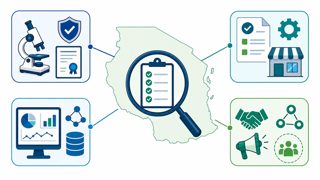
Final Evaluation of the “Quality Standards and Compliance Programme for the United Republic of Tanzania” (QUALITAN NO. FED/2021/428-294) under the business environment growth and innovation (BEGIN/ TZ/FED/41067) programme- Tanzania
- 2026 – 2026
- menos de 500.000 €
- Tanzania
The final evaluation of the EU-funded “Quality Standards and Compliance Programme for the United Republic of Tanzania” (QUALITAN), implemented by UNIDO under the wider Business Environment, Growth and Innovation (BEGIN) programme aimed to increase MSME compliance with quality standards in order to widen market access, reduce standards compliance costs and enhance consumer protection.
The evaluation had a twofold objective: first, to provide the European Union and interested stakeholders with an independent assessment of QUALITAN’s performance, including the results achieved at different levels and the factors explaining those results; and second, to identify lessons learned, conclusions and recommendations to inform current and future interventions.
More specifically, the evaluation assessed progress against the project’s original objectives and expected results; examined the sustainability of benefits; assessed the contribution and effectiveness of stakeholders and governance structures; and identified the major constraints faced during implementation.
The evaluation covered the full QUALITAN implementation period, from 1 January 2022 to 24 July 2025.
While QUALITAN was part of BEGIN, the evaluation focused on the QUALITAN component only. It considered links with BEGIN, the Blueprint reform agenda and Tanzania’s wider quality infrastructure system only where these are relevant to QUALITAN’s performance, coherence, sustainability and EU added value.
The evaluation used a theory-based, mixed-methods approach structured around the OECD-DAC criteria, EU added value, the reconstructed Theory of Change and the Evaluation Matrix. The approach was designed not only to assess what was achieved, but also to explain why results varied across components and how QUALITAN contributed to observed changes.
The main analytical approach was contribution analysis, testing the plausibility of QUALITAN’s intervention logic and assessing whether the project contributed to results in areas such as conformity assessment capacity, standardisation, MSME outreach, digitalisation, governance and communication.
The evaluation assessed QUALITAN against the following main areas: relevance, coherence, effectiveness, efficiency, sustainability, perspective of impact and EU added value. It also integrated cross-cutting issues, including gender equality, youth, disability, Leave No One Behind, human rights-based approaches, environment and climate considerations, and contributions to SDG 8 and SDG 9.
- Palabras clave:
- Comercio, Desarrollo institucional, Industria y desarrollo del sector privado, Seguimiento y evaluación
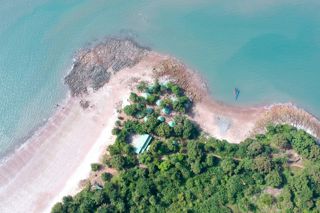
Strategic Evaluation of the EU partnership with Guinea (2014-2024)
- 2025 – 2026
- menos de 500.000 €
- Guinea (Conakry)
This evaluation has two overarching objectives. Firstly, it aims to provide an independent and comprehensive assessment of the performance and strategic relevance of the EU’s partnership with the Republic of Guinea. Secondly, it seeks to identify key lessons and produce forward-looking recommendations to inform responsible decision-makers – particularly within the European External Action Service and the Directorate-General for International Partnerships – on how to enhance the quality, coherence, and impact of the EU’s current and future strategies, programming, and actions in Guinea.
Its specific objectives are as follows:
- To assess how the EU’s overall engagement in Guinea has contributed to its strategic objectives at the country level, through political dialogue, development cooperation, trade, and investment initiatives;
- To provide EU external cooperation services and the broader public with an independent assessment of the EU’s cooperation with the Republic of Guinea over the period 2014-2024.
The evaluation will focus on six priority sectors: i) return to constitutional order; ii) south-north migration; iii) natural resource exploitation and public finance; iv) energy; v) climate change; and vi) health.
The evaluation will deliver findings, conclusions, and lessons regarding the effectiveness, coherence, and sustainability of the EU support in Guinea. It will also provide targeted, practical, and forward-looking recommendations to improve the design and implementation of current and future EU interventions in Guinea under the 2021-2027 programming period
- Socios:
- Particip (líder), ECDPM
- Palabras clave:
- Derechos humanos, Desarrollo institucional, Elecciones, Energía, Finanzas públicas / presupuestación, Gobernanza, Industria y desarrollo del sector privado, Macroeconomía / política nacional, Medio ambiente, Salud, Seguimiento y evaluación, Silvicultura, Sociedad civil

The overall objective of the Press and Public Information Office (hereafter 'PPI Office') is to publish messages which will show the impact and achievements of the Mission to key target audiences, creating interest, partnership, and support for the Mission in carrying out its mandate. High quality multimedia products and visuals are pivotal to attract attention of target audiences and to show the expertise driven work of EUCAP Somalia. The overall objective of this contract is therefore to enable the PPI Office to fulfil this task by producing multimedia products of professional standard, finalised visuals and editorial materials, which showcase both the Mission’s work, and day to day life in Somalia on themes relevant to the Mission’s activities in support of peace and security.
The specific objectives of this contract are as follows:
Specific objective 1: To develop high quality photos that demonstrate EUCAP Somalia’s work, and deliver communication materials which will be well received and appreciated by the target audiences and will thus help to fulfil the mandate.
Specific objective 2: To develop high quality videos that demonstrate EUCAP Somalia’s work, and deliver communication materials which will be well received and appreciated by the target audiences and will thus help to fulfil the mandate. It includes multimedia production and editing, including videos, news clips and advertisement.
Specific objective 3: To provide visual design services for printed and online materials.
The expected outputs of this contract are as follows:
Output 1: Provide professional photography services, namely capturing high-resolution images and videos in EUCAP’s area of operations (Somalia, including Somaliland).
Output 2: The Mission’s presentation videos are professionally produced and published on different channels (usually website and social media channels). Video clips shot by the EUCAP Somalia staff and contractors and sent to the contractor are edited professionally.
Output 3: The Mission’s printed and online materials, drafted by the Press and Public Information Office and sent to contractor for visual design or finalization of the design drafted by the PPIO, have professional, contemporary look which will support the communication objectives and brand image defined in Communication and Information Strategy.
- Palabras clave:
- Comunicación y medios
Supporting EU engagement with Civil Society in Mozambique
- 2023 – 2026
- menos de 500.000 €
- Mozambique
The overall objective is to enhance EU engagement with civil society in Mozambique.
The specific objectives are
1) To support the implementation and monitoring of the EU Roadmap for engagement with Civil Society in Mozambique (2021-2027)
2) To enhance partnership and constructive dialogue between the EU (and EU Member States) and civil society organisations in Mozambique
3) To support mainstreaming of civil society in the MIP priority areas and ensure coherence and efficiency of the EU portfolio in this domain.
- Socios:
- Particip (líder), EPRD
- Palabras clave:
- Sociedad civil
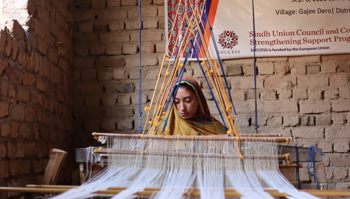
Communication and Visibility Activities on EU Cooperation in Pakistan
- 2022 – 2026
- de 2 a 5 millones de €
- Pakistan
The overall objective of the project is to promote the EU as a strong partner of Pakistan in its efforts to achieve the Sustainable Development Goals (SDGs), with a focus on socio-economic development, good governance, human rights, rule of law and sustainable management of resources.
The purpose of the project is to enhance the visibility and recognition of the EU and its Delegation to Pakistan, particularly through increased visibility of its cooperation programmes and related policy areas.
- Socios:
- Particip (líder), M&C Saatchi, M&C Saatchi Pakistan
- Palabras clave:
- Comunicación y medios

Strategic Environmental Assessment for the Forest Sector
- 2025 – 2026
- menos de 500.000 €
- Sierra Leone
The objective of this SEA is to inform the Government of Sierra Leone as well as the EU and other donors on the potential significant environmental, climate and social challenges and opportunities related to the Forestry and Wildlife Sector Strategic Planning Framework (SPF) 2024-2030 and the potential Forest Partnership with the EU.
This includes the identification of potential significant impacts on the environment and climate that may result from the implementation of the Forestry and Wildlife Sector Strategic Planning Framework (SPF) 2024-2030 and the potential Forest Partnership; the identification of measures to avoid or minimize adverse impacts and to maximize positive impacts.
The SEA will also identify the challenges that environmental degradation and climate change pose to the sustainability and feasibility of the Forestry and Wildlife Sector Strategic Planning Framework (SPF) 2024-2030 and the potential Forest Partnership and identify measures to be integrated in those actions to take them into account and enhance their resilience.
The SEA will thus provide elements that will contribute to enhance the state of the environment and health, build climate resilience of the forest sector and the population, contribute to disaster risk reduction, and promote low carbon development and the transition to a green economy.
- Socios:
- Particip (líder), Expertise Advisors (formerly: ETI Consulting)
- Palabras clave:
- Medio ambiente, Silvicultura

Mid-term evaluation of project 2024/458-756 'Support to the Global Campus of Human Rights 2024 -2026'
- 2025 – 2026
- menos de 500.000 €
- Global
The EU intervention “Support to the Global Campus of Human Rights (2024–2026)” is a EUR 10.6 million global human-rights education action supporting the Global Campus of Human Rights and its university network delivering postgraduate diplomas and Master’s programmes, including scholarship support to students and human rights defenders from third countries. The project runs from 01/08/2024 to 15/06/2026. It is implemented worldwide through the Global Campus headquarters and eight regional hubs in Venice, Pretoria, Yerevan, Sarajevo/Bologna, Buenos Aires, Beirut, Bangkok and Bishkek. The project’s general objective is to foster new generations of human rights defenders able to contribute to a world where human rights and democracy are realised, and it is structured around three specific objectives: Education, Employability, and Research/Networking/Outreach.
The evaluation is a mid-term evaluation covering the intervention in its entirety (including eligible costs retroactive from 01/08/2024) and is framed as an opportunity to reflect on progress, strengthen performance, and improve strategic planning, with an increasing emphasis on achieving best value for money. The evaluation’s global objective is to provide an independent assessment of performance (explicitly including a focus on efficiency and best use of resources) and to produce lessons learned and recommendations to improve current and future interventions.
- Palabras clave:
- Derechos humanos, Seguimiento y evaluación

Final evaluation of the Gulf of Guinea Inter-regional Network Extended (GoGIN II)
- 2025 – 2026
- menos de 500.000 €
- Nigeria
The global objective of this assignment was to provide the relevant services of the European Union, interested stakeholders and the wider public with an independent assessment of the performance of the Gulf of Guinea Inter-regional Network Extended (GoGIN II), paying particular attention to the different levels of results achieved against expected objectives and to the factors explaining those results. The evaluation also aimed to identify key lessons learned, conclusions and recommendations to inform decision-making and improve current and future interventions.
The evaluation covered GoGIN II in its entirety in the Gulf of Guinea. It focused in particular on the YARIS maritime information-sharing and coordination platform, assessing its operational status and level of use, its functionality and financial sustainability after the handover, the performance of the implementing partner in engaging regional organisations and other partners, and the intervention’s exit strategy.
The evaluation assessed the intervention through the six OECD-DAC criteria (relevance, coherence, effectiveness, efficiency, impact and sustainability) and the EU-specific criterion of EU added value. Its main users included EU services and Delegations, Gulf of Guinea Member States, Expertise France, regional organisations and the Yaoundé Architecture, and implementing partners of similar interventions.
- Socios:
- Particip (líder)
- Palabras clave:
- Gobernanza, Seguimiento y evaluación