Mozambique
23 referencias

Strengthening the national regional linkages in SADC (SNRL) - Consultancies on regional integration based on SADC policies, facilitation of events, communication and visibility
- 2023 – 2027
- de 2 a 5 millones de €
- SADC region
The overall objective of the project "Strengthening the national regional linkages in SADC (SNRL)" is to support the Southern African Development Community (SADC) in its efforts to promote regional integration in the member states (MS) for the benefit of the population in the SADC region.
The project is aligned with SADC's regional strategy (the Regional Indicative Strategic Development Plan 2020-30, RISDP) and supports its implementation.
In particular, it supports SADC and its MS on implementing Chapter 5 of the RISDP focusing on the strategic management objectives of the RISDP. By strengthening SADC as a regional organization and by supporting the implementation of the regional agenda RISDP, the SNRL project aims to facilitate the regional integration in the SADC region.
The objective of this contract is the provision of high-quality short-term expert (STE) advice in various topics relevant for enhancing the capacities of national stakeholders to vigorously and effectively pursue in their respective countries the regional integration protocols, policies and strategies of SADC.
The individual consultancy assignments are developed between GIZ and its partners and are based on a joint process and methodology aimed at identifying the needs in the SADC region and within individual member states.
The assignments focus on the scaling-up of best practices and should aim to share experiences and knowledge throughout the region (for example by aiming to standardize products developed as part of the assignment).
The following outputs are expected as a result of project implementation:
- Output 1: The institutional framework for the implementation of regional integration in the SADC region has improved in the member states;
- Output 2: Monitoring and evaluation systems for the implementation of regional integration are in place in selected member states;
- Output 3: The strategic communication capacities of SADC and member states for high profile communication around SADC activities and operations are strengthened.
Implemented projects include the following (project number and title):
- P1/2023 Consultancy to Support the SADC Secretariat to Develop and Pilot the Protocol Compliance Mechanism and Monitoring of the Trade Protocol;
- P2/2023 Perception Survey on the status of SADC regional integration in the Member States;
- P3/2023 Facilitator/Presenter and Group Work Moderators for Two Regional Workshops Supported by SNRL;
- P4/2023 Development of Model Law for the Establishment of SADC National Committees in Member States;
- P5/2023 Consultancy to develop communication products for publication purposes from the deliberations of SADC Member States at the Regional Learning and Exchange Symposium in Lesotho;
- P6/2023 Consultancy to develop presentation on the Status of SADC National Structures and their Financing at the Regional Learning and Exchange Symposium in Lesotho;
- P7/2023 Facilitation Operational Planning SNRL;
- P8/2023 Consultancy Services to Support the Publicity Products of The SADC Summit Public Lecture- Angola;
- P9/2023 Consultancy Services to Provide Rapporteuring of the Proceedings of The SADC Summit Public Lecture- Angola;
- P10/2023 Development of Peer Learning & Review Mechanism for national SADC coordination;
- P11/2023 Shadow monitoring on the extent of implementation of the SADC RAIP 2017 – 2022;
- P12/2023 Editing & Design of Eswatini’s New Industrial Policy;
- P13/2023 Capacity Building on SADC Regional Integration and Project Management for SADC National Contact Points Junior and Middle Staff;
- P14/2023 Updating and Finalising the Status of the SADC National Committees Desk Review Report;
- P15/2023 Consultancy Services to Support the Documentation of Proceedings at the SADC Integrated Regional Electronic Settlement System 10th Anniversary Celebrations;
- P16/2023 Consultancy Services to Support the Publicity Products of the SADC Integrated Regional Electronic Settlement Systems 10-year anniversary;
- P17/2023 Consultancy Services to Support the Rapporteuring of the SADC Integrated Regional Electronic Settlement Systems 10-year anniversary;
- P18/2023 Scoping Studies South Africa and Zimbabwe;
- P19/2023 Scoping Study Madagascar;
- P20/2023 SNRL II Operational Planning Workshop.
- P21 Team Retreat Facilitatior
- P22 Communication Guidelines
- P23 Lesotho National Policy on Regional Economic Integration
- P24 Scoping study and development of SA documentary
- P25 Production of SADC video podcasts
- P27 Development of a Resource Mobilisation Plan for the SNC of the Kingdom of Eswatini
- P28 Ops Manual, OP & Capacity Building Training on RI & PM - Eswatini
- P29 Communications Capacity Building in Botswana
- P30 SNRL II Team Retreat Refresher
- P31 CB& Strengthening Lesotho's SNCs - Project Management
- P33 Establishment of South Africa’s SADC National Committee
- P34 Graphic Design for Promotional Material - SADC Public Lecture in Zimbabwe
- P35 Rapportuering of the SADC Public Lecture Zimbabwe
- P36 Madagascar National Policy on SADC RI
- P37 Capacity Building & Strengthening SNC in Madagascar
- P38 CB & Training on SADC RI & PM for Zambia’s SNC staff
- P39 CB on Resource Mobilisation & Development of Resource Mobilisation Strategy in Zambia
- P40 Regional CB on Resource Mobilisation
- P41 Model Law on the Establishment of SNCs
- P42 Policy briefs on SADC-RTGS; role/significance of the SADC public lectures in promoting regional cooperation and integration in the SADC region.
- P43 Fact Sheets on SADC Protocols
- P44 Communications Strategy and Social Media Dissemination Plan for BGCIS in Botswana
- P46 RI Orientation & Induction for the SNC in Eswatini
- P47 SNRL II Operational Planning Workshop 2025
- P48 Rapporteur for Tanzania Event on SADC RAIP 2017-2022 Shadow Monitoring Report
- P49 Rapporteur for Malawi Event on SADC RAIP 2017-2022 Shadow Monitoring Report
- P50 Policy Brief, Factsheet & Press Release On he AML (Anti-Money Laundering) & CFT
- P51 Madagascar Resource Mobilisation Strategy and Action Plan
- P52 Piloting SNC Peer Learning and Review Mechanism (S-PLRM)
- P53 Establish Baseline Values on SADC Parliamentary Forum’s Operational Efficiency
- P54 Revise SADC Draft Communication, Awareness and Visibility Strategy
- P55 NSA Baseline Indicators
- P56 Interpretation Assignments
- P57 Facilitation of Consultation Workshop SNRL
- P58 Endline Perception Survey
- P60 Piloting M&E Framework for the SADC Protocol on Trade
- P61 SADC Parliamentary Forum M&E on Gender
- P62 Photography, Videography and Livestreaming _ Launch of SA's SNC
- P63 SADC PRU Comms Strategy Launch
- P64 Status of SNCs in the Member States
- P65 Training of Botswana SNC
- P69 Facilitation of SPLRM 1st Cycle
- P70 SPRLM Budget and Finance Plan
- P71 CfP Support
- P72 Facilitation of SNC Guidelines
- P73 SADC PF Publication and Dissemination
- P74 SADC PF Gender Assessment
- P75 SADC PF Mid-Term Evaluation
- P77 Review of Public Hearing
- P81 Communication Documentary Launch
- Socios:
- Particip (líder), Africa Practice, DPC, Imani Development Group
- Palabras clave:
- Agricultura, Comercio, Comunicación y medios, Desarrollo institucional, Gobernanza, Industria y desarrollo del sector privado, Seguimiento y evaluación

Mid-Term Evaluation of the Youth Action Plan in EU External Action (2022-2027)
- 2025 – 2026
- ACP (Africa), ASEAN region, Latin America & Caribbean
The Youth Action Plan (YAP) in EU External Action 2022–2027, adopted in October 2022, aims to promote meaningful youth participation and empowerment in EU external action for sustainable development, equality, and peace. The global objective of this evaluation is twofold:
- To provide the relevant EU services and stakeholders with an independent assessment of the performance of the YAP, ensuring accountability by examining results at different levels against expected objectives and analysing the factors underpinning those results.
- To identify key lessons learned, conclusions, and recommendations regarding the YAP in order to inform decision-makers on how to improve current and future interventions on youth mainstreaming in EU policies, dialogues, and actions, notably within Global Gateway initiatives.
The specific objectives are:
- To assess the performance of the YAP to date in achieving its objectives and expected results, identifying best practices and gaps in implementation.
- To assess the relevance, coherence, efficiency, effectiveness, sustainability, and prospects for impact of DG INTPA’s youth-targeted actions and youth mainstreaming (at country, regional, and global levels) in relation to YAP objectives.
- To assess the relevance, coherence, efficiency, effectiveness, sustainability, and prospects for impact of EU initiatives undertaken to enhance institutional youth engagement.
- To inform decision-making on the implementation and further development of youth policy and priorities in EU external action up to 2027 and into the next programming cycle (possible YAP II), contributing to EU priorities and, in particular, the implementation of Global Gateway.
- Socios:
- Particip (líder), ECDPM
- Palabras clave:
- Seguimiento y evaluación
Supporting EU engagement with Civil Society in Mozambique
- 2023 – 2026
- menos de 500.000 €
- Mozambique
The overall objective is to enhance EU engagement with civil society in Mozambique.
The specific objectives are
1) To support the implementation and monitoring of the EU Roadmap for engagement with Civil Society in Mozambique (2021-2027)
2) To enhance partnership and constructive dialogue between the EU (and EU Member States) and civil society organisations in Mozambique
3) To support mainstreaming of civil society in the MIP priority areas and ensure coherence and efficiency of the EU portfolio in this domain.
- Socios:
- Particip (líder), EPRD
- Palabras clave:
- Sociedad civil
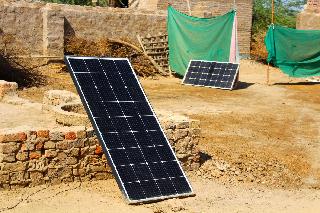
Evaluation of the Renewable Energy for Rural Development Phase II Plus (RERDII+) Irrigation Component, Mozambique
- 2026 – 2026
- menos de 500.000 €
- Mozambique
This End-Term Evaluation (ETE) of the Renewable Energy for Rural Development Phase II Plus (RERDII+) irrigation component was both summative and formative in nature, with the overall purpose of assessing project performance, identifying results and generating learning for future solar-powered irrigation programming in Mozambique. The intervention was designed to strengthen agricultural productivity, climate resilience and rural development through the deployment of Solar-Powered Irrigation Systems (SPIS), while supporting farmer capacity development, institutional strengthening and market development for solar irrigation technologies.
The evaluation covered the implementation of the irrigation component implemented by Enabel in partnership with the National Irrigation Institute (INIR). The intervention focused on the provinces of Manica and Zambézia and aimed to promote sustainable uptake of solar irrigation through infrastructure deployment, financing and co-financing mechanisms, engagement with private suppliers, institutional capacity building and knowledge generation for future scaling.
Thematically, the evaluation assessed project performance against the OECD-DAC criteria of relevance, coherence, effectiveness, efficiency, impact and sustainability, while also examining cross-cutting issues including gender equality, youth inclusion, support to vulnerable farmers and environmental sustainability. Particular attention was given to efficiency and sustainability, in line with the Terms of Reference.
The evaluation involved key stakeholders at national, provincial and local levels, including Enabel, INIR, provincial and district authorities, private suppliers, financial actors, service providers and beneficiary farmers. The methodology combined a desk review of programme documentation, interviews with institutional and sector stakeholders, field visits in Manica Province, beneficiary consultations and case studies documenting farmer-level effects and lessons learned.
Through this approach, the evaluation assessed the relevance of solar irrigation to Mozambique’s agricultural and climate-resilience priorities, examined early effects on production, livelihoods and resilience, analysed financing and market development mechanisms, reviewed institutional and private sector roles, and identified lessons and recommendations to support future scaling of solar irrigation systems. The evaluation found that RERDII+ successfully demonstrated the potential of solar irrigation for rural development but highlighted the need for stronger financing mechanisms, institutional anchoring, post-installation support and market ecosystem development to ensure long-term sustainability.
- Socios:
- Particip (líder), Technopolis Group
- Palabras clave:
- Desarrollo rural y urbano, Energía, Infraestructuras, Seguimiento y evaluación

Evaluation of the African Development Bank’s Regional Integration Strategy Paper for Southern Africa (2020-2026)
- 2025 – 2026
- menos de 500.000 €
- Angola, Botswana, Eswatini, Lesotho, Madagascar, Malawi, Mauritius, Mozambique, Namibia, São Tomé & Príncipe, South Africa, Zambia, Zimbabwe
The evaluation focuses on the African Development Bank’s Regional Integration Strategy for Southern Africa (SA-RISP) 2020–2026, with coverage of the period 2020–2024. Its primary purpose is to assess how far the strategy has progressed towards achieving its intended results and to provide lessons and recommendations for the design of the next regional integration strategy. The evaluation will review both lending operations, sovereign and non-sovereign, and non-lending activities such as policy dialogue, analytical work, and technical assistance.
Key objectives include examining the relevance and design of the SA-RISP as a framework for advancing regional integration, its coherence with regional and continental frameworks such as SADC, COMESA, and the AfCFTA, and its effectiveness, efficiency, impact, and sustainability. The evaluation will also analyse factors that have enabled or constrained implementation, including operational, institutional, and policy challenges, as well as cross-cutting issues. Ultimately, it aims to draw out lessons learned and practical recommendations to strengthen AfDB’s future engagement in supporting regional integration in Southern Africa.
- Palabras clave:
- Comercio, Industria y desarrollo del sector privado, Infraestructuras, Seguimiento y evaluación
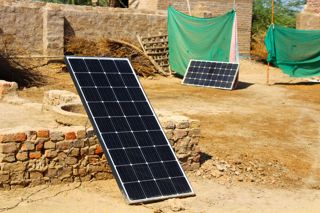
Evaluation of the Renewable Energy for Rural Development Phase II (RERD) II and Belgium
- 2025 – 2026
- menos de 500.000 €
- Mozambique
This End-Term Evaluation (ETE) of the Renewable Energy for Rural Development Phase II (RERDII) project was both summative and formative in nature, with the overall purpose of assessing project performance, identifying outcomes and generating learning for future rural electrification programming in Mozambique. The evaluation focused on the electricity component of RERDII, implemented by Enabel in partnership with FUNAE, which aimed to increase access to renewable energy in rural areas through the installation of five solar-powered mini-grids in the provinces of Nampula and Zambézia, while also supporting institutional strengthening and promoting the productive use of electricity.
The Evaluation covered the implementation period from the start of the specific agreement in March 2018 to the end of December 2024, when the five mini-grids had reached provisional acceptance, while also considering emerging operational issues and lessons relevant to final acceptance and handover in 2025.
Geographically, the evaluation covered the five mini-grid sites in Nampula and Zambézia, with field visits to selected sites and stakeholder consultations in Maputo.
Thematically, it assessed the project against the OECD-DAC criteria of relevance, coherence, effectiveness, efficiency, impact and sustainability, while also considering gender, inclusion and other cross-cutting issues such as environmental safeguards.
Institutionally, the evaluation involved Enabel, FUNAE, MIREME, ARENE, provincial and district authorities, local communities, social institutions, beneficiaries, private operators and development partners active in Mozambique’s rural electrification sector.
The methodology combined desk review of project documentation, technical studies, monitoring data, financial and policy documents; scoping interviews with Enabel staff; key informant interviews with national, provincial and local stakeholders; focus group discussions with end beneficiaries and communities; field observation of mini-grid sites; and case studies documenting specific electrification outcomes, including job creation, productive use of electricity, beneficiary perceptions and constraints affecting sustainability.
Through this approach, the evaluation aimed to support accountability to partners and stakeholders, assess the socio-economic effects of rural electrification on households, SMEs and local communities, examine the performance and sustainability of operation and maintenance models, and formulate practical recommendations and lessons to inform future Enabel, FUNAE and climate-finance-supported interventions, including the envisaged Green Climate Fund rural electrification project.
- Socios:
- Particip (líder), Technopolis Group
- Palabras clave:
- Energía, Seguimiento y evaluación

Strategic Evaluation of the EU partnership with Mozambique (2014-2024)
- 2024 – 2026
- menos de 500.000 €
- Mozambique
This evaluation had two overarching objectives. Firstly, it aimed to provide an independent and comprehensive assessment of the performance and strategic relevance of the European Union’s (EU) partnership with the Republic of Mozambique. Secondly, it sought to identify key lessons and produce forward-looking recommendations to inform responsible decision-makers – particularly within the European External Action Service and the Directorate-General for International Partnerships – on how to enhance the quality, coherence, and impact of the EU’s current and future strategies, programming, and actions in Mozambique.
Its specific objectives were as follows:
- To measure how the combination of different interventions are contributing to the expected EU strategic objectives at the country level, taking into consideration political diplomacy, policy dialogue, and financial assistance;
- To provide relevant external cooperation services of the European Union (EU) and the broader public with an independent assessment of the EU's past and current cooperation with the Republic of Mozambique from 2014 to 2024.
The analysis centred on six ‘domains’ (or ‘development challenges’): i) the path to a stable peace through the implementation of the 2019 Peace Agreement, ii) local violence and conflict in Cabo Delgado, iii) macroeconomic stability and public finance management in the aftermath of the 2016 ‘hidden loans’ case, iv) vulnerability to climate change and natural disasters, v) social and economic disparities within the population, and vi) foreign, domestic and private investment in Mozambique.
The evaluation identified conclusions, lessons learned, and examples of good practices regarding the achievement of the EU’s support to Mozambique. It also provided a set of targeted and practical forward-looking recommendations for the improvement of the programming, assistance, and implementation of current and future EU interventions in Mozambique under the new multi-annual financial period 2021-2027.
- Socios:
- Particip (líder), ECDPM, MANCALA CONSULTORES S.L.

FACILITY TO SUPPORT THE BLUE ECONOMY AGENDA
- 2023 – 2025
- menos de 500.000 €
- Mozambique
The blue economy in Mozambique involves a large number of sectors and institutions, and the governance of the country’s marine and coastal resources is highly complex, requiring coordination on a scale seen in few other areas of the national economy. The Government of Mozambique is promoting several reforms towards better management of ocean and marine resources, as well as, a better institutional alignment around the Ministry of Sea, Inland Waters and Fisheries (MIMAIP). MIMAIP is currently drafting a blue economy strategy covering fisheries resources, energy, maritime transport, biodiversity conservation, tourism and security issues as a priority, and would include an oversight by a consultative inter-ministerial body.
The specific objective of the assignment is to provide technical and support assistance to the donor coordination in Mozambique and to the EU Delegation to Mozambique in support of an enhanced strategic and operational dialogue in the area of Blue economic development and decision-making.
- Socios:
- Particip (líder), CAPA EEIG (managed by Particip), Expertise Advisors (formerly: ETI Consulting)
- Palabras clave:
- Gobernanza, Medio ambiente
Final Evaluation Promove Comercio - Building competitiveness for exports
- 2025 – 2025
- menos de 500.000 €
- Mozambique
The global objective of this assignment is to undertake a final evaluation of the performance of the PROMOVE-Comercio implemented by UNIDO.
In particular, the evaluation will focus on:
- an overall independent assessment of the performance of the PROMOVE-Comercio project, paying particular attention to their actual levels of results measured against its expected objectives; and the reasons underpinning such results.
- key lessons learned, conclusions and related recommendations in order to improve current and future interventions.
In particular, this evaluation will serve as source to inform decision-making on possible future support to trade facilitation in Mozambique and potential replicability in projects in similar context.
The main users of this evaluation will be the European Union Delegation to Mozambique, European Commission, Mozambique trade related authorities (MIC), Implementing Partners (UNIDO, UNCTAD), and other public institutions that are benefiting from the intervention (INNOQ, IPEME, APIEX).
- Socios:
- Particip (líder)
- Palabras clave:
- Comercio, Seguimiento y evaluación

Meta-analysis of Country Programmes 2021–2024
- 2023 – 2024
- menos de 500.000 €
- Global
The purpose of the meta-analysis of the 2021-2024 Country Programmes in Finland's 10 partner countries was to support the achievement of Finland’s development policy objectives in the partner countries, and to provide information for the further development of the Country Programmes and their implementation at the strategic level. The meta-analysis and its recommendations supported the regional departments in the programming of the next generation of Country Programmes, and in their subsequent management.
The meta-analysis comprised a desk review of available information and stakeholder feedback (phase 1) as well as self-assessment workshops with each country team, to assess contributions to results and to discuss further scenarios.
The specific objectives of the analysis were:
1. To synthesise key developments in the 10 partner countries with relevance for the respective Country Programmes
2. To assess the degree and usefulness of adaptive management of the Country Programmes during the current programme cycle
3. To assess the degree to which Country Programmes have contributed to intended (or unintended) Country Programme results and to analyse the factors explaining these contributions (or the absence of contributions)
4. To assess the sustainability of Country Programme results
5. To assess the value-add of Country Programmes compared to planning and implementing separate projects
6. To support the preparation of the next cycle of Country Programmes
- Socios:
- Particip (líder), NIRAS
- Palabras clave:
- Seguimiento y evaluación
Provision of expertise and tools to support Recovery and Peace Building Assessments and Post-Disaster Needs Assessments
- 2017 – 2024
- de 2 a 5 millones de €
- Global
The Particip-led “Post Crisis Assessment and Recovery Planning: Support Office of the EU“ provided systematic support to all stages of disaster- and conflict-related needs assessment missions.
As part of the 2008 Joint Declaration on Post-Crisis Assessments and Recovery Planning, the World Bank (WB), United Nations (UN), and European Union (EU) have committed to providing joint support for assessing, planning, and mobilising efforts toward recovery, reconstruction, and development in countries affected by crises. This tripartite agreement was executed via the mechanism of joint Recovery and Peacebuilding Assessments (RPBA), Post-Disaster Needs Assessments (PDNA), and Pandemic Recovery Needs Assessments (PRNA).
The activities of the advisory team included:
- Provision of support to EU Delegations around the world and EU Services in Brussels in the planning, undertaking and reporting of post crisis assessments: RPBA: support to peacebuilding through short- and longterm support to specific EUDs. Trainings and and workshops for local authorities, ministries and EU staff. PDNA: post-disaster assessments and support to recovery including trainings and workshops. CRNA/PRNA: COVID/pandemic recovery needs assessments and support to recovery including trainings and workshops.
- Support to third countries to build their capacity to carry out RPBAs, PDNAs, and PRNA this includes institutional strengthening and inter-institutional coordination such as the HLAG (High-level-Advisory-Group) composed of WB, UN and EU;
- Facilitate coordination of EU and tripartite input to the implementation of the joint declaration (conceptual work and RPBA/PDNA/PCNA missions);
- Elaborate a preliminary early and longer-term framework (which identifies key recovery sectors, peacebuilding priorities, etc.)– in close cooperation with the EU Delegation and other relevant EU services, including identification/definition of sectors requiring additional EU support (whether provided through short-term assistance under the present project or not), essential cross-cutting issues, a tentative recovery calendar, recovery information management systems, the existing capacity in-country and institutional and legal arrangements for national Authorities, recovery support anticipated, etc.;
- Deployment of experts in RPBA/PDNA/PRNA missions, and
- Revise and/or updating the methodologies as necessary.
Recovery and Peacebuilding Assessments (RPBAs) offered countries a standardised and internationally recognised approach to identify the underlying causes and impacts of conflict and crisis. The RPBA had three primary purposes:
- to help governments identify, prioritise and sequence recovery and peacebuilding activities,
- to provide an inclusive process to support political dialogue and participation of stakeholders,
- to coordinate international support through a joint assessment and a joint recovery and peacebuilding plan as well as a monitoring system.
Post-Disaster Needs Assessment (PDNA) assisted governments with assessing the full extent of a disaster’s impact on the affected country and, on the basis of these findings, producing an actionable and sustainable Recovery Strategy for mobilizing financial and technical resources. The internationally recognised PDNA methodology is a key commitment mentioned in the the Joint Declaration on Post-Crisis Assessments and Recovery Planning. In May 2020, in order to respond to the COVID-19 pandemic, the PDNA methodology was adapted to elaborate a COVID-19 Recovery Needs Assessment (CRNA) methodology.
Recovery and Peace Building Assessment (RPBA)
Myanmar (Jan 2018); Burkina Faso (Jun 2019-June 2021); Mozambique (RPBA Nov 2020-Nov 2021); Azerbaijan (Joint Recovery Needs Assessment - falls outside the RPBA framework, Scoping Mission March 2022); Libya (Stocktaking 2018-2019, RPBA 2022)
Post-Disaster Needs Assessment (PDNA) & Disaster Risk Framework (DRF)
Myanmar (Jan 2018); Syria (Feb 2018); Ivory Coast (July-Sept 2018); Tunisia (Oct 2018); Bangladesh (2018); Georgia (2018); Tonga (2018); Fiji (2018); Mozambique (Apr–Aug 2019);
Central African Republic/CAR (July 2019); Somalia (Drought Impact Needs Assessment/DINA, July - Aug 2018); Albania (Dec 2019-Feb 2020); Lebanon (Rapid Damage Needs Assessment/RDNA, Aug 2020); Lebanon (DRF, Sep 2020-2021); Saint Vincent and the Grenadines (June–Aug) 2021); El Salvador (June-Dec 2021); Haiti (Sep-Oct 2021); Haiti (DRF, Nov-Dec 2021); Pakistan (Sep-Nov 2022); Pakistan (DRF, Nov-Dec 2022); Belize (Jan-Feb 2023); Turkey (Feb-Mar 2023); Ukraine Khakhova dam (June 2023), Myanmar (CMRNA , Sep 2023); Libya ( RDNA, Sep 2023); Afghanistan ( Oct 2023); Afghanistan ( AFPR-PDNA like Refugee support assessment, Nov 2023)
COVID-19 Recovery Needs Assessment (CRNA)
Ecuador (July 2020-Apr 2021); El Salvador (July-Sept 2020); Dominican Republic (Dec 2020-Feb 2021); Zambia (Feb-Aug 2021); Eswatini (Dec 2020-Nov 2021)
Trainings: Recovery and Peace Building Assessment (RPBA)
Bangkok, Thailand (Dec 2017); Lebanon (Apr 2018)
Trainings: Post-Disaster Needs Assessment (PDNA) & Disaster Risk Framework (DRF)
Dominican Republic (Nov 2017); Fiji (Mar-Apr 2018); Vanuatu (Apr 2018); Somalia (May 2018); Myanmar (Aug 2018); Mauritius (Oct 2018); Djibouti & Ethiopia (Feb 2019); Chad (Apr 2019); CAR & Congo (July 2019); India (Aug 2019); Kenya (Sept 2019); Caribbean (Nov 2019); St. Lucia (Nov 2019); Balkans (Sarajevo, Bosnia & Herzegovina, Feb 2020); Mexico (Feb 2020); Liberia (Mar 2020); Senegal (May 2021); Europe and the Commonwealth of Independent States/ECIS region (Jun 2021); University of West Indies (Training of Trainers/ToT, Dec 2021); Panama (PDNA/DRF, Latin American countries/LAC, Mar 2022); Belgrade (ECIS DPPI-SEE, Jun 2022); Regional ECIS (DRF, June 2022); Columbia (PDNA/DRF, July 2022); Costa Rica (PDNA/DRF, July 2022); Barbados (Caribbean countries, Mar 2023); Training Togo Regional ECOWAS (PDNA/DRF, May 2023); Antigua and Barbuda, Saint Johns (DRF, Sept 2023)
Trainings: COVID-19 Recovery Needs Assessment (CRNA) & Pandemic Recovery Needs Assessment (PRNA)
Sahel Region Academia (Nov 2020); Sahel Region government staff and regional organisations (Dec 2020); Ghana (Mar 2021); India (PRNA, Mar 2023)
Other Events
Fragility Forum (RPBA, Mar 2018); Paris Peace Forum (RPBA/PDNA 2019); Paris Peace Forum (RPBA/PDNA, Nov 2020); EU Information Session (Oct 2021); EU Information Session: Asia/Pacific Hub (April 2022); World Reconstruction Conference 5 and Global Platform for Disaster Risk Reduction/GPDRR (Apr 2022); International Society for Photogrammetry and Remote Sensing (ISPRS) Congress (satellite, June 2022); EU Information Session: Caribbean Region (online, June 2023); Slow Onset Event Damage and Loss Workshop ( Nov 2023); Cyclone Mitch 25 year Commemoration ( Oct 2023)
- Socios:
- Particip (líder), GIZ InS
- Palabras clave:
- Ejecución de proyectos / asistencia técnica, Formación, Gobernanza, Sociedad civil
Mid-term review of the project “Renewable Energy for Rural Development 2+” (RERD2+)
- 2023 – 2024
- menos de 500.000 €
- Mozambique
The mid-term review of the project “Renewable Energy for Rural Development 2+ (RERD2+)” was commissioned by Enabel. The project was initiated in 2018 as a continuation of the “Renewable Energy for Development Project 1”. The Project is scheduled for completion by the end of 2024.
The mid-term review served the purposes of accountability, learning, and steering. It addressed the standard evaluation criteria, The purpose of this mid-term review was to support the project towards a successful completion. The work has included the desk review of documents, field visits to the sites of implementation, as well as extensive interviews and triangulation of data, observations, and collected views to formulate findings.
- Socios:
- Particip (líder), TG France
- Palabras clave:
- Desarrollo rural y urbano, Energía, Seguimiento y evaluación
Thematic evaluation of FPI.2 managed responses to Counter Terrorism and Preventing/Countering Violent Extremism (CT-P/CVE) in beneficiary countries (2017-2022)
- 2022 – 2023
- menos de 500.000 €
- Albania, Burkina Faso, Indonesia, Ivory Coast, Jordan, Kazakhstan, Kosovo, Kyrgyzstan, Lebanon, Malaysia, Maldives, Morocco, Mozambique, Niger, North Macedonia, Pakistan, Philippines, Senegal, Sri Lanka, Tajikistan, Thailand, Tunisia, Turkmenistan, Uzbekistan
The main objectives of this evaluation are to provide the relevant services of the European Union, the interested stakeholders with:
- An overall independent assessment of the performance of selected CT-P/CVE measures funded by FPI.2 during the years 2017-2022, paying particular attention to its different levels of results measured against its expected objectives; and the reasons underpinning such results
- As a particular approach to regional actions, a specific case study shall be carried out to assess the regional framework for support to CT-P/CVE measures in the Asian context, managed by the Regional Team in Bangkok. It is expected that the present evaluation assesses the relevance, added value and success of developing a model for CT and P/CVE actions, respectively, which have been replicated in different countries/contexts in Asia/Pacific (in Pakistan, Sri Lanka and Maldives for CT; and in Southeast Asia, Sri Lanka and Maldives for P/CVE). If deemed relevant, links can also be made to regional approaches in other RTs;
- Key lessons learned, conclusions and related recommendations in order to improve current and future interventions.
In particular, this evaluation will serve the contracting authority and other interested services to better understand the performance of the Intervention, its enabling factors and those hampering a proper delivery of results to inform the planning and implementation of current and future support to tackle CTP/CVE.
The main use of the results of the evaluation is expected to be
- To draw general lessons that can be used for the future approach to interventions in the sector
- To draw specific lessons that can be replicated in other similar interventions
- To draw specific lessons from the regional approaches, in particular the one applied by the Regional Team in Bangkok in terms of stocktaking, dynamics and replicability.
The main users of this evaluation will be the contracting authority, FPI.2, including its Regional Teams in Bangkok, Nairobi, Dakar, Eastern Europe and Central Asia (managed from Brussels). The Regional Team in Brasilia is less involved since they currently do not manage any CT-P/CVE projects.
- Palabras clave:
- Seguimiento y evaluación

Communication & Visibility Services 2020-2022
- 2020 – 2022
- menos de 500.000 €
- Mozambique
The overall objective of the project of this contract was to increase awareness and visibility of the EU-Mozambique cooperation partnership to the wider public, and improve the understanding of EU cooperation policies and partnership with Mozambique.
The purpose of this contract was to provide comprehensive visibility and communication services to the EUD to Mozambique. These communication services covered every aspect of the organisation and implementation of the EUD’s visibility and communications strategy, as directed by the management of the EUD.
- Palabras clave:
- Comunicación y medios
Evaluation of Danida Sustainable Infrastructure Finance Programme
- 2020 – 2022
- menos de 500.000 €
- Bangladesh, Ghana, Mozambique, Viet Nam
DSIF provides concessional loans for funding of sustainable infrastructure projects, which cannot otherwise be financed on commercial terms in developing countries. The projects have to be sustainable, support the national development plans and contribute to sustainable growth and employment in line with the Sustainable Development Goals. The evaluation of DSIF served learning and accountability purposes for both the Investment Fund for Developing Countries (IFU)/DSIF and the Ministry of Foreign Affairs (MFA).
This evaluation had two objectives. The first objective was to assess DSIF’s relevance, coherence, effectiveness, efficiency, development impact and sustainability as well as commercial outcomes through its investments in developing countries. The evaluation applied the updated OECD/DAC evaluation criteria to DSIF investment projects. It involved an analysis of the project portfolio in terms of geographies, sectors and types of projects and funds, and the development of the portfolio composition over time. The evaluation included all DSIF activities since the last evaluation in 2002, although with an emphasis on the last ten years of operation. It included DSIF investments and, to the extent relevant, activities related to project preparation managed by DSIF.
The second objective was to assess the policy directions of the MFA and DSIF’s mandate over the evaluation period and provide an assessment of DSIF’s envisaged future role in Danish development cooperation, and whether the organisation was fit for purpose. During the evaluation period, Danish development policy had evolved, and expectations and requirements from the MFA towards DSIF had accordingly led to adjustments in the mandate. The evaluation took into account these changes in development policy and adjusted DSIF mandate when assessing its performance during the evaluation period, including changes in CSR/sustainability polices and the commercial framework under which this development finance instrument worked. The evaluation assessed the extent to which policy-driven initiatives derived from the Danish development policies had the potential to influence DSIFs portfolio, which was otherwise based on client demand. In this context the evaluation assessed the relevance of the adjustments made to the DSIF-mandate and, to the extent possible also, assessed whether the DSIF organisational set-up was Fit for Purpose, including risk management as well as results measurement and communication.
Case studies, including field visits were implemented in Bangladesh, Ghana, Mozambique, and Vietnam.
- Socios:
- Particip (líder)
- Palabras clave:
- Energía, Industria y desarrollo del sector privado, Infraestructuras, Seguimiento y evaluación
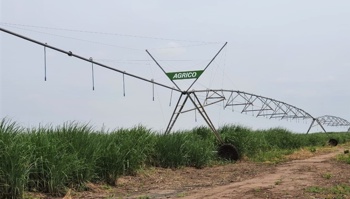
Evaluation of the DRIVE Project 'Chemba Serviços de Irrigação Lda – Irrigation Infrastructure for Organic Sugarcane'
- 2019 – 2021
- menos de 500.000 €
- Mozambique
'Chemba Serviços de Irrigação Lda – Irrigation Infrastructure for Organic Sugarcane' was funded by the Development Related Infrastructure Investment Vehicle (DRIVE) of the Ministry of Foreign Affairs of the Netherlands. The project was located in the Chemba district of Mozambique and aimed to put an agricultural infrastructure in place for small-scale farmers (members of cooperatives) to sustainably grow high-quality organic sugarcane and food crops, which should ultimately enhance the income and food security of farmers and their communities.
The infrastructural outputs of the project, all operated by a utility company through a public-private partnership, included: (i) a bulk water supply infrastructure for irrigation, (ii) an electricity island for power supply to the irrigation system, (iii) a road grader and (iv) a weighbridge for the sugar cane delivered by cooperative members.
The purposes of the evaluation were accountability and learning (for continuous improvement) through insight into the nature and magnitude of effects (direct and indirect, positive and negative, intended or unintended) that could be attributed to the Chemba project. The evaluation determined whether the project contributed to private sector and human development as the overall objectives of the DRIVE facility. It also sought to contribute to the assessment of the feasibility of financing of other irrigation projects through DRIVE.
The evaluation used a mixed-methods contribution analysis that triangulated primary and secondary data. Specifically, it was based on a literature review, a household survey of members of beneficiary cooperatives, and qualitative stakeholder consultations (key informant interviews, focus group discussions, participatory workshop).
- Palabras clave:
- Agricultura, Industria y desarrollo del sector privado, Infraestructuras, Seguimiento y evaluación

Mid-Term Evaluation for the PACED (Rule of Law Project) in PALOP and Timor-Leste
- 2019 – 2020
- menos de 500.000 €
- Angola, Cape Verde, Guinea-Bissau, Mozambique, São Tomé & Príncipe, Timor-leste
The main objectives of this evaluation were to provide the relevant services of the European Union and the interested stakeholders with:
- an overall independent assessment of the past performance of the PACED, paying particular attention to its intermediate results measured against its expected objectives; and the reasons underpinning such results;
- key lessons learned, conclusions and related recommendations in order to improve current and future Actions.
In particular, this evaluation served to understand the performance of the Action, its enabling factors and those hampering a proper delivery of results in order to adjust its design or implementing modalities;
The main users of this evaluation were the EU Delegations, the NAO's, the Central Banks, the ministries of Finance and Plan and other relevant national partner institutions in PALOP/TL involved in the implementation of the Action evaluated.
The specific Evaluation Questions as formulated below were indicative. Based on the latter and following initial consultations and document analysis, the evaluation team discussed them with the Evaluation Manager and proposed in their Inception Report a complete and finalised set of Evaluation Questions with indication of specific Judgement Criteria and Indicators, as well as the relevant data collection sources and tools.
Once agreed through the approval of the Inception Report, the Evaluation Questions became contractually binding.
Relevance:
To what extent activities implemented, and to be implemented, were consistent with beneficiaries' requirements and country needs?
Effectiveness:
To what extent services provided have contributed to expected results making the best use possible of the available resources?
Efficiency:
To what extent outputs were achieved with the lowest possible use of resources/inputs (funds, expertise, time, administrative costs, etc.)?
Perspectives of impact:
To what extent activities implemented had the positive and durable expected impact? Can it be said that the activities and outputs logically allowed the objectives to be achieved?
Coherence of the Action:
Were there contradictions between the different levels of objective? Were there duplications between the activities/components of the Programme? Were there duplications between the PACED and other interventions (from the beneficiary or other donors)? Were complementarities between PACED and other interventions duly capitalized?
The questions coverd the following fields of analysis:
- a)Evaluation of the preliminary results of the action, including factors that have determined its success and failures;
- b)Assessment of the impact of the activities implemented within the beneficiary institutions;
- c)Assessment of the adequacy of the measures adopted to counter delays and deadlocks in the implementation of the action;
- d)Evaluation of the index of appropriation of the results of the action by the beneficiaries;
- e)Evaluation of the beneficiaries’ perception of the results of the action (methodology applied, successes, failures, solutions encountered, etc.); Identification of measures taken by beneficiaries to ensure the sustainability of the results of the action.
- Socios:
- Particip (líder), EMI (formerly: Cardno Belgium), EuroPlus
- Palabras clave:
- Justicia / Estado de derecho, Seguimiento y evaluación
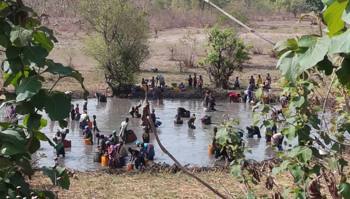
Evaluation of the Belgian Fund for Food Security (BFFS), the integration of food security and the multi-stakeholder approach within the Belgian Development Cooperation
- 2018 – 2019
- menos de 500.000 €
- Benin, Burundi, Guinea (Conakry), Mali, Mozambique, Tanzania
The objectives of the evaluation were as follow:
- Draw lessons learned from the implementation of the FBSA from the results observed in terms of food security with its 4 dimensions (summative evaluation).
- Assess the measures that have been taken to integrate the issue of agriculture and food security into Belgian cooperation.
- Assess the specificity and added value of the multi-stakeholder and multi-dimensional approach for Belgian Cooperation in the field of food security.
Thus, the evaluation is i) backward-looking, covering the implementation of the BFFS in its multidimensional approach based on the four pillars of food security (FAO) and its multi-actor approach; and ii) forward-looking, covering the food security dimension of the new programming of Belgian cooperation. The temporal scope extends from 2010, the year of the creation of the BFFS, to the time of the evaluation in 2019.
The evaluation team conducted 6 country case studies, notably for the five countries in which a BFFS multi-actor programme was carried out from 2012 to 2019: Mali, Mozambique, Burundi, Tanzania and Benin. A sixth case study was carried out on Guinea where a new bilateral programme had been launched, in order to meet the second objective which is to assess the measures taken to integrate agriculture and food security into the new programming of Belgian cooperation. In addition, an online survey was conducted among all actors involved in the implementation of the BFFS programmes.
The published report can be found here: https://diplomatie.belgium.be/sites/default/files/downloads/fbsa-fr-digital-complet.pdf
- Palabras clave:
- Agricultura, Alimentación y nutrición, Seguimiento y evaluación
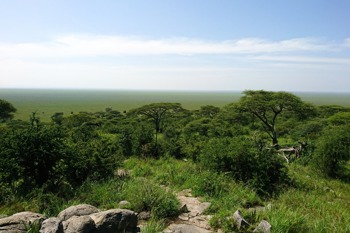
Evaluation of the Agriculture, Rural Development and Forest Sector programmes in Africa
- 2018 – 2019
- menos de 500.000 €
- Africa
The objective of the evaluation was to identify relevant and effective approaches, methodologies, instruments in the Agriculture, Rural Development and Forest sectors’ interventions to support the implementation of current programmes and the planning of possible future cooperation in the Agriculture, Rural Development and Forest Sector.
The evaluation was based on a selection of eight Finnish bilateral programmes in agriculture, rural development and forest sectors in Africa. They represent different approaches, methodologies, ecosystems and geographical areas in Kenya, Tanzania, Zambia, Mozambique and Ethiopia. However, all selected programmes focused on improving livelihoods and reducing poverty through agriculture or forest sector development, providing institutional support and capacity building, and contributing to socio-economic development.
The main issues to be addressed were:
- How can Finnish co-operation efforts best contribute to the achievement of the SDGs – as well as other relevant international agreements – through ARDF sectors making optimal use of its comparative advantages?
- Under what conditions can a value chain approach increase finance and investment in sustainable forestry and agriculture- while benefiting final beneficiaries in a sustainable way?
- How can cross-cutting objectives and HRBA be successfully integrated and implemented, in such a way that they support achievement of the Finnish development cooperation objectives and objectives of the projects?
- What are key success factors for achievement of ’reduced poverty and inequality’, in particular in terms of benefits for women, vulnerable groups, and small and medium-size farmers?
- How can investment in sustainable land use and land management be made inclusive of smallholder and community needs while being attractive to investors at the same time?
- Which implementation approaches are most appropriate - in terms of scale, modality/instrument, channel and/or implementing organisations in future?
- What type of monitoring and evaluation system is most appropriate for outcome monitoring of Finnish projects in the context of wider support for achievement of SDGs?
- How have the lessons learnt from other donors and development organizations been taken into account or implemented at project level and what kind of approaches do the organizations have for future challenges in the sector?
- How can ’Finnish added value’ in the AFRD sector be realised (e.g. through access to Finnish markets and expertise or to Finland’s experience in creating a favourable business environment)?
The final report is available here: https://um.fi/publications/-/asset_publisher/TVOLgBmLyZvu/content/evaluointi-maatalous-maaseutukehitys-ja-metsasektorin-kehityshankkeista-afrikassa/384998
- Socios:
- Particip (líder), Niras Finland Oy
- Palabras clave:
- Agricultura, Gobernanza, Medio ambiente, Seguimiento y evaluación, Silvicultura

Evaluation: How do we learn, manage and make decisions in Finland´s development policy and cooperation?
- 2018 – 2019
- menos de 500.000 €
- Ethiopia, Mozambique, Viet Nam
The evaluation focused particularly on knowledge management, decision making and learning as part of results-based management (RBM). It examined collaboration, organisational learning and capacity development throughout the implementation of RBM loops. Moreover, the evaluation provided an analysis of the progress of RBM and deepened the recommendations of the previous evaluations. It assessed how coherently the Ministry for Foreign Affairs (MFA) implements knowledge management in development policy and co-operation.
The evaluation had the following objectives:
- Evaluate how the Ministry for Foreign Affairs (MFA) manages internal and external knowledge and uses it for evidence-informed learning and decision-making in Finnish development policy and cooperation;
- Issue recommendations that help improving the MFA’s knowledge management, learning and decision-making; and
- Raise awareness and foster learning among MFA staff about these issues during the evaluation process.
The evaluation was conducted in four phases:
- Start-up phase
- Inception phase
- Implementation phase, including field visits
- Reporting and dissemination phase
The final report is available online: https://um.fi/documents/384998/0/Evaluation+report+Knowledge+Management+2019+%281%29.pdf/f5c3b583-6887-bfdf-6cce-9c78ee4a5fe7?t=1567156930398
- Socios:
- Particip (líder), Niras Finland Oy
- Palabras clave:
- Desarrollo institucional, Gestión, Seguimiento y evaluación
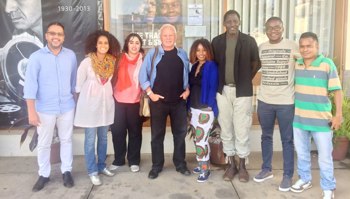
Celebration of the 25th anniversary of the PALOP-TL / EU program
- 2016 – 2018
- menos de 500.000 €
- Angola, Cape Verde, Guinea-Bissau, Mozambique, São Tomé & Príncipe, Timor-leste
The general objective of the contract was to contribute to a strengthened common identity of the PALOP-TL by the production and diffusion of knowledge about the origins and current common ties of the PALOP-TL on the occasion of the 25th anniversary of the programme between the PALOP-TL and the EU.
- produce audio-visual material about the common history and the current common ties between the PALOP-TL through a short-film contest;
- present/diffuse of material to the public during short-film festivals and/or films about the PALOP-TL in 2017 and 2018;
- Palabras clave:
- Comunicación y medios

Evaluation of the ECHO assistance in the Southern Africa and Indian Ocean Region (SAIO), 2012-2016
- 2017 – 2017
- menos de 500.000 €
- Madagascar, Malawi, Mozambique, Zimbabwe
The purpose of this Assignment was to have an independent overall evaluation of the ECHO actions in the SAIO region during the period 2012-2016.
Specifically, the evaluation provided:
- A comprehensive, retrospective assessment of DG ECHO's strategy/approach (as formalised by the Humanitarian Implementation Plans), in the SAIO region covering the evaluation issues of relevance, coherence, EU Added Value, effectiveness, efficiency and sustainability;
- Prospective, strategic recommendations – based on the retrospective evaluation and the related research – for a future ECHO strategy in the region, with a view of maximizing the benefits of ECHO's initiatives on the ground.
- Palabras clave:
- Ayuda humanitaria, Seguimiento y evaluación

Evaluation of Election Observation Missions
- 2016 – 2017
- menos de 500.000 €
- Afghanistan, Bolivia, Guinea (Conakry), Honduras, Kenya, Mozambique, Sri Lanka, Tunisia
The global objectives of the evaluation were:
a) to provide the relevant external and co-operation services and other impacted services of the EU (FPI, EEAS, DEVCO, NEAR) with an independent assessment of the achievement of the intended results of EU election observation missions and b) to identify key lessons and forward looking recommendations in order to improve future actions in this field.
The specific objectives of the evaluation were as follows:
a) The evaluation will assess EU election observation activities worldwide during the period January 2012–June 2016, using two of the standard five DAC criteria for evaluating Development Assistance, namely those of effectiveness and impact. As the evaluation should reflect a results-oriented management approach, these two DAC criteria were selected being the most relevant for this purpose.
b) The difference of this evaluation, compared to the wider one on the EIDHR in the context of the Mid Term Review Report, is that it is more focused on effectiveness and impact and takes also into consideration the beneficiaries' side with field visits of the evaluators in countries in which EU election observation has been conducted. This evaluation has also a shorter time span.
- Socios:
- GOPA
- Palabras clave:
- Gobernanza, Seguimiento y evaluación