
Nuestros proyectos
Explore la experiencia de Particip en proyectos desarrollados en distintos países, sectores y ámbitos de especialización.
Nuestras referencias ofrecen una visión general de las misiones finalizadas y en curso, incluidos sus objetivos, alcance geográfico, duración y valor contractual.
Mostrando 191–200 de 980 referencias
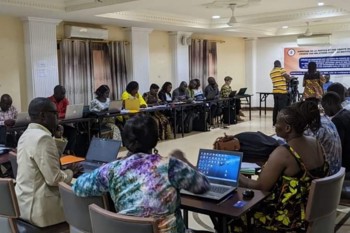
Technical assistance for the implementation of the projects Improvement of the judicial system and access to justice 2021-2025 and Improvement of trust between the population and the internal security forces
- 2021 – 2025
- de 2 a 5 millones de €
- Burkina Faso
The overall Technical Assistance was broken down into two components, linked by a joint general objective to contribute, within the thematic framework of governance of the Danish Country Programme for Burkina Faso 2016, to "an improved human rights situation, strengthening democratic governance and stability" in Burkina Faso.
The main focus was to provide technical assistance to the Governmental agencies and ministries to ensure that the danish programme did not convert into a simple patchwork of training and equipment activities, but that it materialized into a real governance project that links effectiveness, efficiency and accountability; the participation of citizens and CSOs, and inter-ministerial cooperation (particularly with Justice and Human Rights, Social Action and Promotion).
The development of these two axes was guided by the human rights-based approach (HRBA), particularly the four principles of non-discrimination, participation, accountability and transparency
Component 1: Technical Assistance To The Ministry Of Justice, Human Rights And Civic Promotion
The objective of the Development Commitment Paper 1 (DCP 1) was to “strengthen the effectiveness of human rights and the credibility of justice”.
Its aim was to produce the following four outputs:
- Output 1: the Ministry of Justice, Human Rights and Civic Promotion (MJHRCP) will monitor and coordinate the follow-up of the recommendations from the Universal Periodic Review (UPR) for which the public partners are responsible, and strengthen the government capacities in monitoring methods and documenting tools.
- Output 2: the UPR recommendations for which the MJHRCP is responsible were implemented, in particular concerning the key recommendations relating to the categories of rights that were targeted (e.g. child rights, women’s rights, the disabled and prisoners), contributing to an improved delivery of nationwide civic education on justice procedures.
- Output 3: the legislative framework was made more inclusive and participatory in accordance with the UPR recommendations concerning the independence of justice and the categories of rights targeted (child rights, women’s rights, the disabled and prisoners).
- Output 4: the code of ethics were adhered to better within the justice administration and by the governmental agencies and ministries.
Component 2: Technical Assistance To The Ministry Of Territorial Administration, Decentralisation And Security
The objective of the DCP 2 was to “help improve local access to justice, stability and the protection of human rights (2016 – 2020)”. Its aim was to produce the following three outputs:
- Output 1: security services has a good command of the tools and procedures for the protection of human rights, as per international standards.
- Output 2: security services show more presence and effectiveness in the towns / villages that do not have police or gendarmes, in particular by increased citizen participation.
- Output 3: the participation of the communities in building security are effective, especially for vulnerable groups.
The DCP 2 covered the Eastern and Northern Sahel regions and also the strategic function activities at central level. The flagship actions of the present commitment were based on:
- Support in reforming policies, security standards and human rights, as planned in the context of the security services’ missions, and support in preparing a White Paper on defence and security
- Consolidating the initial training in police and gendarme schools (new tools, approaches, procedures and techniques for human rights) and the continuing training (training of trainers and decentralised training in three regions) to accompany the huge ongoing recruitment drive for police officers and gendarmes.
- Support with communication and dialogue between the security services and the population, to assist with community participation on security issues, community conflict resolution and the fight against violent extremism.
The expected results include an improved capacity to deliver security services while respecting and protecting human rights; better citizen’s perception of security services; more responsible governance; and an improved dialogue between state actors and non-state actors (CSOs) when building community security and respecting human rights
Consulting Services - Support to the Malawi Youth Sounding Board (2023 - 2025)
- 2023 – 2025
- menos de 500.000 €
- Malawi
The global objective (Impact) to which this action contributed was to enhance youth engagement and youth inclusion in the programmes and policies of the European Union Delegation to Malawi.
The specific objective of this contract was to provide technical, administrative and communication support to the MW-YSB to efficiently and effectively implement its role and fulfil its mandate.
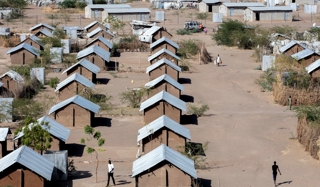
Monitoring Contract for T05-EUTF-HOA-KE-69
- 2024 – 2025
- menos de 500.000 €
- Kenya
This project aimed to learn from EU programme implementation in support of refugees and host communities and obtain an assessment of results reported under programme T05-EUTFHOA-KE-69 ‘Enhancing self-reliance of refugees and host communities’, while improving in programme monitoring and evaluation frameworks with the aim of enhanced effectiveness and efficiency of future implementation.
Specific objectives:
- Through third party monitoring (TPM) of EUTF-funded projects T05-EUTF-HOA-KE-69-01 and T05-EUTF-HOA-KE-69-02 in Kakuma and Dadaab, verify results reported thus far by IPs;
- Improve the monitoring system of ongoing EU actions under decision T05-EUTF-HOAKE-69, through hands-on support to EU implementing partners;
- Collection of strategic end-line data of EUTF projects assessing the degree of self-reliance of project participants.

Global Development Delivery (GDD) Framework Agreement - Lot 10 – Education, Gender and Social Inclusion
- 2023 – 2025
- n/a
- Global
Under this framework agreement, suppliers will provide advice and expertise to FCDO in the thematic areas of education, gender and social inclusion. The exact services provided will be determined through call-down contracts.
In terms of education, the services will notably promote learning for marginalised children at primary and secondary school levels, with a focus on children with disabilities, out of school children, children affected by crises, and hard to reach girls.
Gender equality is a cross-cutting issue for all FCDO work, and an explicit focus in fragile, conflict and humanitarian settings. The expected services will notably focus on strengthening national systems, working in partnership with private sector and civil society.
The services on social inclusion aim at addressing the underlying structural causes of poverty and inclusion, working in multi-dimensional approaches.
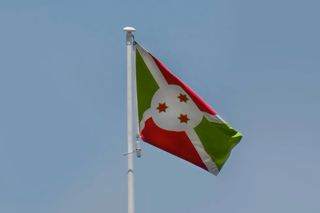
To help strengthen democratic governance in Burundi by building the technical capacity of the National Communication Council and the Burundi Ombudsman Institution.
- 2023 – 2025
- menos de 500.000 €
- Burundi
The general objective was to help strengthen democratic governance in Burundi by building the technical capacity of the National Communication Council and the Ombudsman Institution of the Republic of Burundi.
The specific objectives were :
- To support the National Communication Council in operationalising the implementation of its Triennial Strategic Plan (TSP) 2023-2025.
- Support the institution of the Ombudsman in the implementation of its Strategic Plan 2024-2027 and in the installation and operation of the integrated appeals management system which also takes into account the gender dimension.

Support to implementation of Covenant of Mayor East and M4EG regional projects in Azerbaijan
- 2023 – 2025
- menos de 500.000 €
- Azerbaijan
Task 1. Provided technical support to the CoM signatories to develop and implement SECAPs:
The project provided support to five selected CoM signatories on the step-by-step preparation of SECAPs through seminars/webinars, on-line/face-to-face consultation, site workshops. Detailed action plan with certain milestones, phases, implementation responsibilities, and implementation timeline were prepared for each municipality. Municipalities in Azerbaijan did not have the technical or financial capacity to implement all actions stipulated in their SECAP. The project supported pilot activities for Mingachevir municipality to show how it can effectively turn its SECAP into practical action and play an active role in greening processes at local levels. Lessons from these pilot projects helped other municipalities to identify possible solutions for rolling out their own SECAPs.
Task 2: Provided technical support to the M4EG signatories to develop LEDPs:
The project provided support to ten selected M4EG signatories on the step-by-step preparation of LEDPs through seminars/webinars, on-line/face-to-face consultation, site workshops. Detailed action plan with certain milestones, phases, implementation responsibilities, and implementation timeline were prepared for each municipality. The project also aimed to disseminate amongst the signatory municipalities a successful experience in development of the LEDPs.

Mid-Term Evaluation of the project Transformation towards sustainable food systems – KWIHAZA
- 2025 – 2025
- menos de 500.000 €
- Rwanda
This mid-term evaluation assessed the KWIHAZA project, “Transformation towards sustainable food systems”, implemented in Rwanda and co-funded by the European Union and the Government of Luxembourg together with the Government of Rwanda. It was both summative and formative in nature, serving the dual purposes of accountability and learning. The evaluation examined the project’s overall performance at mid-term and aimed to generate lessons for the remainder of implementation and a possible second phase. More specifically, it assessed the project’s achievements and added value, identified lessons learned, best practices, obstacles and failures, and considered whether future action should be reoriented.
The evaluation was conducted against the broader backdrop of Rwanda’s efforts to transform its food system in response to persistent structural challenges, including low productivity, weak value chain linkages, limited value addition, post-harvest losses, and constrained access to finance. Within this context, it examined the extent to which KWIHAZA had progressed in supporting the transition towards socially and environmentally inclusive food systems through interventions in aquaculture, fisheries and horticulture, with particular attention to women and youth. It covered the project’s three result areas – aquaculture, fisheries and horticulture – and the full range of intervention themes, including support to smallholder organisations, SMEs and aspiring young entrepreneurs, as well as the enabling environment for inclusive value chain development and sustainable food systems.
The evaluation assessed the project against the OECD DAC criteria of effectiveness, efficiency, coherence and sustainability. It also considered unintended effects and explicitly addressed the cross-cutting themes of environment, gender and inclusion. Methodologically, the evaluation followed a theory-based framework and used a mixed-methods approach, including a mission in Rwanda.
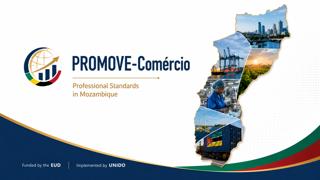
Final Evaluation Promove Comercio - Building competitiveness for exports
- 2025 – 2025
- menos de 500.000 €
- Mozambique
The global objective of this assignment is to undertake a final evaluation of the performance of the PROMOVE-Comercio implemented by UNIDO.
In particular, the evaluation will focus on:
- an overall independent assessment of the performance of the PROMOVE-Comercio project, paying particular attention to their actual levels of results measured against its expected objectives; and the reasons underpinning such results.
- key lessons learned, conclusions and related recommendations in order to improve current and future interventions.
In particular, this evaluation will serve as source to inform decision-making on possible future support to trade facilitation in Mozambique and potential replicability in projects in similar context.
The main users of this evaluation will be the European Union Delegation to Mozambique, European Commission, Mozambique trade related authorities (MIC), Implementing Partners (UNIDO, UNCTAD), and other public institutions that are benefiting from the intervention (INNOQ, IPEME, APIEX).
C2C technical coordination support - bridge contract
- 2024 – 2025
- menos de 500.000 €
- Global
The Specific Objectives are threefold (and interconnected):
- To support DG INTPA, through analyses, in its in-house knowledge/policy reflection on its future engagement with LAs and the place of decentralized cooperation in it, connecting it with important EU development policy trends and thematic priorities such as the so-called “geographisation” of EU aid, the Global Gateway strategy, the EU engagement in fragile states and support to local democracy.
- To maintain a strategic relationship between DG INTPA and a selection of the 57 cityto-city Partnerships (“champions”), including through the organization in Europe of a 3 rd global conference during the 1 st semester of 2025.
- To communicate strategically about the results, lessons learnt and added value of the overall programme and advocate at EU and international level for enhancing support to decentralized cooperation/city-to-city partnerships in the future.

Global Thematic Evaluation of EU actions to counter disinformation and foreign interference and manipulation of information (FIMI)
- 2024 – 2025
- menos de 500.000 €
- Global
The main objectives of this sector evaluation were to provide the relevant services of the European Union and the interested stakeholders with:
- An overview of the FPI funded actions to counter disinformation/FIMI
- An overall independent assessment of the past performance of the actions relevant to countering foreign interference and manipulation of information, funded under different strands of budget managed by the Service for Foreign Policy Instruments (NDICI-Crisis Response, NDICI-Foreign Policy Needs, Thematic MIP Peace and Stability, Instrument Contributing for Stability and Peace Article 3, 4 and 5 respectively), paying particular attention to their approach, the coherence of the approach taken in different countries, intermediate or final results measured against expected objectives; and the reasons underpinning such results;
- An in-detail evaluation of 12 actions to be selected in the inception period;
- Key lessons learned and related recommendations in order to improve current and future Actions, particularly concerning the approach taken to countering FIMI and disinformation in third countries;
- Key lessons learned to improve coordination and articulation with other actions and initiatives in the field of countering FIMI/disinformation implemented by other EC services (NEAR, INTPA, COMM, CNCT, JRC, RTD) and EEAS.
The specific rationale for undertaking this evaluation was to assess the outcomes, approach, and coherence of FPI-managed activities in the field countering disinformation/FIMI, as well as the added value of these activities, by the objectives defined in relation to the different instruments that fund them, i.e. to contribute to peace, stability and conflict prevention in situations of urgency, emerging crisis, crisis and post-crisis, defending and promoting EU interests and values, and pursuing actions towards peace, stability and conflict prevention. It also assessed the extent to which these actions were coherent with the EU policies and to what extent they added value and synergy to the other initiatives/actions of the EC and EEAS in this domain outside and inside the EU.
This sector evaluation contract covered 46 actions for the overall assessment and 12 actions for in-depth analysis. During the Inception and Desk phase, this sample of 12 actions was selected based on criteria agreed during the Inception phase. This sample reflected the variety of countering FIMI/disinformation actions, geographic spread and funding instruments as well as the fact that some are already in their second phase. The sample allowed drawing conclusions, lessons learnt and recommendations for countering FIMI/disinformation actions managed by FPI in support of EU policies. The focus of the evaluation was on assessing the approach taken in relation to FIMI/disinformation under the different Actions, progress to date and, by explaining why progress is happening or is not happening as planned, providing recommendations on how to improve the approach in order to counter FIMI/disinformation more effectively.
In particular, this sector evaluation served to understand the performance of the actions, its enabling factors and those hampering a proper delivery of results, with a view to informing the planning of future EU interventions in relation to countering FIMI and disinformation. To this end, this sector evaluation also looked at the package of actions as a whole and make recommendations regarding strengths, weaknesses and gaps, including by looking into options for more coherent results and monitoring and reporting, in the type of interventions as relevant to impactfully counter FIMI and being able to measure and report results across the sector.
The Final Evaluation Report is available at this link: https://fpi.ec.europa.eu/projects/projects-action/global-thematic-evaluation-eu-actions-counter-disinformation-and-foreign-interference-and_en?prefLang=mt