
Nuestros proyectos
Explore la experiencia de Particip en proyectos desarrollados en distintos países, sectores y ámbitos de especialización.
Nuestras referencias ofrecen una visión general de las misiones finalizadas y en curso, incluidos sus objetivos, alcance geográfico, duración y valor contractual.
Mostrando 561–570 de 985 referencias
Human Rights Policy Support
- 2019 – 2021
- de 500.000 € a 1 millón de €
- Global
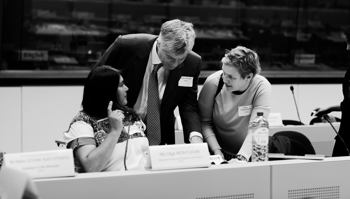
This action contributed to the effective implementation of international human rights instruments, principles and standards, primarily by means of exchange of best practices with partner countries.
The project was conceived to serve and preserve EU values and interests by means of complementary actions. It promoted policy cooperation with partner countries of strategic interest to the EU as well as enhanced the EU's visibility and coherence. This was done through the development of an analysis of the human rights situation in 13 countries, the organisation of seminars/roundtables and outreach activities. This ensured increased human rights awareness and access to human rights knowledge.
The Specific objectives were:
- 1)To ensure appropriate follow-up to political and human rights dialogues with partner countries. This includes, inter alia, facilitating south-south cooperation and exchange of ideas, knowledge and expertise on commonly identified human rights issues; providing technical assistance including in the form of trainings and roundtable discussions with governments in partner countries in order to strengthen their human rights expertise; facilitating interaction among representatives from the private sector and government representatives in partner countries to ensure compliance with the internationally recognised human rights framework; and facilitating regular interaction between partner countries with a view to building and reinforcing regional alliances which may contribute to serving EU interests in multilateral fora;
- 2)To contribute to bringing together experts from the EU and partner countries such as academics, private sector and government representatives in order to equip the EU to remain innovative and tackle emerging subjects of EU interest as a vehicle of cooperation with partner countries such as artificial intelligence, academic freedom, right to water and sanitation, economic social and cultural rights;
- 3)To support and enhance the monitoring of Generalised Scheme of Preferences (GSP) GSP+/ Everything but Arms (EBA) beneficiaries' commitments under the seven GSP core human rights conventions.
Internal studies analysing Human Rights situation in the following countries
- Armenia
- Bangladesh
- Bolivia
- Cabo Verde
- Cambodia
- Kyrgyztan
- Mongolia
- Myanmar
- Pakistan
- Philippines
- Sri Lanka
- Tajikistan
- Uzbekistan
- Socios:
- Particip (líder), SICI Dominus
- Palabras clave:
- Comunicación y medios, Derechos humanos, Seguimiento y evaluación, Sociedad civil

Evaluation on the transition towards a new partnership between Finland and Vietnam
- 2020 – 2021
- menos de 500.000 €
- Viet Nam
The evaluation covered the period of 2008–2020. The ultimate purpose of the evaluation was to support the achievement of goals for the transition process, i.e., transitioning from grant-based development cooperation to increased trade and other mutually beneficial forms of cooperation, in Vietnam and elsewhere in Finland’s partner countries
The evaluation shed light on what are the successes and challenges in the transition process in Vietnam and thereby helped to identify strengths and weaknesses of the transition process. The purpose was also to assist in understanding how development cooperation can support the transition process and build new partnerships and cooperation. The evaluation assisted the MFA to further develop synergies between development cooperation and Team Finland as well as between different development cooperation modalities and instruments in order to support transition as a process.
The following issues were addressed:
- To what extent has the transition process achieved its goal to move from traditional bilateral development cooperation to more diversified cooperation.
- To assess the successes, challenges and possible limitations in the approach, modalities and resources to support the transition process and its goal on building new partnerships and a new type of cooperation.
- How Finland’s development cooperation has supported the transition and how it has contributed to building new partnerships.
- How synergies between different cooperation modalities/instruments, between development cooperation and Team Finland as well as between different actors have been sought.
- What the MFA can learn from its peer organizations, e.g. Denmark and the Netherlands.
- How to best support transition processes elsewhere in Finland’s partner countries and continue support to post-transition phase, with still remaining available resources.
The main sectors of cooperation were Water and sanitation, Forestry, Climate Change, Education, Science, technology and innovation.
- Socios:
- Particip (líder), NIRAS
- Palabras clave:
- Derechos humanos, Educación, Energía, Gobernanza, Silvicultura, Sociedad civil, Tecnologías de la información

Legal advisory services to support the implementation of the integrated pollution prevention and control in Ukraine in line with the provisions of the Directive 2010/75/EU
- 2019 – 2021
- menos de 500.000 €
- Ukraine
The overall GIZ programme of which this project was a part provided support in improving the administrative and technical capacity of the competent governmental authority(-ies) and installation operators to implement the industrial emissions (integrated pollution prevention and control) (IED) and thus enforce the consistent application of the concept of integrated pollution prevention and control in industry and the promotion of the best available techniques (BAT).
The Project supported the further development of the institutional framework, in particular, in reforming the existing system of environmental permitting and introducing the concept of integrated pollution prevention and control. To this end, the project supported the MENR and the competent authority(-ies) in drafting laws and regulations to implement the IED, in preparing BAT conclusions, and in preparing recommendations to adapt existing sectoral legislation.
- Socios:
- Particip (líder)
- Palabras clave:
- Medio ambiente

Evaluation on Development Cooperation carried out by the Department for Russia, Eastern Europe and Central Asia, Including The Wider Europe Initiative (WEI)
- 2020 – 2021
- menos de 500.000 €
- Armenia, Azerbaijan, Belarus, Georgia, Kazakhstan, Kyrgyzstan, Moldova, Tajikistan, Turkmenistan, Ukraine, Uzbekistan
The overall purpose of the evaluation was to inform the Ministry for Foreign Affairs in Finland (MFA) on the achievements of its development policy and cooperation in the region over the past decade, and to support the MFA in deciding how to best achieve its policy objectives and to enhance its management of the programme in the region at strategic level. Main sectors of cooperation in the region are i) Government and Civil Society, ii) Energy, iii) Education and iv) Environment Protection. The evaluation was mostly forward-looking but also included summative analysis to respond to the evaluation questions.
Objectives: The objectives of the evaluation were to produce evidence and present well justified conclusions on the following:
1. To assess the impact(s), if any, of Finland’s development cooperation carried out in the region by the Department for Russia, Eastern Europe and Central Asia;
2. To assess the scope of the impact(s) and their relative significance to development in the area;
3. To assess the levels of sustainability of the achieved results and impact;
4. To assess the results achieved by, and management of, the current country strategies;
5. To analyse the reasons explaining success and/or failure in performance and in reaching a lasting impact, including the operational context, human aspects and resources; and
6. To provide recommendations that serve the Ministry in developing its strategic planning, management and response in the region as well as drawing the broader lessons on how to increase impact and sustainability, in advancement of Finland’s development policy objectives.
Final report available here: https://um.fi/development-cooperation-evaluation-reports-comprehensive-evaluations/-/asset_publisher/nBPgGHSLrA13/content/evaluointiraportti-suomen-kehitysyhteisty%25C3%25B6-it%25C3%25A4-euroopassa-ja-keski-aasiassa/384998
- Socios:
- Particip (líder), NIRAS
- Palabras clave:
- Derechos humanos, Educación, Energía, Medio ambiente, Seguimiento y evaluación, Sociedad civil

Communicating results of the EU support to the private sector development in Jordan
- 2018 – 2021
- menos de 500.000 €
- Jordan
Global objective
The general objective of this assignment was to strategically and effectively communicate the results of the three components under the EU Support to Private Sector Development programme(PSD) in Jordan.
Specific objectives
The project aimed at enhancing the communication capacities of Jordanian key PSD administration to effectively promote government policies and raise their visibility, affect desired changes and maintain public interest consistent with Jordanian aspirations.
The project also aimed at enhancing EU’s support to private sector in Jordan at large and in particular the ongoing PSD programme. The project looked at establishing bridges between expert and non-expert communities and devising the most effective ways of communicating all programme components results to different audiences in formal and informal settings trough all media channels (including social media).
- Palabras clave:
- Comunicación y medios
Advisory Services for GIZ Sector Project Agenda 2030
- 2019 – 2021
- menos de 500.000 €
- Germany
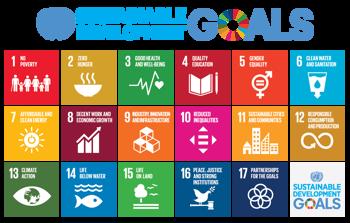
The Agenda 2030 for Sustainable Development has been implemented by all countries since 2016. Over the next 15 years, it will shape numerous policy areas - far beyond development cooperation (DC). The Federal Ministry for Economic Cooperation and Development (BMZ) is in the process of aligning development policy with the implementation of Agenda 2030. This is based on three pillars: implementation in Germany, support for the partner countries of German development cooperation and at the international level.
The sector project (SV) Agenda 2030 for sustainable development advises the BMZ to all three pillars. The focus of advisory activities is on the following three areas:
- German Sustainability Strategy and Architecture
- SDG Measurement Methods, Monitoring/ Data & & Statistics,
- Integrated implementation/policy coherence,
- Financing for sustainable development,
- Multilateral Processes
- Methodical implementation of Agenda 2030.
This means that the SV Agenda 2030 for Sustainable Development has the following requirements: (i) to work on new topics in depth in its activities, even at a short notice; (ii) to cover a wide range of topics using expert advice and to work on them in an integrated manner; (iii) to maintain an overview of the various reform processes and to classify them correctly; and (iv) to react to a broad spectrum of actors and provide advice. The dynamics, thematic range and complexity of the implementation of Agenda 2030 makes it necessary for the SV to have access to well-founded expertise on a wide range of topics (e.g. implementation at local level, private sector, monitoring/data & statistics, integrated implementation/policy coherence, financing for sustainable development, multilateral processes).
Against this background, the scientific/conceptual support prepares existing knowledge in this respect and accelerates, facilitates and deepens the advisory service through corresponding professional preparatory work.
The support provided by the contractor enables the SV Agenda 2030 to award contracts for the development of individual services at relatively short notice. At the same time, the contractor's broad technical base ensures the availability of scientific expertise on various topics relevant to the project and thus enables the BMZ to provide technically adequate and precise advice. Furthermore, the SV is to be enabled to maintain an overview of existing reform and adaptation processes and to derive recommendations for German development cooperation from these. As part of the scientific support, the contractor cooperates with the SV Agenda 2030 on a case-by-case and topic basis upon request and provides services to be specified in detail.

Study on the monopoly position of global and regional Associations of Local Authorities
- 2020 – 2021
- menos de 500.000 €
- Global
The specific objective was to demonstrate which global and regional Associations of Local
Authorities hold a de facto or de jure monopoly on the basis of which DG DEVCO will be able to sign the second generation of Framework Partnerships Agreements for the period of 2021-2027.
In the realm of this assignment, regional and global Associations of Local Authorities have to be understood as membership-based umbrella organisations centered around representativeness operating at sub-national, national, sub-continental, continental and international level. In particular, for the purpose of this study, ALAs were:
- actor-based: “Actor-based” umbrella organisations are understood as structures that gather the family of actors, in this case Local Authorities and their Associations, excluding other types of actors; and
- non-thematic: Non-thematic organisations focus on general development issues such as , inter alia, development effectiveness, capacity building of development actors, creation of an enabling environment for LAs. Non-thematic organisations can be understood as opposed to organisations that focus on particular policy domains and thematic fields such as, inter alia, climate change, education, health, migration.
- Socios:
- Particip (líder), EuroPlus
- Palabras clave:
- Desarrollo rural y urbano, Gobernanza
Evaluation of Danish Funding for Climate Change Mitigation in Developing Countries
- 2020 – 2021
- menos de 500.000 €
- Ethiopia, Indonesia, South Africa, Viet Nam
The objectives of the evaluation were threefold, covering both accountability and learning purposes:
- To document achievements in terms of assisting developing countries to mitigate climate change through the provision of Danish support in the period from 2013, both through the climate change envelope (CE) and through other development assistance channels;
- To analyse the outcomes of climate change mitigation funding, with due consideration of the opportunities and barriers at both national and global levels;
- On the basis of the lessons learned from the evaluation, to provide recommendations pertaining to future funding priorities.
On the basis of the above, four main evaluation questions had been identified:
- Taking into account the strategic objectives of development cooperation and the guiding principles for the CE, what are the main results of Danish funding for climate change mitigation since 2013?
- How has climate change mitigation funding responded to the aims and needs defined by developing countries in nationally determined contributions (NDCs), leading to measurable GHG emission reductions and to pro-poor low carbon development?
- How has climate change mitigation funding contributed to transformational change and the sustainable development goals in a manner consistent with Danish comparative advantages and opportunities and in terms of influencing global agendas for climate action?
- What are the main lessons learned from climate change mitigation funding that can determine strategic directions and operational considerations in the coming years?
- Socios:
- Particip (líder), ODI
- Palabras clave:
- Energía, Medio ambiente, Seguimiento y evaluación, Silvicultura

Evaluation of the action 'Support to the integrated management of water resources of Lake Kivu and the Ruzizi River' – Mid-term Evaluation
- 2020 – 2021
- menos de 500.000 €
- Rwanda
The mid-term evaluation focusses on progress made to date and, explains why progress is happening or is not happening as planned, and shall provide recommendations on how to improve the Action during its residual duration in order to achieve the expected objectives, taking into account problems and opportunities. Further, the evaluation examines the mandate and capacity of ABAKIR, the intended transboundary resource management mechanism for the three states of Rwanda, Burundi and Democratic Republic of Congo.
The evaluation should also serve to prepare new Actions and encompass both forward and backward-looking perspectives including whether gender, environment and climate change were mainstreamed; the relevant SDGs and their interlinkages were identified; the principle of Leave No-One Behind and the rights-based approach methodology were followed in the identification/formulation documents and the extent to which they have been reflected in the implementation of the Action, its governance and monitoring.
1. Is the Action relevant as such and in particular in the current context (security situation in the region, the selected partner ABAKIR and its capabilities, etc)?
2. Is the method of management and of implementation applied by the contractor GIZ still appropriate in the current context and within the time remaining and the limited budget specifically dedicated to the activities?
3. Were all stakeholders appropriately involved in the preparation of the Action or were their views and expectations at least taken into consideration in the Action's design?
4. The Action is experiencing issues in terms of stakeholders' appreciation, ownership and expectations. The evaluators will analyse the reasons for these issues in view of proposing corrective measures to achieve the project objectives with a higher level of involvement and ownership of partners and beneficiaries - even by amending some terms of the Action and by redefining its objectives. Among the possible options, the evaluators will consider the following:
(1) an extension of the Action's duration without any extra budget allocation, namely a No-Cost Extension,
(2) a downsizing or a modification of some activities without altering the original Action's objectives,
(3) a suspension of the activities, as a whole or just partially, for a duration allowing some corrective actions to be taken, or
(4) an anticipated end of the Action and a termination of the contract signed with GIZ. In case this would not turn feasible, the evaluators will propose the best possible ways and conditions to terminate the Action with a limited impact on beneficiaries and stakeholders.
5. The evaluators will analyse the project achievements, all along its results chain.
6. The evaluators will consider the coordination with other Actions like the one similarly launched in favour of the Lake Tanganyika and with the GIZ-led Nexus programme.
- Socios:
- Particip (líder), CAPA EEIG (managed by Particip)
- Palabras clave:
- Medio ambiente

Feasibility study on options for strengthening the future European financial architecture for development
- 2020 – 2021
- menos de 500.000 €
- Europe
The general purpose of this independent study was to provide a more detailed legal, governance, financial and operational assessment of the feasibility of two of the options put forward by the High-Level Group of Wise Persons in their Independent Report on the European Financial Architecture for Development (October 2019) and to assess also the option of possible enhancements in the current institutional set-up. As such, the study should inform future policy choices on the European financial architecture for development by comparing these options and allowing for a clear understanding of the added value of each of them in terms of efficiency, cost, speed of implementation, visibility, development impact and alignment with EU policy objectives as well as of the preconditions for their success.
The specific purpose of this study was to assess the feasibility and the conditions for the implementation of Options 1 and 3 put forward in the Wise Persons Group’s report as well as of possible enhancements in the current institutional set-up (Status Quo+). The two options put forward by the Wise Persons Group to be covered as elements of this study involve important institutional changes and have significant implications on financial and human resources. The study assessed the necessary legal and statutory pre-conditions for their possible implementation, their added value, their financial, governance and operational implications as well as the potential advantages and disadvantages of the Status Quo+.
- Socios:
- Particip (líder), ADE, Lion's Head Global Partner
- Palabras clave:
- Desarrollo institucional, Gestión, Seguimiento y evaluación