Viet Nam
18 referencias

The evaluation of the Danish Energy Partnership Programmes (DEPP) covers more than a decade of bilateral cooperation supporting the green energy transition in emerging economies. Since 2012, these programmes have engaged Denmark with key partner countries such as China, India, South Africa, Vietnam, and Mexico, whose future energy choices will significantly shape global emissions. DEPP provides technical assistance in long-term energy planning, renewable energy integration, energy efficiency, and the development of regulatory frameworks.
The overall objective of the evaluation is to strengthen accountability and learning by documenting results and assessing DEPP’s contributions to capacity strengthening, as well as their strengths and weaknesses. More specifically, the study will analyse the programmes’ relevance, coherence, effectiveness, efficiency, impact, and sustainability. By doing so, it will generate lessons learned and actionable recommendations to inform the design and implementation of future programmes, consolidating Denmark’s role as a trusted partner in advancing global climate and energy goals
.
- Socios:
- NCG Denmark (líder), DEM, Particip
Framework Agreement for Decentralized Evaluations and Reviews (FADER) - Lot 1
- 2023 – 2027
- de 2 a 5 millones de €
- Ethiopia, Indonesia, Kyrgyzstan, Nepal, Tajikistan, Tanzania, Ukraine, Uzbekistan, Viet Nam
The Framework Agreement for Decentralized Evaluations and Reviews (FADER) LOT 1 covers different types of appraisals, evaluations and reviews of development cooperation projects and programmes funded by the Ministry for Foreign Affairs of Finland (MFA).
The main users of the FADER are the regional departments of the MFA, which have regional and country specific development cooperation programmes/projects in Africa, the Middle East, Asia, Eastern Europe and Central Asia.
The following assignments are implemented by Particip GmbH:
- Project appraisal: Strengthening inclusive education system in support of Ethiopia's general education sectoral programme,
- Appraisal of the Local Adaptation to Climate Change- Project in Nepal,
- Project appraisal: Rural Economic Development (RED) Phase I in Ethiopia,
- Appraisal of the “Forestry, Land Use and Value Chains Development in Tanzania” (FORLAND) programme,
- Appraisal of Tax Sector Support to Tanzania (TAXTAN) programme.
- Palabras clave:
- Agricultura, Desarrollo rural y urbano, Educación, Gobernanza, Medio ambiente, Seguimiento y evaluación, Silvicultura

Joint Efforts for a Green Future: Evaluation on Finland's Development Cooperation in Environment and Sustainable Use of Natural Resources and Private Sector Opportunities
- 2024 – 2026
- menos de 500.000 €
- Global
This evaluation aims to provide the Ministry for Foreign Affairs (MFA) of Finland and its stakeholders with an in-depth understanding of the achievements, merits, and value of implementing the policy priority area on sustainable management and use of natural resources. It seeks to deliver evidence-based recommendations to enhance the effectiveness of Finland's engagement with this theme over the long term, while also increasing awareness of results achieved and lessons learned. Additionally, the evaluation will expand knowledge on environment and natural resources-related Sustainable Development Goals (SDGs), with particular attention to SDG 17 on partnerships.
The evaluation encompasses four standalone evaluations on four of the sub-sectors under Finland's ‘Climate and Natural Resources’ policy priority area: i) forests and biodiversity; ii) water resources management; iii) energy, circular economy and critical minerals; and iv) disaster risk reduction (DRR), including meteorology. A synthesis report integrates key findings from the four evaluation reports, explores interlinkages, provides meta-level insights, and identifies concrete opportunities for Finnish private sector engagement. The evaluation also examines digitalisation and data management in forestry sectors in Tanzania and Vietnam, as well as delves deeper into the energy sector in Ukraine.
Objectives:
Assess results, successes, and challenges in achieving the objectives of this policy priority area and its sub-sectors.
Provide a synthesis of outcomes and impacts, including early and emengrgi impacts.
Identify and analyse opportunities for engaging Finnish private sector actors in this work.
Develop practical, evidence-based recommendations for future policy and operational approaches, considering financial and resource constraints. This includes exploring the potential of geospatial data and geo-referencing for monitoring and evaluation purposes.
The evaluation focuses primarily on the OECD DAC criteria of effectiveness and impact, with a particular emphasis on tangible results and signs of impact from both ongoing and completed interventions.
- Palabras clave:
- Energía, Industria y desarrollo del sector privado, Medio ambiente, Seguimiento y evaluación, Silvicultura

Evaluation of ICI cooperation in Asia
- 2024 – 2025
- menos de 500.000 €
- Indonesia, Kyrgyzstan, Nepal, Tajikistan, Uzbekistan, Viet Nam
The evaluation provided an assessment of the support delivered through Finland’s Ministry for Foreign Affairs' (MFA) Institutional Cooperation Instrument (ICI) in Central Asia (Uzbekistan, Tajikistan, Kyrgyzstan), Vietnam, Nepal, and Indonesia. By applying the OECD DAC criteria, the evaluation examined 12 ICI-funded projects, offering insights into both their individual achievements and challenges, as well as insights into the instrument as a whole.
The primary aim of the evaluation was to provide objective and impartial insights that would enhance accountability, promote learning, and support informed decision-making. It specifically focused on assessing the effectiveness, impact, and sustainability of the projects under the ICI programme.
A key aspect of the evaluation was identifying valuable lessons learned that could guide future cooperation efforts and contribute to a broader evaluation of Finland’s development cooperation instruments. Beyond assessing individual projects, the evaluation also explored the efficiency of MFA Finland and ICI consultant support, examining how effectively these contributions facilitated successful project implementation. Additionally, it assessed the sustainability and long-term impact of capacity-building efforts, while addressing important policy considerations for the Government of Finland.
Key focus areas were:
- Project-Level Evaluation: All 12 projects were assessed using the OECD evaluation criteria. Within the scope of available resources, a select few projects received a more comprehensive review, ensuring representation from each of the key Finnish institutions involved in the projects.
- Programme-Level Evaluation: The evaluation explored the long-term sustainability and impact of capacity-building initiatives and other investments made through the ICI Asia programme.
- Formative Evaluation: The study also assessed how the MFA and ICI consultants could better support the implementation of ICI projects, with a focus on improving operational efficiency.
- Policy and Strategic Consideration: The evaluation addressed several broader policy aspects, such as: i) The effectiveness of the ICI Asia programme in leveraging market access and opportunities for Finnish actors, including the private sector; ii) The potential for Finnish private sector actors to access Public Investment Fund (PIF) resources or other funding sources beyond ICI funding; iii) The role of linkages between ICI projects and other Finnish entities, including universities and civil society organisations (CSOs), and the perceived benefits and challenges of such connections.
- Palabras clave:
- Desarrollo institucional, Medio ambiente, Seguimiento y evaluación, Silvicultura

The main objectives of this evaluation were to provide the relevant services of the European Union, the interested stakeholders with:
- an overall independent assessment of the performance of the “Support to enhanced cooperation in sustainable transboundary water management in the Mekong Basin”, paying particular attention to its different levels of results measured against its expected objectives and the reasons underpinning such results;
- key lessons learned, conclusions and related recommendations in order to improve future interventions (this will include the presentation of options for potential future follow-up intervention(s)).
This evaluation fed into the EU’s assessment of its engagement in the Mekong sub-region as well as potential follow-up intervention(s) that could possibly be financed under the Regional Multi-annual
Indicative Programme for Asia and the Pacific 2021-2027 (subject to the availability of funds). On this basis, the evaluation was forward-looking and took into account the EU’s bilateral cooperation with the countries of the Mekong, other relevant EU regional projects and programmes (for e.g. on forestry, wildlife, safe food systems), and potential for a Team Europe Initiative stemming from possible synergies with EU Member States’ relevant support (as the case may be).
- Socios:
- Particip (líder), CAPA EEIG (managed by Particip), EMI (formerly: Cardno Belgium), Expertise Advisors (formerly: ETI Consulting)
- Palabras clave:
- Medio ambiente, Seguimiento y evaluación

The main objectives of this evaluation are to provide the relevant services of the European Union, the interested stakeholders with:
- an overall independent assessment of the past performance of the Partnership Instrument (PI) funded Policy Dialogues Support Facilities (PDSFs) to be evaluated, paying particular attention to the approach taken under the different PDSFs, as well as paying particular attention to the intermediate or final results measured against their expected objectives; and the reasons underpinning such results;
- key lessons learned, conclusions and related recommendations in relation to the PI approach and use of PDSFs and in order to improve current and future Actions.
The specific rationale for undertaking this evaluation is to assess the relevance, outcomes, and approach of PI funded Policy Dialogues Support Facilities (PDSFs), as well as the added value of the activities in strengthening EU’s partnerships/alliances and its position as a global player in the countries concerned, and reinforcing multilateralism, as expressed in the specific objectives of the PI.
This evaluation contract covers 13 actions. The work to be covered under this contract is a hybrid evaluation of individual actions and, drawing conclusions, recommendations and lessons learned, where possible, when looking at the package of these projects as a whole and the approaches taken on how to use the “SPDF approach” to influence effectively EU interests in the respective countries.
The focus of the evaluation is two-fold:
- On the assessment of the approach taken in relation to PDSFs under the different Actions, progress to date and, by explaining why progress is happening or is not happening as planned, provide recommendations on how to improve the approach in order to achieve the expected objectives of the PI, taking into account problems and opportunities.
- This evaluation will also serve to understand the performance of the Actions, its enabling factors and those hampering a proper delivery of results as to inform the planning of the future funded Policy Dialogues Support Facilities.
- Socios:
- Particip (líder), Idem Concept
- Palabras clave:
- Seguimiento y evaluación

Evaluation of the European Union support to Rule of Law and anticorruption in Partner Countries (2010-2021)
- 2021 – 2023
- de 500.000 € a 1 millón de €
- Burkina Faso, Congo (Kinshasa), Guatemala, Jamaica, Kenya, Kyrgyzstan, Mali, Myanmar, Niger, Nigeria, Philippines, Viet Nam
The general objective of this evaluation is to provide an independent assessment of the performance of EU support to the Rule of Law (RoL) and Anticorruption in the period 2010-2021 in INTPA partner countries, funded under DCI, EDF, EIDHR, IcSP, CSO and relevant Trust Funds. The evaluation seeks to be a stock-taking and forward-looking exercise but will focus on learning i.e. the identification of key lessons on what has and has not worked and why.
In addition, the specific objectives for this evaluation are:
- To assess the EU support to independent, effective and efficient justice systems, notably a) legislative processes (legality), b) legal certainty and access to justice; and c) equality and accountability before the law, in terms of its impact on good governance (including stability, human rights and democracy, environmental governance and business climate).
- To look at actions aimed at promoting anti-corruption, public accountability and transparency, improving the justice systems and enforcing the principle of separation of powers.
- To pay specific attention to the inclusion of different groups (political, ethnic, religious, etc.), women and youth in decision making at all levels.
- To gather insights on the extent to which the different tools, instruments and modalities used in the EU response have been beneficial in providing effective support to partner countries and the interactions and coherence of those, notably of policy and political dialogue.
- To evaluate the rationale of the EU in these supports to RoL, as well as risk mitigation measures and the impact of policy dialogue, not least on societal and state resilience.
- To produce recommendations for decision-makers in DG INTPA, FPI, DG NEAR, DG ECHO, DG Trade, DG JUST and EEAS on how to improve the EU’s policy strategy and implementation.
The temporal scope of the evaluation is 2010 to 2021, with a particular focus on the previous MMF (2014-2020). The evaluation will focus on the support provided to core state institutions and civil society organisations, specifically: state institutions and oversight bodies, justice institutions, anti-corruption agencies, civil society and human rights institutions.
- Socios:
- Particip (líder), ECDPM
- Palabras clave:
- Justicia / Estado de derecho, Seguimiento y evaluación
Evaluation of Danida Sustainable Infrastructure Finance Programme
- 2020 – 2022
- menos de 500.000 €
- Bangladesh, Ghana, Mozambique, Viet Nam
DSIF provides concessional loans for funding of sustainable infrastructure projects, which cannot otherwise be financed on commercial terms in developing countries. The projects have to be sustainable, support the national development plans and contribute to sustainable growth and employment in line with the Sustainable Development Goals. The evaluation of DSIF served learning and accountability purposes for both the Investment Fund for Developing Countries (IFU)/DSIF and the Ministry of Foreign Affairs (MFA).
This evaluation had two objectives. The first objective was to assess DSIF’s relevance, coherence, effectiveness, efficiency, development impact and sustainability as well as commercial outcomes through its investments in developing countries. The evaluation applied the updated OECD/DAC evaluation criteria to DSIF investment projects. It involved an analysis of the project portfolio in terms of geographies, sectors and types of projects and funds, and the development of the portfolio composition over time. The evaluation included all DSIF activities since the last evaluation in 2002, although with an emphasis on the last ten years of operation. It included DSIF investments and, to the extent relevant, activities related to project preparation managed by DSIF.
The second objective was to assess the policy directions of the MFA and DSIF’s mandate over the evaluation period and provide an assessment of DSIF’s envisaged future role in Danish development cooperation, and whether the organisation was fit for purpose. During the evaluation period, Danish development policy had evolved, and expectations and requirements from the MFA towards DSIF had accordingly led to adjustments in the mandate. The evaluation took into account these changes in development policy and adjusted DSIF mandate when assessing its performance during the evaluation period, including changes in CSR/sustainability polices and the commercial framework under which this development finance instrument worked. The evaluation assessed the extent to which policy-driven initiatives derived from the Danish development policies had the potential to influence DSIFs portfolio, which was otherwise based on client demand. In this context the evaluation assessed the relevance of the adjustments made to the DSIF-mandate and, to the extent possible also, assessed whether the DSIF organisational set-up was Fit for Purpose, including risk management as well as results measurement and communication.
Case studies, including field visits were implemented in Bangladesh, Ghana, Mozambique, and Vietnam.
- Socios:
- Particip (líder)
- Palabras clave:
- Energía, Industria y desarrollo del sector privado, Infraestructuras, Seguimiento y evaluación

Systematic and timely evaluation of its programmes and activities is an established priority of the European Commission.
The focus of evaluations is on the assessment of achievements, the quality and the results of Actions in the context of an evolving cooperation policy with an increasing emphasis on result-oriented approaches and the contribution towards EU foreign policy objectives and the implementation of the SDGs.
From this perspective, evaluations should look for evidence of why, whether or how these results are linked to the EU intervention and seek to identify the factors driving or hindering progress.
Evaluations should provide an understanding of the cause and effect links between: inputs and activities, and outputs, outcomes and impacts. Evaluations should serve accountability, decision making, learning and management purposes.
The main objectives of this evaluation are to provide the relevant services of the European Union and the interested stakeholders with:
- an overall independent assessment of the past performance of the Action ‘Reducing plastic wast and marine litter in East and South East Asia – Supporting a transition to a circular economy in the region’ (PI/2019/405-400), paying particular attention to its intermediate results measured against its expected objectives; and the reasons underpinning such results;
- key lessons learned, conclusions and related recommendations in order to improve current and future Actions.
- Palabras clave:
- Medio ambiente, Seguimiento y evaluación

Evaluation on the transition towards a new partnership between Finland and Vietnam
- 2020 – 2021
- menos de 500.000 €
- Viet Nam
The evaluation covered the period of 2008–2020. The ultimate purpose of the evaluation was to support the achievement of goals for the transition process, i.e., transitioning from grant-based development cooperation to increased trade and other mutually beneficial forms of cooperation, in Vietnam and elsewhere in Finland’s partner countries
The evaluation shed light on what are the successes and challenges in the transition process in Vietnam and thereby helped to identify strengths and weaknesses of the transition process. The purpose was also to assist in understanding how development cooperation can support the transition process and build new partnerships and cooperation. The evaluation assisted the MFA to further develop synergies between development cooperation and Team Finland as well as between different development cooperation modalities and instruments in order to support transition as a process.
The following issues were addressed:
- To what extent has the transition process achieved its goal to move from traditional bilateral development cooperation to more diversified cooperation.
- To assess the successes, challenges and possible limitations in the approach, modalities and resources to support the transition process and its goal on building new partnerships and a new type of cooperation.
- How Finland’s development cooperation has supported the transition and how it has contributed to building new partnerships.
- How synergies between different cooperation modalities/instruments, between development cooperation and Team Finland as well as between different actors have been sought.
- What the MFA can learn from its peer organizations, e.g. Denmark and the Netherlands.
- How to best support transition processes elsewhere in Finland’s partner countries and continue support to post-transition phase, with still remaining available resources.
The main sectors of cooperation were Water and sanitation, Forestry, Climate Change, Education, Science, technology and innovation.
- Socios:
- Particip (líder), NIRAS
- Palabras clave:
- Derechos humanos, Educación, Energía, Gobernanza, Silvicultura, Sociedad civil, Tecnologías de la información
Evaluation of Danish Funding for Climate Change Mitigation in Developing Countries
- 2020 – 2021
- menos de 500.000 €
- Ethiopia, Indonesia, South Africa, Viet Nam
The objectives of the evaluation were threefold, covering both accountability and learning purposes:
- To document achievements in terms of assisting developing countries to mitigate climate change through the provision of Danish support in the period from 2013, both through the climate change envelope (CE) and through other development assistance channels;
- To analyse the outcomes of climate change mitigation funding, with due consideration of the opportunities and barriers at both national and global levels;
- On the basis of the lessons learned from the evaluation, to provide recommendations pertaining to future funding priorities.
On the basis of the above, four main evaluation questions had been identified:
- Taking into account the strategic objectives of development cooperation and the guiding principles for the CE, what are the main results of Danish funding for climate change mitigation since 2013?
- How has climate change mitigation funding responded to the aims and needs defined by developing countries in nationally determined contributions (NDCs), leading to measurable GHG emission reductions and to pro-poor low carbon development?
- How has climate change mitigation funding contributed to transformational change and the sustainable development goals in a manner consistent with Danish comparative advantages and opportunities and in terms of influencing global agendas for climate action?
- What are the main lessons learned from climate change mitigation funding that can determine strategic directions and operational considerations in the coming years?
- Socios:
- Particip (líder), ODI
- Palabras clave:
- Energía, Medio ambiente, Seguimiento y evaluación, Silvicultura

Evaluation of the Results-Based Financing for Low Carbon Energy Access Facility (RBFF) within Energising Development (EnDev)
- 2015 – 2020
- de 500.000 € a 1 millón de €
- Global
The overall objective was to evaluate the Results-Based Financing (RBF) for Low Carbon Energy Access Facility within the Energising Development (EnDev) Programme. The specific purposes of this evaluation were (i) to assess the performance of the RBF Facility over the period 2012-2020 against key OECD/DAC evaluation criteria, (ii) to understand and disseminate what had worked in which circumstances and why, and (iii) to derive lessons learned and recommendations for future programmes in RBF, energy access support through private sector development, and climate finance more broadly.
EnDev piloted an RBF scheme offering incentive payments to private sector market actors in the low-carbon off-grid energy sector in developing countries. Payments were made against pre-specified results achieved in delivery and sustainable operation of modern energy technologies and services.The aim of the RBF Facility within the global EnDev programme was to (i) increase access to modern energy services in developing countries (including vulnerable groups) (ii) through the use of decentralised renewable energy products and services, (iii) delivered as market-based approaches through private sector actors.
The scope of the evaluation encompassed 17 different RBF projects within the global EnDev programme. The evaluation focused on market changes and private sectors responses – such as market efficiency, business development, distribution strategies and technology adoption –, but also analysed the consumer perspective and the interaction with sector policies and regulation by national governments.
Outputs included:
- Inception Report.
- Baseline Report (review of existing baseline studies).
- Internal Process Review.
- A Mid-term Evaluation, including a set of project evaluations and a portfolio review.
- Deep impact studies of one selected country project in Tanzania.
- A cross-portfolio survey targeting RBF participants.
- Final Evaluation, including a set of project evaluations and a portfolio review.
- Concept notes for the various evaluation products.
- Networking conferences with individual projects to foster knowledge-sharing and learning experiences based on the above products and between projects.
Nine countries were targeted for field and remote evaluation: Bangladesh, Benin, Cambodia, Kenya, Peru, Rwanda, Tanzania, Uganda, Vietnam.
- Socios:
- Particip (líder), Arepo Consult
- Palabras clave:
- Energía, Industria y desarrollo del sector privado, Seguimiento y evaluación

Design of the Viet Nam Nationally Determined Contributions (NDC) Implementation Mechanism
- 2019 – 2019
- menos de 500.000 €
- Viet Nam
The purpose of this contract was to develop / complete the design of the new mechanism for dialogue and coordination, identify an appropriate designation, develop a roadmap with objectives and key milestones for the mechanism to be operational. Additionally, this project encompased an estimation of resources needed for establishing the NDC Mechanism secretariat for the first year of operations and the development of its terms of reference.
The new mechanism furthered the implementation of Viet Nam’s NDC by creating enabling conditions for NDC planning, coordination and implementation at the level of LMs and provinces. Expected effects were among others, the acceleration of implementation and the enhanced quality of action.
- Socios:
- EMI (líder), CAPA EEIG (managed by Particip)
- Palabras clave:
- Gobernanza, Medio ambiente

Evaluation: How do we learn, manage and make decisions in Finland´s development policy and cooperation?
- 2018 – 2019
- menos de 500.000 €
- Ethiopia, Mozambique, Viet Nam
The evaluation focused particularly on knowledge management, decision making and learning as part of results-based management (RBM). It examined collaboration, organisational learning and capacity development throughout the implementation of RBM loops. Moreover, the evaluation provided an analysis of the progress of RBM and deepened the recommendations of the previous evaluations. It assessed how coherently the Ministry for Foreign Affairs (MFA) implements knowledge management in development policy and co-operation.
The evaluation had the following objectives:
- Evaluate how the Ministry for Foreign Affairs (MFA) manages internal and external knowledge and uses it for evidence-informed learning and decision-making in Finnish development policy and cooperation;
- Issue recommendations that help improving the MFA’s knowledge management, learning and decision-making; and
- Raise awareness and foster learning among MFA staff about these issues during the evaluation process.
The evaluation was conducted in four phases:
- Start-up phase
- Inception phase
- Implementation phase, including field visits
- Reporting and dissemination phase
The final report is available online: https://um.fi/documents/384998/0/Evaluation+report+Knowledge+Management+2019+%281%29.pdf/f5c3b583-6887-bfdf-6cce-9c78ee4a5fe7?t=1567156930398
- Socios:
- Particip (líder), Niras Finland Oy
- Palabras clave:
- Desarrollo institucional, Gestión, Seguimiento y evaluación

Final Evaluation of Development of Management Information System for the Forestry Sector (FORMIS – phase II) and People Participation in Improvement of Forest Governance and Poverty Alleviation in Vietnam (PFG)
- 2018 – 2019
- menos de 500.000 €
- Viet Nam
The evaluation comprised two forestry projects financed by the Government of Finland. The first project, 'Development of Management Information System for the Forestry Sector in Viet Nam, Phase II' (FORMIS II), aimed to establish a fully integrated Management Information System (MIS) for forestry decision making. The second project, 'People Participation in Improvement of Forest Governance and Poverty Alleviation in Vietnam' (PFG), aimed to foster the participation of grassroots communities in the national forestry MIS to improve forest governance and contribute to poverty alleviation.
The evaluation covered the period of the FORMIS Phase II (2014-2018) and the implementation period of the PFG (2014-2018). Its objective was to assess the achieved results and impacts of FORMIS II and PFG, as well as their values and merits in the perspectives of their key stakeholders.
For FORMIS II, the evaluation focused on capacity building; information and data sharing policies and practices; IT architecture, functioning and user-friendliness of the platform, applications and database; the extent of use of the system; the contribution and impact of FORMIS project to the ongoing policy reform; and on the role of FORMIS II in supporting the transition from aid to trade between Finland and Vietnam.
Regarding PFG, the evaluation analysed in particular the extent of use of the FORMIS system by communities in the pilot areas; the appropriateness of the livelihood models selected for the pilot sites; and the contribution of the PFG to enhanced participatory forest governance in the pilot areas.
- Socios:
- Indufor Oy - Metsahallitus Group (líder), Particip
- Palabras clave:
- Seguimiento y evaluación, Silvicultura, Tecnologías de la información

Support to the Improvement of Revenue Forecasting (SIRF) in Viet Nam through better Linkages between Macroeconomic Forecasting and Tax Analysis – Programme Macroeconomic Reform – Green Growth – EU Public Finance Modernization Project (EU-PFMO)
- 2016 – 2018
- menos de 500.000 €
- Viet Nam
The SIRF project was a sub-component of the EU-PFMO and thereby contributed to its objective of greater efficiency, effectiveness, transparency and accountability in the Vietnamese budget processes. The projects supported the national partners by delivering strategic, procedural and technical advisory aiming to reform revenue forecasting in Viet Nam via a four-stage-process:
i.) Development of a concept for revenue forecasting, including a capacity development (CD) strategy: The concept for revenue forecasting was developed in accordance with a) partner requirements, b) international standards and c) the institutional, procedural and technical framework. ON the basis of the new concept, a capacity development strategy for the involved partner institutions (Interministerial Working Group, State Budget Department, Budget Planning Department, National Institute for Finance, Training Centre for Finance Officers) was developed and procurement needs were assessed.
ii.) Implementation of trainings in revenue forecasting: On the basis of the CD-strategy developed in phase 1, trainings for all stakeholders were conducted. This was done in close cooperation with a national institute in order to ensure sustainability beyond project duration.
iii.) Advisory services/mentoring throughout the implementation process in 2017: Vietnamese partners were assisted in the process of implementing the new revenue estimation concept throughout 2017. The mentoring and advisory was delivered via a support desk consisting of the expert team and regular mentoring visits.
iv.) Evaluation of revenue forecasting in 2017: Following the implementation process in 2017, the quality of revenue forecasting in Vietnam was assessed in order to identify areas where further support was needed. Furthermore, an adequate monitoring and evaluation system, which allows for project monitoring (by partners, GIZ and contracting party) and project steering in accordance with the five success factors of Capacity Works was developed.
- Palabras clave:
- Desarrollo institucional, Finanzas públicas / presupuestación, Gobernanza, Macroeconomía / política nacional, Seguimiento y evaluación

Public services contract for midterm and final evaluations of projects and programmes of the Belgian Technical Cooperation in the sector of governance
- 2013 – 2018
- de 500.000 € a 1 millón de €
- Africa, Asia
This 4-year framework contract has the objective to conduct all mid-term and final evaluations of projects and programmes of the Belgian Technical Cooperation (BTC-CTB) in the governance sector. Sectors targeted: Justice, security, decentralisation, local development, institutional capacity building.
The following evaluations have been carried out so far are:
- Mid-term review of the project "Appui institutionnel au MACTL pour le pilotage stratégique de la décentralisation et de la déconcentration au Mali", Mali;
- Final evaluation of the project "Appui au développement socio-économique de la Province du Nord (PADSEC)", Rwanda;
- Mid-term review of the project "PADLPC - Projet d'appui au développement local et à la participation citoyenne", Burundi;
- Final evaluation of the project "Support to capacity development in Rwanda", Rwanda;
- Mid-term review of the project "Projet d’appui institutionnel a la mise en œuvre de la politique nationale genre par le Ministere de la population, de la promotion de la femme et de la protection de l’enfant", Niger;
- Mid-term review of the project "Support to Local Government Reform and Development Programme", Palestinian Territories;
- Final evaluation of the project "Kasese District Rural Community Development Programme - Phase II", Uganda;
- Mid-term evaluation of the Common Management Support Units (CMSU) – EPSP – MINIDER - AGRI – DRC;
- Final evaluation of the institutional support to the Ministry of Planning in DRC;
- Final evaluation of the “Support to community development initiatives programme” in the District of Tshopo (Paideco-Tshopo), DRC;
- Final evaluation - Poverty reduction through institutional strengthening at provincial (Nghe An) and district (Quy Chau) levels (Vie 08 036 11) Vietnam;
- Mid-term review of the intervention “Enhancement of procurement capacity of local government authorities project”, Tanzania;
- Mid-term review of the project “Central and decentralized institutional support to the Ministry of Justice in Burundi”;
- Final review of “the support of professionalization of the National Police in Burundi”.
- End-term review of the intervention “Local Government Reform and Development Program (LGRDP)” in Palestine
- Mid-term review of the programme of studies and expertise in DRC
- Mid-term review of the Institutional support project to the regionalisation process in Mali (PAIR)
- Final reviews of the interventions “Support to the decentralization of the Koulikoro region – PADK II” and “Support to civil status – PAEC” in Mali
- Final review of the intervention "Support to the Ministry of foreign affairs, international cooperation and francophonie" in the Democratic Republic of Congo
- Yearly review of the intervention facility for front line service delivery improvement - Tirelo Bosha – in South Africa
- Mid-Term Review of the intervention “Support to the development of human resources of beneficiary organisations “SDHR” in Uganda
- MTR of the intervention Capacity Building for Planning Reform (CDPR) in Vietnam
- Mid-Term Review of the Intervention “Regeneration of Historical Centres in Local Government Units (RHC)” in Palestine
- Mid-Term Review of Rwanda Decentralization Support Programme – Enhancing the capacities of districts (RDSP-ECD)
- Final Evaluation of the Project “Enhancement of Procurement Capacity of Local Government Authorities in Tanzania”
- Final review of the intervention “Institutional support project to the Ministry of Territorial Administration and Local Government (MATDRE) for the strategic steering of decentralization and deconcentration” in Mali
- Final Review of the project "Institutional support to the process of regionalisation in Mali" (PAIR)
- Mid-term review of the support project to investments of local authorities (PAICT) in Mali
- External mid-term review of the Support Project on Expertise, Studies and Technical Assistance to the water and environment sector (PAERE) and the Project on Strengthening of Competencies of the sector water and environment (CF) in Bolivia
- Mid-term review of the project to support Burundian organizations through human resources capacity building (PAORC) in Burundi
- Mid-Term Review Of The Intervention “Facility For Capacity Building” (FCB) in Vietnam
- Final Evaluation of the Support Programme for the Implementation of Decentralised Entities in the Dosso Region, phase 2 and extension phase (PAMED II & PAMED II Extension) in Niger
- End-Term Review of the Intervention "Capacity Building for Planning Reform (CDPR)" in Vietnam
- Socios:
- Particip (líder), MDF
- Palabras clave:
- Desarrollo institucional, GCP / marco lógico, Gobernanza, Seguimiento y evaluación
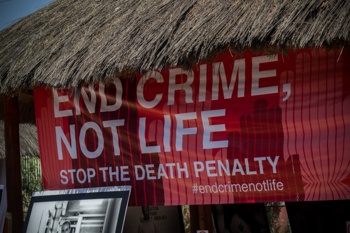
In the framework of its Partnership Instrument, the EU is pursuing action in support of the worldwide abolition of death penalty which is a top foreign policy objective and priority in the EU external human rights policy.
Asia appears as the next frontier in the international campaign against capital punishment. With eight retentionist countries of out 10 ASEAN Member States, South-East Asia (SEA) is a region where capital punishment remains a general standard, with strong roots in local history, cultures and religions/beliefs. A project "Moving away from Death Penalty in South-East Asia" has therefore been designed under the EU's Partnership Instrument. One of its components was this regional awareness campaign with the global objective to promote the abolition of death penalty in South-East Asia
Specific objectives:
- accompany the ASEAN Intergovernmental Commission on Human Rights (AICHR) death penalty study and recommendation process;
- develop and deploy a communication plan and tools in support of regional action on death penalty.
- Socios:
- Edelman Indonesia, HRWG, ICF Next
- Palabras clave:
- Comunicación y medios, Derechos humanos