
Unsere Projekte
Entdecken Sie, wo und wie Particip weltweit wirkt.
Unsere Referenzen geben Ihnen einen Einblick in laufende und abgeschlossene Projekte in verschiedenen Ländern, Sektoren und Fachgebieten – mit Informationen zu Zielen, geografischem Schwerpunkt, Laufzeit und Auftragsvolumen.
71–80 von 980 Referenzen
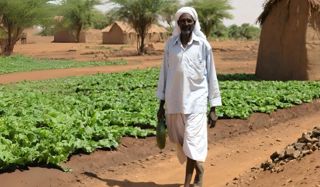
Sudan Somoud Enhancing Community Resilience (now called THABAT-stability) - Bank Support and Monitoring Agent
- 2024 – 2027
- 500.000 € – 1 Million €
- Sudan
The Project Development Objective (PDO) is to improve access to basic services and food security of Select Communities in the Republic of the Sudan. The project is designed to complement the current humanitarian aid to Sudan by laying a foundation for medium and longer term development support in areas with high concentration of IDPs. It builds for the future of Sudan by restoring access to basic services and food, protecting human capital, and enhancing communities’ resilience using a bottom-up approach. It is sequenced to first meet immediate basic service needs of vulnerable groups in areas of high IDP concentration and relative safety and accessibility, followed by community-led planning and implementation of medium-term basic services.
Project M&E efforts will be supplemented by BSMA to ensure WB oversight on the ground, given limited access for Bank personnel. To support the WB to fulfil its monitoring and supervision obligations in areas where its staff are unable to access project sites, the Bank engaged with BSMA with the objective of providing a monitoring layer to complement the monitoring activities of the Implementing Entities and ensure that Bank funds are utilized for the purposes specified in the grant agreement and project documents. The BSMA ’s services will include monitoring of all aspects of Project implementation, including:
- Implementation progress or completion status (including community selection and fund allocations, verification of stakeholder engagement activities, timeliness of implementation, physical verification of infrastructure and goods including quality, quantity, sizing/dimensions, etc. prepared as part of small-scale climate-resilient infrastructure development), and compliance that the physical implementation of projects (including physical verification of works/construction) is in accordance with signed contracts and approved safeguards instruments which are prepared based on the requirements of the WB safeguards policies, UNICEF/WFP policies and procedures and relevant laws and regulations of Government of Sudan.
- Monitoring of the Implementing Agencies’ implementing partners’ fiduciary compliance within the limits focused on site assessments as outlined below.
- On the environmental and social risk management (ESRM) side, the BSMA shall carry out verification of the degree of compliance with ESRM requirements as per the site ESRM instruments including site visits to construction sites, waste disposal sites aided, GMV Centres to comply with WB requirements. This will include monitoring compliance with the Environmental and Social Commitment Plan and more specifically the ESF instruments used in the project.
- Monitor functioning of the project’s grievance redress mechanism (GRM).
- Carry out physical verification with digital photographs of ongoing works and goods supplied, through geo-tagged information and support of smart technology, alerting the Bank and relevant Implementing Agency to deficiencies in quality and implementation and following up on the correction of these deficiencies.
- Compile lessons from activity verification, challenges faced and output monitoring to generate reports on lessons learned and recommendations for improving monitored projects.
The BSMA will also be responsible for monitoring any project activities to develop the capacity within the lowest level of governance structures to enable delivery of basic services – at the community and Locality level.
- Partner:
- Particip (federführend), SRCG
- Schlagwörter:
- Bildung, Ernährung, Gesundheit, Humanitäre Hilfe, Infrastruktur, Monitoring und Evaluierung
Provision of Third-Party Monitoring services for AICS multi-sectoral programme to strengthen the resilience of vulnerable populations in Afghanistan (AID 013073/01/0)
- 2025 – 2027
- unter 500.000 €
- Afghanistan
The project provides independent Third-Party Monitoring and Evaluation (TPME) services for the AICS funde multi-sectoral programme to strengthen the resilience of vulnerable populations in Afghanistan (013073/01/0). In a context marked by political uncertainty, economic decline, acute food insecurity, and strained health systems, the assignment ensures accountability and adaptive management of humanitarian interventions in health, nutrition, agriculture, and food security.
Particip designs and implements a robust Monitoring & Evaluation (M&E) framework that includes a baseline study, periodic monitoring on a four-monthly cycle, spot checks, and an end-line study. The monitoring system validates whether humanitarian goods and services are delivered as planned, assesses outcomes at the community level, and generates evidence-based recommendations for programme adaptation.
Target groups include beneficiaries (women, children, IDPs, returnees, persons with disabilities, and host communities), local service providers, implementing partner staff, and community leaders. Monitoring activities combine quantitative and qualitative methods, employing participatory approaches to capture lived experiences and ensure inclusivity, particularly for vulnerable groups.
Through regular monitoring reports, infographics, and learning loops, the project supports AICS Islamabad in strengthening oversight, ensuring compliance with humanitarian principles, and promoting transparency in hard-to-reach areas where direct donor access is limited

EU Technical Assistance Facility for Improving Sustainable Forest Management (Forests For the Future Facility - F4)
- 2020 – 2027
- über 10 Millionen €
- Global
The Forests for the Future Facility (F4) provides strategic and technical support to the European Commission and to partner countries, to contribute to healthy forest ecosystems able to create decent jobs and to enhance economic growth in partner countries. F4 has a demand-driven approach to improve the number, quality and effectiveness of EU interventions in the forest-relevant sectors. F4's main themes are linked to sustainable forest management, private sector investment, policy reforms and sustainable value chains.
The F4 serves as a platform for dialogue and exchange as well as practical cooperation to address the interlinkages between development, poverty reduction, trade, climate change, biodiversity and forest.
F4 is based on two mutually reinforcing pillars: on the one hand a platform for policy dialogue and knowledge exchange and on the other hand a source of technical and financial support to implement forest-related programmes.
Specifically, the F4 Facility constitutes a team of experts that provides technical assistance to the Commission staff (Commission Headquarter in Brussels and EU delegations, as appropriate) and partner countries to improve the quality of forest-relevant programmes or activities at any stage of their cycle (negotiation, programming, identification, formulation, implementation and evaluation).
The Facility is able to address the full spectrum of the forest sector from legal and sustainable forest management and conservation to trade and consumption aspects, by developing sustainable value chain analysis through a holistic approach, looking extensively at economic, social and environmental indications.
In this context, the Facility promotes the concept of Forest Partnership, integrating programming documents, Team Europe Initiatives and additional policies, which may arise.
Particular attention is given to the role of private sector (smallholder farmers, MSMEs) as a driver of inclusive and sustainable forest sector growth and to enhance civil society ability and capacity to participate in the decision-making and monitoring process.
The Facility also has to be able to assess and develop policies/strategies (reforms, governance, legal framework, institutional strengthening, financing plan, fiscal incentives) within the forest sector as well as sectors that may have an impact on forests, like agriculture, infrastructure, mining.
- Partner:
- Particip (federführend), GFA, Indufor Oy - Metsahallitus Group, Oréade-Brèche, Prospect C&S
- Schlagwörter:
- Forstwirtschaft, Industrie und Privatsektorentwicklung, Kommunikation und Medien, Projektdurchführung / technische Hilfe, Umwelt
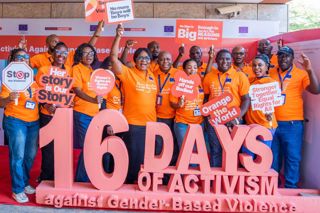
Support to the Operationalisation of Nigeria's Country Level Implementation Plan (CLIP) GAP III
- 2024 – 2027
- 500.000 € – 1 Million €
- Nigeria
The overall objective of the assignment is to support the EU Delegation to Nigeria in the full operationalisation and implementation of the Country Level Implementation Plan (CLIP) for Nigeria in the framework of the EU Gender Action Plan III (2021-2025) and provide strategic advice to the EU Delegation in Nigeria on gender mainstreaming.
The specific objectives are:
- To advance EU efforts in ensuring that at least 85% of all actions in the programming 2021-2027 have gender equality as a significant (Gender Marker 1) or principal objective (Gender marker 2) in each priority area of the Multi Annual Indicative Programme (MIP).
- To produce and update existing sector analyses to integrate a gender-sensitive approach into the priority sectors of the MIP for Nigeria.
- To support the formulation of the EU Delegation’s new G2 Action.
- To provide technical support to assist the operational sections of the EU Delegation to Nigeria with the strengthening of a gender sensitive approach in the development of action and contractual documents.
- To support the Organisation of key events with government and non-government stakeholders, policy and political dialogues in relation to Gender Equality and Women’s empowerment.
- To support targeted initiatives and advocacy on women’s empowerment with government institutions and non-governmental organisations.
- To support increased cooperation and synergies with Member States during key events and public diplomacy campaigns including the International Women’s Day and the 16 Days of Activism Against Gender-Based Violence.
- To provide specific capacity development for EU Delegation staff as required.
- Support the EU Delegation in reporting on the implementation and progress in the CLIP.
- Schlagwörter:
- Menschenrechte

Capacity Development on Education Governance and Management in Lebanon
- 2025 – 2027
- 500.000 € – 1 Million €
- Lebanon
The project supports the Ministry of Education and Higher Education (MEHE) in implementing the Reform Road Map 2025, focusing on decentralized and digital education management. Particip will be responsible for gender-responsive capacity development of MEHE staff, Regional Education Offices (REOs) and schools. Planned activities include a needs assessment, design and delivery of MEHE-certified trainings for 120 participants and on-the-job coaching with a strong focus on female leadership and inclusive governance.
Expected Results:
- Conduct the first gender-responsive capacity needs assessment.
- Deliver MEHE-certified training to 120 staff on education governance and digital management.
- Integrate gender-transformative approaches into MEHE training programmes.
- Strengthen communication and reporting mechanisms between MEHE, REOs, and schools.
- Partner:
- Particip (federführend), RMF

Evaluation of the Country Programme in Uganda 2023-2027
- 2026 – 2027
- unter 500.000 €
- Uganda
The assignment concerns the end-term evaluation of Enabel’s Uganda Country Programme 2023–2027, with a total budget of approximately EUR 68 million. The programme supports Uganda’s development priorities through two main pillars. Pillar 1 focuses on decent jobs and economic opportunities for youth, including technical and vocational education and training (TVET), employability, entrepreneurship, value-chain development and business and human rights. Pillar 2 focuses on health, particularly maternal and child health and sexual and reproductive health and rights.
The evaluation examines the programme’s relevance, coherence, effectiveness, efficiency, sustainability and contribution to intended outcomes and longer-term change. It also assesses cross-cutting dimensions such as gender equality, human rights, inclusion and the principle of Leave No One Behind, as well as the programme’s added value within the wider Ugandan development context.
A theory-based and mixed-methods approach is applied, combining documentary and monitoring-data analysis with stakeholder interviews, focus group discussions and field observations. Fieldwork covers the principal programme implementation areas, including Kampala, Albertine, Acholi, West Nile, Busoga and Rwenzori, allowing the evaluation to capture differences across geographical, institutional and sectoral contexts. A light foresight component is also included to reflect on emerging trends, risks and opportunities that may affect the relevance and sustainability of programme results and future cooperation priorities.
The evaluation is expected to generate robust evidence on programme performance, identify lessons and good practices, and formulate practical recommendations to inform Enabel’s future programming and cooperation in Uganda.
- Schlagwörter:
- Bildung, Gesundheit, Industrie und Privatsektorentwicklung, Monitoring und Evaluierung

Bio-Waste 5 Regions Project (BW5R)
- 2024 – 2027
- 500.000 € – 1 Million €
- Serbia
The specific objective of this contract is to enhance the capacities of the national and local authorities in order to allow them to plan, organize and implement the introduction of bio(green)waste source separation into 25 targeted cities/municipalities across five waste management regions namely Subotica, Pančevo, Sremska Mitrovica (Srem-Mačva), Užice (Duboko) and Pirot.
The scope of the contract is to support introduction of home composting, separate collection and simple biological treatment of biowaste (inc. green waste) in 25 cities/municipalities across five waste management regions in Serbia.
The separation at source approach is as valid for bio-waste as it is for other recyclable materials.
Preparation for recycling, by the generator (source) of the waste consists of separating bioaste from other types of waste and either home composting or bringing to a shared site or putting out for collection.
Within the proposed approach, the home composting measure represents a package of support provided to citizens to prepare and treat bioaste at home. The EU suggests home composting in rural areas or areas where it is reasonable and realistically achievable, including educational programmes and composting advisors. The introduction of door-to-door collection and biological treatment by composting is envisaged at the municipal level. This would include collection from individual households (where home composting is not realistic), small businesses such are restaurants, groceries, super-markets and green markets, green waste from public places. Serbia already has some local PUCs conducting seasonal campaigns to collect green waste and agreements with some small businesses. The intention under this project is to systemize and increase the number of campaigns.
- Partner:
- Particip (federführend)
- Schlagwörter:
- Kommunikation und Medien, Umwelt
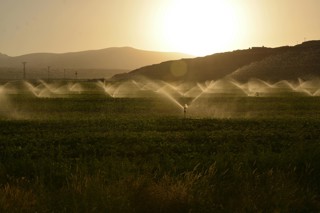
Support to the Egyptian Irrigation Modernization to Enhance the Water Productivity programme
- 2024 – 2027
- 500.000 € – 1 Million €
- Egypt
The envisaged programme to be designed is foreseen to include:
Component 1: Implementation of on-farm irrigation water management Infrastructure. This component is intended to support on-farm (marwa/mesqa) irrigation modernization in the Nile Valley (specific areas to be decided).
The component is divided into the following:
1. Rehabilitation of mesqa (tertiary) system, including pump stations, wherever feasible renewable energy pumps (mainly solar pumps) will be considered, while accounting for feasibility and sustainability measures.
2. Transformation from open marwa canals to a pressurized distribution system composed of buried PVC pipes and hydrants and installing modern irrigation system (drip or bubblers) in the farms.
3. Establishment of mesqa Water User Associations and ensuring their proper representation.
Component 2: Capacity building and participation for government staff and farmers in the project area. This component aims to improve stakeholders' knowledge through
1. Building the capacity of Water User Associations, and key farmers on operation and maintenance of modernized irrigations systems, marketing, accounting and management.
2. Building the capacity of Ministry of Water Resources and Irrigation officials in the field of design, implementation and operation of modern irrigation schemes, and improving their knowledge in the most recent technologies of water management and irrigation modernization.
- Partner:
- Particip (federführend), Incatema
- Schlagwörter:
- Ländliche und städtische Entwicklung, Landwirtschaft, Umwelt
Technical Assistance Support to OCTA 2024-2025
- 2025 – 2027
- unter 500.000 €
- OCT
The overall objective of the proposed technical assistance is to enhance the OCTs’ capacities for political and policy dialogue with the EU and to support OCTA on the management of horizontal issues.
The specific objectives of the action are to ensure a good coordination and dialogue among the OCTs, the Member States to which they are linked and the European Commission, through the annual OCTs-EU Forum, the quarterly tripartite meetings (MS/OCT/COM), Working Parties meetings (if relevant), the OCTA Ministerial Conference and OCTA ExCo meetings and other ad-hoc meetings. Furthermore, the assistance shall ensure that OCTs-EU relations in horizontal issues and programs, trade matters and the mainstreaming of transversal priorities are duly taken into consideration.
- Schlagwörter:
- Institutionelle Entwicklung
Monitoring, Evaluation and Communication of Results in Iraq
- 2023 – 2027
- 2 – 5 Millionen €
- Iraq
The overall objective (Impact) to which this action contributes is :
- To provide monitoring and evaluation services to assess the results achieved through the EU’s development cooperation, and to provide support on communication and visibility in line with the Delegation’s communication strategy.
The specific objectives of this contract are as follows:
- 1.To conduct results-oriented monitoring of EU-funded projects in Iraq and to implement a results-oriented monitoring based on innovative approaches in the field that allows improving the steering and delivery of programmes to Iraq.
- 2.To provide an assessment of achievements, the quality and the results of interventions based on evaluation approaches adapted to the specific intervention under observation in order to deliver evaluations that allow for institutional learning and improved programming cycles.
- 3.To disseminate information about the EU’s engagement in Iraq and notably its cooperation activity in an accessible manner with a focus on communicating EU values and EU results, in particular to stakeholders in Iraq and the general population.
There are 3 main components each associated to a results that the project will aim to achieve
- Component 1: Results-oriented monitoring of EU-Funded projects in IRAQ
- R-1: Provided a results-oriented assessment of ongoing operations
- Component 2: Evaluations of the EU’s cooperation projects in Iraq
R-2: Provided evaluations of achievements, the quality and the results of interventions based on evaluation approaches adapted to the intervention under observation
- Component 3: Communication of EU engagement in Iraq
R-3: Disseminated information about EU engagement in Iraq and notably cooperation initiatives and projects (including results) in an accessible manner with a focus on communicating results across various platforms and towards various audiences
- Partner:
- Particip (federführend), Altai, Idem Concept
- Schlagwörter:
- Kommunikation und Medien, Monitoring und Evaluierung