Sudan
5 Referenzen
Sudan Somoud Enhancing Community Resilience (now called THABAT-stability) - Bank Support and Monitoring Agent
- 2024 – 2027
- 500.000 € – 1 Million €
- Sudan
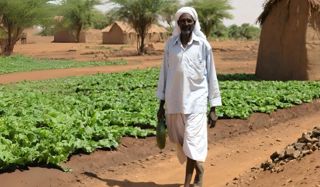
The Project Development Objective (PDO) is to improve access to basic services and food security of Select Communities in the Republic of the Sudan. The project is designed to complement the current humanitarian aid to Sudan by laying a foundation for medium and longer term development support in areas with high concentration of IDPs. It builds for the future of Sudan by restoring access to basic services and food, protecting human capital, and enhancing communities’ resilience using a bottom-up approach. It is sequenced to first meet immediate basic service needs of vulnerable groups in areas of high IDP concentration and relative safety and accessibility, followed by community-led planning and implementation of medium-term basic services.
Project M&E efforts will be supplemented by BSMA to ensure WB oversight on the ground, given limited access for Bank personnel. To support the WB to fulfil its monitoring and supervision obligations in areas where its staff are unable to access project sites, the Bank engaged with BSMA with the objective of providing a monitoring layer to complement the monitoring activities of the Implementing Entities and ensure that Bank funds are utilized for the purposes specified in the grant agreement and project documents. The BSMA ’s services will include monitoring of all aspects of Project implementation, including:
- Implementation progress or completion status (including community selection and fund allocations, verification of stakeholder engagement activities, timeliness of implementation, physical verification of infrastructure and goods including quality, quantity, sizing/dimensions, etc. prepared as part of small-scale climate-resilient infrastructure development), and compliance that the physical implementation of projects (including physical verification of works/construction) is in accordance with signed contracts and approved safeguards instruments which are prepared based on the requirements of the WB safeguards policies, UNICEF/WFP policies and procedures and relevant laws and regulations of Government of Sudan.
- Monitoring of the Implementing Agencies’ implementing partners’ fiduciary compliance within the limits focused on site assessments as outlined below.
- On the environmental and social risk management (ESRM) side, the BSMA shall carry out verification of the degree of compliance with ESRM requirements as per the site ESRM instruments including site visits to construction sites, waste disposal sites aided, GMV Centres to comply with WB requirements. This will include monitoring compliance with the Environmental and Social Commitment Plan and more specifically the ESF instruments used in the project.
- Monitor functioning of the project’s grievance redress mechanism (GRM).
- Carry out physical verification with digital photographs of ongoing works and goods supplied, through geo-tagged information and support of smart technology, alerting the Bank and relevant Implementing Agency to deficiencies in quality and implementation and following up on the correction of these deficiencies.
- Compile lessons from activity verification, challenges faced and output monitoring to generate reports on lessons learned and recommendations for improving monitored projects.
The BSMA will also be responsible for monitoring any project activities to develop the capacity within the lowest level of governance structures to enable delivery of basic services – at the community and Locality level.
- Partner:
- Particip (federführend), SRCG
- Schlagwörter:
- Bildung, Ernährung, Gesundheit, Humanitäre Hilfe, Infrastruktur, Monitoring und Evaluierung
Bank Support and Monitoring Agent for Social Protection and Education projects in Sudan
- 2025 – 2026
- unter 500.000 €
- Sudan
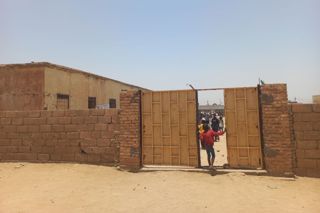
The main purpose of the BSMA is to ensure that funds of the two World Bank-financed projects, namely the Sudan SANAD – Emergency Crisis Response Safety Nets Project and the Sudan Primary Education Emergency Project (P504621), are used for the intended purpose.
The BSMA will carry out its support and monitoring activities consistent with the terms of the grant agreements concluded by the World Bank with WFP and UNICEF, respectively, including the terms of personal data protection. The BSMA consultancy assignment is additional to the normal monitoring and evaluation (M&E) functions that will be carried out by WFP and UNICEF, respectively, and will monitor and review the following:
- Monitor the progress of project activities in accordance with their overall plans. This includes data collection, field visits, and progress reporting.
- Monitor that results are being achieved in accordance with each projects’ results framework. This includes confirmation of the projects targets in the Results Frameworks.
- Monitor the implementation of the environmental and social risk management instruments as set out in the Environmental and Social Commitment Plan (ESCP), and provide recommendations to address the challenges, if any. Provide recommendations for continuous improvement, relevance, effectiveness, impact, and sustainability of activities.
- Monitor the mitigation and management of risks outlined in the project documents and provide recommendations to reduce or manage potential risks or constraints identified through the BSMA.
- Provide evidence-based, credible, and useful information to enable the incorporation of conclusions, lessons, and recommendations into the future decision-making processes of the World Bank projects.
- The BSMA will utilise the World Bank’s Geo-Enabling Initiative for Monitoring and Supervision (GEMS) to enhance transparency and accountability of the BSMA services, where possible, given the Fragility, Conflict, and Violence (FCV) context.
- Partner:
- Particip (federführend), SRCG
- Schlagwörter:
- Bildung, Landwirtschaft, Monitoring und Evaluierung
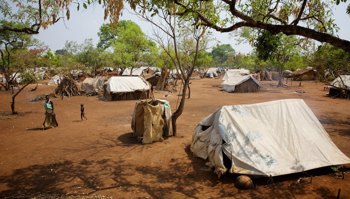
The main purpose of this project was to develop the capacity of secondary teachers to deliver quality education in refugee settings and host communities. Improving the quality of secondary school teaching has an accelerating effect and will enable refugee students to attend higher tertiary education or TVET programmes.
The project was implemented in 6 refugee settings/host communities, two in each of the three selected IGAD Member States (Uganda, Ethiopia, Sudan).
The delivered trainings on pedagogical, psychosocial, ICT and life skills enabled teachers in secondary refugee schools to better respond to the specific needs of refugee students. Under the supervision of the IGAD Secretariat the project worked closely together with the respective Ministries of Education and regional National Teaching Institutes in the selected Member States in order to strengthen their capacities to improve teaching quality and mainstream refugee education in their national education plans. The teacher trainings were elaborated and conducted together with the National Training Institutes of the regions where the refugee settings/host communities are, in order to improve the local and national capacities to tackle the main local challenges, as well as the sustainability of the initiative.
Female teachers were encouraged to participate during the selection process, in order to increase the participation of women in further training activities in all 6 refugee settings/host communities.
The provided support and advisory services brought on board various stakeholders from government, local authorities, international organizations, and foundations involved in refugee education in the selected IGAD Member States.
- Schlagwörter:
- Bildung, Humanitäre Hilfe
Strengthening the Policy Frameworks for Transboundary Water Resources Management in the Nile Basin
- 2020 – 2022
- unter 500.000 €
- Burundi, Congo (Brazzaville), Egypt, Ethiopia, Kenya, Rwanda, South Sudan, Sudan, Tanzania, Uganda
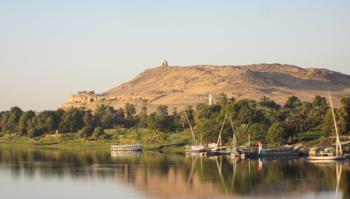
The Nile Basin Initiative (NBI) is a partnership of the 10 Nile Basin riparian states with a shared vision objective to promote sustainable socio-economic development through the equitable utilization of and benefit from the shared Nile Basin water resources. Nile Basin countries face increasing challenges of meeting the requirements of their rapidly growing populations in the face of dwindling resources that are threatened by emerging pressures like climate change, land use change and degradation, urbanization, etc. The challenges result in increased efforts at utilization of the Nile waters for agricultural, domestic, industrial and environmental purposes. Countries are embarking on large-scale developments for water utilization and water-related use in riparian countries which have major implications for current and future availability of water resources.
The assignment took the basin perspective and looked at the transboundary governance mechanisms in place. Especially national level arrangements such as policies and Transboundary Water Management (TWM) units served the various transboundary mechanisms a country subscribes to at the same time.
The objective was to facilitate and document a joint review and learning process on provisions for transboundary cooperation in national policies and related institutional arrangements.
The primary work of the project consisted of the following tasks:
- Task 1: Finalization of the NBI Policy Handbook
- Task 2: Guidance Document on key TWM principles for national water policies
- Task 3: Review of experience and mapping of cross-border cooperation arrangements in Nile Basin
- Task 4: Review of experience of the national level organizational arrangements for TWM
- Task 5: Collaborative assessment of progress of implementation of TWM principles in
National Water Policies
- Task 6: Action plan for transboundary water policy at national and regional level
- Task 7: Policy Synthesis Report – Status of TWM governance and Implementation of
SDG 6.5.2. in the Nile Basin
- Task 8: Blended Learning Module
- Prepare and facilitate Policy Roundtables
- Schlagwörter:
- Aus- und Fortbildung, Umwelt

Final evaluation of the 'Support to democratization processes in Sudan through capacity-building of National Elections Commission and contribution to an inclusive political participation' phase I and phase II.
- 2016 – 2017
- unter 500.000 €
- Sudan
The main objectives of this evaluation was to provide the European Commission, the European External Action Service, the implementing partner (IOM) and other relevant stakeholders with:
- an independent assessment of the overall implementation of the NEC I and NEC II projects in Sudan, paying particularly attention to the results achieved against its objectives; and
- key lessons and recommendations in order to improve current and future action financed under the ICSP in this sector of intervention and in Sudan.
The specific objectives of this final evaluation were:
a) To assess the performance of NEC I and NEC II;
b) to assess if and to what extent the projects NEC I and NEC II have contributed to strengthen the democratization process in Sudan;
c) to assess the relevance of the IcSP intervention in this context and sector of intervention;
d) to identify and document key lessons learned;
e) to produce a set of recommendations that will assist the EU on:
- Future strategies towards electoral and democratisation processes in Republic of
Sudan;
- The appropriate management structure and delivery methods of future similar actions;
- The main issues to be taken into account for the design and implementation of future interventions under IcSP in the Republic of Sudan.
- Schlagwörter:
- Monitoring und Evaluierung