Nigeria
18 Referenzen
Support to the Operationalisation of Nigeria's Country Level Implementation Plan (CLIP) GAP III
- 2024 – 2027
- 500.000 € – 1 Million €
- Nigeria
The overall objective of the assignment is to support the EU Delegation to Nigeria in the full operationalisation and implementation of the Country Level Implementation Plan (CLIP) for Nigeria in the framework of the EU Gender Action Plan III (2021-2025) and provide strategic advice to the EU Delegation in Nigeria on gender mainstreaming.
The specific objectives are:
- To advance EU efforts in ensuring that at least 85% of all actions in the programming 2021-2027 have gender equality as a significant (Gender Marker 1) or principal objective (Gender marker 2) in each priority area of the Multi Annual Indicative Programme (MIP).
- To produce and update existing sector analyses to integrate a gender-sensitive approach into the priority sectors of the MIP for Nigeria.
- To support the formulation of the EU Delegation’s new G2 Action.
- To provide technical support to assist the operational sections of the EU Delegation to Nigeria with the strengthening of a gender sensitive approach in the development of action and contractual documents.
- To support the Organisation of key events with government and non-government stakeholders, policy and political dialogues in relation to Gender Equality and Women’s empowerment.
- To support targeted initiatives and advocacy on women’s empowerment with government institutions and non-governmental organisations.
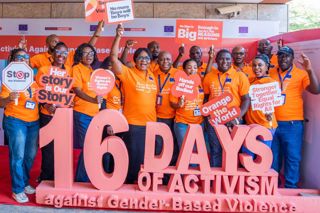
- To support increased cooperation and synergies with Member States during key events and public diplomacy campaigns including the International Women’s Day and the 16 Days of Activism Against Gender-Based Violence.
- To provide specific capacity development for EU Delegation staff as required.
- Support the EU Delegation in reporting on the implementation and progress in the CLIP.
- Schlagwörter:
- Menschenrechte
Evaluation of Disability Inclusion in EU-funded humanitarian aid operations (2020-2025)
- 2026 – 2026
- unter 500.000 €
- Global
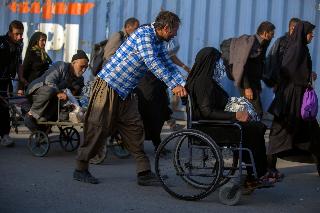
The Evaluation of Disability Inclusion in EU-funded humanitarian aid operations (2020–2025) assesses how disability inclusion has been integrated into DG ECHO-funded humanitarian interventions five years after the publication of its 2019 Operational Guidance on the inclusion of persons with disabilities. The global objective of this evaluation is twofold:
- To provide the relevant EU services and stakeholders with an independent assessment of the extent to which DG ECHO-funded humanitarian interventions have mainstreamed disability inclusion across sectors and contexts, while also supporting disability-targeted actions and relevant policy projects;
- To identify key lessons learned, conclusions, and recommendations to inform decision-makers on how to strengthen disability inclusion in current and future EU-funded humanitarian aid operations, including through improved programming, data use, participation, and accessibility.
The specific objectives are:
- to assess the relevance of DG ECHO’s operational guidance in supporting staff and partners to mainstream disability inclusion in EU-funded humanitarian aid interventions;
- to assess the level, quality, and effectiveness of disability inclusion across all sectors, covering both mainstreaming and disability-targeted actions;
- to assess ECHO-funded policy projects on disability inclusion, including their coherence with EU policy, relevance to global priorities and needs, added value for partners and the broader humanitarian system, and achieved results;
- to assess the capacity of DG ECHO staff and partners to operationalise disability inclusion in programming, including through available requirements, tools, and practices;
- to identify barriers, enablers, gaps, lessons learned, and good practices in disability inclusion, and to develop actionable strategic and operational recommendations for future DG ECHO strategies, policies, programming priorities, guidance, and tools.
- Schlagwörter:
- Monitoring und Evaluierung

Support to Coordination of the EU Development Interventions in Nigeria
- 2025 – 2026
- unter 500.000 €
- Nigeria
The overall objective is to support the FMBEP in strengthening existing capacities for coordination of the EU development interventions in Nigeria. Given the limited budgetary resources in carrying out the key mandates of the EU Unit of the FMBEP relevant to effective implementation of the EU– MIP for Nigeria, it is pertinent to support key activities. This objective is complementary to the economic blueprint of the current Administration, i.e the Medium Term Plans of the Nigerian Agenda 2050 are also critical in meeting the targets of the Sustainable Development Goals (SDGs).
The timing of the action is therefore relevant for facilitation the implementation of the recommendation from the review of the National Development Plan (NDP) and MIP. The proposed activities for this action will support all the thematic sectors and actions of the EU – MIP 2021 – 2027.
The specific objectives are to:
- Result 1: Strengthen understanding and the capacities of key actors involved in supporting the new modalities for implementation of the EU funded interventions programmes (national and regional).
- Result 2: Strengthen administrative systems, structures and capacity to monitor, evaluate, coordinate and report on the EU development assistance are in place.
- Schlagwörter:
- Institutionelle Entwicklung, Projektdurchführung / technische Hilfe, Regierungsführung

Final evaluation of the Gulf of Guinea Inter-regional Network Extended (GoGIN II)
- 2025 – 2026
- unter 500.000 €
- Nigeria
The global objective of this assignment was to provide the relevant services of the European Union, interested stakeholders and the wider public with an independent assessment of the performance of the Gulf of Guinea Inter-regional Network Extended (GoGIN II), paying particular attention to the different levels of results achieved against expected objectives and to the factors explaining those results. The evaluation also aimed to identify key lessons learned, conclusions and recommendations to inform decision-making and improve current and future interventions.
The evaluation covered GoGIN II in its entirety in the Gulf of Guinea. It focused in particular on the YARIS maritime information-sharing and coordination platform, assessing its operational status and level of use, its functionality and financial sustainability after the handover, the performance of the implementing partner in engaging regional organisations and other partners, and the intervention’s exit strategy.
The evaluation assessed the intervention through the six OECD-DAC criteria (relevance, coherence, effectiveness, efficiency, impact and sustainability) and the EU-specific criterion of EU added value. Its main users included EU services and Delegations, Gulf of Guinea Member States, Expertise France, regional organisations and the Yaoundé Architecture, and implementing partners of similar interventions.
- Partner:
- Particip (federführend)
- Schlagwörter:
- Monitoring und Evaluierung, Regierungsführung

Evaluation of the EU Development Cooperation with the Federal Republic of Nigeria
- 2024 – 2026
- unter 500.000 €
- Nigeria
With this Evaluation the EU intends to reflect on its cooperation approach with Nigeria in the last ten years. This includes the thematic and geographical focus as well as the choice of implementing partners, EU interests and the objectives of the cooperation with Nigeria, from the point of view of both strategic partnerships and jointly developed policies, and the positioning of the EU and Member States in the current political and socioeconomic context of Nigeria.
As per the Terms of Reference (ToR), the purpose of the evaluation is:
- To provide the EU Delegation in Nigeria, the relevant INTPA units and other concerned services with ‘lessons learnt’ and with recommendations in order to inform more evidence- based intervention identification, design and implementation in the future; and
- To identify ‘opportunities’ within the general shift towards ‘Global Gateway’ as a strategic programming direction under the current MIP areas with potential for developing strategic partnership for EU-Nigeria mutual interest, and good practices to develop orientations and guidelines for the identification and implementation of current as well as future cooperation programmes.
The Evaluation is commissioned for accountability purposes (the last country evaluation was conducted in 2010), and at the same time has a strong learning and forward-looking element.
The Evaluation covers interventions falling under the EU’s Global Gateway (GG) policy and priority sectors identified in the relevant INTPA programming documents: i) Sustainable Economic
Development covering digitalisation, climate-smart agriculture, energy efficiency (in the
11th EDF: Sustainable energy and access to electricity); (ii) Peace and Security including good governance and migration (in the 11th EDF: Rule of Law, governance and democracy); (iii)
Human Development including health and education, and youth empowerment (in the 11th
EDF: Health, nutrition and resilience); gender equality and HRBA as crosscutting issues.
- Partner:
- Particip (federführend), Ecorys B.V.

Formulation Regional Transnational Organised Crime Programme WCA
- 2023 – 2024
- unter 500.000 €
- Africa (Western)
The contractor undertook the formulation of an Action Document (AD) to implement a regional program addressing illicit trafficking and transnational organized crime in selected West African and neighboring Central African countries. This included providing all necessary inputs and conducting comprehensive analysis, documentation review, fact-finding work, and consultations to propose possible options/scenarios for program focus and intervention logic. This work identified key strategic questions/issues to support informed discussions with relevant EU Delegations and other key stakeholders
- Partner:
- Particip (federführend), EuroPlus
- Schlagwörter:
- Menschenrechte, Regierungsführung

Evaluation of the European Union support to Rule of Law and anticorruption in Partner Countries (2010-2021)
- 2021 – 2023
- 500.000 € – 1 Million €
- Burkina Faso, Congo (Kinshasa), Guatemala, Jamaica, Kenya, Kyrgyzstan, Mali, Myanmar, Niger, Nigeria, Philippines, Viet Nam
The general objective of this evaluation is to provide an independent assessment of the performance of EU support to the Rule of Law (RoL) and Anticorruption in the period 2010-2021 in INTPA partner countries, funded under DCI, EDF, EIDHR, IcSP, CSO and relevant Trust Funds. The evaluation seeks to be a stock-taking and forward-looking exercise but will focus on learning i.e. the identification of key lessons on what has and has not worked and why.
In addition, the specific objectives for this evaluation are:
- To assess the EU support to independent, effective and efficient justice systems, notably a) legislative processes (legality), b) legal certainty and access to justice; and c) equality and accountability before the law, in terms of its impact on good governance (including stability, human rights and democracy, environmental governance and business climate).
- To look at actions aimed at promoting anti-corruption, public accountability and transparency, improving the justice systems and enforcing the principle of separation of powers.
- To pay specific attention to the inclusion of different groups (political, ethnic, religious, etc.), women and youth in decision making at all levels.
- To gather insights on the extent to which the different tools, instruments and modalities used in the EU response have been beneficial in providing effective support to partner countries and the interactions and coherence of those, notably of policy and political dialogue.
- To evaluate the rationale of the EU in these supports to RoL, as well as risk mitigation measures and the impact of policy dialogue, not least on societal and state resilience.
- To produce recommendations for decision-makers in DG INTPA, FPI, DG NEAR, DG ECHO, DG Trade, DG JUST and EEAS on how to improve the EU’s policy strategy and implementation.
The temporal scope of the evaluation is 2010 to 2021, with a particular focus on the previous MMF (2014-2020). The evaluation will focus on the support provided to core state institutions and civil society organisations, specifically: state institutions and oversight bodies, justice institutions, anti-corruption agencies, civil society and human rights institutions.
- Partner:
- Particip (federführend), ECDPM
- Schlagwörter:
- Justiz / Rechtsstaatlichkeit, Monitoring und Evaluierung
Midterm Review of Norway’s Humanitarian Strategy and Strategic Partnership Model
- 2021 – 2022
- unter 500.000 €
- Africa, Global, MEDA region
The midterm review object is the implementation of the humanitarian strategy, and the Strategic Partnership Model.
The purpose of the review is to assess whether Norway is on track in the implementation of the humanitarian strategy, assess the relevance of the strategy to adjust the course and to inform decision-making and strategic direction when formulating a new strategy for Norway's humanitarian engagement after 2023. The review also provides an assessment on the perceived value added of the Strategic Partnership Model, whether it is a good tool to achieve the main goals of the strategy and how it facilitates predictability and flexibility for the partners.
The specific objectives of the review are to:
1. Assess the relevance and coherence of the strategy and whether it has been used as the main tool to guide Norwegian humanitarian engagement.
2. Document progress and results in reaching the strategy's main goals.
3. Assess the Strategic Partnership Model, considering whether it is an effective tool for grant management, how it facilitates predictability and flexibility for the partners and whether it is likely to provide the best results for people in need in line with the priorities in the humanitarian strategy.
Based on the findings and conclusions, the review identifies lessons learnt and gives operational recommendations relevant for the continued follow-up and necessary adjustments of the strategy, and the Strategic Partnership Model.
The review has both a learning and accountability purpose, and its main users will be stakeholders at the Ministry, Norad and partners.
- Schlagwörter:
- Humanitäre Hilfe
Monitoring of activities financed under Article 3 of the IcSP in West Africa and the Lake Chad Basin
- 2020 – 2021
- unter 500.000 €
- Africa (Western)
The general objective of the service was to improve the degree of accountability and quality of certain EU-funded actions by providing the FPI Regional Team with follow-up and monitoring products for these actions and feedback on experience at the end of the project.
The specific objective of this contract was to assist the FPI Regional Team in the monitoring of certain projects financed under Article 3 of the IcSP in the Sahel region and the Lake Chad Basin.
- Partner:
- Particip (federführend), EPRD
- Schlagwörter:
- Humanitäre Hilfe, Monitoring und Evaluierung, Regierungsführung

Evaluation of the EU's external action support in the area of migration (2008-2018)
- 2019 – 2021
- unter 500.000 €
- ACP (Africa), Asia, ENI East, ENI South, IPA
The purpose of this evaluation is to provide an independent assessment and evidence on the contribution of EU external action support in aspects of the policy area of migration. Its specific objectives are the following:
- To assess in both qualitative and quantitative terms the relevance, conditions of implementation and performance of EU external action support to migration in the areas defined in the evaluation’s focal areas.
- To address coherence of the EU external action projects/programmes framed also in the international context (e.g. UN related and non-EU Member States) and achievement by the EU and the candidate countries for EU membership, the potential candidates and the partner countries of their respective commitments in these policy areas.
- To assess how EU external action support in the area of migration in the geographical focal areas, has changed in the aftermath of the 2015 structural shift associated with the so-called “refugee crisis.” The assessment shall also take into account complementarity of EU external action support with that of other donors and actors, including EU Member States.
- To assess whether the EU's policy and operational response to the external dimension on migration triggered new approaches and rendered programmes and actions more effective, targeted and efficient.
It furthermore aims to provide lessons learnt and recommendations for the improvement of the programming and implementation and shall:
- lead to the identification of conclusions based on objective, credible, reliable and valid findings;
- highlight lessons learnt;
- provide the Commission and the European External Action Service (EEAS) with a set of operational, targeted and useful forward-looking recommendations.
The three overarching thematic focal areas examined by this evaluation are the following: Legal (labour) migration, Smuggling of Migrants (SoM), and Trafficking of Human Beings (THB).
Report available here: https://ec.europa.eu/neighbourhood-enlargement/sites/default/files/eval_eu_support_migration_area_-_final_report.zip
- Partner:
- Particip (federführend), ECDPM
- Schlagwörter:
- Monitoring und Evaluierung

Support to the Regional Authorising Officer (ECOWAS Commission) in the implementation of European Development Fund projects: Results 2 and 3
- 2016 – 2018
- 2 – 5 Millionen €
- ECOWAS region
The global objective of the assignment was to support the ECOWAS Commission in implementing its regional strategy and pursuing its mandate in a more efficient and effective way, through a better management of its resources.
The purpose of the project was to strengthen the capacities of the ECOWAS Commission for a more efficient management of EU/EDF resources and reinforced coordination with donors and with the WAEMU Commission.(results 2 &3).
To attain the above purpose, the project had the following expected results:
Result 2: The ECOWAS Commission was supported in its role of Regional Authorising Officer (RAO) in the implementation of 10th EDF projects in compliance with the applicable financial and contractual procedures.
Result 3: The ECOWAS Commission ensured efficient monitoring of the 10th EDF projects and identification and formulation of 11th EDF projects, in coordination with the WAEMU Commission and in the context of improved coherence with interventions of other donors.
Another purpose of the programme reflected in results 2 & 3 was the preparation and facilitation of EC cooperation. For result 2, the following projects were identified where the ECOWAS Commission acted as contracting authority: (i) Peace, Security and Stability project, (ii) Drugs project, (iii) ECOWAS Capacity Building project, and (iv) Support to Joint Border Posts project. For result 3, ECOWAS had a coordinating role in Regional Economic Integration, Trade and competitiveness programmes managed under delegated and contribution agreements.
- Partner:
- GOPA (federführend), Particip

Evaluation of the implementation of the African Peace Facility as an instrument supporting African efforts to manage conflicts on the continent
- 2017 – 2018
- unter 500.000 €
- ACP (Africa)
The objective of the evaluation was to provide an overall independent assessment of the performance of the African Peace Facility (APF) for the period 2014-2016 and, on this basis, draw key lessons and recommendations in order to improve current and future support through that instrument.
The evaluation served policy decision-making and project management purposes. The main users of this evaluation were DG DEVCO, the EEAS, EU delegations in the APF beneficiary regions; the AU and the REC/RMs. The evaluation also generated results of interest to governmental and civil society partners and the EU member states.
Evaluators followed a two-step approach:
- First, the evaluation provided an assessment of what has been achieved through the APF for the period 2014-2016 with regards to Peace Support Operations and capacity-building, taking into account the conclusions and recommendations of th11-0248-052e 2013 APF evaluation.
- Second and based on the findings of the first step, the evaluation offered concrete and actionable follow-up as well as new recommendations to address the remaining and new challenges faced by the APF.
- Partner:
- Particip (federführend), Cardno UK, ECDPM
- Schlagwörter:
- Monitoring und Evaluierung, Regierungsführung

EU Election Follow-up Mission (EU EFM) to Nigeria 2017
- 2017 – 2017
- unter 500.000 €
- Nigeria
The risk of electoral violence in Nigeria was high due to exacerbating conflicts in the Delta region, the North-East and for the decades-long conflict between pastoralists and sedentary farmers. Fully aware of the main challenges, the country’s Independent National Electoral Commission (NEC) was committed to resolve the problems related to the situation of internally displaced people and other vulnerable groups to constituency delimitation and many others. In order to support the NEC in tackling these challenges the EU sent an Electoral Observation Mission EOM in 2015 to assess the general elections in the country and has been engaged intensively on the follow-up of the recommendations on both the political and technical level.
Therefore, the overall objective of this assignment was to contribute to the consolidation of democracy and to support institution building and transparency in Nigeria in the context of the implementation of the EU EOM recommendations of 2015.
The specific objectives of the Mission were to:
- Assess and report to the European External Action Service and the EC on the progress made in electoral reforms since the delivery of the final report of the 2015 EU EOM.
- Review and adjust the set of EOM recommendations to the developments regarding electoral and legal reforms as well as the current institutional, political and social context; new recommendations were given to improve future electoral processes, with specific focus on recommendations that could be implemented prior to the next Parliamentary elections in 2019 or prior to the next Presidential elections in 2018.
- Inject momentum in implementing recommendations of the 2015 EU EOM and address shortcomings in view of future elections by meeting all relevant stakeholders, including the national authorities, the election management body representatives, political actors, civil society, representatives of the international community and the media
- Schlagwörter:
- Wahlen

Mid-Term Evaluation of the 'Promoting Women's Engagement in Peace and Security in Northern Nigeria' Project
- 2016 – 2017
- unter 500.000 €
- Nigeria
The mid-tem evaluation provided the EU and other partners with an assessment of the project's performance and recommendations on how to improve the intervention to achieve expected goals and outcomes, taking into account problems and opportunities.
- Partner:
- Particip (federführend), EuroPlus

Identification and Formulation of Support to West Africa Peace, Security and Stability: Complementary action combatting other main threats
- 2016 – 2017
- unter 500.000 €
- Africa (Western)
This assignment provided a coherent proposal to ECOWAS and EU for the strengthening of coordination and cooperation in security in West Africa and the implementation of programmes dealing with specific threats.
It gave sufficient background information and justifications to enable the ECOWAS and EU to make an informed decision on specific objectives and of the projects' implementation modalities.
The specific objective of this assignment was to prepare all the necessary elements of 4 different Action Documents to implement 4 potential projects covering respectively areas A, B, C and D.(Area A: Border Management, Area B: Enhancing Cybersecurity in ECOWAS region, Area C: Support to GIABA, Area D: Fighting against illicit trafficking).
For each area A,B,C and D, it was required to proceed to:
- an identification of issues, strategical orientations and priority intervention areas
- a formulation of the project under 11th EDF (Phase II).
- Partner:
- Particip (federführend), EuroPlus
- Schlagwörter:
- PCM / Logframe

Visibility portfolio for EASE and environment-related projects in Nigeria
- 2017 – 2017
- unter 500.000 €
- Nigeria
The global objective of this assignement is to contribute to provide visibility to the impact of EASE, as well as other EU-funded environment and climate change mitigation related interventions in Nigeria.
The specific objectives of this mission are:
- To promote the results of EU funded interventions in Nigeria with environment and climate change mitigation activities, linking them to broader development goals.
- To raise awareness about the linkages between energy and environmental protection, climate change mitigation.
- Partner:
- Particip (federführend), DAI Global UK
- Schlagwörter:
- Kommunikation und Medien, Umwelt

Post-conflict and post-disaster needs assessment (PCNA/PDNA): development of assessment capacity and tools - Phase I + II
- 2013 – 2017
- 2 – 5 Millionen €
- Global
Relevant background
Since early 2007, the Commission, the UN-family and the World Bank have worked together in setting up a platform for cooperation on post-crisis needs assessments for natural disaster (Post-Disaster Needs Assessment, PDNA) and conflict (Recovery and Peacebuilding Assessment (RPBA), previously named Post-Conflict Needs Assessment, PCNA) scenarios. This trilateral cooperation was framed and formalised through the signature of a Joint Declaration on “Post-Crisis Assessments and Recovery Planning” in September 2008. The EU/UN/WB platform covers the whole PDNA/RPBA(PCNA) process, including strategic coordination, development of joint methodologies for post-crisis assessments, joint deployment of assessment teams, joint training and joint recovery planning and monitoring.
In line with the 2008 Declaration on Joint Post-crisis Assessments and Recovery Planning, the overall objective of the project is to assist and develop third countries’ in-country capacity to gradually assume a more prominent role in Post-Disaster Needs Assessments and Post-Conflict Needs Assessments (now changed to Recovery and Peacebuilding Assessments, RPBA).
The purpose of this project was:
- to support further development of joint PDNA/RPBA(formerly PCNA) methodologies, tools, training programmes, etc.;
- to support joint PDNA/RPBA(formerly PCNA) missions in-country/in region (in coordinating with EU Heads of Delegations and with the European External Actions Service (EEAS) and European Commission). While such support could cover any relevant technical field (long-term and short-term expertise), it is foreseen that a particular emphasis is put on expertise in mission planning and development of final reports/recovery frameworks.
The two phases of the project contributed to a variety of outputs and results, including:
- Phase 1 (01/01/2013 – 31/07/2015): revision of the PDNA methodology and development of the joint EU/UN/WB PDNA Guide, development of the Disaster Recovery Framework (DRF) Guide, review of the PCNA methodology, development of training and capacity building materials, delivery of information/capacity building sessions, joint PDNA/PCNA training courses for national authorities and regional/international organisations, support to over 15 joint EU/UN/WB PDNA/PCNA missions;
- Phase 2 (10/07/2015 – 09/07/2017): revision of the PCNA methodology and development of the RPBA methodology, development of training and capacity building materials, delivery of information/capacity building sessions, joint PDNA/RPBA training courses for national authorities and regional/international organisations, support to over 10 joint EU/UN/WB PDNA/RPBA missions.
- Partner:
- Particip (federführend), Dara, ECDPM, GOPA, Punto.sud
- Schlagwörter:
- Aus- und Fortbildung, Humanitäre Hilfe, Institutionelle Entwicklung, Regierungsführung

Assessment of Applications for Call for Proposals - Grants to CSOs for Peace, Security and Stability Actions
- 2016 – 2017
- unter 500.000 €
- Nigeria
Overall objective
To recruit assessors to assist the Contracting Authority in the selection of the best proposals received under Grants to Civil Society Organisations (CSO) for Peace, Security & Stability Actions and to achieve a high-quality, complete and coherent selection process of projects in line with the criteria set in the guidelines for applicants.
Results achieved by the Contractor
- Assessors carried out the technical assessment of concept notes in accordance with guidelines provided by the Contracting Authority and which were based on the published evaluation grids. 40 concept notes and full applications were expected. Each concept note had to be assessed individually by two assessors;
- Assessors carried out the technical and financial assessment of full applications in accordance with guidelines to be provided by the Contracting Authority and which were based on the published evaluation grids. Each full application had to be assessed individually by two assessors.
- Assessors carried out the eligibility checks on applicants recommended for funding (main and reserve list) after the checks on their full application.
- Partner:
- Particip (federführend), Cardno UK
- Schlagwörter:
- Menschenrechte