Colombia
19 Referenzen
Evaluation of Disability Inclusion in EU-funded humanitarian aid operations (2020-2025)
- 2026 – 2026
- unter 500.000 €
- Global
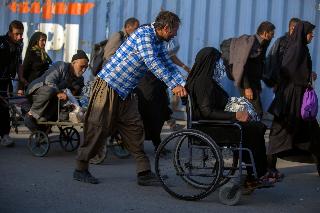
The Evaluation of Disability Inclusion in EU-funded humanitarian aid operations (2020–2025) assesses how disability inclusion has been integrated into DG ECHO-funded humanitarian interventions five years after the publication of its 2019 Operational Guidance on the inclusion of persons with disabilities. The global objective of this evaluation is twofold:
- To provide the relevant EU services and stakeholders with an independent assessment of the extent to which DG ECHO-funded humanitarian interventions have mainstreamed disability inclusion across sectors and contexts, while also supporting disability-targeted actions and relevant policy projects;
- To identify key lessons learned, conclusions, and recommendations to inform decision-makers on how to strengthen disability inclusion in current and future EU-funded humanitarian aid operations, including through improved programming, data use, participation, and accessibility.
The specific objectives are:
- to assess the relevance of DG ECHO’s operational guidance in supporting staff and partners to mainstream disability inclusion in EU-funded humanitarian aid interventions;
- to assess the level, quality, and effectiveness of disability inclusion across all sectors, covering both mainstreaming and disability-targeted actions;
- to assess ECHO-funded policy projects on disability inclusion, including their coherence with EU policy, relevance to global priorities and needs, added value for partners and the broader humanitarian system, and achieved results;
- to assess the capacity of DG ECHO staff and partners to operationalise disability inclusion in programming, including through available requirements, tools, and practices;
- to identify barriers, enablers, gaps, lessons learned, and good practices in disability inclusion, and to develop actionable strategic and operational recommendations for future DG ECHO strategies, policies, programming priorities, guidance, and tools.
- Schlagwörter:
- Monitoring und Evaluierung

Mid-Term Evaluation of the Youth Action Plan in EU External Action (2022-2027)
- 2025 – 2026
- ACP (Africa), ASEAN region, Latin America & Caribbean
The Youth Action Plan (YAP) in EU External Action 2022–2027, adopted in October 2022, aims to promote meaningful youth participation and empowerment in EU external action for sustainable development, equality, and peace. The global objective of this evaluation is twofold:
- To provide the relevant EU services and stakeholders with an independent assessment of the performance of the YAP, ensuring accountability by examining results at different levels against expected objectives and analysing the factors underpinning those results.
- To identify key lessons learned, conclusions, and recommendations regarding the YAP in order to inform decision-makers on how to improve current and future interventions on youth mainstreaming in EU policies, dialogues, and actions, notably within Global Gateway initiatives.
The specific objectives are:
- To assess the performance of the YAP to date in achieving its objectives and expected results, identifying best practices and gaps in implementation.
- To assess the relevance, coherence, efficiency, effectiveness, sustainability, and prospects for impact of DG INTPA’s youth-targeted actions and youth mainstreaming (at country, regional, and global levels) in relation to YAP objectives.
- To assess the relevance, coherence, efficiency, effectiveness, sustainability, and prospects for impact of EU initiatives undertaken to enhance institutional youth engagement.
- To inform decision-making on the implementation and further development of youth policy and priorities in EU external action up to 2027 and into the next programming cycle (possible YAP II), contributing to EU priorities and, in particular, the implementation of Global Gateway.
- Partner:
- Particip (federführend), ECDPM
- Schlagwörter:
- Monitoring und Evaluierung
Traceability for export products and sustainability in Colombia
- 2024 – 2026
- 500.000 € – 1 Million €
- Colombia
Global Objective
Strengthen the EU’s engagement with Colombia on external impacts of EU Green Deal policies and regulatory frameworks, with emphasis on the regulation on deforestation and forest degradation, through the use of EU’s digital tools.
Specific Objective(s)
- Engage with key stakeholders in Colombia to enhance understanding of the objective and content ofthe identified regulations, with emphasis on deforestation and forest degradation. The regulation onCarbon Border Mechanism Adjustment, the Corporate Sustainability Reporting Directive (CSRD), theupcoming Corporate Sustainability Due Diligence Directive, etc. could as well be subject of furtherengagement with Colombian stakeholders;
- Identify the necessary steps to either implement or support already existing effective traceability systems for Colombian exports to the EU market, taking into account the deforestation and forest degradation regulation;
- Identify the most relevant and cost-efficient space-based technologies and data, including their combination and taking into account existing traceability systems, to be used to support Colombia’s efforts to comply with the zero-deforestation supply chain regulation in the most affected value chains, especially coffee, palm oil and/or cocoa. Among these, the most
- Promote the use of already available technological tools within the public and private sector alike, in particular Copernicus-based imagery and support the development of ad-hoc services through the Copernicus Regional centres in Chile and Panama or through the JRC and the European Union Space Programme Agency-EUSPA.
- Identify, promote and support pilot projects and use cases to demonstrate the potential of using satellite-based technologies to develop traceability systems facilitating compliance with the Regulation as well as in other areas such as environmental protection and environmental .
- Support outreach efforts towards the main stakeholders to increase awareness among the main private and public stakeholders over the tools offered by the EU in support of Colombia and promote the uptake of EU Space technologies.
- Support the dialogue on space-based services with institutions, companies, academics, and CSOs through the organisation of high-level events, the creation and animation ofcrosssectoralnetworks and promote synergies with similar EU-funded actions. Complement and supporting the uptake of initiatives like Copernicus Academy, Copernicus Relays, EU Global Action on Space, EU-LAC Digital Alliance amongst others.
- Partner:
- Particip (federführend), Idem Concept
- Schlagwörter:
- Forstwirtschaft, Handel, Kommunikation und Medien, Landwirtschaft, Umwelt
The overall objective of this assignment was to contribute to improving the electoral and democratic framework of Colombia during the inter-election period and raising awareness and understanding of the EU EOM recommendations and technical issues related to their implementation. In general, an EFM supports the consolidation of democracy, institution-building and democratic elections in Colombia in the context of the implementation of the 2022 EU EOM recommendations.
The specific objectives of the Mission included:
- Assess the state of play of the implementation of the recommendations of the 2022 EU EOM to Colombia.
- Assess any electoral reforms adopted since the last EOM or which are under consideration (e.g. draft legislation) or planned and the degree to which these reflect EOM recommendations and their alignment with international standards for democratic elections;
- Identify which EOM recommendations are most relevant to the prevailing country situation and the current phase of the electoral cycle;
- Generate additional impetus for – or contribute to ongoing debates on – electoral reform;
- Identify areas of agreement and disagreement on EU EOM recommendations among the stakeholders and any political, technical, financial obstacles to electoral reform;
- Propose actions to overcome obstacles to electoral reform, including measures to develop support for and national ownership of the recommendations;
- If helpful and requested, assist the EUD, EEAS and INTPA in their assessment on whether ongoing cooperation and conflict prevention projects are addressing the recommendations made by EU EOMs. Based on a brief overview of existing programmes, provide needed information to support identification of potential additional election/democracy support action that could contribute to strengthening the implementation of the recommendations and/or to the overall improvement of the electoral framework;
- Contribute to analysis by the EU Delegation, EEAS and INTPA with information to originate any other possible EU actions that could contribute to strengthening the implementation of the recommendations and/or to the overall improvement of the electoral framework;
- Prepare/update with EU Delegation a follow-up plan to EU EOM recommendations.
- Schlagwörter:
- Wahlen

The objective of this facility is to improve the overall quality of the NDICI Rapid Response and Peace, Stability and Conflict Prevention thematic areas by providing high quality research services.
We will provide the FPI with flexible and ad hoc research services and prepare literature reviews and rapid assistance reports in the thematic areas specified below.
- Partner:
- Particip (federführend), SICI Dominus
- Schlagwörter:
- Humanitäre Hilfe, Umwelt
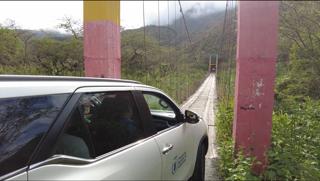
The final evaluation of the project "Building adaptive capacity to climate change through food security and nutrition actions in vulnerable Afro and indigenous communities in the Colombia-Ecuador border area" (Binational Project) was commissioned by the World Food Programme (WFP) in Colombia and Ecuador. The project was financed by the Adaptation Fund (AF) and implemented from 2018 to 2024 in the two binational river basins of Mira-Mataje and Guaitara-Carchi. It sought to reduce the climate vulnerability of Indigenous Awa and Afro-descendant communities and their ecosystems (promoting food security and nutrition, gender equality, and peace building) and strengthen the capacities of the communities and regional institutions to adapt to climate change.
The evaluation covered the period from 2016 (project design) until April 2024 (six months before project closure) and served the double purpose of accountability and learning. It responded to eight main evaluation questions (which covered all AF evaluation criteria except impact), adopting a theory-based mixed methods approach. The evaluation combined conventional performance assessment (through a comprehensive review of available documents and quantitative M&E data, key informant interviews, and direct observation in the field) with appreciative inquiry workshops and indigenous storytelling in beneficiary communities. The field mission in Colombia and Ecuador lasted more than three weeks.
In addition to the evaluation report, a short video with a summary of evaluation results was produced for dissemination purposes. Both products are available at: https://www.wfp.org/publications/colombia-ecuador-evaluacion-descentralizada-del-proyecto-binacional-de-adaptacion-de
- Schlagwörter:
- Ernährung, Forstwirtschaft, Monitoring und Evaluierung, Umwelt
The overall objective of the LCBA programme was to promote EU companies on low carbon and circular economy related technologies and services at regional scale in the Americas
The Action contributed to promote and defend EU economic interests, in particular SMEs and small-mid caps, on the regional stage and thus constituted a major operational action in support of an EU Economic
Diplomacy. It also contributed to the limitation and/or reduction of industrial GHG emissions in line with the commitments of the Paris Agreement on Climate Change.
- Schlagwörter:
- Energie, Monitoring und Evaluierung, Umwelt

The main objectives of this evaluation were to provide the relevant services of the European Union and the interested stakeholders with:
- an overall independent assessment of the past performance of the Public Diplomacy Actions (EU Policy and Outreach Partnership in South America – Phase II and EU Policy and Outreach Partnership, Canada – Phase II), paying particular attention to its results measured against its expected objectives; and the reasons underpinning such results;
- key lessons learned, conclusions and related recommendations in order to improve current and future Actions.
In particular, this final evaluation served to understand the performance of the Actions, their enabling factors and those hampering a proper delivery of results as to inform the planning of the future EU interventions in relation to EU Policy and Outreach Partnerships (EUPOPs) and Cultural Diplomacy. To this end, this final evaluation also looked at the package of Actions as a whole.
The evaluation assessed the Actions using the five standard DAC evaluation criteria, namely: relevance, effectiveness, efficiency, sustainability and perspectives of impact. In addition, the evaluation assessed two EU specific evaluation criteria:
- The EU added value (the extent to which the Actions bring additional benefits to what would have resulted from Member States' interventions only);
- The coherence of the Actions and approach with the EU Global Strategy, the new EU priorities for 2019-2024, as well as with other EU policies and Member State Actions.
Additionally, the evaluation team performed the following tasks:
- Identified type of activities that are frequently included across EUPOP Actions and facilitate the comparison across countries by highlighting the approach, the organisation costs (fees, incidentals) and summarised the key aspects in a table.
- Summarised some best practices per type of initiative/target audience/country in a booklet format.
The evaluation team furthermore considered whether gender, environment and climate change were mainstreamed; the relevant SDGs and their interlinkages were identified, and the extent to which they have been reflected in the implementation of the Actions, their governance and monitoring.
- Schlagwörter:
- Monitoring und Evaluierung

Final Evaluation of the European Union Budget Support SUSTAINABLE LOCAL DEVELOPMENT IN MARGINALIZED AREAS OF COLOMBIA - Phases I and II
- 2023 – 2023
- unter 500.000 €
- Colombia
The evaluation will take stock of all that has been achieved with the primary objective of enabling lessons learned and recommendations to inform:
- The conditions under which the budget support has an effect (or not) and the possible intensity and nature (positive or negative) of this effect on the Environment and Sustainable Development sector.
- The design and implementation of future budget support operations for the Environment and Sustainable Development sector.
- The improvements that will be implemented by the European Union (or other budget support provider(s)) to maximize the impact of budget support in the sector.
- Constraints in government policies, institutional structures and administrative arrangements in Colombia that may hinder the effectiveness of the budget support in financing specific actions and reforms and public policies.
- Partner:
- Particip (federführend), CAPA EEIG (managed by Particip)
- Schlagwörter:
- Ländliche und städtische Entwicklung, Umwelt

Mid-term evaluation of the implementation of the EU Gender Action Plan III (2021-2025)
- 2022 – 2023
- unter 500.000 €
- Global
The main objectives of this assignment are to: i) provide an independent evidence-based assessment of the contribution of EU external action support in the policy area of Gender Equality and Women’s Empowerment (GEWE), including achieved results in line with the objectives of the GAP III, the EU Gender Equality Strategy 2020-2025 and other relevant overall policy frameworks for gender equality such as the Agenda 2030, CEDAW, the Beijing Platform for Action, and ii) based on the above, identify lessons learnt and recommendations to inform the EU programming process in order to improve the implementation of future EU external action.
In particular, this evaluation aims to:
- measure the level of effectiveness of mainstreaming GEWE into the 2021-2027 bilateral, multi-country/regional, and thematic programming (including MIPs and, for the Enlargement Region, Strategic Responses);
- assess the added value of GAP III requirements for the EU and EU Member States (EU MS) to develop GAP III Country Level Implementation Plans (CLIPs);
- assess the progress in the implementation of the EU Action Plan on WPS including in the EU's Common Foreign and Security Policy (CFSP)/ Common Security and Defence Policy (CSDP) context;
- assess results achieved on Women’s Economic Empowerment (WEE), which is part of GAP III’s third pillar on key thematic areas of engagement;
- identify lessons learnt and best good practices that can help improve the effective implementation of GAP III at global, regional and country level;
- provide recommendations to ensure a coherent EU approach on supporting WEE, as well as the effectiveness of the EU actions.
- Schlagwörter:
- Menschenrechte, Monitoring und Evaluierung, Zivilgesellschaft

The main purpose of this exercise is to produce an independent assessment of the past and current support of the EU in food and nutrition security, sustainable agriculture and fisheries at country, regional and global levels. The evaluation aims more specifically at:
- Informing strategic decisions on the implementation and future mid-term review of the new Multi-annual Financial Framework (MFF);
- Improving cooperation with EU partners under the new MFF and in the light of the new EU Sustainable Agri-Food Systems (SAFS) approach;
- Nurturing the design of new interventions in support of Agri-Food Systems transformations;
- Guiding choices for scaling up and replicating innovative/pilot approaches.
The evaluation covers non-spending (e.g., policy dialogue and advocacy) and spending activities funded under geographic (DCI Latin America, DCI Asia, EDF for Africa and Pacific and Caribbean) and thematic financing instruments (DCI-FOOD, DCI-ENV/DCI-GPGC, etc). The analysis considers interventions financed through other thematic budget lines such as the DCI-CSO&LA, and the Trust funds (e.g. the EU Trust Fund for Africa, Trust Fund Bêkou, Trust Fund for Colombia).
The temporal scope focuses on the MFF 2014-2020 and considers any major developments that occurred in 2021.
The geographical scope of the evaluation is essentially worldwide, but in practice will focus on 59 partner countries for which food and nutrition security or sustainable agriculture have been a priority sector in the previous MFF (2014-2020). A thorough selection of case studies identified a representative and evaluable sample of countries: Niger, Kenya, Malawi, Colombia, Haiti and Cambodia.
Following the 2020 4th Biennial Report and the 2019 EU Achievements Report, four EU priorities for addressing the challenges of food and nutrition security, as well as sustainable agriculture, are at the heart of the evaluation:
- Enhancing the resilience of the most vulnerable to food crises;
- Fostering specific nutrition outcomes;
- Increasing responsible investments in agriculture and food systems;
- Stimulating innovations for sustainable agri-food systems.
- Partner:
- Particip (federführend), AKADEMIYA2063, ECDPM, KIT - Royal Tropical Institute
- Schlagwörter:
- Ernährung, Landwirtschaft, Regierungsführung, Umwelt

The purpose of this assignment is to collect, collate and systematically present, in the form of Evaluation Portraits and Country Evaluation Briefs, findings from existing evaluations and other documents of development interventions in five Norwegian partner countries: Colombia, Ghana, Uganda, Indonesia and Niger. The first four countries are characterised as partners “for long-term development” while Niger is characterised as a partner “for stabilisation and conflict prevention”.
The objective of this assignment is to provide accessible and relevant knowledge about Norwegian and other donors’ development efforts in Norway’s partner countries through systematising findings from existing evaluations of development interventions. The exercise emphasises learning, supplementing a growing database of systematised, relevant, context-specific and accessible information. Beyond its intrinsic value, this knowledge forms a basis for development policies and strategies, contributes to development efforts in the field and reveals knowledge gaps that could be covered by future evaluations.
The main target groups for the study are the Norwegian Ministry of Foreign Affairs, Norad and Norwegian embassies in the selected partner countries and elsewhere.
The assignment is guided by the following questions:
- What are the key contextual features characterising each of the studied case countries, and how do these contextual features affect development and/or humanitarian interventions in the respective country/-ies?
- What is the nature of the programmes and projects studied, including levels and trends of development/humanitarian support?
- What are the major findings in the assessed material concerning the goals, methods, challenges, results and sustainability of the interventions studied?
- How do the studied interventions perform in terms of such cross-cutting issues as human rights; women’s rights and gender equality; climate and environment; and anti-corruption?
- Which intended and, if any, unintended effects of the interventions, positive and negative, direct or indirect, can be identified?
Report available here: https://www.norad.no/en/front/evaluation/about-evaluation-department/evaluation-series/country-evaluation-briefs/
- Schlagwörter:
- Monitoring und Evaluierung
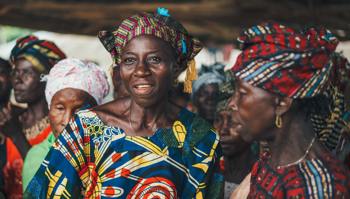
Evaluation of the EU's external action support in the area of gender equality and women's and girls' empowerment (2010-2018)
- 2019 – 2021
- 500.000 € – 1 Million €
- ACP (Africa), ACP (Caribbean), ACP (Pacific), DCI, ENI, ENI East, ENI South, IPA
The main objective of this evaluation was to provide an independent assessment and evidence on the contribution of EU external action support in the policy area of gender equality and women empowerment (GEWE). In line with the EU policy on evaluation, this evaluation sought to be a stock- taking lesson-learning and forward-looking exercise, as well as an accurate assessment of achieved results in line with the objectives of the EU Gender Action Plan (GAP) II and other relevant overall policy frameworks for gender equality such as the new approach on Women, Peace and Security Agenda, Agenda 2030, the New European Consensus for Development.
Its specific objectives were the following:
- To assess in both qualitative and quantitative terms the relevance, conditions of implementation and performance of EU external action to promote GEWE and its mainstreaming, particularly its efficiency, effectiveness, sustainability, and the EU added value.
- To assess whether the EU's policy and operational response on GEWE in partner regions (EU Plans of Action on Gender Equality and Women’s Empowerment for 2010-2015 and 2016-2020) have triggered new approaches and rendered EU external action support more effective, targeted, gender-responsive and efficient.
- To assess: a) the coordination and complementarity of the European Commission services, the European External Action Service (EEAS) and EU Members States’ external action; b) the coordination and complementarity between EU external action support and other non-EU donors’ and actors’; c) the coherence of EU GEWE policy in external action with other relevant EU external policies; and d) the coherence of EU external action support with international commitments to GEWE.
The evaluation should lead to the identification of conclusions, lessons learnt (both positive and negative), good practices regarding the achievement of the intended GEWE-related results and the Commission, the EEAS and EU Member States with a set of targeted and useful forward-looking recommendations for the improvement of the programming and implementation.
Through the course of the evaluation, the evaluation team conducted 18 case studies (focusing on countries, regions and thematic areas) which were subject to an in-depth analysis, including 9 field visits. Both a ‘country-level’ and ‘global’ survey – covering EU services (HQ and EU Delegations/Offices worldwide), EU Member States, other development partners and Civil Society Organisations – were part of the data collection and analysis process. Findings from all evaluation activities were synthesized into a final report.
Final report available here: https://ec.europa.eu/international-partnerships/evaluation-eus-external-action-support-area-gender-equality-and-womens-and-girls-empowerment_en
- Schlagwörter:
- Menschenrechte, Monitoring und Evaluierung, Regierungsführung
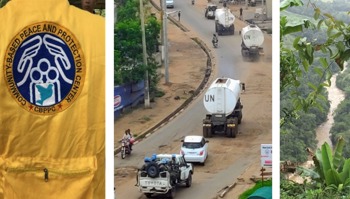
External Evaluation of EU’s Support to Conflict Prevention and Peace Building (2013-2017)
- 2018 – 2020
- 500.000 € – 1 Million €
- Global
This evaluation took place in a context of a recent surge in violent conflicts and a renewed momentum on Conflict Prevention and Peacebuilding (CPPB) both at the EU and global level. Its purpose was to:
- provide the relevant EU Institutions and the wider public with an overall independent assessment of the EU support to CPPB focusing on the period 2013-2017; and
- identify key lessons, instil good practices, and produce recommendations to feed into ongoing and future approaches to EU’s engagement in the field of CPPB.
In particular, the evaluation will feed into the EU implementation of the Integrated Approach to Conflict and Crises and nurture future EU support to CPPB strategies and interventions.
The scope of the evaluation included:
- all relevant actions (including spending and non-spending activities) and all countries/regions which fall under the responsibility of DG DEVCO and DG NEAR (neighbourhood region only); and
- the work/engagement of EEAS related to them.
In terms of temporal scope, the evaluation focused on the period 2013-2018, but also took the period 2011-2012 into consideration in order to assess the evolution of EU support to CPPB.
Through the course of the evaluation, the evaluation team conducted 12 case studies (focusing on countries, regions and instruments) which were subject to an in-depth analysis, including eight field visits. Two surveys – one covering EU services in Brussels, the other covering EU Delegations/Offices worldwide – were also part of the data collection and analysis process. Findings from all evaluation activities were synthesized into a final report.
The final report is available online: https://ec.europa.eu/international-partnerships/external-evaluation-eus-support-conflict-prevention-and-peacebuilding-2013-2018_en
- Partner:
- Particip (federführend), ECDPM
- Schlagwörter:
- Monitoring und Evaluierung, Regierungsführung

Evaluation of IcSP actions supporting the Colombian Peace Process
- 2018 – 2019
- unter 500.000 €
- Latin America & Caribbean
The main objectives of this evaluation were to provide the relevant services of the European Union and the interested stakeholders with:
- an overall independent assessment of the past performance of the four Financing Decisions including its Actions, paying particular attention to its ‘intermediate’ and ‘final’ results measured against its objectives
- key lessons and recommendations in order to improve current and future Actions
In particular, this evaluation served to assess the contribution made by the IcSP (financial and political) to the EU's support to the Colombian Peace Process from 2015 until now, i.e. nearly two years after the signature of the final Peace Agreement, being the first two years critical for advancing in the implementation and contributing to sealing and protecting the gains achieved. The period of the evaluation therefore covered both the negotiation phase at its most difficult point in time and included the delicate period from the signature of the first Peace Agreement (26th September 2016), until the signature and ratification of the Final Agreement (24th November 2016) and its implementation.
The evaluation served to measure the impact, timeliness and pertinence of the IcSP interventions and their results.
- Partner:
- Particip (federführend), Cardno UK
- Schlagwörter:
- Humanitäre Hilfe, Menschenrechte, Monitoring und Evaluierung

Final evaluation of 2014/355-412 "Gender-sensitive Transitional Justice"
- 2018 – 2019
- unter 500.000 €
- Global
The overall objective of this assignment is to conduct a final evaluation of 2014/355-412 Gender-sensitive Transitional Justice.
The final evaluation will provide the European Commission, the implementing partners, and other relevant stakeholders with:
- an independent assessment of the overall intervention, paying particularly attention to the design of the tool, the set-up of the agreement, and results achieved against its objectives; and
- key lessons and recommendations in order to improve current and future actions financed under the IcSP in this sector of intervention.
The specific objectives of this final evaluation are:
- to assess the performance of the project, including type of intervention, design and execution of assignment as well as its results;
- to assess if and to what extent the project has contributed to strengthen the capacities of the implementing partners to engage in transitional justice at international, regional or local levels;
- to assess the relevance of the project in this context and sector of intervention, and in comparison to other transitional justice related initiatives;
- to make an assessment of the project’s visibility, information and communication;
- to identify and document good practices and key lessons learned on mainstreaming gender- sensitivity into transitional justice processes;
- to produce a set of recommendations that will assist the EU in designing and implementing future actions in the area of transitional justice, in applying gender-sensitive approaches to a specific thematic area, and in managing multi-country projects.
- to assess the extent to which the project has contributed to strengthen EU-UN relations in the field of transitional justice
- Partner:
- Particip (federführend), Cardno UK, Cideal
- Schlagwörter:
- Justiz / Rechtsstaatlichkeit, Menschenrechte

EEM to Colombia - Presidential election 2018
- 2018 – 2018
- unter 500.000 €
- Colombia
The purpose of the Experts Mission was to collect factual information concerning the electoral process, in line with the criteria contained in the Commission Communication on Electoral Assistance and Observation [COM(2000)191]. Moreover, the experts produced strategic analysis and reporting on the ongoing electoral processes and will provide inputs for electoral reform as well as confidence enhancing measures, during and after the elections.
The objectives of the mission were the following:
- Assess all aspects of the electoral process in light of international commitments and relevant national legislation of Colombia; evaluate openness, comprehensiveness and adherence to the rules of the different phases of the process, including voting, counting and possibly treatment of complaints; and make recommendations in the area of electoral reform
- Assess the implementation of previous EU (and non-EU) election related missions’ recommendations and propose targeted recommendations the authorities of Colombia should take in order to improve the election framework
- If possible, provide analysis to help identify needs and potential for additional bilateral or EU electoral support
- Prepare a draft Final Mission Report (max. 30 pages), in consultation with representatives of EC/EEAS services presenting an overview of the pre-election situation
- Following final de-briefing with EC/EEAS services in Brussels incorporate additional comments into the draft report and provide Commission and EEAS services with a Final Report.
- Schlagwörter:
- Institutionelle Entwicklung, Justiz / Rechtsstaatlichkeit, Wahlen

The evaluation assessed three regional forestry projects that had support to small producers, development of value chains and the use of participatory approaches in common:
1. ForInfo: Livelihood improvement through generation and ownership of forest information by local people in products and services markets (Mekong, 2011–2015);
2. Finnfor-II: Integrated environmental and forest management co-operation (Central America, 2012–2016);
3. MFS: Sustainable forest management in the Andean region (South America, 2011–2016).
The purpose of the evaluation was to provide guidance to the Ministry for Foreign Affairs of Finland in planning and implementing regional forestry projects. It produced lessons for future forest sector co-operation and planning of other regional programmes. Specific objectives of the evaluation were to:
- Assess the added value of the regional approach compared to a country-based approach;
- Assess the success of the programmes in promoting sustainable forestry based livelihoods and increasing income of small producers;
- Identify the lessons learned from developing value chains and payment for ecosystem services.
The evaluation was conducted in several phases:
- An inception phase focusing on the design and the methodology of the evaluation;
- A desk and field phase with document review and visits to eight different countries in the three regions;
- A synthesis phase with global-level conclusions and recommendations across the three regional projects, presented in a final report to concerned stakeholders.
- Partner:
- Indufor Oy - Metsahallitus Group (federführend), Particip
- Schlagwörter:
- Forstwirtschaft, Industrie und Privatsektorentwicklung, Monitoring und Evaluierung, Umwelt

Systematization of EU support on integrated action against mines in Colombia
- 2017 – 2017
- unter 500.000 €
- Colombia
Thorough systematisation of the EU bilateral support provided to the Colombian Directorate for the Comprehensive Action against Antipersonnel Mines (DAICMA).The project highlighted the results achieved, lessons learned, best practices resulting from the EU support as well as identify remaining gaps.
- Partner:
- Particip (federführend), Expertise Advisors (formerly: ETI Consulting)
- Schlagwörter:
- Humanitäre Hilfe